I Re-Watched Anchorman (2005, Dir. by Adam McKay)


“Ron Burgundy was the balls.”

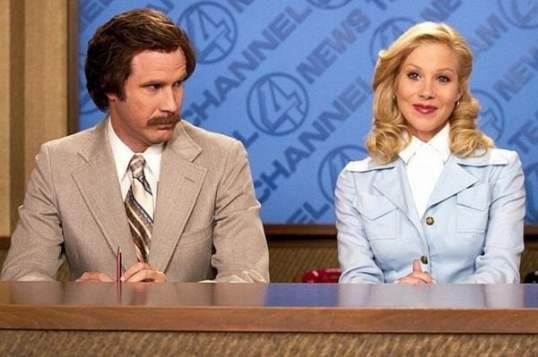
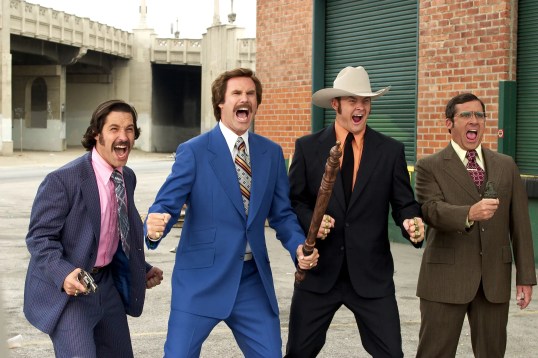
You got that right!  That’s one reason why I’ve lost track of the number of times that I’ve watched Anchorman.  Whatever’s going on in the world or my life, I know that Anchorman is going to make me laugh and make me feel better about things.  The adventures of anchorman Ron Burgundy (Will Ferrell) and his news team (Paul Rudd, David Koechner, Steve Carell) never cease to amuse me, whether they’re capturing the birth of a panda or getting involved in a street fight with their rival newsmen.

“Brick killed a guy.”

He did!  Where did Brick get a trident from?  When the street fight started, he only had a hand grenade.  Ron Burgundy suggests that Brick should find a safehouse and I hope Brick took his advice.  There’s a lot of funny people in Anchorman but Steve Carell, playing the weatherman with an IQ under 80, is my favorite.  Brick saying that he loves the lamp is so touching.

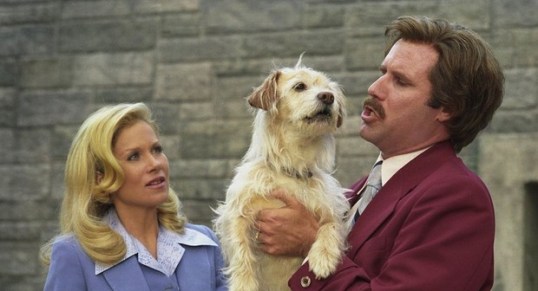
“Fare thee well, Baxter.  You shall always be a friend of the bears.”

The first time I saw Anchorman, I couldn’t believe it when Baxter was drop-kicked off that bridge.  I swore that I would never watch another movie featuring Jack Black!  Baxter was so cute!  When Ron broke down over the loss of his dog, I wanted to break down with him.  Later, when Baxter emerged from the river and barked, “I’m coming, Ron!,” I was so relieved.  Baxter lives!  Baxter’s conversation with the bears warmed my heart.

“Stay classy, San Diego.”

That’s right, San Diego!  Stay classy.  Anchorman is in a class all of its own.  Ron Burgundy makes beautiful music with his jazz flute.  Brian Fantana is a walking advertisement for Sex Panther.  Veronica Corningstone (Christine Applegate) strikes a blow for women’s liberation and teaches Ron an important lesson about teleprompters.  It’s the little moments that make me laugh the most, whether it’s Fred Willard talking to his son’s school about why his son has been expelled or Tim Robbins as the PBS anchor who smokes a pipe and chops off Luke Wilson’s arm or Vince Vaughn shouting about the ratings.  Best of all, Will Ferrell has never been better than as the pompous Ron Burgundy, so stupid but so committed to his job that you can’t help but love him.

“Wow, that really escalated.”

You bet it did, Ron!  Each moment of Anchorman is funnier than the last.  (I wish the same was true of Anchorman 2.)  That’s why Anchorman is a film that I watch and rewatch.  In fact, I think I’ll go watch it right now!

“Thanks for stopping by, San Diego.”

The Films of 2024: Horizon: An American Saga: Chapter One (dir by Kevin Costner)


Horizon: An American Saga: Chapter One is the rather unwieldy title of the first part of what Kevin Costner has said will be an epic four-part movie about the settling of the American frontier.

It’s very, very long.

It has a running time of three hours, during which time a lot of characters are introduced and a lot of plotlines are initiated but, because this is the only first chapter, none of them come to a close.  In fact, as the film ends, it’s still a mystery as to how some of the characters are even related.  I watched all three hours and I took my ADD meds this morning so you can be assured that I was actually paying attention.  That said, I still struggled to keep track of who everyone was or even where they were in proximity to each other.  Indeed, it was only towards the end of the film that I realized that several years were supposed to have passed over the course of the first chapter’s running time.

That’s not to say that the film is a disaster.  While it’s not quite the nation-defining epic that Costner obviously envisioned it as being, it’s also not quite the cinematic atrocity that several critics made it out to be.  It’s a throwback of sorts, to the epic westerns of old.  As such, the film features taciturn gunslingers, a woman with a past, dangerous outlaw families, fierce Indian warriors, and a wise Indian chief who has dreamed of the coming of the white man.  The film is full of actors — like Michael Rooker, Sienna Miller, Sam Worthington, Danny Huston, Will Patton, James Russo, Dale Dickey, and Kevin Costner himself — who feel as if they belong to a different era of filmmaking.  Just about everyone in the film is heading to the settlement of Horizon, which sits in Apache territory.  Despite the efforts of the Indians to kill every settler who shows up, they keep coming.  As one army officer explains it, the Indians have made the mistake of thinking that the settlers will come to believe the land is cursed while the settlers, all of whom are full of American optimism, instead chose to believe that the previous settlers were unlucky but that the next wave of settlers will make it work.  Costner has the right visual sensibility for a western.  The film reveals a director who is obviously in love with the Western landscape and the film is at its best when it simply frames the characters against the beauty of the frontier.  But when it comes to actually telling a compelling story, he struggles.  There are a lot of moving parts to the first chapter of Horizon and the problem is not that they don’t automatically connect but instead that Costner never gives us any reason to believe that they’ll ever connect.  There are no visual clues or bits of dialogue to assure the viewer that everything they’re watching is going to eventually pay off.  Costner asks his audience to have faith in him and remember that he directed Open Range and Dances With Wolves while forgetting about The Postman.

The first hour, which features a brutal raid on the settlement by a group of Indians, is the strongest.  It really drives home the brutality of what we now call the old west.  In the style of Michael Cimino’s The Deer Hunter, Costner closely observes the individual customs of the film’s settlers and carefully introduces several appealing characters who leave the viewer feeling as if they’ve met a very special and very unique community of people.  That makes it all the more devastating when the majority of those characters are subsequently wiped out with casual cruelty in a raid led by the Indian warrior Pionsenay (Owen Crow Shoe).  (Later — much later — a tracker played by Jeff Fahey will show similar brutality while wiping out a group of Apaches.)  The first hour establishes the frontier as being beautiful but also dangerous and it also drives home the mix of determination, desperation, and even madness that led so many to follow Horace Greeley’s advice and “Go west!”  Though the film was shot in early 2023, the brutality of the raid brought to mind the terrible images of the October 7th attacks on Israel.  The subsequent scenes in which Pionesenay and his followers ridiculed those in the tribe who wanted peace mirrored the current schism that’s driving apart the worldwide Left.  The U.S. Army, for their part, arrives a day late and can only offer up not-so subtle condescension.  The surviving settlers, however, remain determined to make a home for themselves.

The second hour focuses on Hayes (played by Costner), who rides into a mining town and gets involved with a family of outlaws who are looking for the woman who shot their father.  The second hour is a bit more of a traditional western than the first hour, though some of the violence is still shockingly brutal.  (Even being comedic relief won’t save you in this film.)  Abbey Lee gives a good performance as the woman with a past and a baby and Kevin Costner is  …. well, he’s Costner.  He could play this type of role in his sleep.

The third hour is a mess, introducing a wagon train and featuring a miscast Luke Wilson as the leader of the settlers and Jeff Fahey giving a strong performance as a ruthless tracker.  The third hour meandered as a whole new set of characters were introduced and I was left to wonder why the film needed new characters when the characters from the first two hours were perfectly adequate.  It was during the third hour that I started to really get impatient with the film and its leisurely approach to storytelling.

The film ends with a montage of what we can expect from the next few chapters of Horizon and I will say that the montage actually looked pretty cool.  That’s because the montage was almost totally made up of action scenes, with none of the padding that caused Chapter One to last an unwieldy three hours despite only having 90 minutes worth of story.  Still, one has to wonder if we’ll actually get to see the next three chapters.  The first chapter bombed at the box office and didn’t exactly excite critics.  Costner is producing and financing the films himself and I doubt he’ll give up on them.  The Horizon saga will be completed but will it made it to theaters or will it just end up on streaming?  Personally, I think the whole thing would work best as a miniseries but who knows?  (If Horizon was airing on Paramount, it would probably be a Yellowstone-style hit.)  All I really do know is that Chapter Two has yet to be released.  And that’s a shame because, for all of Chapter One‘s flaws, I’d still like to see how the story turns out.

Here’s The Trailer for Miranda’s Victim


The upcoming film, Miranda’s Victim, takes a look at the crime that was at heart of the Supreme Court’s once-infamous Miranda decision.  Trish Weir (played by Abigail Breslin) was raped by Ernesto Miranda (Sebastian Quinn).  Miranda confessed to the crime will being interrogated but his conviction was overturned by the Supreme Court, who decided that Miranda had not been fully informed of his rights.  Ernesto Miranda is the reason why we still hear talk of whether or not a suspect had been properly “mirandized.”  Told from the point of view of Trish, the film appears to be offering up a perspective that is far too often ignored when it comes to films about “miscarriages of justice.”  That Ernesto Miranda become a cause célèbre for some does not make him any less guilty of the crime that he committed.

This is one of those films that seems like it was made specifically to appeal to me.  Along with the story’s historical context, the cast is full of intriguing names.  Along with Abigail Breslin and Sebastian Quinn, supporting roles are played by Luke Wilson, Kyle MacLachlan, Ryan Phillipe, Mireille Enos, Emily VanCamp, Andy Garcia, and Donald Sutherland.  Personally, I’m looking forward to seeing Kyle MacLachlan’s performance as Earl Warren.

Here’s the trailer!

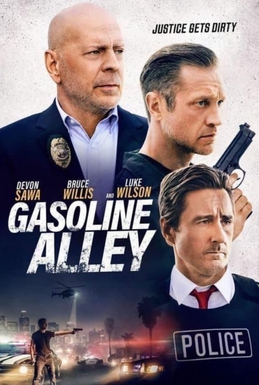
Film Review: Gasoline Alley (dir by Edward Drake)


Believe it or not, Gasoline Alley is not that bad.

Don’t get me wrong.  Gasoline Alley is definitely a pulpy film.  The plot is full of twists and turns and it doesn’t always hang together.  There’s more than a few holes to be found in the story.  There’s also a few threads that are left hanging.  Much as in real life, characters appear and then disappear almost at random.  In many ways, the film plays out like a dream, a jumbled mix of concerns and ideas and images.  The viewer is often left to figure out how to fit everything together on their own.  Obviously, that type of  approach won’t appeal to everyone but, for me, it was the perfect way to tell the film’s story.  The world of Gasoline Alley often doesn’t make sense but neither does the world outside of your window.  Gasoline Alley‘s mystery often feels like a jigsaw puzzle where someone has jammed pieces randomly into each square and then pounded on them until they managed to fit in the slots.  It’s chaos but it’s an appropriate approach for a film that takes place in a chaotic world.

Gasoline Alley also one of the final films that Bruce Willis made before his retirement and, with all the rumors about whether or not Willis was pushed into spending the last few years of his career appearing in low-budget and B-movies, it’s often undeniably awkward to watch him in his final films.  As is the case with almost all of Willis’s recent films, he doesn’t get much screen time in Gasoline Alley.  He’s only in a handful of scenes and his dialogue is limited and delivered in a flat monotone.  He plays a key character but much of what the character does and says occurs off-screen and is described to us second-hand.  And yet, at the same time, Willis still has enough natural presence that his performance works as far as the basic needs of the film are concerned.  He’s playing a character who is meant to be intimidating and Willis still has enough of that tough guy energy that his performance is effective.    

Willis plays a homicide detective named Freeman.  Freeman and his partner, Vargas (Luke Wilson), are investigating the murder of four prostitutes and their number one suspect is a tattoo artist named Jimmy Jayne (Devon Sawa).  Jimmy’s father was a decorated police detective.  His mother was a prostitute.  Jimmy spent several years in prison for assault, though Jimmy claims that he was simply acting in self-defense.  (“He came at me with a screwdriver,” Jimmy says, without further elaboration.)  While he was in prison, Jimmy befriended an actor who was doing time for DUI.  Having been released, Jimmy is now the tattoo artist to the stars.  He has his own tattoo parlor, called Gasoline Alley.  Because one of the murdered women was found with one of Jimmy’s personalized lighters on her body, Jimmy is a suspect.  Jimmy, however, claims that he merely met her in a bar.

Jimmy starts to investigate the murders on his own and it quickly becomes clear that he’s a better investigator than either of the detectives who are on the case.  Though Jimmy is trying to clear his name, he’s also determined to get justice for the murdered women, all four of whom appear to him as either ghosts or drug-induced hallucinations at a key moment in the film.  Jimmy’s investigation leads him into the world of human trafficking, police corruption, and the darkest corners of the film industry.  Indeed, one of Gasoline Alley‘s major points seems to be that everyone in Hollywood is corrupt.  The actor who Jimmy saved in prison is a pretentious loser who, at one point, goes off on a rant that was obviously based on Christian Bale’s infamous Terminator meltdown.  Meanwhile, the adult film industry is represented by a sleazy director who snorts cocaine, tells bad jokes, and throws parties that are almost exclusively populated by crooked cops.  As one cop puts it, “He knows whose lives matter.”

Gasoline Alley has gotten terrible reviews but I think those reviews have more to do with the fact that this is a low-budget Bruce Willis flick than the film itself.  Gasoline Alley is actually not bad at all.  It’s an entertaining work of pulp fiction, a quickly-paced film that takes a look at how life is lived and lost in the shadows of “decent” society.  Because he’s an ex-con, Jimmy is destined to be an outcast, regardless of how many stars come to him for their tattoos.  But, at the same time, it’s Jimmy’s outcast status that allows him to infiltrate and understand the dark side of Los Angeles.  It’s because Jimmy’s an outcast that he’s determined to get justice for the victims that respectable society would rather just ignore.  Director Edward Drake fills the movie with images of neon-suffused decadence.  The atmosphere may be sleazy but it’s also undeniably plausible.  Luke Wilson does a good job playing Willis’s talkative partner but the film is stolen by Devon Sawa, who brings a mix of weary dignity and righteous fury to the role of Jimmy.  Sawa has been through his own well-publicized troubles and perhaps that’s why he seems to instinctively understand why it’s so important that Jimmy not only clear his name but also get justice for those who have been victimized in the shadows.  As played by Sawa, Jimmy is cynical and often tired but he still hasn’t given up his desire to make the world a better place.

No, Gasoline Alley is not a bad film at all.  Instead, it’s a portrait of a harsh world and a look at the people who are simply trying to make it from one day to the next.  Much like Robert Aldrich’s Kiss Me Deadly, Gasoline Alley is a journey through a brutal world where people get what they want at the cost of their own souls.  It’s a film that, like many of the classic B-movies and film noirs of the 40s and 50s, will be rediscovered and better appreciated in the future.

The Films of 2020: All The Bright Places (dir by Brett Haley)


https://www.youtube.com/watch?v=6nRX2bSGjMI

All The Bright Places tells the story of two teenagers in Indiana.

Violet Markey (Elle Fanning) is pretty, popular, and secretly very depressed.  She’s still recovering from the death of her sister and her friends aren’t being particularly helpful.  (At one point, her boyfriend asks how much longer she’s going to be depressed because she’s “been this way for a really long time.”)  Violet lives in a nice, comfortable home and probably has a bright future ahead of her but she can’t communicate how she’s feeling to her parents (Luke Wilson and Kelli O’Hara), who are dealing with their grief in their own ways.

Finch (Justice Smith) is a student who is viewed, by his classmates, as being something of a freak.  Unlike Violet, who holds back her emotions, Finch doesn’t hold back his feelings and, as a result, it’s gotten him in trouble.  If not for a somewhat sympathetic principal (Keegan-Michael Key), Finch probably would have been expelled a while ago.  As it is, he’s on probation and he’s running the risk of not graduating.  Finch lives with his sister (Alexandra Shipp).  Their parents are pretty much not in the picture.

One night, Finch happens to see Violet standing on a bridge and thinking about jumping.  From that moment, an unexpected relationship begins.  Though Violet is, at first, hesitant to open up to Finch (or anyone else, for that matter), Finch continues to try to talk to her.  Eventually, for a class, they’re assigned to do a report on the wonders of Indiana.  Soon, they’re going from location to location and Violet is slowly starting to enjoy life again while Finch encourage her to open up about her feelings and to once again start writing….

And, at this point, you’re probably thinking that this just a typical YA film, one that’s only distinguished by the fact that, instead of having a manic pixie dream girl, it has a manic pixie dream guy.  That was certainly how I felt during the first third of this film.  However, All The Bright Places is too smart of a film to settle for telling such a simple story and Finch is too complex of a character to be dismissed as a trope.  Even as Violet gets better, Finch’s own behavior grows more erratic.  (In fact, it could be argued that this film’s greatest contribution to the cultural discussion is its attempt to seriously explore what would cause someone to become a manic pixie dream person in the first place.)  When events conspire to cause Violet and Finch to be separated, it leads to tragedy.

It’s a sweet-natured and poignant film, one that sensitively explores depression and mental illness.  It’s also a film that understands how, when you’re a certain age and even if you’re not also having to deal with burdens of depression and anxiety, almost anything can seem like the end of the world.  It takes its character’s seriously and it doesn’t pander to its audience with any shallow promises about how things are magically going to get better once they graduate high school and head off to college.  At the same time, it’s also a very life-affirming film, one that encourages us to celebrate life and experience it while we can.

Elle Faning and especially Justice Smith give two achingly sincere and touching performances.  I was especially impressed with the work of Smith.  Smith plays up Finch’s intelligence and his curiosity about the world while, at the same time, also showing why Finch’s attention might occasionally be a bit overwhelming.  I look forward to seeing what he does in the future.

An Olympic Film Review: Blades of Glory (dir by Josh Gordon and Will Speck)


All good things must come to an end and the Winter Olympics have done just that.  Tonight, here in the States, NBC will wrap up their coverage of the Games and they’ll broadcast the Closing Ceremonies.  As NBC tends to do, they’ll pretend that they’re broadcasting live but the truth of the matter is that the Winter Games are over and now we’ll have to wait two years for the far-less exciting Summer Games.

I enjoyed the Winter Olympics this year.  I was one of those obsessive people who would watch all of the recaps at one in the morning.  Medal-wise, Norway dominated with a total of 39 medals.  The United States came in fourth with only 23 medals but that’s still 22 more medals than Latvia got!  (Just kidding, we love you, Latvia!)  Overall, though, it was a pretty good Olympics.

That said, there were a few things missing.

For instance, no one attempted to recreate JFK’s affair with Marilyn Monroe on ice.  I thought that was definitely a missed opportunity.

There weren’t any frantic chase scenes.  No mascots were injured over the course of the Olympics.  I guess we should be happy about that, all things considered.  Still, it’s hard not to feel that this break with Olympic tradition left something lacking in the games.

Finally, none of the skating routines featured the risk of decapitation.  Again, I guess this is a good thing.  I mean, we really don’t want to see anyone lose their head, especially not when the games are being broadcast across the world.  But again, it was hard not to feel that lack of the Iron Lotus was unfortunate.

In short, the Winter Olympics may have been good but they were nothing like the 2007 film, Blades of Glory. 

Blades of Glory tells the story of two very different ice skaters.  Jon Heder is Jimmy McElroy, who was adopted by a hyper-competitive, kinda creepy millionaire (William Fichtner) and practically raised to become a gold medalist.  Will Ferrell is Chazz Michael Michaels, who is a hard-drinking, hard-living, sex addict.  Jimmy is all about technical perfection.  He’s a non-threatening, almost child-like celebrity, the type who has earned himself his own obsessive stalker (Nick Swardson).  Chazz is, on the other hand, is a self-styled rock star, as well as being something of an idiot.  In 2002, when they both tie for the gold, they get into an argument that 1) leads to a mascot getting set on fire, 2) brings shame upon the “World Winter Games,” and 3) leads to them getting banned from men’s single competition.

But, as Jimmy’s stalker figures out, that doesn’t mean that they can’t compete in pair skating!  The former rivals may loathe each other but it’s either that or a future of skating in cheap ice shows and working in retail!  Under the guidance of their burned-out coach (Craig T. Nelson), Jimmy and Chazz learn to work together.  And what better way to win the gold than to do an extremely dangerous maneuver that could potentially lead to one of them losing his head?

However, not everyone is happy to see Chazz and Jimmy return to competition.  The reigning champions — Straz and Fairchild Van Waldenberg (Amy Poehler and Will Arnett, who were still married when they played creepy siblings in this film) — have no intention of allowing themselves to be upstaged.  And if that means using their younger sister (Jenna Fischer) to try to drive a wedge between Chazz and Jimmy, so be it…

So, obviously, Blades of Glory is not a serious look at the world of ice skating.  The plot is really just an excuse to highlight the absurdity of putting people who clearly don’t belong there on the ice.  This is another Will Ferrell comedy where the majority of the laughs come from the absolute dedication that Ferrell brings to playing an almost absurdly stupid human being.  Ferrell has the ability to deliver even the most nonsensical of dialogue with total sincerity and conviction.  In Blades of Glory, he’s well-matched by Jon Heder, who brings his own odd style to the role of Jimmy.  If Ferrell is all about aggressive stupidity, Jon Heder is all about impish stupidity and it becomes surprisingly compelling to see whose stupidity will ultimately win it.

While it never quite reaches the highs of Anchorman, Blades of Glory is still a funny movie.  It made me laugh and that’s always a good thing.

Back to School #54: Rushmore (dir by Wes Anderson)


rushmore-play

It’s an understatement to say that Wes Anderson’s films tend to divide viewers.  It seems like critics either love his excessively stylized and quirky vision or else they dismiss him as being a pretentious, overrated, and overly concerned with the problems of the rich and the suburban.  Even among the writers here at the Shattered Lens, there are conflicting opinions.  Leon the Duke gave Moonrise Kingdom a rave review.  On the other hand, I know that Ryan The Trashfilm Guru is not particularly a fan of Anderson’s films.

Myself, I always find it usually takes me a while to warm up to an Anderson film.  With the exception of The Fantastic Mr. Fox, I always seem to find myself somehow both impressed and slightly disappointed after seeing an Anderson film for the first time.  Perhaps it’s because Anderson is such a highly praised director with such a recognizable style that I always tend to go into his film with my expectations set way too high.  And so, I often times end up watching the latest Anderson film and thinking about how much I loved the film’s production design and some of the performances but often times feeling that, narratively, there was something missing.  On first viewing, Anderson’s trademark quirkiness can be overwhelming.  Usually it’s not until a second or third viewing that I really start to appreciate an Anderson film for something more than just the way it looks.  Eventually, I came to love Moonrise Kingdom and The Grand Budapest Hotel but it took me a while.

However, there is an exception to every rule.  And, as far as my reaction to Wes Anderson’s films are concerned, 1998’s Rushmore is that exception.  Rushmore is a film that I have unquestionably loved since the very first time I saw it.  Maybe it’s because, while Rushmore is undeniably quirky, that quirkiness doesn’t overwhelm the human aspect of the film’s story.  Maybe it’s because Rushmore — along with Bottle Rocket — is the most identifiably Texan of all of Anderson’s films.  Or maybe it’s just because Bill Murray gives such a great performance.

Seriously, Bill Murray makes any movie better.
02-rushmore-max-and-mr-blume

Rushmore is named after Rushmore Academy, a private school in Houston.  (Rushmore is quite obviously based on St. Mark’s, which is perhaps the most exclusive private school down here in Dallas.  Owen Wilson, who collaborated on Rushmore‘s script with Anderson, was expelled from St. Mark’s in the 10th Grade.)  15 year-old Max Fischer (Jason Schwartzman, who gives a sympathetic performance as a potentially off-putting character) loves attending Rushmore.  He’s involved in a countless number of extracurricular activities and has written and directed several plays, the majority of which are based on films from the 70s.  (We see his stage version of Serpico and it’s hilarious.)

tumblr_mcasy9Qj4S1r5l2jyo1_400

Unfortunately, Max has a few problems.  For one thing, unlike most of his peers, he’s not rich.  He tells everyone that his father (Seymour Cassel) is a neurosurgeon but actually, he’s a barber.  Even more seriously, Max spends so much of his time starting clubs and writing plays that he doesn’t ever bother to study.  Max is on the verge of flunking out and, despite numerous warnings from Dr. Guggenheim (Brian Cox), he refuses to do anything to improve his grades.

Instead, Max is more interested in pursuing a crush he has on an older teacher, the widowed Rosemary Cross (Olivia Williams).  What Max doesn’t realize is that his mentor, industrialist Herman Blume (Bill Murray), also has a crush on Ms. Cross.

rushmore02

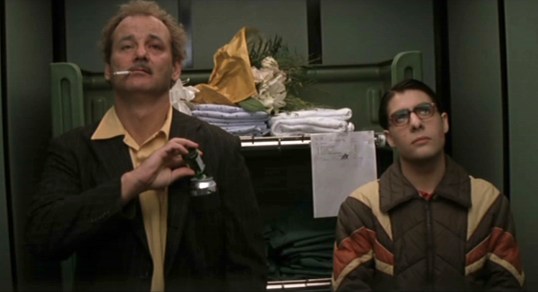
While Max may be the film’s main character, Herman Blume is, without a doubt, the film’s heart.  Blume is a Viet Nam vet (“You were in the shit?” Max asks.  “Yes, I was in the shit,” Blume replies) who has literally gone from rags to riches.  And now that he is rich, he finds himself living an empty life with a wife who doesn’t respect him and two sons who are total idiots.  When Blume starts to mentor Max and pursue Ms. Cross, he starts to care about living once again.
rm61

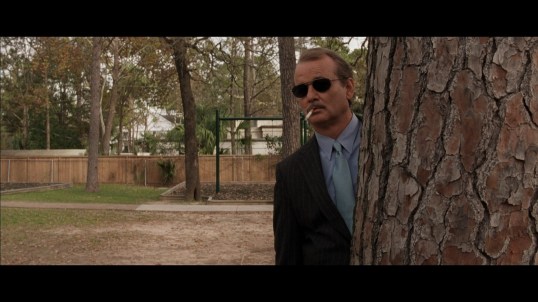
Meanwhile, Max attempts to impress Ms. Cross by building an aquarium on the school’s baseball field.  This leads to Max getting expelled and having to enroll in a public school.  (Max continues to wear a suit and tie, even after being expelled.)  However, Max then discovers that Blume has been seeing Ms. Cross and soon, the mentor and the student become rivals…

And a lot of other stuff happens but you know what?  I’m not going to tell you what because if you haven’t seen Rushmore, you need to see it and discover all of this for yourself.  You won’t be sorry!

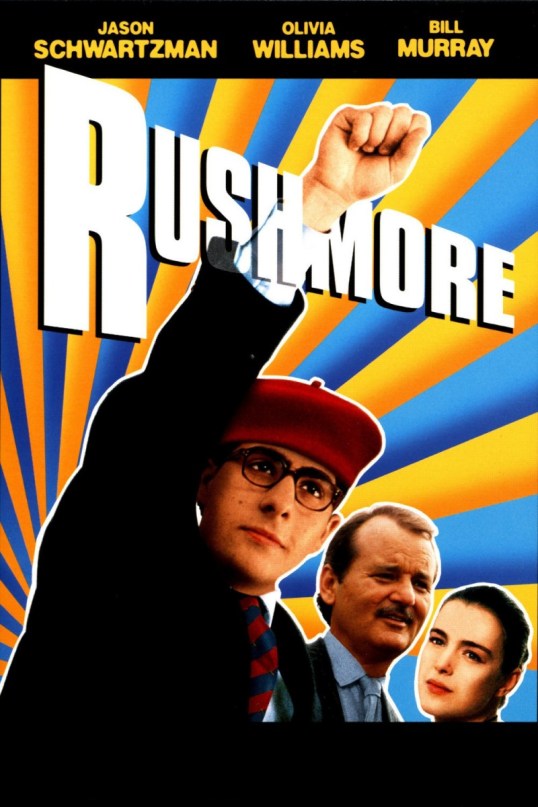
It may be named after the school but Rushmore is ultimately about how love and our dreams make life worth living.  For Max, Rushmore is his fantasy ideal, a world that he loves because it provides him a sanctuary from the harshness of the real world.  When Mr. Blume says, about Ms. Cross, “She’s my Rushmore,” we understand exactly what he means.  But, and this is what distinguishes Rushmore from so many other films about quirky love triangles, is that Ms. Cross is just as independent and important a character as Max and Mr. Blume.  Blessed with excellent performances from Seymour Cassel, Brian Cox, Jason Schwartzman, Olivia Williams, and especially Bill Murray, Rushmore is one of Wes Anderson’s best films.
rushmore-1999-movie-poster1