Film Review: Poor Little Rich Girl (dir by Andy Warhol)


Poor Little Rich Girl (1965, dir by Andy Warhol)

In March of 1965, Andy Warhol, Gerard Malanga, and Chuck Wein went to the New York City apartment of Edie Sedgwick and made a movie.  Edie Sedgwick, at that time, was a 22 year-old model who had been christened a “youthquaker” by Vogue.  She was also, for a year or so, the best-known member of Andy Warhol’s ensemble.  Of all the so-called superstars that spent time with Warhol and appeared in his films, Edie was the one who actually was a star.

The film opens with Edie waking up, walking around her bedroom, smoking a cigarette, popping pills, exercising, and lounging in bed.  (That’s pretty much my morning routine too, except for the cigarettes.)  She doesn’t speak.  The only sound that we hear is a record being played in the background and the whirring of Warhol’s camera.  Because of a faulty lens, the first 30 minutes of Poor Little Rich Girl are out-of-focus.  We can see Sedgwick’s form as she moves and we can, for the most part, tell what she’s doing but we can’t see any exact details.  Her face is a blur and sometimes, her body seems to disappear into the walls of the room itself.  It’s a genuinely disconcerting effect, even if it was an accident on Warhol’s part.  Edie is there but she’s not there.  The blurry image seems to reflect an unfocused life.  Edie is the poor little rich girl of the title and indeed, she was known as a socialite before she even became a part of Warhol’s circle.  The blurriness indicates that she has everything but it can’t be seen.

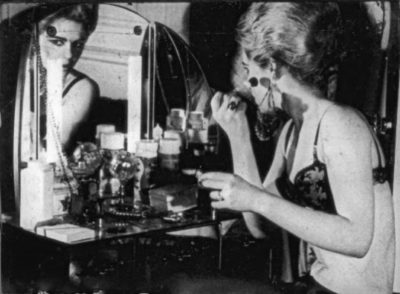
After 30 minutes, the film comes into focus.  Clad in black underwear, Edie answers questions from Chuck Wein, who remains off-camera.  Sometimes, we can hear Chuck’s questions and sometimes, we can’t.  Our focus is on Edie’s often amused reaction to the questions, even more so than her actual answers.  Edie smokes a pipe and looks at herself in her mirror and she talks about how she blew her entire inheritance in just a manner of days.  She raids her closet and tries on clothes while Wein offers up his opinions.  Edie is living the ultimate fantasy of trying on different outfits while your gay best friend makes you laugh with his snarky comments.  Edie comes across as someone who is living in the present and not worrying about what’s going to happen in the future.  It’s only when she nervously smiles that we get hints of the inner turmoil that came to define her final years.  The camera loves Edie and, even appearing in what is basically a home movie, Edie has the screen presence of a star.  There was nothing false about Edie Sedgwick.
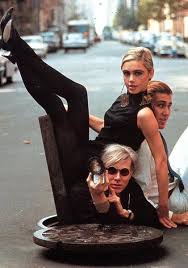
Edie Sedgwick, Chuck Wein, and Andy Warhol

Watching the film today, of course, it’s hard not to feel a bit sad at the sight of a happy Edie Sedgwick.  While Edie would become an underground star as a result of her association with Andy Warhol and his films, their friendship ended when Edie tried to establish a career outside of Warhol’s films.  Edie’s own struggle with drugs and her mental health sabotaged her career and she died at the age of 28.  I first read George Plimpton’s biography of Edie Sedgwick when I was sixteen and I immediately felt a strong connection to her and her tragic story, so much so that I was actually relieved when I made it to my 29th birthday.  Though most people ultimately see Edie Sedgwick as being a tragic figure, I prefer to remember Edie as she appeared in the second half of Poor Little Rich Girl, happy and in focus.

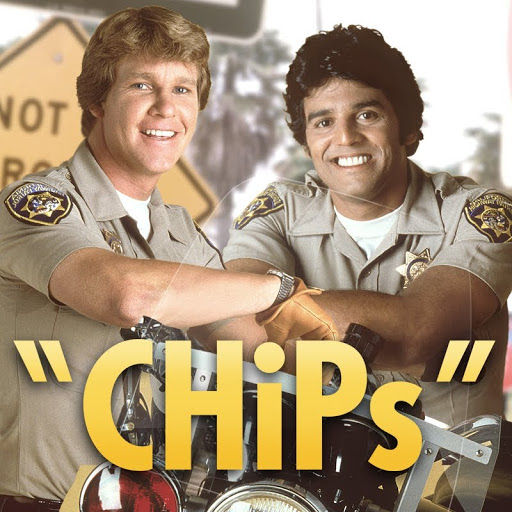
Late Night Retro Television Review: CHiPs 3.6 “Counterfeit”


Welcome to Late Night Retro Television Reviews, a feature where we review some of our favorite and least favorite shows of the past!  On Mondays, I will be reviewing CHiPs, which ran on NBC from 1977 to 1983.  The entire show is currently streaming on Prime!

Tonight’s episode is weird.

Episode 3.6 “Counterfeit”

(Dir by John Florea, originally aired on October 20th, 1979)

Ponch is shocked to discover that he’s carrying several counterfeit twenties.  He turns the money into the Treasure Department, hoping that it will mean receiving an monetary award.  Instead, he’s told that his reward is helping the government crack down  on the bad guys.  Ha!  Take that, Ponch!

That said, you better believe that Ponch is there to help arrest the counterfeiters, who turn out to be a bunch of phony preachers working out of a church.  I know that sounds like the sort of thing that could be interesting.  But, for the most part, these guys are still just generic CHiPs bad guys, even if one of them is played by veteran screen tough guy Ralph Meeker.

Meanwhile, Ponch goes on a date with a woman and is upset when it appears that she’s shallow and doesn’t want to talk about anything that is the least bit intellectual.  That’s our, Ponch!  He’s never shallow!  Fortunately, it turns out that his date isn’t shallow either.  She was just pretending to be shallow to test whether or not Ponch was shallow.  And now, it’s time to dance!  Wait, what?  That doesn’t make any sense.  Ponch — when are you going to settle down?  Disco isn’t going to last forever.

While that’s going on, architect James O’Hara (played by veteran dwarf actor Billy Barty) becomes frustrated with people assuming that he can’t drive because of his size.  He gets tired of all the dumb jokes and the condescending remarks.  As a result, he keeps getting into minor accident whenever he drives on the highway.  This was a strange storyline, largely because O’Hara’s scenes made up over half the episode despite the fact that he had never appeared on the show before and he barely interacted with the members of the Highway Patrol.  A part of me wonders if maybe this episode was meant to be a backdoor pilot for a series about James O’Hara.  The other weird thing about this episode is that O’Hara’s frustration over people making fun of his height was often played for laughs.  The whole thing just felt well-intentioned but oddly tone deaf.

If you’re keeping track, this episode had two Ponch storylines and a storyline about a guy we had never seen before.  Sorry, Baker!  If we had any doubts about who was the favored partner as far as this show goes, this episode erased them.

This whole episode just felt weird.  On the plus side, there was a lot of nice California scenery and there were quite a few accidents, which is the main reason why most people would have been watching the show in the first place.  But this episode really is an example of how a show can get bogged down with a character that we’ve never seen before and that we’ll probably never see again.  The episode just never comes together.

Ghosts of Sundance Past: Waiting For The Moon (dir by Jill Godmilow)


The Sundance Film Festival is currently underway in Utah.  For the next few days, I’ll be taking a look at some of the films that have previously won awards at Sundance.

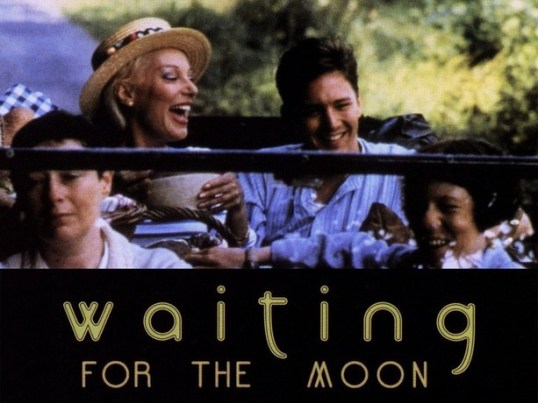
First released in 1987, Waiting For The Moon is a lowkey and fictionalized account of the relationship between Gertrude Stein (Linda Bassett) and Alice B. Toklas (Linda Hunt).

The film takes place in 1936, almost entirely at the home that Stein and Toklas shared in France.  Back in the years immediately following World War I, their home was a stopping spot for almost every writer who no longer felt at home in the conventional world.  It was the place where the members of the so-called Lost Generation met to socialize and discuss their art.  (Ernest Hemingway memorably wrote about visiting Stein and Toklas in A Moveable Feast.)  However, Waiting For The Moon takes place long after those exciting years.  Gertrude and Alice are now living a rather comfortable and settled life.  Occasionally, someone will stop by.  Hemingway (played by Bruce McGill) shows up.  Picasso stops by for a visit, though we only hear him.  But, for the most part, the film focuses on Gertrude and Alice.  The film follows them as they bicker like the old married couple that they essentially are, even if society in 1936 wasn’t willing to acknowledge it.  Alice proofreads Gertrude’s latest writing.  Gertrude waits for word from her doctor.  They talk about old times and old friends.  At one point, an aspiring writer named Henry Hopper (Andrew McCarthy) pays the two women a visit and, for a day at least, it’s like old time.  Henry is earnest and idealistic and full of plans for the future.  Unfortunately, he’s also planning on fighting in the Spanish Civil War and it doesn’t take a genius to guess that probably won’t go well.  Indeed, we learn that several of Gertrude and Alice’s old acquaintances are now fighting and dying in the Spanish Civil War.  For the so-called Lost Generation, the battle against Franco is a chance to find themselves but students of history already know how the war is going to end.  For that matter, students of history will also realize that World War II is right around the corner.  (Needless to say, the film itself offers up not a hint of the controversy that would surround Stein’s activities during the Vichy regime,)

Waiting For The Moon is a deliberately paced film, which is a polite way of saying that it’s a bit on the slow side.  That said, the scenery is beautiful and both Linda Hunt and Linda Bassett give good performances as the film’s versions of Alice and Gertrude.  Bruce McGill steals the film as the blustery Hemingway.  I’m sure Ernest would have approved.  (Could Ernest Hemingway ever be played as being anything other than blustery?)  The film captures the daydream that I think captures the fancy of many aspiring writers, the idea of being in a place where your thoughts are the center of life and all of your friends understand what it’s like to be a creative soul.

Waiting For The Moon won the Dramatic Grand Jury Prize at the 1987 Sundance Film Festival.  It’s not an easy film to find.  On Amazon, a copy on DVD runs about $52.00.  I was fortunate enough to find a copy at Half-Price Books.


Lisa Marie Reviews An Oscar Nominee: Born On The Fourth of July (dir by Oliver Stone)


In 1989, having already won an Oscar for recreating his Vietnam experiences in Platoon, director Oliver Stone returned to the war with Born On The Fourth Of July.

Based on the memoir of anti-war activist Ron Kovic, Born on the Fourth of July stars Tom Cruise as Kovic.  When we first meet Kovic, he’s growing up on Long Island in the 50s and 60s.  He’s a clean-cut kid from a nice family.  He’s on the school wrestling team and he’s got a lot of friends.  When he was just 15, he heard John F. Kennedy telling people to ask what they can do for their country and he was inspired.  He decided he wanted to join the Marines, despite the fact that his father (Raymond J. Barry) was still haunted by the combat that he saw in World War II.  (In one of the film’s better scenes, a young Kovic notices that the elderly veterans marching in the Independence Day parade still flinch whenever they hear a firecracker.)  He enlists in the Marines after listening to a patriotic speech from a recruiter (played by Tom Berenger).  Ron runs through the rain to attend his prom and has one dance with Donna (Kyra Sedgwick), on whom he’s always had a crush.  There’s nothing subtle about the way that Stone portrays Kovic’s childhood.  In fact, one might argue that it’s a bit too idealized.  But Stone knows what he’s doing.  The wholesomenss of Kovic’s childhood leaves neither him nor the viewer prepared for what’s going to happen in Vietnam.

Vietnam turns out not to be the grand and patriotic adventure that Kovic thought it would be.  After Sgt. Kovic accidentally shoots one of his own men in a firefight, he is ordered to keep quiet about the incident.  After he is wounded and paralyzed in another firefight, Kovic ends up in a Hellish VA hospital, surrounded by men who will never fully recover from their mental and physical wounds.  Kovic is eventually returns home in wheelchair.  The film then follows Kovic as he goes from defending the war in Vietnam to eventually turning against both the war and the government.  At one point, he ends up with a group of disabled vets in Mexico and there’s a memorable scene where he and another paraplegic (Willem Dafoe) attempt to fight despite having fallen out of their chairs.  Eventually, Kovic returns to America and turns his anger into activism.

There’s nothing subtle about Born On The Fourth Of July.  It’s a loud and angry film and Oliver Stone directs with a heavy-hand.  Like a lot of Stone’s films, it overwhelms the viewer on a first viewing and it’s only during subsequent viewings that one becomes aware of just how manipulative the film is.  Tom Cruise gives a good performance as Ron Kovic but his transformation into a long-haired, profane drunk still feels as if it happens a bit too abruptly.  A good deal of the film centers on Kovic’s guilt about accidentally killing one of his men but the scene where he goes to the soldier’s family and asks them for forgiveness didn’t quite work for me.  If anything, Kovic came across as being rather self-centered as he robs the man’s mother and father of the belief that their son had at least died heroically in combat as opposed to having been shot by his own sergeant.  Did Kovic’s need to absolve himself really give him the right to cause this family more pain?  Born on the Fourth Of July is an effective work of agitprop.  On the first viewing, you’ll want to join Kovic in denouncing the military and demanding peace.  On the second viewing, you’ll still sympathize with Kovic while also realizing that he really owes both his mother and father an apology for taking out his anger on them.  By the third viewing, you’ll be kind of like, “Wow, I feel bad for this guy but he’s still kind of a jerk.”  That said, when it comes to making an effective political film, Adam McKay could definitely take some lessons from Oliver Stone.  Born On The Fourth of July is at its best when it simply captures the feeling of living in turmoil and discovering that the world is not as simple a place as you once believed.  As idealized as the film’s presentation of Kovic’s childhood may be, anyone who has ever felt nostalgia for an earlier and simpler world will be able to relate.

Oliver Stone won his second Best Director Oscar for Born On The Fourth Of July.  The film itself lost Best Picture to far more genteel version of the past, Driving Miss Daisy.


Retro Television Review: Miami Vice 3.15 “Duty and Honor”


Welcome to Retro Television Reviews, a feature where we review some of our favorite and least favorite shows of the past!  On Mondays, I will be reviewing Miami Vice, which ran on NBC from 1984 to 1989.  The entire show can be purchased on Prime!

This week, another figure from Castillo’s past comes to Miami.

Episode 3.15 “Duty And Honor”

(Dir by John Nicollela, originally aired on February 6th, 1987)

There is apparently some controversy over what this episode should be called.  When it originally aired in 1987, it was called The Savage, after the serial killer who is pursued by Castillo.  When the episode later turned up in syndication, the title was changed to Duty and Honor, a reflection of the fact that the episode links back to Castillo’s (and, to a lesser extent, Crockett’s) service in Vietnam.  Since the imdb has chosen to go with Duty and Honor, I’ve decided to do the same.

The episode opens in Saigon, in the early 70s.  A clean-shaved Castillo (with a pony tail!) investigates the ritualistic murder of a prostitute.  It’s one of several murders that have occurred over the past few days, with all of the victims being sex workers.  Jump forward to Miami in the 80s and prostitutes are now once again being murdered.  Castillo recognizes the M.O. and soon, Crockett and Tubbs are investigating the local VA.  The doctor (Gary Basaraba) refuses to compromise the confidentiality of what his patients have told him but he does allow Crockett and Tubbs to speak to some of them.  One of the patients talks about a mysterious man who was known as The Savage, who was used as an assassin by the CIA.  The Savage was obsessed with killing and hated women because one violent encounter led to him getting castrated.

Tranh (Haing S. Ngor), who investigated the Saigon murders with Castillo, comes to Miami and shows Castillo that, whenever an enemy or critic of the United States has been assassinated overseas, it’s always coincided with a serial killer targeting prostitutes.  Tranh believes The Savage has come to Miami to assassinate a South American activist who is in town to give a speech.  Tranh and Castillo’s investigation leads them to the Savage’s CIA handler, Jack Colman (Brad Sullivan).  Colman makes clear that he really doesn’t care what The Savage does on his own time.

And yes, The Savage (played by Michael Wright), is indeed in Miami and he is killing prostitutes.  As played by Wright, The Savage is one of the most frightening villains to show up on Miami Vice.  He’s a relentless and sadistic killer who has no control over his impulses.  The CIA turned him into a weapon of war and now that the war is over, he no longer has a place in the real world.  Instead, he’s a nightmare creature who exists to execute anyone who Colman considers to be a threat.

(Around the same time this episode aired, Michael Wright also played the high school gang lord in The Principal.)

Up until the final twist, this episode is Miami Vice at its best — dark, moody, thought-provoking, and morally ambiguous.  After spending most of the season staring at the floor, Edward James Olmos finally gets to be the center of the action.  Unfortunately, the film ends with Tranh revealing that he was actually a spy for North Vietnam and that he’s now a colonel in the Vietnamese army.  He leaves Castillo a note, saying that he hopes they can still be friends and promote the type of peaceful world where nations will not create men like The Savage.  And while I agree that the CIA should not be breeding assassins, I still have to say, what’s up with all the pro-commie crap this season, Miami Vice?

Anyway, other than that, this was a good episode.  I should mention that Helena Bonham Carter briefly appears as Sonny’s new girlfriend.  Apparently, she’ll be the center of next week’s episode.

Monday Live Tweet Alert: Join Us for Extreme Justice!


As some of our regular readers undoubtedly know, I am involved in hosting a few weekly live tweets on twitter and occasion ally Mastodon.  I host #FridayNightFlix every Friday, I co-host #ScarySocial on Saturday, and I am one of the five hosts of Mastodon’s #MondayActionMovie!  Every week, we get together.  We watch a movie.  We snark our way through it.

Tonight, for #MondayActionMovie, the film will be 1993’s Extreme Justice!

It should make for a night of fun viewing and I invite all of you to join in.  If you want to join the live tweets, just hop onto Mastodon, pull up Extreme Justice on YouTube, start the movie at 8 pm et, and use the #MondayActionMovie hashtag!

Enjoy!

Scenes That I Love: Mozart Meets The Emperor in Amadeus


Today is Mozart’s birthday so, of course, today’s scene from the day comes from 1984’s Amadeus.  In this scene, the Emperor (Jeffrey Jones) delivers his critique to Mozart (Tom Hulce) and anyone who has ever had to deal with an idiotic critic will be able to relate.

“There’s too many notes!”

What really makes this scene work, along with Hulce’s reaction, is Jones’s blandly cheerful manner.  The Emperor really thinks he’s being helpful!

4 Shots From 4 Films: Special Dancing Edition


4 Shots From 4 Films is just what it says it is, 4 shots from 4 of our favorite films. As opposed to the reviews and recaps that we usually post, 4 Shots From 4 Films lets the visuals do the talking!

4 Shots From 4 Films

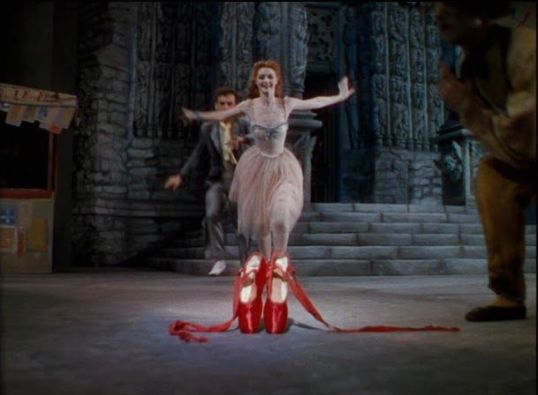
The Red Shoes (1948, dir by Michael Powell and Emeric Pressburger, DP: Jack Cardiff)

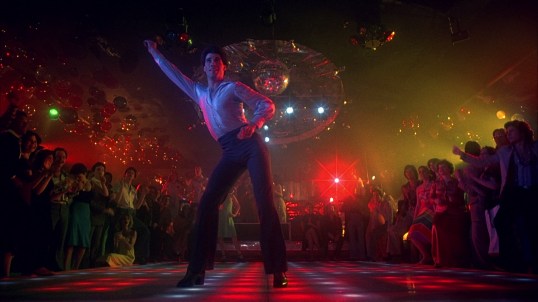
Saturday Night Fever (1977, dir by John Badham, DP: Ralf D. Bode)

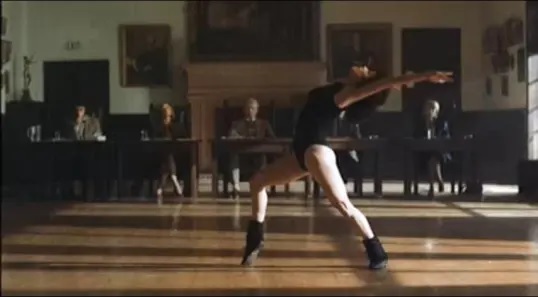
Flashdance (1983, dir by Adrian Lyne, DP: Donald Peterman)

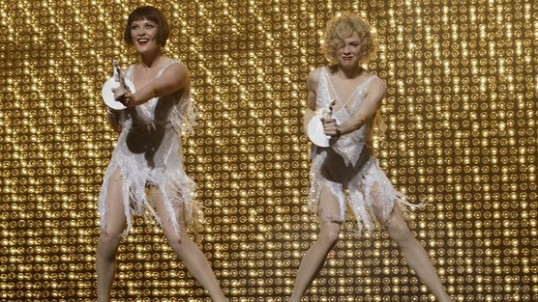
Chicago (2002, dir by Rob Marshall, DP: Dion Beebe)