Guilty Pleasure #85: Attack of the Killer Tomatoes (dir by John DeBello)


The 1978 film, Attack of the Killer Tomatoes, opens with a title card that would make James Nguyen proud.  It informs us that people laughed when they first watched a film called The Birds.  Then, years later, a flock of birds went mad and started attacking people.  No one is laughing now.

As for the rest of the film, it opens with a housewife being menaced by a giant tomato and then it just keeps rolling on from there.  Something is causing normal, everyday tomatoes to go on a rampage and no one can figure out what.  The government is powerless.  (The government’s competence is best exemplified by a scene where a helicopter crashes.  Reportedly, the helicopter crash was not scripted but the film’s director decided to keep the scene anyway.)  The president puts Mason Dixon (David Miller) in charge of defeating the tomatoes.

The film is one gag and one song after another.  Mason has a group of eccentric people working for him, including a superstar gymnast and a man who is always dragging a parachute behind him.  The streets are soon running red with tomato juice while clueless teenagers continue to listen to absolutely terrible song called Puberty Love….

In the past, I’ve struggled to define how a pleasure can be guilty but I think Attack of the Killer Tomatoes is actually one of the rare films that truly can live up to the label.  It’s a pleasure because it’s just so silly and cheerfully stupid that it’s hard not to smile at it.  It’s guilty because, premise aide, the film itself is never really as funny as you want it to be.  Comedy — even when its something as silly as this film — is all about timing and Attack of the Killer Tomatoes never nails the timing of its gags.  Instead, it plays out like a stoned daydream, amusing to talk about but a bit boring to actually witness.

That said, the film deserves some sort of award for its title and also for going on to inspire not only a few sequels but also a cartoon series.  Producer Stephen Peace went on to have a successful career in California politics.  Good for him.

Previous Guilty Pleasures

  1. Half-Baked
  2. Save The Last Dance
  3. Every Rose Has Its Thorns
  4. The Jeremy Kyle Show
  5. Invasion USA
  6. The Golden Child
  7. Final Destination 2
  8. Paparazzi
  9. The Principal
  10. The Substitute
  11. Terror In The Family
  12. Pandorum
  13. Lambada
  14. Fear
  15. Cocktail
  16. Keep Off The Grass
  17. Girls, Girls, Girls
  18. Class
  19. Tart
  20. King Kong vs. Godzilla
  21. Hawk the Slayer
  22. Battle Beyond the Stars
  23. Meridian
  24. Walk of Shame
  25. From Justin To Kelly
  26. Project Greenlight
  27. Sex Decoy: Love Stings
  28. Swimfan
  29. On the Line
  30. Wolfen
  31. Hail Caesar!
  32. It’s So Cold In The D
  33. In the Mix
  34. Healed By Grace
  35. Valley of the Dolls
  36. The Legend of Billie Jean
  37. Death Wish
  38. Shipping Wars
  39. Ghost Whisperer
  40. Parking Wars
  41. The Dead Are After Me
  42. Harper’s Island
  43. The Resurrection of Gavin Stone
  44. Paranormal State
  45. Utopia
  46. Bar Rescue
  47. The Powers of Matthew Star
  48. Spiker
  49. Heavenly Bodies
  50. Maid in Manhattan
  51. Rage and Honor
  52. Saved By The Bell 3. 21 “No Hope With Dope”
  53. Happy Gilmore
  54. Solarbabies
  55. The Dawn of Correction
  56. Once You Understand
  57. The Voyeurs 
  58. Robot Jox
  59. Teen Wolf
  60. The Running Man
  61. Double Dragon
  62. Backtrack
  63. Julie and Jack
  64. Karate Warrior
  65. Invaders From Mars
  66. Cloverfield
  67. Aerobicide 
  68. Blood Harvest
  69. Shocking Dark
  70. Face The Truth
  71. Submerged
  72. The Canyons
  73. Days of Thunder
  74. Van Helsing
  75. The Night Comes for Us
  76. Code of Silence
  77. Captain Ron
  78. Armageddon
  79. Kate’s Secret
  80. Point Break
  81. The Replacements
  82. The Shadow
  83. Meteor
  84. Last Action Hero

October Positivity: Miles Between Us (dir by Andrew Hunt)


2017’s Miles Between Us is the story of a father and a daughter on a road trip.

Luke Duaer (Dariush Moslemi) is a hotshot Hollywood producer, the type who drives around Los Angeles in a nice car and who puts together the type of deals that lead to Hollywood blockbusters.  Luke is really intent on getting film star Chace Creed (Josten Rositas) to agree to being in his next movie but he can’t even get Chace’s people to return his calls.  Luke has a lot to deal with but that’s all going to have to be put on hold because his teenage daughter, Gabby (Anna Stranz) is about to start college on the other side of the country.

Luke and Gabby don’t have much of a relationship.  Since divorcing her mother, Luke has barely been in Gabby’s life.  In fact, Luke’s girlfriend is shocked to discover that Luke even has a daughter.  The road trip is a chance for some father-daughter bonding.  It starts out uneasily.  Luke doesn’t know how to talk to his daughter and finds it strange that she’s enrolled at a small Christian college in North Carolina.  When she asks him to stop at a church so she can worship on Sunday, Luke sits outside in the car while she does so.  Gabby has a lot of understandable resentment towards Luke.  He hasn’t been a great father.  That’s not something that’s easy to forgive, as much as one might try and want to do so.

There’s a lot that I could relate to in this film.  My Dad and I had our difficulties, especially after he divorced my mom.  For years, we barely talked.  He didn’t know how to communicate with me and I was so angry that I wasn’t going to open up and give him any help.  And yet, though I may not have always realized it, I never stopped loving my father.  No matter how many fights we had or how many words were exchanged in anger, I never stopped thinking that, someday, we would work it all out.  I’m happy to say that we did.  My Dad passed away last year.  He was in hospice care and in a coma during the final few days of his life but I believe he could still hear me when I spoke to him and I pray he heard me when I said that I was proud to be his daughter.  That said, I will always regret the years that we didn’t speak.  That was wasted time that I will never get back.

As you can probably guess, Miles Between Us feels like a film that was specifically engineered to get an emotional response from me and it did.  Inevitably, Luke and Gabby end up on the set of Chace Creed’s latest film.  (Gabby’s a fan.)  Chace asks Gabby for a date and, to the surprise of no one watching, he turns out to be a spoiled jerk.  Luke fights for his daughter, as any good father should.  It’s a bit melodramatic but I still smiled.

Miles Between Us is a film that got to me.  Now, you can probably argue that it got to me because of my own circumstances but that’s true of most films and most people.  Miles Between Us made me think about my Dad and how thanksful I am that we finally forgave each other.

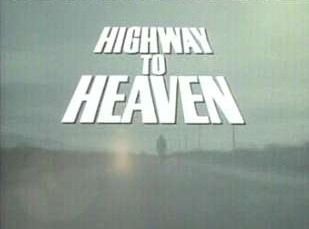
Late Night Retro Television Review: Highway to Heaven 4.16 “Back to Oakland”


Welcome to Late Night Retro Television Reviews, a feature where we review some of our favorite and least favorite shows of the past!  On Thursdays, I will be reviewing Highway to Heaven, which aired on NBC from 1984 to 1989.  The entire show is currently streaming on Tubi and several other services!

This week, Mark rejoins the police force and discovers that things have changed since he last wore the blue.

Episode 4.16 “Back to Oakland”

(Dir by Michael Landon, originally aired on February 3rd, 1988)

Jonathan and Mark return to Mark’s old hometown of Oakland, California.  When Mark stops by his old precinct, he discovers that most of the police force is home with “blue flu,” protesting budget cuts.  Mark volunteers to return to active duty for a few days.  He’s paired up with his former partner, Frank Lawler (Kenneth Kimmins).

Mark, however, discovers that things have changed in his absence.  Cops are viewed with suspicion by the people that they are supposed to be serving.  And Frank is an unrepentant racist who expects Mark to have his back no matter what.

Jonathan, meanwhile, gets a job as a security guard at an all-black apartment complex.  “You’re the first white man to ever work here,” he’s told by the landlady (Fran Bennett).  The landlady’s son, Albert (Guy Killum), doesn’t trust white people and resists Jonathan’s attempts to reach out to him.

When Albert is caught shoplifting by Mark and Frank, Frank takes him into a back alley.  Frank removes his handcuffs and dares Albert to take a swing at him.  Mark steps out of the store just in time to see Frank shoot and kill Albert.

“He attacked me!” Frank says.

“I put cuffs on him,” Mark says.

In the end, Mark refuses to cover for Frank.  Jonathan arranges for Albert’s younger brother (Kenny Ford, Jr.) to meet with Frank’s son (Mark Sussman).  The episode ends with the two of them introducing each other.

This episode was Highway to Heaven at its most earnest and heartfelt.  I imagine there are some that would complain that this episode attempts to “both sides” the issue of racism.  Both Albert and Frank are portrayed as being obsessed their hatred of another race.  That said, only one of the two men is portrayed as being in a position to kill the other and potentially get away with it.  The scene of Mark, who has spent the entire series bragging about his time as an Oakland cop, taking a stand and telling the truth about what happened in the alley is surprisingly powerful.  Mark does the right thing and he does it without hesitation.  Is the ending of the episode a bit naive?  Perhaps.  But it’s so sincerely done that it’s hard not to appreciate the show’s intentions.

In other words, this episode was an example of what Highway to Heaven did well.  It’s not subtle but it’s so heartfelt that the viewer can’t help but be moved.

Moments #25: That Doll


This Doll is Going To Kill You

by Erin Nicole

Our mom was a doll collector.  Especially after she got divorced, she would spend her weekends hitting the estate sales and the thrift stores and searching for dolls.  Eventually, she owned over a thousand dolls, many of which were very valuable.

I don’t know if this doll was valuable but I know it used to scare crap out of me whenever I would wake up to get a drink of water in the middle of the night and I would see it sitting in the kitchen.  I think I was 13 when my mom found this doll and, even as she was buying it, I said, “Mom, that doll’s scary!”

No, my mom told me, this doll was beautiful.

Beauty’s in the eye of the beholder.  All I know is that I always gave it the side eye whenever I was in the same room.  I’m not superstitious.  I know the doll wasn’t possessed but sometimes, it’s arms would be in a different position than they were the last time I had seen it and I would wonder why.  Was the doll haunted?  Or was my little sister just playing a trick on me?

A few years ago, I joined my sisters in going through mom’s doll collection.  Mom not only kept the dolls in perfect shape but she also kept detailed records of where she had bought each doll, how old each doll was, and how much they were selling for on Ebay.  When Lisa came across this doll, she announced that we were taking it home with us.

“No, we definitely are not,” I replied.

Lisa nodded and then said she wouldn’t bring the doll into our house.  I made her promise.  I should have noticed she had her hands behind her back when she did.

The next morning, I woke up and I walked into the kitchen and I screamed at the sight of that doll sitting at the kitchen table.

The doll is still in our house.  It sits in one of the dining room chairs and it greets anyone who visits.  As the years have passed, I’ve actually come to appreciate seeing the doll sitting there every day.  It’s a link to my mom.  Now, when I look at the doll, I think about how much my mom loved collecting and how happy she would be that her daughters have continued to take care of her collection.  I collect cameras and baseball memorabilia.  Lisa collects political campaign buttons and books.  My mom collected haunted dolls.  It’s a family tradition.

Previous Moments:

  1. My Dolphin by Case Wright
  2. His Name Was Zac by Lisa Marie Bowman
  3. The Neighborhood, This Morning by Erin Nicole
  4. The Neighborhood, This Afternoon by Erin Nicole
  5. Walking In The Rain by Erin Nicole
  6. The Abandoned RV by Erin Nicole
  7. A Visit To The Cemetery by Erin Nicole
  8. The Woman In The Hallway by Lisa Marie Bowman
  9. Visiting Another Cemetery by Erin Nicole
  10. The Alley Series by Erin Nicole
  11. Exploring The Red House by Erin Nicole
  12. The Halloween That Nearly Wasn’t by Erin Nicole
  13. Watchers and Followers by Erin Nicole
  14. Visitors by Erin Nicole
  15. Fighting by Case Wright
  16. Walking In The Fog by Erin Nicole
  17. A Spider Does What It Can by Erin Nicole
  18. Downtown Richardson, In The Rain by Erin Nicole
  19. Me, our kids, and ONCE UPON A TIME IN HOLLYWOOD! by Bradley Crain
  20. The Statues of SMU by Erin Nicole
  21. Exploring the Back Yard Of An Abandoned House by Erin Nicole
  22. The Ugly Old Swing by Erin Nicole
  23. The Fourth of July In My Town by Erin Nicole
  24. A 4th of July Tradition: Blurry Firework Pictures! by Erin Nicole

Horror On TV: Hammer House Of Horror Episode #1: Witching Time (dir by Don Leaver)


Hammer House of Horror was a British anthology series that ran for 13 episodes in 1980.  As you can tell by the title, the show was produced by Hammer Films.  Each episode dealt with a different type of horror and featured some of the best actors working in British film and television.

The first episode aired on September 13th, 1980.  Lucinda Jessup (Patricia Quinn), a 17th century witch, escapes from a pack of witch hunters by traveling into the future.  Discovering that her former home is now occupied by a film composer (Jon Finch) and his wife (Prunella Gee) and that the marriage is not a happy one, Lucinda puts her mark  on the composer.  Can the man’s unfaithful wife save him from the witch?  The husband isn’t all that sympathetic and I think that many viewers will probably feel that it might be for the best to just let the witch have him but this is still a well-acted and atmospheric episode.  Keep an eye for Ian McCulloch of Zombi 2 fame as the wife’s lover.

This episode also features some brief nudity so don’t watch it at work.


The TSL Horror Grindhouse: Maniac (dir by William Lustig)


 First released in 1980, Maniac stars Joe Spinell as Frank Zito.

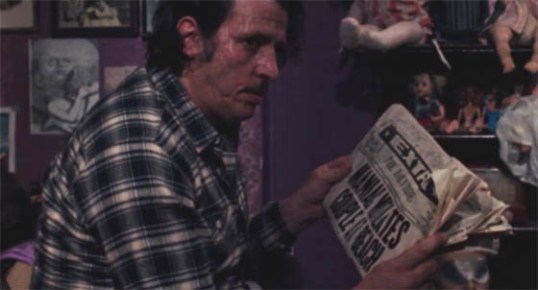
Frank lives in a run-down New York apartment.  The grimy walls are covered with pictures that appear to have been cut out of magazines.  The sheets on the bed look like they haven’t been washed in over a year and, for that matter, the sweaty and greasy Frank Zito looks like he could definitely use a shower as well.  Frank lives alone but he has several blood-stained mannequins.  He talks to the mannequins, cooing about how he just wants them to be nice to him and to stop abusing him.  Just looking at the apartment, one can imagine the nauseating odor of sweet, blood, and who knows what else that seeps out whenever Frank Zito opens his door.

Frank Zito is also a murderer.  The majority of the film is taken up with scenes of him stalking his victims.  One extended sequences features him stalking a nurse through a subway station.  Another scene features a rather nightmarish moment in which Frank, in slow motion, jumps on the hood of a car and shoots a man point blank with a shotgun.  (The man is played by Tom Savini, who was also responsible for the film’s gore effects.)  An innocent model is killed after Frank breaks into her apartment.  “I just want to talk to you,” he says and maybe he actually believes that at first.

Frank has a chance meeting with a glamorous and beautiful photographer named Anna (Caroline Munro, playing a role that was rejected by Daria Nicolodi).  Somewhat improbably, Anna is charmed by the socially awkward Frank and even agrees to go out with him.  She’s touched when Frank shows up at the funeral of the model that he killed.  “She didn’t have many friends,” Anna tells Frank.

Meanwhile, at the cemetery, Frank’s fate awaits….

Maniac is one of the most infamous and controversial grindhouse films ever made.  The film’s atmosphere and the bleak visuals are the equivalent of being forced to look at New York while wearing glasses that somebody found floating in the sewer.  The deaths are drawn out and Savini’s gore effects are disturbingly convincing.  It’s a nearly plotless film about a man who hates women and what makes it scary as opposed to just exploitive is the fact that there are men like Frank Zito out there.  Joe Spinell, who was one of the great character actors of the 70s, appeared in everything from The Godfather to Taxi Driver to Rocky but, in the end, it’s his performance as Frank Zito that he seems to be destined to be most-remembered for.  Spinell is frightening, convincing, and disturbing as Frank Zito.  Spinell was planning on doing a sequel before his untimely death, at the age of 52, in 1989.

(Spinell was a hemophiliac who bled to death after slipping in the shower.  According to Maniac director William Lustig, when the police entered Spinell’s apartment, the first thing they saw was a huge amount of blood.  The second thing they saw was a life-like replica of Spinell’s head sitting on top of the television.  The head was a prop from Maniac and so convincing that the police originally assumed someone had broken into the apartment and decapitated him.  Spinell’s death not only prevented him from playing Frank Zito for a second time but also kept him from reprising his role as Willie Cicci in The Godfather Part III.)

Maniac is not an easy film to defend but, if I had to, I would point out that Frank Zito is portrayed as being an unsympathetic loser throughout the entire film.  He’s not some evil genius like Hannibal Lecter.  He’s not a nonstop quip machine like Freddy Krueger.  He’s not even enigmatic or superhuman like Michael Myers or Jason Voorhees.  Instead, he’s a pathetic loser who can’t even win an argument with the voices in his head.  Horror films all too often glorify or make excuses for serial killers.  (Just look at all of the Ted Bundy films.)  Maniac does not present Frank Zito as being anything other than a pathetic and twisted man and, as such, it’s probably one of the most realistic portrayals of a serial killer to be found on film.  Frank Zito is not meant to be glorified, though I’m sure that went over the heads of more than a few people who saw this film when it first opened.  It’s an ugly film but it’s about an ugly subject.  It’s exploitive but ultimately it’s on the side of Zito’s victims.

The film was an early directorial credit of William Lustig, who worked as a production assistant on Dario Argento’s Inferno in order to see how Argento deal with shooting on location in New York.  It was while working on Inferno that Lustig met Daria Nicolodi and offered her the part of Anna in Maniac.  (Anna’s last name is D’Antoni, a clear nod to Nicolodi’s Italian roots.)  Nicolodi was disgusted by the script and turned it down.  (Caroline Munro accepted the role and was reunited with her Starcrash co-star, Joe Spinnell.  Interestingly enough, even after all of the controversy created by Maniac, Munro and Spinell went on to co-star in The Last Horror Movie.)  Lustig based his serial killer on David “Son of Sam” Berkowitz and named him after director Joe Zito, who would go on to direct Friday the 13th — The Final Chapter.

For all the controversy that has dogged Maniac over the years, it’s easy to forget that the film itself is surprisingly well-directed and acted.  Caroline Munro bring some much needed class to the proceedings, even if the script requires her character to make some truly dumb decisions.  And Joe Spinell was simply horrifying as Frank Zito.  It’s not a pleasant film and if you ever find yourself in a home where the owner has a Maniac poster on the wall, I would suggest leaving immediately.  It is, however, a landmark of grindhouse filmmaking.

(Be sure to read Arleigh’s thoughts on Maniac here!)

October Hacks: Tourist Trap (dir by David Schmoeller)


1979’s Tourist Trap opens in the same way that many slasher films have opened.  A group of friends — young, attractive, and not particularly bright — are driving through a secluded, rural area when they have car trouble.

Now, I have to say that, if I was driving through a rural secluded area or even if I was just a passenger in the vehicle, I would totally freak out if the car broke down.  I mean, seriously, you’re in the middle of nowhere.  You have no idea who or what might be hiding behind those trees.  Even if you don’t get attacked by a bunch of inbred hillbilly cousins, you might get eaten by a bear or, even worse, you might get mauled by a deer and end up with Lyme Disease.  Or you might just end up with a bunch of flies buzzing around your face, which is really even worse than getting attacked by a wild animal.

(Pro-tip: One way to deal with flies is to combine the open flame of a lighter with a can of hairspray.)

I’ve seen enough slasher films to know that bad things happen when you get lost in the woods.  However, up until everything started getting all self-referential in the 1990s, old school slasher films were infamous for featuring characters who had apparently never seen a slasher film or really any other type of movie before.

Your car broke down in the woods?  One member of your party has already disappeared while looking for a gas station?  You have no way of letting anyone know where you are?  Sure, why not go skinny dipping?  For that matter, why not check out Slausen’s Lost Oasis, a run-down shack that is the home of a lot of wax figures and which is owned by the shotgun-toting Mr. Slausen (Chuck Connors).  Mr. Slausen is pretty bitter about the new freeway.  It took away all of his business.

Of course, it turns out that there’s more to this tourist trap than meets the eyes.  For one thing, the mannequins often seem to randomly come to life and murder anyone who spends too much time alone with them.  Secondly, things in the tourist trap often move on their own, as if someone has psychic powers.  And then there the enigmatic man who wears a wax mask and likes to take people hostage before transforming them into wax figures….

Tourist Trap has a totally ludicrous plot but Slausen’s Oasis is such a creepy location and Chuck Connors plays his role with such unnerving intensity that it doesn’t matter that things don’t always make sense.  At its best, Tourist Trap plays out like a filmed nightmare, one in which the rules of normal physics often don’t seem to apply.  The victims are interchangeable (though I did like Tanya Roberts’s energetic performance as Becky) but the kills are imaginative and memorable gruesome.  Researching the film, I was surprised to discover that Tourist Trap was given a PG-rating, despite the skinny dipping and the blood and all of the terrifying wax figures.  Don’t let that rating fool you.  This is genuinely scary slasher film and one that everyone should see before going on an impulsive road trip to the middle of nowhere.

On-Stage With The Lens: Medea (dir by Mark Cullingham)


In 431 BC, the Greek playwright Euripides premiered his latest play, Medea.  The story of a woman scorned who deals with her anger by murdering her ex-husband’s soon-to-be wife, future father-in-law, and finally her own children, Medea has lived on as one of Euripides’s most-performed plays.  Three actresses have won Tony awards for playing Medea on Broadway, setting the record for the most Tonys won for playing the same role.

Medea is a play that is open to a lot of interpretations.  Quite a few stagings of the play present Medea as being a sympathetic character, a victim of a misogynistic culture who was driven to extremes by the men around her.  I can see that argument and it is true that the play does emphasize that all the men in Medea’s life treat her terribly.  Creon plots to send Medea into exile so that his daughter can marry her husband.  Medea’s smarmy husband, Jason, says that he has no choice but to marry a princess because Medea is only a “barbarian,” fit to be his mistress but not his wife.  In many ways, Medea is a sympathetic character.  But, for me, all of that sympathy goes out the window as soon as she murders her children.  The fact that, in most stage versions of the play, the Gods then help her to escape makes her even less sympathetic in my eyes.  (Needless to say, it certainly doesn’t do much for the reputation of the Greek Gods.  Then again, one gets the feeling that even the ancient Gods didn’t particularly like their Gods.)

In 1983, Zoe Caldwell won a Tony for playing Medea.  (Interestingly enough, in this production, the Nurse was played by Judith Anderson, who also won a Tony for playing Medea, in 1947.)  A performance at the Kennedy Center was filmed for PBS.  The production, with its minimalist sets and atmosphere of growing dread, captures the nightmarish intensity of the story.  Zoe Caldwell gives a riveting performance as Medea, alternating between wild-eyed madness and subtle manipulation.

As the most horrific of the Greek plays, Medea is a production that just feels right for the Halloween season.  Here is Zoe Caldwell in 1983’s Medea.

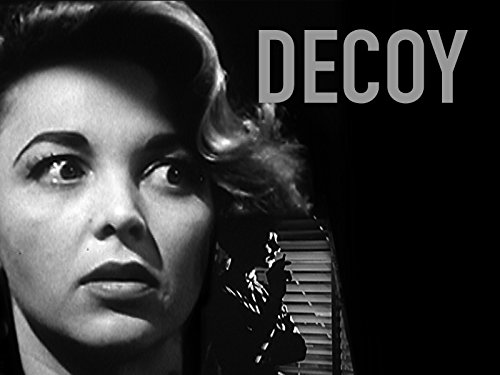
Retro Television Review: Decoy 1.6 “The Savage Payoff”


Welcome to Retro Television Reviews, a feature where we review some of our favorite and least favorite shows of the past!  On Thursdays, I will be reviewing Decoy, which aired in Syndication in 1957 and 1958.  The show can be viewed on Tubi!

This week, Casey gets involved in the shady world of college athletics.

Episode 1.6 “The Savage Payoff”

(Dir by Teddy Sills, originally aired on November 18th, 1957)

When a college basketball player is killed in a car accident, the police discover evidence that he may have been throwing games for the mob.  Lt. Franklin (Bill Zuckert) suspects that the dead player’s best friend and roommate, Dave Carter (Don Hastings), might be taking money as well.  Disguising herself as the dead player’s sister, Casey introduces herself to Dave and befriends him in an attempt to discover the truth.  It turns out that the gangsters have been paying Dave off but, at the last minute, Dave decides not to throw the game and instead leads the team to victory.

This episode bothered me a little.  When the episode begins, there is no real evidence that Dave has been taking money from the mob.  Instead, Lt. Franklin just assumes that Dave is guilty and, with only his hunch to go on, he assigns Casey to befriend Dave and try to prove his guilt.  Obviously, there are times when the police have to go undercover but it was still hard not to feel that the police should have at least had some sort of solid evidence before upending Dave’s life.  The fact that Dave was both mourning his friend and was obviously attracted to Casey just made the whole thing feel all the more icky.  Indeed, a lot of Casey’s action in this episode seem like they would be considered to be entrapment.

Probably the most interesting thing about this episode was that Dave was played by a young Don Hastings.  If you’re like me and you grew up with an aunt who loved As The World Turns, you’ll immediately recognize him as Dr. Bob Hughes.  Hastings played Dr. Hughes for a record-setting 50 years and even spoke the show’s final lines when he said, “Good night” on September 17th, 2010.  Hastings gave a convincing performance as Dave.  I was happy to see him take a stand and refuse to fix the game.  I was also happy that Casey didn’t have to take him to jail.  That would have been depressing.

Speaking of jail, there’s where Casey’s going next week!  We’ll see what happens!

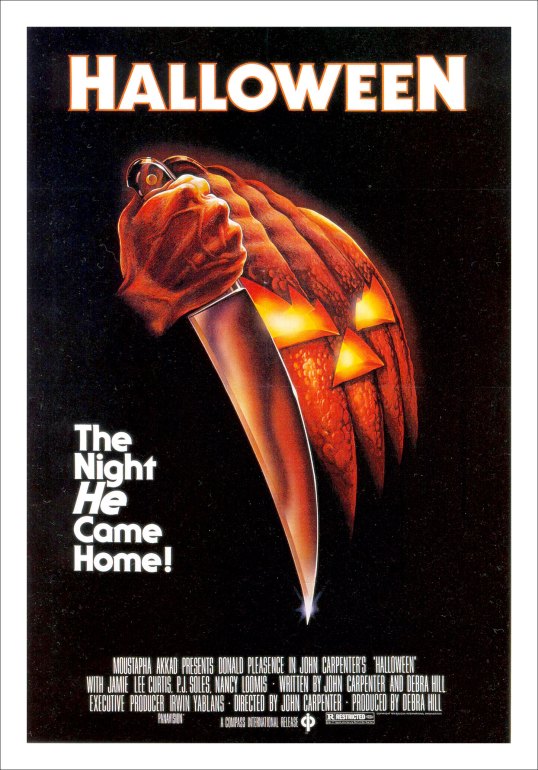
Horror Scenes That I Love: Dr. Loomis Explains Michael Myers in the original Halloween


We’ve talked a bit about Donald Pleasence today.  Pleasence is one of my favorite actors, an intense performer with an eccentric screen presence who always gave it his all, even in films that didn’t always seem like they deserved the effort.  Pleasence was a character actor at heart and he appeared in a wide variety of films.  He’s absolutely heart-breaking in The Great Escape, for instance.  However, it seems that Pleasence is destined to be best-remembered for his horror roles.  For many, he will always be Dr. Sam Loomis, the oracle of doom from the original Halloween films.

In this scene from the original Halloween, Dr. Loomis (Donald Pleasence) attempts, as best he can, to explain the unexplainable.  I’ve always felt that Pleasence’s performance in the first film is extremely underrated.  People always tend to concentrate on the scenes where he gets angry and yells or the later films where an obviously fragile Pleasence was clearly doing the best he could with poorly written material.  But, to me, the heart of Pleasence’s performance (and the film itself) is to be found in this beautifully delivered and haunting monologue.

In this scene, we see that Dr. Loomis is himself a victim of Michael Myers.  Spending the last fifteen years with Michael has left Loomis shaken and obviously doubting everything that he once believed.  Whenever I watch both Halloween and its sequel, I always feel very bad for Dr. Loomis.  Not only did he have to spend 15 years with a soulless psychopath but, once Michael escapes, he has to deal with everyone blaming him for it.  Dr. Loomis was literally the only person who saw Michael for what he was.

Incidentally, Donald Pleasence nearly turned down the role of Sam Loomis.  He didn’t think there was much to the character.  (The role had already been offered to Christopher Lee and Peter Cushing, neither of whom were interested.)  It was his daughter, Angela Pleasence, who persuaded Donald to take the role.  At that year’s Cannes Film Festival, Angela saw John Carpenter’s Assault on Precinct 13 and she assured her father that Carpenter was a talented filmmaker.  Taking his daughter’s advice, Donald Pleasence accepted the role and, by all accounts, was a complete gentleman and a professional on set.  After making horror history as Dr. Sam Loomis, Pleasence would go on to appear in two more Carpenter films, Escape from New York and Prince of Darkness.