Shattered Politics #54: Dave (dir by Ivan Reitman)


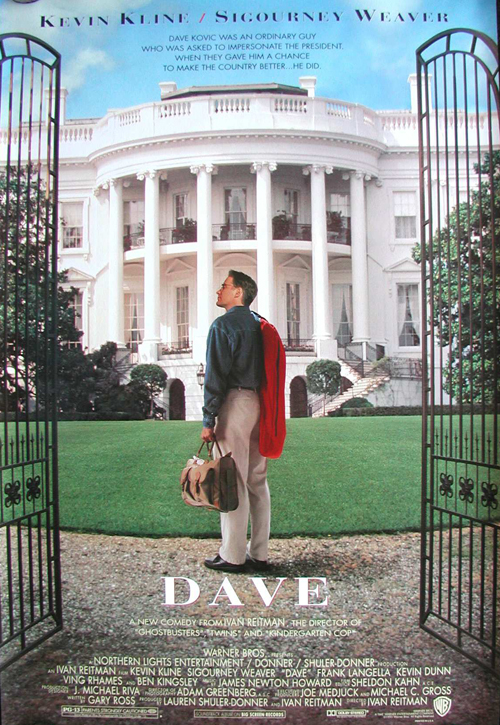
Dave Poster

Way back in 1919, the terrible U.S. President and tyrannical dictator Woodrow Wilson* suffered a stroke that left him semi-paralyzed and unable to perform his duties.  By all standards, Wilson should have been removed from office, if just temporarily.  However, in those pre-Internet days, it was a lot easier to hide the truth about Wilson’s physical and mental condition.  While Wilson spent his days locked away in his bedroom, his wife Edith would forge his signature on bills.  Whenever anyone asked for the President’s opinion, Edith would give her opinion and then assure everyone that it was actually the President’s.

(And really, as long as you were promoting eugenics and white supremacy, it probably was not difficult to imitate Wilson’s opinions.)

Of course, back then, people were used to the idea of never seeing their President in public.  Hence, it was very easy for Wilson to remain sequestered in the White House.  If a similar situation happened today, it’s doubtful that anyone could successfully keep the public from finding out.  When we don’t see the President every day, we wonder why.  How, in this day and age, could a Presidential incapacitation be covered up?

The 1993 film Dave offers up one possible solution.

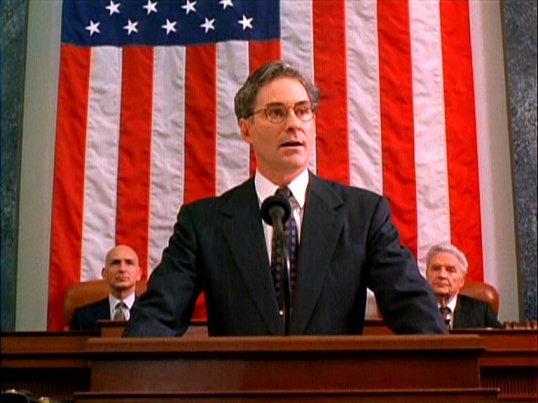
Dave is the story of two men who happen to look exactly like Kevin Kline.  One of them is named Bill Mitchell and he’s the arrogant and corrupt President of the United States.  The other is named Dave Kovic.  He’s a nice guy who runs a temp agency and who has a nice side job going as a professional Bill Mitchell imitator.

So, when Bill has a stroke while having sex with a white house staffer (Laura Linney), it only makes sense to recruit Dave Kovic to pretend to the President.  White House Chief of Staff Bob Alexander (played by Frank Langella, so you know he’s evil) tells Dave that Vice President Nance (Ben Kingsley) is insane and corrupt.  Dave agrees to imitate the President.  Of course, Alexander’s main plan is to convince Nance to resign and then get Dave to appoint him as Vice President.  Once Alexander is Vice President, it will be announced that Mitchell has had another stroke and then Alexander will move into the Oval Office.

However, what Alexander did not take into account was just how much Dave would enjoy being President.  From the moment that he joyfully shouts, “God Bless, America!,” Dave’s enthusiasm starts to win the public over.  Suddenly, people are realizing that President Mitchell isn’t such a bad President after all.  Even more importantly, Dave wins over the first lady (Sigourney Weaver) who, previously, had little use for her philandering husband.  When Alexander claims that there’s no money in the budget to continue funding a program for the homeless, Dave calls in his best friend, an accountant named Murray (Charles Grodin), and has him rewrite the budget…

And you know what?

Dave is one of those films that tempts me to be all cynical and snarky but, ultimately, the film itself is so likable and earnest that I can even accept the idea that one accountant could balance the budget through common sense alone.  I’ll even accept the idea that Dave could come up with a program that would guarantee everyone employment without, at the same time, bankrupting the country.  Kevin Kline is so enthusiastic in the lead role and the film itself is so good-natured that it almost feels wrong to criticize it for being totally implausible.

Sometimes, you just have to appreciate a film for being likable.
Dave—–

* For those of you keeping count, that’s the third time in two weeks that I’ve referred to Woodrow Wilson as being  a dictator.  Before anyone points out that some historians rank Wilson as being in the top ten of President, allow me to say that I don’t care.  I DO WHAT I WANT!
Embracing the Melodrama #51: Mystic River (dir by Clint Eastwood)


mystic-river

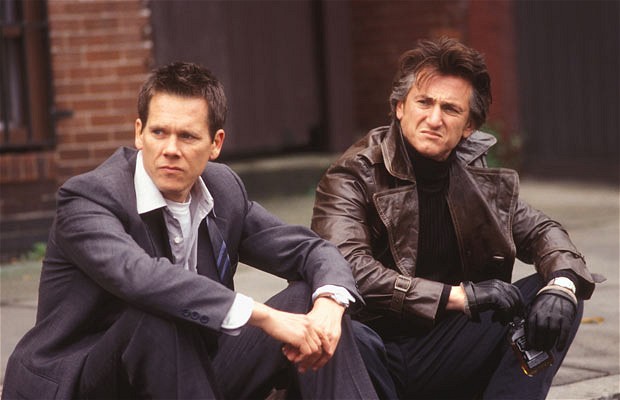
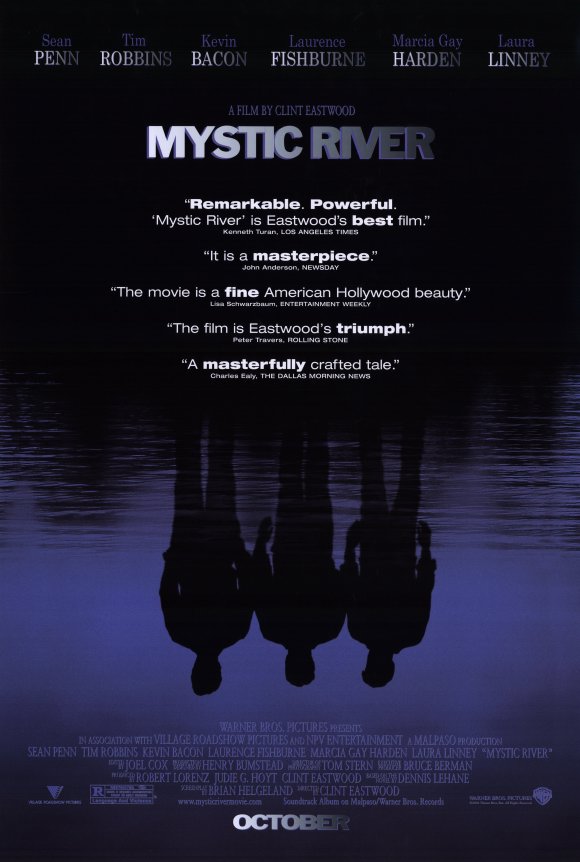
Much like In The Bedroom, 2003’s Mystic River is a film that deals with guilt, murder, and vengeance in New England.  Whereas In The Bedroom deals with the guilt of just four people, Mystic River deals with the guilt of an entire neighborhood.

Mystic River opens in Boston in 1975.  Three young boys are writing their names in wet cement when a car pulls up beside them.  An angry-looking man (played by the always intimidating John Doman) gets out of the car and announces that he’s a police officer and that the three boys are under arrest.  He orders them to get in the car.  Of the three boys, Jimmy and Sean refuse but meek Dave gets into the car, where he’s greeted by a leering old man.  Jimmy and Sean watch as the car drives away with their friend trapped in the back seat.  Dave is held prisoner and abused by the two men for four days until he finally manages to escape.

Twenty-five years later, the three boys have grown up but are still haunted by what happened.  Sean is now a detective with the Massachusetts State Police.  Jimmy is an ex-con who now owns a local store and who, despite being married to Annabeth (Laura Linney), the daughter of a local gangster, is trying to lead a law-abiding life.  As for Dave (Tim Robbins),  he is married to Celeste (Marcia Gay Harden) and manages to hold down a job but he’s also the neighborhood pariah.

Mystic River 1

When Jimmy’s daughter Katie (Emmy Rossum) is brutally murdered, Sean and his partner Whitey Powers (Laurence Fishburne) are assigned to the case.  The distraught Jimmy, however, starts to investigate the murder himself and, after talking to Celeste, he discovers that, on the night Katie died, Dave came home with blood on his clothes and claiming that he had a fight with a mugger.  That’s all the evidence that Jimmy and his friends need to believe that Dave is the murderer…

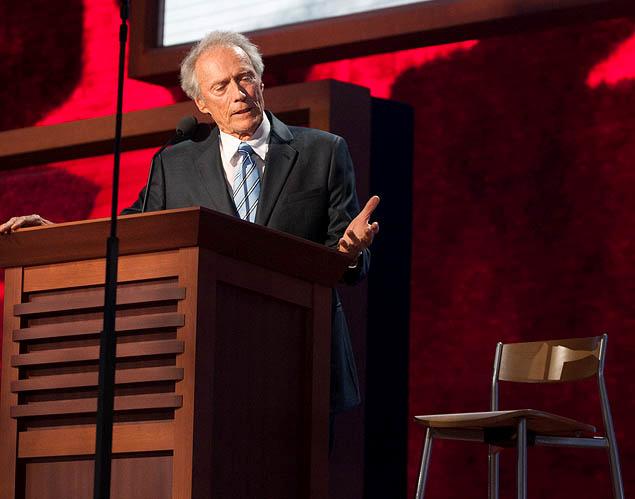
I have a lot of friends who will probably never forgive Clint Eastwood for not only endorsing Mitt Romney in 2012 but for also giving the “empty chair” speech at the Republican Convention.  From the way that a lot of them reacted, you would think that Eastwood had filmed himself drowning puppies as opposed to simply expressing his own cantankerous opinions about current events.  (Honestly, do you know any 82 year-olds who weren’t disgruntled in 2012?)  Myself, I thought the empty chair speech was an act of brilliant performance art, one that not only highlighted the fact that most politicians really are just empty chairs but also exposed just how humorless most political activists truly are.  (Admit it — if John Fugelsang had done that same routine at the 2004 Democratic convention and referred to the empty chair as being President Bush, most of the people who went on and on about how terrible it was that Eastwood was being disrespectful to the President would still be using it to create Facebook memes.)

Eastwood

Unfortunately, I sometimes find myself wondering why Clint Eastwood the director sometimes seem to struggle to be as interesting, innovative, and thought-provoking as the empty chair speech.  It sometimes seems that for every Eastwood film that works, there’s a handful films like Hereafter, Changeling, and Jersey Boys.  These aren’t bad films as much as they’re just uninspired films.  (Well, Hereafter is pretty bad…)  Ultimately, Eastwood is more of a storyteller than a Martin Scorsese-style innovator.  If Eastwood has a good story to tell, the film will work.  If he has a weak story — well, then the film will be weak.

Fortunately, with Mystic River, Eastwood has a good story and the end result is one of the best films of his uneven directorial career.  Eastwood uses a fairly standard murder mystery to explore themes of guilt, redemption, and paranoia.  Jimmy may be looking for revenge and Sean may be doing his job but ultimately, both of them are trying to absolve themselves from the consequences of their childhood decisions.  If Dave is guilty, then Jimmy will justified in having let him get in that car.  If Dave is innocent, Sean can finally step up and save him.

And complicating all of this is the Neighborhood, which is as much a character in this film as Jimmy, Dave, and Sean.  The Neighborhood will never allow anyone to forget or live down the past.  When, towards the end of the film, Jimmy is declared to be the “king of the neighborhood” by Annabeth, there’s little doubt that she’s right.  The question is whether Jimmy’s kingdom is one worth ruling.

Mystic River

By the way, here are the Satellite Award Nominations…


Moonrise

In even more Oscar season news, the International Press Association announced their nominations for the Satellite Awards yesterday.  Les Miserables led with 10 nominations.

If you’re like most people who don’t obsess over film awards then chances are that you’ve never heard of the International Press Association.  And that’s okay.  The main thing to know is that it’s Oscar season and that means that everyone’s giving out an award.  The Satellites are a lot like the Golden Globes, just with less credibility.  As far as serving as a precursor is concerned, a Satellite win can help a film maintain momentum but a loss doesn’t really hurt.

That said, for the past few years, I’ve always ended up agreeing more with the Satellite Nominations than with either the Oscars or the Golden Globes.  For instance, back in 2010, the Satellites nominated Noomi Rapace for her performance in the original (and the best) version of The Girl With The Dragon Tattoo.

BEST PICTURE
“Argo”
“Beasts Of The Southern Wild”
“Life Of Pi”
“Lincoln”
“Les Misérables”
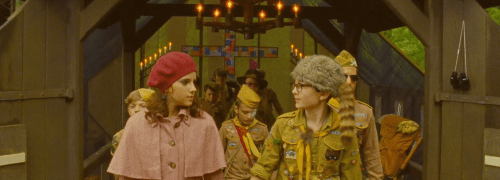
“Moonrise Kingdom”
“The Sessions”
“Silver Linings Playbook”
“Skyfall”
“Zero Dark Thirty”

BEST DIRECTOR
Ben Affleck, “Argo”
Steven Spielberg, “Lincoln”
Kim Ki-duk, “Pieta“
Ben Lewin, “The Sessions”
David O. Russell, “Silver Linings Playbook”
Kathryn Bigelow, “Zero Dark Thirty”

BEST ACTRESS
Laura Birn, “Purge”
Jessica Chastain, “Zero Dark Thirty”
Emilie Dequenne, “Our Children”
Keira Knightley, “Anna Karenina”
Jennifer Lawrence, “Silver Linings Playbook”
Laura Linney, “Hyde Park On Hudson”
Emmanuelle Riva, “Amour”

BEST ACTOR
Bradley Cooper, “Silver Linings Playbook”
Daniel Day-Lewis, “Lincoln”
John Hawkes, “The Sessions”
Hugh Jackman, “Les Misérables”
Joaquin Phoenix, “The Master”
Omar Sy, “The Intouchables”
Denzel Washington, “Flight”

BEST SUPPORTING ACTRESS
Amy Adams, “The Master”
Samantha Barks, “Les Miserables“
Judi Dench, “Skyfall”
Helene Florent, “Café De Flore”
Anne Hathaway, “Les Misérables”
Helen Hunt, “The Sessions”

BEST SUPPORTING ACTOR
Javier Bardem, “Skyfall”
Robert De Niro, “Silver Linings Playbook”
John Goodman, “Flight”
Philip Seymour Hoffman, “The Master”
Tommy Lee Jones, “Lincoln”
Eddie Redmayne, “Les Misérables”

BEST ORIGINAL SCREENPLAY
John Gatins, “Flight”
Eric Toledano and Olivier Nakache, “The Intouchables”
Paul Thomas Anderson, “The Master”
Roman Coppola and Wes Anderson, “Moonrise Kingdom”
Kim Ki-duk, “Pieta”
Mark Boal, “Zero Dark Thirty”

BEST ADAPTED SCREENPLAY
Tom Stoppard, “Anna Karenina”
Chris Terrio, “Argo”
David Magee, “Life Of Pi”
Tony Kushner, “Lincoln”
Ben Lewin, “The Sessions”
David O. Russell, “Silver Linings Playbook”

BEST FOREIGN LANGUAGE FILM
“Amour” (Austria)
“Beyond The Hills” (Romania)
“Caesar Must Die” (Italy)
“The Intouchables” (France)
“Kon-Tiki” (Norway)
“Our Children” (Belgium)
“Pieta” (South Korea)
“A Royal Affair” (Denmark)
“War Witch” (Canada)

BEST ANIMATED OR MIXED-MEDIA FILM
“Brave”
“Frankenweenie”
“Ice Age 4: Continental Drift”
“Madagascar 3: Europe’s Most Wanted”
“Paranorman”
“Rise Of The Guardians”
“Wreck-It Ralph”

BEST DOCUMENTARY FEATURE
“Ai Weiwei: Never Sorry”
“The Central Park Five”
“Chasing Ice”
“The Gatekeepers”
“Marina Abramovic: The Artist Is Present”
“The Pruitt-Igoe Myth”
“Searching For Sugar Man”
“West Of Memphis”

BEST CINEMATOGRAPHY
Seamus McGarvey, “Anna Karenina”
Ben Richardson, “Beasts Of The Southern Wild”
Claudio Miranda, “Life Of Pi”
Janusz Kaminski, “Lincoln”
Mihai Malaimare, Jr., “The Master”
Roger Deakins, “Skyfall”

BEST PRODUCTION DESIGN
Sarah Greenwood, Niall Moroney, Thomas Brown, Nick Gottschalk and Tom Still, “Anna Karenina”
Nathan Crowley, Kevin Kavanaugh, James Hambidge and Naaman Marshall, “The Dark Knight Rises”
Rick Carter, Curt Beech, David Crank and Leslie McDonald, “Lincoln”
David Crank and Jack Fisk, “The Master”
Eve Stewart and Anna Lynch-Robinson, “Les Misérables”
Niels Sejer, “A Royal Affair”

BEST COSTUME DESIGN
Jacqueline Durran, “Anna Karenina”
Kym Barrett and Pierre-Yves Gayraud, “Cloud Atlas”
Christian Gasc and Valerie Ranchoux, “Farewell, My Queen”
Paco Delgado, “Les Misérables”
Manon Rasmussen, “A Royal Affair”
Colleen Atwood, “Snow White And The Huntsman”

BEST FILM EDITING
Alexander Berner, “Cloud Atlas”
Jeremiah O’Driscoll, “Flight”
Chris Dickens, “Les Misérables”
Lisa Bromwell, “The Sessions”
Jay Cassidy, “Silver Linings Playbook”
Dylan Tichenor, “Zero Dark Thirty”

BEST ORIGINAL SCORE
Dario Marianelli, “Anna Karenina”
Alexandre Desplat, “Argo”
Dan Romer and Benh Zeitlin, “Beasts Of The Southern Wild”
John Williams, “Lincoln”
Jonny Greenwood, “The Master”
Thomas Newman, “Skyfall”

BEST ORIGINAL SONG
“Learn Me Right,” “Brave”
“Fire In The Blood/Snake Song” “Lawless”
“Love Always Comes As A Surprise,” “Madagascar 3: Europe’s Most Wanted”
“Suddenly,” “Les Misérables”
“Still Alive,” “Paul Williams: Still Alive”
“Skyfall,” “Skyfall”

BEST SOUND (EDITING AND MIXING)
“Flight”
“Les Misérables”
“Snow White And The Huntsman”
“Kon-Tiki”
“Life Of Pi”
“Prometheus”

BEST VISUAL EFFECTS
“Cloud Atlas”
“The Dark Knight Rises”
“Flight”
“Life Of Pi”
“Prometheus”
“Skyfall”