Top Of the World (1997, directed by Sidney J. Furie)


Ray Mercer (Peter Weller) has just gotten out of prison and already, he and his wife Rebecca (Tia Carrere) are heading to Nevada for a quicky divorce.  However, a stopover in Las Vegas leads to Ray having a run of luck in a casino owned by Charles Atlas (Dennis Hopper).  Ray and Rebecca start to reconsider their divorce but their reconciliation is temporarily put on hold when the casino is robbed by a bunch of thieves led by Martin Kove.  Because of Ray’s criminal history, the police (led by David Alan Grier) consider Ray to be the number one suspect.  Ray and Rebecca try to escape from the casino and clear Ray’s name, leading to a night on nonstop action and an explosive climax at the Hoover dam.

One thing that you can say about Top of the World is that it certainly isn’t boring.  The action starts earlier and lasts nonstop until the end of the movie.  No sooner has Ray escaped from one scrape than he finds himself in another.  Despite the low-budget, the action scenes are often spectacularly staged and exciting to watch.  Another thing that you can say about Top of the World is that, for a B-movie, it certainly has a packed cast.  Along with Weller, Carrere, Hopper, Grier, and Kove, the movie also finds room for Peter Coyote, Joe Pantoliano, Ed Lauter, Gavan O’Herlihy, Eddie Mekka, Cary-Hiroyuki Tagawa, and even Larry Manetti of Magnum P.I. fame.  This movie paid off a lot of mortgages and probably funded more than a few vacations.

One thing you can’t say about Top of the World is that it makes any sense.  It doesn’t.  There are so many holes in the plot that you could fly a helicopter through them and that’s exactly what this film does.  But with the nonstop action and the entertaining cast, most people won’t mind.  I certainly didn’t!

Retro Television Review: Fantasy Island 5.19 “Face of Love/Image of Celeste”


Welcome to Retro Television Reviews, a feature where we review some of our favorite and least favorite shows of the past!  On Tuesdays, I will be reviewing the original Fantasy Island, which ran on ABC from 1977 to 1984.  Unfortunately, the show has been removed from most streaming sites.  Fortunately, I’ve got nearly every episode on my DVR.

This week …. hey, where’s Tattoo!?

Episode 5.19 “Face of Love/Image of Celeste”

(Dir by Don Chaffey, originally aired on March 20th, 1982)

Once again, as I did with Miami Vice and CHiPs, I am going to save time by doing this review bullet-point style.  It’s the holidays, after all.

  • After two (or was it three) weeks of just Roarke and Tattoo, this episode features only Julie as Roarke’s assistant.  Apparently, Tattoo has been busy helping a guest fulfill a “Cinderella fantasy” but things have gone wrong.  The carriage turned back into a pumpkin.  The horses turned back into mice and are now running all over the Island.  Tattoo is not seen in this episode, which is a shame because the last few episodes (featuring only him and Roarke) really did feel like a throw-back to the first two seasons of the show.
  • It’s been kind of weird during this season, continually hearing that various fantasies are going wrong.  That’s not the Fantasy Island that we all know.  Fantasy Island has previously been portrayed as a place where Roarke would never allow anything to truly go wrong.
  • Julie doesn’t really do anything as Roarke’s assistant in this episode.  Roarke tells her who each guest is and gives her the details of their fantasy but that’s pretty much it.
  • Laura Jensen (Erin Gray) has spent her life with a face that was scarred during a housefire.  She’s grown up to be bitter and angry.  She’s just gotten out of prison and she’s brought to the Island by her parole officer, Ron  (Monte Markham).  Ron’s fantasy is for Laura’s scars to go away so that Laura can let go of her anger and live a norma;l life.
  • Though initially weary, Laura is amazed when Roarke gives her a magical cream that causes her scars to temporarily vanish.  In fact, Laura appears to be ready to get on with her life and accept that she and Ron are in love.  But then Laura’s sleazy ex (Larry Manetti) shows up and tempts her back to her old ways.  Don’t worry.  It all works out in the end and Ron and Laura leave as a couple.  However, I get the feeling that Ron’s going to lose his job as a parole officer.  Falling in love with a parolee and taking a tropical vacation with her seems like something that would go against every rule in the book.
  • The other fantasy was slightly more interesting, if just because it featured Paul Gauguin.  When Celeste Vallon (Joanne Pettet) discovers that Roarke owns a Gauguin portrait of a woman who looks just like her, Celeste requests to go back to the past and be that woman.  Roarke agrees, even though he warns her that she will also have to make a very serious decision, one that could change history.
  • Right away, this fantasy ran into a major stumbling block.  The Gauguin painting looked absolutely nothing like something that Gauguin, one of the great post-impressionists, would have painted.  Instead, it’s a very conventional painting.
  • The second stumbling block is that the legendary and charismatic Gauguin is played by the handsome but mild-mannered Robert Goulet.
  • What Celeste discovers is that she is directly descended from the woman in Gauguin’s painting.  The woman was Gauguin’s mistress and was engaged, against her will, to marry a soldier (Christopher Stone).  If Celeste agrees to remain with Gauguin, then Gauguin will never paint another painting.  If Celeste agrees to return to France, her ancestor will lose the love of her life but Gauguin will continue to paint.
  • Celeste chooses not to change history.  Good for her!  Of course, that’s kind of an easy decision to make when Celeste isn’t the one who is actually going to have to live the rest of her life in Paris, dreaming of returning to Tahiti and Gauguin.
  • I wanted to like this episode more than I did.  The parole officer bringing one of his parolees to the Island felt strange to me and the Gauguin story would have worked if the painter had been anyone other than the Paul Gauguin.  If they had come up with a fictional painter, perhaps Goulet would have seemed more appropriate in the role.  As it was, this episode felt bland and miscast.
  • Herve Villechaize was an accomplished painter so it’s a shame he wasn’t present for the Gauguin story.  It’s previously been established that Tattoo is quite a painter himself so this episode definitely feels like a missed opportunity.

Sudden Death (1977, directed by Eddie Romero)


Ed Neilson (Ken Metcalf) is a business executive who just wants to spend the weekend grilling with his family but then a bunch of gunmen show up and, in a surprisingly violent sequence that even shows children being shot in slow motion, massacre his entire family.

Ed barely survives and begs his old friend, a former CIA agent named Duke Smith (Robert Conrad), to find out who murdered his family.  Duke would rather hang out on the beach with his wife (Aline Samson) and daughter (Nancy Conrad) and he refuses to help Ed.  But then Ed gets blown up in his car and Duke and his former partner (Felton Perry) come out of retirement to get justice.  Duke’s investigation leads to a corrupt businessman (Thayer David), a murderous government official (John Ashley, who also produced), and a ruthless hitman (Don Stroud).

Filmed in The Philippines and directed by Eddie Romero, Sudden Death is a violent and brutal thriller with a twisty the plot that is nearly impossible to follow.  It seems like a lot of killing for no particular reason.  The thing that sets Sudden Death apart from other action films is its willingness to violently kill off anyone, regardless of age, gender, or relative innocence.  The 70s was a decade known for downbeat endings but, even by the standards of that decade, Sudden Death‘s ending is shockingly abrupt and bleak.  In the lead role, Robert Conrad shows off the ruthless intensity that made him the most feared of all of the coaches on Battle of the Network Stars.

Originally, the sidekick role was offered to Jim Kelly.  When Kelly dropped out, the role was given to the far more laid back Felton Perry.  I think if Kelly had stayed with the film, it would probably be a cult classic today.  Instead, it’s an obscurity that reminds us of how bleak even exploitation films were in the 70s.

Did You See The Sun Rise? (1982, directed by Ray Austin)


Ivan (Bo Svenson) is a KGB colonel who, working under the guise of being a diplomat, has set up operations on Hawaii.  During the Vietnam War, Ivan tortured and brainwashed an American POW named TC (Roger E. Mosely), placing a hypnotic suggestion in his brain on just the off-chance that Ivan would need a Manchurian candidate to do some dirty work at some point in the future.  With the help of another former POW, Sebastian Nuzo (James Whitmore, Jr.), Ivan plans to activate TC and then use him to assassinate the visiting prime minister of Japan.  What Ivan hasn’t counted on is that TC has two friends looking out for him, a club owner named Rick (Larry Manetti) and a laid-back, Hawaiian-shirt loving private investigator named Magnum (Tom Selleck).

Did You See The Sun Rise?  Is it a movie or is it just a two-hour episode of the original Magnum P.I.?  I think it’s both because, while it’s definitely an episode of TV series (it was, in fact, the premiere episode of Magnum‘s third season and the fact that it was a special, extra-long episode shows how popular Magnum was back in the 80s), it’s also good enough that it can stand on its own and be viewed and appreciated even by those who have never seen any other episodes of the show.  For the most part, Magnum P.I. was a breezy detective show that mixed comedy and mystery-solving.  Occasionally, though, the show would do a more serious episode and, more of than not, that episode would deal with Magnum, T.C., and Rick’s time in Vietnam.  (At the time it premiered, Magnum was unique in that it was one of the only shows to feature characters who had served in Vietnam without portraying them as being unhinged, unemployable, or potential threats to society.  Magnum and his friends had been effected by their experiences in Vietnam but, unlike someone like Rambo, they were not solely defined by their status as being veterans of what was then America’s least popular war.)  Of those serious shows, Did You See The Sun Rise? is the best example.

There’s a lot to recommend Did You See The Sun Rise?  It’s well-acted by series regulars Selleck, Manetti, Mosely, and John Hillerman.  Bo Svenson plays a great villain and even his Russian accent is more credible than you’d probably expect it to be.  The Vietnam flashbacks are handled well.  The episode has an unexpected twist, one that daringly kills off one of the show’s semi-regular supporting characters.  Even the entire Manchurian candidate plot, even if it is a little more out there than Magnum usually got, is handled well.

And then there’s that final scene.  Did You See The Sun Rise? ends with a freeze frame of Magnum doing something that TV show heroes didn’t normally do in 1982.  You can’t blame him, of course.  It’s a satisfying ending but it still leaves you knowing that nothing is ever going to be same for any of these characters ever again.  In that final scene, Did You See The Sun Rise? takes things further than most shows would have the guts to do.  The ending may not seem as shocking today but you have to remember that this episode aired long before networks like HBO regularly challenged the assumptions of what a show’s main character could or could not do on television.

The original Magnum P.I., including Did You See The Sun Rise?, is available for free on Amazon Prime.


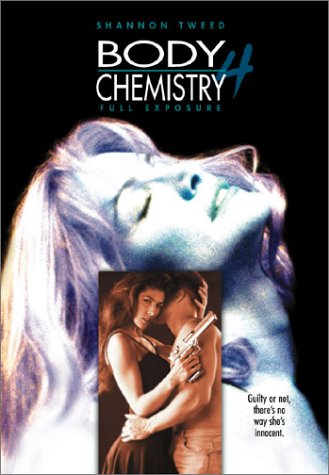
A Movie A Day #49: Body Chemistry 4: Full Exposure (1995, directed by Jim Wynorski)


51tj679zxfl

After five years of kinky sex and murder, the Body Chemistry franchise ended with Body Chemistry 4: Full Exposure.

Like the third film, Full Exposure was directed by Jim Wynorski and produced by Andrew Stevens.  Shannon Tweed stepped into the role of murderous Dr. Claire Archer, replacing Shari Shattuck.  Shannon Tweed was always one of the most talented of the actresses who regularly appeared on what was then nicknamed Skinemax.  It wasn’t just that Tweed always seemed to being give it her all in her films’ frequent sex scenes.  Tweed also had the look and style of an old-fashioned femme fatale.  It was easy to imagine her trading sultry quips with Alan Ladd or Tom Neal.  This made Tweed perfect for the role of Claire Archer and her performance was a noticeable improvement on Shari Shattuck’s.  It’s just too bad the rest of the film was such a snoozefest.

In Full Exposure, after getting away with three murders in the first two Body Chemistry films, Claire has finally been arrested.  She is on trial for killing Alan Clay (Andrew Stevens) at the end of the third film.  However, she has a hotshot lawyer named Simon Mitchell (Larry Poindexter) and she is soon up to her old tricks, having sex with Simon in his office, a parking garage, and an elevator.  Simon’s aide, Lane (Marta Martin), has come across proof of Claire’s crimes but Claire has a plan to take care of that.  She always does.

Full Exposure starts out as a typical Body Chemistry film, with neon-lit sex scenes, but it quickly get bogged down in lengthy courtroom sequences.  In the previous three films, Claire at least had some sort of motivation but here, it’s never clear why she would try to destroy her lawyer’s life during the trial instead of waiting until he had, at least, gotten her off the hook.  Tweed is a perfect Claire but the rest of the cast is just going through the motions.   Though Claire once again got away with murder, there were no more chapters to her story after this one.  The Body Chemistry franchise managed to do a lot with a very thin premise but Full Exposure shows, that by the fourth film, there was no where left to go.

A Movie A Day #33: Two-Minute Warning (1976, directed by Larry Peerce)


mpw-8771

For the longest time, I thought that Two-Minute Warning was a movie about a gang of art thieves who attempt to pull off a heist by hiring a sniper to shoot at empty seats at the Super Bowl.  As planned by a master criminal known as The Professor (Rossano Brazzi), the sniper will cause a riot and the police will be too busy trying to restore order to notice the robbery being committed at an art gallery that happens to be right next to the stadium.

I believed that because that was the version of Two-Minute Warning that would sometimes show up on television.  Whenever I saw the movie, I always through it was a strange plan, one that had too many obvious flaws for any halfway competent criminal mastermind to ignore them.  What if the sniper was captured before he got a chance to start shooting?  What if a riot didn’t break out?  The sniper spent the movie aiming at empty seats but, considering how many people were in the stadium, it was likely that he would accidentally shoot someone.  Were the paintings really worth the risk of a murder charge?

Even stranger was that Two-Minute Warning was not only a heist film but it was also a 1970s disaster film.  Spread out throughout the stadium were familiar character actors like Jack Klugman, John Cassevetes, David Janssen, Martin Balsam, Gena Rowlands, Walter Pidgeon, and Beau Bridges.  It seemed strange that, once the shots were fired and Brazzi’s men broke into the gallery, all of those familiar faces vanished.  When it comes to disaster movies, it is an ironclad rule that at least one B-list celebrity has to die.  It seemed strange that Two-Minute Warning, with all those characters, would feature a sniper shooting at only empty seats.  For that matter, why would there be empty seats at the Super Bowl?

That wasn’t the strangest thing about Two-Minute Warning, though.  The strangest thing was that Charlton Heston was in the film, playing a police captain.  In most of his scenes, he had dark hair.  But, in the scenes in which he talked about the art gallery, Heston’s hair was suddenly light brown.

Recently, I watched Two-Minute Warning on DVD and I was shocked to discover that the movie on the DVD had very little in common with the movie that I had seen on TV.  For instance, the television version started with the crooks discussing their plan to rob the gallery.  The DVD version opened with the sniper shooting at a couple in the park.  In the DVD version, there was no art heist.   The sniper had no motive and no personality.  He was just a random nut who opened fire on the Super Bowl.  And,  in the DVD version, he did not shoot at empty seats.  Several of the characters who survived in the version that I saw on TV did not survive in the version that I saw on DVD.

What happened?

The theatrical version of Two-Minute Warning was exactly what I saw on the DVD.  A nameless sniper opens fire and kills several people at the Super Bowl.  In 1978, when NBC purchased the television broadcast rights for Two-Minute Warning, they worried that it was too violent and too disturbing.  There was concern that, if the film was broadcast as it originally was, people would actually think there was a risk of some nut with a gun opening fire at a crowded event.  (In 1978, that was apparently considered to be implausible.)  So, 40 minutes of new footage was shot.  Charlton Heston even returned to film three new scenes, which explains his changing hair color.  The new version of Two-Minute Warning not only gave the sniper a motive (albeit one that did not make much sense) but it also took out all of the violent death scenes.

Having seen both versions of Two-Minute Warning, neither one is very good, though the theatrical version is at least more suspenseful than the television version.  (It turns out that it was better to give the sniper no motive than to saddle him with a completely implausible one.)  But, even in the theatrical version, the potential victims are too one-dimensional to really care about.  Ultimately, the most interesting thing about Two-Minute Warning is that, at one time, an art heist was considered more plausible than a mass shooting.

tmw