October Positivity: Beckman (dir by Gabriel Sabloff)


2020’s Beckman is one of the most violent faith-based films I’ve ever seen.

Usually, when a religious film is full of death and violence, it’s apocalypse-themed.  The rapture has happened.  The Anti-Christ is in power.  All bets are off.  Beckman, however, is not an apocalypse-themed film.  Instead, it’s a John Wick rip-off, one in which the Wick-character also happens to be a preacher.

David A.R. White plays Beckman, a former contract killer who stumbled into a church and meets Rev. Philip (Jeff Fahey).  Philip converts Beckman, baptizing him and showing him that even a viscous killer can be redeemed.  (A Vietnam vet, Philip killed eleven people during the war and it still haunts his nightmares.  Incidentally, Jeff Fahey deserves roles in better movies.)  When Philip grows sick and dies, Beckman takes over as the church’s pastor.  When Philip’s runaway niece, Tabitha (Brighton Sharbino), shows up at the church, Beckman adopts her as his daughter.

One year later, all Hell breaks loose.  Gunmen working for rich cult leader Reese (William Baldwin, looking like someone cosplaying Alec for Halloween) storm the church and they kidnap Tabitha.  Beckman snaps.  He goes back to his old ways, leaving a trail of bodies throughout Los Angeles as he searches for Tabitha.  The film becomes a cross of Taken and John Wick with a religious angle tossed in as well.  Beckman kills but he constantly hears a voice in the back of his head telling him that he needs to reject his anger.

Beckman does indeed kill a lot of people and I have to admit that it bothered me a bit, just how casual the film got about killing.  It made the film’s ending, with Beckman suddenly realizing that he doesn’t need to kill everyone, feel rather hollow.  Reese is an Jeff Epstein-like madman who kidnaps teenage girls and makes them a part of his cult.  He associates with human traffickers.  And yet, when Beckman has a chance to kill him, Beckman suddenly realizes that he doesn’t want to lower himself to Reese’s level.  Okay, what about all the people Beckman killed beforehand?  I mean, if you’ve already killed 12 people, you might as well take out the worst of them all.

(It reminded me a bit of how Cecil B. DeMille would always be sure to include plenty of sin in the first half of his films so that audiences could enjoy themselves before the second half became all about chastity and redemption.  The film portrays a countless number of deaths but still wants its message to be Thou Shalt Not Kill.  It feels a bit hypocritical.)

Beckman takes a lot of its cues from John Wick and there are a few effective fight scenes.  The film is also divided into chapters and there’s a lot of time jumps, showing that the filmmakers have, at the very least, seen at least one Tarantino film.  But the film itself lacks the self-aware humor and the shameless style that made the John Wick films memorable.  David A.R. White is not a bad actor but he’s better at light comedy than at killing people.  The film ends with what appears to be the promise of a sequel but I’m not sure how many more people Beckman can kill while still claiming to be a preacher.

October Positivity: Redeemed (dir by David A.R. White)


In 2014’s Redeemed, Ted McGinley plays Paul Tyson.

Paul is married to Beth (Teri Copley) and is a respected businessman who is in charge of a cybersecurity firm.  His latest project is Jericho which, if successful, could revolutionize the way that information is protected online.  A Brazilian firm is interested in buying Paul’s company, which could make Paul a very wealthy man.

However, Paul has some secrets.  Work on Jericho has not gone as smoothly as one might hope and Paul suspects that it might be due to corporate espionage.  Paul is several thousand dollars in debt and the bank has been sending him threatening letters.  When Paul’s friend David (David A.R. White, who also directed) splits with his wife, Paul starts to wonder whether any marriage can survive the modern age.  How do you keep a marriage strong in an increasingly complicated world?  Paul and Beth are supposed to be renewing the vows in the near-future but Paul is preoccupied with both his job and what appears to be a massive mid-life crisis.

Temptation arrives in the form of Julia (Ana Ayora), a beautiful woman who has been sent from Brazil to check out the company.  Paul finds himself attracted to Julia and they bond over many a night of corporate intrigue.  Paul finds himself growing distant from Beth.  Is Paul going to cheat and destroy his marriage?

(Actually, David explains that Paul is already cheating just by spending time with a woman other than this wife.  David also explains that he’s not the one who cheated in his marriage.  Instead, his wife met some guy in an Internet chatroom and she’s been talking to him nonstop.  They haven’t even met but it’s enough for David to move out of his house and into a hotel.  So, remember — if you’re married and you have any close friends of the opposite sex, you’re just a cheatin’ whore.  Sorry, I didn’t make the rules.)

Will Paul remain faithful to Beth?  And will he ever discover who is trying to sabotage Jericho?

On the positive side, Redeemed features Ted McGinley in a dramatic lead role and McGinley does a pretty good job with it.  There are a few times when Paul is simply too naive to be believable but that’s due to the script and not due to McGinley’s performance.  McGinley does the best he can with the material that he’s been given to work with.  I will also point out that the stock footage of Brazil was lovely.  Finally, David A.R. White is a pleasant-enough actor and his direction here gives the entire film a comfortable Lifetime sort of fell.

On the negative side …. ugh, that plot.  The corporate espionage stuff was hokey and Paul’s indecision about whether or not to commit adultery made his character seem more than a little flakey.  Paul’s married to a very tolerant and understanding woman and he has a beautiful family.  The fact that Paul was so easily tempted to throw all that away makes it difficult to have much sympathy for his character and it also makes his eventual “redemption” a bit difficult to buy.  I think most genuinely good husbands would be able to decide not to cheat on their wives without having to fly off to Brazil to think about it.  In the end, the film is very forgiving of Paul but it doesn’t convince the audience to feel the same way.

Redeemed is a film that celebrates marriage and leaves one appreciating divorce.

October Positivity: The Moment After 2: The Awakening


2006’s The Moment After 2 picks up where The Moment After ended.

In the days after the Rapture, the Global Alliance has taken over the world.  The government seeks to control everything.  Paper money is becoming a thing of the past and instead, everyone is expected to pay via a chip that’s been implanted in their hand.  Not having a chip means going to prison and probably being executed for being a subversive.  The Global forces, led by the sadistic Commander Fredericks (Monte Rex Perlin), are hunting down dissidents.  People are being reeducated.  It’s the type of world that, in reality, a lot of people want, even if they hide it behind a bunch of class struggle rhetoric.

Former FBI agent Adam Riley (David A.R. White) is on Death Row but he gets a chance for freedom when the prison transport is attacked by a rebel group.  When the other prisoners ask Adam to come with them, Adam takes one look at all the bodies of the people killed during the attack and refuses.  He’s not a follower of Global but he doesn’t want any part of the rebel militia’s demand of “an eye for an eye.”  Instead, Adam wanders through the desert until he finds a community of Christians.  He’s reunited with the Rev. Jacob Krause (Brad Heller), from the first film.  He also meets Carissa (Andrea Logan White), a woman with whom he is in love.  However, she’s married to Richard (Mark Atteberry) and we all know what the Bible says about adultery.  Of course, the world is now a dangerous place and, with Fredericks executing every Christian he finds, maybe Adam will still get his chance.  Adultery may be a sin but moving in on a new widow is not.

Meanwhile, Adam’s former partner and friend, Charles Baker (Kevin Downes), is recruited to track Adam down.  If Charles captures Adam, maybe Charles’s wife Rebecca (Deanne Morre) will be releases from prison.  Or maybe not.  You really can’t trust the Global Alliance.

One thing that I appreciated about this film is that Adam, despite plenty of opportunities to give into temptation, stayed true to the commandment that “Thou Shalt Not Kill.”  A lot of faith-based, apocalypse films tend to use the end times setting as an excuse to turn its characters into quip-ready action heroes, gunning down the forces of the world government and blowing up buildings without a second thought.  This film, though, is smart enough to say, “Hold on, the whole anti-killing thing still applies, regardless of how bad things get.”

As for the rest of the film, it’s well-made and the cast is decent.  That may sound like faint praise but, after you’ve watched enough low-budget faith-based productions, you come to appreciate the ones that at least feature a steady camera, a clean soundtrack, and actors who can at least show a modicum of emotion.  As tempting as it may be to laugh at the heavy-handedness of the Global Alliance, those of us who remember the COVID lockdowns will never forget some of the suggestions that were made for dealing with people who were judged to be noncompliant because they didn’t want to observe curfew or close their businesses.  Much like the first film, The Moment After 2 is a decent thriller, one that works nicely for our paranoid times.

October Positivity: The Moment After (dir by Wes Llewellyn)


1999’s The Moment After opens with the world in a panic.  Millions of people have suddenly vanished into thin air, leaving only their clothes and their loved ones behind.  On a news program, three expects are brought in to discuss what might have happened.  A New Age-y woman argues that “Mother Earth” is eliminating overpopulation.  A wild-eyed man argues that people have been abducted by UFOs.  And finally, a man with a neatly trimmed beard argues that it’s the rapture.  The bearded man is dismissed as being a crank.

Two FBI agents — Adam Riley (David A.R. White) and Charles Baker (Kevin Downes) — are assigned to investigate the disappearances.  Charles is himself shaken because he knew a few people who disappeared.  As they drive around the city and talk to people, they hear the same story.  People who went to church regularly and were Christian vanished while their less faithful loved ones watched.  Adam comes to suspect that there might be something to the Rapture Theory.  Charles, bitter because his wife recently suffered a miscarriage, has no time for it.

As often happens in a crisis, the government grows heavy-handed and sinister.  The President announced that he’s going to follow the lead of Europe and “suggest” that everyone get a chip implanted in their hand.  Charles gets the chip without hesitation.  Adam keeps finding excuses to put it off, even though he’s mandated to get one as a federal employee.  With the country turning into an authoritarian dystopia, Charles and Adam are assigned to track down a renegade preacher (Brad Heller), who is telling his followers not to get chipped.

Stories about the end time have always been popular when it comes to faith-based films.  A lot of that is because the Book of Revelations is written in such a way that there’s a lot of different ways that one can interpret it.  As a result, it’s always interesting to see how “the mark of the Beast,” will be represented in these films.  Sometimes, it’s a tattoo.  Sometimes, it’s an invisible mark that only demons can see.  In this one, it’s a chip that works as a credit card.  And while it’s easy to scoff at this film’s conspiracy theories and the shots of people staring at their palms, some of us still remember how, during the COVID lockdowns, there were more than a few people in positions of influence who argued that the citizenry shouldn’t be allowed in stores or restaurants or anywhere else unless they could show proof they had gotten the vaccine and kept up with the boosters.  There were even some who said that the National Guard should go door-to-door and force the shot on people.  (For the record, I did get the vaccine but, when I started hearing about monthly boosters and all that other stuff, I decided that one shot was more than enough for me.)  There is definitely an authoritarian impulse out there, one that comes out whenever there’s a crisis.  One reason why films like this one continue to find an audience is because real-life governments often behave like the dictatorship portrayed in The Moment After.  Of course, in the movie, everyone can at least say they were influenced by the Devil.  In real life, it just comes down to pettiness and a need to tell other people what to do.

As for The Moment After, it’s a low-budget but fairly well-done thriller, one that keeps the preaching to a minimum and doesn’t feature a lot of the problematic elements that one tends to find in movies like this.  White and Downes both give effective performances.  It avoids the histrionics that tend to define a lot of other apocalyptic films.  This is not a film that’s going to convert anyone but it does a good enough job creating an atmosphere of paranoia and growing dread that it works as a thriller.

October Positivity: Faith Of Our Fathers (dir by Carey Scott)


2015’s Faith Of Our Fathers tells the story of a road trip to Washington, D.C.

John (Kevin Downes) and Wayne (David A.R. White) might not seem to have much in common.  John is uptight and neurotic, on the verge of getting married but feeling like he has to do one final thing while his fiancée (Candace Cameron Bure) plans their wedding.  Wayne is a proud redneck, someone who lives in a trailer and enjoys picking fights.  When John first shows up at the trailer, Wayne shoots a shotgun at him.  When John refuses to leave, Wayne eventually allows him into the trailer and the two of them talk.

They are linked by their fathers, who both served and bonded in Vietnam.  Through flashbacks, we see how John’s father (Sean McGowan) found strength from his religious faith and how Wayne’s father (Scott Whyte, who viewers of a certain age will recognize from City Guys) eventually set aside his cynicism.  Wayne is in possession of the letters that his father wrote home from Vietnam and John, feeling a need to know who his father was, wants to read those letters.  Wayne agrees to show John the letters if he drives Wayne to Washington D.C. so that they can visit the Vietnam War memorial.

Along the way, the two of them bicker, bond, and have adventures.  This is a road film, which means that it has to take a while for John and Wayne to stop arguing with each other and start to open up about their pasts and their views on the modern world.  They meet a wide variety of people while on their trip, some of whom are trustworthy and many of whom are not.  They also meet Mansfield (Stephen Baldwin), who served in Vietnam with their fathers and who offers up some details about what happened to the men while they were serving in the military.

Unfortunately, the film itself doesn’t really work.  It has all of the flaws that one typically associates with a faith-based filmmaking.  The budget is noticeably low, something that especially becomes an issue during the Vietnam flashbacks.  The dialogue is often didactic.  Downes and White are familiar faces when it comes to faith-based films and they’ve both given good performances in other films but they both feel miscast here.  As played by Downes, John is a bit too neurotic to be believable (or particularly sympathetic) while White’s earnest and, at times, goofy style of performing feels wrong for a character who is supposed to be into random fights and beer.  For someone whose career has largely become about appearing in faith-based films, Stephen Baldwin seems rather detached throughout Faith of our Fathers.  In the flashbacks, he’s one of the least convincing commanding officers that I’ve ever seen in a war film.  In the modern scenes, he just seems bored.  If I’m being hard on Baldwin, it’s because I’ve seen him give really good performances in other films.  Knowing that he could be giving a good performance makes his bad performances all the more frustrating.

I will say this, though.  Faith of Our Fathers takes a stand for supporting our veterans, both when they’re serving and after they’ve come home.  I appreciated that.  All too often, we seem to hold the unpopular wars against those who served, as if the mistakes of those in command are somehow their fault.  That happened with Vietnam and it’s happening right now with Iraq and Afghanistan.  No one should ever be forgotten or deserted by their own country.


January Positivity: Mercy Streets (dir by Jon Gunn)


2000’s Mercy Streets is a strange film.

Two twin brothers, John and Jeremiah, grew up in a series of terrible group homes.  One night, John fell off a bridge and Jeremiah failed to rescue him from the water below.  Jeremiah was convinced that John drowned.  Wracked with guilt, Jeremiah turned his life around.  He became an upstanding citizen and, as an adult, he’s an Episcopal deacon who is just a few weeks away from being ordained.  His girlfriend (Cynthia Watros) loves him but can tell that he’s not always open with her about his past and his emotions.

What Jeremiah doesn’t know is that John did not drown.  He survived and grew up to be a career criminal.  Having spent the last few years in jail, he tracks down his mentor, Rome (Eric Roberts), as soon as he’s released.  (That’s right!  This is an Eric Roberts film!)  Rome wants John to help him out with a scheme involving counterfeit money.  John decides to grab the money and run.  When Rome can’t catch John, he decides to abduct Jeremiah instead.

Meanwhile, John takes over Jeremiah’s life.  Pretending to be his brother, John fixes Jeremiah’s relationship with his girlfriend and he even proves to be better at delivering sermons than Jeremiah, despite the fact that John is not religious at all.  While Jeremiah gets a crash course in how to be a counterfeiter, John learns how to be an upstanding member of society.

Of course, it doesn’t last.  Jeremiah eventually escapes from Rome and finds himself on the streets, where he struggles to not fall into the same criminal lifestyle that previously captured his brother.  Fortunately, Jeremiah runs into a priest named Tom (Stacy Keach), who offers some good advice.  Meanwhile, John learns about the importance of forgiveness and redemption and discovers that Jeremiah has spent his entire life mourning the brother who he thought was dead.

Mercy Streets is an odd mix of religion and action.  On the one hand, the film features David A.R. White playing two brothers who feel like they could have walked out of one of his wholesome Pureflix  movies.  (White, while being a decent actor, is not exactly the most believable hardened criminal that I’ve ever seen.)  On the other hand, you’ve got Eric Roberts teaching Jeremiah how to be a criminal and basically taking over the entire film whenever he’s onscreen.  (The scene where Rome teaches Jeremiah how to pass fake money is surprisingly well-acted and directed.)  The movie runs into the same problem that plagued many a DeMille production.  The heroes may all be Godly but the sinners appear to be having more fun.  That said, this film at least reminds us of what a good actor Eric Roberts can be when he’s got a decent role.

Previous Eric Roberts Films That We Have Reviewed:

  1. Star 80 (1983)
  2. Blood Red (1989)
  3. The Ambulance (1990)
  4. The Lost Capone (1990)
  5. Love, Cheat, & Steal (1993)
  6. Love Is A Gun (1994)
  7. Sensation (1994)
  8. Dark Angel (1996)
  9. Doctor Who (1996)
  10. Most Wanted (1997)
  11. Wolves of Wall Street (2002)
  12. Mr. Brightside (2004)
  13. Six: The Mark Unleased (2004)
  14. Hey You (2006)
  15. In The Blink of an Eye (2009)
  16. Enemies Among Us (2010)
  17. The Expendables (2010) 
  18. Sharktopus (2010)
  19. The Dead Want Women (2012)
  20. Deadline (2012)
  21. The Mark (2012)
  22. Miss Atomic Bomb (2012)
  23. Bonnie And Clyde: Justified (2013)
  24. Lovelace (2013)
  25. The Mark: Redemption (2013)
  26. Self-Storage (2013)
  27. This Is Our Time (2013)
  28. Inherent Vice (2014)
  29. Road to the Open (2014)
  30. Rumors of War (2014)
  31. Amityville Death House (2015)
  32. A Fatal Obsession (2015)
  33. Stalked By My Doctor (2015)
  34. Enemy Within (2016)
  35. Joker’s Poltergeist (2016)
  36. Prayer Never Fails (2016)
  37. Stalked By My Doctor: The Return (2016)
  38. The Wrong Roommate (2016)
  39. Dark Image (2017)
  40. Black Wake (2018)
  41. Stalked By My Doctor: Patient’s Revenge (2018)
  42. Clinton Island (2019)
  43. Monster Island (2019)
  44. The Savant (2019)
  45. Seven Deadly Sins (2019)
  46. Stalked By My Doctor: A Sleepwalker’s Nightmare (2019)
  47. The Wrong Mommy (2019)
  48. Exodus of a Prodigal Son (2020)
  49. Free Lunch Express (2020)
  50. Her Deadly Groom (2020)
  51. Top Gunner (2020)
  52. Deadly Nightshade (2021)
  53. Just What The Doctor Ordered (2021)
  54. Killer Advice (2021)
  55. The Poltergeist Diaries (2021)
  56. The Rebels of PT-218 (2021)
  57. A Town Called Parable (2021)
  58. Bleach (2022)
  59. My Dinner With Eric (2022)
  60. Aftermath (2024)
  61. The Wrong Life Coach (2024)

The Film’s of 2024: God’s Not Dead: In God We Trust (dir by Vance Null)


It can be easy to forget just what a big splash God’s Not Dead made when it was released back in 2014.  Today, it’s taken for granted that every year, at least one faith-based movie will be released to terrible reviews and then “shock” everyone by opening up strong at the box office.  However, in 2014, God’s Not Dead was the film that started the whole trend, along with sparking the ongoing debate about whether or not Hollywood has the slightest idea what most Americans want to see.

That’s not to say, of course, that God’s Not Dead was a good film.  It’s not.  It’s a ludicrously simplistic and smug film that, over the course of its overly long run time, promotes the idea that the only reason atheists exist is because they’re either bitter, evil, or both.  (For the record, if a professor truly threatened to fail a paying student solely because of his religious beliefs, the end result would probably be a lawsuit.)  The idea that someone could sincerely disagree with the film’s heroes or even believe differently than them without having an ulterior motive is not one that is entertained in the God’s Not Dead universe.  Indeed, perhaps the most interesting thing about the God’s Not Dead films is that they are just as heavy-handed and often just as condescending as the secular films being churned out by the major studios.

God’s Not Dead has, to date, spawned four sequels.  The second was enjoyably campy and featured an earnest performance from Melissa Joan Hart.  The third, which is the the closest that the franchise has gotten to actually making a good film, was surprisingly even-handed, or at least as even-handed as a film in this franchise can be.  The fourth was way too talky but, because it came out during the COVID lockdowns, its condemnation of government overreach reflected the way that a lot of people were feeling at the time.  Somewhat inevitably, the fifth film finds Reverend David Hill (David A.R. White) running for Congress again the villain from the second film, dastardly atheist Peter Kane (Ray Wise).

The film opens with the death of an incumbent congressman.  His opponent, Peter Kane, tells the press that the congressman was a good man and then proceeds to gloat about his death in private.  Kane is an ultra-liberal atheist.  Usually, the villains in the God’s Not Dead universe have a dead relative to help explain why they’ve lost their faith but Kane is just evil.  (In God’s Not Dead 2, Kane specifically put Melissa Joan Hart on trial for expressing her Christian beliefs and then chortles, “We are going to prove God is dead!”)  With Kane on the verge of being elected to Congress by default, Rep. Daryl Smith (Isaiah Washington) suggests that David Hill, who went viral for denouncing Congress in the fourth film, should be the party’s new nominee.

After some hesitation, Hill agrees.  However, he drives his campaign manager, Lottie Joy (Samaire Armstrong), crazy by basing his campaign on his religious beliefs.  Of course, if you didn’t want a candidate to talk about his religious beliefs in a campaign, why would you nominate a pastor whose fame is totally based on those beliefs?  Add to that, Hill is running for a Congressional seat in Arkansas.  I have family in Arkansas.  Growing up, I occasionally lived in Arkansas.  Sure, there are liberals in Arkansas and there are atheists in Arkansas.  But none of them are going to get elected to Congress anytime soon.  Arkansas is probably one of the few states where Hill’s faith-based campaign wouldn’t be considered controversial.

(That Mike Huckabee has a cameo as himself should be all the reminder that viewers need that Arkansas is not at all hesitant about electing pastors to higher office.)

It’s heavy-handed and cartoonish, which is probably to be expected.  Unfortunately, it’s also rather boring, with not even Ray Wise’s villainy providing much entertainment value.  Outside of arguing that atheists are evil and that separation of church and state is just a catch phrase, the film argues that money is a divisive force in politics and that politicians shouldn’t be bought.  Wow, really!?  It’s a film about politics that has little fresh insight to offer.  David Hill goes from being a media-savvy pastor to being an innocent naïf who is shocked to discover that politics is a dirty business.  God’s Not Dead: In God We Trust makes Billy Jack Goes To Washington seem like a hard-hitting portrayal of American politics.

I will give this franchise some credit for maintaining a surprising sense of continuity.  As I mentioned earlier, Ray Wise returns as the character that he played in the second film.  Paul Kwo is back as Hill’s associate pastor.  Dean Cain returns as the amoral businessman from the first film.  You have to imagine that Kevin Sorbo is kicking himself for allowing his smug professor character to die in the first film.  What’s funny is that the college student who kicked off the franchise by refusing to sign a piece of paper declaring God to be dead has pretty much vanished from the films.  Whatever happened to that kid?

In the end, we all know where this is going.  The next film will undoubtedly feature David Hill running for president.  2028 is right around the corner.

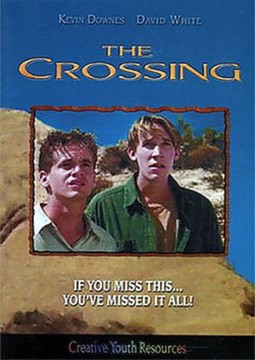
October Positivity: The Crossing (dir by John Schmidt)


The 1994 film, The Crossing, tells the story of two teenage friends.  Jason (Kevin Downes) and Matt (David A.R. White) used to be cheerful juvenile delinquents.  But now, Matt is dying of what appears to be leukemia and Jason …. well, Jason’s in denial.  Jason does not want to admit that his best friend is going to die.  But then his best friend does die and Jason really doesn’t have any choice to admit it.  But then, at Matt’s funeral, Matt suddenly shows up and starts talking to Jason.

That’s right …. MATT’S BACK!

Unfortunately, Matt’s only back for a little bit and only Jason can see him.  Having died, Matt has not only witnessed Heaven but also discovered that it’s really difficult to get in.  He takes Matt to a heavenly court where they watch as another one of their friends is condemned to Hell by a sympathetic but firm-handed judge.  Matt also visits the big computer room where all of the records are kept.  He’s given a big dot-matrix printout that lists all of his sins.  There’s a lot of them!

However, Jason tells Matt that there’s still hope for him and then invites him to come check out Heaven.  They just have to walk over a wooden cross that is used as bridge between Purgatory and Heaven.  Underneath the bridge is Hell and no one wants to go down there.  However, no sooner have Matt and Jason crossed over than Jason notices that his mother is following them!  And she can’t see the bridge!  Uh-oh!

The Crossing is an early example of the Christian scare film, where the main message is that, if you displease God, you’ll go to Hell and suffer for all eternity.  Obviously, that’s a very cinematic message and these films always seem to spend a good deal of time in trying to find new ways to visualize Hell.  That said, I’ve always felt like that message was a bit counter-productive.  Instead of emphasizing what Jesus preached and what the Church is supposed to stand for (even if it rarely lives up to its own standards), these films instead seem to say, “Convert or we’ll punish you forever.”  People will do a lot of things under the threat of eternal pain and damnation but I’m a bit skeptical as to how sincere any of those actions will be.  Indeed, many evangelical films seem to take a bit too much pleasure in imagining people being condemned to Hell.  There’s definitely an element of, “You think you’re so smart but we’ll get the last laugh!” to these films.  That’s not exactly the best attitude.

That said, The Crossing is slicky produced and it gets a lot of mileage out of its low budget.  The scene in the computer room actually had a few intentional laughs as Matt marveled at how business-like and matter-of-fact all the record keepers were.  They were just doing their jobs with an attitude that said, “We’ve seen things you can’t even imagine.”  Who wouldn’t want that job?  Still, one has to wonder why Matt got to go see all of this and change his life but his friend who was condemned to Hell didn’t.  That doesn’t seem quite fair.

Insomnia File #38: Six: The Mark Unleashed (dir by Kevin Downes)


What’s an Insomnia File? You know how some times you just can’t get any sleep and, at about three in the morning, you’ll find yourself watching whatever you can find on cable? This feature is all about those insomnia-inspired discoveries!

http://www.youtube.com/watch?v=u1pd9Jr_bgA

If on Sunday night, if you were having trouble getting to sleep around midnight and if you lived in North Texas, you could have turned over to channel 58 and watched a 2004 film called Six: The Mark Unleashed.

Six: The Mark Unleashed is an evangelical film about the end of the world.  By that, I mean there’s a lot of talk about tribulation, the mark of the Beast, and all the rest of that.  The whole world is one big secular dystopia, in which people who refuse to accept the mark of the beast are sent to prison and given the choice of either getting the mark or getting their head chopped off.

I think one reason why so many faith-based films deal with the end of the world is because it allows characters to rebel, break the law, blow stuff up, and steal cars while still getting to remain a believer.  I mean, usually, you run into the problems of turning the other cheek and giving unto Caesar what is Caesar’s but, once you’ve been left behind, you can pretty much do anything you want because you’re fighting against Satan.

Now, admittedly, the car thieves in Six aren’t into religion.  They’re just rebels who didn’t want to get the mark and who are talked into stealing a car by Eric Roberts.  (That’s right, Eric Roberts is in this movie.  Eventually, Eric Roberts will be in every movie.)  Anyway, the two thieves get caught in that stolen car and they get sent to prison.

Also getting sent to prison is Tow Newman, who is a smuggler who was arrested by his own ex-wife!  Tom is given the option of either losing his head or infiltrating a group of Christians and killing their leader.  What’s interesting about this is that Tom is played by Jeffrey Dean Morgan.  That’s right.  Negan is in this movie!  Morgan goes all in and does a pretty good job as Tom.  In fact, I’d say his performance here is more interesting than his work on The Walking Dead.  It helps, of course, that Tom is the only person in the film who actually has a character arc.

Stephen Baldwin’s in the movie, too.  That’s not really a shock because it’s a proven statistic that 9 out of 10 evangelical movies will feature Stephen Baldwin.  Anyway, Baldwin plays Luke, who is a prison preacher and who teaches everyone about peace and forgiveness.  He gets beat up for his troubles.

In the end, it all leads to three characters being tortured until they agree to accept the mark of the beast.  Two of them refuse and lose their heads.  One says yes and regrets it forever.  Try to guess who does what!  It’s fun.

Anyway, I have to admit that I always find these low-budget, independent films to be a little bit fascinating.  It’s always interesting to me to see movies that were obviously made with one very specific audience in mind, whether that audiences is religious, political, or whatever.  Six is the type of film that, quite literally, preaches to the choir.  Those who share its vision of the end of the world will nod in agreement.  Those who do not will roll their eyes.  Both sides will probably end up getting too worked up, since that’s what people tend to do.  Myself, I just find myself wondering if there’s any role that Eric Roberts would turn down.

Previous Insomnia Files:

  1. Story of Mankind
  2. Stag
  3. Love Is A Gun
  4. Nina Takes A Lover
  5. Black Ice
  6. Frogs For Snakes
  7. Fair Game
  8. From The Hip
  9. Born Killers
  10. Eye For An Eye
  11. Summer Catch
  12. Beyond the Law
  13. Spring Broke
  14. Promise
  15. George Wallace
  16. Kill The Messenger
  17. The Suburbans
  18. Only The Strong
  19. Great Expectations
  20. Casual Sex?
  21. Truth
  22. Insomina
  23. Death Do Us Part
  24. A Star is Born
  25. The Winning Season
  26. Rabbit Run
  27. Remember My Name
  28. The Arrangement
  29. Day of the Animals
  30. Still of The Night
  31. Arsenal
  32. Smooth Talk
  33. The Comedian
  34. The Minus Man
  35. Donnie Brasco
  36. Punchline
  37. Evita