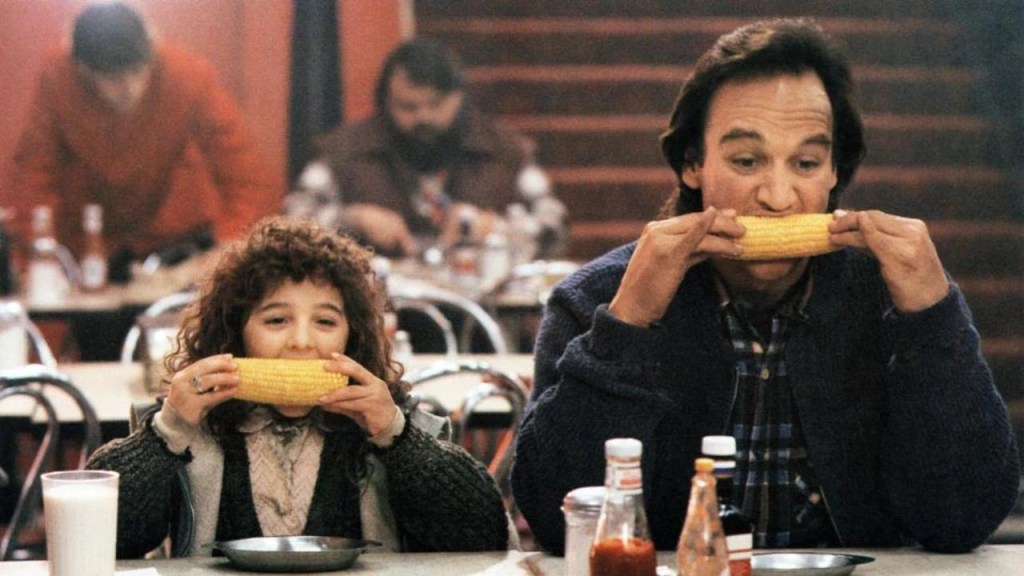
Brad reviews CURLY SUE (1991), starring James Belushi and Kelly Lynch!


Bill Dancer (James Belushi), a homeless drifter and small-time con artist, and his 9 year old companion Curly Sue (Alisan Porter), survive by running somewhat harmless scams against rich people. While traveling through Chicago they target Grey Ellison (Kelly Lynch), a rich, career-focused divorce attorney, tricking her into thinking that she ran over Bill with her Mercedes. Normally the pair are just after a free meal and maybe a little cash, but Bill doesn’t have the heart to take too much from Grey since she’s so darn pretty. Through a variety of circumstances, she actually does run over Bill the next day. This time she brings him and Curly Sue up to her fancy apartment so he can recover, despite the objections from her snobby boyfriend Walker (John Getz). As the three get to know each other, Grey forms an especially close connection with Curly Sue, and learns that Bill isn’t her actual dad, even though he’s raised her since she was a baby. Knowing that Grey can give Curly Sue a better life than he can, Bill thinks about leaving. But can he ever leave the girl he sees as a daughter? And can Grey discover a compassion for others and the maternal instinct that she’s been missing? 

As is often the case with movies I choose to write about, I had a sense of nostalgic warmth while watching CURLY SUE this morning for the first time in three decades. I saw CURLY SUE at the movie theater with my high school girlfriend in the fall of 1991. I remember enjoying the film and even buying it on VHS as a gift for my mom because I knew she would like it. In the years before she could record her Hallmark movies on her DVR, Mom watched that VHS tape many times. 

Quite different from his classic teen comedies, CURLY SUE, which is the final film directed by John Hughes, can only be described as unapologetically sentimental. Sure the movie is formulaic and pure syrup, but I still enjoy it anyway. This heartwarming fairy tale will make you believe that an unconventional, loving family can emerge from the most unexpected of circumstances. It will suggest that there are some things more important than any amount of money can buy. It will make you laugh out loud at times, and yes, it will even bring a tear to your eye as some of the more emotional scenes play out. CURLY SUE wants to manipulate its audience’s emotions, and it will happen if you just go with it. On the down side, if you catch this film in the wrong kind of mood, or if you’re feeling especially cynical, that magic will disappear and you probably won’t enjoy the movie at all. 

As for the performances, as a fan of James Belushi, I like him as the gruff but likable Bill. I also enjoy Kelly Lynch as the she evolves from a person married to her work to someone who starts to care deeply about the people around her. Probably the most important performance in the film comes from Alisan Porter as Curly Sue. If you don’t find her cute and adorable, then you’ll probably have a hard time watching the movie. I personally found her to be quite precious so that was not a problem for me. Once again, the movie version of early 90’s Chicago as our setting is something I enjoy as well. 

Overall, CURLY SUE is not in the same league as Hughes’ best work like PLANES, TRAINS AND AUTOMOBILES, and there will be many who downright dislike the schmaltzy nature of the film. However, if you’re in a nostalgic mood for an earnest, early ‘90s heart-tugger, this movie might just hit the spot.
Lisa Marie Reviews An Oscar Nominee: Born On The Fourth of July (dir by Oliver Stone)


In 1989, having already won an Oscar for recreating his Vietnam experiences in Platoon, director Oliver Stone returned to the war with Born On The Fourth Of July.

Based on the memoir of anti-war activist Ron Kovic, Born on the Fourth of July stars Tom Cruise as Kovic.  When we first meet Kovic, he’s growing up on Long Island in the 50s and 60s.  He’s a clean-cut kid from a nice family.  He’s on the school wrestling team and he’s got a lot of friends.  When he was just 15, he heard John F. Kennedy telling people to ask what they can do for their country and he was inspired.  He decided he wanted to join the Marines, despite the fact that his father (Raymond J. Barry) was still haunted by the combat that he saw in World War II.  (In one of the film’s better scenes, a young Kovic notices that the elderly veterans marching in the Independence Day parade still flinch whenever they hear a firecracker.)  He enlists in the Marines after listening to a patriotic speech from a recruiter (played by Tom Berenger).  Ron runs through the rain to attend his prom and has one dance with Donna (Kyra Sedgwick), on whom he’s always had a crush.  There’s nothing subtle about the way that Stone portrays Kovic’s childhood.  In fact, one might argue that it’s a bit too idealized.  But Stone knows what he’s doing.  The wholesomenss of Kovic’s childhood leaves neither him nor the viewer prepared for what’s going to happen in Vietnam.

Vietnam turns out not to be the grand and patriotic adventure that Kovic thought it would be.  After Sgt. Kovic accidentally shoots one of his own men in a firefight, he is ordered to keep quiet about the incident.  After he is wounded and paralyzed in another firefight, Kovic ends up in a Hellish VA hospital, surrounded by men who will never fully recover from their mental and physical wounds.  Kovic is eventually returns home in wheelchair.  The film then follows Kovic as he goes from defending the war in Vietnam to eventually turning against both the war and the government.  At one point, he ends up with a group of disabled vets in Mexico and there’s a memorable scene where he and another paraplegic (Willem Dafoe) attempt to fight despite having fallen out of their chairs.  Eventually, Kovic returns to America and turns his anger into activism.

There’s nothing subtle about Born On The Fourth Of July.  It’s a loud and angry film and Oliver Stone directs with a heavy-hand.  Like a lot of Stone’s films, it overwhelms the viewer on a first viewing and it’s only during subsequent viewings that one becomes aware of just how manipulative the film is.  Tom Cruise gives a good performance as Ron Kovic but his transformation into a long-haired, profane drunk still feels as if it happens a bit too abruptly.  A good deal of the film centers on Kovic’s guilt about accidentally killing one of his men but the scene where he goes to the soldier’s family and asks them for forgiveness didn’t quite work for me.  If anything, Kovic came across as being rather self-centered as he robs the man’s mother and father of the belief that their son had at least died heroically in combat as opposed to having been shot by his own sergeant.  Did Kovic’s need to absolve himself really give him the right to cause this family more pain?  Born on the Fourth Of July is an effective work of agitprop.  On the first viewing, you’ll want to join Kovic in denouncing the military and demanding peace.  On the second viewing, you’ll still sympathize with Kovic while also realizing that he really owes both his mother and father an apology for taking out his anger on them.  By the third viewing, you’ll be kind of like, “Wow, I feel bad for this guy but he’s still kind of a jerk.”  That said, when it comes to making an effective political film, Adam McKay could definitely take some lessons from Oliver Stone.  Born On The Fourth of July is at its best when it simply captures the feeling of living in turmoil and discovering that the world is not as simple a place as you once believed.  As idealized as the film’s presentation of Kovic’s childhood may be, anyone who has ever felt nostalgia for an earlier and simpler world will be able to relate.

Oliver Stone won his second Best Director Oscar for Born On The Fourth Of July.  The film itself lost Best Picture to far more genteel version of the past, Driving Miss Daisy.


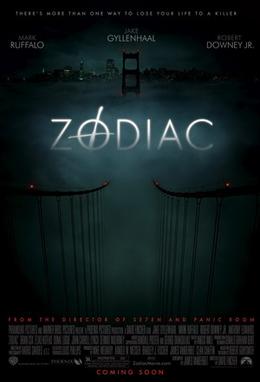
October True Crime: Zodiac (dir by David Fincher)


Who was the Zodiac Killer?

That is a question that has haunted journalists, cops, and true crime fans since the late 60s.  It is known that the Zodiac Killer murdered at least five people in Northern California in 1968 and 1969.  He targeted young couples, though he is also thought to have murdered on taxi driver as well.  What set Zodiac apart from other killers is that he was a prolific letter writer, who sent cards and ciphers to the police and the journalists who were reporting on his crimes.  In one of his ciphers, Zodiac claimed that he had killed 37 people.  Cartoonist Robert Graysmith later wrote two books about his personal obsession with the case.  He estimated that the Zodiac may have been responsible for hundred of murders, up through the 80s.  Of course, reading Graysmith’s first Zodiac book, it’s also easy to suspect that Graysmith reached a point where he saw the Zodiac’s hand in every unsolved murder in the San Francisco area.  Of all the unidentified serial killers in American history, Zodiac is one that most haunts us.  Zodiac was a serial killer who operated in an era when such things were still considered to be uncommon.  Much as Jack the Ripper did during the Victorian Age, Zodiac announced the arrival of a new age of evil.

Zodiac wrote about being a film fan and he was probably happy about the fact that he inspired quite a few films.  1971’s The Zodiac Killer came out while Zodiac was still sending letters to the police and cops actually staked out the theaters showing the film just to see if he  would show up.  Dirty Harry‘s Scorpio Killer was also based on Zodiac, right down to the taunting letters that he sent the mayor and again, one has to wonder if Zodiac ever showed up to watch Clint Eastwood take him down.

And, if Zodiac survived into the 21st Century, one has to wonder if he showed up in the theaters for 2007’s Zodiac.

One of the best true crime films ever made, Zodiac not only recreates the crimes of the Zodiac but it also examines the mental price of obsessing over the one unknown force of evil.  Mark Ruffalo plays Dave Toschi, the celebrity cop who nearly sacrificed his professional reputation in his search for the identity of the killer.  Jake Gyllenhaal plays cartoonist Robert Graysmith, who spends over a decade searching for the Zodiac’s identity and who loses his wife (Chloe Sevigny) in the process.  And Robert Downey, Jr. plays Paul Avery, the crime reporter to whom the Zodiac wrote and who sunk into paranoia and addiction as a result.  This is a film that is less about the Zodiac’s crime and more about how this unknown killer seemed to unleash a darkness that would come to envelope first a city and eventually an entire nation.

As one might expect from a film directed by David Fincher, Zodiac plays out like a filmed nightmare with the starkly portrayed murders being all the more disturbing because they often take place outside, where people would think they would be safe.  (The second murder is especially terrifying, as it plays out without even the sound of background music to allow us the escape of remembering that it’s only a movie.)  Fincher heightens our paranoia but having a different actor play the killer in each scene, reminding us that the Zodiac could literally be anyone.  Indeed, one of the scarier things about Zodiac is that, in the course of his investigation, Graysmith meets so many different people who seem like they could be the killer.  Even if they aren’t the Zodiac, the viewer is left with the feeling that the world is full of people who are capable of committing the same crimes.  The film becomes a journey into the heart of darkness, with the Zodiac becoming both a malevolent force and potentially your next door neighbor.  And with the film’s detailed recreation of the 60s and the 70s, the film becomes a portrait of a country on the verge of changing forever with the Zodaic and his crimes representing all the fear waiting in the future.

Again, as one might expect from a Fincher film, it’s a well-acted film, especially by Robert Downey, Jr.  Zodiac came out a year before Iron Man, when Downey was still better known for his personal troubles than for his talent.  Downey perfect captures his character’s descent into self-destruction, as he goes from being cocky and self-assured to being so paranoid that he’s carrying a gun.  (Paul Avery’s actual colleagues have disputed the film’s portrayal of Avery being mentally destroyed by the Zodiac.)  Ruffalo and Gyllenhaal also do a good job of portraying Toschi and Graysmith’s growing obsession with the case while Charles Fleischer and John Carroll Lynch both make strong (and creepy) impressions as two men who might (or might not) be the killer.

Though the film was not a success at the box office and it was totally ignored by the Academy, Zodiac has built up a strong reputation in the years since its released.  It’s inspired a whole new generation of web sleuths to search for the killer’s identity.  Personally, my favored suspect is Robert Ivan Nichols, an enigmatic engineer who abandoned his former life and changed his name to Joseph Newton Chandler III in the 70s and who committed suicide in 2002.  I think much like Jack the Ripper, the Zodiac’s identity will never be definitely known.  There have been many compelling suspects but most of the evidence seems to be circumstantial.  (That’s certainly the case when it comes to Nichols.)  The Zodiac was thought to be in his 30s or even his early 40s in 1969 so it’s doubtful that he’s still alive today.  In all probability, his identity and his motive will forever remain an unsolvable mystery.

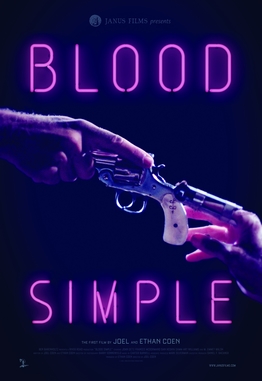
Sundance Film Review: Blood Simple (dir by Joel Coen)


(The 2018 Sundance Film Festival opens tonight!  Over the years, Sundance has become the premiere festival for independent film.  Not only have some of the best American films ever made premiered at Sundance, but it’s become the first stop in many a successful Oscar campaign.  Manchester By The Sea, Whiplash, Brooklyn, Beasts of the Southern Wild: all of them started their journey to a best picture nomination at Sundance.  For the duration of this year’s Sundance Film Festival, from today to the 28th, I’ll be reviewing films that first made a splash at Sundance.)

Blood Simple is an essential film.

If you love American movies, this is a movie that you have to see.  A delirious tribute to film noir, it’s a film that takes place in the darkest corners of America.  This is a film that shows that stories of love, betrayal, and murder can be just as complicated in the middle of America as in California and New York.

If you’re fascinated by the history of indie cinema, Blood Simple is a film that you have to see.  Joel and Ethan Coen, at a time when they were best known for their work with director Sam Raimi, created a trailer for Blood Simple long before they shot the actual movie.  They used this trailer to raise the film’s small budget.  Blood Simple was not only their directorial debut (though only Joel received a directorial credit, while the screenplay was credited to Ethan) but it was also both the feature debut of Frances McDormand and cinematographer (and future director) Barry Sonnenfeld’s first major credit as well.

If, like me, you love films about Texas, Blood Simple is an essential.  Long before they made No Country For Old Men, the Coens filmed Blood Simple in Texas.  Texas is as much a character in Blood Simple as Minnesota and the Dakotas were in Fargo.  Along with their twisty crime plots, Fargo, No Country, and Blood Simple all share a similarly cynical and fatalistic view of human nature, one that is perfectly reflected by the bleak locations where their stories take place.  Watching Blood Simple, it’s easy to imagine that, once the film ended, it fell to No Country‘s Sheriff Ed Tom Bell to laconically look over the carnage and try to figure out what the Hell just happened.

Like many Coen Brothers films, Blood Simple starts out simply and then gets progressively more and more complicated.  Almost all of those complications are due to a combination of human stupidity and greed.  Abby (Frances McDormand) and Ray (John Getz) are having an affair.  Abby’s husband, Marty (Dan Hedaya), owns the bar where Ray works as a bartender.  Marty hires a sleazy private detective named Loren Visser (M. Emmett Walsh) to kill Abby and Ray.  Visser has other plans.  By the end of the movie, almost everyone is dead but no one’s sure why.

The film largely serves as a showcase for Walsh, so much so that McDormand, Hedaya and Getz run the risk of getting lost in the shuffle.  That’s a shame, because all three give excellent performances.  McDormand brings strength and determination to the role of Abby.  Meanwhile, both Getz and Hedaya play two very familiar types.  Anyone who has spent any time in Texas will immediately recognize the characters played by Getz and Hedaya.  Ray may not be the smartest guy in the world but he’ll keep your car running and your glass full.  He’s probably never going to amount too much but he’s what is universally known as a good guy.  On the other hand, Marty, as played by Hedaya, is perhaps one of the most pathetic characters to ever appear in an American film.  Film noirs are full of betrayed husbands but it’s hard to think of a bigger loser than Marty.  Marty is the guy who tries to act tough but even he secretly knows that no one will ever take him seriously.  With the combination of his northern accent and his pathetic attempts to dress “western,” Marty is an outsider in Texas, one who is too stupid to realize just how far outside he actually is.

That said, the film is dominated by M. Emmett Walsh.  As played by Walsh, Loren Visser is one half sleazy redneck and one half demon from Hell.  Speaking in a sarcastic drawl and seemingly amused by all the chaos he has created, Walsh turns Visser into a truly fascinating villain.  He may be evil but you can’t stop watching him.  Walsh’s best moment is also his last in the film, a sarcastic one-liner that suggests that everything that has happened was caused more for his own amusement than anything else.  Visser is clever but not even he can escape the random whims of fate.

Violent and, as is typical for the Coens, darkly humorous, Blood Simple won the Grand Jury Prize at the 1985 Sundance Film Festival.  Though it was only a modest box office success, it not only launched the careers of the Coen Brothers but continues to be on the most influential independent films ever made.  The film remains impressive today.  Whenever I see it, I’m always stunned to see how, even with their first film, the Coens had already developed their own very unique aesthetic.

Blood Simple is an essential film.

Val’s Movie Roundup #16: Hallmark Edition


Sorry, but during this period my Mom has been having knee replacement surgery so my descriptions are going to be so so at best. Luckily, I know that when it comes to Hallmark movies, you really just want to know whether it’s worth your time. That I can do.

MV5BMTUyNzg4NzcyNl5BMl5BanBnXkFtZTcwMTEwMTE0MQ@@._V1_SY317_CR51,0,214,317_AL_

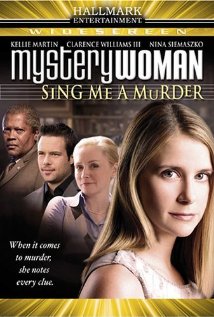
Mystery Woman: Sing Me A Murder (2005) – This one has Kellie Martin’s character hosting a charity concert for an old timey folk band. At the same time Clarence Williams III is doing side work investigating a series of bank robberies. I reached the end where they explain what really happened and it made little sense to me. I watched that section a second time, and it still didn’t make sense. This movie is a convoluted mess. It’s a shame because I have been enjoying this particular series of films. On the upside, this movie has John Getz in it. Movie lovers might not recognize the name, but you will recognize him when you see him. He is the lover in the Coen Brothers first film Blood Simple (1984). Just with 21 years added on to him. If you don’t have to see all of the Mystery Woman movies, then you can skip this one.

220px-FallingInLoveGND

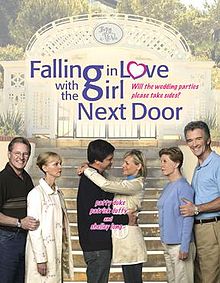
Falling In Love With The Girl Next Door (2006) – Ever wrote a paper for school, had absolutely no inspiration, but powered through it and churned out something to turn in? That’s this movie. You already know this by just reading that title. It’s about two people who fall in love, want to get married, their parents interfere, and the couple ultimately gets their way. That’s it! Nothing worth seeing here. There are a few big name actors in here, but Bruce Boxleitner and Shelley Long, for example, are completely wasted. A definite skip.

tumblr_mrpkh18oeB1qhckj0o1_400

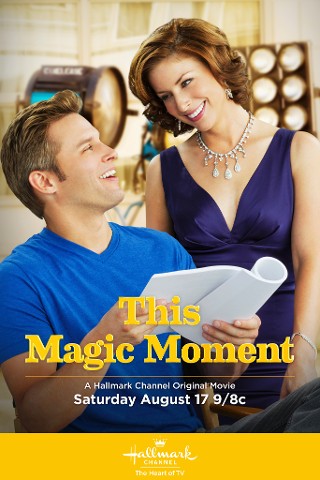
This Magic Moment (2013) – A film crew comes to a small town to shoot scenes. A local screenwriter hooks up with their lead actress, but belongs with another girl. He ends up with the local girl. I was quite bored out of my mind. However, it did remind me that the movie Love And The Midnight Auto Supply (1977) was shot in a neighboring small town to where I live, so I will have to review it at some point. I even have access to the old local papers from back then when it was being made.

If you can follow the conversations in this movie better than I did then you will probably like it more, but it’s still not a particularly good Hallmark movie of this nature. I’ve reviewed much better love stories such as Recipe For Love and the recent Love Under The Stars. Also, just like Falling In Love With The Girl Next Door, this movie has two good actors that it completely wastes. Those being Charles Shaughnessy and Corin Nemec.

MysteryWoman_AtFirstSight_0001.jpg

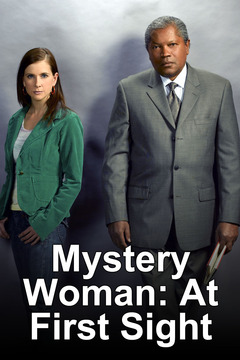
Mystery Woman: At First Sight (2006) – The interesting thing about this particular entry in the Mystery Woman series is that Kellie Martin herself directed it. It doesn’t make a whole lot of difference, but she does at least as good a job as the others who have helmed other entries in the franchise. It begins with Kellie setting out to find her birth mother. She gets embroiled in a murder mystery that involves her biological family. It’s fine, followable, and not sanitized. That’s really the best you can ask for from a Hallmark mystery movie. At the same time, Clarence has his own plot that reveals or at least hints more at his mysterious background. Honestly, I prefer when Martin and Williams work together to solve the mystery, rather than each having their own plot to follow. I think they work well together. Oh, well. Even though this is my 5th Mystery Woman film, there are still six more of these to go. This one is perfectly fine to watch.