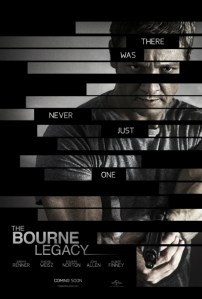
Quick Review: The Bourne Legacy (dir. by Tony Gilroy)


After completing The Bourne Ultimatum, Director Paul Greengrass and Actor Matt Damon were probably asked if they’d ever come back to do another. When you look at the overall story, Bourne’s journey was pretty complete, and Damon voiced that he’d only consider doing another if Greengrass did. After Greengrass bowed out, the notion of another chapter in the Bourne saga was dead in the water.

Universal had other ideas, deciding on moving forward and having the trilogy’s screenwriter, Tony Gilroy direct The Bourne Legacy. No stranger to making films, Gilroy is more known for making “slow burn” features like Duplicity and one of my favorites, Michael Clayton. If he were working on a remake to “All the President’s Men”, I’d be certain it was a perfect fit. For Bourne, however, we get something of a different result. Not a terrible one, but possibly not the one that everyone was hoping for. This almost makes sense, considering that even the Bourne novels themselves were taken over by Eric Van Lustbader after Robert Ludlum’s death.

The Bourne Legacy takes place during the same time period as The Bourne Ultimatum. The story expands not on what happened to Bourne post Ultimatum, but what happened to the programs in place in the aftermath of Bourne’s visit to New York. We find Aaron Cross (Jeremy Renner), part of a separate program that goes beyond Treadstone and Blackbriar, making his way through a snowy Alaskan wilderness. The new breed of agents (assets, as they’re referred to in the Bourne Universe) are genetically augmented by way of meds they call “Chems”. The Chems give the assets the edge they need to do what they do.

This bothered me a little, because Jason Bourne got by with none of that for years, but I chalk that part of the storyline to the notion that Gilroy has this thing for Pharmaceuticals and Chemicals. Michael Clayton’s antagonist worked for a Chemical Company. Duplicity’s spies were trying to steal secrets from a pair of what seemed like pharmaceutical companies. The reasoning behind Cross’ need for the Chems is made clear through the story, but it was a strange angle to go on, I felt.

During the course of Aaron’s trip, the Powers That Be, played by, Stacy Keach, Donna Murphy and an underused Edward Norton decide that Bourne’s actions (along with Joan Allen’s Pamela Landy) are going to cause all of their programs some serious trouble and decide to wipe the slate clean. Cross needs to both escape this while still finding a way to get a hold of the Chems he needs to stay at peak performance. That’s the idea behind the Bourne Legacy in a nutshell.

On a casting level, The Bourne Legacy is actually very good. Both Renner and Rachel Weisz handle their parts well, I thought (for what they were given). A few of the cast members return from the previous Bourne films, but their appearances are so brief that it may leave you feeling as if they were just a piece of leftover film from the Original Trilogy. If there’s anyone who feels out of place, it would have to be Edward Norton. He comes across in this movie like he wasn’t sure what he wanted to take on and decided to just do this to pass the time.

The action in the Bourne Legacy is on par with the other films, but this being Gilroy, there’s more of a distance between the action and the drama.  When I really think about it, there’s about the same amount of it as there was in The Bourne Identity or Supremacy – neither one of those were die hard action films – but the potential to wish for more is greater with Legacy. This is especially true with the way it was advertised. Just about every action scene in the film is in the trailer. That said, Gilroy has gotten better at being able to handle these scenes. A few more films like this and he should do really well in the future.

Just like Michael Clayton, however, the movie ends so abruptly that you may blink a few times in protest. Gilroy needs to work on that part.

So overall, The Bourne Legacy wasn’t a story that was needed, nor does it really add too much more to the Bourne Universe over all, but it’s nice to return to the espionage that surrounds it. Here’s hoping that this could give something more for Renner, Gilroy and the rest of the team.

Trailer: The Bourne Legacy


When Paul Greengrass completed The Bourne Ultimatum it looked like a perfect ending to the Bourne Series. Despite an ending that could be seen as a way to leave the door open to continue the series most people were content with the series ending as trilogy. That sort of thinking never enters the mind of studio executives who saw the success of this particular trilogy as still bankable even if it meant the filmmaker (Greengrass) and the series’ lead star (Matt Damon) weren’t going to participate.

What we ended up getting was a new lead in Jeremy Renner as another Treadstone-like agent, but one who didn’t have all the glitches that Jason Bourne had. Let’s just say that Renner’s character Aaron Cross would be Jason Bourne 2.0. I wasn’t convinced that a Bourne film minus Greengrass and Damon would work, but after seeing this latest official trailer from Universal Pictures I’m quite excited about this latest film.

With the success of The Avengers and Mission Impossible: Ghost Protocol where Renner had substantial roles in it looks like this latest film in the series could get a nice uptick in the amount of interest it gets from the public. The sort of action Renner’s character goes through in this film one could easily call this Hawkeye: The Early Years. All his character would need would be a nice hi-tech bow.

The Bourne Legacy is set for an August 17, 2012 release date.

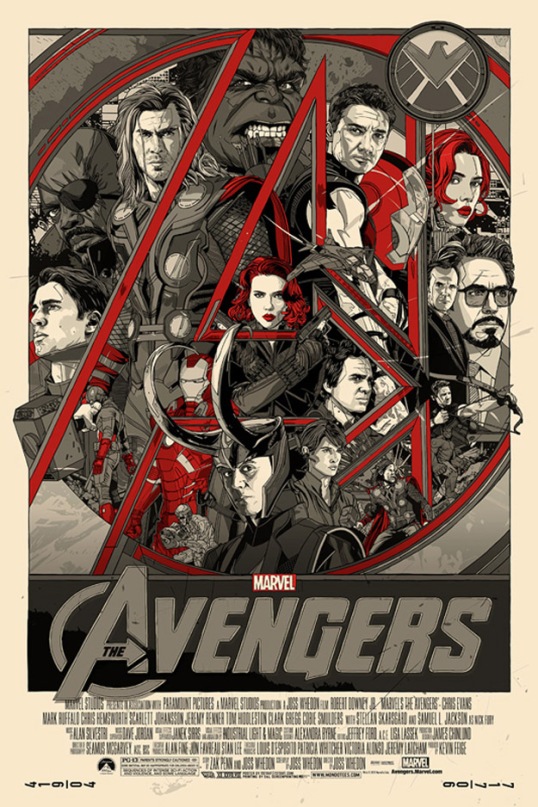
Okay, So I Saw “The Avengers”


Or should that be “Okay, so I saw Marvel’s The Avengers ?”

In any case, I wasn’t going to. I was determined not to participate in the so-called “biggest event of the summer” because I’m flat-out tired of seeing Marvel (and, by extension, Disney) rake in hundreds of millions, if not billions, of dollars off the fruits of Jack Kirby’s imagination while “The King’s” estate gets more or less nothing (although in fairness — or should that be unfairness — they do get some sort of pittance for anything featuring Captain America in it, since he’s officially recognized as Cap’s co-creator along with Joe Simon). Stan Lee’s recent comments about Jack didn’t do much to up my enthusiasm level for this latest blockbuster either, and basically reaffirmed my opinion that he’s a major-league asshole who was lucky enough to glom onto the works a true creative genius that now he doesn’t even have the decency to acknowledge, much less thank, so yeah — it’s fair to say I was pretty cool to this whole thing and found most of the absolute gushing over it that’s been infecting the internet, Twitter in particular, to be annoying in the extreme.

But then the folks who are trying to put together The Jack Kirby Museum came up with a novel idea — donate the price of your ticket to their brick-and-mortar fund, so that future generations can have an actual, physical place to go and experience first-hand the power of the unfettered creative genius that everyone else but his family has gotten rich off. That sounded good to me, so for the price of a $7.50 admission and a matching $7.50 donation, my conscience was suitably assuaged  — hey, I guess I always knew there was some price at which my principles could be sold out, but it’s rather depressing to think that it could be so cheap. Still, best not to spend too much time dwelling on that —

Anyway, before I kick over the hornet’s nest of fan opinion, let me state for the record that I found The Avengers to be a perfectly fun, generally-well-executed, thoroughly entertaining superhero romp. But (and you knew there was a “but” coming, didn’t you?) — that’s all it is.

Sorry, assembled hordes of fandom, but it’s not “groundbreaking,” it’s far from “the best superhero movie ever,” (hello? The Dark Knight? Batman Begins? Spider-Man 2? Superman :  The Movie?) much less “the best comic book adaptation ever,” (hello again? American Splendor? Ghost World? Sin City? A History Of Violence?) and it doesn’t “prove” that co-writer/director Joss Whedon is a “visionary,” or the “new master of the superhero genre.”

And all those quotes I  pulled are, frankly, just a sampling of some of the less effusive praise I’ve seen bandied about online in regard to this flick. I’ve also seen it called “the new benchmark by which all others will be judged,” “the summer blockbuster to end them all,” “a singular work of astonishing breadth and scope,” and “the defining cinematic statement from the undisputed master of the craft.”

In this armchair critic’s opinion, unpopular as saying so is bound to make me, it’s none of those things. Not even close. Whedon has concocted a nice little script and brought it to life in an appealing and pleasant manner, but this isn’t a movie that bears any authorial signature whatsoever — if the credits were blank and someone told you it was directed by, say, Jon Favreau, you’d believe it, because it plays out pretty much exactly the same, in tone and style, as either of the two Iron Man films, and it doesn’t have anything like the individualistic flair of Kenneth Branagh’s Thor or Joe Johnson’s Captain America : The First Avenger. Hell, it even completely overuses the tedious inside-the-helmet perspective shots of Robert Downey Jr.’s head that Favreau is so annoyingly fond of.

In addition, our guy Joss shows no particularly deft touch with his cast. The acting ranges from surprisingly good (Mark Ruffalo positively nails it as Bruce Banner) to completely lethargic (Scarlett Johansson is completely listless as the Black Widow and is the least-convincing Russian superspy in movie history). Downey plays himself, as always, and the talented Jeremy Renner is criminally underutilized as Hawkeye, while both Chris Hemsworth’s Thor and Tom Hiddleston’s Loki, the central villain of the piece, came off much better in Branagh’s flick. Samuel L. Jackson pretty much owns every scene he’s in as Nick Fury, but I don’t think there was ever really any doubt that he would. All told,  the whole thing has the feeling of a director who just told his cast “okay — have at it” and then let the cameras roll.

In his favor, fandom’s newest and biggest crush does do a nice, pacy job with the action sequences, of which there are many (although even he can’t make the bog-standard CGI alien invaders that attack the Earth at the end and, yawn, double-cross Loki seem interesting), and doesn’t overplay his hand in the pathos department — he gives each and every character a nice little individual “story arc” that never taxes the imagination too much and remains dimly interesting without seeming intrusive vis-a-vis the “bigger picture” — which is, of course, to show all these folks coming together and fighting a menace big enough to require their assembled talents and abilities. And while Whedon has an annoying habit of defusing every potentially tense situation with a pithy little quip of some sort, on the whole the interplay between the various characters is reasonably well-handled and plausible (as far as these things so).

So The Avengers has some pluses in its favor, as well as some minuses working against it. It’s good, solid, mindless summer entertainment with a nifty, if thoroughly uninspired, visual sensibility; it plays to what the fans want in a generally competent manner; and it keeps you at least modestly interested in the proceedings throughout. It doesn’t have the mythic scope of Donner’s Superman, nor does it redefine the possibilities inherent in the superhero genre in the way Nolan’s Batman films do. It doesn’t take the time to examine the gap between what these characters symbolize and who they actually are in the way that Marvel’s two far superior summer blockbusters of last year (again, Thor and Captain America : The First Avenger) did — hell, it doesn’t even have much of anything to say about the human condition, much less the superhuman condition. And while it’s all pretty fun to look at by and large, it doesn’t have the inventive, groundbreaking, downright operatic visual flair of Burton’s forays into Gotham City. So it’s fair to say that even the things this movie does well have been done a lot better in other films of this same genre.

But it is fun. Not as fun, or as immediate, or as dramatic, or as dynamic, as the classic Avengers stories brought to life by Jack Kirby that it’s essentially a modernized (and, frankly, watered-down — proof that “The King” could do more with a pencil than Whedon can with a couple hundred million bucks) rehash of, but a good time nonetheless — and in a society as desperate for diversion and spectacle as the one we live in, I can certainly understand why it’s such a big hit. But please. Let’s stop pretending it’s anything more than what it is — modestly-well-realized, lively,  big-budget summer fun that doesn’t demand anything from its audience apart from kicking back and enjoying the ride. And let’s stop venerating Joss Whedon for what’s essentially a director-for-hire project executed in what’s basically become Marvel’s “house style.” Sure, there’s a good possibility that the financial success of The Avengers means he might be able to write his own ticket in Hollywood from here on out — and more power to him if that’s the case since other projects he’s helmed (most notably the excellent sci-fi TV series Firefly) do indeed show that he’s capable of distinctive, highly imaginative drama — but it’s just as likely that Marvel will replace him on this film’s inevitable sequel with some youthful up-and-comer who can deliver essentially the same product and will work for half the price.

Once the novelty of having all these superheroes on screen together wears off, I predict that we’re going to realize we’ve been had a little bit here — but seeing as how we had a pretty good time in the process, there’s no real harm done.
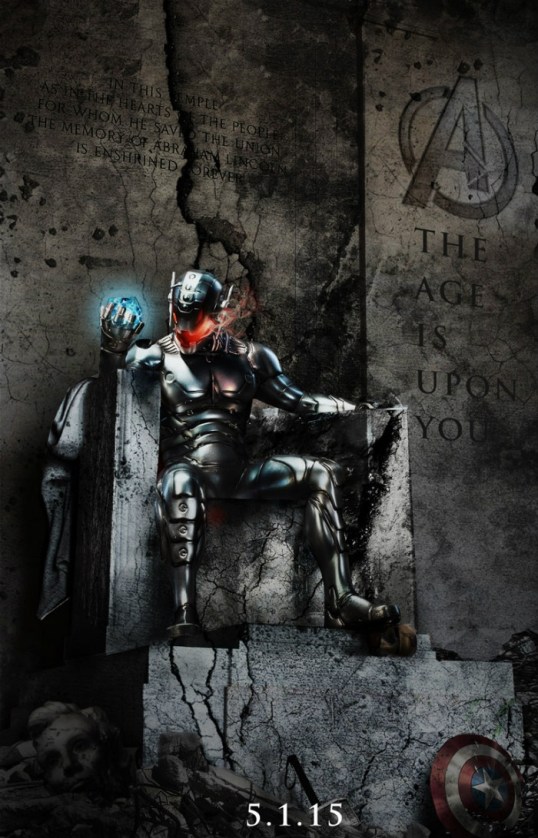
AVENGERS ASSEMBLE!


Avengers did what I previously thought was impossible… it Leonidas-kicked Iron Man 1 off its throne and now reigns on my all-time favorite comic inspired movie. Nolan has a tough act to follow. The gauntlet has been dropped. I attribute this remarkable feat to Joss Whedon’s screenplay and the cast for the most part.  I will not spoil the film and simply state what I enjoyed in a vague manner.

What I loved:

  1. The cast embodied the characters that I grew up reading, especially Downey and Pines
  2. The incorporation elements of Mark Millar and Bryan Hitch’s version of Avengers (in my opinion at least) in the film
  3. The revelation of the Other’s Master
  4. The Other’s design and connection of the comic version of Fantastic Four
  5. The nod to the classic Thor and Hulk relationship
  6. Clark Gregg’s Phil Coulson
  7. Tom Hiddleston captured all the resentment, sense of entitlement and bitterness that represents Marvel’s iteration of Loki
  8. The more humane and decent version of Ultimate Nick Fury (he’s a rotten & ruthless so & so on Millar’s book)

Minor quibbles:

  1. The Black Widow’s lack of a Russian Accent (but it didn’t take away from Scarlett’s performance
  2. The lack of a Loki betrayal, he’s the god of evil after all


TV Spot: The Avengers “Head Count”


We’re just a month away from the release of Marvel Studios’ long-awaited superhero team action film The Avengers. It’s a film that’s been many years in the making with five other Marvel Studio films released prior to it introducing the many characters who will form the ensemble for this project.

It’s not going to be much of a surprise to see many tv spots and on-line releases of 30-second clips to help hype a film that needs no more hyping. While it seems all these incoming tv spots just rehash the same scenes from the several trailers already released once in awhile we see a quick new scene that should help excite the fan-base even more. This time around that new scene is one of the Hulk himself taking on a couple of Loki’s alien army. All that is missing is the Hulk saying “Hulk Smash!” as he simply smashes one of these alien bastards.

The Avengers (retitled Avengers Assemble to differentiate itself from the awful The Avengers film adaptation of the British spy tv series of the same name) will have it’s world premiere on April 11, 2012 in Hollywood with a general wide release on May 4, 2012 starting in the US.

Trailer: The Avengers (2nd Official)


We’re just a little over two months away from the release one of this summer’s most-anticipated films. It’s a film that’s been 4 years in the making. The first pieces that set it up were 2008’s Iron Man and The Incredible Hulk. This was followed up by 2010’s Iron Man 2 then finished up by the double-shot of 2011’s Thor and Captain America: The First Avenger.

It’s now 2012 and those five films will finally see it’s culmination with Joss Whedon’s The Avengers. It’s a superhero ensemble film starring each lead from all the aforementioned films with only Mark Ruffalo replacing Edward Norton in the role of Dr. Bruce Banner and his Hulk persona.

This latest official trailer from Marvel Studios gives a bit more insight as to the meat of The Avengers story. Where the previous teasers and trailer just showed the Avengers team in action with explosions happening around them this new one shows some of the initial dysfunctions which will plague the team when it first goes into action against a resurgent Loki and his invading alien army. We also get more scenes with Mark Ruffalo as the Hulk not to mention some action sequences involving Captain America, Iron Man and Thor.

To say that the release of this trailer elicited a global geekgasm would be an understatement. Even now the interwebz is rife with theories as to what is the huge serpent-looking machine that chases Iron Man before the trailer ends.

The Avengers is set for a release date of May 4, 2012.

Trailer: The Avengers (Super Bowl Extended Spot)


This summer has a couple of films that many would consider must-see. One of them is Marvel Studios’ superhero team-up, The Avengers. It’s a film that’s been 4-5 years in the making which saw it’s first foundation brick laid down with Iron Man in 2008. Each year saw another film from Marvel Studios which laid down more characters that will make up the roster for the Avengers. 2011’s Thor and Captain America completed that roster and this 2012 we see all that foundation building culminate in The Avengers.

The Super Bowl spot shown on tv is only a 30-second spot, but a much longer version has been released by Marvel on it’s Facebook page and with the video available on it’s own Youtube page it’s the extended version that will be shown here. It’s a version that shows all members of the roster in action with the nature of the danger to the planet looking to be alien in nature. What we see in this trailer spot that hasn’t been shown in past trailer releases for this film is the final member of the roster and ultimately it’s most powerful one.

Loki confidently tells Tony Stark that he has an army. Well, what’s an army when you got a Hulk on your side. Nuff said!

The Avengers is still set for a May 4, 2012 release both in regular and 3D.

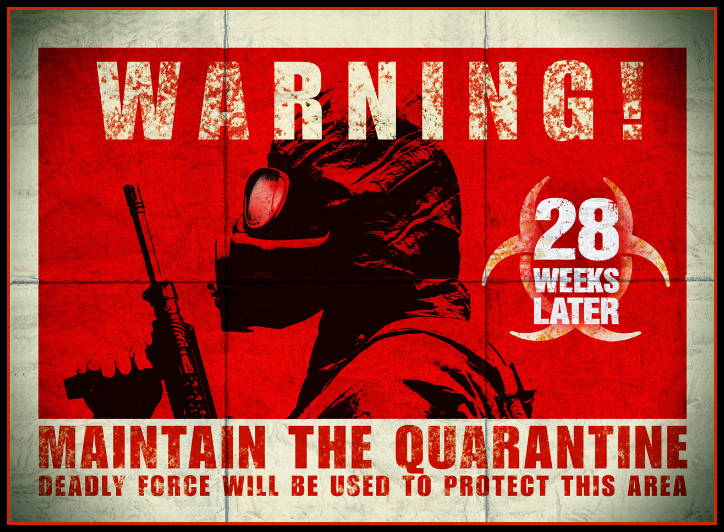
Horror Review: 28 Weeks Later (dir. by Juan Carlos Fresnadillo)


Danny Boyle and Alex Garland’s 28 Days Later was made in such a way that any sequel was almost destined to struggle in its shadow. Their film was not only one of the most influential horror films of the early 2000s, but also an exercise in experimental filmmaking and cinematic reinvention. It fused realism and terror through its digital photography, unconventional pacing, and minimalist score. Any follow-up would have to contend not just with its fresh twist on the zombie mythos (despite the infected not technically being zombies) but also its unique atmosphere, music, and stripped-down aesthetic. Against those odds, 28 Weeks Later manages to stand as an impressive and worthy successor—one that in some respects even surpasses the original.

Spanish director Juan Carlos Fresnadillo approaches the material with a clear reverence for Boyle and Garland’s vision while imprinting his own stylistic and emotional signature on the sequel. From the very first scene, Fresnadillo establishes a tone that blends despair and dread with human frailty. The film opens on a stunningly tense prologue in which Don (a gaunt and haunted Robert Carlyle) and Alice (Catherine McCormack) are living with several others in a rural cottage outside London during the first weeks of the Rage virus outbreak. In this sequence, Fresnadillo distills the central moral dilemma that runs through both films: whether to preserve one’s humanity through compassion or to surrender to pure survival instinct. When Don is forced to choose between rescuing his wife and saving himself, his decision—while horrifying to watch—feels horribly plausible. The following chase through open fields as he flees dozens of Rage-infected attackers captures the raw panic that made Boyle’s original so memorable, yet Fresnadillo shoots it with a sharper sense of chaos and movement. It sets the tone for a story that is both intimate in its human tragedy and apocalyptic in its reach.

Following this intense opening, the film transitions through an introductory credits montage that fills in the aftermath. Don’s escape was not the end of the story but the beginning of a grim reconstruction effort. The British Isles, we are told, were swiftly quarantined when it became clear the infection could not be contained. Twenty-eight weeks later, with the infected population presumed dead from starvation, a U.S.-led NATO force spearheads an ambitious effort to repopulate and rebuild. Led by General Stone (played with austere calm by Idris Elba), the military has converted London’s Isle of Dogs into a heavily fortified safe zone. This enclave represents both restoration and repression—a fragile bubble of civilization built atop the bones of horror.

Within this environment lives Don, now employed as a maintenance manager and struggling to suppress the guilt from his past. The arrival of his two children, Tammy (Imogen Poots) and Andy (Mackintosh Muggleton), who were abroad in Spain during the initial outbreak, reopens emotional wounds he had hoped were sealed. Their reunion, though heartfelt, carries an undercurrent of deception. Don’s explanation of their mother’s fate does not align with what the audience has already witnessed. This dishonesty propels the children into dangerous territory when they decide to sneak out of the Green Zone to retrieve personal belongings from their old cottage. While this act of recklessness fits with youthful impulses and emotional longing, it also feels like the film’s only contrived lapse in logic—an inevitable but frustrating horror trope that sets off the story’s next catastrophe.

What the children discover at the cottage reintroduces the virus in a shocking way. Without realizing it, they bring the Rage infection back into the supposedly secure refuge of London. As soon as containment is broken, the military response escalates with brutal efficiency. General Stone declares a “Code Red,” authorizing the use of extreme measures to eradicate the infected—including indiscriminate firebombing of civilian areas. These scenes echo not only classic apocalyptic tropes but also resonate as a grim reflection of post-9/11 militarism. Many viewers and critics interpreted this act of mass destruction as allegory for the United States’ War on Terror and the ethical corruption of occupation forces. Fresnadillo’s direction, while hinting at this reading, avoids heavy-handed political critique. His portrayal of military overreaction feels less ideological than tragic—a manifestation of fear, confusion, and the blunt-force nature of institutional power. The armed forces are not villains so much as desperate men trapped in an impossible moral quagmire. As in George A. Romero’s The Crazies, which 28 Weeks Later strongly recalls, the destructive consequences stem not from malice but from the futility of trying to maintain order amid chaos.

Where 28 Days Later focused on a small group of survivors and the intimate erosion of morality under crisis, 28 Weeks Later expands the scale dramatically. Fresnadillo transforms Boyle’s compact nightmare into a large-scale urban apocalypse. The sweeping aerial shots of a deserted London—bridges empty, streets silent—hammer home the desolation. When the city is engulfed in flames and gas clouds during the firebombing sequence, the imagery becomes both terrifying and grimly beautiful, a vision of civilization consuming itself. The sequel’s tone is darker and more nihilistic than Boyle’s film, which allowed a trace of optimism in its ending. Here, even innocence becomes a catalyst for doom: it is the children’s actions, driven by love and loss, that inadvertently reignite the infection and condemn the survivors to another wave of horror. This subversion of the “innocent child” trope underscores Fresnadillo’s bleak worldview—where sentiment and humanity, however noble, can still create destruction.

In several ways, 28 Weeks Later aligns more closely with Romero’s Living Dead films than with Boyle’s original. Though Boyle borrowed some of Romero’s thematic DNA, Fresnadillo fully embraces it. The infected may not be reanimated corpses, but the societal collapse, moral ambiguity, and recurring cycles of violence all trace back to Romero’s legacy. One of the sequel’s most striking qualities is its unflinching pessimism: even individuals acting out of love or duty become agents of devastation. The so-called survivors are reduced to primal instincts—running, hiding, killing—in a landscape where institutional power and human decency dissolve together. Fresnadillo makes the action kinetic without glamorizing it. His camera work, switching between chaotic handheld intensity and precise, panoramic destruction, keeps the viewer off balance, mirroring the unpredictability of the apocalypse itself.

The performances elevate the material beyond genre expectations. Robert Carlyle’s portrayal of Don is both gut-wrenching and terrifying. His character’s transformation—from remorseful father to infected embodiment of pure rage—serves as the film’s emotional and thematic anchor. Imogen Poots, in an early standout role, conveys resilience and vulnerability in equal measure, while Jeremy Renner delivers a strong supporting turn as Sergeant Doyle, the soldier torn between obedience and morality. Their performances, though sometimes confined within the film’s relentless pace, enrich its exploration of guilt, loyalty, and the futility of control.

Despite sacrificing some character depth for momentum, the film’s taut editing and grim atmosphere sustain tension throughout. Fresnadillo’s direction never loses sight of his central message: that humanity’s efforts to rebuild are perpetually haunted by its capacity for self-destruction. Even as the few surviving characters reach supposed safety, the final scenes undermine any hope of resolution. The closing image—infected sprinting through the streets of Paris—reminds viewers that, although the city itself appears intact and bustling in daylight, the Rage virus has now breached mainland Europe. This ending shifts the scale of threat from the quarantined British Isles to the broader continent, making containment and redemption feel like dangerous illusions.

As a sequel, 28 Weeks Later earns its place alongside 28 Days Later by honoring the original’s DNA while pushing its boundaries. It retains the visceral dread and societal commentary but broadens the lens to encompass collective failure rather than individual struggle. Fresnadillo’s approach feels colder and more apocalyptic, transforming the story into a study of fear’s infectious nature—social, political, and biological. While his film might not achieve the same creative purity as Boyle’s indie landmark, it succeeds in redefining the tone, expanding the mythology, and pushing the series toward a darker, more cinematic landscape.

In the end, 28 Weeks Later is both a continuation and an escalation—a relentless, despairing study of human fragility under crisis. Its pacing, performances, and imagery combine to create an experience that’s not only horrifying but profoundly unsettling in its realism. If 28 Days Later showed us the collapse of civilization, its sequel reveals the hopeless struggle to rebuild it. Few horror sequels accomplish that much, and fewer still end with such haunting inevitability.

Quick News: The Avengers Trailer Released


Marvel has just released the trailer for The Avengers, which is viewable on Apple’s Quicktime Site. The trailer showcases what looks like a big battle within a major city. It also seems like some of the focus in the film is the team having to deal with each other’s issues to work together as a unit. So far, it’s looking pretty good, but I’m noticing they’re really keeping The Hulk under wraps. There’s also a nice use of Nine Inch Nails “We’re in this Together” off The Fragile album.

Very interesting work there!

EDIT: Below is the HD trailer on YouTube if people can’t get the Apple QT site to work.

SDCC 2011: The Avengers Line-Up Concept Art Posters


One great thing Marvel has done this year for San Diego Comic-Con 2011 was the begin the major media and ad campaign for their 2012 summer tentpole blockbuster in The Avengers. This is a superhero team project which has been 3-4 years in the making. It all began with 2008’s Iron Man and finally concludes with 2011’s Captain America: The First Avenger. In-between these two films we got other members of Marvel Comics’ iconic Avengers team make their introduction through their own films and/or make appearances in all the films like Thor, the Hulk, Nick Fury, Black Widow, Hawkeye and SHIELD.

One of the coolest things to come out of the Marvel Studios/Paramount Pictures part of Comic-Con 2011 was the release of the concept art posters for not just The Avengers but for all the characters who make up the team. Each character poster shows each team member (even SHIELD gets their own with Nick Fury leading the agents) in a striking pose with background images showing scenes from past films which comprises what is being called “Marvel’s Cinematic Universe”. That term is just one way of saying that these films do not follow the timelines set down in the primary Marvel Comics universe (Marvel-616).

I’m not exactly sure who was the artist responsible for these concept art, but they’re great and brings to mind such cover artwork as Alex Ross, Drew Struzan and Dave Dorman. I’m sure someone over on Twitter or on Facebook will be able to figure out just who this awesome artist is. Some of the details in the background should make the comic book fans quite happy like the Quinjet in the Black Widow poster and the SHIELD Helicarrier which appear in both the Hawkeye and SHIELD posters.

With Comic-Con winding down the hype machine for The Avengers will definitely be on full swing with New York Comic-Con this October up next. Captain America: The First Avengers is now out in the theaters earning universal acclaim. The Avengers will assemble for a May 4, 2012 release date.

Source: Marvel