Today, the Shattered Lens wishes a happy birthday to director Amy Heckerling!
Today’s scene that I love comes from Amy Heckerling’s feature debut, 1982’s Fast Times At Ridgemont High. In just two minutes, Heckerling introduces us to almost all of the major characters, establishes the mall as the center of Ridgemont High culture, and leaves us with little doubt that we’ve entered a time machine and found ourselves in the 80s. Look at all the future stars. Look at Mike Damone, future mobster. My heart always breaks for Stacy and her brother Brad. They have no idea what’s waiting for them this year.
Opening with a swarm of helicopters spaying for medflies and ending with an earthquake, 1993’s Short Cuts is a film about life in Los Angeles.
An ensemble piece, it follows several different characters as they go through their own personal dramas. Some of them are married and some of them are destined to be forever single but they’re all living in varying states of desperation. Occasionally, the actions of one character will effect the actions of another character in a different story but, for the most part, Short Cuts is a portrait of people who are connected only by the fact that they all live in the same city. There are 22 principal characters in Short Cuts and each one thinks that they are the star of the story.
Jerry Kaiser (Chris Penn) cleans the pools of rich people while, at home, his wife, Lois (Jennifer Jason Leigh), takes care of their baby and works as a phone sex operator. Jerry’s best friend is a makeup artist named Bill (Robert Downey, Jr.) who enjoys making his wife, Honey (Lili Taylor), looks like a corpse so that he can take her picture. One of her photographs is seen by a fisherman (Buck Henry) who has already discovered one actual corpse that weekend. He and his buddies, Vern (Huey Lewis) and Stuart (Fred Ward), discovered a dead girl floating in a river and didn’t report it until after they were finished fishing. (The sight of Vern unknowingly pissing on the dead body is one of the strongest in director Robert Altman’s filmography.)
Stuart’s wife, Claire (Anne Archer), is haunted by Stuart’s delay in reporting the dead body. A chance meeting Dr. Ralph Wyman (Matthew Modine) and his wife, artist Marian (Julianne Moore), leads to an awkward dinner between the two couples. Claire works as a professional clown and Ralph ends up wearing her clown makeup while his marriage falls apart.
Earlier, Claire was stopped and hit on by a smarmy policeman named Gene Shepard (Tim Robbins), who just happens to be married to Marian’s sister, Sherri (Madeleine Stowe). Gene is already having an affair with Betty Weathers (Frances McDormand), the wife of a helicopter pilot named Stormy (Peter Gallagher). When Stormy discovers that Betty has been cheating, he takes a creative revenge on her house.
Doreen Pigott (Lily Tomlin) lives in a trailer park with her alcoholic husband, Earl (Tom Waits). Driving home from her waitressing job, Doreen hits a young boy. The boy says he’s okay but when he gets home, he passes out. His parents, news anchorman Howard Finnegan (Bruce Davison) and his wife, Anne (Andie MacDowell), rush him to the hospital, where his doctor is Ralph Wyman. As Howard waits for his son to wake up, he has a revealing conversation with his long-estranged father (Jack Lemmon, showing up for one scene and delivering an amazing monologue). Meanwhile, a baker named Andy (Lyle Lovett) repeatedly calls the Finnegan household, wanting to know when they’re going to pick up their son’s birthday cake.
Based on the short stories of Raymond Carver and directed by Robert Altman, Short Cuts can sometimes feel like a spiritual descendent of Altman’s Nashville. The difference between this film and Nashville is that Short Cuts doesn’t have the previous film’s satiric bite. As good as Nashville is, it’s a film that can be rather snarky towards it character and the town in which it is set. Nashville is used as a metaphor for America coming apart at the seams. Short Cuts, on the other hand, is a far more humanistic film, featuring characters who are flawed but, with a few very notable exceptions, well-intentioned. If Nashville seem to be a portrait of a society on the verge of collapse, Short Cuts is a film about how that society ended up surviving.
It’s not a perfect film. There’s an entire storyline featuring Annie Ross and Lori Singer that I didn’t talk about because I just found it to be annoying to waste much time with. (The Ross/Singer storyline was the only one not to be based on a Carver short story.) The conclusion of Chris Penn’s storyline wasn’t quite as shocking as it was obviously meant to be. But, flaws and all, Altman and Carver’s portrait of humanity does hold our attention and it leaves us thinking about connections made and sometimes lost. Seen today, Short Cuts is a portrait of life before social media and iPhones and before humanity started living online. It’s a time capsule of a world that once was.
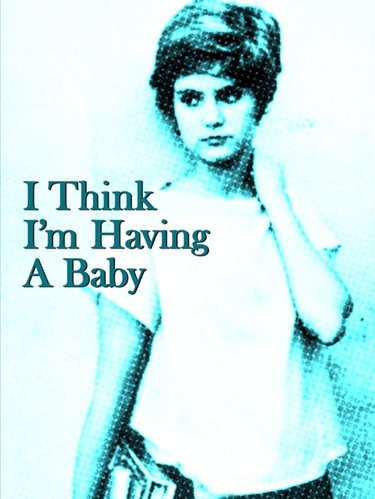
Seriously, whenever you watch any of the movies that Leigh made early in her career, your heart just goes out for. She was always either getting stalked or getting abused or getting lost or struggling through a pregnancy scare. In Fast Times At Ridgemont High, she actually did get pregnant and had to go to the abortion clinic on her own after Mike Damone failed to keep his promise to be there for her. It doesn’t get quite as bad as that for her in 1981’s I Think I’m Having A Baby but she still has to put up with a lot.
In I Think I’m Having A Baby, Jennifer Jason Leigh plays 15 year-old Laurie, who is not only socially awkward but also has the worst haircut that has even been inflected on an otherwise attractive person. Laurie idolizes her older cousin, Phoebe (Helen Hunt). Phoebe is dating a lunkhead jock named Peter (Shawn Stevens). Phoebe does Peter’s homework for him and Peter complains that Phoebe won’t go beyond some mild making out in his car. That’s the kind of relationship that they have. On the night of his birthday, Peter and Phoebe have an argument at the outdoor party that Phoebe went out of her way to set up. Peter drives off in his car, little realizing that the shy Laurie is hiding in the backseat. When Peter notices Laurie there, he pulls over and starts talking about how difficult (cue a massive eye roll from me) his life is. By the end of the night, Peter has revealed himself to be a whiny jerk and Laurie is no longer a virgin.
Soon afterwards, Laurie starts to feel ill. Her nerdy best friend, Marsha (Samantha Paris), thinks that Laurie might have the flu. Laurie, however, fears that it’s definitely not the flu. When Laurie tells Peter that she thinks she might be pregnant, Peter freaks out. He tells her to take care of it and makes it clear that he has no interest in being a father. Marsha says that she can’t understand why anyone would want to have a baby. She announces that she’s never going to have one. Instead, she’ll just adopt a dog. That really doesn’t help out Laurie, though. Eventually, Marsha and Laurie head to the clinic to discover whether or not Laurie is actually pregnant.
Meanwhile, Laurie’s little sister, Carrie (Tracey Gold), makes the mistake of letting her pet rabbits all socialize with each other. Carrie learns a lesson about the importance of keeping a safety barrier between male and female rabbits. At school, the students smirk as Mr. Fenning (David Birney) ties to teach a sexual education class. One of the students is played by future Breakfast Club member Ally Sheedy, making her television acting debut by uttering a handful of lines. The ultimate message is that no one knows anything and all of the education that they’ve gotten so far has been inadequate.
It’s pretty heavy-handed and some of the acting is a bit less than award-worthy. (Samantha Paris shouts nearly every line that she has.) But Jennifer Jason Leigh gives a good performance as Laurie, perfectly capturing not only Laurie’s fear of being pregnant but also the sadness that comes from being painfully shy. Your heart breaks for her when you watch this film. If nothing else, hopefully Laurie realizes, by the time the end credits roll, that she can do far better than Peter. For that matter, so can Phoebe. While everyone has a bright future ahead of them, Peter is destined to spend the rest of his life wondering why he peaked at 17.
Monsters will not be reviewed tonight so that we may bring you this very special presentation of 1983’s Have You Ever Been Ashamed Of Your Parents?
Yes, my retro television reviews will return next week but, until then, enjoy this blast from the past. In this hour-long presentation, Fran Davies (Kari Michaelson) is upset when her mother (Marion Ross) takes a summer job working as a maid for a rich family. At first, Fran thinks that Andrea (Jennifer Jason Leigh), the daughter of her mother’s employer, is a stuck-up snob but she soon learns that Andrea is instead painfully shy and that she has parents who are rich but unloving. Meanwhile, Fran’s parents are …. well, I wouldn’t call them poor. The film acts as if they’re poor but, from all indications, they appear to be comfortably middle class. The point is that they’re not rich but they are loving.
This is worth watching for Jennifer Jason Leigh’s performance as Andrea, a character to whom I could relate. It’s not easy being both shy and beautiful. Fans of great character actors will also be happy to see James Karen, playing Andrea’s father.
Now, without further ado, here is Have You Ever Been Ashamed Of Your Parents?
I love movies. And when I say that I love movies, I don’t mean that I just enjoy watching them. When I say I love movies, what I’m really saying is that my love of cinema is part and parcel of who I am. And I truly enjoy sharing that love with any person who will listen to me, or in this case, read what I have to say. For most of my life, I experienced the wonder of movies either at my local cinema or on VHS, DVD or Blu-ray at my house. It was a really big deal for me to travel about 45 miles to the big city of Little Rock and watch a movie at the Cinema 150, which was the coolest theater in Arkansas prior to the stadium seating multiplexes that we have now. Unfortunately, it had to close its doors way back in 2003, but I still have fond memories of the place. Watching movies at the Cinema 150 was reserved for the big, special effects movies like TRUE LIES and TWISTER where the Cinema 150 could give you that added value! Those days that included dinner at Casa Bonita and a movie at the Cinema 150 were great days. In 2015, I started taking my love of movies on the road, and these have been some wonderful experiences for a movie lover like me. Over the next week, I’m going to share a few of those experiences here. I hope you enjoy them!
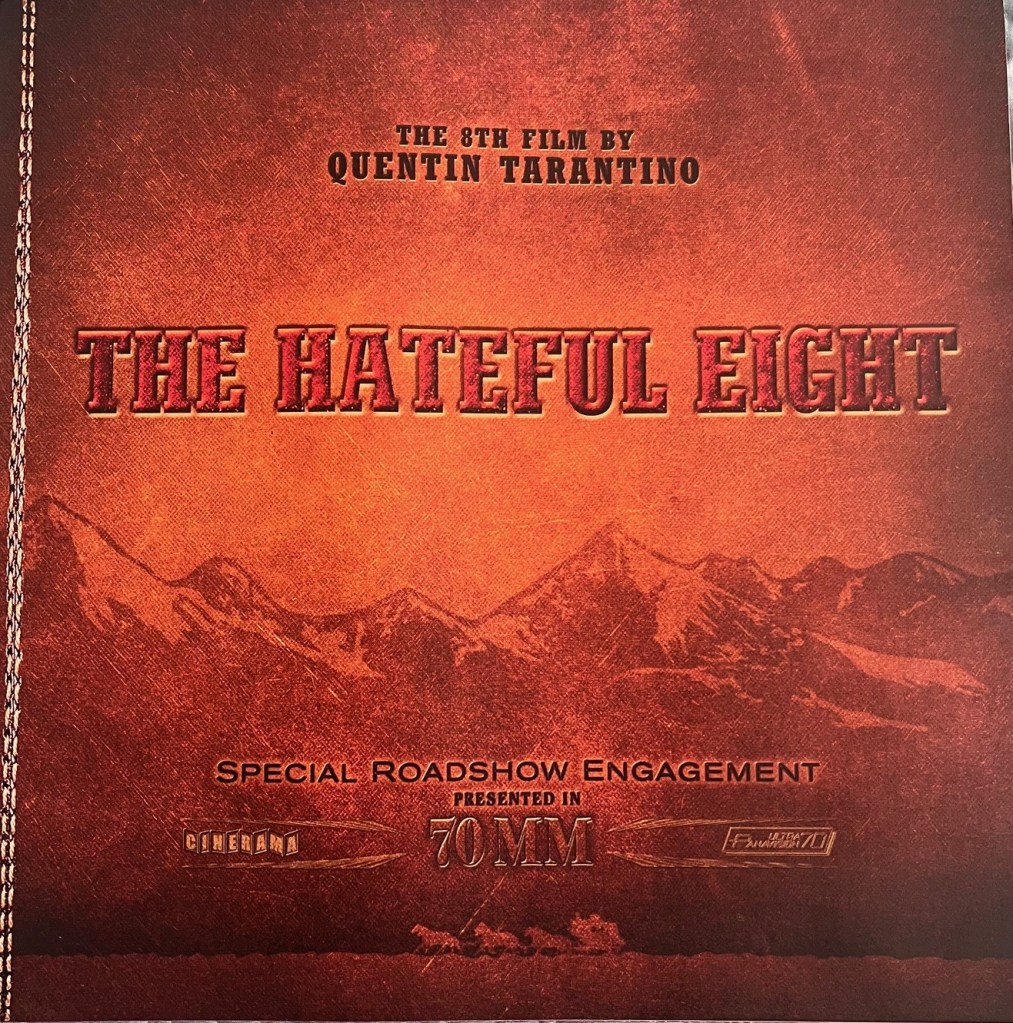
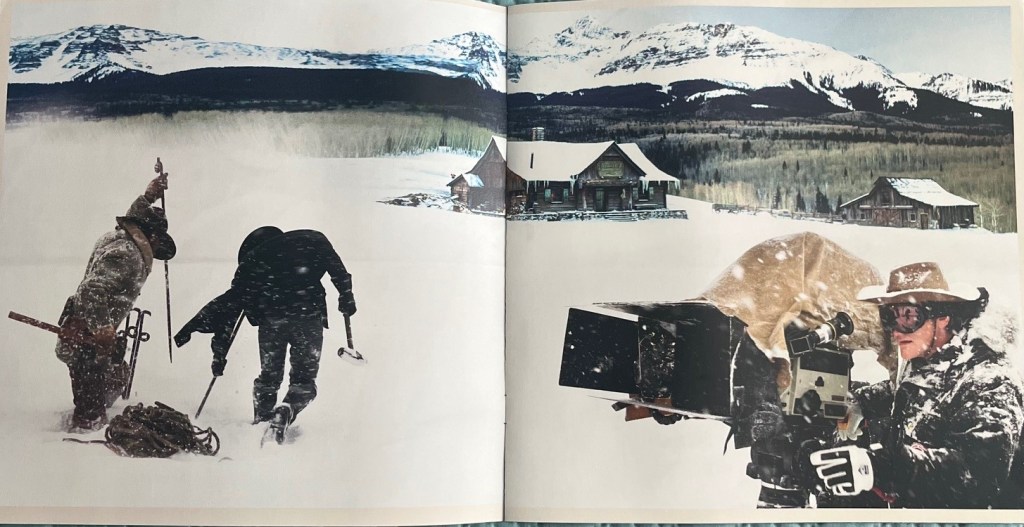
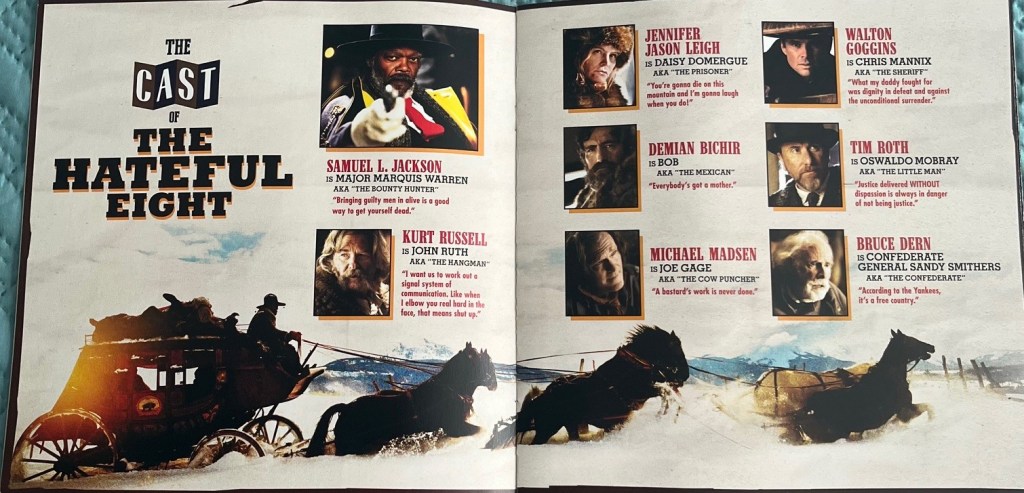
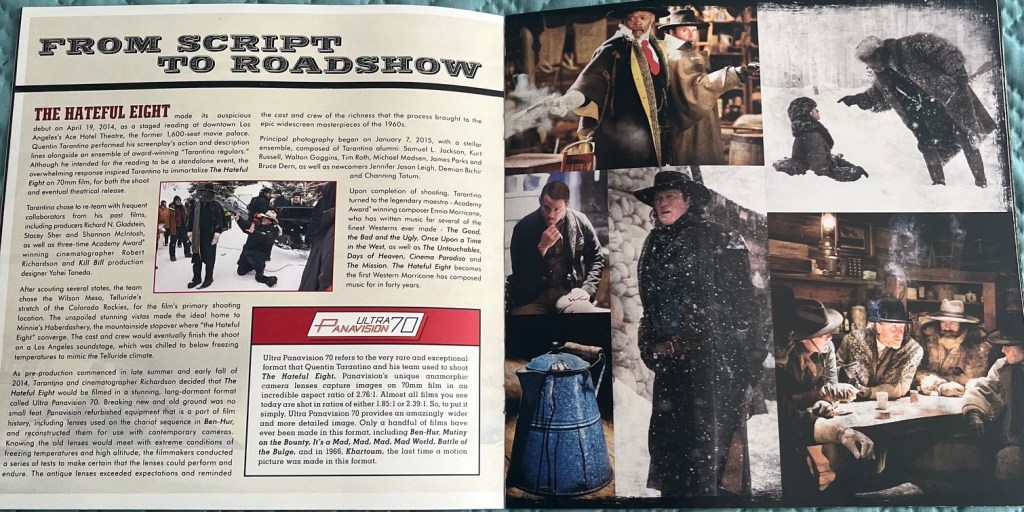
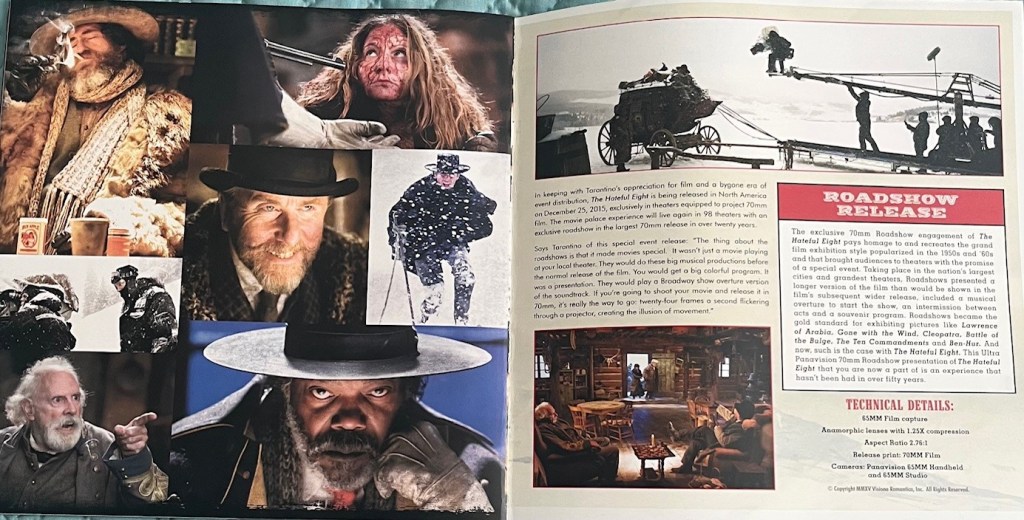
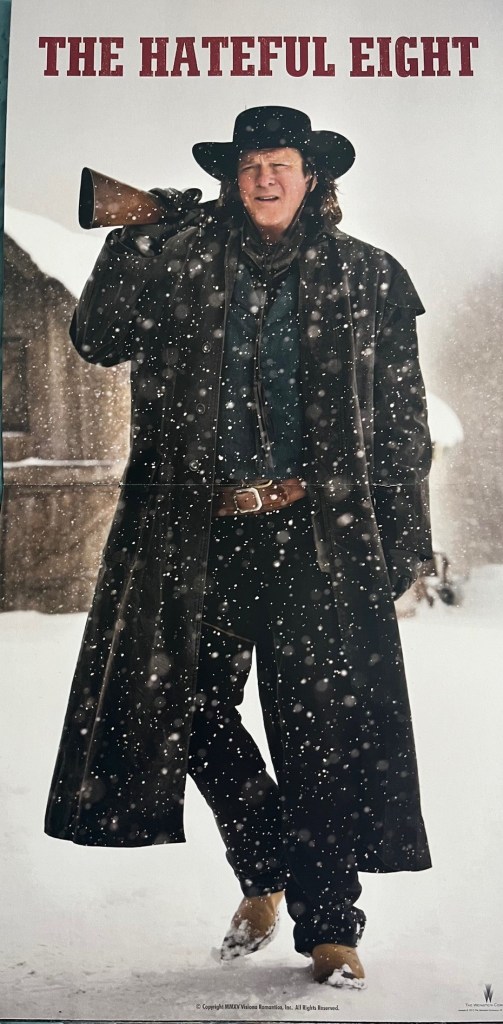
The first time I ever left the state of Arkansas specifically to watch a movie was the week after Christmas in 2015. My son Hank and I made the trip to Dallas, TX, actually Arlington, which was about a 4-hour drive, to attend the unique “Roadshow” presentation of THE HATEFUL EIGHT. Hank was 15 and I had introduced him to Tarantino’s films by this point. As an avid gamer, with a specific interest in first person shooter “War” games, he really liked INGLORIUS BASTERDS. He was a fun partner to have on this trip! I was excited to see Tarantino take on the western genre, one of my favorites. I thought Kurt Russell was perfect for the part of “the hangman” John Ruth, and we all know what Samuel L. Jackson is capable of when acting out Tarantino’s words. It was also a terrific showcase role for Jennifer Jason Leigh. But I have to admit the performance I enjoy the most of all is that of Walton Goggins as Sheriff Chris Mannix. As a big fan of the JUSTIFIED TV series, I couldn’t wait to see how he would perform in the company of those amazing film actors, and I was so glad to see him knock it out of the ballpark! The roadshow version of The Hateful Eight included a 70 MM projector, a 4-minute overture, 12-minute intermission, Cinerama logos, and a cool booklet. I still have the booklet from the show we attended. We both loved the movie. Hank and I were recently talking about Tarantino, and I asked him what his favorite Tarantino film was. Without hesitating, he said THE HATEFUL EIGHT. I love it as well. This “roadshow” movie experience is a very special memory that I have with my son. I’ve shared a few of the pictures from the booklet below. Enjoy!
Since Sunday is a day of rest for a lot of people, I present #SundayShorts, a weekly mini review of a movie I’ve recently watched.
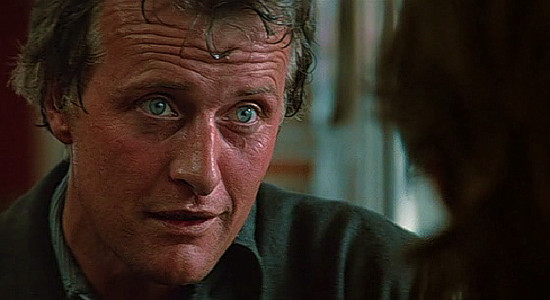
Jim Halsey (C. Thomas Howell) is driving a car across the country to San Diego. Tired and needing some help staying awake, he makes the major mistake of picking up a hitchhiker, the psychotic John Ryder (Rutger Hauer). Through a stroke of luck, he’s able to knock the “Hitcher” out of his car and keep going. Unfortunately, John Ryder isn’t content with being dumped by young Jim Halsey. Rather, he decides to stalk Jim and frame him for a cross-country murder spree.
I first saw THE HITCHER at a friend’s house when I was in the 4th grade. It scared the ever living crap out of me. I have never even pondered the possibility of picking up a hitchhiker because there’s always a chance that it could be a psycho like John Ryder. The genius of THE HITCHER is how it taps into the horror of everyday life. We pass by strangers every day. Who’s to know if there’s a John Ryder in our presence just waiting for us to invite them into our lives?!
What can I say about Rutger Hauer as John Ryder?! He absolutely owns the film. There’s no wonder his roles in BLADE RUNNER and THE HITCHER would come to define his career. He was one of the great artists, and I’ve missed him ever since I learned of his death while I was sitting on the beach in Perdido Key, FL in 2019. C. Thomas Howell & Jennifer Jason Leigh are excellent as well. As a big-time Rutger Hauer fan, THE HITCHER is an intense film that I watch at least once a year.
Five Fast Facts:
C. Thomas Howell admitted that he was actually afraid of Rutger Hauer on and off the set because of Hauer’s general intensity.
Writer, producer, and director Christopher Nolan (THE DARK KNIGHT, OPPENHEIMER) has listed THE HITCHER as one of his favorite movies.
Entertainment Weekly ranked THE HITCHER as the nineteenth scariest movie of all time.
Gene Davis, the psycho killer from Charles Bronson’s 10 TO MIDNIGHT plays Trooper Dodge in this movie. Based on my love of the Bronson Cannon classic, I love seeing Davis in any film.
President George W. Bush served on the board of the company that lent money to HBO to finance this movie. During the 2000 presidential election, Bush’s critics used his involvement in this film to discredit his stance on “family values” and his criticism of pervasive violence in Hollywood movies.
Today, the Shattered Lens wishes a happy birthday to director Amy Heckerling!
Today’s scene that I love comes from Amy Heckerling’s feature debut, 1982’s Fast Times At Ridgemont High. In just two minutes, Heckerling introduces us to almost all of the major characters, establishes the mall as the center of Ridgemont High culture, and leaves us with little doubt that we’ve entered a time machine and found ourselves in the 80s. Judge Reinhold looks like he’s on top of the world. Jennifer Jason Leigh bravely faces the pizza oven. Sean Penn makes us wish he had never lost his laid back stoner vibe. And the underrated Robert Romanus struts through the mall like a king overlooking his kingdom. With this scene, Heckerling announces that she has made the ultimate 80s high school film.
(And just a decade later, she would make the ultimate 90s high school film with Clueless.)
The year is 1952 and one neighborhood in Brooklyn is on the verge of exploding.
A thug named Vinnie (Peter Dobson) holds court at a local bar. (His associates include the moronic Sal, who is played by a very young Stephen Baldwin.) Some nights, Vinnie and his associates mug people for money. Sometimes, they just attack people for fun.
A strike at the local factory has entered its sixth month, with management showing no sign of compromising and Boyce (Jerry Orbach), the head of the union, showing little concern for the men who are now struggling to feed their families. The local shop steward, Harry Black (Stephen Lang), is a self-important braggart who never stops talking about how he’s the one leading the strike. At home, Harry ignores his wife, with the exception of a violent quickie. On the streets, Harry embezzles money from the union and uses it to try to impress the men that he would rather be spending his time with. But even the men who Harry considers to be friends quickly turn on him when he is at his most pathetic.
Big Joe (Burt Young) is a proud union member who is shocked to discover that his teenage daughter (Ricki Lake) is 8-months pregnant. Despite being out-of-work and not caring much for Tommy (John Costelloe), Joe puts together the wedding that appears to be the social event of a shabby season. But even at the reception, violence lurks below the surface.
Georgette (Alexis Arquette) is a transgender prostitute who loves Vinnie, even after he and his idiot friends stab her in the leg while playing with a knife. Beaten at home by her homophobic brother (Christopher Murney), Georgette sinks into drug addiction.
Tralala (Jennifer Jason Leigh) is an amoral prostitute, one who specializes in picking up military men and then arranging from them to be mugged by Vinnie and his gang. Sick of being exploited by Vinnie, Tralala heads to Manhattan and meets Steve (Frank Military), an earnest soldier from Idaho. For the first time, Tralala is treated decently by a man but Steve is set to ship out to Korea in a few days and, as he continually points out, there’s a chance that he might not return. For all of the happiness she finds in Manhattan, Tralala is continually drawn back to her self-destructive life in Brooklyn.
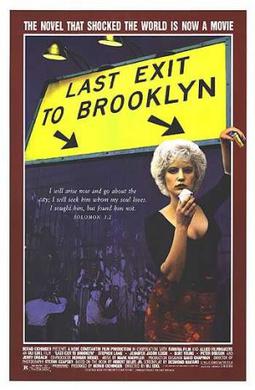
First released in 1989 and directed by Uli Edel (who directed another film about desperation, Christiane F.), Last Exit To Brooklyn is based on a controversial novel by Hubert Selby, Jr. In fact, it was so controversial that the novel was banned in several countries and, for a while, was listed as being obscene by the U.S. Post Office. I read the novel in the college and it is indeed a dark and depressing piece of work, one that offers up very little hope for the future. It’s also brilliantly written, one that sucks you into its hopeless world and holds your interest no matter how bleak the stories may be. Due to its reputation, it took over 20 years for Last Exit to Brooklyn to be adapted into a film.
The film is actually a bit more positive than the book. One character who appears to die in the book manages to survive in the film. The wedding subplot was a minor moment in the book but, in the film, it’s made into a major event and provides some mild comedic relief. That said, the film is definitely dark. Almost every character is greedy and angry and those who aren’t are victimized by everyone else. Unfortunately, the film lacks the power of Selby’s pungent prose. As a writer, Selby held your attention even when you want to put the book away. When it comes to the film, the lack of Selby’s voice makes it very easy to stop caring about the characters or their stories. Even with the attempts to lighten up the story, the film is still so dark that it’s easy to stop caring. The non-stop bleakness starts to feel like a bit of an affectation.
And that’s a shame because there are some brilliant moments and some brilliant performances to be found in Last Exit To Brooklyn. An extended sequence where the police fight the striking workers is wonderfully directed, with the police becoming an invading army and the men on strike being transformed from just factory workers to rebels. The scene where Boyce informs Harry that he’s not as important as he thinks is wonderfully acted by both Jerry Orbach and Stephen Lang. As Tralala, Jennifer Jason Leigh gives a raw and powerful performance, whether she’s shyly accepting Steve’s kindness or drunkenly exposing herself to a bar full of lowlifes. In many ways, Tralala is the most tragic of all the characters to be found in Last Exit to Brooklyn. She’s tough. She’s angry. But, in the end, she’s ultimately the victim of men who are too stupid to understand anything other than aggression. The neighborhood applauds her when she confidently walks past a line of cops and strikebreakers but the same people who cheered for her later try to destroy her.
The film ends on an ambiguous note, with a peace that feels very temporary. The message seems to be that men are at their worst when they’re bored so perhaps it’s best to keep them busy, whether with a job or perhaps a wedding. It’s a flawed film but it sticks with you.
Not only where they murdered in their sleep by a junkie loser who also happened to be a member of the family but, for the past five decades, their names have been slandered in a countless number of Amityville books and films. The house’s subsequent owner, George Lutz, realized that he could make a fortune by claiming that the murder house was haunted by a demon and, working with an author named Jay Anson, he did just that. Anson’s book, The Amityville Horror, was published in 1977. The first film version was released in 1979. Since then, there have been over 20 Amityville films, the majority of which feature reenactments of the DeFeo murders and all of which let Ronald DeFeo, Jr. off the hook by suggesting that it was the supernatural that led to the murders as opposed to a raging heroin habit.
With so many different films having been made by so many different directors and companies, it’s next to impossible to maintain any sort of consistent continuity from film to film. 2017’s Amityville: The Awakening acknowledges this in the most meta way possible by having the film’s lead character, Belle (played by Bella Thorne), watch the original film with two of her friends while discussing all of the sequels. In the world of Amityville: The Awakening, the films exist and the house is both famous and infamous. And yet, people still voluntarily live there.
The latest inhabitants are Joan (Jennifer Jason Leigh) and her three children, Belle, Juliet (McKenna Grace), and James (Cameron Monaghan). James is on life support after having been paralyzed in an accident and Joan is fanatically devoted to him. Though Dr. Milton (Kurtwood Smith) says that there’s no chance of James ever recovering and that he’s probably brain dead, Joan remains convinced that James will someday come back again. As she explains at one point, she’s abandoned her faith in God but she still has faith that there will be a way for James to recover.
No sooner has the family moved in then all of the typical Amityville stuff starts happening. Flies start buzzing around. The dog doesn’t want to be in the house. Juliet starts talking to people who aren’t there. One night, James flatlines but, after being dead for several minutes, his heart suddenly starts to beat again. Suddenly, James is showing indications that, though paralyzed and unable to speak, he is aware of his surroundings. Joan is convinced that James is recovering but is it possible that something else is happening?
If I may take the risk of damning with faint praise, Amityville: The Awakening is not bad for an Amityville film. Yes, you do have to wonder why the house has never been torn down and yes, I’m as bored with the big Amityville flies as anyone else. And the scenes where the characters discuss the DeFeo murders are icky and unethical as Hell. But, with all that in mind, this is actually one of the better-made Amityville films. Director Franck Khalfoun was also responsible for the better-than-it-had-any-right-to-be remake of Maniacand he brings a lot of energy to his direction here. He’s smart enough to realize that the audience is going to automatically roll their eyes at yet another Amityville film and he often rolls his eyes with them. As a result, we get some deserved digs at the shoddiness of the other films. Khalfoun is also smart enough to understand that Bella Thorne is more effective as a personality than an actress and, as such, the character of Belle is carefully developed to fit with Thorne’s public image. Jennifer Jason Leigh, on the other hand, is such a good actress that she actually brings some unexpected depth to the role of Joan and the film as a whole.
Amityville: The Awakening is one of the better Amityville films. You still have to wonder why that house is still standing, though. Seriously, tear it down already.
Joe Wright’s TheWomanInTheWindow is a film that was kicked around a bit before it was eventually released.
Based on the best-selling novel by A.J. Finn, TheWomanInTheWindow was filmed in 2018 and was originally set to be released in October of 2019. At the time, there were many who predicted that this would be the film for which Amy Adams would finally win an Oscar. However, after a few poor test screenings, the release of WomanInTheWindow was pushed back. The film’s producer, the now-infamous Scott Rudin, reportedly brought in Tony Gilory to re-shoot a few scenes. The film was finally set to be released in May of 2020 and, needless to say, it was no longer expected to be an Oscar contender. Then, the pandemic hit and, like so many movies, TheWomanInTheWindow was left in limbo. With its theatrical release canceled, the film was eventually purchased by Netflix. Netflix finally released it in May of this year. With all of the delays and the bad buzz, the critics had plenty of time to sharpen their knives and I don’t think anyone was surprised when the film got scathing reviews.
Though the film was completed long before the lockdowns, TheWomanInTheWindow does feel like a COVID thriller. Anna Fox (played by Amy Adams) is a child psychologist who is afraid to leave her Manhattan brownstone. She has agoraphobia, the result of a personal trauma. She’s not only scared to leave the safety of her apartment but she’s also terrified of anyone else getting inside. She spends her days spying on the neighbors, drinking wine, and watching old movies. Of course, that’s also what many people in the real world spent most of the past year doing. As I watched Anna freak out over some trick or treaters throwing eggs at her door, I was reminded of my neighbor who, a few months ago, nearly had a panic attack because she saw someone walking past her house without a mask. One could argue that the world itself has become agoraphobic.
Despite her housebound status, Anna does still have a few contacts with the outside world. For instance, a psychiatrist (played by Tracy Letts, who also wrote the script) comes by every weekend. She has a tenant named David (Wyatt Russell) who lives in her basement. She regularly has conversations with her husband and her daughter, who she says are both living in another state. And eventually, she meets Ethan (Fred Hechinger), the 15 year-old who has just moved in across the street. When Anna thinks that she’s witnessed Ethan’s father (Gary Oldman) murdering his mother (Julianne Moore), Anna calls the cops. However, when a totally different woman (Jennifer Jason Leigh) shows up and claims to be Ethan’s mother, Anna is forced to try to solve the mystery herself.
TheWomanInTheWindow is a disjointed and rather messy film but I’d be lying if I said that I didn’t enjoy it. The novel (which I also greatly enjoyed) was told entirely from Anna’s point of view, which means that we saw everything through the eyes of a sometimes unreliable narrator. The novel did such a good job of putting us inside of Anna’s head that it didn’t matter that the story itself was full of improbable coincidences. Director Joe Wright tries to recreate the novel’s uneasiness through garish lighting, crooked camera angles, and abrupt jump cuts. Sometimes, it’s effective (as when Anna tries to leave her apartment in the rain, just to pass out after having a panic attack) and other times, the technique feels a bit too obvious. And then there’s other scenes — like when Anna suddenly sees an overturned car in the middle of her living room — where it becomes brilliantly bizarre. It’s in those scenes, in which the film carefully balances on the line between the surreal and the silly, that Wright seems to be most comfortable as a director. Much as he did with AnnaKarenina, Wright fills TheWomanInTheWindow with scenes that suggest that, on some level, the characters are aware that they’re just characters in a B-melodrama.
Indeed, despite being directed by a great filmmaker and featuring a cast of award-winning actors, TheWomanInTheWindow is a B-movie and, when taken on those terms, it’s an entertaining melodrama. Interestingly enough, it actually helps that almost everyone in the film has either been miscast or is too obvious a choice for their role. Gary Oldman is such an on-the-nose choice to play a tyrannical authority figure that it actually makes sense that a film buff like Anna would automatically assume the worst about him. Julianne Moore has even less screen time than Oldman but she makes the most of it, playing yet another one of her talkative characters who doesn’t appear to have the ability to filter her thoughts. It’s the type of role that Moore specializes in and one that she could probably play in her sleep but she and Adams establish a good rapport and the scene that they share is one of the best in the film. Speaking of which, Amy Adams is so incredibly miscast as Anna that you actually find yourself rooting for her to somehow bring the character to life. Amy Adams is one of the few performers who can make being cheerful compelling so it seems like a bit of a waste to cast her as a self-destructive agoraphobe who can’t leave her apartment And yet, much as in HillbillyElegy where she was similarly miscast, Adams seems to be trying so hard to make her casting work that you appreciate the effort, even if she doesn’t quite succeed. She’s just so likable that you sympathize with her, even if she isn’t quite right for the role.
(Myself, I pictured Naomi Watts in the role when I read the book.)
As a film, TheWomanInTheWindow shares the book’s flaws. The plot is a bit too heavy on coincidences and we’re asked to believe that Anna, who can’t leave her house without having a panic attack and who is terrified of someone getting into her house without her knowledge, would also invite Ethan to visit her and allow David to live in her basement. As well, it’s hard to watch the movie without wondering which scenes were reshot by Tony Gilroy. (The final scene especially feels out-of-place with what came before it, leading me to suspect that it may have been added in response to those negative test screenings.) But, while the film’s defects are obvious, I still enjoyed it. It may be flawed but it’s hardly the disaster that some have made it out to be.