4 Shots From 4 Films is just what it says it is, 4 shots from 4 of our favorite films. As opposed to the reviews and recaps that we usually post, 4 Shots From 4 Films is all about letting the visuals do the talking.
This October, I am going to be using our 4 Shots From 4 Films feature to pay tribute to some of my favorite horror directors, in alphabetical order! That’s right, we’re going from Argento to Zombie in one month!
Today’s director is Freddie Francis. Though Francis may be best remembered as a cinematographer (who worked on three David Lynch films), he was also a director who did memorable work for both Hammer and Amicus in the 60s and 70s.
4 Shots From 4 Freddie Francis Films
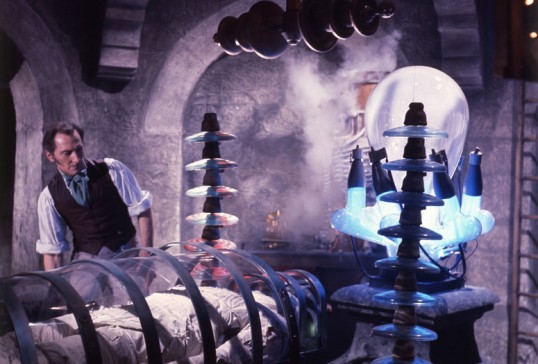
The Evil of Frankenstein (1963, dir by Freddie Francis, DP: John Wilcox)
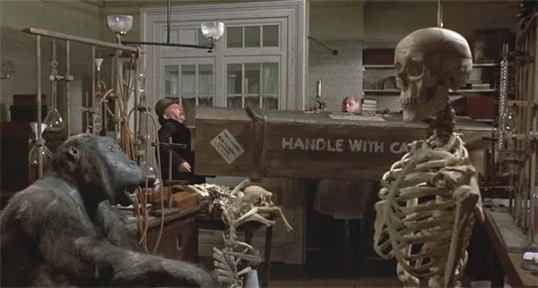
The Skull (1965, dir by Freddie Francis, DP: John Wilcox)
Dracula Has Risen The Grave (1968, dir by Freddie Francis, DP: Arthur Grant)
The Creeping Flesh (1973, dir by Freddie Francis, DP: Norman Warwick)
Argosy was one of the earliest and longest-lived of the American pulp magazines. Initially, it was published from 1882 to 1978. It was subsequently revived from 1989 to 1994 and then a second time in 2005 and 2006. Over the years, there were many different variations on the publication’s name but no matter what exactly Argosy was called, each issue featured stories by prominent pulp writers. Argosy published all genres, from adventure to mystery to science fiction to westerns to horror. The covers were done by some of the prominent of the pulp artists. Here are just a few horror-themed covers from Argosy:
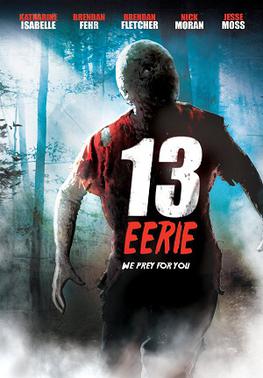
The 2013 film, 13 Eerie, takes place on an island that is not quite as deserted as our heroes originally assumed.
The island, known as the Eerie Strait, was once the home of a brutal, maximum security prison. The island is full of abandoned buildings and abandoned vehicles, all of which sit there as monuments to the brutality of mass incarceration. Prof. Tompkins (Michael Shanks) teaches a class in Forensic science and he brings six of his best students (played by Katharine Isabelle, Brendan Fehr, Brendan Fletcher, Jesse Moss, Kristie Patterson, and Michael Eisner) to the island. With the help of an ex-convict named Larry (Nick Moran), Tompkins has set up several fake crime scenes (often featuring very real corpses) for his students to investigate. For the class, the students are required to work in teams of two and the teams are not allowed to communicate with each other. However, each team is given a walkie-talkie so that they can still communicate with Tompkins.
Now, just speaking for myself, I would probably drop the class rather than take part in any of this. Seriously, as soon as you tell me that I’m going to have to spend my weekend hanging out at an abandoned prison and examining real corpses, I would probably walk out of the classroom and switch majors. (Then again, I probably wouldn’t be majoring in forensics to begin with.) But Tompkins’s students are very enthusiastic about heading off to the island. I guess if doing obviously dumb things, going off to an isolated location with an ex-con would be an attractive option.
Anyway, the students head over to the Island and — surprise! — it turns out that there’s a lot of extra dead bodies lying around. At first, the students think that the extra bodies are all a part of their class but then some of the dead bodies come back to life. It turns out that the island — much like the prison camp in Garden of the Dead — was once used a place to experiment on prisoners. As a result, many of the former prisoners have now been transformed into flesh-eating zombies who roam the island and look for new victims.
(And again, anyone who has ever seen a zombie movie, should have realized that this would happen. It always amazing me that people in zombie movies have apparently never come across Night of the Living Dead on television late at night. At the very least, you would think that these people would have at least read an article or two about The Walking Dead. And really, even if you have somehow gone your entire life without being exposed to any zombie media, the sight of the dead walking around should be enough to convince most people to run away.)
13 Eerie has some atmosphere but it doesn’t really bring anything new to the zombie genre. In fact, it so closely follows the rules of the genre that it actually gets kind of boring. I appreciated, as always, the committed performance of Katharine Isabelle and I also liked that the film ended on a bit of a down note. But, for the most part, 13 Eerie doesn’t bring anything new to the world of the living dead.
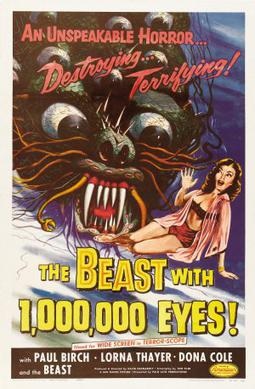
The 1955 film, The Beast With A Million Eyes, has three credited directors and reportedly, Roger Corman also stepped in and took over the direction as well, even though he received no screen credit. That’s a lot of directors for a relatively simple sci-fi/horror film. Reportedly, the problem with the directors came from the fact that The Beast With A Million Eyes was a non-union production and, after one day of production, the unions threatened to picket the set and basically shut down production unless the entire cast and crew signed up for the guilds. The unions eventually got their members and their money but all of the drama set production so far behind that Roger Corman stepped in, fired award-winning cinematographer Floyd Crosby, and proceeded to finish up the film himself.
As for the film itself, it takes place in the California countryside. Allan Kelly (Paul Birch, who was one of the first guys to get killed in The War of the Worlds and later played the dying alien in Corman’s Not Of This Earth) has no use for modern society and he has moved his family to a ranch in the California desert. His family is not particularly happy about this. His wife, Carol (Lorna Thayer), hates being isolated from the world. Their teenage daughter, Sandy (Dana Cole), is lonely and has a strained relationship with her mother. The only thing that makes Sandy happy is her boyfriend (played by Dick Sargent, who would later take over the role of Darin on Bewitched) and her dog. Perhaps the worst part of living out in the desert is that their handyman is a weirdo known as Him (Leonard Tarver).
Now, I should mention that, when I was growing up, my family moved around a lot. I spent a while living on a few farms that were owned by my aunts, uncles, and grandparents. Even after we finally settled down in Texas, I would still frequently visit their farms. I enjoyed visiting the farms, even though I’m pretty much a city girl at heart. I can say that The Beast With A Million Eyes definitely captured the isolated feel of country life. Watching the film, I could feel the heart of the unforgiving sun. I could feel the feeling of tall grass against my bare legs. And, at times, I could even remember the sound of roosters in the distance and crickets and grasshoppers chanting in the night.
Fortunately, my family was never bothered by aliens while we were on the farm. Unfortunately, the same cannot be said for the family at the center of The Beast With A Million Eyes. An alien decides to test its invasion plan on the family. First, the animals turn against the family, including the poor family dog. (This is probably not a film to watch if you feel about dogs the way that I feel about cats.) Then, the handyman suddenly turns against the family as well. The alien is taking over the minds of the living beings around, starting with animals and then moving on to humans. Can the family defeat the aliens? And will nature ever be the same?
Hey, I liked The Beast With A Million Eyes! Usually, when the film has a lot of directors, it results in a disjointed mess but The Beast With A Million Eyes actually had an interesting story and a lot of country atmosphere. As opposed to the stereotypically perfect 50s family, the family at the center of The Beast With A Million Eyes is believably dysfunctional but, in the end, they have to come together to save the humanity. I just hope the rest of the world would be willing to do the same.
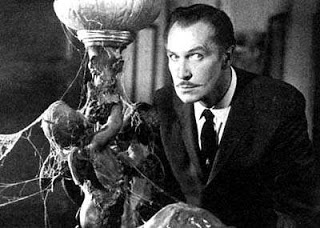
The original The House on Haunted Hill is a classic and one that we make it a point to share every Halloween. And since October is now halfway over, now seems like the perfect time to do so!
In this video, the Bauhaus perform their song Spirit for actual spirits. Spirit was the seventh single to released by Bauhaus. It peaked at Number 42 on the UK Singles Chart.
Director Christopher Collins is directed with overseeing three other videos, all for Bauhaus: Bela Lugosi’s Dead, Mask, and In The Flat Field.
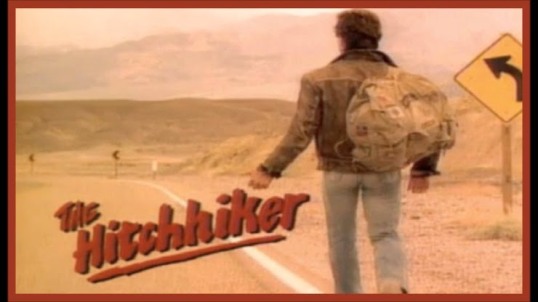
Tonight’s episode of The Hitchhiker depicts what happens with a greedy woman (Stephanie Zimbalist) attempts to force her Vietnam vet brother out of the house that has been his only sanctuary from all the troubles of the world. Needless to say, things do not go well.
This episode originally aired on September 16th, 1989.
The 1972 film, Garden of the Dead, takes place in a prison camp that sits out in the middle of what appears to the bayous. The prisoners spend their days working on the chain gang, breaking rocks and cleaning highways. The tough-as-nails guards spend their days watching the prisoners and carrying around their rifles. This is the type of prison camp where the prisoners are all talkative and boastful and the guards all wear sunglasses and every day is just like the next.
A group of prisoners are trying to brighten things up on the chain gang by using some experimental formaldehyde to get high. I’m sure that won’t lead to any complications! When the prisoners later try to escape from the prison camp, they’re quickly captured by the guards who proceed to violate all sorts of laws by gunning the prisoners down and then ordering the other prisoners to bury the dead bodies in the prison camp’s garden.
That night, the dead prisoners come back to life as zombies. Does this happen because they were getting high off of the formaldehyde or is it because the chemicals themselves were leaked into the garden? The film doesn’t make it particularly clear but it doesn’t matter. What’s important is that they’re now zombies. You really don’t need a whole lot of explanations when it comes to zombies. The dead prisoners are still obsessed with getting high and they start to kill everyone in the camp as a part of their effort to get their precious formaldehyde.
I’ll just admit right now that I absolutely love Garden of the Dead. Some of that is because Garden of the Dead is a very short movie, clocking in at barely an hour’s running time. It was a film that was obviously designed to be the second half of a double feature but no matter! That short running time means that there’s no need for extra padding and the action move quickly. The film ends before the viewer gets bored with the somewhat repetitive zombie action. Seriously, we need to normalize 50 minute films.
Another thing that I love about Garden of the Dead is that it is full of foggy bayou atmosphere. The film itself was obviously shot on a very low budget and on very cheap film but the grainy images actually contribute to the film’s nightmarish feeling. The film captures the feeling of being isolated in the middle of nowhere. One reason why the zombies in this film are frightening is because there’s literally nowhere safe to hide from them. Even if you can get out of the prison camp, you’ll still have to brave the wilderness that surrounds it.
Finally, I liked that the zombies in Garden of the Dead were smarter than the average zombies. Instead of just stumbling around and trying to eat every living thing that they met, these zombies worked together to get what they wanted. I especially liked the spazzy zombie who was always running around the prison camp and jumping and yelling at everyone. These are zombies who clearly enjoy being zombies and it makes Garden of the Dead all the more effective.
Filmed, reportedly over the course of a few days, in 1974 but not released until 1977, The MeatcleaverMassacre is known for two things.
First off, it’s known for opening and ending with on-screen narration for Christopher Lee. The distinguished-looking Lee begins the film sitting in what appears to be his own personal office. He talks to us about the history of the supernatural and the paranormal and he suggests that the story that we’re about to see, may very well change someone like me from being a skeptic into a believer.
Secondly, MeatCleaverMassacre is known for being one of the last films to be directed by the infamous Edward D. Wood, Jr. Now, it should be understood that Wood didn’t have anything to do with writing or producing the film. And when filming started, the director was a guy named Ken Burns who I assume is not the famed documentarian. Unfortunately, Burns was judged not to be up to the role of directing and he was fired. Edward D. Wood, Jr., who by this point was living in alcoholic squalor in Los Angeles and making his money through writing pornographic books, was brought in as his replacement. When the film was released, the director was credited as being “Evan Lee.” It wasn’t until 2022 that the film’s cinematographer (who was not paid for his work on the film) posted on Facebook that Ed Wood was the director. The cinematographer’s claim was backed up by the film’s editor.
Now, my immediate reaction to learning this was to think: “Oh my God, Ed Wood directed Christopher Lee!”
Well, sorry …. no. All the evidence points to Wood directing Meat Cleaver Massacre. It’s an Ed Wood film, even if it doesn’t feature Wood’s trademark obsession with angora. But the two scenes with Christopher Lee were apparently filmed for a different project, one that was abandoned. In 1977, the distributors of Meatcleaver Massacre purchased the footage of Christopher Lee and inserted it into their film, which was promptly sold as a Christopher Lee film. But the truth of the matter is that Lee’s footage was obviously meant for a far “classier” film than Meatcleaver Massacre and, judging from how dismissive Lee tended to be of the work that he did strictly for the money, it’s totally possible that he didn’t even know that he had become the star of Meatcleaver Massacre.
As for Ed Wood, he died a year after this film was released. At the time of his death, he had been evicted from his apartment and his landlord apparently threw away all of his scripts and movie memorabilia. Sorry, everyone. The first half of Ed Wood’s life story may be popular and funny but it definitely did not lead to a happy ending.
But what about Meat Cleaver Massacre, you may be asking. Well …. actually, it’s not terrible. It’s definitely a low-budget affair and none of the actors are particularly impressive but there are a few scenes that work when taken on their own terms.
James Habif stars as Professor Cantrell, who is first seen teaching a class on how to summon an Irish demon and then returning home to his family. Unfortunately, that night, one of this students, Mason (Larry Justin), orders his gang to break into Cantrell’s house. Mason says that he just wants to play a prank on the professor but instead, he and his idiot friends murder Cantrell’s family and leave Cantrell in a paralyzed state. That said, Cantrell may be paralyzed but he can still summon the demon Morak to hunt down and kill all of Mason’s friends, one-by-one. The deaths are grisly, with Mason’s home invasion bringing to mind the crimes of the Manson’s family and the demon’s acts of vengeance ranging from a disembowelment in the desert to an accident in a garage to an exploding movie projector.
As with most of Ed Wood’s film, the pacing is a bit off and the film is edited in such a way that it’s sometimes difficult to keep track of how much time has passed between scenes. The acting isn’t great, though it’s really not any worse than the acting you would expect to find in a low-budget 70s horror film. The scene in which one of Mason’s gang meets his fate in the desert is actually rather well-done and intentionally surreal. To be honest, there’s not much about the film that would make you think it was an Ed Wood production. As I said before, there’s no references to angora. There’s no Kelton the Cop. Criswell doesn’t make an appearance. By most accounts, Ed spent the final decade of his life broke and doing whatever he had to do to scrounge up enough cash to pay his rent and keep drinking. Doing whatever he had to do included directing films like Meatcleaver Massacre. I wonder how many other films were secretly directed with Ed Wood?
Anyway, if you’re a Christopher Lee or Ed Wood completist, Meatcleaver Massacre is currently available on Tubi.







 Through the Shattered Lens