Horror Scenes That I Love: The Conquistador Scene From Lucio Fulci’s Zombi 2


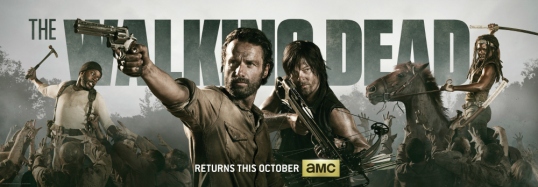
Both Arleigh and I have devoted a lot of time on the site to talking about our mutual admiration for the films of Italian horror director Lucio Fulci.  While Fulci will always have as many detractors as defenders, the fact of the matter is that Fulci has been a major and often unacknowledged influence on the direction of horror cinema.  To cite just one prominent example, the disturbing and graphic body horror of The Walking Dead has less to do with Romero and everything to do with Fulci.

Fulci remains a controversial figure and that’s not surprising.  For every Fulci lover, there’s a detractor.  For every good horror film that he made between 1979 and 1982, there’s a terrible one that he made in the years leading up to his   mysterious death.  But what everyone seems to agree on is that his 1979 epic Zombi 2 is one of the best (and most important) of the post-Romero Zombie films.  Zombi 2 may have been produced to take advantage of the popularity of Romero’s Dawn of the Dead but Fulci created a film that transcended its origins.

(Personally, I prefer Fulci’s film to Romero’s but that’s a discussion for another day.)

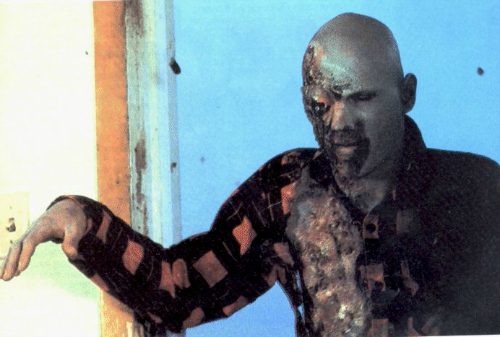
Zombi 2 is a film that’s provided us with a few scenes that we love here at the Shattered Lens.  Whether it’s the scene where a zombie wrestles with a shark or the very first Fulci’s signature eyeball impaling, Zombi 2 is a film that is full of memorable scenes.  Tonight, I want to highlight another moment from Zombi 2 — the conquistador scene.

As this scene begins, the film’s star are already fleeing from an army of zombies when they discover that it’s not just the recently deceased that they have to fear.  This is a scene that manages to be shameless, silly, and disturbingly effective at the same time.  In other words, it’s pure Fulci.

Horror Scenes I Love: Christine


Here we are again ghouls and ghoulettes. Time for another one of my favorite horror scenes. Some might say that the film I chose my latest favorite scene from is not truly a horror film but more a thriller are so definitely wrong. Both in it’s original novel form and in Carpenter’s film adaptation, Christine is definitely a horror film that eschews overt scenes of gore and violence and goes about it’s scares in a more round-a-bout way. It’s a horror film of a Boy-meets-Girl gone wrong. My own review of the film over a year ago show’s my positive take on this 80’s classic.

One of my favorite scenes from Christine happens midway through the film that also serves as the final clue that something may just be a tad different with Archie’s car named Christine. While the scene itself is not one of horror it does show the supernatural side of this film’s plot (a bit more simplified than the original novel’s but still keeping the theme of possessed inanimate objects giving life to itself). The combination of Christine showing Archie just what she’s capable of and Carpenter’s electronic film score as it segues into a seductive tune adds to the awesomeness of this scene.

Once this scene is over the audience now knows that Archie is fully gone over to Christine’s side and that the story will end not in a very happy note, but until that happens we see just how much this particular Boy seem to have finally met his ideal Girl.

A Grindhouse Horror Review: Zombie Holocaust (dir. by Marino Girolami)


Traditionally, I like to start my film reviews with a trailer but, with this trailer, I do feel the need to include a quick warning.  The film being advertised, 1980’s Zombie Holocaust, was released at the height of the Italian exploitation boom and  combined two notably gory genres of horror — the cannibal film and the zombie film.  The trailer below is pretty explicit (even by the standards of the free speech zone known as the Shattered Lens) and is definitely not safe for work.

Like many of the classic Italian grindhouse films, Zombie Holocaust opens in New York City.  A hospital attendant is caught devouring a cadaver in a morgue.  After he attempts to escape by throwing himself out of a window, it’s discovered that 1) he’s a native of the Asian Molucca islands and 2) he’s only one of several natives to have both recently immigrated to New York City and gotten a job at a morgue.  Dead bodies across NYC are being eaten and anthropologist Lori (played by Aelxandra Delli Colli, who is best known for being the only sympathetic character in Lucio Fulci’s New York Ripper) is determined to discover why.

In order to investigate, Lori and Dr. Peter Chandler (played by Ian McCullough, who was also in Fulci’s classic Zombi 2) lead an expedition to the island.  Almost as soon as the expedition arrives, they find themselves being pursued by not only cannibals but zombies as well!  Even worse, it turns out that there’s a mad scientist on the island.  Dr. Obrero (Donald O’Brien, an Irish actor who appeared in a few hundred Italian films of every possible genre) is convinced that he can unlock the secrets of life by experimenting on dead bodies and doing brain transplants.

(To be honest, I’ve seen this film a few times and I’m still not quite sure what exactly Dr. Obrero was trying to accomplish but I guess it doesn’t matter.  He’s a mad scientist with his own private laboratory so I guess he can pretty much do whatever he wants.)

I love Italian zombie films but, for the most part, I try to avoid the cannibal films.  I saw both Cannibal Ferox and Cannibal Apocalypse because they both featured Giovanni Lombardo Radice and I saw Cannibal Holocaust because, seriously, that’s one of those films that any student of cinematic horror has to see at least one time.  But otherwise, I tend to avoid the cannibal films because, to me, they’re just not that much fun to watch.  (And the fact that most of them contain scenes of actual animal cruelty doesn’t help…)

However, Zombie Holocaust is one of the rare cannibal films that I can watch and enjoy because it’s just so ludicrous and over-the-top.  It also helps that the film’s gore is so obviously fake that it becomes almost a postmodern statement on Italian cannibal films.  And, finally, this film has got zombies in it and who doesn’t love zombies?

Of the countless zombie films that came out of Italy during the early 80s, Zombie Holocaust is one of the odder entries in the genre.  While most Italian exploitation films were shameless when it came to imitating other movies, Zombie Holocaust attempts to outdo them all by cramming the conventions of three different genres into one mess of a movie.  As such, the movie starts out as a standard cannibal film just to suddenly become an almost shot-by-shot remake of Zombi 2 before then finally wrapping things up by having Donald O’Brien pop up, acting like Peter Cushing in a Hammer Frankenstein film.  There’s nothing graceful or subtle about this film’s everything-and-the-kitchen-sink approach to its story and, while the end result isn’t exactly pretty, it’s still watchable in much the same way that a televised police chase is watchable.

Director Marino Girolami was a veteran filmmakers who was ending a long career with his work on Zombie Holocaust and you have to admire the fact that, as opposed to many other filmmakers who have found themselves in a similar situation, he made an honest and unapologetic exploitation film, a shameless rip-off of about a thousand other films.  Instead of being embarrassed by the film’s silliness, he instead embraced it and his cast did the same.

Playing the lead role, Scottish actor Ian McCullough plays his character with an attitude that, at times, almost comes across as a parody of stiff upper lip English imperialism.  You may have to be a fan of grindhouse cinema to truly appreciate it but, whenever I’ve sat through this film, I always found myself smiling every time that McCullough discovered that another member of his expedition has been killed and responded with a frustrated, “And none of this would have happened if you had simply done as I had told you to do.”  By the end of the film, I was expecting McCullough to approach the last remaining native and tell him, “You’re a better man than I am, Gunga Din.”

However, the film is truly stolen by Donald O’Brien, who plays the mad scientist with an almost alarming sense of authenticity.  For the most part, nothing that O’Brien says during the film makes the least bit of sense but he delivers the lines with such conviction that it really doesn’t matter.  In one of the film’s most famous scenes, O’Brien delivers the line, “Patient’s screams annoying me…performed removal of vocal chords.”  It takes a special type of actor to make a line like that work and O’Brien was that actor.

Indeed, watching a film like this, it’s hard not to admire the fact that both the filmmakers and the cast managed to stay sane regardless of how ludicrous the film eventually became.  That’s perhaps the best way to describe Zombie Holocaust.  It’s ludicrous but it’s still a lot of fun.

(Speaking of ludicrous and fun, when Zombie Holocaust was released here in the States, it was renamed Dr. Butcher, M.D. and it was apparently advertised by a sound truck known as the Butchermobile.  To me, that sounds like a lot of fun and it again reminds me that I was born a few decades too late.)

Horror Trailer: V/H/S (Red Band)


This film has already been making the film festival circuit so for genre fans it’s nothing new, but for the general public are probably still not aware that it even exists.

V/H/S is another one of those “found footage” films that everyone either hates or loves. I’m sort of straddling the fence between the two. I can dig well made ones, but some have been awful. From what I’ve been hearing about this horror anthology the reactions seem to run the gamut of it being good to almost great. I keep hearing and reading that despite flaws and unevenness in the way the five stories were told (each with it’s own filmmaker directing the segment) the film overall should satisfy genre fans everywhere. Like having so many different segments with a different filmmaker and storytelling style should give at least someone watching one good thing to like if not more.

The one thing about this film that has me interested in making it one of my must-see for this October is the fact that one of the filmmakers doing a segment in the film is none other than Ti West. His horror work has been sparse but eah one he’s released has become favorite of mine. Here’s to hoping his segment in V/H/S is not one of the flawed ones.

6 Trailers From The Girl Who Has Returned Home


Now that I’m back home from my vacation, it’s time for me to post yet another installment in my raison d’être, Lisa Marie’s Favorite Grindhouse and Exploitation Film Trailers!  In keeping with this month’s theme, all of today’s trailers are horror-related.

Enjoy!

1) Virus (1980)

Let’s start things out with the end of the world.  From 1980, it’s the story of what happens when the world gets hit by the “Italian flu.”

2) The Evil of Frankenstein (1964)

It’s just not October without some Hammer horror.

3) Horror of Dracula (1958)

And wherever you have Frankenstein, you have to have Dracula…

4) The Mummy’s Shroud (1967)

As long as we’re taking a look at Hammer horror icons, let’s not forget the Mummy.

5) Baron Blood (1972)

This film is from the great Italian filmmaker, Mario Bava.

6) Invasion of the Blood Farmers (1972)

“They plant the dead and harvest the living!”

Horror Film Review: House At The End of the Street (dir. by Mark Tonderai)


Hi there!  I’m back!  For the past two weeks, I’ve been “on the road,” traveling from my home in Texas to Baltimore, Maryland and then back to Texas again.  It was a great two weeks and a much-needed vacation and now, I am back at my office here at the Shattered Lens Bunker, and I am refreshed and I am ready to get caught up on what really matters: reviewing movies.

This is October, perhaps the third greatest month of the year.  Traditionally, October is horror month here at the Shattered Lens and, for my first post-vacation film review, I want to take a look at an underappreciated horror film that came out right before I left for Maryland.  It was released to theaters on September 21st, was the number one film in the country for a week, and got next to no love from either mainstream critics or my fellow film bloggers.  It’s still playing at a theater near you and, believe it or not, it’s not that bad.  The name of the film?  The House At The End of the Street.

(Or, as my BFF Evelyn and I called it, “The House at the End of the Cleavage” because seriously…)

In The House At The End of Street, recently divorced Sarah (Elisabeth Shue) and her daughter Elissa (Jennifer Lawrence) move to a small country home.  Sarah has managed to buy a house that she really shouldn’t be able to afford and the new neighbors quickly explain to them that this is because, many years ago, a crazy girl named Carrie-Ann was living at the house at the end of the street and she murdered her parents before then disappearing into the woods.  Apparently, this has caused all of the property values in town to plummet and I really have to wonder why.  I’m not a real estate expert (for instance, I have no idea what a mortgage is and I have no desire to learn) but, personally, I would love to live next to a murder house.  Seriously, imagine the interesting conversations that could be started by saying, “So, my neighbor buried a salesman in his basement…”

But anyway, it turns out that Elissa has a perfect view of the house at the end of the street from her bedroom window and she quickly discovers that the house is not deserted.  It turns out that Carrie-Anne’s brother Ryan (Max Thieriot) is living in the house and, despite being shunned by the entire community, he seems to be a nice, sensitive guy.  Despite her mother’s misgiving, Elissa befriends Ryan and defends him against everyone who claims that he’s crazy.

Of course, what Elissa doesn’t know is that there’s another girl in Ryan’s life and she’s locked up in his basement…

When I look over the negative reviews of House at the End of the Street (especially the ones written by male film bloggers), I frequently come across the phrase “lifetime movie.”  Their argument seems to be that House At The End of the Street, with its emphasis on a single mom raising her daughter, was essentially just a PG-13 rated Lifetime movie.

Well, they’re right.

But so what?

Seriously, Lifetime movies are a lot of fun to watch when you’re in the right mood for them and that’s a perfect way to describe House At The End Of The Street.  It’s a lot of fun, the type of silly horror film that’s fun to watch with a group of friends.  Max Thieriot plays the type of cute but damaged (and potentially dangerous) outsider that every girl has had a crush on and, for the boys in the audience, there’s plenty of cleavage and visible bra straps.

Finally, I think the main reason that House At The End of the Street stayed with me is because both Elisabeth Shue and Jennifer Lawrence really invested themselves in their roles.  They were totally believable as mother and daughter and their loving but occasionally contentious relationship felt totally true-to-life (or, at the very least, it was true to my life).  Lawrence and Shue both give performances that bring some unexpected depth to this underrated film.

Horror Review: Down the Road (by Bowie Ibarra)


Down the Road by Bowie Ibarra is part of the renaissance of the zombie tale. While not a great novel, Ibarra’s first foray into novel length (though I would categorize this tale more as an extended novella than a full-blown novel) storytelling hits more than it misses.

Ibarra uses the the so-called “Romero Rules” in regards to the topic of the flesh-eating zombies in Down the Road. There are none of the Olympic-level sprinters of the recent trend in modern zombie films (Dawn of the Dead remake) and Ibarra’s zombies remain slow, shambling creatures with the barest of motor functions and instinct (unlike the demon-possessed undead of Brian Keene’s great, albeit nihilisitic The Rising and City of the Dead). The story’s told through the point of view of the main character, George Zaragoza, a high school teacher in an Austin school. The story starts off in quick form with George quickly going through preparing to leave the city to head for his boyhood home. There’s not of the so-called “origin” chapters that usually used to explain how the crisis first began and where. Instead the reader gradually learns from George’s interaction with people he meets during his roadtrip home about what exactly has been happening the past couple of weeks.

To say that George’s travels once he leaves Austin was eventful would be an understatement. He doesn’t just have to deal with the growing numbers of undead roaming the roads, by-ways and towns in his path, but also the danger of looters and criminals. Ibarra gives FEMA and Homeland Security top-billing as the living danger to bookend the growing undead. I may not agree with all his characterization of those two government agencies, but he does describe vividly just how quickly such organizations can go from protecting its citizens to posing a bigger danger in the end.

But his travels was not just about one dangerous crisis after the other. George meets up with other survivors who show and make him feel alive and give him some hope that not everyone has devolved to their most basest instinct. It’s in some of these encounters that Ibarra has injected a bit more sex in a zombie tale that other authors have not ventured deeply into. Who said a zombie tale meant character’s libido has to be suppressed or be non-existent. How Ibarra came about in creating the situations for the sex scenes might seem incredulous at first, but who said such things couldn’t occur in high stress situations especially when people find themselves trying to survive day0by-day or even hour-by-hour.

Overall, Ibarra’s first work looks to be a work of love by a fan of all things zombie and who knows exactly what other fans just like him want from their zombie tales. He doesn’t overdo in layering his story with layers upon layers of themes and social commentary. While the theme of how far an individual will go to survive in a crisis is there, Ibarra still sticks to keeping the story moving quickly from one end to the other. I actually thought the novel as too short. He had so much ideas introduced in the first couple chapters that I think he could’ve added another 150 pages and not lose the reader’s interest. But I’m assuming that’s where the sequel novel comes in.

Down the Road: A Zombie Horror Story by Bowie Ibarra is a very good first try by a new writer in keeping the tradition of the zombie tale alive during this second Golden Age for the subgenre. While there’s flaws in this first novel, the story itself moved at such a fast pace that I barely noticed the flaws until after I was done and by then I was already hooked by the world he had put on paper. I hope that with all the feedback he’s received from fans and fellow writers both, Ibarra’s sequel to this novel will be less of a jewel in the rough and more of the polished gem that I feel he has in him to write. I highly recommend this first novel to all fans of the zombie genre. They won’t be disappointed.

Horror Scenes I Love: The Prophecy (dir. by Gregory Widen)


What is it about stories of angels and demons that makes people gravitate towards them. One doesn’t even have to be religious to feel a sense of curiosity towards such stories. Is it because deep down we put some sort of faith that we’re being watched over by the One who created us. I’m not religious, but I always found stories about angels and their rebellion against God quite interesting. It’s the age-old tale of love, betrayal and redemption on a cosmic and divine scale. It’s from one such story that I find the latest “Scenes I Love”.

The film The Prophecy was one I had already reviewed a while back and whenever I come across it on cable I tend to drop whatever I’m doing and watch it. I go into much more detail why I enjoy this film very much in my review of it. This time I like to share one scene from the film that hints at just how much more epic this film could’ve been if it was a full-blown novel. It helps that the performance by Viggo Mortensen as Lucifer shows that even in 1995 he was already a great actor who hasn’t been discovered yet. While it’s deserving to say that Christopher Walken owned this film with his work in it I’d say Mortensen’s portrayal of The First Angel, The Morningstar and God’s Most Favored was something I wish a film could be made around.

Horror Scenes I Love: Dawn of the Dead (dir. Zack Snyder)


Continuing our horror-theme for October the latest “Scenes I Love” entry comes from one of those hated remakes that was actually better than expected (and for some better than the original…yes, heresy). It’s from the excellent extended opening sequence for Zack Snyder’s remake of George A. Romero’s horror classic, Dawn of the Dead.

In most zombie films we never truly get to see the early hours of the zombie apocalypse from the ground. We always hear about it second-hand after it has already occurred. In Snyder’s remake we get to see it first-hand just as it’s flaring up to uncontrollable levels.

I’m a traditional Romero-type zombie enthusiast myself, but I must admit that Snyder’s choice to make the zombies in this remake runners does add a sense of the end-times as we see zombies after zombies running and gunning after neighbors who either don’t know what the hell just dropped in their neighborhood or just too slow to get away. Love how this sequence even has a shout-out to the original version with the traffic helicopter that flies in to give a bird’s-eye view of the whole apocalypse coming down on everyone.

A Horror Quickie With Lisa Marie: Slaughter High (dir by George Dugdale, Mark Ezra, and Peter Litten)


Before I left on my vacation, I watched several free horror movies on Fearnet.  The majority of those films were worth exactly what I paid for them but, occasionally, I came across a film that was worth a quarter or two more.  One of those fifty cent films was Slaughter High.

Though it was obviously made a few years earlier, Slaughter High was released in 1986 and was a part of the whole mid-80s slasher cycle.  Like many of the films in this cycle, Slaughter High opens with a high school prank gone wrong.  Poor Marty (Simon Scuddamore) is the victim of an incredibly cruel April Fool’s Day prank that ends with him totally naked and being dunked in a toilet by a group of 8 students who are surprisingly sadistic.  Of course, part of that sadism could have something to do with the fact that they all appear to be in their 30s, yet they’re still students in high school.  A coach (who appears to be the only teacher in the entire school) happens to come across the students tormenting Marty and he punishes them by ordering them to go to the gym and start doing push ups.

“This is all Marty’s fault!” one of the 8 sadists exclaims.

So, naturally, they play yet another prank on poor Marty.  This prank involves Marty smoking a poisoned joint and then accidentally spilling a jug of acid on his face.  As his tormenters watch, a seriously disfigured Marty is taken out of the school on a stretcher.

Exactly ten years later, the 8 sadists (who have now all graduated) get an invitation to attend a reunion at the old high school.  When they arrive, they discover that 1) they’re the only ones who have been invited and 2) the high school has been abandoned and is on the verge of collapsing.  Now, you might think that this might lead at least one of them to remember that it’s been exactly 10 years since they totally destroyed Marty’s face and life but you would be wrong.  Instead, the group decides to break into the old school and spend the night.

You can probably guess how well that works out.  Even as our guests discover that random pictures of Marty have been posted throughout the school, none of them suspects that something bad might be about to happen.  In fact, it’s not until one of them drinks a beer that’s been spiked with acid that it occurs to any of them that they might not be alone…

Slaughter High is something of a surprise, a low-budget horror film that works exactly because it doesn’t make any sense.  Nobody in this film acts like a logical (or halfway intelligent) human being and that — along with a genuinely creepy setting, a camera that never stops prowling through the dark corridors of that dilapidated school, and some surprisingly brutal death scenes — all comes together to create a narrative that feels more and more dream-like as the story continues.  Narrative logic is ignored in favor of nightmarish imagery and the end result is a slasher film that seems to be directly descended from Lucio Fulci’s Beyond trilogy.

It’s hard to talk about Slaughter High without talking about the film’s ending and it’s impossible to talk about that ending without spoiling the entire film.  So, I’ll just say that Slaughter High has two endings.  One concludes the action at the school and then, a few minutes later, there’s a twist ending that concludes the film as a whole.  Just on the basis of a few online reviews that I’ve read, the “twist ending” is something that people either love or they hate.  Myself, I felt that the film’s first ending would have been a perfect place to end things but, at the same time, the twist didn’t bother me.  If nothing else, it nicely complimented the entire film’s lack of narrative logic.

A sad sidenote: Simon Scuddamore, who plays Marty here, never made another film because he apparently killed himself a few weeks after filming his role.  On another odd casting note, Caroline Munro plays one of Marty’s high school tormentors despite being in her mid-30s at the time.