For tonight’s episode of The Twilight Zone, we present to you The Last Night of A Jockey. In this episode, Mickey Rooney plays a jockey who has just been banned, for life, from horse racing. The self-pitying jockey is offered the chance to change his life with “one wish.” He wishes that he could be a “big man” and, unfortunately, he gets his wish.
This episode is basically a one-man show for Mickey Rooney and he makes the most of it. I almost feel like I have to share this episode, just in case my earlier review of The Manipulator inspired anyone to see that misbegotten film. Needless to say, Rooney is a lot more impressive in Last Night Of A Jockey than he was in The Manipulator.
This episode originally aired on October 25th, 1963.
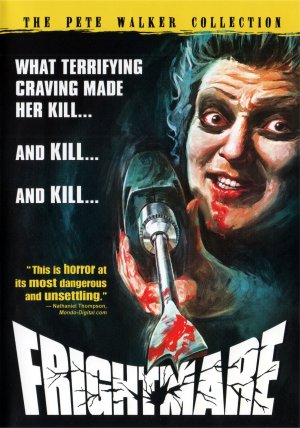
Since I already reviewed one British film about cannibalism earlier today, I figured why not review another one? Pete Walker’s film Frightmare was released in 1974, two years after the release of Death Line. You have to wonder what was going on in British society in the early 70s that led to so many cannibal films. When watched together, Frightmare and Death Line present a vision of a society that was devouring itself, both literally and figuratively.
Frightmare tells the story of Dorothy (Shelia Keith) and Edmund Yates (Rupert Davies). Dorothy is a fortune teller who has something of a violent temper. Edmund is her loving but abused husband. However, Dorothy has more than just a temper. She also has a taste for human flesh. She’s just spent 15 years in prison, convicted of killing and eating a man. However, she has now been “found sane,” (and that’s a term that is repeated, with increasing irony, throughout the entire film) and she has been released. She’s even reading fortunes again!
Jackie (Deborah Fairfax) is Edmund’s daughter by his first marriage. She’s devoted to her father and, at the same time, scared of her mother. She doesn’t believe that her mother is truly sane, despite the fact that her psychiatrist boyfriend, the well-meaning but arrogant Graham (Paul Greenwood), continues to remind her that Dorothy has been “found sane.” Jackie knows that Dorothy still wants to eat human flesh so, every weekend, she takes the train to Dorothy’s home and delivers meat. Jackie tells Dorothy that it’s human flesh but, in reality, it’s just a placebo. When Graham finds out what Jackie’s doing, he is outraged. After all, Dorothy has been found sane!
Jackie, however, has other things to worry about. Her younger half-sister, the rebellious Debbie (Kim Butcher), is living with her. Along with dating an obnoxious biker, Debbie also resents the fact that Jackie is obviously Edmund’s favorite. And, as quickly becomes clear, Debbie is as much of a sociopath as her mother…
Speaking of which, Dorothy may have been found sane but it’s obvious that she’s not. (Throughout the film, no matter how erratic Dorothy’s behavior becomes, Graham continually assures us that she has been found sane.) It also become obvious that Jackie’s placebos are not doing the trick. Dorothy is once again murdering the random people who come to get their fortunes told. And Edmund is helping her cover up the crimes, all the while pathetically telling anyone who will listen, “They said she was sane….they said she was sane…”
Frightmare is one of those films that you really do have to see in order to understand just how effective it is. It’s an undoubtedly pulpy story and there’s not a subtle moment to be found in the entire film but it doesn’t matter. Frightmare is properly named because it is pure nightmare fuel. This is a film that work both as a family melodrama and a satire on the trust that people put into authority (the authorities said that Dorothy was sane so, everyone assumes, she must be) but ultimately, this is an intense and frightening little film. That’s largely due to Sheila Keith’s ferocious performance. She turns Dorothy into a force of cannibalistic nature.
Feel free to have a Death Line/Frightmare double feature. Just don’t expect to have much of an appetite afterward…
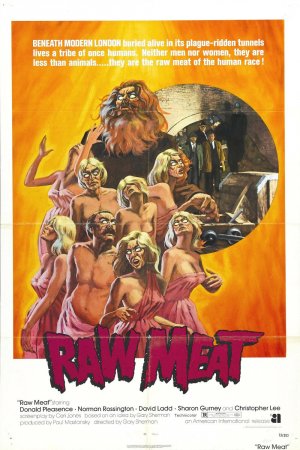
Before I get to far into reviewing the unjustly obscure British horror film, Death Line, I want you to take a look at the film poster below.
This is the poster that was used when Death Line was released in the United States. Now, I have to admit that I like this poster but that’s largely because I’m a lover of old grindhouse and exploitation films. And this poster is a perfect example of the grindhouse aesthetic. Of course, it’s not surprising that this poster is largely misleading.
First off, the title has been changed to Raw Meat. That makes sense when you consider that the film is about a cannibal but it also creates the mistaken impression that this film is primarily about cannibalism. It’s not. Actually, Death Line is a film about class differences and government secrecy. (Though it’s probably best to leave this as a topic for another post, I think it can be argued that almost every film made in the UK is, in some way, about class and secrecy.)
The bearded man is obviously meant to be a stand-in for Death Line‘s cannibal. Known as the Man and played by Hugh Armstrong, he is the last descendant of a group of Victorian railway workers who were buried alive during the construction of the London underground. The Man is the product of generations of cross-breeding. And while the Man is definitely frightening at first, he ultimately emerges as the film’s only truly sympathetic figure. He’s hardly the intimidating figure pictured above. Instead, he’s a heart-breakingly pathetic figure who, having grown up in the shadows of the underground, is only capable of uttering three words: “Mind the doors.” There’s a lengthy scene in which the Man howls in anguish after the death of his wife. I don’t care if he was a cannibal, it still brought tears to my eyes.
The poster does offer up a glimpse of two men who appear to be searching an underground tunnel. This image, at the very least, is accurate. The two men are Inspector Calhoun (Donald Pleasence) and his partner, Detective Sergeant Rogers (Norman Rossington). When the Man makes the mistake of attacking, murdering, and eating a member of a Parliament, Calhoun and Rogers are the ones who end up investigating the case. What’s interesting is that neither Calhoun nor Rogers are presented as being sympathetic characters. In fact, Calhoun is something as a fascist. When Christopher Lee tells them to stop investigating the case, Calhoun is less upset over the government cover-up and more angered by the fact that he doesn’t like being told what to do.
There are two other people investigating the case, though neither one of them are present on the poster. Alex Campbell (David Ladd) is an American college student and, though Alex starts out as sympathetic to the Man, that changes when the Man kidnaps his girlfriend (Sharon Gurney) and tries to make her into his new wife. Alex serves as a stand-in for the self-righteous activists who, in most films, would be responsible for saving the day. It’s telling of just how cynical a film Death Line is that Alex ultimately turns out to be even more ineffectual than Calhoun and Rogers.
Finally, the poster offers up a group of half-naked people. I have no idea who these people are supposed to represent but I’m sure they helped to sell tickets!
As for Death Line, it’s an unjustly obscure film. Whether you track it down under the original title or the Americanized title of Raw Meat, be sure to watch it.
4 Shots From 4 Films is just what it says it is, 4 shots from 4 of our favorite films. As opposed to the reviews and recaps that we usually post, 4 Shots From 4 Films is all about letting the visuals do the talking.
4 Shots From 4 Films
The City of The Living Dead (1980, directed by Lucio Fulci)
The Beyond (1981, dir by Lucio Fulci)
The House By The Cemetery (1981, directed by Lucio Fulci)
(I originally shared this film back in 2011 — can you believe we’ve been doing this for that long? — but the YouTube vid was taken down. So, I’m resharing it today!)
For today’s excursion into the world of public domain horror, I offer up the film debut of Francis Ford Coppola. Before Coppola directed the Godfathers and Apocalypse Now, he directed a low-budget, black-and-white thriller that was called Dementia 13. (Though, in a sign of things to come, producer Roger Corman and Coppola ended up disagreeing on the film’s final cut and Corman reportedly brought in director Jack Hill to film and, in some cases, re-film additional scenes.)
Regardless of whether the credit should go to Coppola, Corman, or Hill, Dementia 13 is a brutally effective little film that is full of moody photography and which clearly served as an influence on the slasher films that would follow it in the future. Speaking of influence, Dementia 13 itself is obviously influenced by the Italian giallo films that, in 1963, were just now starting to make their way into the drive-ins and grindhouses of America.
In the cast, keep an eye out for Patrick Magee, who later appeared as Mr. Alexander in A Clockwork Orange as well as giving a memorable performance in Lucio Fulci’s The Black Cat. Luana Anders, who plays the duplicitous wife in this film, showed up in just about every other exploitation film made in the 60s and yes, the scene where she’s swimming freaks me out to no end.
(One final note: I just love the title Dementia 13. Seriously, is that a great one or what?)
For tonight’s journey into the world of televised horror, we present to you the last ever episode of Baywatch Nights. In this episode, David Hasselhoff and Angie Harmon investigate a haunted restraunt. Then Angie disappears and the Hoff has to rescue her!
So, I have to admit, there’s a part of me that’s sad knowing that this was the last ever episode of Baywatch Nights. As silly as the show may have been and despite the fact that the cameraman was always drunk, it was a fun show. Who knows? Maybe, someday in the future, I’ll do an in depth series of reviews on this series.
Hmmmm….maybe. Actually, right now, I’m just looking forward to finishing up 2015.
But, anyway, here’s the final episode of Baywatch Nights!
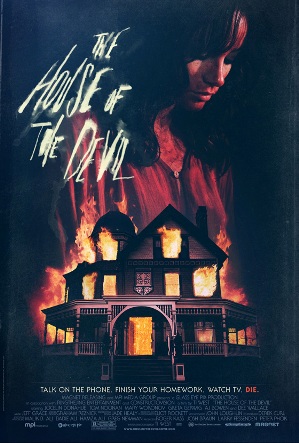
When was the last time you actually saw a good movie on Chiller? Seriously, it doesn’t happen that often and perhaps that’s why, when, a few years ago, I curled up on the couch and watched 2009′s The House of the Devil on Chiller, I wasn’t expecting much. However, I was pleasantly surprised to discover that The House of the Devil is actually one of the most effective low-budget horror films that I’ve seen in a while.
The plot of House of the Devil is pretty simple. Samantha (a likable performance from Jocelin Donahue) is a college student who has just moved into her first apartment. However, Samantha can’t really afford to pay the rent so she agrees to take a babysitting job for the mysterious Mr. Ullman (Tom Noonan, who is just so creepy in this film). Ullman offers her one hundred dollars to come babysit for the night. Samantha agrees and, with her skeptical friend Megan (Greta Gerwig, who is hilarious here), drives out to Ullman’s home. It turns out that Ullman lives in an isolated house out in the country and that he actually doesn’t have any children. Instead, he wants Samantha to babysit his aging mother while he goes into town so he can watch the lunar eclipse which just happens to be happening on that exact night! Samantha is reluctant but agrees to stay when Ullman offers to pay her $400.00.
And can you guess where this story is headed?
This film isn’t titled House of the Devil for nothing.
As I said before, I wasn’t expecting much from The House Of The Devil. I was honestly expecting it just to be a typical, low-budget Chiller horror film, good for nothing more then maybe a laugh or two and maybe a few memorably silly gore effects. Having now seen the film, I’m very happy to say that I was incorrect. The House of the Devil is a well-made, effectively creepy horror film and it’s one that other horror filmmakers could very much learn from.
Don’t get me wrong. The plot of House of the Devil isn’t going to win any points for creativity. Even if the film didn’t open with a wonderfully self-concious title card informing us that the movie is “based on a true story” of Satanic activity, it would be pretty easy to figure out that nothing good is going to happen once Samantha goes into the house. But that actually works to the film’s advantage. The House of the Devil feels like an old ghost story told at a sleepover. You know where the story’s heading but you get scared nonetheless because, ultimately, it’s the type of story that plays on the fears that everyone has.
Also, in the style of the scary ghost story told by a storyteller with a flashlight pointed up at her chin, The House of the Devil understands that the best horrors are the ones produced by an overstimulated imagination. With the exception of two or three scenes, this is not a gory film nor is it a film that sadistically lingers over scenes of torture and carnage. Instead, director Ti West takes his time to set up both the story and the characters. This is a film where the horror comes more from a carefully constructed atmopshere than any sort of easy shock effects. As a result, this is a horror film that actually stays with you after you watch it.
The House of the Devil is a film that I’m very happy to recommend.
As a film reviewer, I usually try to introduce my readers to good films that they might otherwise miss. However, sometimes, you see a film that’s so bad, bland, and/or boring that you simply have to speak up to prevent anyone else from wasting their time watching it. And sometimes, you come across a film so bad that, even 3 years after it was first released, you still need to raise the alarm because this film represents everything that has recently cheapened horror as a genre.
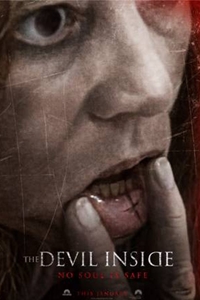
The Devil Inside is one such film.
The Devil Inside is yet another horror film that’s disguised as a “found footage” documentary. A camera crew follows Isabella Rossi (Fernanda Andrade) as she wanders around Rome and investigates the rite of exorcism. It seems that Isabella’s mom, Maria, committed a triple homicide 20 years previously and Isabella thinks that Maria’s possessed by a demon. Isabella recruits two priests to perform an exorcism on her mother and — well, the rest of the movie is pretty much a remake of every other horror film that’s been released over the past 20 years. The only surprise comes at the end of the film when a title card appears, inviting the viewers to visit a web site about the Rossi murders so that they can learn more about the “ongoing investigation.” If there was ever a point, during the film, when you actually believed that the story being told was true, that might be an effective ending. However, since the whole films feels false, that title card just feels insulting.
The Devil Inside was one of the first movies to be released in 2012 and, 3 years later, it remains one of the worst ever made. The performances aren’t particularly memorable, the scares are nearly non-existent, and there’s not a thing to be seen in this film that one can’t see in a better horror film. Whereas films like The Last Exorcism, Apollo 18, and the third Paranormal Activityfilm actually managed to find a new wrinkles to the whole “found footage” genre, The Devil Inside seems to be content to be mediocre, boring, and, worst of all, boring. Perhaps that’s why when I think about The Devil Inside, my immediate response is, “No more!”
No more horror films disguised as documentaries. No more artfully awkward scenes where characters say things like, “Is the camera on?” and “Are you getting this?” Listen, aspiring horror filmmakers — the gimmick no longer works! We know that you didn’t just happen to find this footage sitting in some warehouse somewhere. Don’t end your film by telling us that we should visit some equally fake web site so that we can see more “proof” that what we’ve just seen is real. Just stop it. It was a good gimmick while it lasted but it’s no longer effective. It’s time to discover some new tricks with which to fool your audience.
In short, it’s time for horror filmmakers to stop expecting us to be content with stuff like The Devil Inside.
The Cabinet of Dr. Caligari is a film that I’ve shared twice previously on the Shattered Lens. The first tim was in 2011 and then I shared it again last year. Well, you know what? I’m sharing it again because it’s a classic, it’s Halloween, and everyone should see it!
Released in 1920, the German film The Cabinet of Dr. Caligari is one of those films that we’ve all heard about but far too few of us have actually seen. Like most silent films, it requires some patience and a willingess to adapt to the narrative convictions of an earlier time. However, for those of us who love horror cinema, The Cabinet of Dr. Caligari remains required viewing. Not only did it introduce the concept of the twist ending (M. Night Shyamalan owes his career to this film) but it also helped to introduce German expressionism to the cinematic world.
My initial reaction to The Cabinet of Dr. Caligari was that it simply wasn’t that scary. It was certainly interesting to watch and I was happy that I was finally experiencing this film that I had previously only read about. However, the film itself was obviously primitive and it was difficult for my mind (which takes CGI for granted) to adjust to watching a silent film. I didn’t regret watching the film but I’d be lying (much like a first-year film student) if I said that I truly appreciated it after my first viewing.
But you know what? Despite my dismissive initial reaction, the film stayed with me. Whereas most modern films fade from the memory about 30 minutes after the end credits, The Cabinet of Dr. Caligari has stuck with me and the night after I watched it, I even had a nightmare in which Dr. Caligari was trying to break into my apartment. Yes, Dr. Caligari looked a little bit silly staring through my bedroom window but it still caused me to wake up with my heart about to explode out of my chest.
In short, The Cabinet of Dr. Caligari passes the most important test that a horror film can pass. It sticks with you even after it’s over.
For the curious who have 50 minutes to spare and an open mind to watch with, here is Robert Wiene’s The Cabinet of Dr. Caligari…
The month of October is winding down and I still have a stack of horror films to watch. To say I’ve been lagging behind on my horror-related entertainment would be an understatement. Yet, I’ve still been able to catch several horror films that tells me that all the doom and gloom that the current state of horror is running out of ideas.
The four shots chosen from four horror films I’ve witnessed this month run the gamut of Cronenbergian body-horror mashed together with some Bentley Little-style narrative, a disturbing little family horror piece from Austria, a siege horror with major Biblical overtones right up to that rare sighting of a great horror western.
4 SHOTS FROM 4 FILMS
Goodnight Mommy (dir. by Veronika Franz and Severin Fiala)
Bone Tomahawk (dir. by S. Craig Zahler)
Let Us Prey (dir. by Brian O’Malley)
Starry Eyes (dir. by Kevin Kölsch and Dennis Widmyer)





 Through the Shattered Lens