4 Shots From 4 Films: The Craft, From Dusk Till Dawn, Scream, Thinner


4 Shots From 4 Films is just what it says it is, 4 shots from 4 of our favorite films. As opposed to the reviews and recaps that we usually post, 4 Shots From 4 Films lets the visuals do the talking!

This October, we’re using 4 Shots From 4 Films to look at some of the best years that horror has to offer!

4 Shots From 4 1996 Horror Films

The Craft (1996, dir by Andrew Fleming)

From Dusk Till Dawn (1996, dir by Robert Rodriguez)

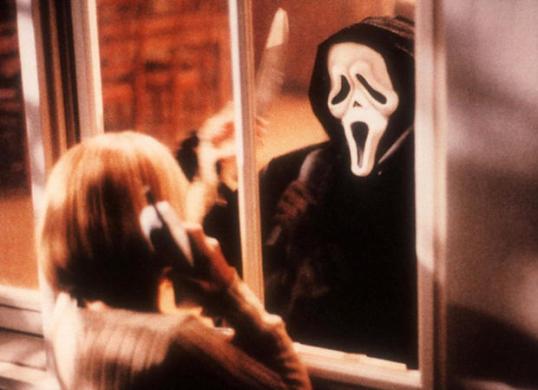
Scream (1996, dir by Wes Craven)

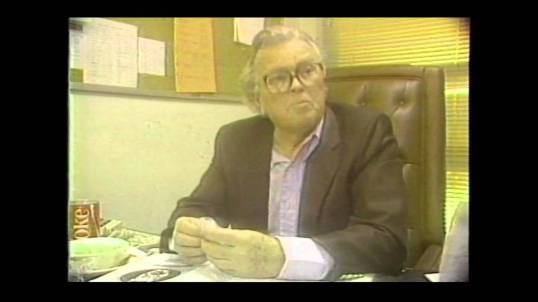
Thinner (1996, dir by Tom Holland)

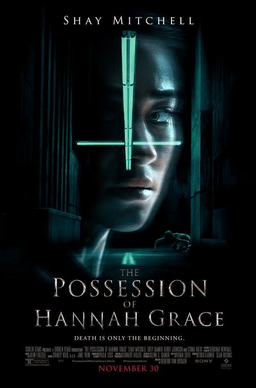
Horror Film Review: The Possession of Hannah Grace (dir by Diederik van Rooijen)


2018’s The Possession of Hannah Grace is a real idiot film.

As in, “Hey, idiot, there’s a dead woman behind you!”

The dead woman in question of Hannah Grace (Kirby Johnson), who was once alive and had brown eyes but then she was possessed by demons and her eyes turned blue.  An attempted exorcism didn’t go well, with the older priest ended up getting impaled on a conveniently placed hook and the younger priest being one of those young bearded types who had obviously never done an exorcism before.  Finally, Hannah’s father, Grainger (Louis Herthum), was like, “Ah, screw it,” so he just smothered her to death,

Unfortunately, the demon is still inside of Hannah’s body and, three moths later, that means trouble when it shows up at the morgue.  Megan (Shay Mitchell), who is working the night shift, is an ex-cop with drug and alcohol problems and she’s not sure if Hannah is really wandering around or if she’s just hallucinating things.  The film probably would have been more interesting if we had been as uncertain as Megan as to whether or not she was really seeing Hannah wandering around the morgue.  Unfortunately, though, the film starts with the unsuccessful exorcism and, as a result, we already know that it’s Hannah and we’re just kinda like, “We get it.  You’ve got issues.  Who cares?”

Anyway, even though the morgue is a restricted area, people keep coming down there and getting killed.  What’s interesting is that everyone who dies is on duty at the hospital yet hardly anyone seems to notice or care that they’re suddenly absent.  We do see one security guard wandering why his partner hasn’t returned but that’s pretty much it.

And it should be scary because this is one of those films that seems to exclusively take place in dark rooms and unlit hallways but it never really is, largely because we know everything that Hannah’s going to do before Hannah does it.  And everyone is so stupid that there’s not really any suspense as to whether or not Hannah’s going to be able to rip them up into little pieces of naive medical personnel.  This all, of course, leads to Megan declaring that she’s now a stronger person and will be able to face the the future with renewed confidence so I guess all of those people dying for no good reason was worth it.

Anyway, I usually like to make sure that my reviews usually run at least 500 words but I kind of feel like that would be a waste of effort where The Possession of Hannah Grace is concerned.  I’ll be happy with 440.

Horror On The Lens: Night Tide (dir by Curtis Harrington)


Night Tide

First released in 1961 and directed by Curtis Harrington, Night Tide stars a young Dennis Hopper as Johnny, an awkward sailor.  Johnny meets Mora (Linda Lawson), who works as a “mermaid” on the pier.  For Johnny, it’s love at first sight.  However, the more that Johnny pursues her, the more he learns about both her mysterious past and the dark fate of her previous boyfriends.

Night Tide is low-key and atmospheric gem of a movie, one that serve as an inspiration for low-budget filmmakers every where.  Lawson is perfectly cast as the enigmatic Mora but the film really belongs to Dennis Hopper.  Hopper’s naturally off-key presence made him perfect for the role of Johnny.

Night Tide is one of those low-budget movies that, because it’s in the public domain,  has been released on DVD (often in inferior form) by dozens of different companies.  Often times, films like this turn out to be fairly forgettable.  Night Tide, however, is an exception.

Music Video of The Day: Written in Blood by She Wants Revenge (2007, dir by Justin Warfield)


Oh my God, I love this video.

Everything — from the atmosphere of ominous decadence to the dark cinematography to the wonderfully sordid art direction — just works perfectly.  Fortunately, this is one of those videos where we actually have the names of some of the people who worked behind the scenes so here they are:

Director — Justin Warfield
Director of Photography — Simon Thirlaway
Production Design — Ariana Nakata, Production Designer
Costume and Wardrobe — Brooke Dulien and Stefanie King Warfield, Wardrobe Stylists

Great work by all!  Jean Rollin would be proud.

Enjoy!

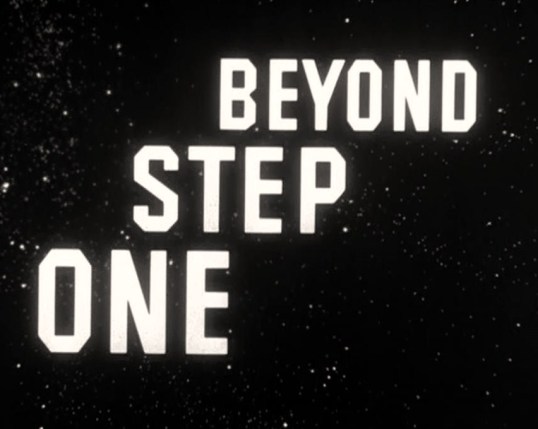
Horror on TV: One Step Beyond 2.5 “Night of the Kill” (dir by John Newland)


When young Davey Morris tells his parents that he’s been hanging out with a friendly Bigfoot-type creature, all of the adults in town react in the worst way possible.

This episode, from the second season of One Step Beyond, was one of the first to deal with the legend of Bigfoot.  Needless to say, it’s the adults who turn out to be the true monsters in this scenario.

This episode originally aired on October 20th, 1959.


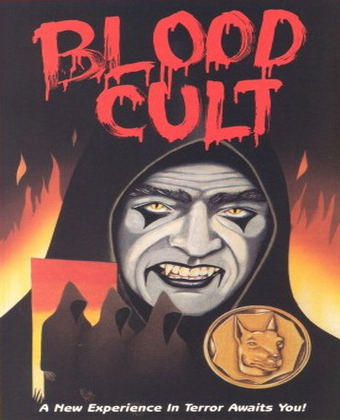
The TSL’s Horror Grindhouse: Blood Cult (dir by Christopher Lewis)


Oh no!  There are bad things happening!  On a small college campus, co-eds are being stalked and killed by a masked murderer who carries a cleaver.  With each murder, the killer chops off a limb and carries it off with him.  He also leaves behind a mysterious gold medallion, one that appears to feature an etching of a dog on it.  It’s a bit of a mess, really.

Early on, in the 1985 film, Blood Cult, a narrative crawl informs us that the events that we’re watching occurred during the previous winter.  These murders, we’re told, were “the strangest crimes in recent recorded history.”  The film opens with one of those crimes.  In an homage to Psycho and every other slasher movie ever made, the first murder occurs in a shower.  The showering victim looks straight at the camera during her scenes.  When she delivers her lines (“Is that you?  Did you get the pizza?  Did you get my anchovies?”), she does so in a flat, Oklahoma accent.  In short, these scenes proudly announce that we are watching an amateur, regional production.

Anyway, the film itself deals with Sheriff Ron Wilbois (Charles Ellis), who must solve the murders before they harm his chances of being elected to the U.S. Senate.  Fortunately, he has some help from his daughter, Tina (Judi Adelman).  Tina is a librarian, which means that she has magical research powers.  All she has to do is open up a book and, thirty seconds later, she will have discovered whatever needs to have been discovered.  Unfortunately, Tina may have some secrets of her own.  She’s also dating an rather dorky guy named Joel (James Vance).  Joel is the type of guy who, when he meets his girlfriend’s father in a diner, lazily props his feet up in the seat across from him.  I mean, come on, Joel!  At least try to impress the old man!  I kept expecting Sheriff Wilbois to yell, “Get the Hell away from my daughter!” and maybe draw his gun but apparently, that was not the Sheriff’s style.  The Sheriff’s a good, honest lawman.  He’s not the type to abuse his powers.  He just wants to solve the murders, go to the Senate, and drink a lot of Coke.  Seriously, there are so many Coke cans in this movie that, if not for the film’s amateur status, one could be forgiven for assuming that the film was produced by the Coca-Cola Corporation.

Can you spot the Coke?

There’s a twist to Blood Cult but it’s not a particularly surprising one.  In fact, there’s really nothing surprising about Blood Cult.  Some of the gore effects are effective in a low-budget way.  One victims gets beaten to death by another victim’s severed head.  That was kind of creative.  For the most part, though, Blood Cult never escapes the constraints of its low budget and its status as an amateur production.  I did feel that Charles Ellis, who was a regional theater actor, gave a fairly good performance as Sheriff Wilbois.  He came across like being a genuinely nice guy.  I would have voted for him.  The rest of the cast was forgettable at best and painfully stiff at worst.

Blood Cult is historically significant because it was actually the first movie to ever specifically be made for the home video market.  Every straight to video movie ever made is a descendant of Blood Cult.  Apparently, it was filmed in nine days, with the cast and crew taking a week off from their days jobs.  To the film’s credit, there are a few atmospheric scenes, largely because Oklahoma is a naturally atmospheric state.  But, for the most part, Blood Cult has a “Grandpa Picked Up a Video Camera And Made A Horror Film” look and feel to it.  I have a weakness for amateur, regional horror movies and the DVD of Blood Cult comes with a likable director’s commentary but, for the most part, this is a film that’s significant mostly as a piece of historical trivia.


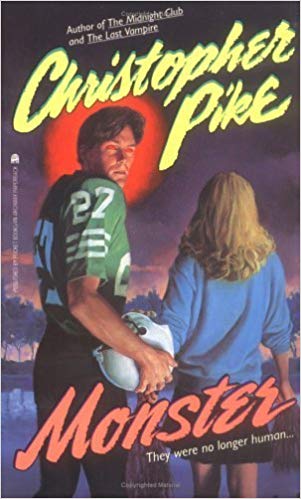
Horror Book Review: Monster by Christopher Pike


“They were no longer human…” the cover of 1992 first edition of Christopher Pike’s Monster announces and indeed, they’re not!  That cover, I should add, makes the book look a lot more light-hearted than it is.  It makes it look like it’s some sort of sci-fi comedy about a demonically possessed football player when there’s actually very little about this book that could be considered light-hearted.

This book is dark.  Like, seriously, dark.

It opens with popular high school student Mary Carlson walking into a party while carrying a shotgun.  She blows away a football player named Todd and then a cheerleader named Kathy and then she points the gun at her own boyfriend, Jim.  Fortunately, the new girl at school, Angela, manages to distract Kathy just long enough for Jim to take off running into the woods.  Mary goes chasing after him but she gets arrested before she guns him down as well.  It’s probably a good thing that Jim survived because, without him, how would the football team ever win another game?  After all, the team sucked just last season before all of the players and the cheerleaders suddenly got super strong!

Anyway, Mary says that she was shooting her friends because they were no longer human and, according to her, the three of them have been picking up people and killing them in a warehouse.  Police Lt. Nguyen doesn’t believe her but Angela feels a bit of an obligation to investigate Mary’s story.  And really, it’s the least she can do considering that she promptly starts flirting with Jim right after Mary’s arrested.

It quickly becomes obvious that something strange has happened to all of the school’s athletes and cheerleaders.  Maybe it has something to do with the mysterious crater from which the town gets its drinking water.  Angela notices that Jim tends to eat everything in sight, including a raw hamburger.  After she and Jim make out and she ends up getting some of his blood on her, she soon finds that she’s eating everything in sight.  Is it possible that some sort of monster has not only taken over Jim but is now taking over Angela as well!?

Yes, it is.  That’s bad news for Kevin, who is Angela’s BFF and who is totally in love with her even though she only views him as being a very good friend.  Oh, poor Kevin!  Kevin is one of the few wholly sympathetic characters in the book and he still ends up with a broken neck.  Like I said, this book is dark!

It all ends on an appropriately dark note and I guess that’s the important thing.  This book was written in 1992 and, at the time it was written, it was probably meant to be a metaphor about the dangers of having unsafe sex, as Angela is infected after fooling around with Jim.  Reading it today, though, it feels more like a commentary on just unsafe school has become over the past decade.  Mary Carlson, blowing away her friends because they’re “not human,” brings to mind so many recent gun-related tragedies.  It’s a bit difficult to read.

Anyway, Monster is a seriously dark book but still an effectively macabre story.  Nobody was as skilled at traumatizing young readers as Christopher Pike!

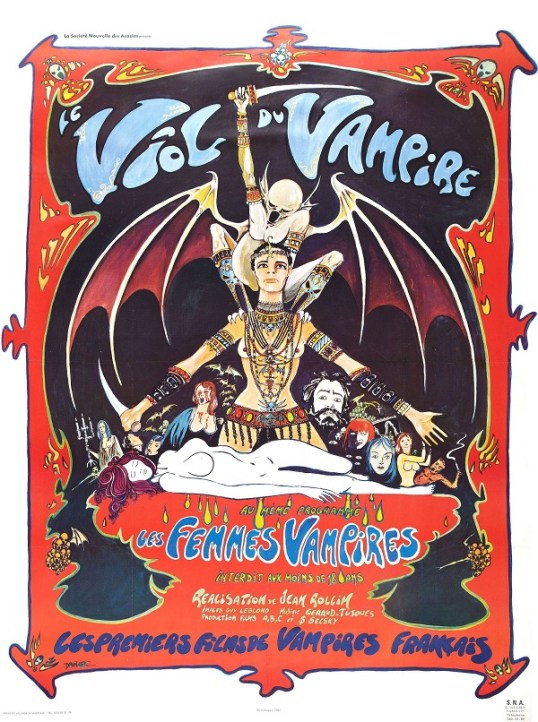
Critique Cinématographique: Le Viol du Vampire (dirigé par Jean Rollin)


Don’t worry, I’m not going to review this film in French.

I wish I could because this was the feature film debut of Jean Rollin, who made horror films that were uniquely French in both their vision and their execution.  A decade ago, I probably could have written an at least 300-word review in vaguely passable French but, unfortunately, my language skills have gotten a bit rusty as of late.  “But Lisa, what about Google translate?”  Uhmmm ….. yeah, that’s not a good idea.  The comprehension powers of Google translate are a bit overstated.

Anyway, on to the film!

I absolutely love the wonderfully surreal films of Jean Rollin.  At his best, Rollin was responsible for some of the most visually impressive and narratively incoherent films ever made.  Believe it or not, I don’t mean incoherent in a bad way.  A Rollin film creates its own unique world, one in which things don’t necessarily have to make much sense.  A Jean Rollin movie is like a filmed dream, one in which the stories continually seem to loop back to the same group of obsessions.  There’s always an emphasis on memory and the importance of the past.  The countryside is always beautiful but also always full of menace.  There’s always a scene or two at the beach.  It’s not unusual for a Rollin film to end with the water washing away the evil, like some sort of fairy tale.  There’s usually a house in the country and Rollin’s camera loved old French architecture just as much as it loved images of people making love.  Rollin’s films often very sincerely celebrated female friendship while, at the same time, continually returning to the theme of lesbian vampires.  In fact, I think it can be argued that the best way to appreciate Rollin’s films is to sit down and watch all of them, one after another.  So many theme reoccur from film to film that ultimately, they all become a part of giant and very strange tapestry of lust, secrets, and the paranormal in France.
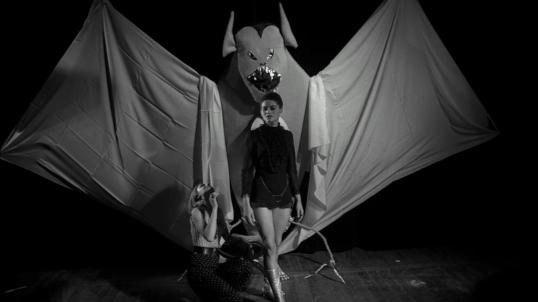
Le Viol du Vampire (which translates to The Rape of the Vampire in English) was Rollin’s feature directing debut.  It started out as a 30-minute short film, one that more or less made sense.  A producer then offered Rollin some money to expand the short into a feature film.  The end result was a deeply strange but visually stunning film, one in which characters who clearly died in the original short film mysteriously came back to life so that they could take part in the second part of the film.

During the first 30 minutes of the film, three Parisians are called out to a country château (because it’s not a Rollin film without a château) to investigate four sisters who believe that they’re vampires.  (One of the sisters is blind and says she became a vampire after being raped by the local peasants, hence the film’s title.)  The Parisians believe that the sisters are being manipulated by an evil old man.  The sisters believe that they are all vampires.  It turns out that they’re all right!

As I said, that part of the film makes sense.  But then suddenly, a vampire queen appears and suddenly there’s all these other vampires running around and some of them are dressed like court jesters and there’s a doctor working at a clinic who thinks that he can cure vampirism and then there’s a revolution against the queen and there’s a car chase and you’re never really sure who is who or what it is that they’re doing or why they’re doing it.  Rollin was a noted fan of the old serials and that’s how directs the final 60 minutes of Le Viol du Vampire.  Cliffhanger after cliffhanger follows twist after twist and, again, you find yourself wondering if even Rollin was able to keep up with it all.
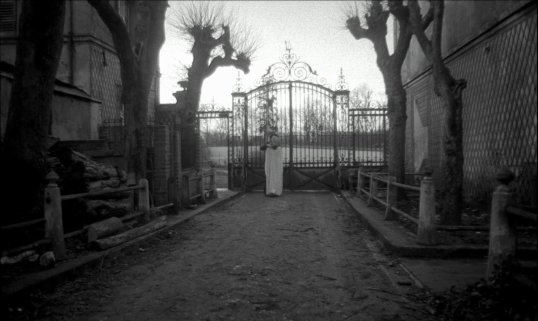
And yet, it remains a compelling film because Rollin was such a gifted visual artist and the black-and-white cinematography is so atmospheric that it’s very easy to ignore the plot and instead just enjoy looking at the film.  I would actually suggest waiting to watch this film until you’ve seen some of Rollin’s other films.  Once you’ve experienced Rollin’s unique aesthetic vision, it’s easy to watch Le Viol du Vampire and say, “There’s the beach!  There’s the clowns!  There’s the lesbian vampires!  There’s everything that we’ve come to expect from Jean Rollin!”

Le Viol du Vampire was released in 1968.  It was released at a time when political turmoil had brought much of the French film industry to a halt.  As a result, Le Viol du Vampire was the only film playing several theaters.  If you were in France during the summer of 1968 and you wanted to go to the movies, Le Viol du Vampire was often the only option available.  As a result, a huge number of people went to this movie.  Audiences were reportedly so angered by the film’s intentional incoherence that they rioted and threw things at the screen.  It was quite a scandal but it also made Rollin a bit of a star.

Seen today, the film is still incoherent but it’s also a chance to see where one of the most interesting horror directors of the 20th Century got his start.
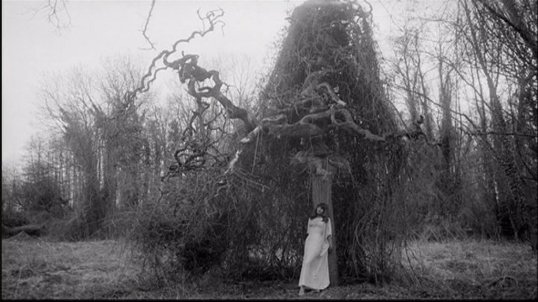
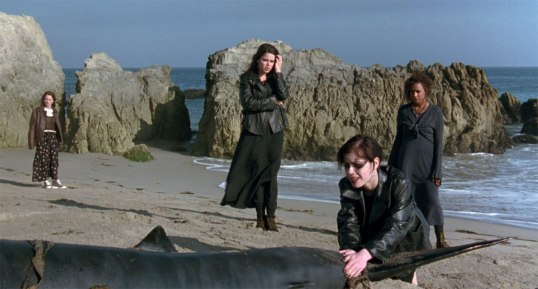
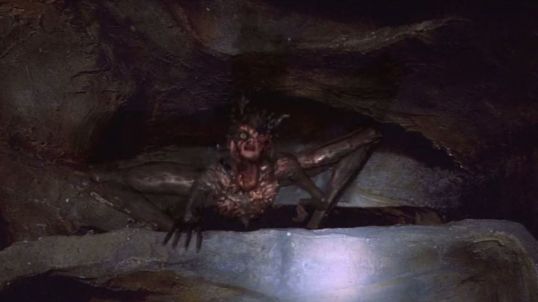
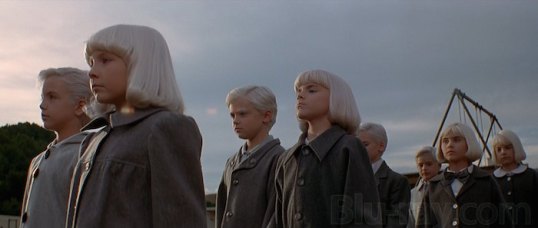
4 Shots From 4 Films: Castle Freak, Lord of Illusions, Species, Village of the Damned


4 Shots From 4 Films is just what it says it is, 4 shots from 4 of our favorite films. As opposed to the reviews and recaps that we usually post, 4 Shots From 4 Films lets the visuals do the talking!

This October, we’re using 4 Shots From 4 Films to look at some of the best years that horror has to offer!

4 Shots From 4 1995 Horror Films

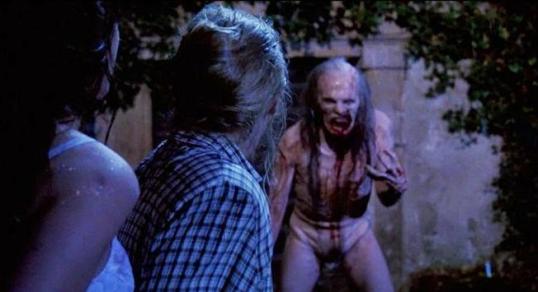
Castle Freak (1995, dir by Stuart Gordon)

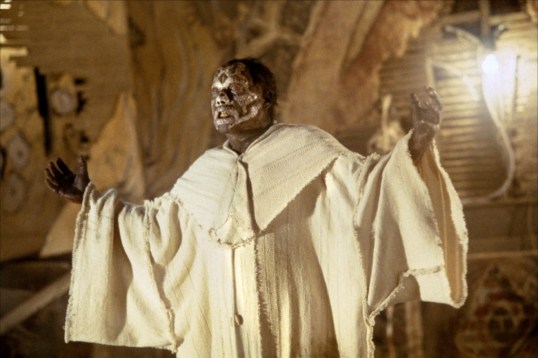
Lord of Illusions (1995, dir by Clive Barker)

Species (1995, dir by Roger Donaldson)

Village of the Damned (1995, dir by John Carpenter)