“Violence is a language written in blood; it tells the story of those who refuse to be silenced.”
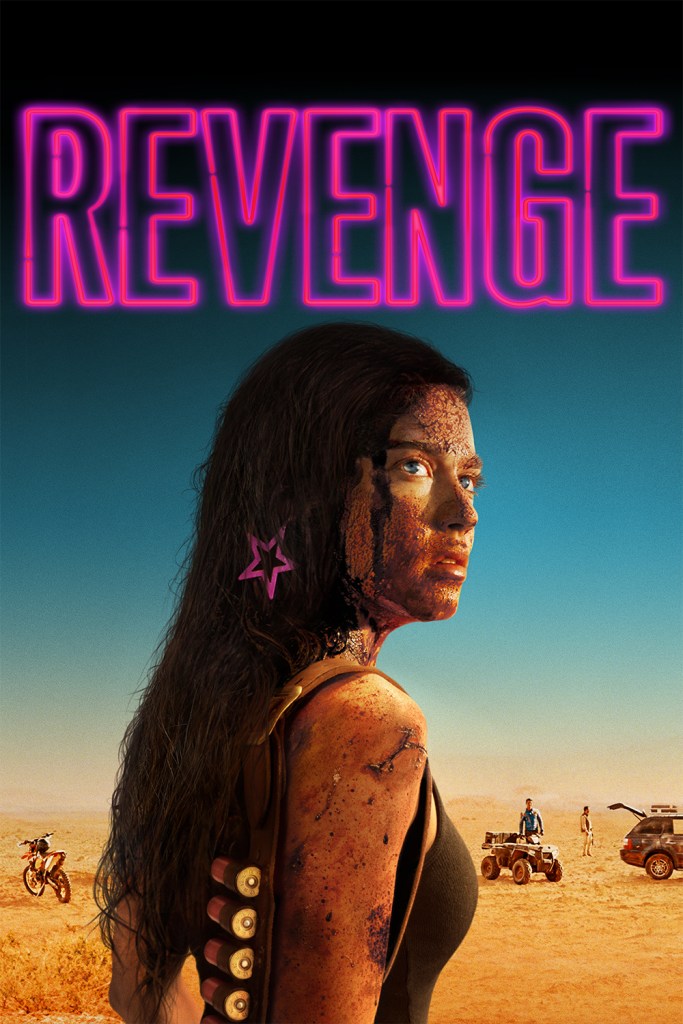
Coralie Fargeat’s 2017 film Revenge is an intense and striking blend of horror and thriller that refreshes the rape-revenge genre with a strong emphasis on female empowerment and resistance. At its core, the film follows Jen, a young woman who is brutally assaulted and left for dead in a desert. Against all odds, she survives and seeks brutal revenge on her attackers. What makes Revenge stand out is its blend of graphic, realistic violence and a striking, highly stylized visual approach, resulting in a film that is both visceral and symbolic.
Revenge sits within a long tradition of rape-revenge films that includes both grindhouse exploitation and serious art films. One of the earliest and most influential films in this tradition is Ingmar Bergman’s The Virgin Spring (1960), a somber and moral exploration of a father’s response to his daughter’s rape and murder in medieval Sweden. Bergman’s film inspired many later works, including Wes Craven’s famously brutal The Last House on the Left (1972), which reinterprets the same story through the lens of exploitation horror. Other notorious examples include I Spit on Your Grave (1978), known for its graphic depiction of sexual violence and violent retaliation. More recent films like Jennifer Kent’s The Nightingale (2018) revisit these narrative themes with psychological and political depth. Fargeat’s Revenge draws on this history, combining symbolic storytelling and thematic depth with the raw brutality and energy of grindhouse exploitation.
The narrative structure of Revenge is familiar: Jen, introduced as the mistress of a wealthy man, is assaulted by his friends. Her lover Richard tries to silence her by pushing her off a cliff, but Jen survives, severely injured and impaled on a tree. Her journey is one of intense physical suffering, but also resurrection and fierce empowerment. The film’s use of bright, vivid colors such as hot pinks and blues shifts the story into a surreal, symbolic space where gender roles are exaggerated and the desert becomes a mythic battleground where Jen fights to reclaim control.
Fargeat depicts Jen’s trauma and physical recovery through graphic and detailed body horror—not simply for shock, but as a visual metaphor for reclaiming agency. For example, Jen’s self-treatment of her impalement wound with a hot beer can brands her skin and symbolizes her rebirth and determination. These elements mark a clear departure from earlier rape-revenge films that sensationalized female suffering, shifting the focus to the survivor’s power and autonomy.
Cinematographer Robrecht Heyvaert’s work enhances this dynamic, contrasting the bright, harsh desert landscape with the cold, sterile luxury of Richard’s home. This contrast symbolizes the clash between raw survival and social control. The violence throughout the film is explicit and often hard to watch, but it is deeply rooted in the reality of trauma rather than fantasy.
Matilda Lutz’s performance as Jen is a key strength of the film. She transforms from a vulnerable, objectified figure into a fierce, focused avenger. The male antagonists are less developed, serving as archetypes of toxic male dominance—entitlement, violence, and cowardice—and their downfall reflects the collapse of that social order.
While Revenge maintains the fast pace and suspense of a thriller, its focus on graphic body horror and trauma places it firmly within the horror genre, aligning with the French Extremity movement known for its intense depictions of suffering and transgression. The source of horror here is not supernatural but very much rooted in the physical and psychological impact of violence.
The film has been praised for its technical skill and its focus on female resistance and empowerment. Instead of exploiting female suffering, it forces audiences to confront violence and trauma in a way that centers strength and rage. This is a clear reimagining of the revenge narrative through a modern lens that highlights resilience.
Revenge stands as both a tribute and a reinvention within its genre. It nods respectfully to the moral complexity of Bergman’s The Virgin Spring, the shock tactics of grindhouse staples like The Last House on the Left and I Spit on Your Grave, and the psychological depth of The Nightingale. Yet it simultaneously reinterprets these influences, making a statement that is both timely and provocative.
Coralie Fargeat’s Revenge is a powerful and contemporary entry into the rape-revenge genre, blending horror and thriller conventions with a focus on survival and agency. The film explores the physical and emotional effects of trauma and the possibility of reclaiming power through violence. Its vivid visuals, symbolism, and intense violence challenge audiences to rethink assumptions about gender, justice, and survival. It is a film that provokes strong reactions while delivering a deeply felt story of empowerment and resilience.
Unflinching, subversive, and dripping in corrosive dark humor, Sion Sono’s Cold Fish (2010) doesn’t just showcase Japan’s taste for genre-bending horror—it rips open the underbelly of polite society and exposes what writhes beneath. If I Saw the Devil was a descent into the abyss of revenge, Cold Fish is a fever-dream trek through manipulation, depravity, and the most repressed corners of the psyche. Built around the crucible of violence and sex, Sono’s film dares viewers to question not only the shape of evil, but whether the forces that awaken it could be lurking in anyone.
Before Cold Fish, Sono had already established himself as a subversive force in horror with his earlier film Suicide Club (2001), which helped him gain a loyal cult following and introduced him to the genre scene at large as an innovative and provocative filmmaker unafraid to challenge conventions. With Cold Fish, Sono refined his style, offering a tighter, more psychologically driven narrative that accelerates the intensity while probing deep societal anxieties.
Inspired by the real-life Saitama serial murders of the 1990s, committed by dog breeder Gen Sekine and his common-law wife Hiroko Kazama, Cold Fish draws chilling authenticity from these events. Sekine and Kazama ran a pet shop and poisoned several customers before dismembering their bodies to conceal the murders. Sono reimagines this disturbing history by transforming the pet shop into a tropical fish store and fictionalizing details while preserving the core themes of manipulation, complicity, and violence.
The story opens with Nobuyuki Syamoto, the definition of a beaten-down everyman: a tropical fish shop owner whose daughter openly hates her stepmother, whose marriage is half-drowned in silent resentment, and who drifts through life as little more than a shadow. From the outset, Syamoto’s passivity sets a tremulous undertone—terrible things are happening, but he isn’t doing much to stop them. That changes the moment his daughter Mitsuko is caught stealing and rescued by the charismatic Yukio Murata, proprietor of a flashier fish store. Murata’s manners and generosity are overwhelming, almost caricatured, yet there’s an edge of anticipation: something is amiss, and Sono lets the feeling gradually curdle beneath his gentle facade.
Murata’s initial charm morphs into coercive control as he manipulates the Syamoto family into his orbit. When Syamoto is coerced to become Murata’s “business partner,” the narrative takes its first graphic, kinetic turn: a sales pitch for a rare tropical fish goes lethally wrong. Murata poisons a buyer in cold blood, then erupts into violence, forcing Syamoto and his wife into complicity by helping dispose of the body. The shift is immediate and nightmarish—the performance by Denden (Murata) snaps from quirky salesman to a near-mythical monster, as terrifying for his unpredictability as for his casual approach to killing.
From here, Cold Fish dives into a spiral of murder, sexual domination, and psychological torture. Murata and his partner Aiko have murdered dozens, perfecting the art of erasing their victims. As the body count rises, Sono’s camera remains hauntingly restrained: eschewing frantic cuts for long takes, keeping his characters center-frame, locking viewers in Syamoto’s dread-soaked POV. We are forced to witness every mechanical step in the pair’s routine—the body disposal, the literal scattering of ashes, the casual cruelty.
What makes Cold Fish such a disturbing experience is not merely the gore (though the final act is blood-soaked chaos), but the way deviance is normalized, even made bureaucratic. Murata’s operation feels part nightmare, part dull corporate job. This banality breeds horror. At times, Sono punctuates scenes with black comedy: surf rock tunes play in the background as mutilated bodies are processed in Murata’s shop, and his wife’s participation has a twisted, deadpan humor that makes the violence doubly unsettling.
Syamoto’s trajectory is the film’s secret weapon. By trapping us in his perspective, Sono draws out the uncomfortable reality of learned helplessness, craven compromise, and the latent violence beneath a repressive facade. Syamoto isn’t a hero or anti-hero, but a study in desperation and dissolution. His initial submission slowly ferments into rage, and when he finally snaps, the violence is primal and cathartic—a vengeance that feels less like triumph and more like an act of obliteration. Instead of a neat moral arc, Sono’s script is obsessed with the ambiguity of retribution: what festers beneath apathy, what trauma does when left unaddressed, and what the need to act breeds when suppressed for too long.
This thematic preoccupation connects Cold Fish to the likes of I Saw the Devil: both movies use revenge not as justice, but as a mirror for corruption—how far can the ordinary man go before he becomes indistinguishable from the monsters tormenting him? Sono’s film is ultimately more nihilistic, using social commentary as a subtle undertow, with critiques of Japanese conformity, sexuality, and family decaying beneath the surface. The result is a film that is both emotionally exhausting and intellectually provocative.
Technically, Cold Fish offers Sono at his most focused. The cinematography is subtle but relentless, with natural camera movement amplifying character reactions rather than indulging in spectacle. The use of Mount Fuji as a backdrop for scenes of violence is striking and effective. Costume, color palette, and setting all speak of an ordinary world slowly overtaken by surreal terror. The score plays off these moments, with music choices ranging from nervy tension to surf-rock irony.
The performances are uniformly superb. Denden is magnetic as Murata—making each mood shift obvious, unpredictable, and horrifying. Mitsuru Fukikoshi’s portrayal of Syamoto is raw, fragile, and ultimately explosive. The supporting cast amplifies the film’s extremes without ever feeling cartoonish. Sono pushes them to the edge, finding both tragedy and queasy humor in their unraveling. The sound design, especially in scenes of dismemberment and violence, is overwhelming and intense—forcing the audience into a sensory trap that mirrors Syamoto’s psychological implosion.
Yet Cold Fish isn’t just an exercise in gore or cruelty—it’s an autopsy of repression, cowardice, and compulsion, watched through the lens of a culture known for its traditions of obedience. The film asks what drives people to murder, what keeps them silent, and what happens when those limits are breached. It never gives viewers easy sympathies or clean answers, and the ending is deliberately unnerving—Syamoto’s transformation is complete, but it isn’t heroic, nor is it redemptive.
For some, the film’s length and relentless tone will be too much. Others have pointed out its over-the-top final act, and some feel the excessive violence is hard to justify. However, these very qualities are what cement Cold Fish as a significant work in contemporary Japanese horror—it’s the sort of movie that claws at you for days, sticking in the brain with its grim humor and powerful sense of unease. Like I Saw the Devil, it’s less about catharsis than about exposing the permanent scars left by evil and revenge, and the horrifying possibility that what lurks under the surface of normality is just waiting for an invitation to come out.
Ultimately, Sion Sono’s Cold Fish is an important piece of modern horror—not simply for its brutality, but for its relentless psychological excavation and perverse humor. By channeling the real Saitama serial murders into a study of psychological torment and complicity, Sono creates a film that is designed to provoke, to disturb, and to make audiences ask where the boundaries of morality might finally break. For genre fans, it’s a bracing, unforgettable experience; for those who approach with caution, it’s both a warning and an invitation to glimpse the heart of darkness just beneath the surface.
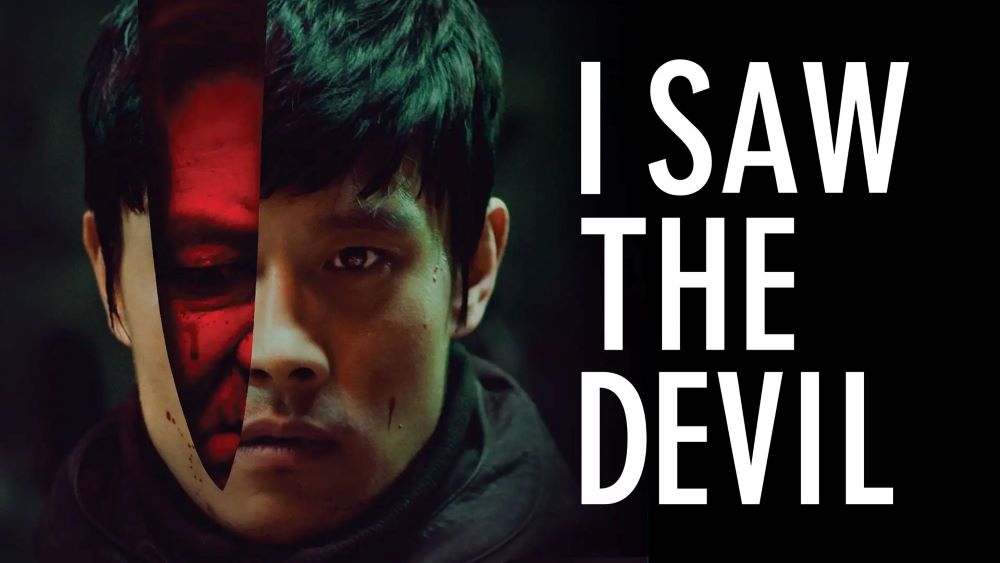
I Saw the Devil (2010) is a film that refuses to play by the rules of typical revenge thrillers. Instead, it pushes the boundaries into some of the most brutal and unflinching territory South Korean cinema has to offer. Directed by Kim Ji-woon, the movie blends elements of horror and psychological thriller, creating a hybrid that’s as disturbing as it is compelling. Much like Kingdom, it blurs the lines between genres—what starts as a revenge story quickly morphs into something darker and more extreme, turning familiar tropes into a raw exploration of evil’s destructive power.
The story follows Soo-hyeon (Lee Byung-hun), an intelligence agent whose fiancée becomes the victim of a sadistic serial killer named Kyung-chul (Choi Min-sik). Instead of a straightforward pursuit of justice, Soo-hyeon dives into a nightmarish game of cat and mouse. His goal? To inflict suffering on Kyung-chul in return, not for closure but for unleashing a kind of revenge that is almost self-destructive. Repeatedly capturing and releasing Kyung-chul, Soo-hyeon becomes trapped in a cycle of violence that steadily erodes his moral boundaries.
That cyclical pattern forms the backbone of the film, adding a rhythm that oscillates between moments of calm and bursts of brutal violence. Scenes of horror are often tinged with dark humor, adding an unsettling layer to the narrative. One standout moment occurs in a remote farmhouse, where Kyung-chul meets his twisted friend Tae-joo, a cannibalistic serial killer who treats violence like a casual dinner conversation. This scene exemplifies the film’s unsettling ability to find morbid humor in the most horrific circumstances, emphasizing how evil—when normalized—becomes almost banal.
Choi Min-sik’s performance in I Saw the Devil is chilling, showcasing his ability to embody pure evil. It’s a stark contrast to his role in Oldboy, where he played Oh Dae-su, a man seeking revenge for his own suffering. Here, Choi’s Kyung-chul is the embodiment of savagery—an inhuman predator with no remorse, no moral compass, just pure chaos. The role reversal highlights the incredible range of an actor whose presence can turn the screen into a nightmare. This flip from sympathetic avenger to monstrous villain makes the film’s exploration of morality even more compelling.
The film’s approach to violence is unabashed and graphic. Scenes of sexual assault, torture, and murder are depicted in unflinching detail, sparking inevitable debates about whether it’s gratuitous or necessary. Kim Ji-woon doesn’t hold back — he wants you to feel the full weight of evil in its most visceral form. This isn’t horror for shock’s sake; it’s a brutal mirror held up to the darker sides of human nature, exploring how unchecked vengeance can corrupt and destroy everything in its path.
Beyond the violence, I Saw the Devil probes deeper questions about morality and obsession. Soo-hyeon’s transformation from devastated lover to relentless avenger is portrayed with subtlety—they’re not just chasing a killer; they’re unraveling themselves. Lee Byung-hun brings a quiet intensity to his role, capturing the tragic descent into obsession and madness. The film makes you ask: how far can you go to punish someone before you become what you hate? And is vengeance ever truly justified? These aren’t easy questions, but I Saw the Devil forces you to sit with them.
Visually, the film is bleak and cold—mirroring its themes of alienation and moral decay. Kim Ji-woon keeps things straightforward, focusing on clear visuals that highlight the starkness of both urban and rural settings. The action scenes are brutal but precise, often choreographed with a sense of dark beauty that enhances their impact. The pacing is tight—about two hours—delivering a relentless story that never quite lets go of the tension.
The soundtrack and sound design don’t overshadow the visuals but add to the sense of dread. Quiet moments are ominous; violent sequences are thunderous, immersing viewers fully into this nightmare landscape. Every detail, from lighting to camera angles, emphasizes the film’s mood: raw and unsettling from start to finish.
The themes extend beyond personal revenge, touching on broader issues of societal trauma and the cyclical nature of violence. Korea’s history of brutal trauma and social upheaval echoes in the film’s exploration of how wounds—personal or national—can perpetuate more violence if left unresolved. It’s a brutal reminder that revenge can become a self-fulfilling prophecy, devouring everyone involved.
But make no mistake: I Saw the Devil is a challenging film. It doesn’t shy away from explicit content or disturbing themes. It’s brutal, unrelenting, and sometimes hard to watch. But that’s its power. It forces viewers out of their comfort zones and confronts uncomfortable truths about justice, evil, and our capacity for cruelty.
I Saw the Devil is a landmark in Korean cinema—an uncompromising look at revenge as a corrosive force. Its fusion of extreme horror and psychological drama creates a haunting experience that stays with you long after the credits roll. It’s not just a revenge story; it’s a primal reflection on what it means to be human—and what it costs to seek vengeance in a world full of monsters.
“When the dead walk, señores, we must stop the killing… or lose the war.”
In 1968, horror cinema was irrevocably changed by the emergence of George A. Romero’s vision, signaling the beginning of a transformative era for the genre. Romero, who had spent much of his early career making industrial and educational films, shifted gears dramatically by crafting Night of the Living Dead, an independent film that did more than just scare audiences—it shattered the conventions of horror. This was a film that rejected the glossy, Gothic monsters of studios like Universal and Hammer, replacing them with raw, unvarnished depictions of human decay and social collapse. The fear Romero invoked was no longer supernatural; it was born from human frailty and social upheaval.
Night of the Living Dead introduced audiences to an entirely new kind of monster: the zombie, not as a mystical or alien infection, but as the reanimated corpse of an ordinary person. This change was more than cosmetic. It shifted the source of horror from “the other” to a reflection of ourselves. Death itself had become weaponized, turning friend into foe in the most visceral way imaginable. The infection was no longer a far-off fantasy but an internal threat. Although the word “zombie” was scarcely spoken in Romero’s first three Dead films, the concept solidified into the cultural lexicon, haunting audiences with the idea that anyone—even the people closest to us—could become the enemy.
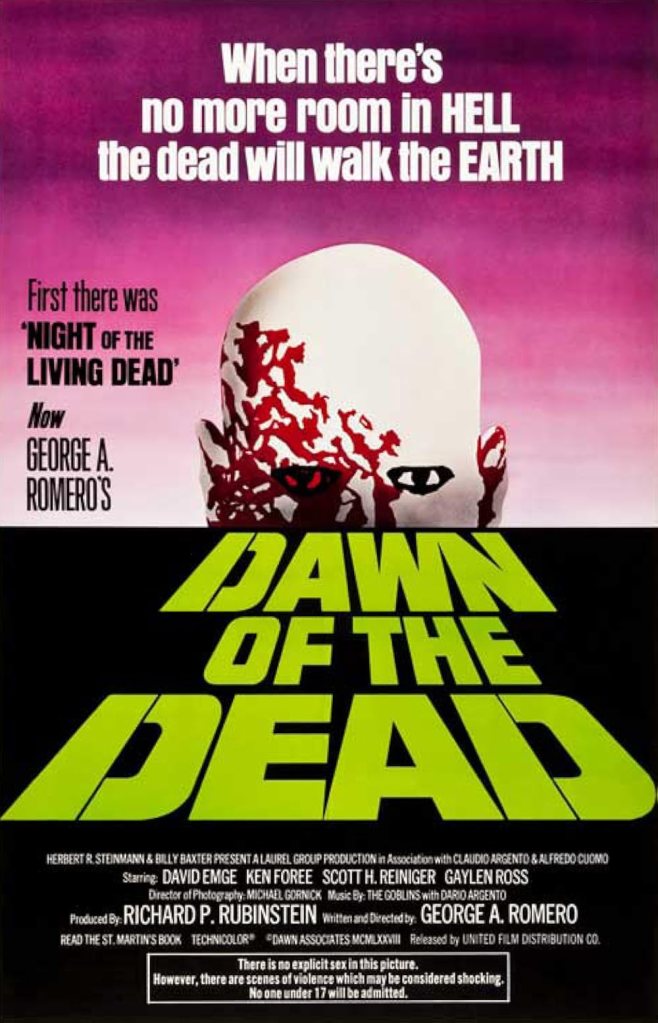
Despite the landmark impact of Night of the Living Dead, it would take a decade before Romero was able to produce its sequel. The first film’s shocking violence and disturbing social commentary made Hollywood studios wary of financing a continuation. However, a breakthrough came when Italian horror maestro Dario Argento learned of Romero’s plans and offered to co-finance Dawn of the Dead under the condition that he would receive European distribution rights and be allowed to edit a version for his audience. This international collaboration proved pivotal, allowing Romero to create what many consider not just a sequel but a towering masterpiece of horror cinema.
Released in 1978, Dawn of the Dead solidified Romero’s reputation as a visionary filmmaker willing to confront uncomfortable truths. The Motion Picture Association of America refused the film an R-rating due to its graphic content, and Romero opted to release it unrated to avoid association with the X-rating, which was then primarily linked to pornography. While this restricted the number of theaters willing to show the film, it did not hinder its success. The movie drew large audiences hungry for a horror story that dared to depict society’s unraveling with brutal honesty.
From its opening, Dawn of the Dead confronts viewers with the chaos midst societal collapse rather than building toward it. Traditional authority figures—news anchors, government officials, police—are portrayed as overwhelmed, often ineffective, and sometimes themselves sources of danger. The film’s opening sequence, set inside a frenzied television newsroom, captures this chaos vividly; reporters and producers struggle to maintain composure while the world outside falls apart. This scene encapsulates one of Romero’s central themes: the erosion of trust in institutions during extreme crisis. As media credibility falters, survivors are left in an informational vacuum, further imperiling their ability to cooperate or find sanctuary. This mistrust resonates strongly today, echoing recent real-world crises where institutional failure has worsened public panic and political division.
A critical early sequence—the tenement raid—brilliantly illustrates the film’s social complexity. The conflict here stems not only from the undead but from a clash of cultures: the low-income inhabitants hold tightly to their traditions, especially the respect and mourning of their dead, while the government, scientists, and law enforcement—detached “outsiders”—seek to destroy the infected bodies coldly as threats. This refusal to recognize the residents’ humanity and cultural practices sparks a brutal firefight, symbolizing the broader breakdown of social cohesion. Romero uses this conflict to show that the apocalypse is fueled as much by misunderstandings and institutional coldness as by the undead threat itself.
Within this crumbling world, the film centers on four survivors who become our guides through Romero’s apocalyptic landscape: Roger (Scott Reiniger) and Peter (Ken Foree), two disillusioned Philadelphia SWAT officers who desert after that violent raid; Stephen (David Emge), a helicopter pilot; and Fran (Gaylen Ross), a television producer. These characters represent the fractured remnants of a society that once clung to institutions but is now adrift. Their escape from Philadelphia aboard a stolen news helicopter is less a triumphant flight than a retreat into uncertainty.
Their destination is a suburban shopping mall near Monroeville, Pennsylvania. The mall, abandoned but intact, quickly becomes their fortress. Clearing out the zombies inside and barricading the doors seems like a triumph—an oasis amid apocalypse. The survivors revel in a surreal form of luxury that stands in stark contrast to the danger outside. For a time, they indulge in consumer comforts previously unattainable: fine clothes, gourmet food, and even jewelry. This phase is both a coping mechanism and a critique. Romero uses the mall setting as a dark mirror to American consumer culture. The shoppers turned zombies wander these halls as if drawn by habit, herding toward the very symbols of consumption that once defined the pre-apocalyptic world.
Romero’s critique extends beyond consumerism run amok; he exposes consumerism itself as a new religion for America. In the 1970s, as economic and social uncertainties shook the nation, megamalls emerged as the new temples of worship where consumer habits became ritualistic acts of devotion. The film’s setting drives home this analogy—the mall is not simply a marketplace but a sacred space where the rituals of buying and consuming provide meaning and identity. The zombies’ relentless, automatic wandering through the mall’s stores reflects a zombified devotion to these rituals, implying that consumerism has replaced spiritual and community values, offering hollow salvation in its place.
This portrayal is not accidental but deliberately satirical. The mall is a gilded cage, symbolizing consumerism’s dominance over American identity. Even in the apocalypse, the survivors replicate the rituals of capitalism, clinging to items of superficial value and meaning. The zombies’ mindless shuffling through stores like Woolworth’s and the food court underscores this grotesque cycle. Romero’s message is sharp: consumerism is a kind of death, a trance that distracts from and perhaps accelerates societal decay. The film implies that in America, the line between life and death blurs within the walls of the shopping mall because it is there that life’s priorities have long been warped.
While consumerism forms a visible backdrop, Dawn of the Dead probes deeper, exposing a darker undercurrent: humanity’s inherent violent nature as the real engine of destruction. The undead are monstrous and fearful, but they lack the complexity and self-destructiveness of the living. Throughout the film, Romero presents violence not as a rare failing but as a baseline condition of human behavior. The survivors themselves struggle to suppress impulses of aggression, paranoia, and selfishness that grow more toxic over time.
Roger’s reckless bravado during their clearing of the mall leads to a fatal bite from a zombie, making his death a metaphor for the cost of unchecked aggression. The living kill as readily as the dead, but with purpose and calculation that is often more destructive. The raiding biker gang that ultimately invades the mall appears as a harsh symbol of this self-inflicted violence. Unlike the zombies, whose threat is instinctive, the bikers wield cruelty consciously, plundering and destroying the survivors’ fragile sanctuary. Their incursion shatters any illusion of security and exposes the futility of individualistic survival strategies when cooperation is absent.
The unraveling of the survivors’ cohesion over the course of the film underscores one of Romero’s most bleak insights: humanity’s greatest enemy is itself. Even small groups that depend on trust and unity quickly fragment amid fear and scarcity. Despite the severity of their predicament, the four protagonists are often consumed by petty grievances, distrust, and self-preservation. Romero suggests that unless cooperation becomes a collective imperative, survival is impossible. The dead multiply endlessly, but it is the living who ensure society’s demise by turning against each other first.
Romero’s Dawn of the Dead also marks the cinematic arrival of Tom Savini, whose pioneering make-up effects would forever transform horror filmmaking. Savini and members of his team not only crafted many of the film’s grisly effects but also played some of the biker gang antagonists, blending artistry and performance. While the gore in Dawn can appear somewhat garish or cartoony on film, largely due to lighting effects and the practical limits of makeup technology at the time, Savini’s work set the standard for modern horror effects. His techniques and vision became the bedrock of the gore genre, influencing decades of horror cinema thereafter. His legacy continued as he later directed the 1990 remake of Night of the Living Dead, bringing Romero’s seminal vision to a new generation with his signature effects sensibility.
Ken Foree’s portrayal of Peter anchors the film emotionally; his performance balances toughness with vulnerability, capturing a man grappling with the collapse of law and societal norms while striving to retain his humanity. Scott Reiniger’s Roger provides a volatile contrast—impulsive, reckless, and ultimately tragic—as his aggression leads directly to his downfall. David Emge’s Stephen and Gaylen Ross’ Fran round out the core survivors, expressing pragmatism, grief, and the desperate need for connection as their world crumbles. Their dynamic interactions highlight Romero’s warning: human connection in times of extremity is fragile and fraught, undermined by fear and mistrust.
Romero’s expert use of sound and music further elevates the film. The eerie muzak playing through the mall’s PA system contrasts sharply with the groans of the undead and sudden bursts of violence, creating a haunting dissonance between normalcy and chaos. This effective sound design emphasizes the thematic conflict between consumerist detachment and encroaching apocalypse.
Beyond its horror, Dawn of the Dead serves as a time capsule of late-1970s American socio-political anxieties. America was reeling from the disillusionment of Vietnam, shaken by the Watergate scandal, and grappling with urban decay and economic malaise. The film vividly captures this zeitgeist: a society where institutions are distrusted, violence is normalized, and consumerism both numbs and destroys. Romero’s criticism extends to Cold War paranoia, reflected in his depiction of apocalypse not as a sudden cataclysmic event but a slow, grinding decline fueled by human self-destruction.
Romero’s directing style—unpolished at times but unflinching—adds authenticity to the film’s grim message. His use of long takes, handheld camera work, and naturalistic performances grounds the supernatural in the everyday, making the horror tangible. The bleak humor sprinkled throughout, such as the zombies’ fascination with the mall’s siren and muzak, darkens the tragedy with satirical bite.
Dawn of the Dead does not offer easy hope. Its ending—marked by betrayal, destruction, and resignation—echoes Romero’s worldview: humanity’s baser instincts, left unchecked, will always undermine salvation. Yet, in this stark vision lies an ironic beauty: survival is not only about killing or hiding but the recognition of our shared flaws and the possibility, however slim, of striving beyond them.
In conclusion, Dawn of the Dead remains a masterpiece of horror, combining groundbreaking practical effects, compelling performances, and incisive social commentary to create a film that is as relevant today as it was nearly fifty years ago. Romero’s work challenges viewers to confront the monsters within us all and questions whether human nature’s violent and consumerist impulses might prove more lethal than any undead army. Its enduring legacy lies not just in its scares but in its profound understanding of societal collapse and the fragile bonds that sustain civilization.
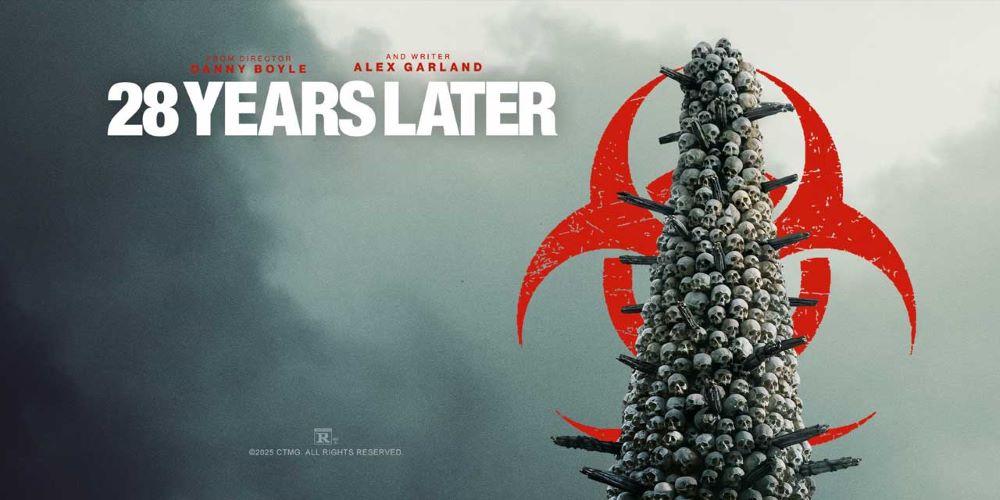
Danny Boyle waited nearly two decades to return to the world he helped redefine with his groundbreaking 2002 film 28 Days Later, which reshaped the zombie subgenre by replacing the traditional, slow-moving undead with fast, feral infected that embody contagion, panic, and societal collapse. While purists continue to debate whether the creatures are technically zombies or infected, Boyle’s vision fundamentally changed how audiences engage with themes of epidemic, survival, and the breakdown of order on screen. The 2007 follow-up, 28 Weeks Later, directed by Juan Carlos Fresnadillo, expanded the Rage virus mythology and landscape but lacked the original’s haunting intimacy and innovation, leaving the franchise in a state of uncertainty until Boyle and writer Alex Garland reunited for 28 Years Later, a film that feels less like a conventional sequel and more like an elegy for a deeply changed world.
The film opens with a short, brutal prologue: young Jimmy Crystal’s family is consumed by the Rage virus while watching Teletubbies, and the boy flees to find safety only to discover his minister father welcoming the infected as a sign of apocalyptic judgment. This early scene deftly establishes the film’s unease, blending visceral horror with spiritual inquiry and foreshadowing a narrative caught between faith, grief, and chaos. Boyle reasserts his command of visceral set pieces while signaling that this film is more concerned with memory and ritual than with relentless terror.
Decades later, the British Isles have been sealed off; NATO forces enforce a quarantine and blockade, isolating the mainland as a toxic exclusion zone. On the tidal island of Lindisfarne, a small community clings to a fragile existence, protected by a causeway that floods at high tide—a detail that metaphorically underscores themes of isolation and dangerous connection. It is here that the emotional core emerges in Jamie and his son Spike, played by Aaron Taylor-Johnson and the remarkable newcomer Alfie Williams. Their spare, heartfelt relationship grounds what otherwise wanders into meditative and often surreal territory.
Alfie Williams emerges as one of the year’s most impressive new talents. His portrayal of Spike avoids the usual survivor archetype; instead, he presents a boy deeply shaped by inherited trauma and cautious curiosity. Boyle’s camera lingers on Williams’ face, capturing silent shifts of fear, wonder, and resilience, making his quiet moments as powerful as the film’s larger set pieces. Williams shines particularly in a sequence where Spike and his mother, portrayed with subtle grace by Jodie Comer, navigate a moss-covered village reclaimed by nature; Williams embodies awe and terror with a single glance. His encounters with the evolved infected—some sedentary and tree-like, others organized into predator packs—are charged with terrifying authenticity and emotional depth. Early reviews label Williams a breakout star, praising his ability to hold the screen alongside veteran actors.
Visually, Boyle and cinematographer Anthony Dod Mantle experiment with a striking mix of techniques, blending the use of iPhone 15 Pro Max cameras and drones with traditional film methods to create a language that oscillates between intimate human moments and sweeping, documentary-style landscapes. The Britain depicted is no longer a lifeless wasteland but an ecologically regrown terrain—lush, eerie, and indifferent. This verdant backdrop reflects the Rage virus’s own evolution. The infected have adapted in ways both terrifying and fascinating: some feed off the earth and fungus, becoming near-plantlike and sedentary, while others form packs ruled by alpha mutants, suggesting emergent social structures even after humanity’s collapse. This biological and ecological evolution amplifies the film’s central theme: survival transcending humanity.
Anchoring the film’s philosophical inquiry is Ralph Fiennes’s performance as Dr. Ian Kelson, a former general practitioner who has exiled himself to live among the infected. Fiennes crafts Kelson with haunting solemnity and layered ambiguity—part caregiver, part fanatic, part recluse—who has created the eponymous “Bone Temple,” a shrine assembled from bones and memories to honor the dead and the changed world they inhabit. The role requires quiet intensity, and Fiennes delivers; his interactions with Spike are charged with both menace and melancholy. Kelson’s reverence for the infected and his willingness to coexist with them challenge traditional survivalist narratives, injecting the film with a solemn meditation on loss, acceptance, and the possibility of new forms of life.
28 Years Later opts for a deliberately slower, more contemplative pace than its predecessors. Boyle and Garland invest their energy in exploring grief, adaptation, and collective memory. The infected become symbolic forces of transformation rather than mere antagonists, while survivors seek meaning through ritual and remembrance as a bulwark against despair. This approach has divided fans: some lament the absence of the unrelenting terror and pace that characterized the earlier films, while others welcome the franchise’s intellectual maturity and thematic depth.
Certain scenes—such as the stranded NATO patrol subplot and glimpses of emerging cult-like human factions—hint at a larger, more complex world but never overshadow the film’s intimate father‑son narrative. Jodie Comer complements Williams with a nuanced portrayal of Spike’s mother, and Taylor‑Johnson brings grounded emotional weight to Jamie, embodying a parent wrestling with how to protect the next generation in a broken world and dealing with his own inner demons.
The interplay between Williams and Fiennes forms the film’s core dynamic, uniting youthful vulnerability with somber reflection. Kelson’s philosophical acceptance of the apocalypse contrasts with Spike’s struggle for identity and belonging, producing compelling, often unsettling exchanges that elevate the narrative’s moral complexity.
Toward the film’s conclusion, a jarring tonal shift occurs with the sudden arrival of a grown-up Jimmy Crystal, whose unsettling presence and cult leadership drastically change the mood. The moment is so discordant that viewers are left questioning whether it is literal or a fevered hallucination—an ambiguity that effectively sets the stage for the sequel.
The upcoming follow-up, 28 Years Later: The Bone Temple, is set for release in January 2026 and will be directed by Nia DaCosta, with Alex Garland returning as screenwriter. This sequel is expected to explore the role of Kelson’s Bone Temple more deeply and develop the cult gathering led by Jack O’Connell’s Jimmy Crystal, expanding on the fractured post-apocalyptic world and the characters introduced in the current film.
Ultimately, 28 Years Later is a film about evolution—of species, storytelling, and filmmaking itself. It balances raw dread with haunting visuals and somber themes, anchored by Alfie Williams’s quietly compelling Spike and Ralph Fiennes’s enigmatic Dr. Ian Kelson. Boyle has not merely revived the franchise; he has transformed it into an unsettling, elegiac meditation on rage, loss, and the fragile hope that survives beyond apocalypse.
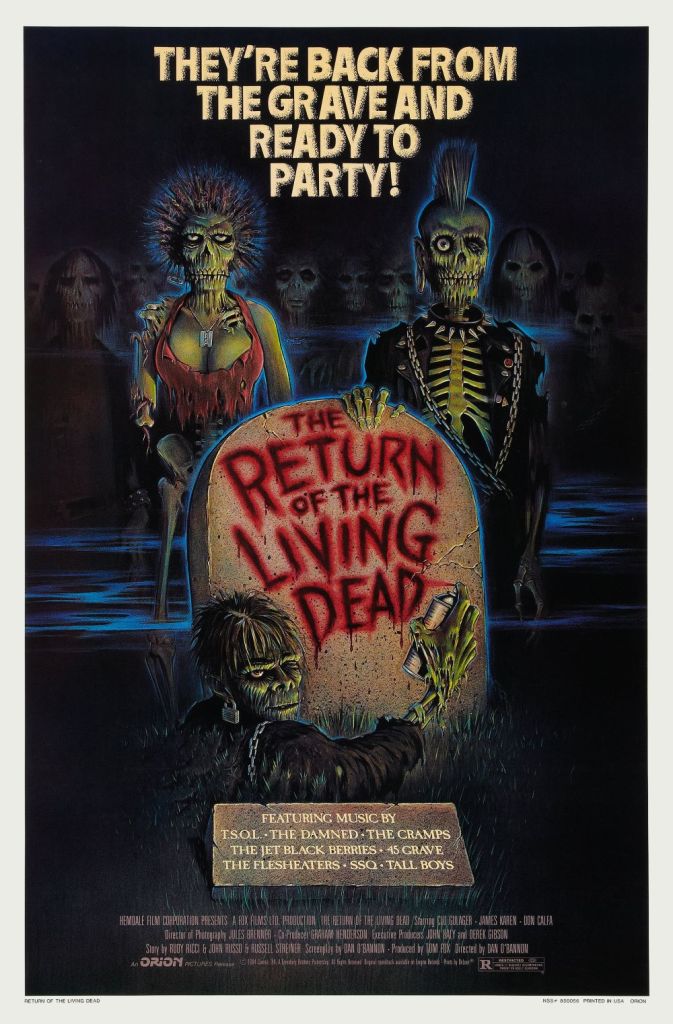
Subverting the Zombie Canon: Satire, Genre-Bending, and Decay in the Return of the Living Dead Series
When talking about cult horror films, the Return of the Living Dead series holds a special place—not only as a spin-off from George A. Romero’s seminal Night of the Living Dead, but as a unique creative force in its own right. Thanks to a legal split between Romero and co-writer John Russo over rights to the “Living Dead” name, Russo and director Dan O’Bannon got to imagine a parallel zombie universe. This franchise quickly carved out its own identity, mixing horror, black comedy, and punk spirit in a way that both paid tribute to and upended zombie tropes.
Reinventing Zombie Lore with a Wink
The original Return of the Living Dead (1985) starts with a clever “what if” twist: what if Romero’s Night wasn’t just a movie, but a dramatized cover-up of a real government disaster? This meta idea instantly frames the film as self-referential and playful, setting a tone unlike anything out at the time.
Central to the film’s identity is the invention of 2-4-5 Trioxin, a fictional military chemical designed to clear marijuana crops which instead raises the dead—zombies with surprising new abilities. Unlike the slow, drooling zombies Romero popularized, these ghouls sprint, talk, and set traps. Their hunger is peculiar as well: they crave brains exclusively, as it eases the pain of being undead. And the old rules of zombie combat? Forget shooting them in the head. These zombies resist it, raising the stakes and scare factor.
This refreshing rewrite of zombie rules allowed the movie to be both frightening and fun. The zombies were smart but still monstrous, turning classic horror expectations on their head in a way that invited both laughter and fear—a tricky balance that few horror comedies manage.
Playing with Comedy, Panic, and Punk Rock
One of the greatest strengths of the original film is how it embraces horror-comedy so naturally. It doesn’t shy away from being funny while still delivering tension. James Karen and Thom Mathews excel as the main pair—Karen’s frantic, over-the-top panicked man paired with Mathews’ straight, slowly succumbing counterpart create a perfect comedic rhythm. Their slow transformation into zombies adds a tragic dimension to what could have been simple slapstick. Meanwhile, Don Calfa’s mortician character and Clu Gulager’s warehouse owner provide a grounded center amidst chaos.
The punk subculture flavor adds another unique texture. Linnea Quigley’s famous graveyard striptease encapsulates the 1980s’ blend of irreverence, sexuality, and horror obsession. The scene is shocking, hilarious, and iconic—one of those moments that encapsulates everything this film is about: having fun with taboos while not losing the darker undercurrents of mortality and decay.
Beyond laughs, there’s biting satire here. The film skewers the government and military’s hubris—scientists create a superweapon they can’t control, leading to chaos and destruction. This reflects 1980s American anxieties about bioweapons, government cover-ups, and nuclear fears. Horror and comedy collide to reflect cultural distrust and paranoia.
The Problem of the Sequel: Part II’s Familiar Ground
When Return of the Living Dead Part II came out in 1988, it felt like the franchise was stuck in a loop. With much of the original cast returning in near-identical roles, and lines and situations seemingly recycled, the film circles back to the same story. This self-copying invites a mix of amusement and disappointment: it seems the filmmakers didn’t believe they could improve on the original and decided to replicate it instead.
While it has its moments—good practical effects and a rollicking tone reminiscent of the first film—it leans harder into comedy, sometimes at the expense of the horror. The suburban setting and clearer military lockdown raise the action stakes, but the humor feels broader and less sharp, which can make the movie seem a bit cartoonish.
In a way, Part II comments on the pitfalls of horror franchises: once you’ve struck gold with an unexpected idea, sequels often struggle to regain that freshness. This installment is entertaining, but signals the beginning of the franchise’s creative plateau.
Much Darker Territory: Part III’s Horror and Romance
With Return of the Living Dead 3 in 1993, things take a major tonal shift. Brian Yuzna’s direction removes much of the comedy and replaces it with body horror, gore, and a genuinely tragic romance. The story centers on Curt and Julie, two teenagers tragically pulled into the military’s secret zombie experiments. After Julie is accidentally killed and resurrected, she becomes a zombie who feeds on brains but manages her hunger through extreme self-inflicted pain.
This grim take pushes the franchise into more serious, intense horror territory, with heavy themes of love, loss, and bodily autonomy threaded throughout. Julie’s tortured transformation is both tragic and unsettling, symbolizing not only the loss of life but also the torment of trying to hold onto humanity while losing it from within.
Yuzna’s effects are grisly in the finest tradition of ‘90s practical SFX. The film revives the franchise’s sense of danger and stakes by mixing romance with horror, delivering something emotionally resonant and viscerally impactful. While it diverges sharply from the earlier comedic tone, Part III proves the series’ flexibility and capacity for reinvention.
Creative Collapse: Parts IV and V’s Direct-to-Cable Downfall
Sadly, the wheels come off with Return of the Living Dead 4: Necropolis and 5: Rave to the Grave, both made in 2005 and directed by Ellory Elkayem. Shot back-to-back and released direct-to-cable, these films are pale shadows of the earlier entries.
They ditch the original’s clever mix of horror and humor entirely. Instead, we get generic corporate conspiracies, confusing Eastern European settings, weak scripts, and inconsistent zombie characterizations. The zombies lose their unique “brains only” horror and instead act like run-of-the-mill undead. Even the acting is amateurish, with only Peter Coyote standing out briefly as a sinister scientist.
Part 5 further muddies continuity by introducing Trioxin as a rave drug, leading to a chaotic rave/zombie apocalypse scenario that is both baffling and poorly paced. The low-budget effects and uneven pacing betray the exhaustion and lack of passion behind these entries.
These final two films underscore a common fate for franchises that outlive their creative spark—once inventive mythology becomes shallow cliché, and attempts to cash in feel uninspired. Instead of honoring their roots, they become muddled and forgettable.
Why the Series Matters
Despite its uneven legacy, Return of the Living Dead remains important for what it dared to do in horror cinema. The first film’s originality influenced countless horror comedies and redefined how zombies could be portrayed. Its self-awareness and invention paved the way for postmodern horror, where genre is as much about commentary as it is fear.
The third film’s daring shift to tragic body horror further demonstrated the potential for zombie films to explore complex emotional and societal themes beyond gore or giggles.
While the later sequels falter, their failure serves as a cautionary tale about the dangers of diluting distinct voices and creative risks in franchise filmmaking.
Ultimately, Return of the Living Dead survives in cultural memory as a zombie series that captured the spirit of its time—punk rebellion, Cold War paranoia, and genre self-mockery—with flashes of brilliance that continue to entertain and inspire.
“I mean, in a sense we’re all vampires. We drain energy from other life forms. The difference is one of degree. That girl was no girl. She’s totally alien to this planet and our life form… and totally dangerous.” — Dr. Hans Fallada
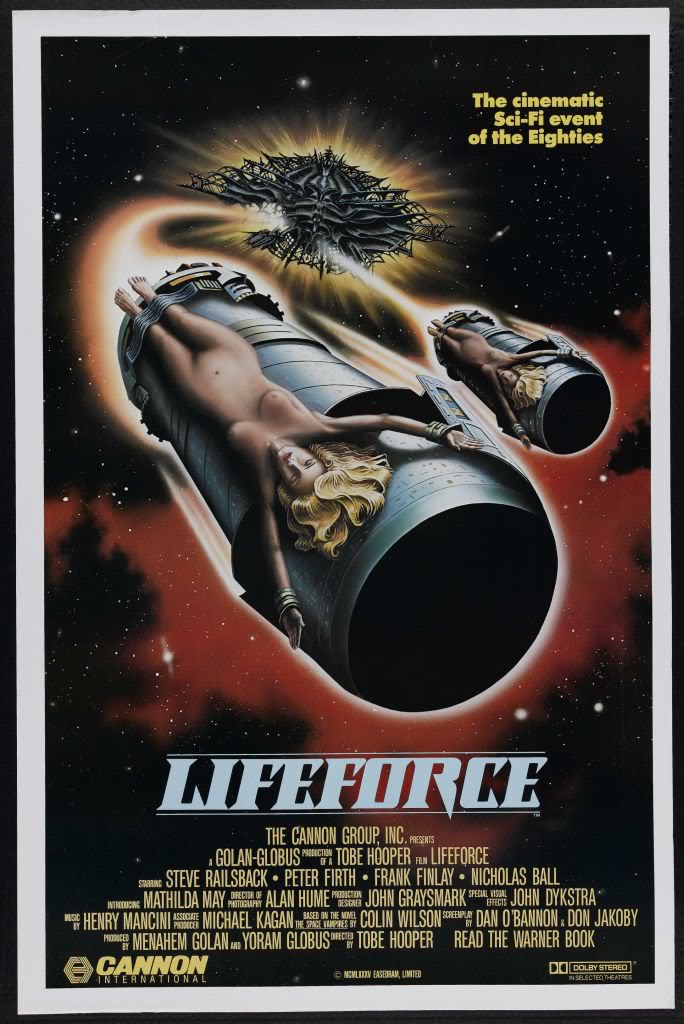
1985’s Lifeforce, directed by Tobe Hooper, was critically panned and barely registered at the box office. Yet in the decades since its release, something curious has happened: the film has gathered a loyal cult following among fans of science fiction and horror. Hooper’s film fuses so many genre conventions that it resists classification—too strange for pure sci-fi, too grandiose for standard horror. The result is a striking and eccentric reinvention of the vampire myth, a lavish but uncanny blockbuster that feels imported from an alternate cinematic timeline.
The film begins squarely in the realm of science fiction. Conceived during the public fascination with Halley’s Comet ahead of its 1986 return, Lifeforce rode the wave of comet-themed media flooding the decade. Most were cheap cash-ins. Hooper’s film stood out for its ambition and its visual scale.
Coming off Poltergeist, Hooper received an unusually large budget—a far cry from the lean, feral energy of The Texas Chainsaw Massacre. The story follows the crew of the shuttle Churchill as they discover a massive alien spacecraft hidden in the comet’s tail. Inside, frozen in suspended animation, are three humanoid figures. The ship’s dignified name feels ironic, even doomed; considering what’s to come, Demeter might have been more fitting. Like the sailors of Stoker’s novel, these astronauts inadvertently ferry an ancient predatory force home—yet this time, the threat arrives from the stars.
The horror unfolds once the crew retrieves its mysterious “specimens.” Members die in gruesome succession until only one survivor, Colonel Tom Carlsen (Steve Railsback), escapes in a pod back to Earth. Railsback’s performance is an intriguing mix of unhinged emotion and grim conviction. His intensity suits a film that constantly walks the line between pulp spectacle and cosmic tragedy.
When the story shifts to London, Lifeforce transforms into a supernatural thriller with procedural undertones. Peter Firth’s Colonel Colin Caine becomes the viewer’s compass: calm, authoritative, and determined to impose order on mounting chaos. As London succumbs to panic and outbreak, his steady professionalism anchors the outlandish events. His partnership with Railsback’s haunted, psychic Carlsen gives the middle act its volatile energy.
Among the supporting cast, Frank Finlay leaves one of the strongest impressions as Dr. Hans Fallada, a scientist fascinated by death and metaphysical energy. He serves as both philosopher and investigator, treating the vampiric invasion as a riddle of life itself. His restrained curiosity lends weight to scenes that might otherwise descend into absurdity. While the city collapses, Fallada studies the phenomenon with eerie calm, treating catastrophe as an experiment in cosmic entropy.
Patrick Stewart also makes a memorable, if brief, appearance as Dr. Armstrong, the head of a psychiatric hospital linked to the Space Girl’s psychic presence. His role builds to the film’s most grotesque and bizarre sequence: an exchange of minds, sudden possession, and an unnervingly intimate kiss with Railsback. The moment condenses everything Lifeforce represents—erotic, macabre, and unconcerned with boundaries. Stewart brings a gravitas that makes the absurd strangely compelling, a counterweight to Railsback’s volatility and Mathilda May’s silent allure.
May, as the unnamed Space Girl, says little but dominates the film through presence alone. She embodies an alien ideal of beauty and destruction, gliding through scenes with a composure that’s both sensual and predatory. Her nudity, much debated at the time, plays less as exploitation and more as elemental symbolism—the human body as an expression of both creation and death, desire and annihilation.
Supporting figures from the British military and government round out the ensemble, emphasizing the film’s descent into bureaucratic chaos. Michael Gothard’s Kane, a Ministry of Defence officer struggling to reconcile logic with the inexplicable, captures the helplessness of institutional order collapsing under cosmic threat. His pragmatic exchanges with Firth highlight competing instincts between reason and survival.
As the infection spreads, Lifeforce expands into a vision of urban apocalypse that fuses British science fiction and American spectacle. London becomes a nightmare tableau—crowds of shriveled corpses feed on energy while arcs of blue plasma swirl through the sky. The city’s fall evokes both George A. Romero’s zombie apocalypse and the metaphysical unease of Nigel Kneale’s Quatermass stories. Amid the insanity, Finlay and Firth remain the emotional touchstones, keeping the audience oriented as narrative logic begins to dissolve.
For all its ambition, however, Lifeforce suffers from erratic pacing and tonal whiplash. The first act unfolds with deliberate, moody wonder, then abruptly veers into frenzied exposition and psychic melodrama once the story reaches Earth. The balance between unsettling mystery and outright spectacle often collapses under its own weight. Scenes that should evoke cosmic terror sometimes tip into unintended camp, particularly in the dialogue-heavy middle stretch. Hooper’s direction, though visually imaginative, occasionally struggles to maintain coherence amid the script’s shifting identities—part creature feature, part disaster epic, part metaphysical drama. The editing, especially in the theatrical cut, undercuts tension with rushed transitions that leave emotional beats hanging. Railsback’s manic performance, while strangely compelling, can also verge on excess, blurring the line between conviction and chaos.
Tonally, the film wavers between awe and amusement. For some viewers, its earnest delivery will read as self-parody; for others, its collision of erotic horror and science fiction grandeur gives it a singular vitality. Lifeforce’s flaws are inseparable from its daring. It dares to fail boldly, and in that failure finds a kind of messy transcendence—larger than reason, too strange to fade.
In the end, Lifeforce lingers as one of the strangest hybrids of its era: part gothic fable, part erotic horror, part apocalyptic science fiction. It was too eccentric to find mainstream success, yet its sincerity and scope give it lasting resonance. The ensemble performances and tonal daring hold the film together, transforming potential chaos into something mythic—a story about possession, contagion, and humanity’s fatal pull toward the unknown.
Beneath its spectacle, the film engages in a deeper dialogue between gothic and cosmic horror traditions. Its characters represent a spectrum of responses to the incomprehensible: Fallada’s intellectual curiosity, Firth’s stoic resolve, Railsback’s frenzy, and May’s serene seduction. Together they form a portrait of human fragility in confrontation with the infinite. Where gothic horror finds fear in the collapse of reason, cosmic horror finds it in the vast indifference of the universe.
By fusing these lineages, Lifeforce becomes a mythic apocalypse that feels both intimate and vast—an encounter between flesh and void, terror and temptation. Its fusion of genres, ideas, and performances ensures its peculiar power endures, a reminder that some of the strangest failures of 1980s cinema are also its most visionary.

 Through the Shattered Lens