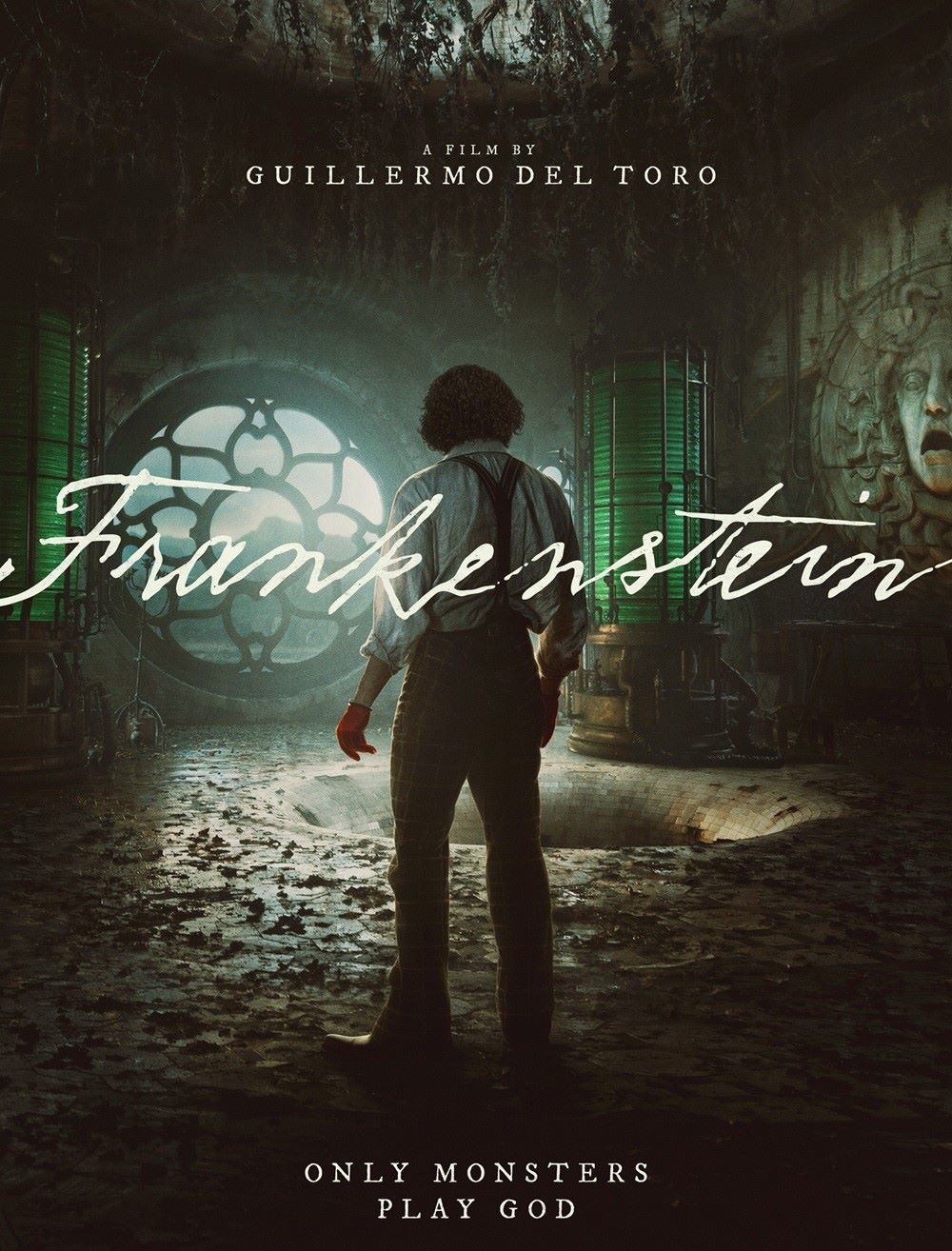
Review: Frankenstein (dir. by Guillermo Del Toro)


“An idea, a feeling became clear to me. The hunter did not hate the wolf. The wolf did not hate the sheep. But violence felt inevitable between them. Perhaps, I thought, this was the way of the world. It would hunt you and kill you just for being who you are.” — the Creature

Guillermo del Toro’s long-awaited take on Frankenstein finally lumbers to life after years of speculation and teases, and it’s every bit the dark, hypnotic fever dream you’d expect from his imagination. The film, a Netflix-backed production running close to two and a half hours, stars Oscar Isaac as the guilt-ridden Victor Frankenstein and Jacob Elordi as his tragic creation. The result lands somewhere between Gothic melodrama and spiritual lament—a lush, melancholy epic about fathers, sons, and the price of neglect. It’s both a triumph of aesthetic world-building and a case study in overindulgence, the kind of movie that leaves you haunted even when it occasionally tests your patience.

From the very first frame, del Toro plunges us into a Europe steeped in rot and beauty. His world feels more haunted than alive—every misty street lamp and echoing corridor loaded with centuries of decay. Victor, introduced as both a visionary and a failed son, is shaped by years of cruelty at the hands of his domineering father, played with aristocratic venom by Charles Dance. That upbringing lingers in every decision he makes, especially when he turns to science to defy death. Del Toro shoots his laboratory scenes as though they were sacred rituals: the flicker of candlelight reflecting off glass jars, the close-up of trembling hands threading sinew into flesh. When the Creature awakens, lightning cracks like some divine act of punishment. It’s a birth scene that feels more emotional than monstrous—Elordi’s raw, wordless confusion gives it a painful tenderness that lingers longer than the horror. Del Toro discards the usual clichés of flat heads and neck bolts, opting for something far more human: an imperfect body full of scars and stitched reminders of mortality.

One of the most striking choices del Toro makes is reframing Victor and the Creature as mirror images rather than opposites. Instead of playing Victor as a simple mad scientist, del Toro paints him as a broken man desperate to reclaim the control he never had as a child. That fear and obsession ripple through the Creature, who becomes his unacknowledged shadow—an extension of Victor’s failure to love or take responsibility. The movie often frames the two in parallel shots, their movements synchronized across different spaces, suggesting that creator and creation are locked in a tragic loop. The audience watches both sides of the story—Victor’s guilt and the Creature’s anguish—without clear moral lines. This emotional split gives the film its heartbeat: the Creature isn’t a villain so much as a rejected child, articulate and lonely, begging to know why he was made to suffer.

Jacob Elordi’s performance is revelatory. He channels something hauntingly human beneath the layers of prosthetics and makeup. There’s a fragility to the way he moves—those long, uncertain gestures feel less like a monster testing its strength and more like someone trying to exist in a world that never wanted him. His eyes carry the movie’s emotional weight; the moment he sees his reflection for the first time is quietly devastating. Oscar Isaac, meanwhile, leans hard into Victor’s manic idealism, all sweat-soaked ambition and buried grief. He makes the character compelling even at his most despicable, though at times del Toro’s dialogue spells out Victor’s torment too bluntly. Still, the scenes between them—particularly their tense reunion in the frozen north—achieve the Shakespearean tragedy that del Toro clearly aims for.

Visually, Frankenstein is pure del Toro—sumptuous, grotesque, and alive in every corner of its composition. Each frame looks painted rather than filmed: flickers of gaslight reflecting on wet marble, glass jars filled with organs that seem to breathe, snow settling gently on slate rooftops. The film feels drenched in the texture of another century, yet vibrates with modern energy. Costume designer Kate Hawley, longtime collaborator of del Toro, deserves special recognition here. Her work helps define the story’s emotional tone, dressing Victor in meticulously tailored waistcoats that hint at obsession through precision, and the Creature in tattered fabrics that seem scavenged from several lives. Elizabeth’s gowns chart her erosion from warmth to mourning, using color and texture as silent narration. Hawley’s palette moves from opulent golds and creams to bleak greys and winter blues—visually tracing how ambition and grief drain the light from these characters’ worlds. The costumes, much like del Toro’s sets, feel alive with history, heavy with stories stitched into every seam.

Mia Goth gives a strong, if underused, turn as Elizabeth, Victor’s doomed fiancée. Her early scenes bring a spark of warmth to the story’s coldness; her later ones turn tragic in ways that push Victor toward his final breakdown. Minor characters—the townspeople, the academics, the curious aristocrats who toy with Victor’s discovery—carry familiar del Toro trademarks: grotesque faces, eccentric manners, glimmers of compassion buried in callousness. The composer’s score matches this tone perfectly, alternating between aching melodies on piano and surging orchestral crescendos that make even the quiet scenes feel mythic. Combined, the sound and visuals give Frankenstein a grandeur that most modern horror films wouldn’t dare attempt.

Still, not every gamble lands cleanly. Del Toro’s interpretation leans so hard into empathy that it dulls the edges of the original story’s moral conflict. Shelley’s Creature grows into a murderous intellect, acting out of vengeance as much as sorrow; here, his violence is softened or implied, as though del Toro can’t quite bring himself to stain the monster’s purity. The effect is powerful emotionally but flattens some of the tension—Victor becomes the clear villain, and the Creature, the clear victim. It fits del Toro’s worldview but leaves the viewer missing some ambiguity. The pacing also falters in the middle third. There are long, ornate monologues about divinity, creation, and guilt that blur together into a swirl of purple prose. The visuals never lose their grip, but the script occasionally does, especially when it slows down to explain what the imagery already tells us.

Those fits of overexplanation aside, del Toro’s Frankenstein stays deeply personal. The story connects directly to the themes he’s mined for years: innocence cursed by cruelty, love framed in pain, beauty stitched from the broken. The Creature isn’t just man made from corpses; he’s a kind of prayer for grace—a plea for understanding in a world defined by rejection. Victor’s failure to nurture becomes an act of spiritual cowardice rather than scientific arrogance. The parallels between them give the film its emotional voltage. Every time one character suffers, the other feels it by proxy, as if their bond transcends life and death.

By the final act, all the grand tragedy is distilled into the silence between two beings who can’t forgive each other—but can’t let go, either. The closing image of the Creature, trudging across a barren arctic plain beneath a rising sun, borders on mythic. His tear-streaked face and quiet acceptance of solitude bring the story full circle: a being born of man’s arrogance chooses forgiveness when his maker couldn’t. It’s sad, tender, and surprisingly spiritual, hinting at del Toro’s constant fascination with mercy in a cruel universe.

As a whole, Frankenstein feels like the culmination of del Toro’s career obsessions condensed into one sprawling film. It’s not perfect—it wanders, it sermonizes, and it sometimes sacrifices fear for sentiment—but it’s haunted by sincerity. You can see del Toro’s fingerprints in every gothic curve and crimson hue, and even when he overreaches, you believe in his conviction. Isaac anchors the film with burning intensity, Elordi gives it wounded humanity, and Goth tempers the heaviness with grace.

In the end, this version of Frankenstein isn’t about horror in the traditional sense. It’s not there to make you jump—it’s there to make you ache. The film trades sharp scares for bruised hearts, replacing terror with empathy. Del Toro reanimates not just flesh but feeling, dragging one of literature’s oldest monsters into our modern reckoning with parenthood, grief, and the burden of creation. It’s daring, messy, and undeniably alive. For better or worse, it’s exactly the Frankenstein Guillermo del Toro was always meant to make.

Horror Trailer: Frankenstein


The official trailer for Guillermo Del Toro’s take on the Mary Shelley’s classic gothic horror Frankenstein has finally been released.

An earlier teaser was sent out months ago, but that was mostly played off like sizzle reel of what Del Toro had been up to with this latest adaptation. This official trailer gives us a much more closer look at the type of adaptation Del Toro decided to take with Shelley’s novel of the tortured scientist and his creation.

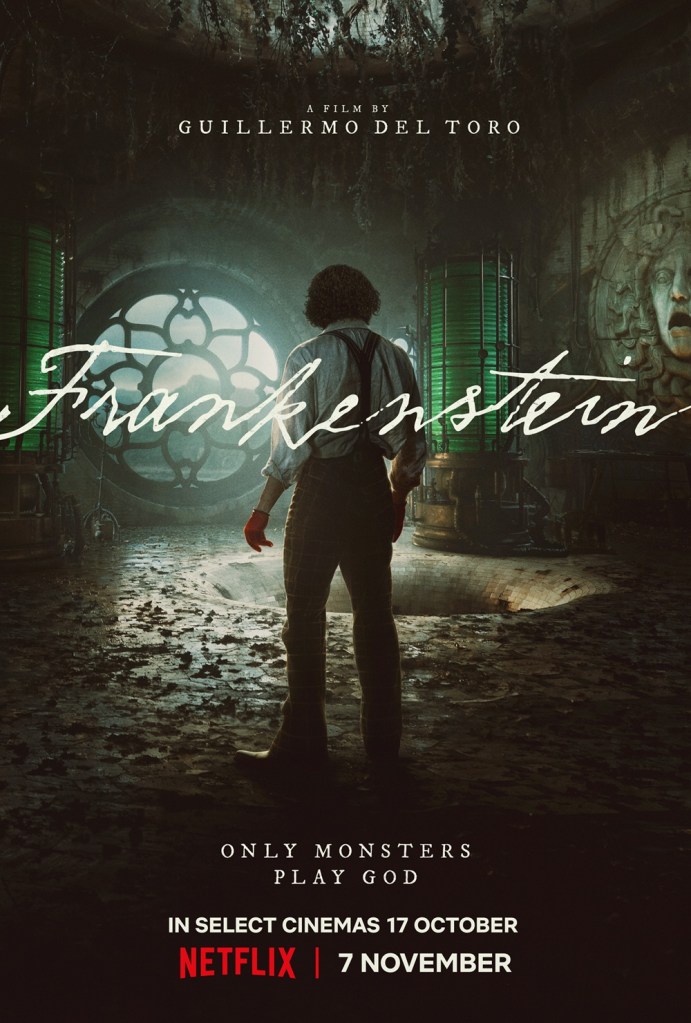
Even though it will be show up on Netflix on November 7, 2025, I do believe that this film needs to be seen on the big screen when a select cities get them on October 17, 2025.

4 Shots From 4 Films: Guillermo del Toro Edition


Happy Birthday to the Master of Dark Fantasy.

Guillermo del Toro ranks high in my eyes as one of the best filmmakers working today. His films have ranged from an inventive take on the vampire genre, the mutant monster film, an evocative ghost story and right up to a dark fable. Guillermo del Toro has worked on both smaller, personal projects and the big, blockbuster action. He’s comfortable in living in both worlds.

No matter which side he happens to land at any particular time he always brings his own brand of visual style and storytelling to each and every film that tells the world that they’re watching a Guillermo del Toro production.

4 Shot From 4 Films

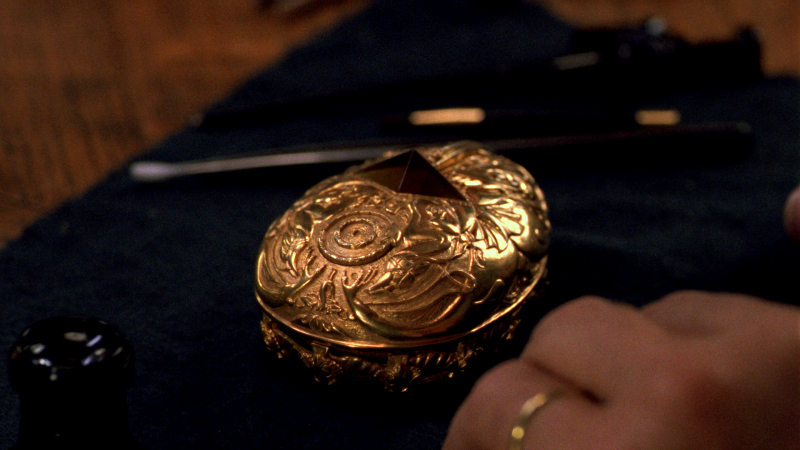
Cronos (dir. by Guillermo del Toro)

Cronos (dir. by Guillermo del Toro)

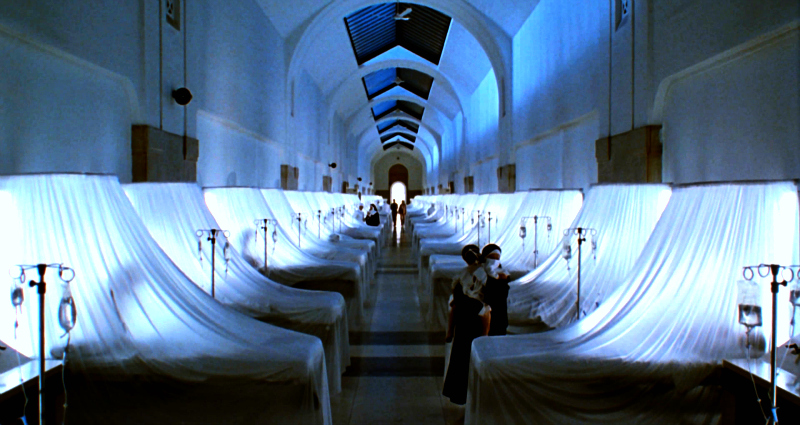
Mimic (dir. by Guillermo del Toro)

Mimic (dir. by Guillermo del Toro)

The Devil's Backbone (dir. by Guillermo del Toro)

The Devil’s Backbone (dir. by Guillermo del Toro)

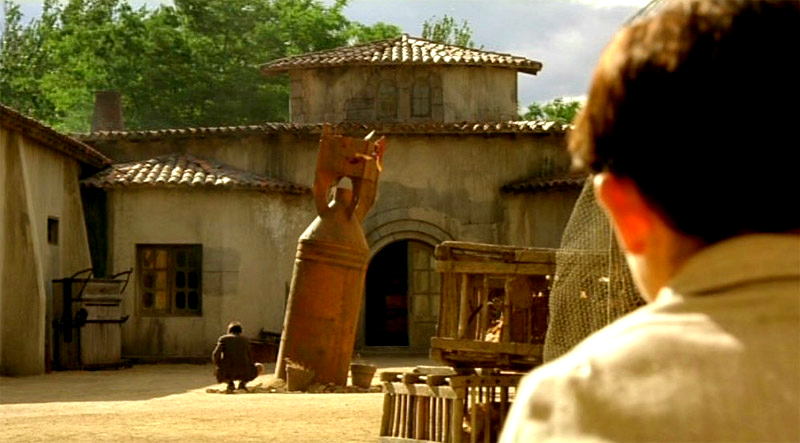
Pan's Labyrinth (dir. by Guillermo del Toro)

Pan’s Labyrinth (dir. by Guillermo del Toro)

Horror Song of the Day: Penny Dreadful Theme (by Abel Korzeniowski)


penny-dreadful-logo-penny-dreadful-new-posters-and-a-new-character-trailer

It’s that time of the year. It’s October here in Through the Shattered Lens and that means one thing: horror-theme month.

October has become a sort of favorite month for us over here at Through the Shattered Lens. While other genres and topics will be posted and and get their time in the sun, this month always brings the site back to the shadows and things that made us fear the dark. Horror has been a common thing which drew Lisa and I to continue the site from it’s fledgling early months to going on almost 6 years.

I’d like to start my contribution to all-things horror by introducing those who haven’t experienced one of the best shows on TV which also has one of the most unique horror theme’s on either big or small screen.

The theme for Showtime’s Penny Dreadful was composed by Abel Korzeniowski. It’s a theme that gives an audience of hint at the show’s Victorian Age gothic setting with just the right amount of dark romance and psychological themes the show has become famous for.

So, here’s the latest “Song of the Day” set for the witching hour.

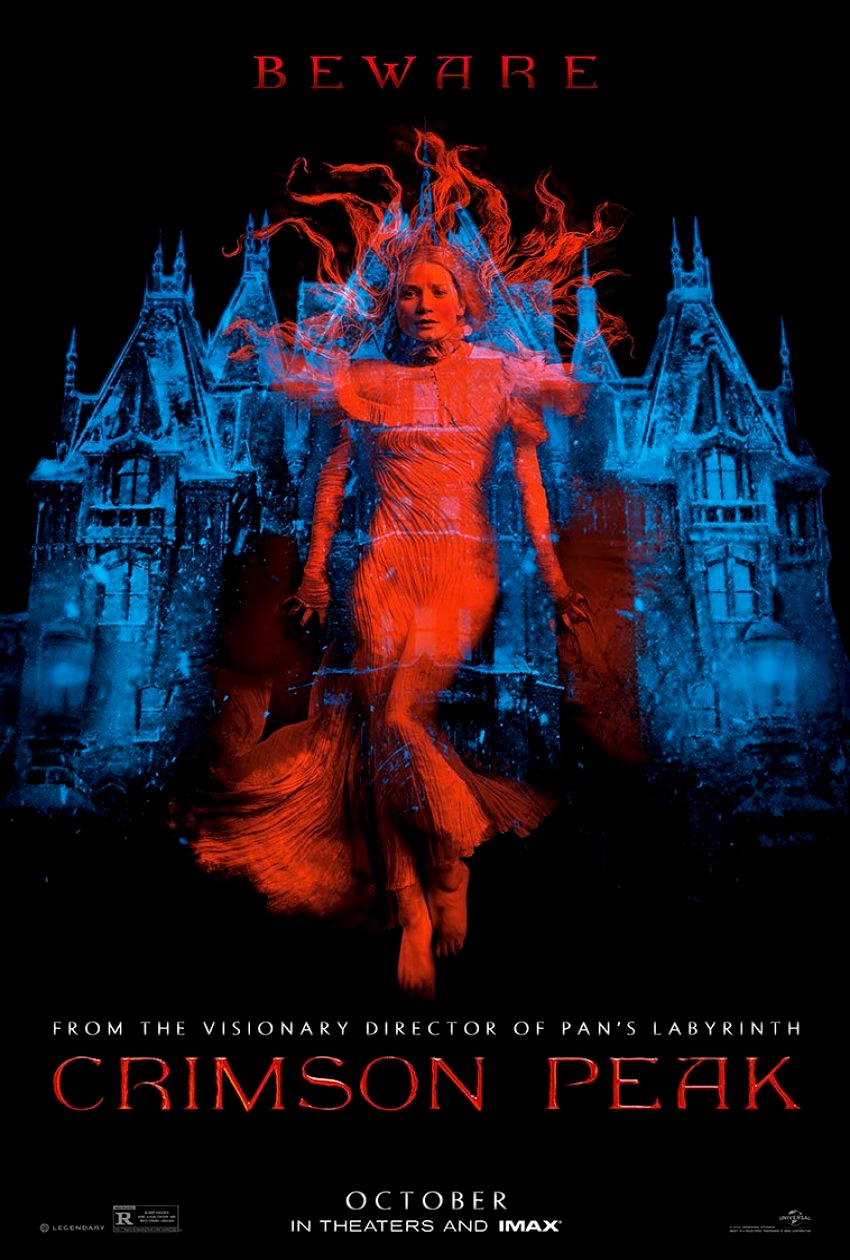
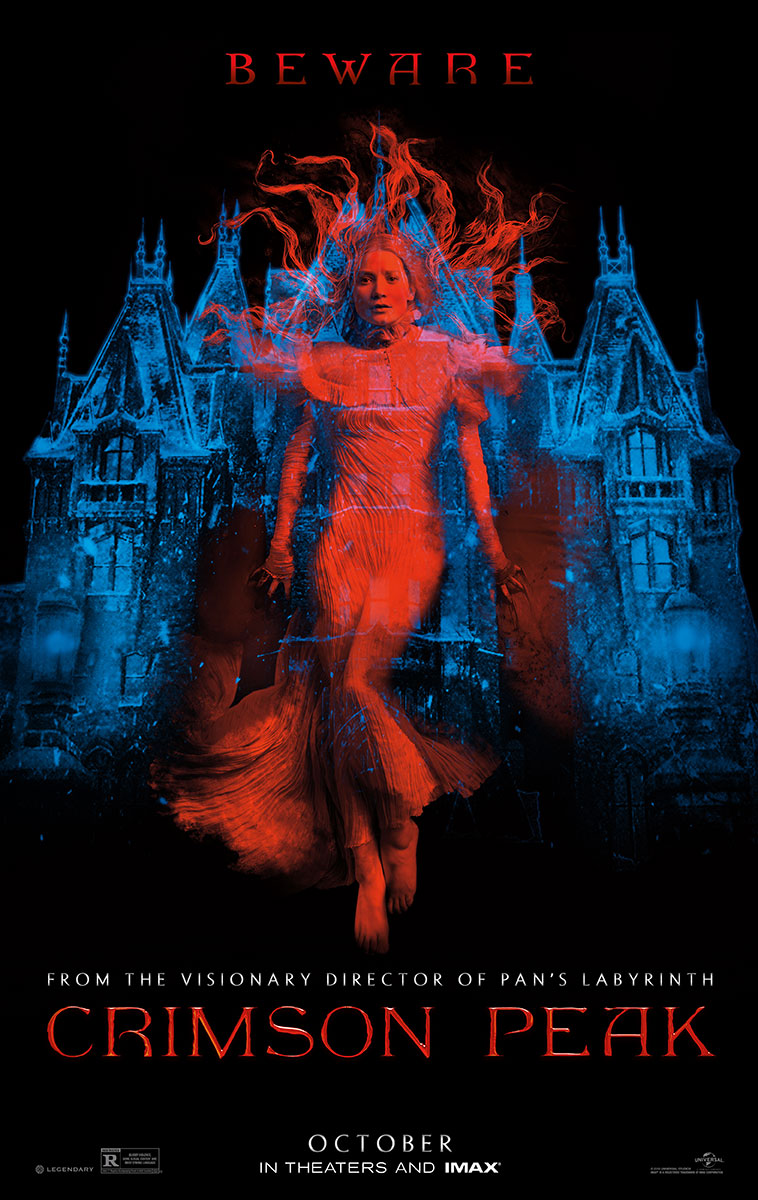
Crimson Peak’s Visually Stunning Gothic Horror


CrimsonPeak

Guillermo Del Toro has become the one filmmaker who seems to excite both the elitist cinephiles and the geek community whenever he comes out with a new film. He’s done both pop-friendly extravaganzas (Pacific Rim, Hellboy) to critically-acllaimed arthouse fares (Pan’s Labyrinth, The Devil’s Backbone). His name has been attached to so many projects of all stripe that one wonders if he ever gets time to rest.

Most of these projects never get past the concept stage, but when one does and he goes all out in directing such projects we get something that excites the fanbase like his upcoming gothic horror film Crimson Peak. It looks to be Del Toro’s love letter to gothic horror of the past with his own visual flair for the morbid and the beautiful in one package.

The film stars a who’s who of powerful performers from Jessica Chastain and Tom Hiddleston to Mia Wasikowska and Charlie Hunnam.

Crimson Peak is set to haunt the public this coming October 16, 2015

Review: Sunless Sea


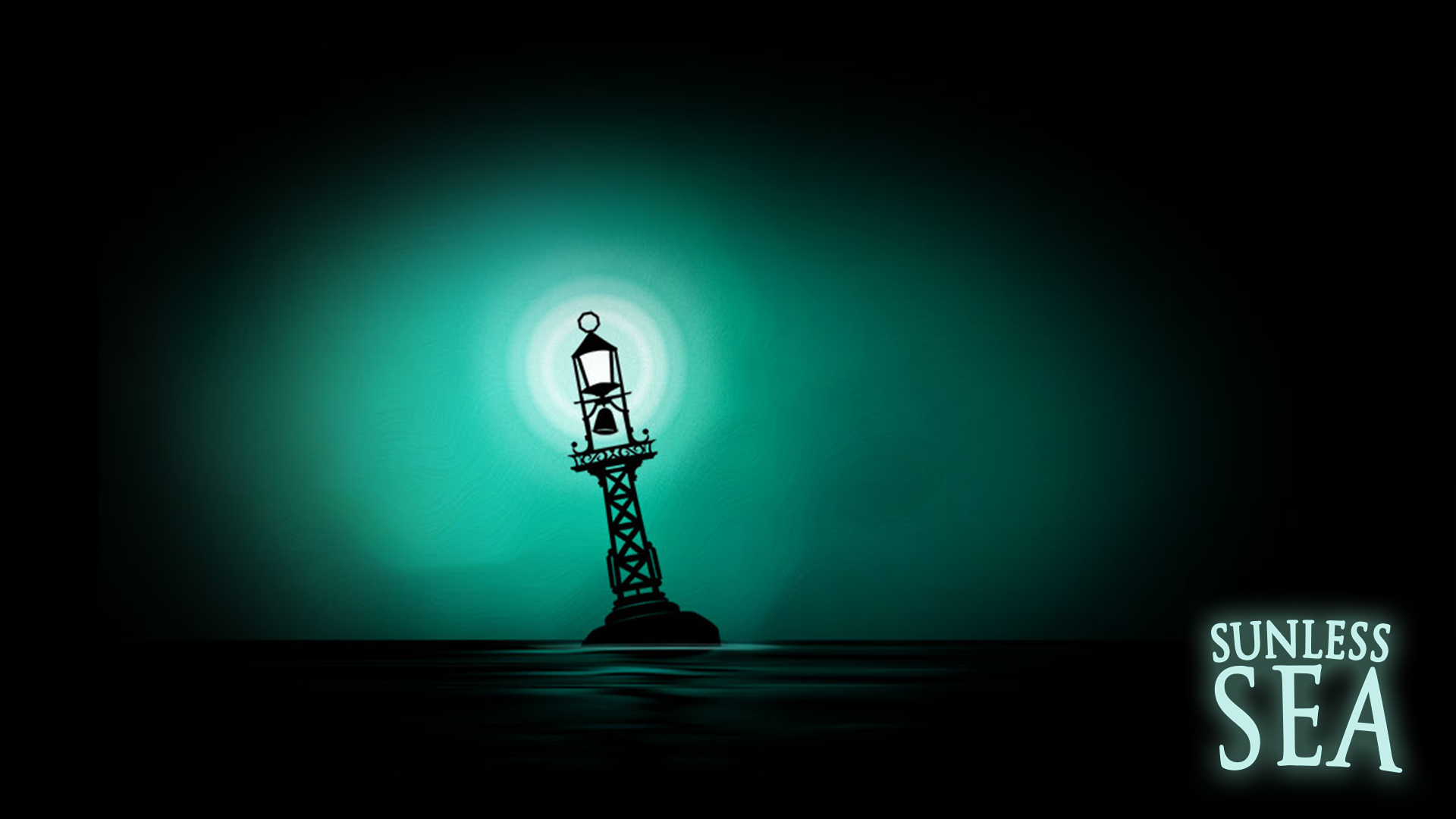
Sunless-SeaI acquired Sunless Sea by impulse as soon as I heard it was a “story-driven roguelike”. I had heard of it before as a “lovecraftian ship navigation simulator”. So happens it attempts to be both, and executes its proposal with laudable competence. Sunless Sea is Uncharted Waters: New Horizons for the SNES meets Eternal Darkness for the Gamecube. It is Sid Meier’s Pirates with a Doctor Who, wacky kind of horror, eldritch and horrifying in its own right. It is fantastic, and scary and fascinating.

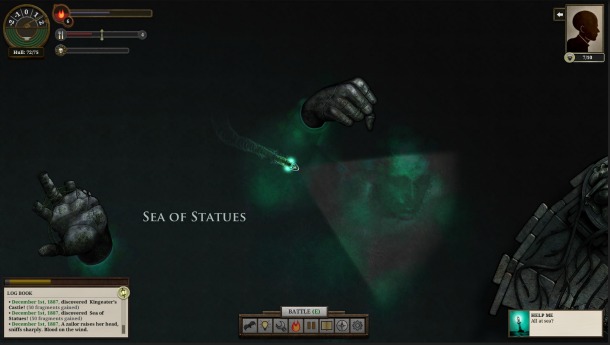
Sunless Sea evokes the mysteriousness of the oceans during the age of discoveries and displaces it into a fantasy, steampunk, victorian London to create a setting appropriately unknown. Your home port of Fallen London (Which as it implies, is London after falling into the earth. Get with the program.) is the only mostly safe place in the underground sea referred to as the Unterzee. As soon as you set sail from Fallen London, there’s no telling what you’ll find, with bat swarms, giant crabs and rat pirates being some of the most tame enemies you’ll encounter. The Unterzee is appropriately feared by those that dwell in it, and your own terror is only one of the things you must manage, lest despair drives you into joining the ghosts in the sea. Mind you, this is not a metaphor, there are actual sea ghosts who, on occasion, wail for you to join them. Your ship’s light brings some comfort at the cost of precious fuel. You must balance the intake of fear with the diminishing fuel and food supplies. It is a game of management. as well as exploration.

sunless1

But most of all, it’s story-driven. There is no single story to speak, but all of them are superbly written. You travel from port to port, from tale to tale, every one of them as eerie as the previous and never the same as any other. The seas are ruled by the gods of Salt, of Stone and of Storm, and you seek their favour, only hoping not to displease any of them. Spider-silk and mushroom wine are common trading goods, while human souls and uncensored romantic novels are illegal commodities. Every island you visit is a story. Every game update is a new set of stories added. It is a fascinating, ever expanding world for the fantasy and horror writer and all its consumers.

If I had to describe Sunless Sea in one word, it would be “enigmatic”. More extensively I’d describe it as dashingly green and black. But it offers too much content; it’s too original to be summarized so briefly. As a roguelike, it is unconventional. As a horror story, it is promising, and as an indie game as a whole it is very successful. I can only hope the Unterzee becomes richer and richer with its programmed updates, and so should you.


Trailer: Crimson Peak


crimson-peak-poster

When will studios finally smarten up and realize that Guillermo Del Toro is one of the preeminent fantasists of our time. Just give him the money and talent to finally make his dream project for the bigscreen: At the Mountains of Madness.

Until that happens we shall have to wait with anticipation for every new project he does see through to completion. This time around he leaves the world of Jaegers and Kaiju and takes us into the world of gothic horror with his upcoming film Crimson Peak.

The most talented cast he has work with to date, Crimson Peak is Del Toro’s take on the classic gothic ghost story but with more than just a tad and smidgen of his own narrative and visual style when it comes to horror. It stars Tom Hiddleston, Jessica Chastain, Mia Wasikowska, Charlie Hunnam and Jim Beaver.

Crimson Peak is set for an October 16, 2015 release date. Just in time for Halloween.

Penny Dreadful Season 2 Trailer


penny-dreadful-logo-penny-dreadful-new-posters-and-a-new-character-trailer

“When Lucifer fell, he did not fall alone.” — Vanessa Ives

It would be an understatement to say that Showtime’s Penny Dreadful was my favorite new show of 2014. I can honestly say that it was the best new show of 2014.

John Logan was able to create a show that probably sounded like a Victorian gothic version of League of Extraordinary Gentlemen on paper, but once seen ended up being both mesmerizing and hypnotic for those willing to travel down the dark, shadowy twists and turns the series took from beginning to end.

We now have the latest trailer and a release date for the second season premiere of Penny Dreadful and it looks like it’ll continue the storyline about Vanessa Ives’ past of demon-possession and exploring it’s ramifications further. We also get the return of a bit player from season 1, Madame Kali, returning to a much more expanded role and if the trailer was to suggest or hint at her role we might be seeing the series’ version of Countess Bathory (I pray to all the fallen angels that this becomes a reality).

If Penny Dreadful season 1 was just the opening appetizer course then here’s to hoping that season 2 will be a satisfying and meatier course.

Penny Dreadful season 2 will have it’s premiere on Showtime on April 26, 2015.

Scenes I Love: Penny Dreadful


Episode 102

2014 has been a very good year in the realm of great television. We have the perennial stand-outs like Breaking Bad, Mad Men, Game of Thrones, Justified and The Americans. Some shows that have been brought down a peg or two in seasons past made a resurgence in quality and consistency with The Walking Dead and Sons of Anarchy.

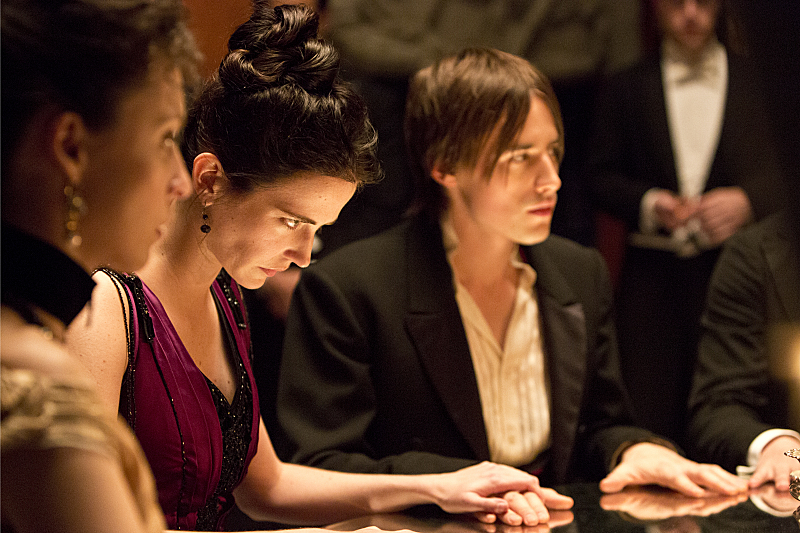
Yet, it is with the new kid on the block that I pick my latest “Scenes I Love” and probably the most memorable scene on TV all year. The scene I speak of is the “seance” scene of the second episode of Showtime’s gothic horror series Penny Dreadful. This scene wasn’t even the big reveal in the episode but it ultimately set the tone for what’s to come for the rest of the series’ inaugural season.

The scene focuses on Eva Green’s character, Vanessa Ives, as she attends and participates in a seance held by Madame Kali in the home of renowned Egyptologist Ferdinand Lyle. It’s a powerful performance from Eva Green who has become an actor with a penchant for pulling off bravura performances in the small and big screen.

Green’s Ives has several more performances such as these during the rest of the season, but they all didn’t come with that first shock and awe this scene gave the episode and the series. It’s actually a shame that Green’s work on Penny Dreadful hasn’t garnered as much, if any, year end accolades. Her work as Vanessa Ives was that good.