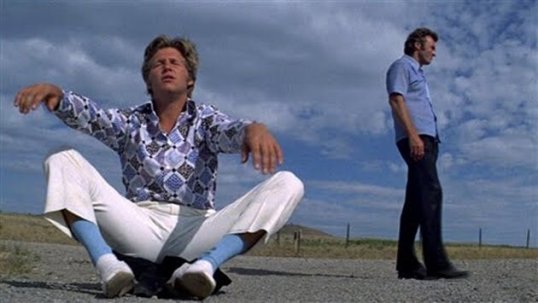
1974’s Thunderbolt and Lightfoot opens with two men, one young and one middle-aged, facing a moment of truth.
The younger of the two is Lightfoot (Jeff Bridges), a wild and hyperactive rich kid who is in his 20s and who steals a corvette right off of a used car lot. The other man is simply known by his nickname, Thunderbolt (Clint Eastwood). When we first see Thunderbolt, he’s giving a sermon in a small Montana church. When a gun-wielding man steps into the church and promptly starts firing at Thunderbolt, he takes off running. Pursued by his attacker, Thunderbolt runs through a field and just happens to jump onto Lightfoot’s speeding corvette. Lightfoot runs over the Thunderbolt’s pursuer. Thunderbolt slips into the car and Lightfoot drives on for a bit. Lightfoot is excited and talkative. Thunderbolt is more concerned with popping his shoulder back into its socket. A stop at a gas station leads to the men stealing someone else’s car.
And so it goes for a good deal of the movie. Thunderbolt and Lightfoot is a road movie, the majority of which is taken up with scenes of the two men just hanging out. Thunderbolt and Lightfoot take an instant liking to each other. When Lightfoot picks up a prostitute (Catherine Bach), he makes sure to ask that she bring along a friend for Thunderbolt. When a criminal punches Lightfoot, Thunderbolt is quick to punch back. “That’s for the kid,” Thunderbolt says. That’s the type of friendship that they have. Jeff Bridges is handsome and full of energy as Lightfoot and Clint Eastwood smiles more in this film than I think I’ve seen him smile in any other film. For once, Eastwood is not playing a perpetually grumpy stranger or a supercop. Instead, he’s just a blue collar guy who enjoys having a friend to travel with.
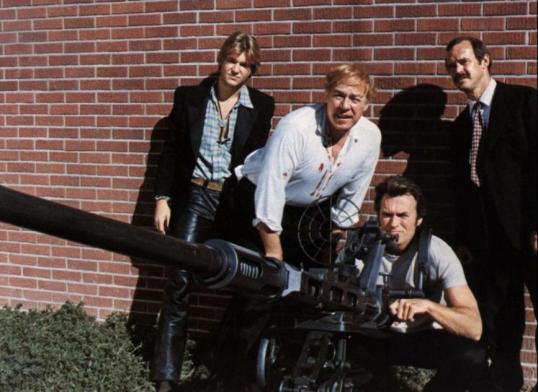
Eventually, Thunderbolt and Lightfoot meet up with two of Thunderbolt’s former associates. Red (George Kennedy) is a brutal brawler who, it is suggested, served with Thunderbolt in the Korean War. Goody (Geoffrey Lewis) is a gentle soul who takes orders from Red but still can’t bring himself to shoot anyone, no matter how much Red demands that he pull the trigger. Red and Goody have always assumed that Thunderbolt stole the loot from a bank robbery that they pulled off. Thunderbolt explains that he didn’t steal the money. He just got arrested after hiding it. Lightfoot suggests that maybe the four of them could pull off another bank heist….
Kennedy and Lewis are perfectly cast as the two criminals who end up working with Thunderbolt and Lightfoot. In many ways, the relationship between Red and Goody mirrors the relationship between our lead characters. The main difference is that Red is sadistic and quick to loose his temper, whereas Thunderbolt controls his emotions and tries not to hurt anyone while committing his crimes. Lightfoot looks up to Thunderbolt and Goody looks up to Red. Again, the difference is that Thunderbolt actually cares about Lightfoot, whereas Red is incapable of truly caring about anyone but himself. Eastwood, Bridges, Kennedy, and Lewis make quite a team and it’s hard not to worry about all four of them, especially when the film takes an unexpectedly dramatic turn during its third act.
I really wasn’t expecting Thunderbolt and Lightfoot to make me cry but the final thirty minutes of the film brought tears to my eyes as what started out as a buddy comedy turned into a tragedy. (I shouldn’t have been surprised. I’ve seen enough 70s movies that I really should have known better than to have expected a happy ending.) Thanks to the perceptive script by Michael Cimino (who would go on to make The Deer Hunter and Heaven’s Gate) and the performances of Eastwood and Bridges, the movie’s final moments carry quite a punch and they leave you wondering if Thunderbolt and Lightfoot’s road trip was worth the price that was ultimately paid. The film works as not only a tribute to friendship but also as a fatalistic portrait of life on the backroads of America.
Thunderbolt and Lightfoot was the first Eastwood film to receive an Oscar nomination, with Jeff Bridges competing for Best Supporting Actor. (He lost to Robert De Niro’s star turn in The Godfather, Part II.) Eastwood, reportedly, felt that he deserved a nomination for his performance as Thunderbolt and, considering that that Oscar itself was won by Art Carney for his pleasant but hardly revelatory work in Harry and Tonto, Eastwood was correct. Instead, Eastwood would have to wait for another 18 years before he finally received Academy recognition for starring in, producing, and directing Unforgiven.
I enjoyed Clint Eastwood’s 1975 film, THE EIGER SANCTION. The movie features many visually stunning shots. The one I’m sharing today is the scene where Clint Eastwood and George Kennedy climb the famous “Totem Pole” in Arizona’s Monument Valley. The scene is breathtaking, but watching it made me weak in the knees. It finishes with a little beer humor that I enjoyed.
Interestingly, this production was the last time anyone has been legally allowed to climb the “Totem Pole.” Why anyone would want to is beyond me. SCARY!! In exchange for permission to film there, climbers with the production had to remove all of the metal spikes, or pitons, which had accumulated from years of climbing. Legend has it that some adventurous folks have climbed it since then, but they were being unlawful with each step, tug and pull!
Here at The Shattered Lens, we’re definitely celebrating Clint Eastwood’s May 31st birthday. As part of that celebration, I decided to revisit his 1975 film, THE EIGER SANCTION.
Clint Eastwood is art professor Jonathan Hemlock, a retired assassin, who agrees to take one last “sanction” from a shadowy agency to avenge his friend’s death. A skilled mountain climber, Hemlock learns that the killer is part of a group of men who are attempting to climb the treacherous Eiger mountain in Switzerland. The Eiger has defeated Hemlock two times already, but he’s hoping the third time will be the charm. He goes to see his friend Ben (George Kennedy) in Arizona, who gets him in the shape he needs to be in to climb the Eiger. The time finally comes to go to Switzerland, climb the mountain, identify the man who killed his friend, and take him out. None of it goes easy, and Hemlock can only hope he will live long enough to avenge his friend!
THE EIGER SANCTION finds Clint Eastwood in James Bond territory. The “agency” is run by the over-the-top albino villain “Dragon,” who can never see any daylight, but seems to enjoy the sanctioning of death. He sends a beautiful woman named Jemima Brown (Vonetta McGee) to steal Hemlock’s money and put him in no position to turn down the agency’s request. Luckily for Hemlock, in true Bond fashion, the beautiful “Aunt” Jemima decides to bed him as part of her assignment. I must admit that I found myself quite enraptured by the beautiful Vonetta McGee. This is some pretty good stuff, but I prefer my 70’s Bond action to come from Sean Connery or Roger Moore. Eastwood is always great (the man had the best head of hair in the business), but I enjoy his movies more when they’re set in the real world of cops and criminals. It’s still a fun movie, and I especially like Hemlock’s relationship with Kennedy. There are some amazing shots of Eastwood and Kennedy in Arizona’s Monument Valley as they prepare for the Eiger and drink some warm beer together on the Totem Pole rock formation! The shots of the men climbing the Eiger are also amazing, but we don’t really know the characters so the drama isn’t strong during this portion of the film. The visuals are absolutely amazing though. The final reveal of the man that Hemlock is after isn’t very surprising. Any person who has seen more than a couple of “mystery” films will figure it out quite easily.
At the end of the day, I enjoyed THE EIGER SANCTION. Eastwood is always worth watching and this film contains several moments of his unique toughness and dry sense of humor. It’s just not as engaging as his very best work. Eastwood is tying to do something a little different, and while I commend him for that, it’s not quite as good as his other work during this time. I’d still give a solid 7 out of 10. The trailer is included below:
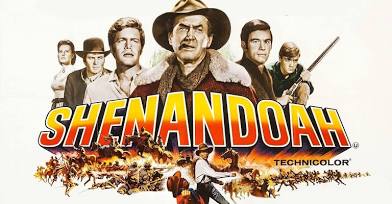
Jimmy Stewart plays Charlie Anderson, the patriarch of a large farming family in Virginia during the time of the Civil War. His family doesn’t own slaves, so he doesn’t figure it’s any of their business what all the fighting is about. He wants to keep working the land in hopes that the war will pass them by. Besides, he has six sons, a daughter, and a daughter in law that he wants to keep safe. He’s trying to keep the family together on his own as his beloved Martha had passed away sixteen years earlier giving birth to their youngest son, who we only know as Boy (Phillip Alford). Aside from the war that’s going on all around them, things seem pretty good for the Anderson’s. They all sit down for a big delicious meal every night. They attend Church every Sunday where they’re usually late and given the side-eye by Pastor Bjoerling (Denver Pyle). One of the sons, James Anderson (Patrick Wayne) and his wife Ann (Katharine Ross), have a precious newborn baby to take care of. The beautiful daughter Jennie (Rosemary Forsyth) is being courted by, and eventually marries, a lovestruck confederate officer named Sam (Doug McClure). Unfortunately the war won’t just go away, and when Boy is taken prisoner by Union soldiers, Charlie can’t stand idly by any longer. They head out to find him and bring him home.
In the guise of an entertaining semi-western, SHENANDOAH does a great job of illustrating how futile and randomly tragic war can be. The movie starts out lighthearted and fun as the family goes about its normal life, with Jimmy Stewart’s Charlie Anderson giving his homespun advice and rolling his cigars. This is a self-sufficient family that loves, respects and enjoys each other even if they don’t agree on everything. But the war keeps inching its way into their lives. First in the form of small group of confederate soldiers who come by to get some water and try to convince the boys to join up. None of the boys will join up, but they do help bury the soldiers when they’re ambushed and killed just down the road. Next a group of men come to the ranch to try to confiscate their horses for the Union army. Of course, Charlie Anderson isn’t going to let that happen and this turns into the type of brawl that seems to come right out of John Wayne western comedy like MCLINTOCK. Everybody joins in with the participants punching and being punched repeatedly, while Boy keeps getting knocked into the horse trough. This shouldn’t be a surprise because Director Andrew V. McLaglen directed MCLINTOCK and many other John Wayne films. Finally, Boy is taken prisoner because he is wearing a confederate cap that he found floating down the steam while he was out fishing one day. Once Charlie and most of his family head out to search for Boy, the movie begins a turn into tragedy. I won’t give the specifics away, but some members of the family will die, and not a single one of their deaths will be based on the actual fighting of a war. Rather, their deaths will be based on the chaos and depravity that surrounds the war. It’s tough to see, especially when they were all so happy just a little bit earlier. For me, the movie’s changes in tone make the tragedy more powerful and really drive home its message about the futility of war. But the Anderson family, like the United States of America after the Civil War, is made up of tough, resilient folks, and the movie ends on a hopeful note that definitely brought some extra moisture to my eyes.
Jimmy Stewart commands the screen in SHENANDOAH. You simply can’t take your eyes off of him, and his performance alone would make the movie worth watching. But with its powerful message, excellent cast, and solid direction, the movie is much more than just Stewart’s strong performance. I highly recommend it.
Hi, everyone! Guess is who is guest hosting the #MondayMuggers live tweet tonight? That’s right …. me!
Tonight’s movie will be The Delta Force (1986), starring Chuck Norris, Lee Marvin, Robert Forster, George Kennedy, Robert Vaughn, Steven James, Hanna Schygulla, Shelley Winters, Martin Balsam, Bo Svenson, Joey Bishop, Susan Strasberg, Kim Delaney …. well, you get the idea. There’s a lot of people in this movie! Jedadiah Leland swears that this is the greatest film ever made. We’ll find out tonight!
You can find the movie on Prime and then you can join us on twitter at 9 pm central time! (That’s 10 pm for you folks on the East Coast.) See you then!
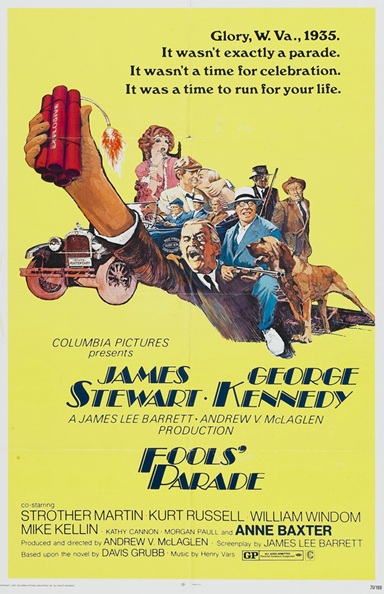
Three men are released from the West Virginia state penitentiary and given a train ticket out of town by the prison captain, Council (George Kennedy). The men are a bank robber named Lee Cottrill (Strother Martin), a young man named Johnny Jesus (a young Kurt Russell), and a courtly older man named Mattie Appleyard (James Stewart). Despite his polite tone of voice and his folksy manner, Appleyard is actually the most notorious of the three men being released. Convicted of murdering two men, Appleyard has spent the past 40 years in prison. Both Appleyard and Cottrill are looking to go straight. Every day of his sentence, Appleyard worked and earned money. Along with a glass eye, Appleyard leaves prison with a check for $25,000 dollars. Appleyard plans to cash the money at the bank and then open a store with Cottrill.
Unfortunately, Appleyard has been released at the height of the Great Depression. The streets are full men desperately looking for work. People will do anything to feed their families or to make a little extra money. Salesman Roy K. Sizemore (William Window) transports guns and dynamite. Willis Hubbard (Robert Donner) works as a conductor on the train. Aging prostitute Cleo (Ann Baxter) offers to sell the virginity of her adopted daughter, Chanty (Katherine Cannon). Junior Killfong (Morgan Paull) sings on the radio and occasionally takes on deadlier work with his friend, Steve Mystic (Mike Kellin). As for Captain Council, he’s decided that he’s going to make his money by ambushing the train carrying the three men that he has just released from prison. After killing the men, Council will cash Appleyard’s check himself.
Of course, it doesn’t quite work out as simply as Council was hoping. Willis Hubbard has a crisis of conscience and lets Appleyard, Cottrill, and Johnny know what Council is planning. The three men narrowly make their escape but Council frames Appleyard for a murder that he didn’t commit. Now wanted once again, the three men must not only get the money but also clear their names. It won’t be easy because, as Hubbard explains, they may be free from the penitentiary but now, they’re trapped in “the prison of 1935.”
Fools’ Parade really took me by surprise. I watched it because it featured two of my favorite actors, James Stewart and Kurt Russell. And both Stewart and Russell give very good performances in the film. Stewart was always at his best when he got a chance to hint at the melancholy behind his folksiness and the young Kurt Russell plays Johnny with a sincerity that makes you automatically root for him. For that matter, the normally sinister Strother Martin is very likable as Lee Cottrill, a bank robber who is still struggling with the idea of going straight. But, beyond the actors, Fools’ Parade is a genuinely sad portrait of desperate people trying to survive. At one point, Sizemore and Cottrill watch as their train passes a camp of people who have been displaced by the Great Depression and it’s even implied that the villainous Council has some regret over what he’s become. (There’s a small but poignant scene in which Council and Cleo acknowledge the passage of time and, for a minute, the viewer realizes these two people were, at one time, maybe as idealistic and optimistic as Johnny.) It’s a well-acted film, one in which moments of humor are mixed with moments of true sadness. I may have picked the film for Jimmy and Kurt but, in the end, the film’s story and performances drew me in. The 63 year-old Stewart proved that he could still give a memorable performance and the 20 year-old Kurt Russell proved that he was a future star in the making. If you haven’t seen it, this is definitely a film to check out.
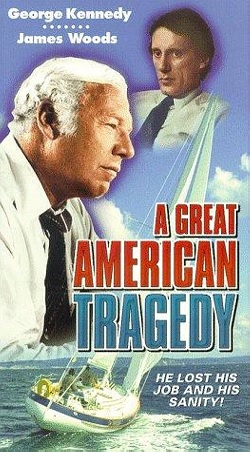
Welcome to Retro Television Reviews, a feature where we review some of our favorite and least favorite shows of the past! On Sundays, I will be reviewing the made-for-television movies that used to be a primetime mainstay. Today’s film is 1972’s A Great American Tragedy! It can be viewed on YouTube!
Brad Wilkes (George Kennedy) had a good career, working as an aerospace engineer. He was able to buy a nice house. With his wife, Gloria (Vera Miles), he was able to raise a good family. He was even able to buy a sailboat, one that is the pride of the entire marina. But then, one day, he’s told that the company is letting him go.
Returning to his home, Brad tells Gloria that he’s lost his job but that everything’s going to be okay because not only does he have a $10,000 pension but he’s sure he can find a new job. “Of course, I might not be making $35,000 a year….” he says.
(Watching at home, I said, “Pfffft! I make more than that!” But, of course, Brad is talking about $35,000 in 1972 money, which would be the equivalent of a quarter of a million today.)
However, Brad soon discovers that getting a new job will not be as easy as he assumed. It turns out that there are a lot of people out there looking for work and most of them are younger, cheaper, and better educated than Brad. The bills start to pile up. His former boss (Robert Mandan) informs Brad that his pension is going to be $7,000 less than he thought. Brad forces himself to go down to the unemployment office so that he can collect $25 a week and then suffers the humiliation of being offered a loan by his well-meaning son-in-law (played by a youngish James Woods). Gloria gets a job at the same clothing store where she used to shop and her lecherous boss (Kevin McCarthy) starts to hit on her.
For Brad, the final humiliation comes when he has to sell the boat. A younger boat owner (Tony Dow, with a huge mustache) puts Brad in contact with a woman named Paula (Natalie Trundy). Paula wants to buy the boat and, after they take it out on the water, Brad finds himself tempted to cheat on his wife. It all gets to be too much for Brad and soon, he’s on a plane to Nevada where hopefully one good night at the craps table will be enough to pay his bills….
Watching this film, I found myself feeling very sorry for Brad while, at the same time, becoming very frustrated with him. On the one hand, his company tossed him out after years of loyal service and then tried to screw him out of his pension. On the other hand, Brad spent almost the entire movie in denial about how bad things actually were. It’s one thing to be proud and it’s another to just be stubborn. Knowing that he has next to no money, Brad still insists on throwing his annual 4th of July party and he even invites his former boss to come over and celebrate. Brad simply cannot bring himself to admit that his old life is over but really, who can blame him? He’s not the one who chose to be fired.
A Great American Tragedy was directed by J. Lee Thompson, who also did Cape Fear, The Guns of Navarone, the Planet of the Apes sequels, and several Charles Bronson films. There are no fight scenes to be found in A Great American Tragedy but Thompson does get good performances from his cast and the film makes great use of George Kennedy’s likability. The viewer remains sympathetic to Brad, even when he makes mistake after mistake. A film about a formerly secure family suddenly discovering just how much the economy sucks, A Great American Tragedy remains just as a relevant today as when it was first made.
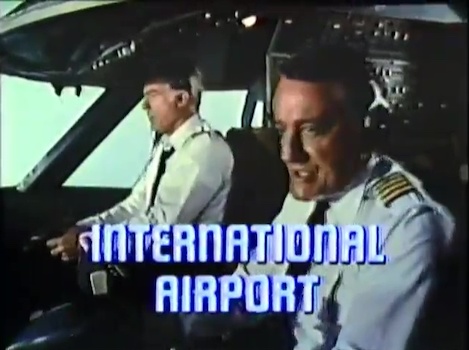
Welcome to Retro Television Reviews, a feature where we review some of our favorite and least favorite shows of the past! On Sundays, I will be reviewing the made-for-television movies that used to be a primetime mainstay. Today’s film is 1985’s International Airport! It can be viewed on YouTube!
It’s not easy working at an international airport!
At least, that’s the message of this made-for-television film. Produced by Aaron Spelling and obviously designed to be a pilot for a weekly television series, International Airport details one day in the life of airport manager David Montgomery (Gil Gerard). Everyone respects and admires David, from the recently graduated flight attendants who can’t wait for their first day on the job to the hard-working members of the airport security team. The only person who really has a problem with David is Harvey Jameson (Bill Bixby), the old school flight controller who throws a fit when he learns that a woman, Dana Fredricks (Connie Sellecca), has been assigned to work in the tower. Harvey claims that women can’t handle the pressure of working the tower and not having a personal life. He demands to know what Dana’s going to do during that “one week of the month when you’re not feeling well!” Harvey’s a jerk but, fortunately, he has a nervous breakdown early on in the film and Dana gets to take over the tower.
Meanwhile, David is trying to figure out why an old friend of his, Carl Roberts (played by Retro Television mainstay Robert Reed, with his bad perm and his retired porn star mustache), is at the airport without his wife (Susan Blakely). David takes it upon himself to save Carl’s troubled marriage because it’s all in a day’s work for the world’s greatest airport manager!
While Carl is dealing with his mid-life crisis, someone else is sending threatening letters to the airport. One of the letters declares that there’s a bomb on a flight that’s heading for Honolulu. David and Dana must decide whether to allow Captain Powell (Robert Vaughn) to fly to Hawaii or to order him to return to California. And Captain Powell must figure out which one of his passengers is the bomber. Is it Martin Harris (George Grizzard), the sweaty alcoholic who want shut up about losing all of his friends in the war? Or is it the woman sitting next to Martin Harris, the cool and aloof Elaine Corey (Vera Miles)?
Of course, there are other passengers on the plane. Rudy (George Kennedy) is a veteran airline mechanic. Rudy is hoping that he can talk his wife (Susan Oliver) into adopting Pepe (Danny Ponce), an orphan who secretly lives at the airport. Unfortunately, when Pepe hears that Rudy’s plane might have a bomb on it, he spends so much time praying that he doesn’t realize he’s been spotted by airport security. Pepe manages to outrun the security forces but he ends up hiding out in a meat freezer and, when the door is slammed shut, it appears that Pepe may no longer be available for adoption. Will someone hear Pepe praying in time to let him out? Or, like Frankie Carbone, will he end up frozen stiff?
International Airport was an attempt to reboot the Airport films for television, with the opening credits even mentioning that the film was inspired by the Arthur Hailey novel that started it all. As well, Gil Gerard, Susan Blakely, and George Kennedy were all veterans of the original Airport franchise. George Kennedy may be called Rudy in International Airport but it’s easy to see that he’s still supposed to be dependable old Joe Patroni. Unfortunately, despite the familiar faces in the cast, International Airport itself is a bit bland. It’s a disaster film on a budget. While the viewers gets all of the expected melodrama, they don’t get anything as entertaining or amusing as Karen Black flying the plane in Airport 1975 or the scene in Concorde: Airport ’79 where George Kennedy leaned out the cockpit window (while in flight) and fired a gun at an enemy aircraft. Probably the only thing that was really amusing (either intentionally or unintentionally) about International Airport was the character of Pepe and that was just because young Danny Ponce gave perhaps the worst performance in the history of television.
International Airport did not lead to a television series. Watching it today, it’s a bit on the dull side but, at the same time, it is kind of nice to see what an airport was like in the days before the TSA. If nothing else, it’s a time capsule that serves as a record of the days when the world was a bit more innocent.
Welcome to Retro Television Reviews, a new feature where we review some of our favorite and least favorite shows of the past! On Fridays, I will be reviewing Half Nelson, which ran on NBC from March to May of 1985. Almost all nine of the show’s episodes can be found on YouTube!
The year was 1985 and actor/singer Joe Pesci was at an interesting place in his film career.
In 1980, Joe Pesci was nominated for Best Supporting Actor for his performance as Robert De Niro’s brother in Raging Bull. Raging Bull was Pesci’s second film and he earned critical acclaim for his performance as the second most angry member of the LaMotta family. In the years immediately following his first Oscar nomination, Pesci went on to play character roles in a handful of other films, including Dear Mr. Wonderful, Easy Money,Once Upon A Time In America, and Eureka. While no one could deny Pesci’s talent or his unique screen presence, it was also obvious that Hollywood wasn’t quite sure what to do with him. While Pesci was apparently high on everyone’s list when it came to playing gangsters with hair-trigger tempers, no one was willing to give Pesci a starring role.
Fortunately, television always has room for an Oscar nominee and, in 1985, Half Nelson came calling. Created by veteran television producers Glen A. Larson and Lou Shaw, Half Nelson was a detective show. Joe Pesci starred as Rocky Nelson, a tough New York cop who relocated to Los Angeles to pursue his acting career. While waiting for his big break, Rocky worked for Beverly Hills Security and lived in Dean Martin’s guest room. And when I say that Rocky was living in Dean Martin’s guest house, what I mean is that Dean Martin actually appeared on the show, playing himself.
NBC liked the idea enough to air the pilot film and then schedule the show as a mid-season replacement. Audiences were a bit less interested in the show and Half Nelson was canceled after only 8 weeks. Pesci went on to win an Oscar for Goodfellas and he never starred in another television show. Half Nelson would probably be forgotten if not for the fact that someone recently came across the opening credits on YouTube. When shared on Twitter, this video went viral as “the most 80s thing” ever created.
After I watched that video, I knew I simply had to review Half Nelson as soon as I finished up The Brady Bunch Hour. Fortunately, almost all of the episodes have been uploaded to YouTube so, for the next few weeks, I’ll be taking a look at HalfNelson, starring Joe Pesci!
Episodes 1 & 2 “The Pilot”
(Dir by Bruce Bilson, originally aired on March 24th, 1985)
Half Nelson begins in New York City, with NYPD’s finest, Detective Rocky Nelson (Joe Pesci), disguising himself as a waiter and sneaking into a mafia-owned restaurant. After punching out two guards, Rocky enters a backroom and discovers a group of guys with a lot of heroin. Rocky arrests them and becomes a hero. As Rocky explains in a voice-over, it’s the biggest drug bust in history. When Hollywood asks for the rights to the story, Rocky insists that he be allowed to audition for the lead role. Rocky quits the NYPD and heads out to Los Angeles. Rocky’s going to be a star!
And, at first, it seems like Rocky’s dream might actually come true. The film’s director (played by the veteran TV character actor, George Wyner) watches Rocky’s audition and announces that Rocky has the screen presence and talent of Al Pacino. Unfortunately, Rocky is also only 5’3. “You’re too short to play Rocky Nelson,” the director explains.
“But I am Rocky Nelson!” Rocky exclaims.
Despite the fact that Rocky’s telling the truth, it doesn’t matter. A tall British actor is cast in the film. As a dejected Rocky leaves the audition, he’s approached by a security guard who offers Rocky a job with Beverly Hills Patrol, a private security firm. Rocky’s skeptical until the security guard mentions that Rocky will get to live in Dean Martin’s guest house.
We jump forward six months. Rocky is now a trusted employee of Beverly Hills Patrol. When he’s not working as a bodyguard, he’s auditioning for roles. At the office, his boss is Chester (Fred Williamson) and the office manager is Annie O’Hara (Victoria Jackson). Chester is cool and all-business. Annie is flighty and has an obvious crush on Rocky. She also gives Rocky a pit bull named Hunk. Hunk is very loyal but also very quick to attack anyone who isn’t Rocky. I don’t know if a show could get away with a comic relief pit bull today but whatever. Hunk is a cute dog with a ferocious bark.
In just six months, Rocky has become surprisingly well-known in L.A. Some of that might be because he lives with Dean Martin. Martin appears in three scenes of the pilot and, to be honest, he definitely looks and sounds a bit worse for wear. Half Nelson was Dean’s final acting role. (He died ten years after the show was canceled.) But even though Dean was clearly not in the best shape when he appeared in the pilot, his natural charisma still shines through and there’s a lot of pleasure to be found in his scenes with Joe Pesci. For one thing, Pesci himself seems to be genuinely excited about acting opposite Martin.
Along with becoming friends with Dean Martin, Rocky has also befriended Parsons (George Kennedy), a Los Angeles police chief who is eager for Rocky to quit the Beverly Hills Patrol and to join the LAPD. Rocky turns down the offer, however. Rocky is done with police work. He’s going to be a star!
Of course, he’ll also find time to solve some crimes along the way.
For instance, in the pilot, Rocky investigates the death of his best friend and co-worker, Jerry (Nicholas Surovy). Parsons insists that all the evidence shows that Jerry murdered his girlfriend, Monika (Morgan Brittany), and then shot himself. However, Rocky doesn’t think Jerry would do something like that. When Jerry’s father (veteran screen actor Rory Calhoun) asks Rocky to find the people who killed his son, Rocky doesn’t have to be asked twice.
It turns out that Jerry and Monika were taking money from a tabloid magazine publisher (Terry Kiser). They had a video tape that would have been very embarrassing to some prominent Angelinos, including a businessman (Rod Taylor), a restauranter (Tony Curtis), a general (Mills Watson), an astronaut (Gary Lockwood), and a television executive (Bernie Kopell). Rocky assumes that the people on the tape ordered the murders but then he learns that, while the general did send two government agents to find the tape, he also made clear that no one was supposed to be killed. Instead, someone else who wanted the tapes committed the murders on his own.
Searching for the killer means that Rocky will have to assume many disguises and show off his acting skills. As an actor, he’s able to wander into the local movie studio and not only raid their wardrobe department but also borrow their cars. Over the course of the film, Rocky disguses himself as both a cowboy and a traffic cop. He also drives a Ferrari, a Cadillac, a jeep, a motorcycle, and KITT, the talking car from Knight Rider. (KITT, unfortunately, does not talk in Half Nelson.) On the one hand, the use of disguises is a little bit silly because Joe Pesci is always going to be Joe Pesci regardless of what costume he is wearing. The pilot’s silliest scene involves Rocky dressed up like a cop to confront two men who have been following him. Somehow, they fail to pick up on the fact that the 5’3 cop with the New York accent is the same 5’3 New Yorker who they’ve been tailing for the last few days. And yet, it’s one of those things that’s so ludicrous that you can’t help but think that the show was showing a bit of self-awareness and commenting on just how ludicrous most television shows tend to be.
Eventually, Rocky figures out that the killer is …. SPOILER ALERT …. Parsons! That’s right. The same police chief who kept offering Rocky a job with the LAPD turned out to be the murderer for whom Rocky was looking. What’s interesting is that, after realizing that Parsons is the killers, Rocky doesn’t arrest Parsons or attack him or do any of the other things that a typical TV detective might. And Parsons doesn’t try to flee or fight. Instead, the two men take a leisurely drive and talk about life, morality, and regret. Parsons talks about how he was once an honest cop but Los Angeles corrupted him. Rocky expresses some sympathy and says that he hates that he discovered that Parsons was the murderer. It’s a well-acted and surprisingly well-written scene. When Rocky asks Parsons about the murders, Parsons replies, “I had to empty my gun, just to drown out their screams.” (Yikes!) Parsons lets Rocky out of the car and tells him, “Don’t let them get to you, kid.” Parsons then drives the car over a cliff as Roberta and Chester (who have been tailing Parsons) run up to Rocky.
“Hard to believe that a man like that would kill himself!” Roberta says.
“That’s just the funeral,” Rocky replies as Parsons car explodes, “He died a long time ago.”
Wow, that’s dark! Fortunately, the mood is lightened during the show’s final scene, in which Rocky’s pit bull attacks boxer Larry Holmes.
The pilot for Half Nelson was nicely done. It set up the series and it gave us an introduction to the characters, which is exactly what a pilot is supposed to do. The cast showed off their chemistry and the final scene between Parsons and Rocky indicated that the show had the potential to be something more than just another mid-80s detective show. The pilot’s greatest strength, not surprisingly, was Joe Pesci. Pesci has played so many mobsters and crooked lawyers that it’s easy to forget what a likable actor he can be. The pilot featured Pesci at his most amiable and it also gave him a chance to show off his comedic timing. All-in-all, the pilot was a success and I could understand why NBC would have ordered more episodes after watching it.
But what about the series? Would the series live up to the promise of the pilot or would it just become another generic detective show? We’ll find out over the next 8 weeks!
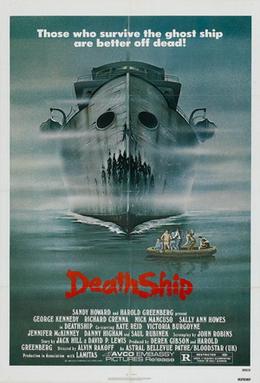
The 1980 Canadian film, Death Ship, opens with a black freighter ominously sailing across the ocean in the middle of the night. The freighter appears to be deserted but, when a cruise ship appears over the horizon, we suddenly hear disembodied German voices announcing that the enemy is in sight and it’s time to take battle stations. The freighter changes direction and starts to rapidly move straight towards the cruise ship.
On the cruise ship, a really bad comedian named Jackie (played by Saul Rubinek) is telling a series of unfunny jokes. Fortunately, before he can further offend anyone else’s comedic sensibilities. the freighter crashes into the cruise ship and sinks it. The next morning, we see a small group of survivors floating on a piece of debris. There’s the firm and harsh Captain Ashland (George Kennedy), who was on the verge of being forced into retirement before his boat sank. There’s Mrs. Morgan (Kate Reid), the odd religious passenger. There’s Trevor Marshall (Richard Crenna), his wife Margaret (Sally Ann Howes), and their two annoying kids. There’s a guy named Nick (Nick Mancuso) and a woman named Lori (Victoria Burgoyne), who are in love but obviously doomed. And then there’s Jackie. That’s right, Jackie survived! And he’s still telling bad jokes!
Suddenly, the survivors spot the freighter in the distance. Not realizing that it’s the same freighter that previously rammed them, they board the boat and discover that it appears to be totally abandoned. Jackie stands on the deck, encourages everyone to be positive, and makes more jokes. Suddenly, a cable wraps around his ankles, one of the ship’s cranes suddenly moves, and Jackie is tossed back into the ocean. The comedy Gods have spoken.
Anyway, once Jackie is no longer around to make them laugh, the cruise ship survivors set about going crazy. It’s not that difficult to do because it turns out that not only is the freighter full of ghosts but the ship’s engine is fueled by pure hate. That means that one passengers takes a shower just to have the water turn to blood. Another makes the mistake of watching an old movie and eating a cursed piece of hard candy. Yet another ends up getting tossed into the gears of the ship and loses an arm.
Meanwhile, Captain Ashland stumbles around the ship and hears voices telling him that the ship is now his. After Ashland discovers and then puts on an old officer’s uniform, he declares that he’s in charge of the freighter and then he proceeds to try to kill everyone else on the ship. Captain Ashland is possessed and there’s not even anyone on the boat who can make a joke about it.
Death Ship is a dumb but crudely effective movie. This is one of those films where everyone could have saved themselves a lot of trouble by sticking together as a group instead of splitting up to search the freighter but it’s not like you’re watching a movie called Death Ship because you’re looking for a coherent narrative or anything. The main reason you’re watching is so you can see George Kennedy get possessed and go crazy. Fortunately, George Kennedy was just the type of character actor who you could depend upon to act the hell out of getting possessed. There’s not a hint of subtlety to be found in Kennedy’s performance and, if nothing else, that certainly makes him entertaining to watch. Kennedy attacks this role with the ferocity of a cheetah pouncing on a gazelle in a nature documentary. He basically grabs hold of the film and snarls at the rest of the cast, “This is my movie! If you steal a scene from me in your dreams, you better wake up and apologize!” It’s fun to watch.
The same can be said about Death Ship, which is a totally over-the-top movie but which, thanks to Kennedy’s performance and a few atmospheric shots of the freighter, is also far more entertaining than it has any right to be.


 Through the Shattered Lens