May The Fourth Be With You: Looking Back At Star Wars


Today is Star Wars Day.  (It’s May 4th.  May the Fourth Be With You!  I’ll stop now.)  Five years ago, I ranked all of the Star Wars feature films that had been released up until that point from best to worst.  Here’s how I ranked them:

  1. The Empire Strikes Back
  2. Rogue One
  3. New Hope
  4. The Force Awakens
  5. Revenge of the Sith
  6. Return of the Jedi
  7. Solo
  8. The Rise of Skywalker
  9. The Last Jedi
  10. Attack of the Clones
  11. The Phantom Menace

Since that was a while ago, I decided to take a look back and see if I still felt the same way.  Here are my brief thoughts on each film, in order of release.

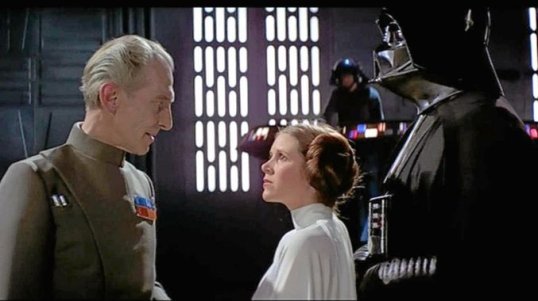
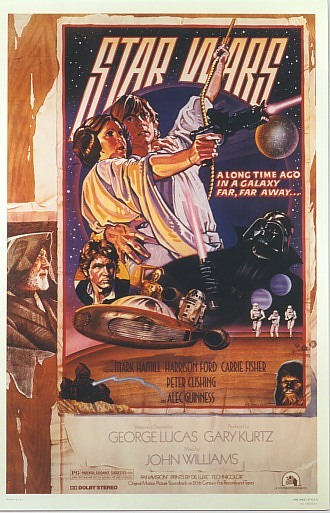
Star Wars: Episode IV — A New Hope (1977, directed by George Lucas) — A New Hope may not be the best Star Wars film but it’s still the most entertaining, even if George Lucas doesn’t seem to realize that.  A tribute to the serials and space operas that Lucas grew up with, A New Hope features great action scenes, special effects that hold up well despite not being as slick as modern CGI, and great performances from Alec Guinness and Harrison Ford.  Mark Hamill would eventually become a much better actor, though you might not guess just from his performance here.  Watching New Hope today, I really appreciate that the movie doesn’t get bogged down in overexplaining things.  We don’t need to know what the Clone Wars were specifically about or what the Kessel Run actually was.  They sound cool and that’s all that was really required.  Despite what some claim, there is absolutely no evidence that Darth Vader was meant to be Luke’s father in this move.

Star Wars Holiday Special (1978, directed by Steve Binder) — Only aired once, I debated whether to include it here or not.  I eventually did just because it features the debut of Boba Fett.  It’s as bad as you’ve heard but the special’s real since is that it’s incredibly boring.  Harrison Ford still looks happier here than he did in Return of the Jedi.

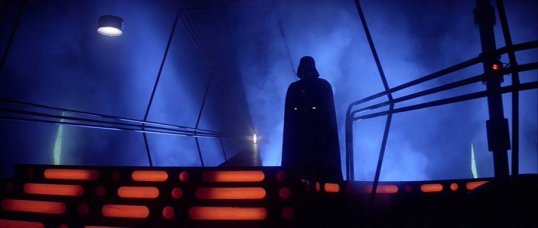
Star Wars: Episode V — The Empire Strikes Back (1980, directed by Irvin Kershner) — The best of the original trilogy, this installment was surprisingly dark, downbeat, and violent.  Mark Hamill finally started to show some signs of growth as an actor while Harrison Ford’s Han Solo continued to be the coolest rebel in the universe.  Combining the more thoughtful scenes with Yoda with the action-orientated scenes on Cloud City made this the most intelligent of the Star Wars films.  The battle on Hoth remains one of the best action scenes ever.  I think every kid who saw this movie wanted an AT-AT Walker.  I know I did.

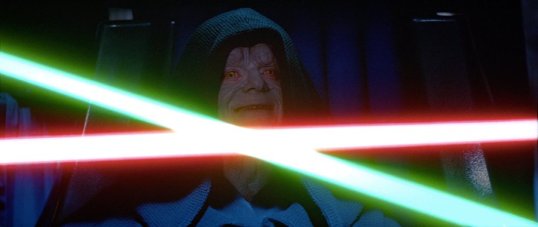
Star Wars: Episode VI — Return of the Jedi (1983, directed by Richard Marquand) — It’s not quite as bad as its reputation, largely due to the opening with Jabba the Hutt’s court.  Jabba is so grotesque and evil in this movie that it’s hard not to regret that the subsequent films made him into more of buffoon than a crime lord.  Brining back the Death Star made this film feel like a retread.  The Ewoks were created to sell toys but so was everything else in this movie.  Harrison Ford looks particularly grouchy at the end.

The Ewok Adventure (1984, directed by John Korty) and Ewoks: The Battle For Endor (1985, directed by Jim and Ken Wheat) — I guess if these had been successful, there would have been an Ewok television show.  The Ewok Adventure feels childish and features a narrator.  Battle for Endor is surprisingly violent for a movie about teddy bears.  Both films are more bland than truly bad.
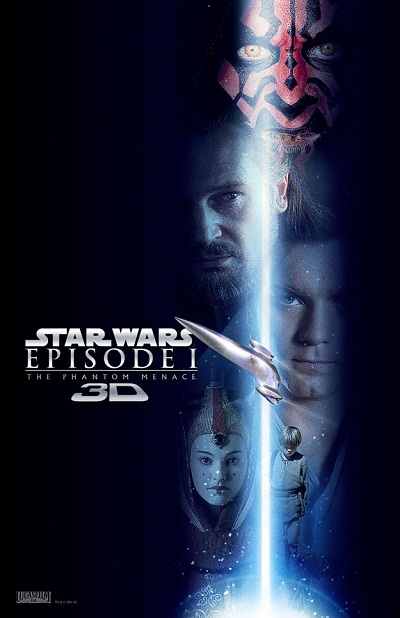
Star Wars: Episode I — The Phantom Menace (1999, directed by George Lucas) — There’s been some revisionism about this film.  Some people actually defend it now.  Not me.  It’s still pointless.  This movie started the trend of every popular film having to have an in-depth “mythology” behind it.  It turns out that the Evil Empire was all about trade routes and tariffs.  Jake Lloyd gets more blame than he deserves.  Overexplaining the Force was a sign of things to come.  This movie would feature Natalie Portman’s worst performance if not for…

Star Wars: Episode II — Attack of the Clones (2o02, directed by George Lucas) — As painfully generic as its title, this movie was responsible for Hayden Christensen having an undeserved reputation for being a bad actor.  I doubt any actor, no matter how talented, could make Lucas’s dialogue feel natural.

Star Wars: Episode III — Revenge of the Sith (2005, directed by George Lucas) — The only one of the prequels that actually added anything to what we already knew, Revenge of the Sith is dark, violent, and it doesn’t have as many slow spots as the other prequels.  Ewan McGregor finally gets a chance to act and Hayden Christensen and Natalie Portman are finally given actual characters to play.  Today, some people say it’s the best of the Star Wars films.  They’re wrong but it’s still pretty good.

The Clone Wars (2008, directed by Dave Filoni) — The only animated Star Wars film doesn’t get much attention and it does get bogged down in the mythology of the of the prequels.  No one really cares about the specifics of the Clone Wars.  The fact that it’s animated and clearly marketed at kids makes the dialogue easier to tolerate.
Star Wars: Episode VII — The Force Awakens (2015, directed by J.J. Abrams) — When this first came out, a lot of people (including myself) were so happy to have a new Star Wars film that we overrated it.  It’s hard to watch today without thinking about how bad things got after it was released but it does still hold up well as a space adventure, though Daisy Ridley’s blandness is more apparent on subsequent viewings.  The performances of Adam Driver and John Boyega still hold up.  The main attraction, though, is Harrison Ford returning as Han Solo.

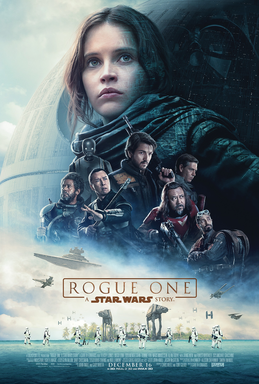
Rogue One: A Star Wars Story (2016, directed by Gareth Edwards) — The first stand-alone live action Star Wars feature film is a thrilling space adventures that holds up on subsequent viewings and works because the stakes actually feel real.  For the first time since New Hope, the Death Star is actually frightening.  This remains one of the best films in the franchise and it’s not surprising that it led to the best of the Star Wars television shows.

Star Wars: Episode VIII — The Last Jedi (2017, directed by Rian Johnson) — The haters are right about much of this film.  For all the complaints about Disney not allowing their Marvel directors much freedom, the Star Wars sequels shows what happens when a franchise isn’t sure where it wants to go.  Rian Johnson tries to bring Star Wars down to Earth but that’s not where we want Star Wars.  Rose Tico was an annoying character and her line about saving what we love deserves all of the mockery it received but Kelly Marie Tran still didn’t deserve to be run off of social media.  Turning Luke into a bitter old man was this film’s greatest sin.

Solo: A Star Wars Story (2018, directed by Ron Howard) — That this wasn’t a box office hit was the a clear warning sign that audiences were getting bored with Star Wars.  This Han Solo origin story isn’t bad.  Ron Howard could direct a film like this in his sleep.  It just feels unnecessary.  Alden Ehrenreich does his best but no one can replace Harrison Ford as Han Solo.

Star Wars: Episode IX — The Rise of Skywalker (2019, directed by J.J. Abrams) — J.J. Abrams tries to undo everything that Rian Johnson did in his film.  I don’t blame Abrams because Johnson’s film wasn’t great but just shrugging it all off doesn’t really work either.  The sequel trilogy, which started with such high hopes, ends with a whimper.  Daisy Ridley’s boring performance doesn’t help.

My rankings, as of 2025, are below:

  1. The Empire Strikes Back
  2. Rogue One
  3. New Hope
  4. Revenge of the Sith
  5. Return of the Jedi
  6. Force Awakens
  7. Solo
  8. Rise of Skywalker
  9. The Last Jedi
  10. Ewoks: Battle for Endor
  11. The Clone Wars
  12. The Ewok Adventure
  13. Holiday Special
  14. Phantom Menace
  15. Attack of the Clones
4 Shots From 4 Films: Special Star Wars Edition


4 Or More Shots From 4 Or More Films is just what it says it is, 4 shots from 4 of our favorite films. As opposed to the reviews and recaps that we usually post, 4 Shots From 4 Films lets the visuals do the talking!

Today, we wish all of our readers a happy May The Fourth Be With You Day!  It’s time for….

4 Shots From 4 Star Wars Films

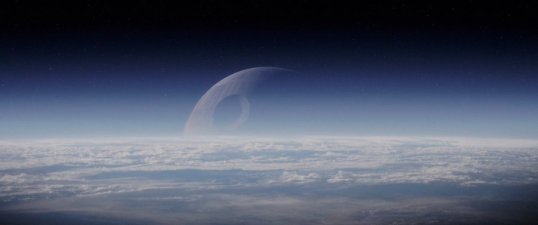
Star Wars Episode IV: A New Hope (1977, dir by George Lucas, DP: Gilbert Talyor)

The Empire Strike Back (1980, dir by Irvin Kershner, DP: Peter Suschitzky)

Return of the Jedi (1983, dir by Richard Marquand, DP: Alan Hume and Alec Mills)

Rogue One (2016, dir by Gareth Edwards, DP: Greig Fraser)

Scenes I Love: The Raid 2


Yesterday, I highlighted one of my more recent guilty pleasures, Timu Tjahjanto’s unhinged action thriller The Night Comes for Us, and today I highlight an action scene from an earlier film that helped propel Indonesia’s action film scene to most Westerners with a little sequence from Gareth Edwards’ The Raid 2. A sequel to his own earlier film, The Raid.

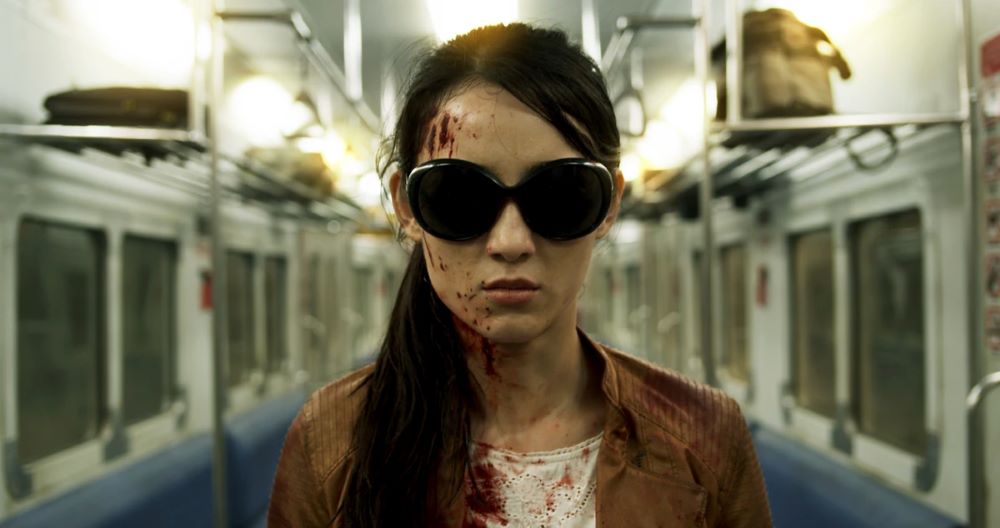
This sequence stars the character only known as Hammer Girl and played Julie Estelle who is also in The Night Comes for Us. I would’ve picked her scene from that film to highlight but it spoils a major part of the film so I decided on this scene in The Raid 2 that got her noticed with action film aficionados worldwide.

It’s a simple set-up. Girl with two claw hammers in a crowded train silently squares up against a train car full of yakuza members. What comes next is a masterclass in action choreography that induces many a visceral response form the viewer yet hard to look away from.

4 Shots From 4 Films: Special Star Wars Edition


4 Or More Shots From 4 Or More Films is just what it says it is, 4 shots from 4 of our favorite films. As opposed to the reviews and recaps that we usually post, 4 Shots From 4 Films lets the visuals do the talking!

Today, we wish all of our readers a happy May The Fourth Be With You Day!  It’s time for….

4 Shots From 4 Star Wars Films

Star Wars Episode IV: A New Hope (1977, dir by George Lucas, DP: Gilbert Talyor)

The Empire Strike Back (1980, dir by Irvin Kershner, DP: Peter Suschitzky)

Return of the Jedi (1983, dir by Richard Marquand, DP: Alan Hume and Alec Mills)

Rogue One (2016, dir by Gareth Edwards, DP: Greig Fraser)

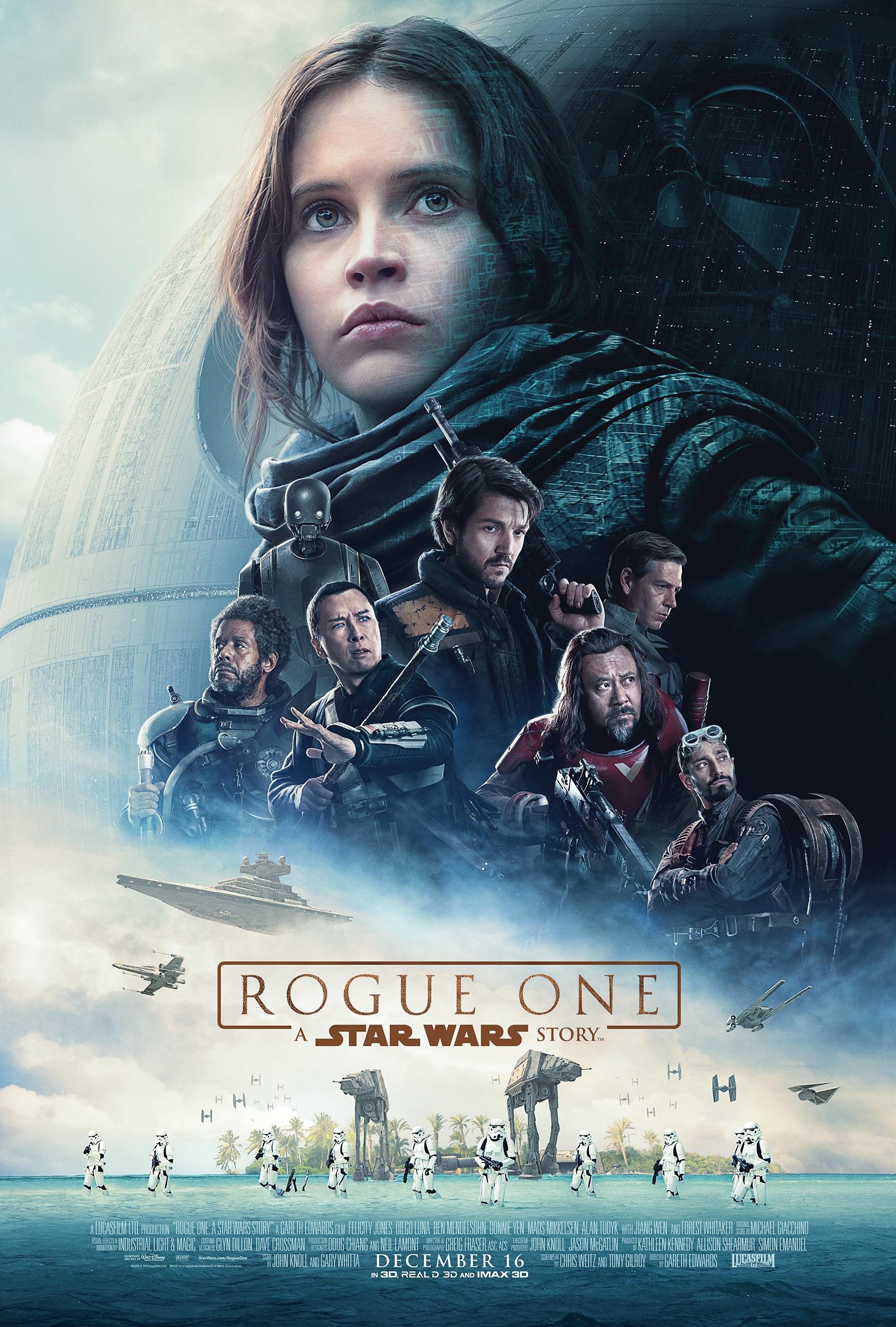
No Ewoks, No Jar Jar: Rogue One: A Star Wars Story (2016, directed by Gareth Edwards)


rogue_one_a_star_wars_story_posterA long time ago in a galaxy far, far away…

The evil Galactic Empire spent what had to be billions of Imperial credits to build the greatest weapon in the universe.  It was known as the Death Star and it housed a laser so powerful that it could blow up a planet with just one shot.  And yet, for all the effort and all the years that were spent building it, the Death Star had one glaring vulnerability, an exposed exhaust valve that the Rebel Alliance twice used to the destroy it.

For years, fanboys debated why the Empire would go to the trouble to build a super weapon with such an obvious design flaw.  I have to admit that I was often one of them.  No one else seemed to care but, to us, this was a huge deal.  If the Empire could figure out how to blow up a planet with one super laser, why couldn’t they figure out how to protect that one valve?

Now, thanks to Rogue One: A Star Wars Story, we have an answer.  We not only know why that valve was there but we also know what was meant in New Hope when the rebel general said that the plans to the Death Star had been stolen at great cost.

Rogue One is a fan’s dream, one that answers questions while expanding on the Star Wars mythology.  Unlike the previous prequels, it adds to the story without cheapening the original films.  In fact, of all the Star Wars films, Rogue One is the first to make the Death Star into a believable weapon of mass destruction.  When it appears over one planet, it blots out the sun.  When it blows up a rebel base, we see the destruction from inside the base instead of observing it from the safety of Death Star.  Director Gareth Evans does for the Death Star what he previously did for Godzilla.

death-star

Unfortunately, like Godzilla, the action and the special effects in Rogue One are usually more interesting than any of the film’s characters.  Felicity Jones, Diego Luna, Donnie Yen, Jiang Wen, Alan Tudyk, and Riz Ahmed are all good actors but they’re all playing underwritten parts.  No one steps up like Harrison Ford did in the original trilogy.  Commander Kennec, played by Ben Mendelsohn, has a little more depth than the typical Imperial villain but, for better or worse, the film’s most memorable performances come from a CGI Peter Cushing and James Earl Jones providing the voice of Darth Vader.

rogue-one

Despite the underwritten characters, Rogue One is still the best Star Wars film since Empire Strikes Back, a return to the grittiness, the thrilling action, and the awe of discovering new worlds that distinguished the first two movies.  For once, a Star Wars film seems to have more on its mind than just selling toys.  Though we already know what is ultimately going to happen to the Death Star at the end of New Hope, Rogue One is a frequently downbeat film.  There are no Ewoks and, to great relief and rejoicing, Jar Jar is never seen.  The closest that Rogue One gets to comic relief is Alan Tudyk providing the voice of a cynical robot.  The emphasis is on the horrors of war and even the rebels are troubled by some of the things that they have done.  For once, the Rebel Alliance actually feels like a rebellion and the evil of the Empire feels real instead of cartoonish.

Rogue One is projected to be the first of many “Star Wars stories,” stand-alone film that will expand the universe and hopefully clarify some of the points that were left unclear by the original trilogy.  I think it’s going to be very successful very Disney.  I’m just dreading the inevitable Jar Jar origin story.


Rogue One: A Star Wars Story Makes Its Final Approach


We take a brief break from our current regular scheduled horror programming to bring in the final official trailer for the latest entry in that little space opera called Star Wars.

With just two months left before Rogue One: A Star Wars Story splashes down into theaters everywhere, the film doesn’t seem to be gathering the sort of massive hype and anticipation that last year’s Star Wars: The Force Awakens had leading up to its release.

Rogue One is still predicted to be the biggest film of the year. Yet, the feeling that permeates each trailer release have been one of guarded anticipation.

This latest and final full trailer oils to remedy that situation.

Rogue One: A Star Wars Story is set for a December 16, 2016 release just in time for the holidays.

Rogue One: A Star Wars Story Official Trailer Finally Arrives


Rogue One

The Rogue One official trailer finally came out after weeks of fans waiting for it since last month’s Star Wars celebration over in London.

At first, people thought the trailer would be released during the celebration, but that didn’t come to pass. Then San Diego Comic-Con came and went and still no official trailer. We already seen the teaser, the sizzle reel from London celebration and even a tv spot that aired in the last week or so. Yet, there was still no full trailer. Fans were waiting with extreme patience.

Once news came down that the first official trailer will show during the Olympics the guessing game began on which day it will be. When it was confirmed that it was to be tonight people worldwide began to wait for the trailer to premiere. And waited during each Olympic event. And waited some more. I, myself, decided I needed a nap and left orders to be awoken when it finally did show.

Well, it did show just an hour into my nap and despite being groggy from being woken up that first image of the desert planet with Forest Whitaker and Felicity Jones conversing got my full attention. The wait was long, but it was well worth it and now the wait for the film’s premiere begins.

Rogue One: A Star Wars Story is set for a December 16, 2016 release date.

Rogue One Wakes Up the Internet with Its First Trailer


Rogue One

The world has been dying to see the first teaser trailer for the next Star Wars. The most recent one came out at the end of last year and already people wondering why this next one hasn’t already come out.

Well, it will come out this December when the public is flush with money to spend on the holidays (though we all know it’s probably to buy Rogue One: A Star Wars Story tickets as holiday gifts for themselves).

This teaser trailer shows us stuff that happened between Episode 3 and Episode 4. It also focuses on a new hero character which has raised the ire of the most vocal minority (very tiny) of the Star Wars fandom. We’re introduced to Jyn Erso played by English-actress Felicity Jones who we learn is not just a criminal of sorts, but one ready with a smartass quip.

Star Wars has another woman in the lead role! First it was Rey in Star Wars: The Force Awakens. Then just the last couple weeks, one of the few redeeming things about Batman v. Superman was the appearance of Wonder Woman. We can’t forget how last year’s Mad Max: Fury Road was being called Mad Max Furiosa Road.

The MRA mouthbreaters and Mary Sue labelers have had it up to their neckbeards of having their beloved franchises being invaded by the opposite sex. They’re already calling for boycotts and petitions to get Rogue One from being released as is. They want their fictional heroes to return to the good ol’ days of privileged, white men who rescued and kissed damsels (even if they to be their sister) in distress.

Their shouts and cries of impotent rage has been drowned out by the massive majority of even more vocal supporters of another female heroine in a fictional universe which dares to posit that dangerous question: can women be heroes? It looks like after Rey and now, with this upcoming film’s Jyn Erso the answer may be a collective and very loud “Yes, Yes, Yes.”

Rogue One: A Star Wars Story is set for a December 16, 2016 release date or be on hold indefinitely if the MRA neckbeard mouthbreaters get their court injuction to delay its release.

Trailer: Monsters: Dark Continent


monsters-dark

Monsters was this little, low-budget monster film from 2010 by filmmaker Gareth Edwards that got all the film community a-buzzing. Edwards’ work on that film landed him the job on 2014’s reboot of the Godzilla film franchise.

After Monsters was such a success there were plans to make a sequel of it, but Edwards being so busy doing Godzilla, he was unable to get back in the director’s chair and instead it went to Tom Green (not the comedian). We get a sequel that’s less about a romance in the midst of a creeping alien invasion, but one that looks to expand the world building Edwards created for the first film and make it global.

Monsters: Dark Continent is set in the Middle East where the alien infection has spread to and where a U.S. military mission goes in to stem the tide. Making things a tad difficult in a mission already tough to begin with is the rise of a new insurgency in the region.

I liked the first film, but I thought the low-budget really hampered how the monsters were portrayed. Edwards had to tease very brief glimpses of them until the end where he finally gives the audience the big reveal. This style was one of the reasons why I just liked the new Godzilla instead of loving it.

It looks like this sequel forgoes the teases and goes full out reveal of all the alien monsters. I am more than just slightly interested in checking this film out now.

Monsters: Dark Continent is set for a September 26, 2014 release date.

Trash Film Guru Vs. The Summer Blockbusters : “Godzilla”


godzilla2014_poster2

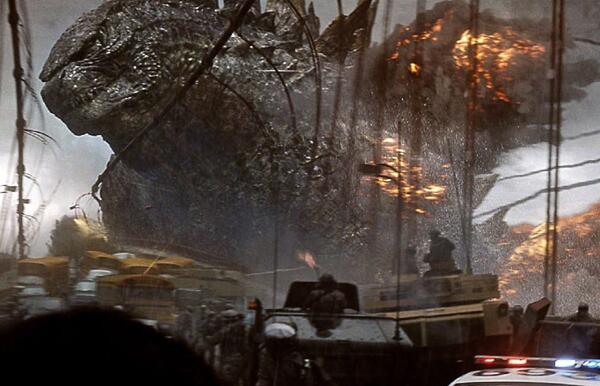
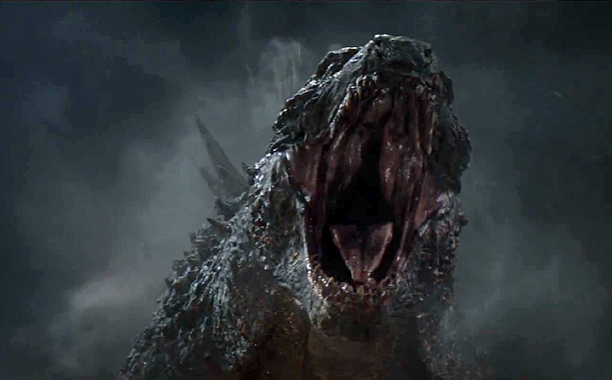
Here’s the thing when it comes to any and all Westernized takes on Japan’s most famous movie monster — Hollywood’s just never going to “get it” because, frankly, it can’t. Oh, sure, Gareth Edwards’ 2014 Godzilla is head and shoulders above Roland Emmerich’s 1998 abomination of a film, but the simple fact is that the Big Green Guy and all of his scaly, serpentine brethren that came to us courtesy of the venerable Toho studios were, at their core, celluloid manifestations of a deep-seated atomic angst that only a country that had been on the receiving end of, as Sting put it, “Oppenheimer’s deadly toy” could ever really give birth to. And while Ken Watanabe’s Dr. Ichiro Serizawa character does, in fact, explicitly mention Hiroshima and Nagasaki in this flick, it’s pure window dressing — Edwards and screenwriters Max Borenstein and Dave Callaham didn’t actually live through a time when they had to actively wonder what sort of nuclear fission-induced mutations were lurking beneath the waves just a few miles offshore, so they just can’t communicate that sort of unease with the same authenticity that the original Godzilla did.

And to those who would argue that a young Japanese filmmaker wouldn’t be able to imbue a project such as this with any more immediacy than Edwards does because they wouldn’t have lived though those horrific final days of WWII either, I’ve got one word for you : Fukushima.

Godzilla-2014-Roar

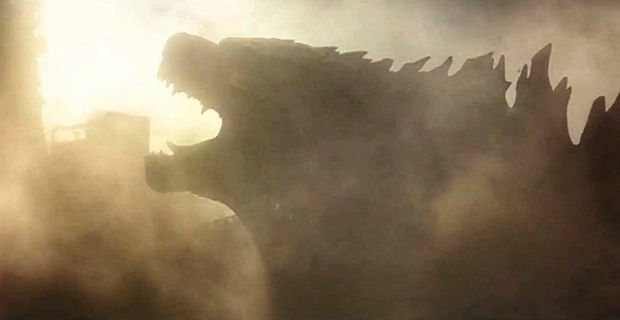
There’s also something about CGI in these flicks that always has, and always will, suck, no matter how “good” it is : you know, in the back of your mind, that it’s just not there. To be sure, Edwards and his visual effects crew do a bang-up job of realizing their monster once they do, finally, reveal him, but no matter how “unrealistic” watching the original Godzilla smash cardboard miniatures of buildings may be by today’s standards, it still feels more “real” than the essentially flawless computer graphics of 2014 can ever hope to. But maybe that’s just me —-

godzilla-trailer-02

Still, don’t get the wrong idea : I’m not so much “down on” the new Godzilla as I am completely indifferent to it. To be sure, Edwards’ heart seem to be in the right place here, and he’s very likely doing the best job that he can do — it’s just that his best is nowhere near good enough. A slow-burn plot doesn’t help matters much, either, and while I’m all for a prolonged buildup that leads to a big payoff, frankly the “character arcs” of all the principal players are so dull and uninvolving that when Compu-Zilla finally does make the scene, it feels more like a relief from soap opera-style tedium than anything else. Thankfully, there’s some effectively-realized mass destruction to bump up the “wow” factor a bit, and Godzilla doesn’t turn out to a solo act (that’s all I’ll say about that), but it’s still definitely a case of “too little, too late” as far as excitement here goes and a smorgasbord of good performances (Bryan Cranston, Juliette Binoche, David Strathairn, Sally Hawkins, and the aforementioned Ken Watanabe) and bad (Aaron Taylor-Johnson, Elizabeth Olsen) find themselves having equally gone, more or less, to waste when the proverbial train finally leaves the station.

Plot recaps probably make as much sense here as they do for a Hulk comic book — sure, the set-up matters on some level, but it’s all about “Hulk smash!” at the end of the day, isn’t it? Suffice to say that the main reason the various intermingling sub-plots here really don’t work is because the film goes from small-scale to so-big-it’s-off-the-scale at the drop of hat, with no transition period in between for either the characters or the audience. It’s all just a bit jarring — but maybe that’s not such a bad thing when I think about it because, truth be told, I was getting a little sleepy.

The “who are the real monsters?” theme that Edwards toys with is frankly a little bit old, too, and honestly represents something of a cop-out ( and here’s where my “Westerners will never get this right” thesis comes into play, by the way) :  sure, humans are bad news, we’re destroying everything, etc. I know that. But some of us are worse than others, and any side willing to drop a nuclear bomb and murder hundreds of thousands of innocent people in order to “win” a war is due for some special criticism, in my view . The makers of the original Godzilla understood that fact, even if they couldn’t say so explicitly, while in the franchise’s 2014 iteration we just all suck. No one, specifically, is to blame, and hey, it’s too late for recriminations anyway when you’ve got an overgrown reptile tearing up the town. Or something like that.

godzilla-attacks-golden-gate

Still, the film’s third act is enough to make even a hardened cynic like me gasp in awe on numerous occasions, and the “childlike wonder factor,” for lack of a batter term, really does kick into high gear here as events steamroll toward their conclusion. It’s worth the price of admission for the awesome (even if it is computer-generated) spectacle the final 45-or-so-minutes deliver. Sure, I wish we’d gotten nothing but a bad ride on a  bumpy road from start to finish, but I guess I’m still willing to take what I can get. Felling like you’re 12 years old all over again for even a little while is better than never feeling like it at all.

And yet — in addition to being this film’s greatest (perhaps even only) saving grace, perhaps that last act is also its greatest weakness, because it exposes the essential, unavoidable truth at the heart of Edwards’ Godzilla : it’s good enough to make you remember why you love monster movies in the first place, but nowhere near good enough to actually be one of those monster movies  that you love.