Lisa Marie Reviews An Oscar Nominee: Apocalypse Now (dir by Francis Ford Coppola)


1979’s Apocalypse Now reimagines the Vietnam War as pop art.

Jim Morrison sings The End in the background as slow-motion helicopters pass in front of a lush jungle.  The jungle erupts into flame while in a dingy hotel room, Captain Benjamin Willard (Martin Sheen) gets drunks, practices his karate moves, and smashes a mirror before collapsing to the floor in tears.  The next morning, the hung-over and bandaged Willard ends up at a U.S. military base where he has a nice lunch with Lt. General Corman (G.D. Spradlin) and Col. Lucas (Harrison Ford) and a nearly silent man wearing an undone tie.  Willard is asked if it’s true that he assassinated an enemy colonel.  Willard replies that he did not and that the operation was classified, proving that he can both lie and follow military protocol.  Willard is told that a Col. Walter Kurtz (Marlon Brando) has gone rogue and his mission is to go into Cambodia and terminate his command with “extreme” prejudice.  It’s a famous scene that features G.D. Spradlin delivering a brilliant monologue about good and evil and yet it’s often missed that Willard is getting his orders from Roger Corman and George Lucas.

(Roger Corman was the mentor of director Francis Ford Coppola while the pre-Star Wars George Lucas was Coppola’s business partner.  Indeed, Apocalypse Now was originally somewhat improbably planned to be a George Lucas film.)

Up the river, Willard heads on a patrol boat that is populated with characters who could have come out of an old World War II service drama.  Chief (Albert Hall) is tough and no-nonsense.  Lance (Sam Bottoms) is the goofy comic relief who likes to surf.  Clean (Laurence Fishburne) is the kid who is obviously doomed from the minute we first see him.  Chef (Fredric Forrest) is the overage, tightly-wound soldier who just wants to find mangoes in the jungle and who worries that, if he dies in a bad place, his soul won’t be able to find Heaven.  The Rolling Stones are heard on the boat’s radio.  Soldiers on the other patrol boats moon the boat and toss incendiary devices on the roof.  It’s like a frat prank war in the middle of a war.

Colonel Bill Kilgore (Robert Duvall) is a badass calvary officer whose helicopter raids are legendary amongst the enemy and a dedicated surfer who tries to turn every night into the equivalent of an AIP Beach Party film.  He’s a brilliant warrior who speaks with Malibu accent (“Charlie don’t surf!”) and who doesn’t flinch when a bomb goes off near him.  “I love the smell a napalm in the morning,” he says and, for a few moments, you really wish the film would just abandon Willard so we could spend more time with Kilgore.  “Some day this war is going to end,” he says with a reassuring nod, showing a non-neurotic attitude that is the opposite of Kurtz’s.  Willard says that he could tell Kilgore was going to get through the war without even a scratch and it’s true.  Kilgore doesn’t try to rationalize or understand things.  He just accepts the reality and adjusts.  He’s a true surfer.

The film grows progressively more surreal the closer the boat heads up the river and gets closer to Cambodia.  A USO show turns violent as soldiers go crazy at the sight of the Playboy Bunnies, dressed in denim outfits and cowboy hats and twirling cap guns like the love interest in a John Wayne western.  A visit to a bridge that is built every day and blown up every night is a neon-lit, beautiful nightmare.  Who’s the commanding officer?  No one knows and no one cares.

The closer Willard gets to Kurtz, the stranger the world gets.  Fog covers the jungles.  A tiger leaps out of nowhere.  Dennis Hopper shows up as a photojournalist who rambles as if Billy from Easy Rider headed over to Vietnam instead of going to Mardi Gras.  Scott Glenn stands silently in front of a temple, surrounded by dead bodies that feel as if they could have been brought over from an Italian cannibal film.  Kurtz, when he shows up, is an overweight, bald behemoth who talks in riddles and who hardly seem to be the fearsome warrior that he’s been described as being.  “The horror, the horror,” he says at one point in one of the few moments that links Apocalypse Now to its inspiration, Joseph Conrad’s Heart of Darkness.

Directed by near-communist Francis Ford Coppola and written by the unapologetically right-wing John Milius, Apocalypse Now is actually less about the reality of Vietnam and more about how the images of the war shaped pop culture the world over.  It’s a reminder that Vietnam was known for being the first television war and that counterculture was not just made up of dropouts but also of writers, actors, and directors.  Kurtz may say that Willard’s been sent by grocery store clerks but actually, he’s been sent by the B-movie producers who first employed and mentored the directors and the actors who would eventually become the mainstays of the New Hollywood.  The film subverts many classic war film cliches but, at the same time, it stays true to others.  Clean dying while listening to a tape recording of his mother telling him not to get shot and to come home safe is the type of manipulative, heart-tugging moment that could have appeared in any number of World War II-era films.  And while Coppola has always said the film was meant to be anti-war, Col. Kilgore remains the most compelling character.  Most viewers would probably happily ride along with Kilgore while he flies over Vietnam and plays Wagner.  The striking images of Vietnam — the jungle, the explosions, the helicopters flying through the air — stay in the mind far more than the piles of dead bodies that appear in the background.

It’s a big, messy, and ultimately overwhelming film and, while watching it, it’s hard not to get the feeling that Coppola wasn’t totally sure what he was really trying to say.  It’s a glorious mess, full of stunning visuals, haunting music, and perhaps the best performance of Robert Duvall’s legendary career.  The film is too touched with genius to not be watchable but how one reacts overall to the film will probably depend on which version you see.

The original version, which was released in 1979 and was nominated for Best Picture, is relentless with its emphasis on getting up the river and finding Kurtz.  Willard obsesses on Kurtz and really doesn’t have much to do with the other people on the boat.  It gives the story some much-needed narrative momentum but it also makes Kurtz into such a legendary badass that it’s hard not to be disappointed when Willard actually meets him.  You’re left to wonder how, if Kurtz has been living in the jungle and fighting a brutal and never-ending guerilla war against the communists, he’s managed to gain so much weight.  Brando, who reportedly showed up on set unprepared and spent days improvising dialogue, gives a bizarre performance and it’s hard to view the Kurtz we meet as being the Kurtz we’ve heard about.  As strong as the film is, it’s hard not to be let down by who Kurtz ultimately turns out to be.

In 2001 and 2019, Coppola released two more versions of the film, Redux and The Final Cut.  These versions re-inserted a good deal of footage that was edited out of the original cut.  Most of that footage deals with Willard dealing with the crew on the boat and it’s easy to see why it was cut.  The scenes of Willard bonding with the crew feel out of character for both Willard and the rest of the crew.  A scene where Willard arranges for Clean, Lance, and Chef to spend time with the Playboy bunnies seems to go on forever and features some truly unfortunate acting.  Worst of all, Redux totally ruins Kilgore’s “I love the smell of napalm in the morning” monologue by having Willard suddenly steal his surf board.  Again, it’s out of character for Willard and it actually feels a bit disrespectful to Duvall’s performance to suddenly turn Kilgore into a buffoon.

But then there are moments that do work.  I actually like the lengthy French Plantation scene.  By the time Willard, Lance, and Chef stumble into the plantation,  the journey upriver has gotten so surreal that it makes a strange sort of sense that they would run into a large French family arguing politics while a clown tries to keep everyone distracted.  The new versions of the film are undeniably disjointed but they also shift the focus off of finding Kurtz and place it more on Willard discovering how weird things are getting in Vietnam.  As such, it’s less of a disappointment when Kurtz actually shows up.  Much as with the French Plantation scene, the journey has become so weird that Kurtz being overweight and pretentious feels somehow appropriate.

What all the versions of the film have in common is that they’re all essentially a neon-lit dream of pop cultural horror.  Is Apocalypse Now a horror film?  Critic Kim Newman argued that it owed a lot to the genre.  Certainly, that’s the case when Willard reaches the temple and finds himself surrounded by corpses and and detached heads.  Even before that, though, there are elements of horror.  The enemy is always unseen in the jungle and, when they attack, they do so quickly and without mercy.  In a scene that could almost have come from a Herzog film, the boat is attacked with toy arrows until suddenly, out of nowhere, someone throws a very real spear.  Until he’s revealed, Kurtz is a ghostly figure and Willard is the witch hunter, sent to root him out of his lair and set his followers on fire.  If the post-60s American horror genre was shaped by the images coming out of Vietnam then Apocalypse Now definitely deserves to be considered, at the very least, horror-adjacent.

Apocalypse Now was controversial when it was released.  (It’s troubled production had been the talk of Hollywood for years before Coppola finally finished his film.)  It was nominated for Best Picture but lost to the far more conventional Kramer vs Kramer.  Robert Duvall was the film’s sole acting nominee but he lost the award to Melvyn Douglas’s turn in Being There.  Douglas was very good in Being There and I imagine giving him the Oscar was also seen as a way of honoring his entire career.  That said, Duvall’s performance was amazing.  In his relatively brief screen time, Duvall somehow managed to take over and ground one of the most unruly films ever made.  The Oscar definitely should have gone to him.

As for the film itself, all three versions, flaws and all, are classics.  It’s a film that proves that genius can be found in even the messiest of productions.

January True Crime: Shoot First: A Cop’s Vengeance (dir by Mel Damski)


Made for television in 1991 and possessing a rather unwieldy title, Shoot First: A Cop’s Vengeance tells the story of two friends in San Antonio in the early 80s.

Farrell Tucker (Dale Midkiff) and Stephen Smith (Alex McArthur) are both cops.  They entered the police academy together, they graduated as a part of the same class, and they both hope to be partners while working to keep the streets of San Antonio safe.  Tucker is laid back and friendly and not one to worry too much about following all of the regulations.  Stephen Smith, on the other hand, is uptight and, at first, by-the-book.  He grew up in a poverty-stricken, crime-riddled neighborhood and it left a definite impression on him.  He hates crime and criminals but what he really can’t stand is a justice system that seems to be more concerned with the victimizers than with the victims.  Tucker and Smith enjoy spending their time together, drinking at the local cop bars and practicing their shooting on the weekends.  Tucker’s not much of a shot, whereas Smith is a sharpshooter who rarely misses.

At first, no one notices or even cares that some of San Antonio’s less upstanding citizens are getting gunned down in the streets.  But when Smith somehow manages to be first on the scene to a series of shootings, it gets the attention of Internal Affairs.  With Sergeant Nicholas (Terry O’Quinn) investigating the possibility of a cop-turned-vigilante and Chief Hogan (G.D. Spradlin) announcing that no one is above the law, Smith starts to get a bit paranoid and Tucker is forced to consider that his friend could very well be a murderer.

And, of course, Tucker’s right!  The first scene features Tucker confronting Smith and then the majority of the film is told in flashback.  Even if not for that narrative choice, one could guess at Smith’s guilt just from the title of the film.  When Shoot First: A Cop’s Vengeance was released on home video, the title was changed to Vigilante Cop, which made Smith’s guilt even more obvious.  Finally, some viewers will guess that Smith is guilty because the film is based on a true story.  Officer Stephen Smith actually did go on a killing spree, gunning down men who he felt had escaped the law and even sending threatening letters to his chief when the latter announced that vigilante activity would not be tolerated.  Officer Stephen Smith went from being a follower of the rules to someone who attempted to write his own rules.  It’s an interesting story for anyone who wants to google it.

As for the film, it’s adequate without being particularly memorable.  Alex McArthur and Dale Midkiff both give good performance as Tucker and Smith and the cast is full of talented people like Terry O’Quinn, G.D. Spradlin, Bruce McGill, and Lynn Lowry.  Observant viewers will even notice a long-haired Jeremy Davies, showing up for a split-second.  I liked the performance of Loryn Locklin, as the waitress who marries Smith and then discovers that her charming husband actually has some very serious issues.  The main problem with the film is that the story moves a bit too slowly for its own good and some of the Texas accents were more than a little dodgy.  If you’re looking for an action film, this won’t be for you, though the shootings are surprisingly graphic for something that was made for television.  Shoot First: A Cop’s Vengeance is a rather routine telling of an interesting story.

Scenes That I Love: Harrison Ford Briefs Martin Sheen In Apocalypse Now


Happy birthday, Harrison Ford!

Today’s scene that I love features Harrison Ford in one of his more unexpected roles.  In Francis Ford Coppola’s Apocalypse Now, he played one of the three men who ordered Martin Sheen to go upriver and assassinate Marlon Brando.  It’s a small role, especially when one considers that Ford had appeared as Han Solo just two years before.  Given the lengthy shooting of Apocalypse Now, there’s some debate as to whether Ford was actually cast in the role before he was selected for Star Wars.  Giving credence to that theory is that Ford played a similar role for director Francis Ford Coppola in The Conversation.  However, it’s hard not to notice that Ford plays Col. G. Lucas, which would suggest that his casting was a bit of an inside joke.  Speaking of inside jokes, G.D. Spradlin plays General R. Corman, no doubt named for the man who gave Coppola his start in the business.

(Interesting enough, both Spradlin and Corman played U.S. Senators in The Godfather Part II.)

In this scene, Ford shows off the nerdy intensity that was actually kind of his acting trademark before Star Wars changed his screen persona.  This scene, along with his work in The Conversation, serves as a reminder that Harrison Ford is a pretty good character actor along with being one of the last great movie stars.

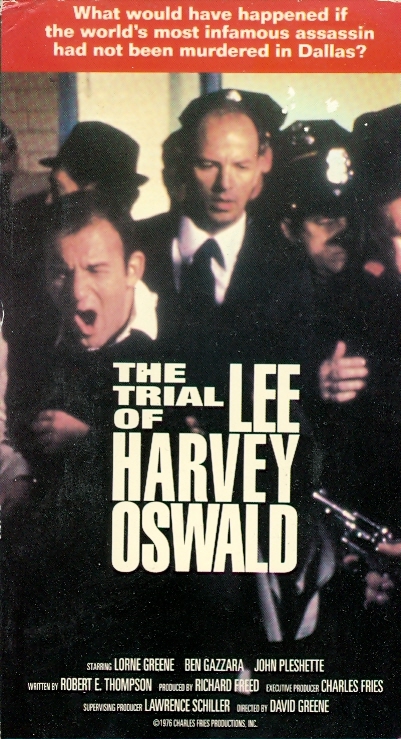
The Trial of Lee Harvey Oswald (1977, directed by David Greene and Gordon Davidson)


What if, instead of being shot by Jack Ruby, Lee Harvey Oswald had survived and been put on trial for the murder of President John F. Kennedy?

That’s the question asked by this television film.  John Pleshette plays Lee Harvey Oswald while Lorne Greene plays his attorney, Matt Weldon and Ben Gazzara plays the prosecutor, Kip Roberts.  The film imagines that the trial would have been moved to a small Texas town because Oswald presumably wouldn’t have been able to get a fair trial in Dallas.  While Roberts is forced to deal with his own doubts as to whether or not Oswald actually killed the President, Weldon is frustrated by Oswald’s paranoid and self-destructive behavior.  Oswald insists that he’s a patsy and that he was framed by “them” but he refuses to tell Weldon who they are.

With a running time of four hours, The Trial of Lee Harvey Oswald is a courtroom drama that tries to be fair to both sides and which ends with a frustrating cop-out.  While Weldon presents all of the evidence that real-life conspiracy theorists frequently cite in their attempts to prove Oswald’s innocence, Roberts makes the case that was presented in the Warren Commission.  Unfortunately, the film ends up trying too hard to avoid coming down on one side or the other and just proves that it’s impossible to be even-handed when it comes to conspiracy theories around the Kennedy assassination.  It’s either buy into the idea that it was all a huge conspiracy involving mobsters and intelligence agents or accept that it was just Oswald doing the shooting as a lone assassin.  Trying to come down in the middle, as this film does, just doesn’t work.

John Pleshette does a good job as Oswald and bears a passing resemblance to him.  Because the movie refuses to take a firm stand on whether or not Oswald’s guilty, the character is written as being a cipher who claims to be innocent but who, at the same time, also refuses to take part in his defense.  Pleshette plays up Oswald’s creepy arrogance, suggesting that Oswald was capable of trying to kill someone even if he didn’t actually assassinate JFK.  Both Greene and Gazzara are convincing as the two opposing attorneys, even if neither one of them really does much more than offer up a surface characterization.

The majority of the movie takes place in the courtroom, with a few flashbacks to Oswald’s past included to keep things from getting too stagnant.  When the film was made, people were still learning about the conspiracy theories surrounding the Kennedy assassination and The Trial of Lee Harvey Oswald might have had something new to tell them.  Seen today, the majority of the film’s evidence seems like old news.  The Trial of Lee Harvey Oswald never escapes the shadow of later films, like Oliver Stone’s JFK.

It’s hard not to regret that The Trial of Lee Harvey Oswald wasn’t willing to come definitively down on one side or the other.  Instead, it ends by telling us that we’re the jury and that the only verdict that matters is that one that we come up with.  They could have just told us that at the start of the movie and saved us all four hours.

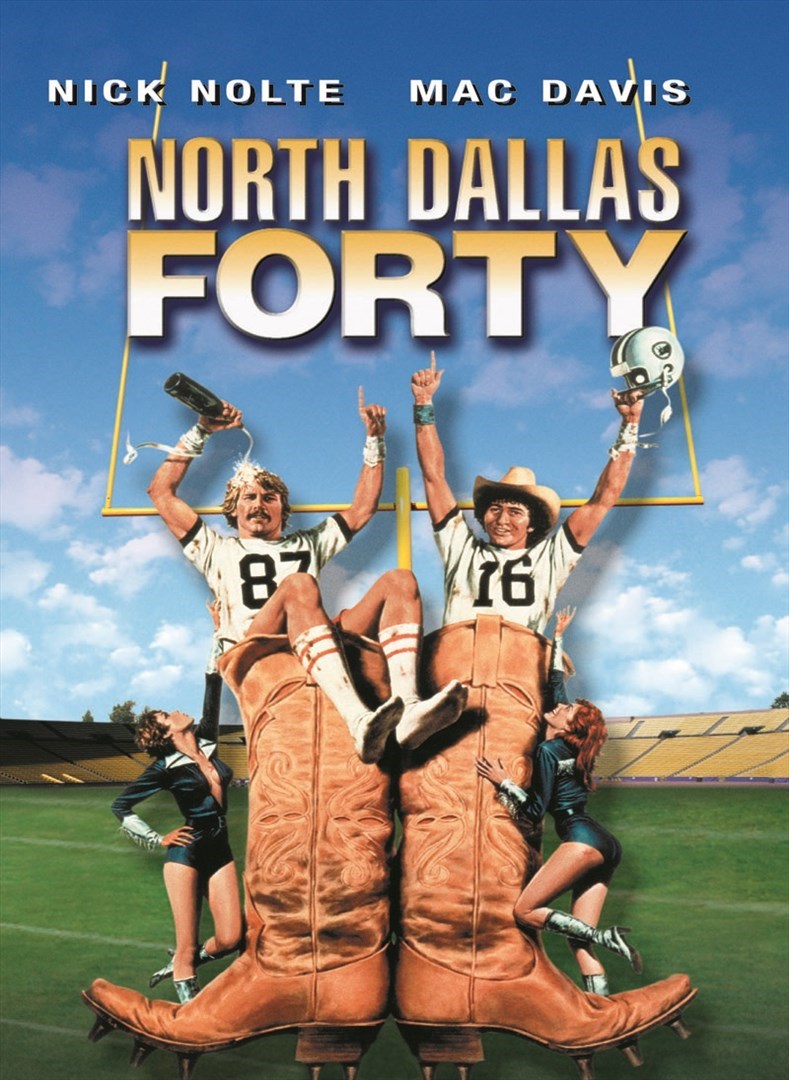
North Dallas Forty (1979, directed by Ted Kotcheff)


Pete Gent was a college basketball star at Michigan State University who, in 1964, received a tryout with the Dallas Cowboys.  Intrigued by the $500 that the team was offering to any player who attended training camp that summer, Gent accepted.  Despite the fact that Gent had never before played football, the Cowboys were impressed with his athleticism and they signed him to the team.

For five seasons, Gent played wide receiver.  During that time, he caught a lot of balls, became close friends (or so he claimed) with quarterback Don Meredith, and got under the skin of Coach Tom Landry with his nonconformist attitude.  After several injuries kept him off the field during the 1968 season, Gent was traded to the Giants who waived him before the next regular season began.

Out of work and with no other team wanting to sign him, Gent wrote a thinly veiled autobiographical novel about his time with the Cowboys.  North Dallas Forty was published in 1973 and it immediately shot up the best seller charts.  When the book was published, football players were still regularly portrayed as being wholesome, all-American athletes and the Dallas Cowboys were still known as America’s Team.  North Dallas Forty shocked readers with its details about groupies, drugs, racism, and gruesome injuries.  The NFL, of course, claimed that Gent was just a disgruntled former player who was looking to get back at the league.  When asked about the book (which portrayed him as being a marijuana-loving good old boy), Don Meredith was reported to have said, “If I’d known Gent was as good as he says he was, I would have thrown to him more.”

Meredith had a point, of course.  In the book, Pete Gent portrays himself as not only being the smartest man in football but also as having the best hands in the league.  Men want to be him.  Women want to be with him.  And the North Dallas Bulls (which is the book’s version of the Dallas Cowboys) don’t know what they’re losing when they release him for violating the league’s drug policy.  Today, when you read it and you’re no longer shocked by all of the drugs and the sex, North Dallas Forty comes across as mostly being a case of very sour grapes.

Luckily, the film version is better.

Nick Notle plays Phil Elliott, a broken-down receiver who wakes up most mornings with a bloody nose and who can barely walk without first popping a hundred pills.  Phil is a nonconformist and a rebel.  He loves to play the game but he hates how it’s become a business.  Mac Davis plays Seth Maxwell, the team’s quarterback and Phil’s best friend.  Seth is just as cynical as Phil but he’s better at playing politics.  G.D. Spradlin is B.A. Strother, the cold head coach who is a thinly disguised version of the legendary Tom Landry.  In the novel, B.A. Strother was portrayed as being a hypocritical dictator.  The film’s version is more sympathetic with Strother being portrayed as stern but not cruel.  Strother even tells Phil that he “can catch anything.”

Both the film and the book take place over the course of one week leading to a big game against Chicago.  In the book, Phil says that he and Seth don’t care about whether or not they win.  In the movie, they much do care but, at the same time, they know that they’re being held back by a system that cares more about whether or not they follow the rules than if they win the game.  While Phil’s teammates (including Bo Svenson as Joe Bob Priddy and John Mantuszak as O.W. Shaddock) behave like animals, Phil falls in love with Charlotte Caulder (Dayle Haddon), who doesn’t care about football.

Pete Gent was originally hired to write the film’s screenplay but left after several disagreements with producer Frank Yablans.  (The screenplay was completed by Yablans, directed Ted Kotcheff, and an uncredited Nancy Dowd.)  The movie loosely follows the novel while dropping some of its weaker plot points.  As a result, the film version has everything that made the novel memorable but without any of Gent’s lingering bitterness over how his career ended.  The novel used football as a metaphor for everything that was going wrong in America in the 60s and 70s but the movie is more of a dark comedy about one man rebelling against the system.

There’s only a few minutes of game footage but North Dallas Forty is still one of the best football movies ever made, mostly because Nick Nolte is absolutely believable as an aging wide receiver.  He’s convincing as someone who can still make all the plays even though he’s usually in so much pain that it’s a struggle for him to get out of bed every morning.  He’s also convincing as someone who loves the game but who won’t give up his freedom just to play it.  This is a definite improvement on the novel, in which Phil seemed to hate football so much that it was hard not to wonder why he was even wasting his time with it.  Country-and-western signer Mac Davis is also convincing as Seth Maxwell and fans of great character actors will be happy to see both Charles Durning and Dabney Coleman in small roles.

Whether you’re a football fan or not, North Dallas Forty is a great film.  Coming at the tail end of the 70s, it’s a character study as much as its a sports film.  It’s also one of the few cinematic adaptations to improve on its source material.  As a book, North Dallas Forty may no longer be shocking but the movie will be scoring touchdowns forever.

Cleaning Out The DVR: One On One (dir by Lamont Johnson)


Sometimes, I come across things on my DVR that I not only have no memory of recording but which I also cannot, for the life of me, figure out why I decided to record it in the first place.  I recorded the 1977 film One On One off of TCM on January 17th and I’m not really sure why.

It’s not that One On One is a terrible movie or anything like that.  It’s an extremely predictable film and it’s got one of those soundtracks that is extremely 70s but not cool disco-style 70s.  No, instead this film is full of the type of soft rock music that your grandmother listens to while driving to the local CVS Pharmacy.  (The majority of the songs are performed by a group called Seals and Croft and are painfully undanceable.)  But, even with that in mind, it’s not really a bad movie.  If I’m confused about why I recorded it, it’s because One on One is a movie about basketball, which is a sport that holds absolutely zero interest for me.

(My main issue with basketball has to do with the sound of all of those squeaky shoes on the court.)

But, before going any further, let’s watch a commercial:

One on One tells the story of Henry Steele (Robby Benson), a high school basketball star.  Henry is from Colorado, which this film seems to suggest is the equivalent of coming from Siberia.  When Moreland Smith (G.D. Spradlin). the renowned coach of Western University’s basketball team, offers Henry a full athletic scholarship, Henry negotiates a pretty good deal for himself.  Not only is his education going to be paid for but he also wins a guarantee that he’ll never be cut from the team and that his father will get a car.  All Henry has to do is keep his grades up but that shouldn’t be a problem.  Sure, Henry appears to be an idiot but the athletic department will set him up with a tutor and, as long as the coach is happy with him, it’s not like Henry’s actually going to have to go to class.

Upon arriving in Los Angeles, Henry picks up a hitchhiker (a very young Melanie Griffith) who promptly robs him of all of his money.  Once he arrives at the university, he discovers that Coach Smith is not going to be the surrogate father figure that he was expecting.  Instead, Coach Smith is a rather cold and ruthless taskmaster, whose main concern is winning.  When Henry, who is by far the shortest player on the team, struggles, Smith tells Henry that he needs to renounce his scholarship and return home.  When Henry refuses to do so, Smith becomes obsessed with trying to break him.

As Henry’s roommate, Tom (Cory Faucher), points out, Henry’s head is not in the game.  Instead, Henry can’t stop thinking about his tutor, Janet (Annette O’Toole).  At first, Janet assumes that Henry is just a dumb jock, largely because Henry’s a jock and he spends the first half of the movie acting really, really dumb.  Then, out of nowhere, Henry reveals that he’s not only read Moby Dick but he can quote passages from memory.  In fact, Henry even understands that Ahab was — wait for it — obsessed!  Oh my God, Janet realizes, Henry’s literate!  In fact, Janet exclaims that Henry is the first person she’s met who has actually read Moby Dick!  (Really?)  Janet and Henry fall in love but, unfortunately, Janet is already dating her psychology professor.

(The professor has got a beard that looks like it reeks of stale weed and he says stuff like, “Have you seen my sandals?,” so we know better than to take him seriously when he compares the popularity of college athletics to the rise of fascism.  When Henry accuses him of being a hippie, the professor just smirks and says something condescending.  Stupid hippie.)

Will Janet and Henry fall in love?  Will Janet dump her unattractive and unappealing boyfriend so she can date Henry?  Will Henry manage to pass his classes?  Will Henry ever get a chance to prove himself on the court?  Will … oh, why even ask these questions?  You already know what’s going to happen in this movie.  There’s really not a single unexpected moment to be found in One on One.  Everything about the film, from the coach’s ruthlessness to Henry’s transformation from idiot to savvy player, feels pre-ordained.  It’s a predictable movie but, at the same time, it’s a likable movie.  At the start of the film, Benson overplays Henry’s stupidity and O’Toole overplays Janet’s brittleness but, at the film progresses, both performers seem to relax and, by the time the end credits role, they’re actually a fairly likable couple.  Benson even gets a killer final line, one that I imagine made audiences in 1977 applaud.

That said, the film is pretty much stolen by G.D. Spradlin.  Spradlin was a former Oklahoma oilman who reinvented himself as a politician and then as a character actor.  Best known for playing Senator Pat Geary in The Godfather, Part II, Spradlin had a flair for bringing casually corrupt authority figures to life.  In One on One, Spradlin turns Coach Smith into a Mephistophelean figure, offering Henry success at the cost of his soul.  Coach Smith is arrogant, oily, casually racist, and an all-around jerk but, at the same time, it is also obvious that he knows how to lead a team to victory.  The great thing about Spradlin’s performance is to be found in not just how menacing he is but in how charismatic he is.  You never doubt that Coach Smith is both a lousy human being and an absolutely brilliant coach.  If nothing else, he’s good at his job.

As I said at the start of this review, I am not really sure why I recorded One on One but it turned out to be better than I was expecting.  It is a flawed and uneven film but worth watching for Spradlin’s intriguingly villainous turn.


A Movie A Day #326: MacArthur (1977, directed by Joseph Sargent)


The year is 1962 and Douglas MacArthur (Gregory Peck), the legendary general, visits West Point for one last time.  While he meets the graduates and gives his final speech, flashbacks show highlights from MacArthur’s long military career.  He leaves and then returns to Philippines.  He accepts the Japanese surrender and then helps Japan rebuild and recover from the devastation of the war.  He half-heartedly pursues the Presidency and, during the Korean War, gets fired by Harry Truman (Ed Flanders).
MacArthur is a stolid biopic about one America’s most famous and controversial generals.  It was produced by Frank McCarthy, a former general who knew MacArthur and who previously won an Oscar for producing Patton.  McCarthy was obviously hoping that MacArthur was do its subject what Patton did for George Patton and both films follow the same basic pattern. a warts-and-all portrait of a World War II general with all of the action centered around the performance of a bigger-than-life actor in the title role.  Though obviously made for a low budget, MacArthur is a well-made and well-acted movie but it suffers because Douglas MacArthur was just not as interesting a figure as George Patton.  Gregory Peck does a good job subtly suggesting MacArthur’s vanity along with capturing his commitment to his duty but he never gets a scene that’s comparable to George C. Scott’s opening speech in Patton.  The main problem with MacArthur, especially when compared to Patton, is that George Patton was a born warrior while Douglas MacArthur was a born administrator and it is always going to be more exciting to watch a general lead his men into battle then to watch him sign executive orders.

An October Film Review: Ed Wood (dir by Tim Burton)


From start to end, the 1994 film Ed Wood is a nearly perfect film.

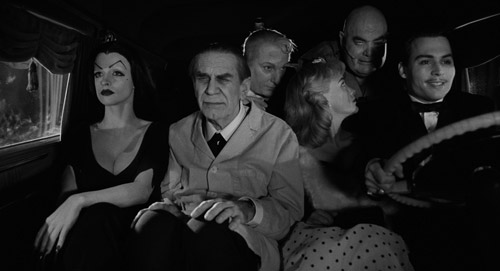
Consider the opening sequence.  In glorious black-and-white, we are presented with a house sitting in the middle of a storm.  As Howard Shore’s melodramatic and spooky score plays in the background, the camera zooms towards the house.  A window flies open to reveal a coffin sitting in the middle of a dark room.  A man dressed in a tuxedo (played to snarky and eccentric perfection by Jeffrey Jones) sits up in the coffin.  Later, we learn that the man is an infamously inaccurate psychic named Criswell.  Criswell greets us and says that we are interested in the unknown.  “Can your heart handle the shocking facts of the true story of Edward D. Wood, Jr!?”

As streaks of lightning flash across the sky, the opening credits appear and disappear on the screen.  The camera zooms by tombstones featuring the names of the cast.  Cheap-looking flying saucers, dangling on string, fly through the night sky.  The camera even goes underwater, revealing a giant octopus…

It’s a brilliant opening, especially if you’re already a fan of Ed Wood’s.  If you’re familiar with Wood’sfilms, you know that Criswell’s appearance in the coffin is a reference to Orgy of the Dead and that his opening monologue was a tribute to his opening lines from Plan 9 From Outer Space.  If you’re already a fan of Ed Wood then you’ll immediately recognize the flying saucers.  You’ll look at that octopus and you’ll say, “Bride of the Monster!”

And if you’re not an Ed Wood fan, fear not.  The opening credits will pull you in, even if you don’t know the difference between Plan 9 and Plan 10.  Between the music and the gorgeous black-and-white, Ed Wood is irresistible from the start.

Those opening credits also announce that we’re about to see an extremely stylized biopic.  In the real world, Ed Wood was a screenwriter and director who spent most of his life on the fringes of Hollywood, occasionally working with reputable or, at the very least, well-known actors like Lyle Talbot and Bela Lugosi.  He directed a few TV shows.  He wrote several scripts and directed a handful of low-budget exploitation films.  He also wrote a lot of paperbacks, some of which were semi-pornographic.  Most famously, he was a cross-dresser, who served in the army in World War II and was wearing a bra under his uniform when he charged the beaches of Normandy.  Apparently, the stories of his love for angora were not exaggerated.  Sadly, Wood was also an alcoholic who drank himself to death at the age of 54.

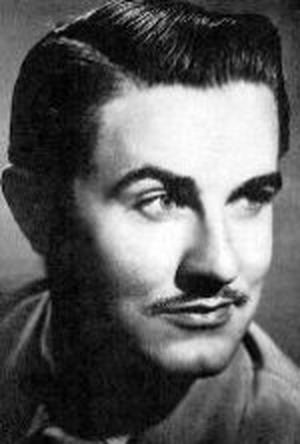
Every fan of Ed Wood has seen this picture of him, taken when he first arrived in Hollywood and looked like he had the potential to be a dashing leading man:

What people are less familiar with is how Ed looked after spending two decades on the fringes of the film business:

My point is that the true story of Ed Wood was not necessarily a happy one.  However, one wouldn’t know that from watching the film based on his life.  As directed by Tim Burton, Johnny Depp plays Ed Wood as being endlessly positive and enthusiastic.  When it comes to determination, nothing can stop the film’s Ed Wood.  It doesn’t matter what problems may arise during the shooting of any of his films, Wood finds a way to make it work.

A major star dies and leaves behind only a few minutes of usable footage?  Just bring in a stand-in.  The stand-in looks nothing like the star?  Just hide the guy’s face.

Wrestler Tor Johnson (played by wrestler George “The Animal” Steele), accidentally walks into a wall while trying to squeeze through a door?  Shrug it off by saying that it adds to the scene.  Point out that the character that Tor is playing would probably run into that wall on a regular basis.

Your fake octopus doesn’t work?  Just have the actors roll around in the water.

The establishment won’t take you seriously?  Then work outside the establishment, with a cast and crew of fellow outcasts.

You’re struggling to raise money for your film?  Ask the local Baptist church.  Ask a rich poultry rancher.  Promise a big star.  Promise to include a nuclear explosion.  Promise anything just to get the film made.

You’re struggling to maintain your artistic vision?  Just go down to a nearby bar and wait for Orson Welles (Vincent D’Onofrio) to show up.

Personally, I’m of the opinion that Ed Wood is Tim Burton’s best film.  It’s certainly one of the few Burton films that actually holds up after repeat viewings.  Watching the film, it’s obvious that Wood and Burton shared a passionate love for the movies and that Burton related to Wood and his crew of misfits.  It’s an unabashedly affectionate film, with none of the condescension that can sometimes be found in Burton’s other film.  Burton celebrates not just the hopes and dreams of Ed Wood, Bela Lugosi, Tor Johnson and Criswell but also of all the other members of the Wood stock company, from Vampira (Lisa Marie) to Bunny Breckenridge (Bill Murray), all the way down to Paul Marco (Max Casella) and Loretta King (Juliet Landau).  Though Ed Wood may center around the character of Wood and the actor who plays him, it’s a true ensemble piece.  Landau won the Oscar but really, the entire cast is brilliant.  Along with those already mentioned, Ed Wood features memorable performances from Sarah Jessica Parker and Patricia Arquette (one playing Wood’s girlfriend and the other playing his future wife), G. D. Spradlin (as a minister who ends up producing one of Wood’s films), and Mike Starr (playing a producer who is definitely not a minister).

For me, Ed Wood is defined by a moment very early on in the film.  Wood watches some stock footage and talks about how he could make an entire movie out of it.  It would start with aliens arriving and “upsetting the buffaloes.”  The army is called in.  Deep delivers the line with such enthusiasm and with so much positive energy that it’s impossible not get caught up in Wood’s vision.  For a few seconds, you think to yourself, “Maybe that could be a good movie…”  Of course, you know it wouldn’t be.  But you want it to be because Ed wants it to be and Ed is just do damn likable.

As I said before, Ed Wood is a highly stylized film.  It focuses on the good parts of the Ed Wood story, like his friendship with Bela Lugosi and his refusal to hide the fact that he’s a cross-dresser who loves angora.  The bad parts of his story are left out and I’m glad that they were.  Ed Wood is a film that celebrates dreamers and it gives Wood the happy ending that he deserved.   The scenes of Plan 9 From Outer Space getting a raptorous reception may not have happened but can you prove that they didn’t?

I suppose now would be the time that most reviewers would reflect on the irony of one of the worst directors of all time being the subject of one of the best films ever made about the movies.  However, I’ll save that angle for whenever I get a chance to review The Disaster Artist.  Of course, I personally don’t think that Ed Wood was the worst director of all time.  He made low-budget movies but he did what he could with what he had available.  If anything, Ed Wood the film is quite correct to celebrate Ed Wood the director’s determination.  Glen or Glenda has moments of audacious surrealism.  Lugosi is surprisingly good in Bride of the Monster.  As for Plan 9 From Outer Space, what other film has a plot as unapologetically bizarre as the plot of Plan 9?  For a few thousand dollars, Wood made a sci-fi epic that it still watched today.  Does that sound like something the worst director of all time could do?

Needless to say, Ed Wood is not a horror film but it’s definitely an October film.  Much as how Christmas is the perfect time for It’s A Wonderful Life, Halloween is the perfect time for Ed Wood.

A Movie A Day #258: The Hunting Party (1971, directed by Don Medford)


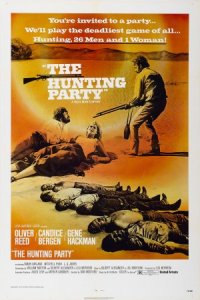
Old west outlaw Frank Calder (Oliver Reed) wants to learn how to read so he and his gang ride into the nearby town and kidnap Melissa Ruger (Candice Bergen).  Because he saw her reading to a group of children, Calder assumed that Melissa was a school teacher.  Instead, Melissa is the wife of a brutal cattle baron and hunter named Brandt Ruger (Gene Hackman).  Even after Calder learns the truth about Melissa’s identity, he keeps it a secret from his gang because he knows that they would kill her and then kill him as punishment for kidnapping the wife of a man as powerful as Brandt.  Stockholm Syndrome kicks in and Melissa starts to fall in love with Calder.  Meanwhile, Brandt learns that his wife has been kidnapped and, with a group of equally brutal friends, he sets out to get her back.  In Brandt’s opinion, Calder has stolen his personal property.  Using a powerful and newly designed rifle, Brandt kills Calder’s men one-by-one until there is a final, bloody confrontation in the desert.

Coming out two years after Sam Peckinpah redefined the rules of the western genre with The Wild Bunch, The Hunting Party owes a clear debt to Peckinpah.  Much as in The Wild Bunch, the violence is sudden, brutal, and violent.  What The Hunting Party lacks is Peckinpah’s attention to detail and his appreciation for the absurd.  Instead, The Hunting Party is just one shooting after another and, devoid of subtext or any hint of a larger context, it quickly gets boring.

Fans of Oliver Reed, however, will want to watch The Hunting Party because it features one of his best performance.  For once, Reed is actually playing the nice guy.  He may be an outlaw but he still cries when a mortally wounded member of his gang begs Calder to put him out of his misery.  Gene Hackman is also good, even though he’s playing one of his standard villain roles.  (The less said about Candice Bergen’s performance, the better.)  The Hunting Party may be dully nihilistic but Oliver Reed shines.

A Movie A Day #204: Tank (1984, directed by Marvin Chomsky)


If you had just moved to a small town in Georgia and your teenage son was framed for marijuana possession and sentenced to years of hard labor, what would you do?

Would you hire a good lawyer and file appeal after appeal?

Would you go to the media and let them know that the corrupt sheriff and his evil deputy are running a prostitution ring and the only reason your son is in prison is because you dared to call them out on their corruption?

Or would you get in a World War II-era Sherman tank and drive it across Georgia, becoming a folk hero in the process?

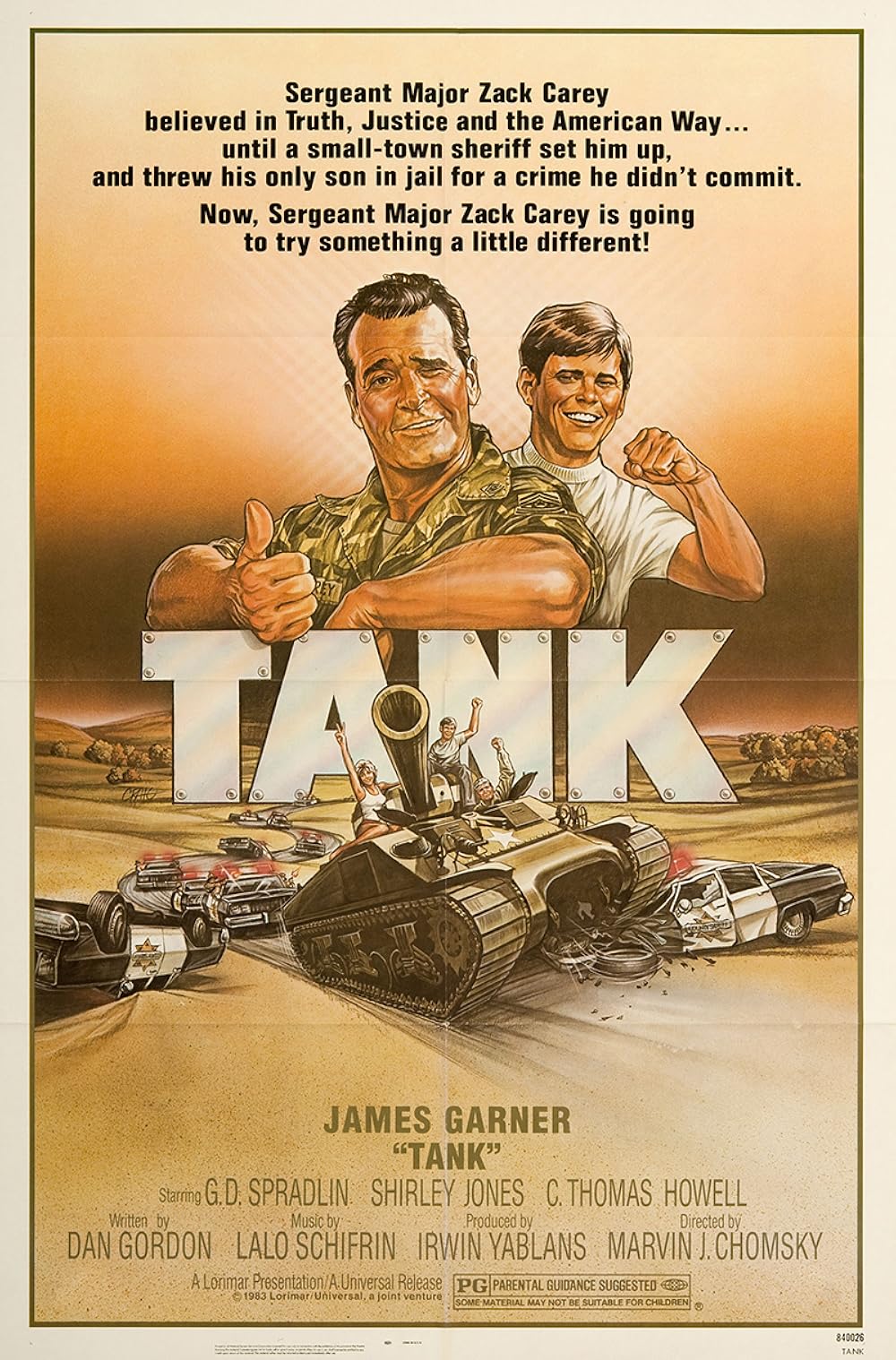
If you are Sgt. Zack Carey (James Garner), you take the third option.  Sgt. Carey is only a few months from retirement but he is willing to throw that all away to break his son (C. Thomas Howell) out of prison and expose the truth about Sheriff Buelton (G.D. Spradlin) and Deputy Euclid Baker (James Cromwell, playing a redneck).  Helping Sgt. Carey out are a prostitute (Jenilee Harrison), Carey’s wife (Shirley Jones), and the citizens of Georgia, who lines the road to cheer the tank as it heads for the Georgia/Kentucky border.  It’s just like the O.J. Bronco chase, with James Garner in the role of A.C. Cowlings.

The main thing that Tank has going for it is that tank.  Who has not fantasized about driving across the country in a tank and blowing up police cars along the way?  James Garner is cool, too, even if he is playing a role that would be better suited for someone like Burt Reynolds.  Tank really is Smoky and the Bandit with a tank in the place of that trans am.  Personally, I would rather have the trans am but Tank is still entertaining.  Dumb but entertaining.

One final note, a piece of political trivia: According to the end credits, the governor of Georgia was played by Wallace Willkinson.  At first, I assumed this was the same Wallace Wilkinson who later served as governor of Kentucky.  It’ not.  It turns out that two men shared the same name.  It’s just a coincidence that one played a governor while the other actually became a governor.