4 Shots From 4 Films: Special Sean Connery Edition


4 Or More Shots From 4 Or More Films is just what it says it is, 4 shots from 4 of our favorite films. As opposed to the reviews and recaps that we usually post, 4 Shots From 4 Films lets the visuals do the talking!

Today would have been Sean Connery’s 95th birthday.  It’s time for….

4 Shots From 4 Sean Connery Films

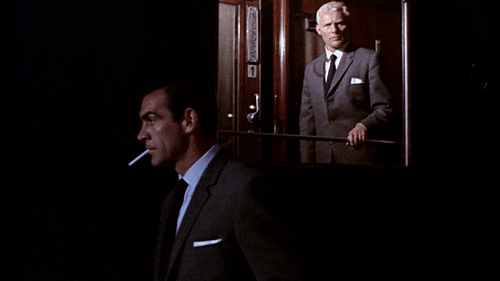
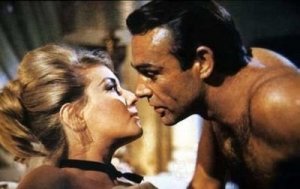
From Russia With Love (1963, dir by Terence Young, DP: Ted Moore)

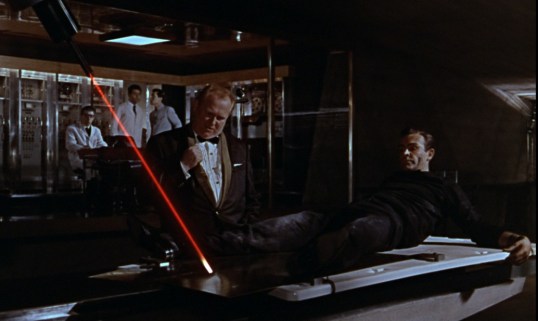
Goldfinger (1964, dir by Guy Hamilton, DP: Ted Moore)

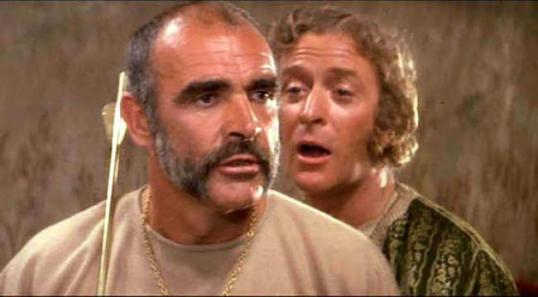
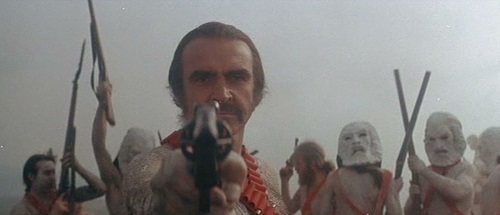
The Man Who Would Be King (1975, dir by John Huston, DP: Oswald Morris)

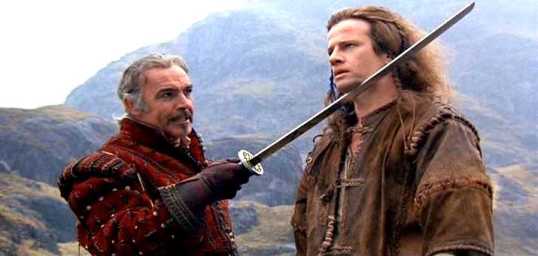
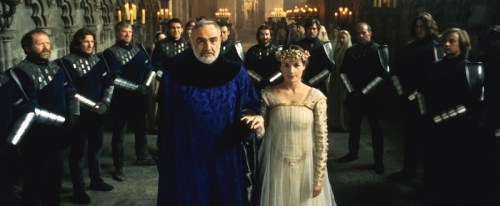
Highlander (1986, dir by Russell Mulcahy, DP: Gerry Fisher)


4 Shots From 4 Films: Special 1963 Edition


4 Shots From 4 Films is just what it says it is, 4 shots from 4 of our favorite films. As opposed to the reviews and recaps that we usually post, 4 Shots From 4 Films is all about letting the visuals do the talking.

Since I reviewed a film that takes place in 1963 this morning, I’m going to use today’s edition of 4 Shots From 4 Films to pay further homage to that pivotal year.  It’s time for….

4 Shots From 4 1963 Films

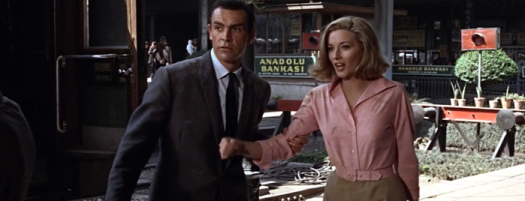
From Russia With Love (1963, dir by Terence Young, DP: Ted Moore)

Black Sabbath (1963, dir by Mario Bava, DP: Ubaldo Terzano)

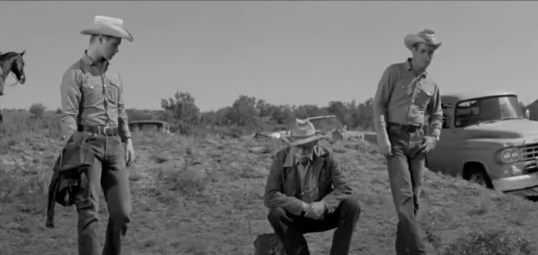
Hud (1963, dir by Martin Ritt, DP: James Wong Howe)

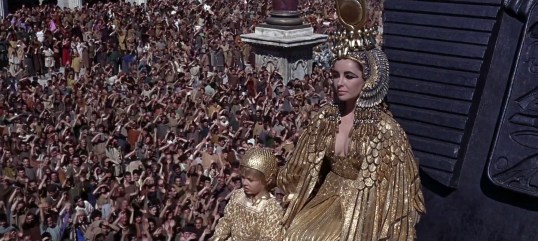
Cleopatra (1963, dir by Joseph L. Mankiewicz, DP: Leon Shamroy)

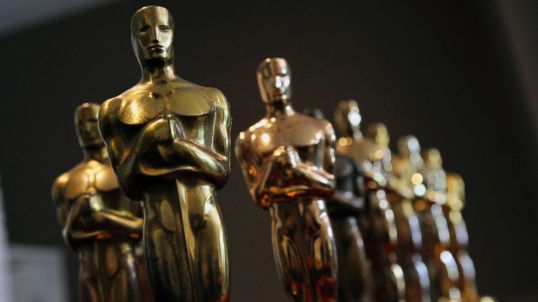
10 Oscar Snubs From The 1960s


Ah, the 60s. Both the studio system and the production code collapsed as Hollywood struggled to remain relevant during a time of great social upheaval. The Academy alternated between nominating films that took chances and nominating films that cost a lot of money. It led to some odd best picture lineups and some notable snubs!

1960: Psycho Is Not Nominated For Best Picture and Anthony Perkins Is Not Nominated For Best Actor

To be honest, considering that the Academy has never really embraced horror as a genre and spent most of the 60s nominating big budget prestige pictures, it’s a bit surprising that Psycho was actually nominated for four Oscars.  Along with being nominated for its production design and its cinematography, Psycho also won nominations for Alfred Hitchcock and Janet Leigh.  However, Anthony Perkins was not nominated for Best Actor, despite giving one of the most memorable performances of all time.  The film literally would not work without Perkins’s performance and, considering that Perkins pretty much spent the rest of his career in the shadow of Norman Bates, it’s a shame that he didn’t at least get a nomination for his trouble.  Psycho was also not nominated for Best Picture, despite being better remembered and certainly more influential than most of the films that were.

1962: The Man Who Shot Liberty Valance Is Almost Totally Snubbed

The Man Who Shot Liberty Valance was not totally snubbed by the Academy.  It received a nomination for Best Costume Design.  But still, it deserved so much more!  John Ford, James Stewart, John Wayne, Lee Marvin, Vera Miles, and the picture itself were all worthy of nominations.  Admittedly, 1962 was a year full of great American films and there was a lot of competition when it came to the Oscars.  Still, The Man Who Shot Liberty Valance definitely deserved a best picture nomination over the bloated remake of Mutiny on the Bounty.  Today, if the first Mutiny on the Bounty remake is known for anything, it’s for Marlon Brando being difficult on the set.  But The Man Who Shot Liberty Valance is still remembered for telling us to always print the legend.
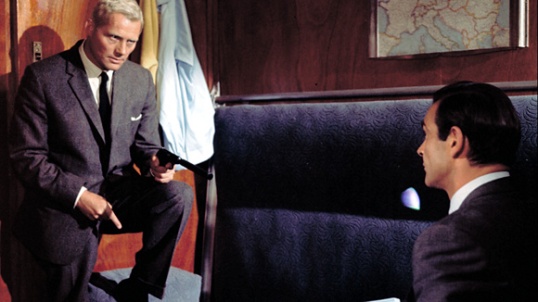
1964: From Russia With Love Is Totally Snubbed

The same year that the Academy honored George Cukor’s creaky adaptation of My Fair Lady, it totally ignored my favorite James Bond film.  From Russia With Love is a Bond film that works wonderfully as both a love story and a thriller.  Sean Connery, Lotte Lenya, Robert Shaw, and Terence Young all deserved some award consideration.  From Russia With Love was released in the UK in 1963.  In a perfect world, it would have also been released concurrently in the U.S., allowing From Russia With Love to be the film that gave the the Academy the chance to recognize the British invasion.  Instead, Tom Jones was named the Best Picture of 1963 and From Russia With Love had to wait until 1964 to premiere in the U.S.  It was snubbed in favor of one of old Hollywood’s last grasps at relevance.

1964: Slim Pickens Is Not Nominated For Best Supporting Actor

Playing three separate roles, Peter Sellers dominates Dr. Strangelove: Or How I Learned To Stop Worrying And Love The Bomb.  But, as good as Sellers is, the film’s most memorable image is definitely Slim Pickens whooping it up as he rides the bomb down to Earth.  George C. Scott and Sterling Hyaden also undoubtedly deserved some award consideration but, in the end, Pickens is the one who brings the film to life even as he helps to bring society to an end.

1967: In Cold Blood Is Not Nominated For Best Picture

In Cold Blood, though not a perfect film, certainly deserved a nomination over Dr. Doolittle.  In Cold Blood is a film that still has the power to disturb and haunt viewers today.  Dr. Doolittle was a box office debacle that was nominated in an attempt to help 20th Century Fox make back some of their money.

1967: Sidney Poitier Is Not Nominated For Best Actor For In The Heat Of The Night

In 1967, Sidney Poitier starred in two of the films that were nominated for Best Picture but somehow, he did not pick up a nomination himself.  His restrained but fiercely intelligent performance in In The Heat Of The Night provided a powerful contrast to Rod Steiger’s more blustery turn.  That Poitier was not nominated for his performance as Virgil Tibbs truly is one of the stranger snubs in Academy history.  (If I had to guess, I’d say that the Actors Branch was split on whether to honor him for In The Heat of the Night or Guess Who’s Coming To Dinner or even for To Sir With Love and, as a result, he ended up getting nominated for none of them.)

1968: 2001: A Space Odyssey and Planet of the Apes Are Not Nominated For Best Picture

Neither one of these classic science fiction films were nominated for Best Picture, despite the fact that both of them are far superior and far more influential than Oliver!, the film that won that year.

1968: The Good, The Bad, and the Ugly Is Totally Ignored

Not even Ennio Morricone’s score received a nomination!

1968: Petulia Is Totally Snubbed

Seriously, I don’t know what was going on with the Academy in 1968 but it seems they went out of their way to ignore the best films of the year.  Richard Lester’s Petulia is usually cited as one of the definitive films of the 60s but it received not a single Oscar nomination.  Not only did the film fail to receive a nomination for Best Picture but Richard Lester, George C. Scott, Julie Christie, Shirley Knight, Richard Chamberlain, and the film’s screenwriters were snubbed as well.

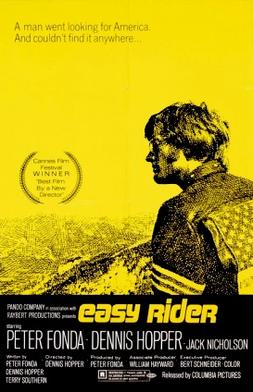
1969: Easy Rider Is Not Nominated For Best Picture

Yes, I know.  Easy Rider is a flawed film and there are certain moments that are just incredibly pretentious.  That said, Easy Rider defined an era and it also presented a portrait of everything that was and is good, bad, and timeless about America.  The film may have been produced, directed, and acted in a drug-razed haze but it’s also an important historical document and it was also a film whose success permanently changed Hollywood.  Certainly, Easy Rider’s legacy is superior to that of Hello, Dolly!

Agree? Disagree? Do you have an Oscar snub that you think is even worse than the 10 listed here? Let us know in the comments!

Up next: It’s the 70s!
6 Good Films That Were Not Nominated For Best Picture: The 1960s


Sonny and Cher walk down the 1968 Oscars Red Carpet

Continuing our look at good films that were not nominated for best picture, here are 6 films from the 1960s.

Psycho (1960, dir by Alfred Hitchcock)

The director was nominated.  Janet Leigh was nominated.  Amazingly enough, Anthony Perkins was not nominated for playing the role that would come to define him.  And, in the end, the film itself was not nominated for best picture.  Perhaps it was too sordid for the Academy.  Perhaps they resented no longer feeling safe in the shower.  Regardless, Psycho has gone on to influence every horror thriller made since 1960.  And let’s not even talk about how much we all cried while watching the finale of Bates Motel.

From Russia With Love (1963, dir by Terence Young)

The first great James Bond film should have also been the first Bond film to be nominated for best picture.  Actually, looking over the films that actually were nominated in 1963, From Russia With Love should have been the first Bond film to win best picture.

Blow-Up (1966, dir by Michelangelo Antonioni)

Mimes playing tennis and David Hemmings briefly breaking out of his shell of ennui to investigate a murder that has no solution!  How could the Academy resist?  Somehow, they did.  Michelangelo Antonioni received a nomination but the film was, at the time, considered to be too controversial to nominate.

The Good, The Bad, and the Ugly (1967, dir by Sergio Leone)

Though initial reviews were mixed, Sergio Leone’s Civil War epic has come to be recognized as one of the greatest and most important Westerns of all time.  Perhaps it’s understandable that the Academy of 1967 would be skeptical of an Italian western starring Clint Eastwood, Eli Wallach, and Lee Van Cleef.  Still, it would have been one of the coolest best picture nominees of all time.  (Shockingly, not even Ennio Morricone’s iconic score was nominated.)

Petulia (1968, dir by Richard Lester)

Though Richard Lester will probably always be best known as the man who directed the first two Beatles films, he also directed one of the definitive 60s films, Petulia.  Sadly, in a year when many lackluster films were nominated, the challenging and rather melancholy Petulia was not.

Night of the Living Dead (1968, dir by George Romero)

Again, we really can’t be shocked that the Academy held off an recognizing a low-budget, independent film about zombies  But come on!  A Night of the Living Dead vs. Petulia Oscar race would have bene one for the ages.

Up next, in an hour or so, the 1970s!

Bond Is Back!: FROM RUSSIA WITH LOVE (United Artists 1963)


gary loggins's avatarcracked rear viewer

The Cold War got really hot when James Bond returned to the screen in FROM RUSSIA WITH LOVE, second in the film series starring Sean Connery as Ian Fleming’s Secret Agent 007. Picking up where DR. NO left off, the film is popular with Bond fans for its more realistic depiction of the spy game, though there’s still plenty of action, romance, and quick quips, along with the introduction of several elements soon to be integral to the series.

FROM RUSSIA WITH LOVE has Bond falling for Soviet defector Tatiana Romanova (Daniela Bianchi), who’s willing to help steal a Russian Lektor decoding machine for Her Majesty’s Secret Service. But both she and Bond are just pawns in a larger game, with the international crime cartel SPECTRE making all the moves. Their goal is to not only posses the decoder and ransom it back to the Russians, but to eliminate 007…

View original post 340 more words

Book Review: From Russia With Love by Ian Fleming


(MAJOR SPOILERS)

First published in 1957, the fifth James Bond novel was nearly the last.  Despite the success of the previous books, Ian Fleming was growing tired of the yearly obligation of coming up with a new adventure for James Bond.  His health failing and his marriage strained, Fleming wrote to his friend Raymond Chandler, “My muse is in a very bad way … I am getting fed up with Bond and it has been very difficult to make him go through his tawdry tricks.”

Perhaps that’s why From Russia With Love could have easily been retitled “The Death of James Bond.”

In fact, the promise of death hangs over every paragraph of From Russia With Love.  Bond doesn’t even make a personal appearance until halfway through the book.  Up until that point, we spend our time with the men and the women who are plotting his death.  The Russians not only want to kill Bond but they want to do so in a way that will embarrass the British secret service.  What better scheme than to use the naive Tatiana Romanova to entice Bond and get Bond to lower his guard long enough to be killed by their top assassin, the sociopathic Red Grant?

Indeed, From Russia With Love is unique among the Bond books in that the reader spends almost the entire book a few steps ahead of Bond.  While Bond thinks that he is helping Tatiana defect to the West, we’re aware that Red Grant is waiting just around the corner.  And while Bond is often unsure about whether Tatiana is really in love with him, we know that she is but we also know that the Russians consider her to be expendable.

Up until the final few chapters, Bond is almost as passive a character in From Russia With Love as he was in Casino Royale.  When he arrives in Turkey to investigate Tatiana, he spends most of his time being led around by the older Darko Kerim.  Much as in Casino Royale, Bond is a bit of a student, one who is briefly disturbed when Kerim ruthlessly assassinates an enemy agent.  Kerim is one of Fleming’s best creations, an outspoken spymaster who is so full of life that he often overshadows Bond.  It’s only when Kerim is dead that Bond can step up into his usual heroic role.

Throughout the book, Fleming appears to be fascinated by everyone but James Bond.  However, the change-of-pace actually works out surprisingly well.  Grant, Tatiana, Kerim, and the dangerous Major Rosa Klebb are such memorably drawn characters that it doesn’t matter that Bond spends most of the book in the background.  More than being a good Bond novel, it’s a genuinely exciting thriller.

And then there’s that ending.  After originally ending with Bond and Tatiana going off on a typical Bondian jaunt, Fleming revised the book’s conclusion.  Now, the book ended rather abruptly with Bond, having been poisoned by Major Klebb, crashing to the floor.  If you ignore the fact that you’re reading a James Bond novel then it’s obvious that the Russians have succeeded in assassinating MI6’s best agent.  That may have been Fleming’s intention but, of course, that’s not the way things turned out.  Instead, Bond would return a year later in Dr. No.

And why not?  From Russia With Love was the best Bond novel up to that point.  (I consider it to be the second best of Fleming’s Bond novels, behind On Her Majesty’s Secret Service.)    Fleming may have been growing bored with Bond but readers?  They loved him.

Up next: Bond gets strange with Dr. No!

6 James Bond Films That Should Have Been Nominated For Best Picture


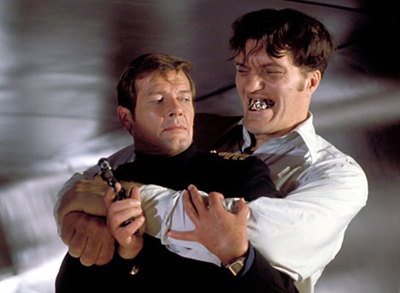
James Bond and Jaws

Other than a few song nominations (and wins) and the occasional technical mentions, the Academy has tended to snub the James Bond franchise.

However, I love the Bond films so here are 6 times that I think 007’s latest adventure should have been nominated for best picture!

From Russia With Love

  1. From Russia With Love (1963)

I not only think that From Russia With Love should have been nominated for best picture, I also think that it should have won.  This film featured Sean Connery at his best and it’s one of the few Bond films to work not only as an adventure but as a romance as well.

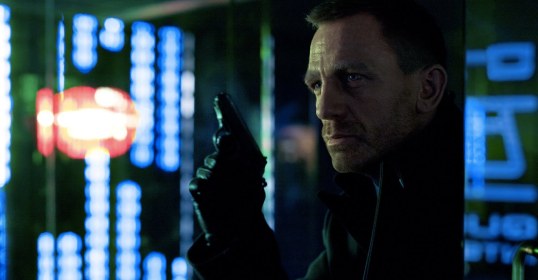
Skyfall

2. Skyfall (2012)

I’m not a huge fan of Daniel Craig’s interpretation of the character.  If Connery was Killer Bond and Roger Moore was Charming Bond, Craig often seems to be Whiny Bond.  That said, Skyfall was not only one of the best Bond films but one of the best films of 2012 as well.

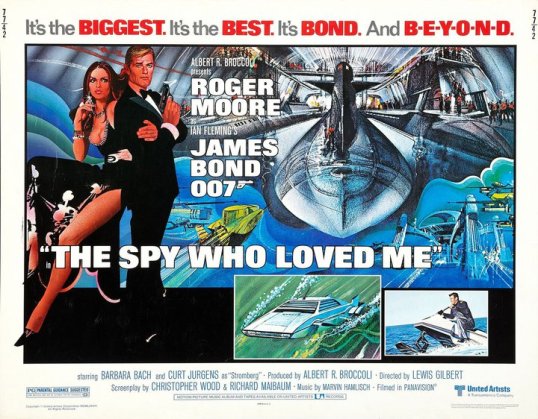
The Spy Who Loved Me

3. The Spy Who Loved Me (1977)

Nobody does it better!  Not only was this Roger Moore’s best Bond film but it’s a wonderful piece of pop art.

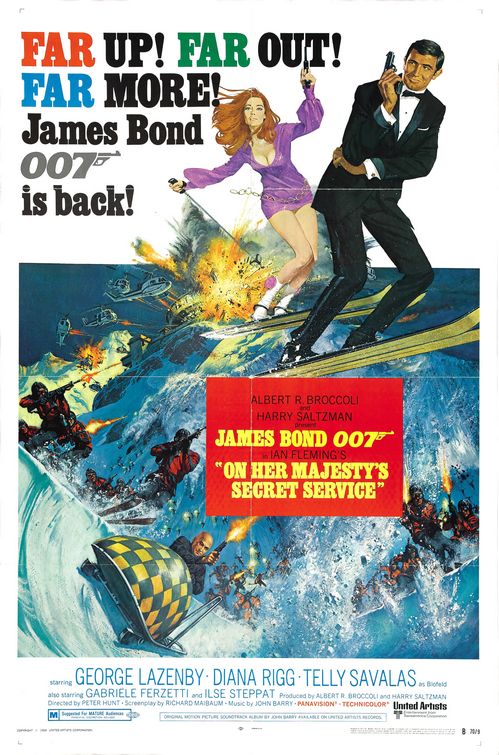
on_her_majestys_secret_service1

4. On Her Majesty’s Secret Service (1969)

This is one of the most underrated of all of the Bond films.  Ignore all the gossip over how George Lazenby came to play James Bond and you’ll discover that it is a Skyfall for the 60s.

goldfinger-movie-poster-1964-1010189635

5. Goldfinger (1964)

“No, Mr. Bond, I expect you to die!”  Goldfinger is over the top perfection.

LiveandLetDie

6. Live and Let Die (1973)

Live and Let Die will probably never be acclaimed as the other Bond films but I don’t care.  I love it.  It’s the closest the Bond franchise ever came to achieving the anything-goes insanity of a classic grindhouse film.

Will a James Bond film ever receive a best picture nomination?  Normally, I’d say no.  But Mad Max: Fury Road changed the rules (for the better).  Given the right Bond, the right director, the right story, and the right year, who knows what could happen?


4 Shots From 4 Films: From Russia With Love, Zardoz, Highlander, First Knight


4 Shots From 4 Films is just what it says it is, 4 shots from 4 of our favorite films.  As opposed to the reviews and recaps that we usually post, 4 Shots From 4 Films is all about letting the visuals do the talking.

This edition of 4 Shots From 4 Films is dedicated to Sean Connery, on the occasion of his 85th birthday!

4 Shots From 4 Films

From Russia With Love (1963, directed by Terrence Young)

From Russia With Love (1963, directed by Terrence Young)

Zardoz (1974, directed by John Boorman)

Zardoz (1974, directed by John Boorman)

Highlander (1986, directed by Russell Mulcahy)

Highlander (1986, directed by Russell Mulcahy)

 First Knight (1995, directed by Jerry Zucker)

First Knight (1995, directed by Jerry Zucker)

James Bond Film Review: From Russia With Love (dir. by Terrence Young)


Hi there!  The name’s Bowman, Lisa Marie Bowman.  And tonight, I’m continuing the Shattered Lens’ look at the James Bond film franchise by reviewing 1963’s From Russia With Love.

The 2nd film in the Bond film series, From Russia With Love is considered by many to be one of the best entries in the franchise.  I happen to agree with them.  There’s a lot of talk right now that Skyfall could be the first James Bond film to receive an Oscar nomination for best picture.  Personally, I think From Russia With Love (and not Tom Jones) should have been named the best picture of 1963,  (Seriously, has anyone actually tried to watch Tom Jones recently?)

From Russia With Love opens with a tuxedo-clad James Bond sneaking around outside the type of opulent estate that every Bond villain seems to own.  Suddenly, Bond is attacked by a hulking assassin named Red Grant (played by a pre-Jaws Robert Shaw) and, as the audience watches shocked, Bond is apparently killed.  It’s only after Bond’s dead and on the ground that we learn the truth.  The man in the tuxedo wasn’t James Bond at all — instead, he was just some random henchman in a James Bond mask!  It turns out that Grant works for the villainous organization SPECTRE and this is all part of his training routine.  Now, you would be justified in wondering why SPECTRE would go through the trouble to make a next-to-perfect James Bond mask for a simple training routine but. ultimately, it doesn’t matter.  It’s a great sequence, that manages to be both fun and suspenseful at the same time.  It’s also a great set-up for the rest of the film.

SPECTRE and its mysterious leader (and this is the first time in which we get to see that iconic image of a hand stroking a white cat while a disembodied voice says evil things) want Bond dead.  The job of arranging Bond’s assassination is given to Kronsteen (played by Vladek Sheybal, who has a truly fascinating skeletal face).  When he’s not off being evil, Kronsteen is a chess grandmaster and, not surprisingly, he views his assignment as if it’s just one big chess game.  In order to kill Bond, he knows that he’s going to need a pawn.

That’s where Tatiana Romanova (played by Daniela Bianchi) comes in.  Tatiana is a cipher clerk at the Russian Embassy in Istanbul.  She is approached and given an assignment by Rosa Klebb (Lotte Lenya), a Russian intelligence agent who, unknown to Tatiana, is also working for SPECTRE.  Tatiana contacts MI6 and tells them that she’s willing to defect but only to James Bond.  Tatiana explains that she came across Bond’s picture in a Soviet Intelligence file and the insinuation is that she fell in love (or, at the very least, lust) with that picture.

(Interestingly enough, this parallels the fact that audiences had previously seen Sean Connery in Dr. No and, like Tatiana, spent the year between the two films fantasizing about James Bond themselves.  In that way, Tatiana is the perfect audience surrogate.)

James Bond is sent to Istanbul by M (Bernard Lee) but before he goes, he meets with the head of Q branch.  Desmond Llewelyn makes his first appearance in the Bond franchise here.  In a historic moment of film history, he gives Bond his first booby-trapped briefcase.

When Bond arrives in Istanbul, he meets with station head Kerim Bey (played by Pedro Armanderiz, who tragically committed suicide before From Russia With Love was released).  With the help of Kerim Bey and Tatiana (who Bond first meets with she turns up, naked, in his bed), Bond steals the Lektor decoder device from the Russian consulate.  Though Bond doesn’t realize this, he’s aided in this task by none other than Red Grant.  Grant has been following Bond and perversely, he’s been protecting Bond from KGB assassins so that he might have the chance to kill Bond himself.

Bringing the Lektor device with them, Bond, Tatiana, and Kerim Bey board the Orient Express.  It’s on the train that they meet Nash, a British agent who says that he’s been sent by MI6 to help make sure that Bond and Tatiana safely make it back to England.  Of course, what the audience knows, is that the somewhat smug Nash is none other then … Red Grant!

I love From Russia With Love.  Everything that makes the James Bond series so special — romance, memorable villains, spectacular locations, exciting action, and a rather sardonic sense of humor — is present in From Russia With Love.  Playing Bond for the second time, Connery is more confident with the role here than he was in Dr. No and, as opposed to some of his later appearances in the series, Connery appears to be enjoying bringing this iconic character to life.  There’s none of the boredom that marred some of Connery’s later performances.  Instead, Connery is exciting to watch and it helps that he and Bianchi have a very real chemistry in this film.  As opposed to some Bond girls, Tatiana is a believable, multi-layered character and you actually care what happens to her.  The relationship between Tatiana and Bond feels real and, therefore, the film has a surprising emotional resonance to it.

As opposed to Dr. No, with its somewhat bland title character, the villains in From Russia With Love are a fascinating quartet of rogues.  Lotte Lenya brings an unexpected amount of depth to the role of Rosa and her final battle with Bond is one of the best in the history of the franchise.  Even more exciting than Bond’s fight with Rosa is his final fight with Red Grant.  As played by Robert Shaw, Grant comes across as if he’s the literal personification of Bond’s dark side.  Both men are killers and both are rather smug about it but the difference is that Bond is capable of caring about Tatiana whereas Grant has surrendered whatever emotions he may have once had.  Shaw’s performance so dominates the film that, when I rewatched the film, I was surprised to discover that Grant is only in a handful of scenes.

If Dr. No was an enjoyable B-movie, then From Russia With Love was a cinematic masterpiece that transcended the limitations of genre.  If Dr. No established the basic conventions of James Bond, From Russia With Love showed that those conventions could be used to make a great film.

Tomorrow, we’ll be taking a look at the third film in the Bond franchise, Goldfinger.