4 Shots From 4 Films is just what it says it is, 4 shots from 4 of our favorite films. As opposed to the reviews and recaps that we usually post, 4 Shots From 4 Films lets the visuals do the talking!
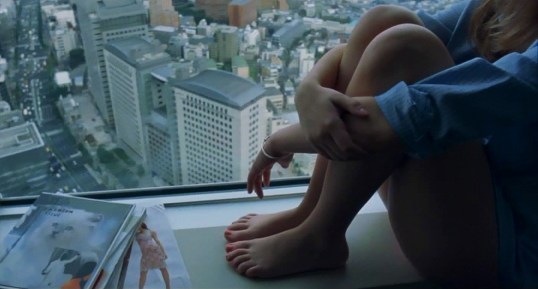
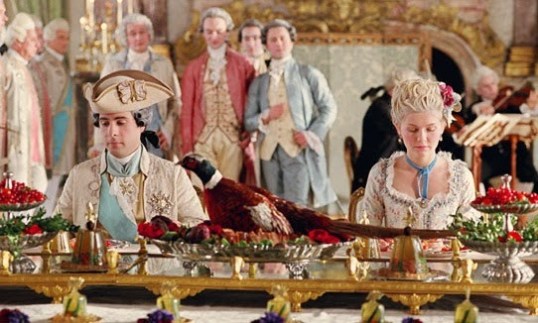
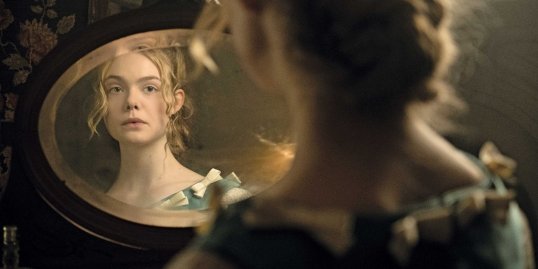
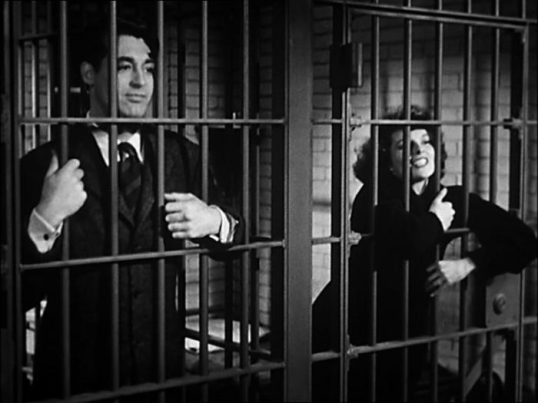
Today is the birthday of one of my favorite American directors, the one and only Sofia Coppola! In honor of this day, here are….
Harvey Keitel is one of those actors who has given so many great performances that it’s difficult to pick which one is his best. He’s almost always great, even when the film sometimes isn’t. That said, I’ll always have a lot of affection for the character of Winston Wolfe, the cleaner that Keitel played in Quentin Tarantino’s Pulp Fiction.
Keitel doesn’t show up until the final third of Pulp Fiction but once he does, he pretty much takes over the entire film. For me, though, my favorite Winston Wolfe moment comes at the end of his story, when he says goodbye to John Travolta and Samuel L. Jackson and essentially reveals himself to be kind of an old-fashioned, almost dorky (if impeccably dressed) guy.
4 Shots From 4 Films is just what it says it is, 4 shots from 4 of our favorite films. As opposed to the reviews and recaps that we usually post, 4 Shots From 4 Films lets the visuals do the talking!
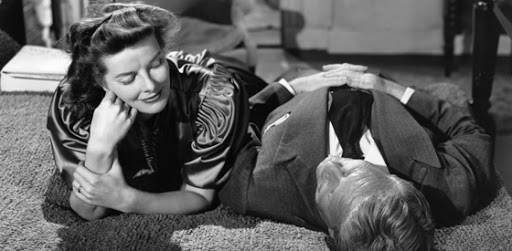
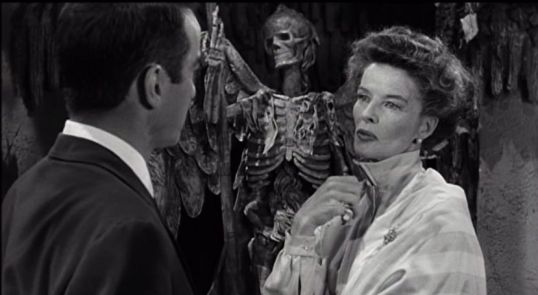
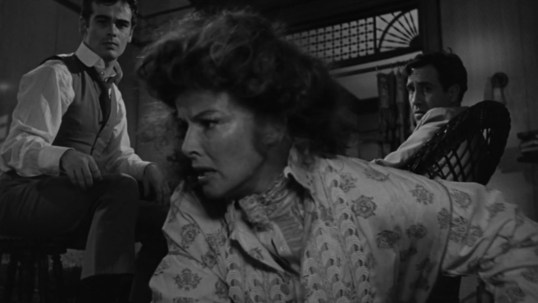
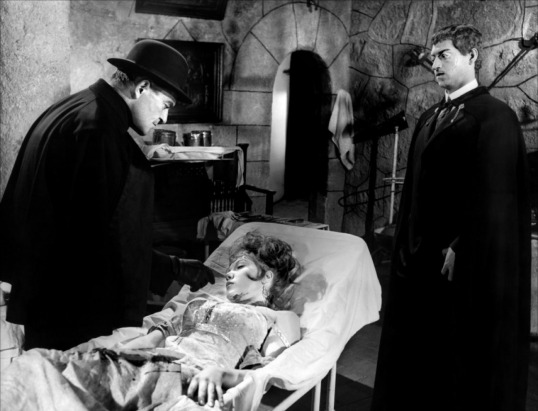
Yesterday was the birthday of one of the most iconic screen legends of all time, the one and only Katharine Hepburn! In honor of her life, career, and legacy, here are….
4 Shots From 4 Films
Bringing Up Baby (1938, dir by Howard Hawks)
State of the Union (1948, dir by Frank Capra)
Suddenly, Last Summer (1959, dir by Joseph L. Mankiewicz)
Long Day’s Journey Into Night (1962, dir by Sidney Lumet)
4 Shots From 4 Films is just what it says it is, 4 shots from 4 of our favorite films. As opposed to the reviews and recaps that we usually post, 4 Shots From 4 Films lets the visuals do the talking!
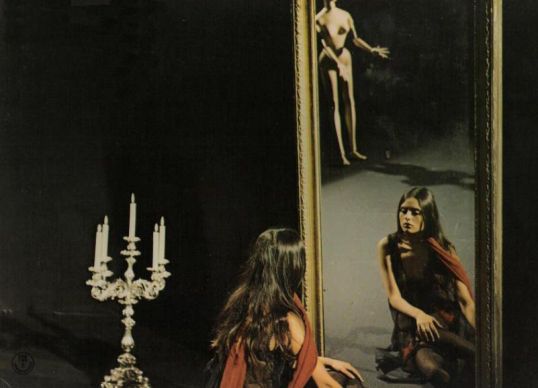
Today is the 90th anniversary of the birth of Jesus Franco! One of the most prolific filmmakers of all time, Franco made movies that …. well, they’re not easy to describe. Jess Franco was responsible for some of the most visually striking and narratively incoherent films ever made. He made films that you either loved or you hated but there was no mistaking his work for being the work of someone else.
4 Shots From 4 Films is just what it says it is, 4 shots from 4 of our favorite films. As opposed to the reviews and recaps that we usually post, 4 Shots From 4 Films lets the visuals do the talking!
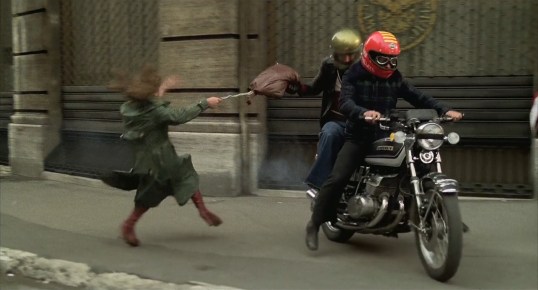
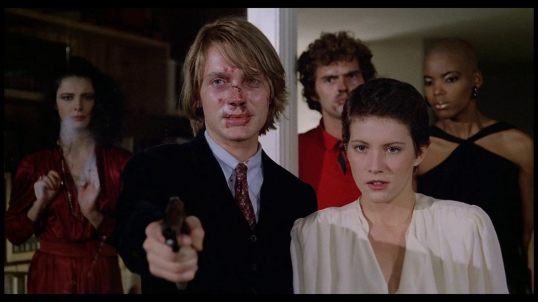
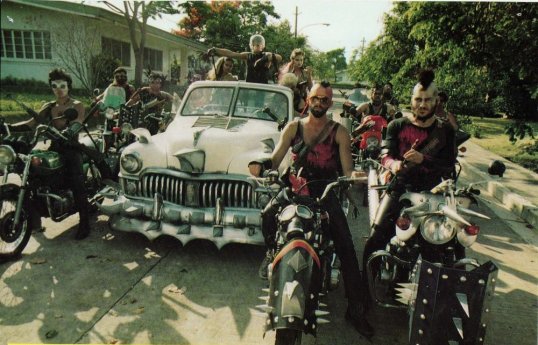
Today is the 81st birthday of the great Italian director, Ruggero Deodato! And that, of course, means that it’s time for….
4 Shots From 4 Films
Live Like A Cop, Die Like A Man (1976, dir by Ruggero Deodato)
The House on The Edge of The Park (1980, dir by Ruggero Deodato)
Raiders of Atlantis (1983, dir by Ruggero Deodato)
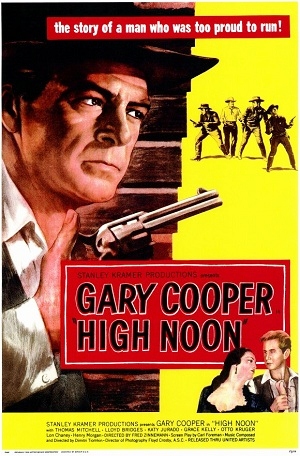
119 years ago today, Gary Cooper was born in Helena, Montana.
Cooper was an actor who, for many viewers, represented the American ideal. He played characters who were strong and modest and who refused to compromise their principles. Though Gary Cooper appeared in many films over the course of his career, he is probably destined to be forever associated with High Noon. In this classic western, Cooper plays Will Kane, the marshal who finds himself abandoned by almost everyone when a group of killers come to town looking to kill him. The film is often seen as being a commentary on the 1950s Red Scare. Cooper, who was a committed anti-Communist and about as conservative as anyone in Hollywood, stood up for the film’s screenwriter, the blacklisted Carl Foreman and threatened to walk off the picture when it appeared that Foreman’s writing credit might be removed. That was what a huge part of Cooper’s appeal. He did the right thing, even if it meant standing up for someone with whom he didn’t agree. There aren’t many Gary Coopers left today, are there?
Below, we have the final scene of High Noon, in which the cowardly townspeople finally come to support Marshal Kane. Kane, disgusted by their actions, can only throw away his star and leave town. Even without dialogue, Cooper lets you know exactly what is going through Kane’s mind. It’s a great scene from a great film featuring a great actor.
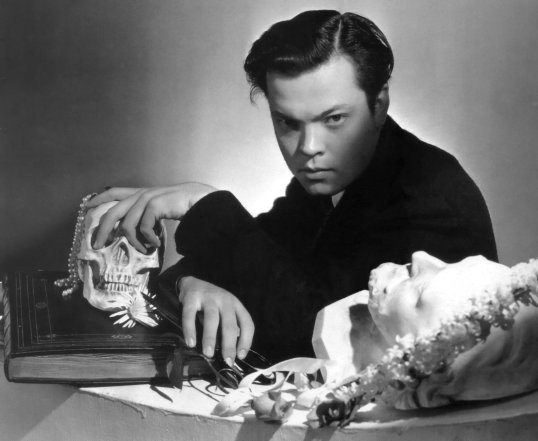
Today is the 105th anniversary of the birth of the great Orson Welles. As those of you who have been reading us for a while know, Orson Welles is a bit of patron saint around here. With this year being the 10th anniversary of the creation of Through the Shattered Lens (and wow, what a year to celebrate that moment, right?), there was no way that we couldn’t pay tribute to Orson Welles on his birthday.
The scene below comes form the 1965 film, Chimes at Midnight. Based on several of Shakespeare’s history plays (Henry IV, Part 1 and Henry IV, Part 2, and also Richard II, Henry V, and The Merry Wives of Windsor), Chimes at Midnight was one of Welles’s dream projects. Though it was initially dismissed by critics, it has since been rediscovered and is now regularly cited as one of the greatest Shakespearean films of all time.
Welles not only directed this film but he also played the key role of Falstaff, the knight who loves good food, good drink, and low company. Falstaff acts as a mentor to Price Hal and, when Hal is finally ready to make his move and assume the throne of England as Henry V, Falstaff supports him. Falstaff believes that Hal will remember his friends once he is king. Sadly, Falstaff turns out to have been far too trusting.
In the poignant scene below, Falstaff greets the newly crowned King Henry V (played by Keith Baxter), just to be coldly rebuffed by his former friend. Now that Henry is king, he no longer has time for the loyal Falstaff. In Shakespeare’s time, this scene was probably meant to reflect that, now that he was king, Henry V was prepared to set aside childish games and devote himself to ruling England. Seen, today, it just comes across as being a betrayal of a good man who deserved better.
It’s a heart-breaking scene. Critic Danny Peary has speculated that, in this scene, Prince Hal/Henry V is a stand-in for every director who Welles mentored in Hollywood who later refused to help Welles when the latter was struggling to get his projects off the ground. Peary may be right because Welles was betrayed by quite a few people during his lifetime. As Welles himself put it, “They’ll love me when I’m dead,” and indeed, it wasn’t until after Welles was dead that his post-Citizen Kane work was truly appreciated.
There haven’t been many trailers to share, lately. That’s largely due to the uncertainty that’s surrounding COVID-19 and when — if ever — certain films are going to be able to get a theatrical release. That said, there is a new trailer out and I think that a lot of our readers are going to be interested in it.
So, without further ado….
Inmate #1 is a documentary about how all-around badass Danny Trejo went from being a convict to being a cultural icon. As anyone who has ever seen Trejo interviewed can tell you, he’s got an inspiring life story and he’s also a wonderful storyteller. I’m looking forward to seeing this documentary, which will be released in the United States on July 7th.
The Shock of the Future follows one day in the life of a composer named Ana (Alma Jodorowsky).
The year is 1978 and Ana is living in a studio in Paris. It’s not her studio. The owner is currently in India and no one knows when he’ll be returning. He’s lent it to Ana and she’s moved in. She shares the space with a truly impressive collection of synthesizer equipment. She swears, to everyone who stops by over the course of the day, that she can use the equipment to make wonderful music that will replace all of the dinosaur rockers who have outlived their usefulness. Some believe her. Some are skeptical.
Ana has been paid a good deal of money to write a commercial jingle but she has no interest in jingles, no matter how many times the sleazy ad guy (Phillippe Rebbot) drops by the studio and tries to intimidate her with his tough guy act. She doesn’t care about “50s rock” nor does she care about the “soft voices” of acoustic folk. Drummers, she says, are not necessary when she has a machine that can do the job. In fact, she doesn’t need a band at all! Rebbot is not particularly impressed and orders her to either write him a jingle or pay him back the money.
Throughout the day, more people drop by the apartment. Geoffrey Carey plays a friend who brings her the latest records from the UK. Teddy Melis shows up to deliver a piece of equipment and to smoke a joint. A singer (played by Clara Luciani) unexpectedly shows up and she and Ana bond over their mutual dislike of the sleazy men in the business and then proceed to work on a song together. It all leads to a party, in which Ana plays her new song for a dismissive producer who tells her that that “there’s something there” but it will never catch on. The producer is especially dismissive because the song’s lyrics are in English. “We are French!” he all but announces.
However, not all hope is lost. By the end of the film, we’ve been reminded that there actually is a world outside of Ana’s studio and that the future cannot be stopped….
The Shock of the Future is a deceptively simple film. Nearly the entire film takes place in one location and the majority of the action consists of people entering the studio, talking to Ana, and then eventually leaving. This is one of those films that I’m sure some people will watch and claim that there wasn’t enough of a story for the film to hold their interest. Of course, those people are wrong. The Shock of the Future is a film about the act of creation and anyone who creates for a living — whether they’re a composer like Ana or a writer like me or a photographer like my sister — will automatically be able to understand and relate to Ana’s story. If you’ve ever had someone dismiss your work by saying that it’s “too strange” or that it didn’t conform to whatever society’s current standards may be, you’ll relate to Ana. You will understand what she is going through and why she refuses to surrender to the condescending naysayers around her. All visionaries are initially dismissed by a world that’s not ready for them, by a world that’s not ready for the shock of the future. Alma Jodorowsky does a wonderful job in the role of Ana. There’s not a moment when she’s not onscreen and she’s compelling even when she’s just staring at her machines and waiting for inspiration to come.
The Shock of the Future is a tribute to the female pioneers of electronic music, the women who changed the direction of music and saved us from the tyranny of acoustic folk bullshit and who were often overlooked by future historians. The film ends with a dedication to the “women who pioneered in electronic music: Clara Rockmore, Wendy Carlos, Daphne Oram, Delia Derbyshire, Elaine Rodrigues, Laurie Spiegel, Susan Ciani, Johanna Beyer, Bebe Baran, Pauline Oliveiras, Else Marie Pade, Beatriz Ferrerya, et al.” Ana serves as a stand-in for all of them and also as a stand-in for every artist who had the courage to follow their own vision. In the end, Ana is one of us and we are all Ana.
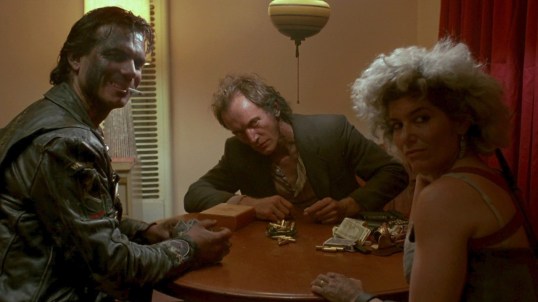
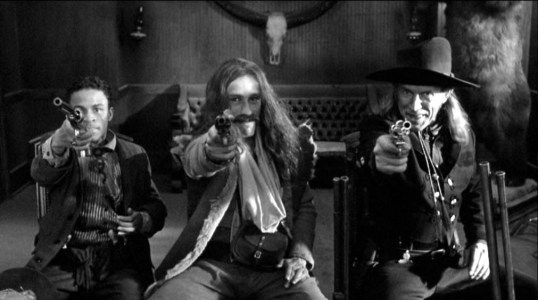
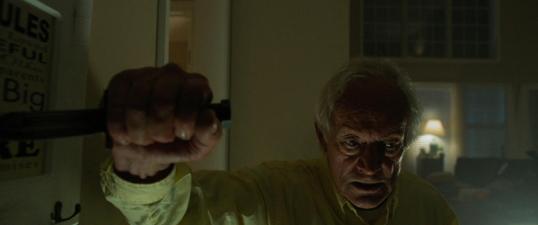
4 Shots From 4 Films is just what it says it is, 4 shots from 4 of our favorite films. As opposed to the reviews and recaps that we usually post, 4 Shots From 4 Films lets the visuals do the talking!
Today, Lance Henriksen is 80 years old! In honor of this day, here are….





 Through the Shattered Lens