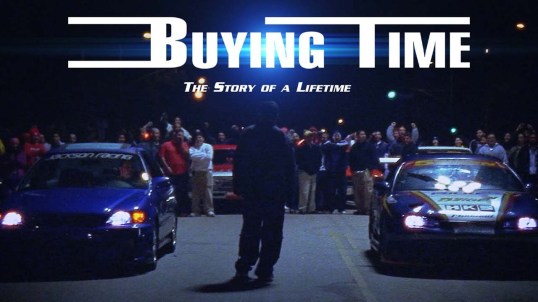
October Positivity: Buying Time (dir by Michael Cargile)


2019’s Buying Time opens in the future.

It’s not a particularly happy future.  Many things have been declared illegal and forbidden, all in the name of the public good.  Secret police roam the streets.  Those who refuse to obey the system are arrested and held in dark cells.  It’s all for the benefit of the people, of course.  (Not me, us and all that nonsense.)

Adam Demus (Drew Garrett) is arrested for street racing and tossed into a dark cell.  Adam is a rebel, though he doesn’t seem to be sure what exactly it is that he’s rebelling against.  To Adam’s shock and anger, his father, Nick (Jake Head) is brought into the cell.  It is quickly established that Nick used to be an abusive drunk and that he regularly beat both Adam and Adam’s mother.  Adam wants nothing to do with Nick but Nick asks him to just listen to his story.  Seeing as how the cell is locked, Adam doesn’t really have much choice.  While Nick speaks, the government monitors everything that he says.  They’re just waiting for him to say one certain thing so that they can make their move.

Nick talks about his youth and how he was once also a street racer.  In the years before the new government came to power, Nick would spend every night racing against two brother, Ben and Pete.  But then, one night, a terrible accident landed Ben in the hospital.  Having nearly died, Ben declared himself to be a Christian and, instead of racing, he now wanted to preach.  Pete wasn’t particularly happy about that.  In fact, outside of their mother and the local preacher, no one was happy about that.  Ben would still go to the street races but now, he would try to preach and he would go on and on about how breaking the law went against God’s will.  Finally, Nick called Ben’s bluff and challenged him to a race.  If Ben won the race, he would be allowed to preach and everyone would listen to him.  If Nick won the race …. well, who knows?  I guess Ben would just have to go to some other illegal event and try to preach there.  (One can only imagine how his message would have gone down at a cockfight.)  Anyway, if you’ve ever seen a faith-based film, you’ll know that this all leads to tragedy, a sudden conversion, and eventually a scene where the government declares that Christianity is now forbidden.

Due to its structure, Buying Time has an odd feel to it.  Indeed, it feels like two separate movies and it wouldn’t surprise me to learn that the interrogation scenes were conceived and added after the scenes involving Ben and Pete.  All in all, it’s a pretty heavy-handed film and Ben and Pete are not particularly likable characters.  Ben is preachy.  Peter is resentful.  Even their mom is a bit full-of-herself.  That said, I do like fast cars and I don’t care much for the government so I appreciated the film on those two levels.  It’s interesting to note that, as a viewer, I never really bought Ben’s sudden conversion to Christianity but I totally believed that the government would have no problem taking away everyone’s rights.  I guess that says a lot about the state of the world today.
The TSL’s Horror Grindhouse: Bigfoot (dir by Bruce Davison)


In this 2012 Asylum production, the legendary Bigfoot is revealed to just be a big gorilla who wants to sleep for the winter.  In fact, Bigfoot seems to have more in common with King Kong than the hairy, humanoid that people have been reporting seeing for over a hundred years.  Unfortunately, all of the hunters and the tourists and the noise from a local music festival keep interrupting Bigfoot’s slumber.  It turns out that Bigfoot is not a morning monster and tends to wake up grumpy.  When Bigfoot is in a bad mood, he turns over RVs, steps on hunters, and tries to destroy Mt. Rushmore.

Concert promoter Harley Henderson (Donny Bonaduce) wants to kill Bigfoot and turn his body into a tourist attraction.  Environmental activist Simon Quinn (Barry Williams) wants to not only protect Bigfoot but to also perform protest-themed folk music.  Harley and Simon were once musical partners, until Simon decided that he would rather protect endangered species and Harley decided to become a businessman.  Now, they hate each other and are constantly on the verge of coming to blows.  Meanwhile, Sheriff Alvarez (Sherilyn Fenn) just wants to keep her town safe from the creature’s rampage.  You read that right.  This film is The Partridge Family vs. The Brady Bunch with Twin Peaks trying to keep the peace.  If you’re wondering how The Asylum convinced Bonaduce, Williams, and Sherilyn Fenn to all appear in a low-budget film about a giant gorilla menacing South Dakota, consider that they also convinced Bruce Davison to appear in it as well.  In fact, Bruce not only stars but he directed the film as well!  I mean, Bonaduce and Williams were probably just happy that someone was calling them and this film was made before Twin Peak: The Return reignited Fenn’s career.  Bruce Davison, however, has an Oscar nomination to his name.  Of course, before one gets too snarky, it’s important to remember that actors have bill to pay, just like the rest of us.  Sometimes, those bills are played by appearing in Shakespeare.  Sometimes, they’re paid by appearing in Bigfoot.

Actually, no one should be ashamed about appearing in Bigfoot.  Like most of the films produced by the Asylum, Bigfoot is actually a lot of fun.  It’s not a film that’s meant to be taken seriously.  Instead, it’s basically a parody of the big-budget giant monster movies that come out of Hollywood, complete with a tacked-on environmental subplot and an endangered national monument.  Bigfoot is in on the joke.  The minute that Barry Williams picks up his guitar and starts to sing an insufferable folk song, it’s obvious that this film is laughing along with us.  Bigfoot was designed to be a silly film and it succeeds.  When taken on its own terms, it’s hard not to enjoy it.

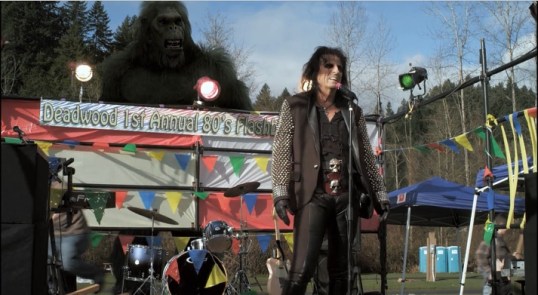
Finally, Alice Cooper appears in this film as himself, performing at Bonaduce’s concert.  After Alice complains about the crowd size and bemoans the indignity of going from being one of the world’s biggest stars to performing at a festival in South Dakota, Bigfoot literally kicks him off the stage.  Much like the film, Alice deserves some credit for be willing to poke fun at himself.

Horror Scenes That I Love: The Party Scene From The Rage: Carrie 2


While it’s certainly not as good as the original, I still think 1998’s The Rage: Carrie 2 is underrated.

In this scene, a bunch of dumbass jocks discover that they’ve bullied the wrong girl.  Because I occasionally wear glasses, this scene freaks me out.

International Horror Film Review: Hostile (dir by Mathieu Turi)


The world is ending and you’re stuck in the desert. The vehicle you were driving has flipped over. You’ve got a severely broken leg and can’t move. The few remaining humans in the city have informed you that a rescue party will not be sent out until the sun rises. And you’ve got a deformed creature circling your crashed van, trying to find a way to enter.  You have to figure out how to survive the night while being hunted by some sort of mutant and you also have to mentally work out your relationship issues while doing so.

(It may sound like a nightmare but if you ever break up with someone while on a road trip through South Texas and then you have to ask that person to give you a ride home, it can be a reality.  Not that I’m speaking for personal experience, of course….)

That’s the situation in which Juliet (Brittany Ashworth) finds herself in the 2017 French film, Hostile.  While Juliet tries to survive the night, she flashes back to the life and the world she used to know. She remembers how she was once a nearly illiterate drug addict who met and fell in love with an art gallery owner named Jack (Grégory Fitoussi). After discussing the paintings of Francis Bacon and the role of fate in everyone’s life, Jack took it on himself to lock Juliet in an apartment until she overcame her addiction. Now, that’s not something that most professionals would necessarily recommend trying, especially when the addict and the apartment owner barely know one another.  In fact, I felt it was a bit presumptuous on Jack’s part.  Who is Jack to decide that he’s going to be the one to save Juliet’s life?  Jack may think that his intentions are good but there’s something a bit too self-righteous and controlling about Jack, even if he is trying to keep someone from self-destructing.  He’s every preachy Intervention producer come to life.  He’s someone who most viewers will feel a bit of ambiguity about.

The audience might not be totally comfortable with what Jack does but, for Juliet and Jack, it all works out and they fall in love. Juliet remembers the good times with Jack and she also remembers how their relationship eventually fell apart and how the world itself eventually started to end, almost as if their relationship issues were a bit of a metaphor for the fragility of society.  Meanwhile, the creature outside the van continues to try to find its way inside.

Hostile is a claustrophobic and atmospheric end-of-the-world thriller from director Mathieu Turi. The inside of that van is a properly ominous location and it’s impossible not to sympathize with Juliet as she struggles to figures out how to survive the night. The film’s deliberate pace takes some getting used to and the final twist requires a certain suspension of disbelief but both Ashworth and Fitoussi are well-cast as Juliet and Jack. In the end, the film is a moody and interesting look at the end of the world, albeit one that is marred by the heavy-handedness of its script.

8 Shots From 8 Horror Films: 1997–1999


4 Or More Shots From 4 Or More Films is just what it says it is, 4 shots from 4 of our favorite films. As opposed to the reviews and recaps that we usually post, 4 Shots From 4 Films lets the visuals do the talking!

This October, I’m going to be doing something a little bit different with my contribution to 4 (or more) Shots From 4 (or more) Films.  I’m going to be taking a little chronological tour of the history of horror cinema, moving from decade to decade.

Today, we take a look at 1997, 1998, and 1999!

8 Shots From 8 Horror Films: 1997 — 1999

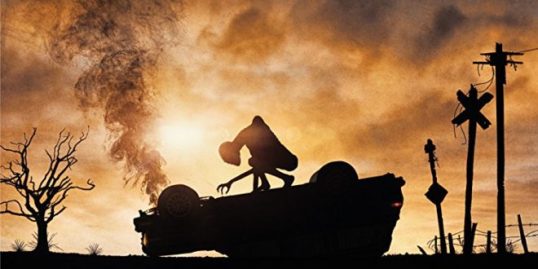
I Know What You Did Last Summer (1997, dir by Jim Gillespie, DP: Denis Crossan)


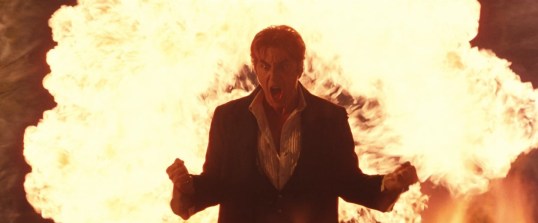
The Devil’s Advocate (1997, dir by Taylor Hackford, DP: Andrzej Bartkowiak)


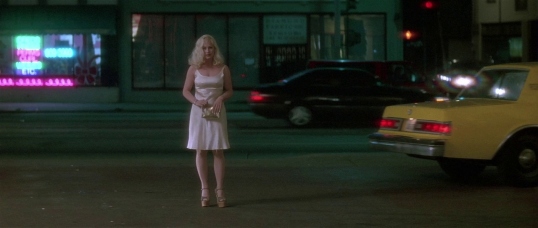
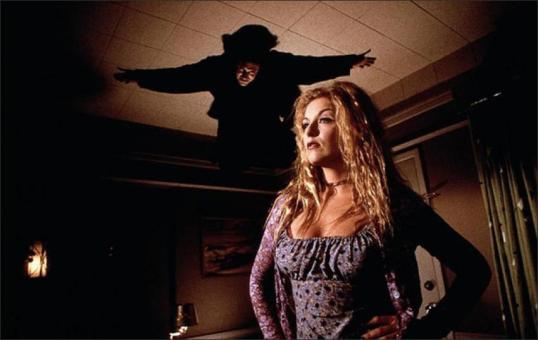
Lost Highway (1997, dir by David Lynch, DP: Peter Deming)


Vampires (1998, dir by John Carpenter, DP: Gary B. Kibbe)


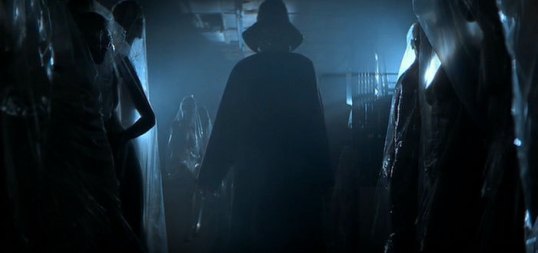
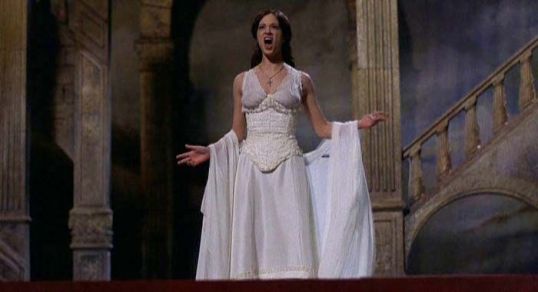
The Phantom of the Opera (1998, dir by Dario Argento, DP: Ronnie Taylor)


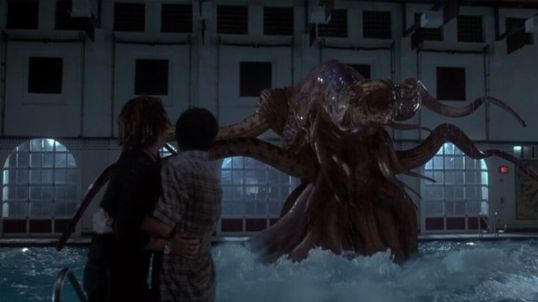
The Faculty (1998, dir by Robert Rodriguez, DP: Enrique Chediak)


The Rage: Carrie 2 (1999, dir by Katt Shea, DP: Donald M. Morgan)


The Sixth Sense (1999, dir by M. Night Shyamalan, DP: Tak Fujimoto)

Horror Film Review: Hellraiser (dir by David Bruckner)


Last night, I started watching the Hellraiser reboot.  I fell asleep about 40 minutes in.

That’s never a good sign, especially when it comes to a horror movie.  A horror movie is supposed to be so scary that you can’t sleep.  It’s supposed to be so intense and disturbing that it gives you nightmares, even if you actually do manage to get some rest.  A horror movie is supposed to haunt you, not bore you.  That’s especially true of the Hellraiser movies, which are defined by their grotesque imagery and the terrifying implications of the Cenobites.

This morning, I finished watching the movie.  Somehow, I did not fall asleep again.

The Hellraiser reboot asks the question: “If Doug Bradley isn’t playing Pinhead, is there any point to watching this crap?”

Based on this movie (and, to be fair, the two previous Hellraisers as well), the answer would appear to be no.  Jamie Clayton takes over the role of Pinhead in the new Hellraiser and the results are a bit underwhelming.

I mean, the Cenobites still look somewhat frightening, don’t get me wrong.  And the puzzle box is a huge part of the reboot’s plot.  And there’s still a lot of blood and a lot of talk about how suffering can be music and a lot of people get ripped apart by magical space chains.  But, with all that in mind, the Cenobites still come across as being kind of boring.  They’ve gone from being frightening creatures beyond imagination to just being generic bad guys.

A big problem is that Jamie Clayton never quite captures the all-encompassing contempt for existence that Doug Bradley brought to the role.  Bradley played Pinhead as a regal sadist, delivering his lines with a withering condescension.  As played by Bradley, Pinhead was really neither good nor evil.  He had transcended such concerns in his search for experience.  Hence, he could get away with announcing that he and the Cenobites were angels to some and demons to others.  In the original Hellraiser, Pinhead (and Bradley) made his first appearance by saying, “You called, we came,” and that pretty much summed up what made the character so frightening.  Bradley’s Pinhead had no concern as to the circumstances that led to him being  called and he certainly had no patience for anyone who thought they could talk their way out of the situation.  Bradley’s Pinhead was beyond such concerns and that made him all the more frightening.

Jamie Clayton’s Pinhead, on the other hand, is smug and not much else.  She’s playing a game with humanity but that leaves her vulnerable to losing.  That’s a mistake that Bradley’s Pinhead would not have made.  (Or, at least, he wouldn’t have made it in the original movie.  The Hellraiser sequels are a different story.)  There’s nothing particularly regal about Clayton’s Pinhead.  She’s just another horror villain.  With her demanding a sacrifice from anyone who cuts themselves on the puzzle box, she’s not that much different from the little girl in Ring.

(In Clayton’s defense, she’s not the first person to replace Doug Bradley as Pinhead.  Bradley also did not appear in the two previous Hellraiser films, Revelations and Judgment.  Bradley felt the scripts were poorly written and, perhaps more to the point, Dimension Films wanted him to take a pay cut.)

As for the reboot itself, it’s about Riley (Odessa A’zion), a recovering drug addict who, along with her boyfriend Trevor (Drew Starkey), steals the puzzle box and then cuts herself on the box which leads to the Cenobites stalking all of her annoying friends.  Riley is an incredibly unlikable character and her friends are kind of whiny so who cares?  Gordan Visnjic plays a decadent businessman who is trying to manipulate the box to his own ends.  Visnjic has a good scene at the start of the film, one that perfectly captures the privileged ennui that would lead to someone getting involved with the Cenobites.  But, eventually, even Visnjic is reduced to being a one-dimensional character.

The main lesson of this Hellraiser film (and the previous two films as well) is that things work better with Doug Bradley than without him.

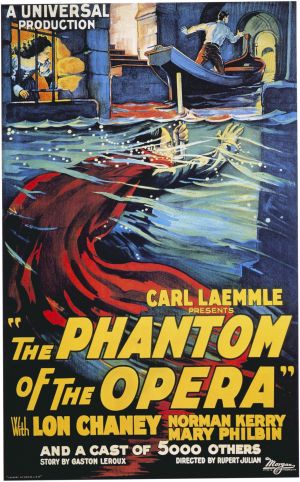
Horror On The Lens: The Phantom of the Opera (dir by Rupert Julian)


Today’s horror movie on the Shattered Lens is both a classic of silent era and one of the most influential horror films ever made.  It’s one that I previously shared in 2013, 2015, 2016, 2108, 2019, 2020, and 2021 but it’s such a classic that I feel that it is worth sharing a second (or fifth or even a sixth or perhaps an eighth) time.

First released in 1925, The Phantom of the Opera is today best known for both Lon Chaney’s theatrical but empathetic performance as the Phantom and the iconic scene where Mary Philbin unmasks him. However, the film is also a perfect example of early screen spectacle. The Phantom of the Opera was released during that period of time, between Birth of the Nation and the introduction of sound, when audiences expected films to provide a visual feast and Phantom of the Opera certainly accomplishes that. Indeed, after watching this film and reading Gaston Leroux’s original novel, it’s obvious that the musical was inspired more by the opulence of this film than by the book.

This film is also historically significant in that it was one of the first films to be massively reworked as the result of a poor test screening. The film’s ending was originally faithful to the end of the novel. However, audiences demanded something a little more dramatic and that’s what they got.

October Positivity: The Perfect Race (dir by Dave Christiano)


In this 2019 sequel to Remember The Goal, cross country coach Courtney Smith-Donnelly (Allee Sutton Hethcoat) finds herself coaching at the college level.  One of the runners that she coached in high school, Brittany (played by Bethany Davenport), is now the best runner at Bethany University.  In fact, she’s the second best runner in the nation!  Coach Michaels (Clarence Gilyard, Jr.) brings in Courtney to work with Brittany while he deals with some health complications.

So, pretty much all the stuff that happened during the first movie happens during the second.  Once again, everyone doubts Courtney’s training methods.  Once again, Courtney takes it upon herself to tell all of the runners how to live their lives.  Brittany’s father gets angry when Courtney tells Brittany to run slower than usual.  Considering that Courtney is now a local celebrity because of how well the cross country team did in Remember the Goal, you might think that the other coaches would know about her techniques and would prepare for them.  But nope.  No one has any faith in Courtney’s ideas but she’s vindicated in the end.  In fact, over the course of two movies, Courtney is never once incorrect about anything.  To be honest, that’s kind of annoying.

The main difference between Remember The Goal and The Perfect Race is that Courtney is a thousand times more preachy in the sequel.  In the first film, she cited a verse from Corinthians and later talked about Jesus raising a girl from the dead and that was about it.  In The Perfect Race, it’s rare that a scene goes by without Courtney saying, “Do you remember the story about….” and then offering up a Biblical lesson.  It gets a bit tiring and, again, it’s hard not to get bored with Courtney having all of the answers all of the time.  For example, when she’s told that the track team doesn’t practice when its raining, she promptly asks everyone in the room to raise their hand if their parents are divorced.  Courtney goes on to explain that, if you’re not willing to train while it’s raining, you probably won’t be able to make a marriage work either.  WHAT!?  You know what else might end a marriage?  Dying of pneumonia.

For a film about athletics, The Perfect Race is a very talky film.  Unfortunately, most of the conversations are very repetitive.  When Courtney tells Brittany to slow down during one of her races, we got several scenes in a row of people asking each other why Courtney did that.  Brittany’s father asks Brittany why Courtney told her to slow down.  Brittany replies that she doesn’t know.  In the very next scene, Brittany’s father tells Coach Micheals about what Courtney told Brittany to do.  Coach Michaels asks Brittany’s father why Courtney did that.  “I don’t know,” Brittany’s father replies.  Coach Michaels asks Brittany why Courtney did that.  “I don’t know,” Brittany replies.  In the next scene, two rival coaches talk about Brittany slowing down.  One coach asks, “Why did she do that?”  “I don’t know,” the other coach replies.  And it just kept going and going until eventually, I wanted to throw something at the TV.

Anyway, my frustrations aside, Courtney is triumphant at the end of the movie, largely because Courtney is perfect and never makes any mistakes.  Did I mention how annoying that can get?

This film inspired me to go for a run, if just to have an excuse to stop watching it.  And, before anyone asks, I do not like carrots.

The TSL’s Horror Grindhouse: Scissors (dir by Frank De Felitta)


The plot of the 1991 film, Scissors, is not easy to describe. That’s not because the plot is particularly clever as much as it’s because it doesn’t make much sense.

Basically, Sharon Stone plays a woman named Angela Anderson. She is oddly obsessed with scissors and terrified about getting close to anyone. She’s been getting hypnotherapy from Dr. Carter (Ronny Cox) in an effort to understand why she’s so repressed but she doesn’t seem to be getting anywhere. This could possibly have something to do with the fact that Dr. Carter is continually distracted by the adulterous activities of his wife, Ann (Michelle Phillips).

Angela lives in a lonely but surprisingly big apartment with only her cat for company. Her cat is named Midnight and he’s a black cat so he automatically became my favorite character in the film. Living next door to her are two twin brothers. Alex (Steve Railsback) is a soap opera star. Cole (Railsback, again) is an artist in a wheelchair who continually paints cartoonish pictures of Angela being attacked by a man with a big red beard.

Then, one day, Angela goes out to buy some scissors. When she returns and gets on the elevator to head back up to her apartment, she’s attacked by a man …. A MAN WITH A RED BEARD! Fortunately, Angela is able to stab him with her scissors. After the man with the red beard runs off, Angela is discovered in the elevator by Alex and Cole. Alex and Angela fall in love. Cole’s not too happy about that.

Following so far?

Angela get a call about a job interview, one that requires her to go to a stranger’s apartment. Despite the fact that the film has spent nearly an hour setting up Angela as being intensely agoraphobic, she has no problem going to this apartment. However, once she enters the apartment, she finds herself locked in! She also discovers that the red-bearded man is also in the apartment. Fortunately, he’s dead. Unfortunately, it appears that he was killed by Angela’s scissors. There’s also a raven in the apartment. The raven continually taunts Angela, saying, “You killed him!” Let’s just be happy that Edgar Allan Poe wasn’t around to see this.

Trapped in the apartment, Angela has flashbacks to her past. Is Angela the murderer? Is all of this just happening in her mind? Or is someone trying to drive her over the edge?

Though Scissors is set up as a psychological horror film, it’s really more of an extended acting exercise for Sharon Stone. Stone wanders around the apartment. She talks to herself. She had a nervous breakdown or two. She discusses life with a puppet. Every single scene seems to be designed to make audiences go, “Wow, she really can act!” but, despite all of the histrionics on display, Angela is still a very one note character. By making her obviously unstable from the start, the film doesn’t really leave the character with much room to develop or take us by surprise. The film attempts to end on a bit of an ambiguous note as far as Angela’s character is concerned but that type of ambiguity has to be earned. There’s nothing to Stone’s performance to indicate that there’s anything about Angela that isn’t totally on the surface. To suggest that there was more to her than originally appeared is to insult the audience’s ability to discern hidden depths.

The film does eventually wrap up its mystery and present a solution of sorts. Unfortunately, it’s a totally unsatisfying solution and one that’s dependent on otherwise intelligent people coming up with a ludicrously overcomplicated scheme to deal with one not particularly complicated problem. It’s all pretty forgettable but at least the cat survives.