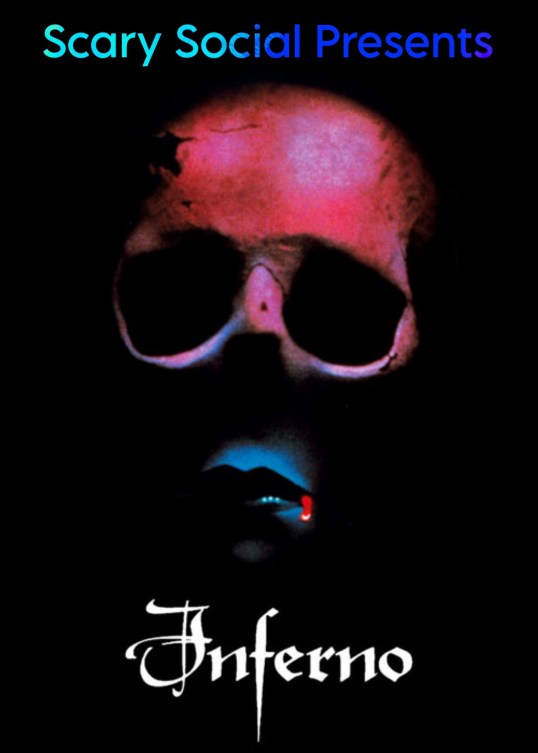
Inferno (1980, dir by Dario Argento, DP: Romana Albano)
As some of our regular readers undoubtedly know, I am involved in a few weekly live tweets on twitter. I host #FridayNightFlix every Friday, I co-host #ScarySocial on Saturday, and I am one of the five hosts of #MondayActionMovie! Every week, we get together. We watch a movie. We tweet our way through it.
Tonight, for #ScarySocial, I will be hosting 1980’s Inferno! Dario Argento’s sequel to the original Suspiria is one of his best films, a dream-like exploration of the dark and the disturbing. I can’t wait to share it with everyone!
If you want to join us on Saturday night, just hop onto twitter, start the film at 9 pm et, and use the #ScarySocial hashtag! The film is available on Prime. I’ll be there co-hosting and I imagine some other members of the TSL Crew will be there as well. It’s a friendly group and welcoming of newcomers so don’t be shy.
As some of our regular readers undoubtedly know, I am involved in a few weekly live tweets on twitter. I host #FridayNightFlix every Friday, I co-host #ScarySocial on Saturday, and I am one of the five hosts of #MondayActionMovie! Every week, we get together. We watch a movie. We tweet our way through it.
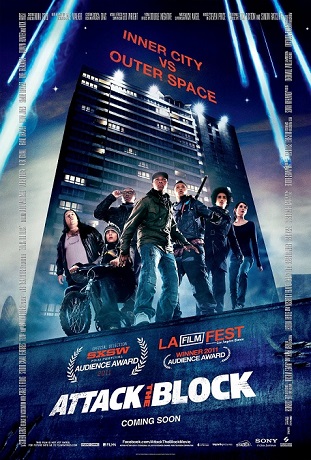
Tonight, at 10 pm et, #FridayNightFlix has got 2011’s Attack the Block!
If you want to join us this Friday, just hop onto twitter, start the movie at 10 pm et, and use the #FridayNightFlix hashtag! It’s a friendly group and welcoming of newcomers so don’t be shy.
Attack The Block is available on Prime and Tubi! See you there!
Amityville Emanuelle is the latest film about the dumbass Amityville Haunting.
In order to watch any of the many films about the supposed haunted house in Amityville, New York, you need to be aware of two real-life events.
In 1974, a 23 year-old junkie named Ronald DeFeo, Jr. gunned down his entire family in their Amityville home. DeFeo first claimed that unknown gunmen had killed his family while he was out. He then changed his story and said that he killed his family but he did it because he knew they were plotting to kill him. He then suggested that the whole thing was a mafia hit. He then moved on to claiming that his sister was the one who actually killed everyone. And, finally, he claimed that he had been possessed by demonic spirits.
One year later, the Lutz family moved into the Amityville House. After a month, the Lutzes left the house and George Lutz claimed that the house was haunted and that the family had been forced to flee for their lives. Thanks to a book and a few movies based on that book, the Lutzes made some money and eventually ended up suing a lot of other people in order to make even more money. Subsequent owners of the house have never reported anything strange happening while living in the house, other than strangers stopping by to view the supposedly haunted structure.
So, we can either believe that Ronald DeFeo was a junkie who killed his own estranged family or we can accept that the Devil took one look at Ronald DeFeo shooting up heroin and decided, “I’m tired of possessing the innocent and the naïve. I’m going to possess someone who is already so screwed up that no one will even notice that he’s been possessed. That’ll show ’em!”
And we can either believe that a bunch of demons chased George and Kathryn Lutz from their home or we can believe that the Lutzes looked at the success of books and films like The Exorcist and The Omen and they decided that they might as well cash in as well.
Amityville Emanuelle accepts, from the start, the everything was due to the paranormal, which is fine. It’s a movie and Occam’s razor goes out the window when it comes to the movies. George Lutz’s daughter, Laura (Dawn Church), moves into a new house and is soon visited by a strange woman who claims that she is delivering some of George’s belongings. Laura discovers that George owned an urn that was full of Ronald DeFeo’s ashes. Apparently, George and DeFeo had a psychic connection and George, who is insinuated to have been some sort of an occultist, knew that DeFeo was going to murder his family before he even did it.
(Wow, those are some pretty mean things to say about the late George Lutz, who was a real person and not really around to defend himself. Then again, George Lutz would be totally forgotten today if not for the fact that he made up a bunch of stuff about a haunted house so really, Lutz being portrayed as an occultist feels like karma.)
Laura soon finds herself acting in strange ways, picking up random men at bars and then barely noticing when they’re subsequently killed by someone who looks just like Ronald DeFeo.
Meanwhile, Ronald DeFeo’s son, Gordon (Shane Ryan-Reid, himself a director of transgressive films), makes the mistake of using a Ouija Board with his friends and he’s soon having visions of his father killing people.
(Now, I know that some of you are now saying, “Where does Emanuelle fit in with this?” because, after all, the symbol of sexual freedom and experimentation is namechecked in the film’s title. Well, Emanuelle really doesn’t fit into it, unless you include the scene where Laura goes to a bar and picks up two men. But those watching this film because they’re expecting it to be some sort of soft-core haunted house flick are going to be disappointed.)
Amityville Emanuelle is a low-budget and rather dumb film but it is at least partially redeemed by the fact that it doesn’t appear to be taking itself seriously at all and there’s no attempt to convince the viewer that they’re somehow watching anything that could be based on fact. There’s not much in the way of suspense and both the gore and the sex are rather tame but there is a medium (played by Saint Heart) whose generally annoyed attitude is occasionally fun to watch. The Amityville Haunting has always been a particularly stupid story and the cynicism of the majority of people who continue to try to sell it as being fact has always been more than a bit icky so, at this point, Amityville Emanuelle is kind of what the legend deserves.
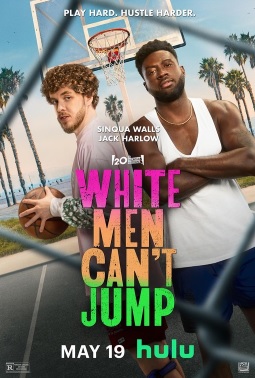
Hulu’s White Men Can’t Jump is the story of two aging basketball players who have never lived up to their potential but who have yet to totally give up on their dreams.
Even when he was in high school, Kamal Allen (Sinqua Walls) was considered to be one of the best basketball players in the country. A lot of that was due to how he was raised by his father, Benji (Lance Reddick, giving a strong performance in one of his final roles). Benji was a basketball star himself and, as we see in several flashbacks, he trained Kamal to be the best. Benji was so obsessed with turning Kamal into a great player that he even drove away Kamal’s mother. Benji taught Kamal all that he needed to know about playing basketball but not enough about how to survive once his playing days were over. Unfortunately, after Benji was diagnosed with MS, Kamal lost his concentration. When he responded to being taunted during a game by going into the stands and punching a guy out, Kamal ended up getting arrested and he also ended up losing his chance of entering the NBA.
Jeremy (Jack Harlow) was a college basketball star who blew out his knee and lost his chance to go pro. He makes his living hustling other basketball players, knowing that they’ll assume that he can’t shoot because he’s white. He also sells highly suspicious health tonics and he spends a lot of time meditating. Though he can barely walk without taking his pain pills first, Jeremy still wants to make the NBA. When he hears that stem cell treatment might help his knee, Jeremy starts to scheme to win the money to cover the cost.
Together, Jeremy and Kamal hustle other players, make some money, and become unlikely friends.
It took me three days to get through White Men Can’t Jump, largely because the film itself was so boring that I struggled to actually pay attention to it for more than a few minutes at a time. This film is a remake of a 1992 film that starred Wesley Snipes and Woody Harrelson. I have not seen the original White Men Can’t Jump but I have seen enough films featuring both Snipes and Harrelson to know that they are both talented and charismatic actors who both have strong comedic timing. In short, they don’t have much in common with the two leads of the new version of White Men Can’t Jump. In the role of Kamal, Sinqua Walls is solid but dull. Walls is convincing but he’s never particularly interesting. Making his film debut in the role of Jeremy, rapper Jack Harlow is so incredibly obnoxious that I found myself wanting to throw something at the screen whenever he popped up. The film repeatedly emphasizes that no one wants to play with Jeremy because he’s white but I think it’s equally probable that they’re just reacting to the fact that he is an incredibly annoying human being. Director Calmatic does all the usual choppy editing and slow-motion dunking that most viewers have come to expect from movies about basketball but with little chemistry between the leads and a script that tends to repeat the same jokes over and over again, this film never takes flight.
Single mother Grace Allen (Nia Long) goes on a week-long vacation to Colombia with her boyfriend, Kevin (Ken Leung). In doing so, she leaves her 18 year-old daughter, June (Storm Reid), alone at the house. She tells June to be responsible. She tells June to only use the emergency cash in case of emergencies. She tells June not to throw any wild parties. She tells June to clear out her voice mail so Grace can actually leave a message. As soon as Grace leaves, June starts spending the emergency money on beer and parties and she also fails to clear out her voice mail.
It’s hard to blame June, however. She’s 18 and she’s rebellious and it doesn’t help that her mother is extremely overprotective. June feels that there is something off about Kevin and his awkward attempts to talk to her do nothing to make her like him. June spends most of her time wishing that she could have spent more time with her father, James (Tim Griffin), a man who she can barely even remember.
At the end of the week, June drives out to the airport. She makes a sign that reads, “Welcome back from prison,” and she stands in the airport, waiting to see her mom and Kevin. However, neither one of them shows up. The plane has landed. The passengers have disembarked. But Grace and Kevin are nowhere to be seen. June realizes that they are …. MISSING!
Missing was made by the same production team behind Searchingand, like that film, it’s a screenlife thriller, one that is told via computer desktops, security cameras, smartphones, and a smartwatch. Early on, June watches an episode of a true crime show called Unfiction, which is based on the missing person case at the heart of Searching, establishing that the two films take place in the same universe. Much as with Searching, the app-heavy visual style of Missing feels a bit gimmicky but it’s also undeniably effective. Indeed, it’s interesting to think that, even as technology connects us in new ways and as cameras film our every move, people can still somehow disappear off the face of the Earth. As June goes through both Grace and Kevin’s social media and email accounts, the film’s format lets us view the world through her eyes. Like her, we read every email and search for hidden meanings and missed clues.
The mystery at the heart of Missing is an intriguing one and the film is full of twists and turns. Unfortunately, many of the film’s later twists are more improbable than clever. For all of the film’s strengths, things pretty much fall apart during the film’s final third. That’s when the film comes up with a twist that’s surprising only because of how little sense it makes. It’s one thing to fool an audience by being clever. It’s another thing to fool an audience by just pulling a plot point out of thin air. The final big twist requires a huge suspension of disbelief on the part of the audience but Missing isn’t a horror or a sci-fi or a Fast & Furious-style action film. It’s a mystery and anyone who was actually trying to look for clues and come up with the solution on their own would have every right to be annoyed by the way the film handles its finale.
That said, it’s a well-acted film and, much like John Cho in Searching, Storm Reid deserves a lot of credit for bringing some genuine emotion to the lead role. With Reid in the lead role, Missing manages to become something more than just the latest twist on the found footage genre. I also liked the performance of Joaquim de Almeida as Javi, the local Colombian who aids June in the search for her mother. (As long as we’re going to keep spinning off new Searching and Missing films, I think the next one should be about Javi.) There are some genuinely funny moments in the film. Be sure to keep an eye on the messages that June gets from Angel (Michael Segovia) over the course of the film. Despite its flaws, Missing is an enjoyable thriller and, undoubtedly, it will make a good episode of Unfiction.
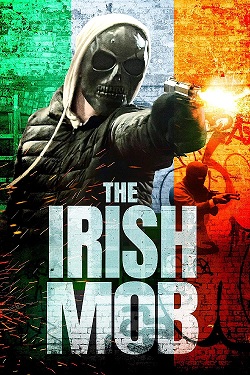
Valentino “Val” Fagan (played by Rob McCarthy) was named after Rudolph Valentino but he didn’t grow up to be a chivalrous lover, the type whose romantic eyes make hearts swoon. Instead, Val grew up to be a mobster, the head of the Irish mob. His eyes view the world with mistrust and anger. As he tells us in the cocky voice-over that runs through The Irish Mob, Dublin is his city. Whether its drugs, theft, or dealing weapons with the IRA, Val is involved.
However, it’s not easy being the boss.
For one thing, Val has the Garda after him. Detective Liz Delahunt (Pauline O’Driscoll) is obsessed with taking Val down. She’s got the wall of her office set up with one of those crazy charts that links Val and his associates to a series of unsolved murders throughout Ireland. Liz is clever and she’s determined. In one of the film’s funnier moments, she puts Val under a protection order so that he ends up with Detective Kevin Hogan (David Greene) following him around 24 hours a day and staking out his home. Whenever Val looks out of a window, Hogan gives him a friendly wave.
As well, the Corrigan Brothers, who are Val’s Amsterdam-based drug connections, have just lost a fairly large shipment of drugs and the money that they would have made from selling them. The Corrigans expect their associates to kick in to help make up for the loss and it’s pretty clear that failure to do so will lead to something not good happening. Val may be rich but he’s not that rich and he soon finds himself taking risks in order to raise the money. Right when it appears that Liz’s funding has been cut, one of Val’s brazen robberies leads to Liz being told that she’ll have all the money that she needs to pursue her case against Val.
Finally, there’s Dessie Corrigan (George Bracebridge), a monstrous sociopath who has just been released from prison and who is looking to get back into the Dublin rackets. A misunderstanding leads to Corrigan deciding that Val sold him out to the Garda. Corrigan soon starts to attack Val’s men and makes plans to come after Val himself. As with so many of the criminals in The IrishMob, Corrigan is an idiot but he’s a very determined idiot. He’s also someone who can easily be manipulated by those looking to take over Dublin.
Val has his ways of dealing with the stress. He genuinely loves his son and comes about as close to being human as he probably can whenever he’s just being a father. Though he spends a lot of time fighting with his wife, he does have a mistress who he enjoys spending an hour or two with. And, of course, there’s always cocaine. The more stressed Val gets, the more he does. The more paranoid Val becomes, the more people he kills. It’s not easy being in charge but, as Val tells us, Dublin is his city,
Plotwise, The Irish Mob is a standard Mafia movie, complete with a philosophical voice over and scenes of random violence. Val reached his position of power by being smarter than everyone else but, now that he’s in charge, he’s forced to depend on people who are stupid, sadistic, and impulsive. Val thinks that he can control the cycle of violence but what he doesn’t understand is that the cycle controls him and not the other way around. Rob McCarthy gives a steely performance as Val and the Dublin locations give the film a gritty feel. Unfortunately, the plot itself doesn’t really feature many surprises and the film’s concluding twist, while being appropriately tragic, is still one that most audiences will see coming from a mile away. Then again, that may be the point. Val’s fate is as predestined as those who came before him and those who will come after him. In the end, the cycle just keeps repeating.
As some of our regular readers undoubtedly know, I am involved in hosting a few weekly live tweets on twitter and occasion ally Mastodon. I host #FridayNightFlix every Friday, I co-host #ScarySocial on Saturday, and I am one of the five hosts of Mastodon’s #MondayActionMovie! Every week, we get together. We watch a movie. We snark our way through it.
Tonight, for #MondayActionMovie, the film will be 1994’s Crackerjack! Christopher Plummer’s in it so you know it has to be good!
Following #MondayActionMovie, I will be guest-hosting the #MondayMuggers live tweet! We will be watching 1982’s TheBeastmaster, starring Marc Singer, Tanya Roberts, and Rip Torn! The film is on Prime!
It should make for a night of fun viewing and I invite all of you to join in. If you want to join the live tweets, just hop onto Mastodon, pull up Crackjack on YouTube, start the movie at 8 pm et, and use the #MondayActionMovie hashtag! Then, at 10 pm et, switch over to Twitter and Prime, start TheBeastmaster, and use the #MondayMuggers hashtag! The live tweet community is a friendly group and welcoming of newcomers so don’t be shy.
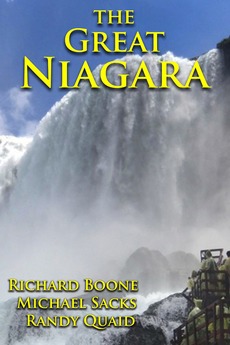
Welcome to Retro Television Reviews, a feature where we review some of our favorite and least favorite shows of the past! On Sundays, I will be reviewing the made-for-television movies that used to be a primetime mainstay. Today’s film is 1974’s The Great Niagara! It can be viewed on YouTube!
The Great Niagara takes place during the Great Depression.
With the world mired in economic uncertainty and the threat of war right around the corner, people are more desperate than ever for entertainment. One of the latest fads is attempting to conquer the Niagara by going over the falls in some sort of raft. If done correctly, it can lead to fame and fortune. But, if one mistake is made while trying to steer the raft against the rapids and the rocks, it can lead to death. In fact, death is the usual outcome of most people’s efforts to conquer the Niagara. It’s actually illegal to try to ride anything over the falls but people still try to do it and crowds still gather to watch the attempts.
Old Aaron Grant (Richard Boone) is obsessed with conquering the Niagara but, because he’s been injured in too many attempts, all he can do now is sponsor and try to help others who are willing to take the risk. Aaron is the type who will look out at the Niagara and angrily shake his fist. He hates the river and he hates the falls but they’re also the only thing that gives his life meaning. After Aaron’s latest protegee, Ace Tully (Burt Young), fails in his attempt to go over the falls, Aaron starts to put pressure on his sons to make the attempt. Lonnie Grant (Michael Sacks) knows that Aaron has allowed his obsession to drive him mad and he’s also promised his wife, Lois (Jennifer Salt), that he won’t go over the falls. However, Carl Grant (Randy Quaid) is desperate for his father’s approval and it’s not long before he’s getting ready to enter the barrel and risk his life.
The Great Niagara is a short but interesting film. It’s based on historical fact. There’s been a long history of people risking their lives with stunts at Niagara Falls. A few years ago, there was a live television broadcast of someone walking over the falls on a tightrope. It was a huge rating success and it was, of course, sold as a tribute to the human spirit. That said, it’s entirely believable that a good deal of the people watching were doing so because they were curious about what would happen if the guy fell off the wire. By that same token, the crowds that we see in The Great Niagara are far more concerned with seeing someone go over the falls than they are with whether or not that person survives the experience. Richard Boone gives an obsessive, half-mad performance as Aaron and Michael Saks does a good job as the voice of reason. Randy Quaid gives a poignant performance as poor Carl, who is so desperate for his father’s approval that he’s willing to risk his life to try to get it. That said, the true star of the film is the Niagara itself, which is beautiful but obviously dangerous. When Aaron shakes his fist at the falls, it’s hard not to feel that the Niagara isn’t doing the same back at him.
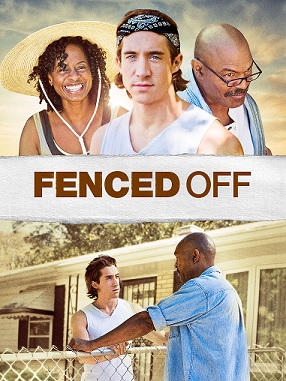
2011’s Fenced Off tells the story of Josh (Joshua Zirger) and George (Reggie Willis).
Josh is a young white social worker who has just moved onto a street where all of his neighbors are black. His mother worries that Josh and his wife, Anne, are going to become crime statistics. All of Josh’s friends tend to say things like, “Isn’t that neighborhood a little urban for you?” Josh’s dumbass brother thinks that it would be a good idea to show up at Josh’s house wearing a durag and pouring a bottle of wine out on the driveway. Josh is a nice guy but he sure does know a lot of dumb people.
Meanwhile, George (Reggie Willis) has lived on the block for 17 years. He’s not at all happy when Josh shows up and he goes out of his way to avoid talking to his new white neighbors. George’s best friend suggests that George might be a “bigot” but George denies it. He says that he has a lot of reasons to not want to talk to Josh. The fact that Josh is a dorky white guy is just one of them.
One week, while his wife is out of town, Josh’s life falls apart. He offends a group of teenagers when he assumes that they’re approaching him because they want to mug him. (Instead, they just want to return the $4.00 that he dropped while running.) He freaks out when he hears a gunshot in the distance and, when George makes a joke about gangs in the area, Josh briefly worries that George might be a gang member. Josh finds a white package on his property and automatically assumes that some drug dealers dropped a package of cocaine on his front lawn. George grabs the package and reveals that it just a bag of diapers.
It’s certainly a well-intentioned film and Josh and George are both portrayed as being complex characters who are sometimes right and sometimes wrong. There’s actually a rather insightful scene in which Josh attempts to soothe things over with George by talking about how his family struggled financially when he was a kid just for George to call him out for assuming that George must be from a poor background. When Josh argues that his best childhood friend was black, George wonders why every white guy claims to have had a black best friend who moved away in the 8th grade. George has a point with both comments. “I didn’t grow up rich” and “my best friend was/is black” are two of the most regularly repeated claims in white America today.
But, that said, Fenced Off doesn’t really work. Due to a lot of unnecesssary padding, the otherwise slight story unfolds a bit too slowly and the acting is often amateurish. The actor who played Josh’s brother especially tended to overact. (I’ve noticed that, when it comes to indie films like this one, it seems like there’s always at least one former theater kid who gets cast as a sidekick who proceeds to shout out all of his lines.) Fenced Off has good intentions but the film is ultimately left down by its execution.