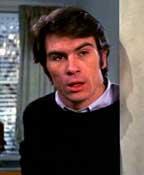
Lisa Marie Discovers All Good Things (dir. by Andrew Jarecki)


I’ll admit right now that I’m a true crime junkie.  Maybe it’s because I work for a lawyer or maybe I’m just morbid-minded but, for whatever reason, I am fascinated by this stuff.  And while we all love to watch a good mystery and see if we can solve it before everyone else, it’s the mysteries without a solution that hold a special grip on my imagination.  That’s why I was really looking forward to seeing the film All Good Things.  Directed by Andrew Jarecki and starring Ryan Gosling, All Good Things is based on not one true crime case but three!  (And two of those crimes remain unsolved to this day.)

All Good Things is based on the life of Andrew Durst, who was born into a wealthy New York family just to eventually find himself accused — at one time or another — of two murders and actually put on trial for a third.  Oh, and did I mention that in-between being accused of killing people, Durst also found the time to drop out of high New York society and, despite being a very wealthy man, wandering around the country like a homeless transient?  And, would you also believe that when Durst eventually ended up moving down to Galveston, Texas, he apparently also became a transvestite?  And once Durst was in Galveston, he ended up living in a run-down boarding house with another transient who Durst eventually ended up decapitating?  Of course, all of this happened long after the mysterious disappearance of his first wife and the execution-style shooting his best friend (who also happened to be the daughter of a Las Vegas mob boss).  Durst, it should be noted, has only been put on trial once and, in that case, was acquitted.  (For a better account of the various unproven allegations against Robert Durst, click here.)

Yes, Robert Durst is a man who has found himself at the middle of several very intriguing mysteries and All Good Things pretty much sticks to the facts of the case, recreating all the scenes that we Durst watchers are familiar with while leaving the ultimate question of Durst’s guilt or innocence ambiguous.  For legal reasons, the names are changed but that’s about it.  The film even begins with a title card telling us that the film is based on the Durst case even if Ryan Gosling is technically playing a character named David Marks.  We watch as David meets and romances sweet but lower class Katie (Kirsten Dunst) despite the disapproval of his wealthy father.  (David’s father is a real estate mogul who owes his fortunes to the peep shows and grindhouses on 42nd Street.)  Once David and Katie have married, we watch the marriage turn into a nightmare as David grows increasingly abusive and Katie starts to abuse drugs.  We meet all the familiar characters that we know about from reading about the case, especially David’s devoted friend Deborah (Lilly Rabe).  We see the way that Deborah fanatically defends David after Katie mysteriously vanishes and eventually, we see David in Galveston, a blank-faced recluse who has lost the ability (if he ever had it) to exist in reality.   Yes, it’s an interesting story but does the film do it justice? 

Frustratingly, the answer is yes and no.

There’s a great movie to be found in the life of Robert Durst and unfortunately, director Andew Jarecki doesn’t find that great movie with All Good Things.  Despite telling a fictionalized version of a true story, Jarecki still approaches the material as if he’s making another documentary.  By simply concentrating on the public record of the Durst case (and, for the most part, declining to engage in any poetic license while telling the story), he keeps his distance from the characters and their world and, as a result, you watch fascinated because the story is so bizarre but not because you have any emotional investment in anything happening onscreen.   Like a good documentarian, Jarecki concentrates on providing the evidence and leaving the ultimate verdict to the audience.  If this film was a documentary about Robert Durst, this would be commendable.  However, All Good Things is a movie about a vaguely sinister guy named David Marks who remains a cipher throughout the entire film.

However, this is not the fault of the cast who manage to redeem this movie with several carefully conceived character turns.  In a frustrating and vague role, Ryan Gosling gives a far better performance than anyone would really have the right to expect.  He plays the role with a vague sense of blank desperation, creating a portrait of a man who wants to fit in with reality but just doesn’t know how to do it.  When we first meet see David wandering around 42nd street and struggling to maintain a facade of normalcy, it’s hard not to feel sorry for him.  He looks like a lot child and your natural reaction is to want to protect him and help him find his place in the world.  Add that vulnerability to the fact that he looks like Ryan Gosling and you can believe that Kirsten Dunst’s character would find him attractive and would eventually marry him, despite his quirks.  Its only once David is married (and, in theory, no longer has to worry about losing Dunst) that he starts to show his true face.  Any woman who has ever been in an abusive relationship will know the type of person that David Marks is.  As played by Gosling, he becomes every boyfriend or husband who has ever transformed into a different person once we’ve made the mistake of falling in love with him.  He’s every man we’ve ever been happy to have out of our life even as we wondered if we were to blame for whatever went wrong.  Gosling’s strongest moments come when David simply stares at his own reflection, the look on his face indicating that he’s just as confused by himself as we are.  Kirsten Dunst is sympathetic as his wife and there’s excellent character turns from Frank Langella, Philip Baker Hall, Diane Venora, and Lilly Rabe.

So, what I recommend All Good Things?  I would.  It makes for a good introduction to the Durst case and, if nothing else, it’s worth seeing for Gosling’s performance.  The definitive version of Durst’s case hasn’t been told yet but All Good Things is, at the very least, a start.
Scenes I Love: Sherlock Holmes (2009)


One thing you can always count on with a Guy Ritchie film is an interesting fist fight. Sherlock Holmes, which I’ve watched tons of times, doesn’t disappoint. It incorporates a bit of Wing Chun, and the blows actually landed in this scene (at least according to the behind the scenes crew). The music in the background (The Dubliners “Rocky Road to Dublin”) also really adds to this. Shame it wasn’t on the soundtrack.


6 Trailers In Search Of a Title


Without further delay, here’s the latest edition of Lisa’s favorite grindhouse and exploitation trailers.

1) Something Weird (1967)

I just had to start out with this because it represents everything that I love about these old school exploitation trailers.  It’s just so shameless and cheerful about it all.  This film is from Herschell Gordon Lewis and it features ESP, a really kinda scary witch, and a random LSD trip.  The title of this film also inspired the name of one of my favorite companies, Something Weird Video.  (I make it a point to buy something from Something Weird every chance I get.  My most recent Something Weird video is a film from the 60s called Sinderella and the Golden Bra.  Haven’t gotten a chance to watch it yet but with a title like that, how could it be bad?)

2) Fade to Black (1980)

This is actually a really, really bad movie and I think the trailer goes on for a bit too long but it does have a few vaguely effective moments — i.e., when Dennis Christopher stares at the camera with half of his face painted.  Plus, you can catch a young Mickey Rourke acting a lot like Michael Madsen. 

3) Monster Shark (1984)  

Now you may think that since this Italian film was directed by Lamberto Bava (credited here as John Old, Jr. because his father, Mario, was occasionally credited as John Old, Sr.) and has the word “shark” in the title that it’s yet another rip-off of Jaws.  Well, joke’s on you because, as they state repeatedly in the trailer, “It’s not a shark!”  Even if you didn’t know this was an Italian film before watching the trailer, it wouldn’t be hard to guess.  First off, there’s the dubbing.  Then there’s the scene of the film’s main character wandering around aimlessly.  (Most Italian horror trailers feature at least one scene of someone just walking around.)  And finally, there’s the fact that this is yet another trailer that uses a sped-up version of Goblin’s Beyond The Darkness soundtrack for its background music.  While I haven’t seen this film yet, I plan to just to find out who Bob is.

 4) Van Nuys Boulevard (1979)

Originally, I was planning on including the trailer for a Ted V. Mikels’ film called The Worm Eaters right here but I reconsidered because, quite frankly, The Worm Eaters is one of the most disgusting, stomach-churning things I’ve ever seen.  I’m going to wait until I find five other equally disgusting trailers to feature it with and then I’m going to put them all up under the heading: 6 Trailers To Inspire Vomit.  Until then, enjoy a far more pleasant trailer — Van Nuys Blvd.  This trailer rhymes!  I’m tempted to say that I could have written it but then again, I only write free verse poetry.  Anyway, where was I?  Oh yeah, Van Nuys Blvd.

5) Vice Squad (1982)

However, there was a darker side to Van Nuys Blvd. and here it is: Vice Squad, starring Wings Hauser.  Eventually, I’ll review this film but until I do, check out our new friend Trash Film Guru’s review.

6) Crosstalk (1982)

We’ll conclude with the only thing scarier than Wings Hauser in Vice Squad — a computer that has not only witnessed a murder but enjoyed it!

What Lisa Watched Last Night: The Haunting of Sorority Row (dir by Bert Kish)


On Friday night, after we saw the movie Hanna, a friend Jeff and I returned back to my house and retreated to my bedroom where he eventually fell asleep and I tried to sleep.  Insomnia, however, won out and I ended up watching a Lifetime horror movie called The Haunting on Sorority Row.

Why Was I Watching It?

I couldn’t get to sleep.  Poor me.  So, I turned on the TV, checked out what was on the DVR, and as soon as I saw The Haunting of Sorority Row, I knew what I had to do.  Somehow, I forgot that, regardless of how low I turned down the sound the last time I was watching it, whenever I turn on my TV, the volume is always reset to full blast.  So, as soon as I hit play, the TV literally thundered to life and woke up not only Jeff but probably the rest of the neighborhood as well.

As I frantically turned down the volume, Jeff sat up in bed and asked, “What’s this?”

“It’s a movie,” I said, “Sorry, I couldn’t sleep.”

“I bet it’s a horror film,” he said.

“Yeah,” I nodded.  Then I looked over my shoulder, gave him my wicked little smile (well, I like to think of it as being my wicked little smile), and I added, “It’s a Lifetime horror film.”

“Oh,” he replied, sounding much less enthusiastic.

Anyway, The Haunting of Sorority Row put him back to sleep in about five minutes.  Me, I still haven’t slept which is why I’m still sitting here in my beloved Pirates t-shirt while Jeff peacefully sleeps behind me.  Maybe after I finish writing this, I’ll give sleep another chance.

What’s The Movie About?

It’s about a haunting on sorority row.  More specifically, it’s about a really angry ghost who is determined to kill the four sorority sisters who are hiding a secret.  Their ringleader is Leslie who is played by an actress named Lisa Marie Caruk.  And that’s a great name.  Anyway, Blair Waldorf herself, Leighton Meester, is also pledging this haunted sorority and she is determined to set things right.

What Worked?

Oh, this is a Lifetime Movie so everything worked.  I mean, you know what you’re getting with Lifetime and part of the reason why we love Lifetime movies is because they’re all exactly the same.  The perfect Lifetime Movie is the epitome of a stupid movie that can be best enjoyed by intelligent women with a healthy sense of the absurd.  I’d like to think that I qualify on all three of those.

That said, there were a few things that worked even if you decided to ignore the fact that they were found in a Lifetime film.  Not surprisingly, the nearly-all female cast was a lot more likable and their roles were a bit more developed than you’d expect to find in a horror film.  Leighton Meester is probably one of the most underrated actresses working right now and she does a great job playing the film’s “final girl” while Lisa Marie Caruk has a lot of fun playing the bullying head of the Sorority.

Another thing that worked here was the great pleasure that I got out of imagining how many of you guys rented this film thinking it was a typical, Dead Women In Lingerie Slasher Film just to discover that it was instead a Lifetime movie.

What Didn’t Work?

This film works pretty well as a Lifetime movie but it totally sucks as a horror film. A lot of this is due to the fact that this is a TV movie which pretty much means that it can’t really show anything that would scare us. 

As often happens in Lifetime movies, the main character’s boyfriend is a eunuch.  In this one, we’re asked to believe that an 18 year-old boy would refuse to have premarital sex with Leighton Meester.  Yeah, right.  Because boys have so much self-control…

Finally, this is another one of those films that suffers from having a final twist that’s so obvious that most viewers will figure it out before the movie even begins.  Yes, it’s that obvious.

“Oh my God!  Just like me!” Moments

There’s a scene in which one of the unfortunately sorority sisters ends up getting trapped in the shower and scalded to death by hot water.  This is scene vaguely disturbed me because 1) I’m claustrophobic, 2) I have a fear of scalding water, and 3) I’ve actually managed to get trapped in a shower before and I had to scream and scream until someone heard me, ran into the bathroom, and told me that I needed to pull (as opposed to pushing) the shower door in order to open it.  Of course, my hands and arms were too busy trying to cover up me for me to take his advice on the door.  So, I said. “Thank you. sir,” and then waited until he left.

Otherwise, it was hard for me to relate to this film because I never pledged nor did I ever want to pledge a sorority in college.  I was actually invited to do so by one of them but, at the time, I said, “No, that’s way too bourgeois  for me.” 

“Bourgeois?” she replied, confused.

Lessons Learned 

I definitely did the right thing by never joining a sorority. 

Lisa Marie Does A Line With The Cocaine Fiends (dir. by William A. O’Connor)


Back in the 1930s, the American film industry regulated itself with the Motion Picture Production Code.  The production code stated that, in films, crimes would always be punished, profanity would not be heard, bodies would remain clothed, and drug abuse would not be portrayed.  The only way to get around these rules was to make sure that the film was “educational” and that it pretended to condemn the behavior shown on-screen.  This was the birth of what would eventually become grindhouse cinema.

It’s always interesting to watch these early grindhouse films because, even with the inclusion of such forbidden elements as nudity, violence, and drugs, they all still seem oddly innocent.  Yes, there’s always a scene or two of the lead actress undressed but the camera rarely lingers as if it’s aware that it’s somehow breaking the rules.  Whenever one of these films dealt with drug addiction or white slavery, the depictions were often so heavy-handed and silly that it was obvious that nobody involved with the film had any first-hand knowledge of what they were showing.  The end results were often undeniably fun.

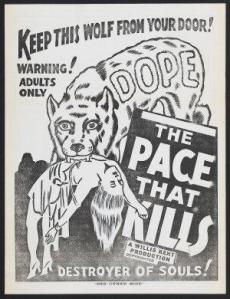
I watched one of these films last night, 1935’s The Cocaine Fiends (also known as The Pace that Kills, which is a much better title).  The Cocaine Fiends starts with a waitress named Jane (Lois January) who meets and falls in love with a mysterious fellow named Nick the Pusher (Noel Madison).  For most people, I would think that Nick the Pusher’s name would be a dead give away to what he does for a living but Jane is from the country and, by this film’s logic, this makes her an idiot.  Anyway, Jane goes to the city with Nick.  Whenever Jane starts to get a headache, Nick gives her some headache powder.  Jane snorts the powder and her headache goes away.  Soon, she’s calling herself Lil and sleeping with strangers to get money so that Nick will keep giving her headache powder.  Soon Jane/Lil discovers that she hasn’t been doing lines of headache powder at all!  Nope, that white powder is cocaine!

(Now, I know you’re probably laughing at Jane but I have to be honest and admit that last year, I was at work when I got a terrible migraine.  This woman who works in the same building as me took sympathy on me and gave me a little packet of white powder.  I quickly got out my credit card and a dollar bill and cut myself a line.  “Wait, what are you doing!?” she said as I held the tightly rolled dollar bill up to my nostril.  “I’m going to do a line,” I said.  “Oh no, honey,” she said, sweetly, “you don’t snort B.C. Headache Powder.”  True story.)

Anyway, Jane’s brother, Eddie (Dean Benton), comes to the city looking for his sister and gets a job working as a carhop.  At his job, he befriends Fanny (Sheila Bromley) who, seriously, is one of the greatest film characters ever.  Seriously, I had a huge girlcrush on Fanny by the end of this film.  Not only is she hot and independent but she also hides cocaine underneath her garter and says stuff like, “Tonight, I’m going to take you on a sleigh ride with some snowbirds.”  Eddie has a crush on Fanny too and they end up hanging out at sordid nightclubs together.  Unfortunately, Fanny also gets Eddie hooked on cocaine and soon, they both get fired.  Eddie forgets about finding his sister while Fanny turns to prostitution to support her habit.

Meanwhile, Fanny’s friend Dorothy (Lois Lindsay) doesn’t use cocaine but she still ends up getting kidnapped by Nick anyway.  Apparently, Dorothy’s father is rich.  While Eddie spends his time at an opium den (a surprisingly effective sequence), Dorothy’s boyfriend Dan (Charles Delaney) recruits Lil (remember her?) to help him rescue Dorothy and hopefully reveal the secret identity of the shadowy figure in charge of the city’s dope trade…

Did I mention all of this happens in 61 minutes?  Seriously, the Cocaine Fiends is one busy film.  Now, to be honest, all of this plot doesn’t leave much room for anything resembling introspection or nuance but perhaps that’s appropriate for a film about cocaine. I do have to admit that the Cocaine Fiends isn’t as much fun as some other exploitation films from the roadshow era.  Unlike a lot of those films, Cocaine Fiends actually does have at least a tenuous connection to reality in that, when abused, cocaine actually is a dangerous drug that can contribute to people doing some pretty dangerous things.  Still, for those searching for sordid melodrama and committed overacting, they’ll find it a surplus of it here.

 That said, like the best grindhouse films, the Cocaine Fiends occasionally offers up a moment or two of true insight.  For me, what made this film more than just a camp oddity was its sympathetic portrayal of women trapped in a cold, male-dominated underground where being female means being a commodity.  What sets The Cocaine Fiends apart from other films of that era (not to mention most films made today) was the fact that it didn’t attempt to present their tragic fate as some sort of karmic punishment or divine retribution for straying from what society deemed the proper feminine path.  Most films continue to insist that women “ask for it.”  Whatever other faults The Cocaine Fiends may have, it knows better than to think anyone asks to be violated, abused, and exploited.

To be honest, the main reason I occasionally watch a film like The Cocaine Fiends is because I’m a just a history nerd at heart.  Watching a film like The Cocaine Fiends, made outside of the idealized worldview of the Hollywood Establishment, is probably about as close as I’m going to get to using a time machine to go back to the 30s and experience the culture firsthand.  I love how Eddie, when Fanny offers to let him stay at her apartment, automatically responds with, “But we’re not married.”  And then there’s the sequence in the “dangerous” night club which, as far as decorations, music, and proper attire are concerned, reminded me of my senior prom.  It’s also where Eddie freaks out upon getting a bill for $9.97.  Luckily, Fanny is there to loan him enough money to pay it.

Anyway, for those who have an hour to kill, here’s 1935’s The Cocaine Fiends…

Lisa Marie Laughs and Cries Over Love Story (dir. Arthur Hiller)


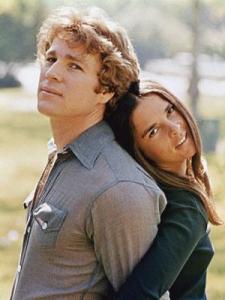
They are so freaking pretty!

I’ve discovered something as I’ve pursued my mission to see every single film ever nominated for best picture.  Quite a few of the nominees (perhaps the majority of them) are no longer impressive because they’ve simply become dated by the passage of time.  We can still watch these films and understand (and believe) that they were probably quite groundbreaking and impressive when initially released.

And then there’s the films like the 1970 best picture nominee, Love Story.  These are the nominees that you quickly realize were never good.  These are the films that were nominated because they either dominated the box office or perhaps they just lucked out and were released in a bad year for cinema in general.  At least that’s what we tell ourselves.  In all honesty, the circumstances of how they came to be nominated are often enigmatic and shrouded in mystery.  I have yet to read a single critic — from either 1970 or the present day — who has had a single kind thing to say about Love Story and, after sitting through it last night, I can say that for once, me and the critical establishment are in agreement.

The plot of Love Story is pretty simple and I’m going to go ahead and include the entire story here because quite frankly, it’s impossible to spoil something this predictable.  Oliver (Ryan O’Neal) meets Jenny (Ali MacGraw).  Oliver is a rich jock who is attending Harvard.  Jenny is a poor music student.  Upon first meeting her, Oliver calls Jenny a “bitch.”  Jenny calls Oliver “a dumb jock.”  Oliver falls in love with Jenny.  Jenny calls Oliver “a dumb jock.”  Oliver and Jenny get married.  Oliver’s father (Ray Milland) disapproves.  Jenny’s father (John Marley) is just kind of confused.  Cut off from the family fortune, Oliver struggles to provide for Jenny.  (Apparently, the 70s were a tough time to be a graduate of Harvard Law School.)  Jenny and Oliver have a fight.  Oliver cries.  Jenny says, “Love means never having to say you’re sorry,” which seems to be an underhanded way of admitting that most guys aren’t ever going to say that anyways.  Oliver is happy.  Jenny comes down with a never-named terminal illness and dies.  The end.

I know that I’m supposed to watch a movie like Love Story and just shrug my shoulders and go, “Oh well, it’s not very good but I’m a girl so I’ll love it unconditionally.”  And God knows, I tried my best,  I tried so very hard to just shut down my mind and give control over to my heart.  Because, believe it or not, I’m just a dorky, asthmatic romantic.  I’m the type of girl who gets all giggly and excited when she gets flowers, despite all of my allergies.  I can remember every sunset I’ve ever watched.  The rare times we actually do have a winter down here in Texas, I’m all about the snowball fights that end with a long, passionate kiss.  I love Valentine’s Day and I remember anniversaries.  I still have every gift that I’ve ever been given, even the really cheap and ugly things that I wouldn’t be caught dead wearing in public.  Every trinket, every stuffed animal, every card, every piece of jewelery, every note, every article of lingerie, every movie ticket — if it’s an artifact of a past or current relationship, I have it all safely stored in a place of honor. 

Yes, I adore everything that Love Story was selling and yet, as I watched Love Story, I felt myself growing more and more cynical with each passing moment.  Fortunately, the movie only last 99 minutes because if it had gone on for a few 120, I probably would have ended up “an old maid…closing up the library!” like Donna Reed in It’s a Wonderful Life.  The problem with Love Story isn’t that it’s not romantic; it’s that it takes the standard clichés of romance and embraces them to such an extent that I didn’t feel as if I was being manipulated by the film as much as I felt like I was being brutally violated by it.

Seriously, the entire time I was watching, I felt like the film was screaming at me, “Look at how beautiful they are!  Look at that sunset!  Listen to that music!  Cry, damn you, cry!”  Never mind the fact that MacGraw and O’Neal — pretty as they are to look at — generate close to zero chemistry.  Never mind that  MacGraw responds to being terminally ill by laying in bed with her hair artfully spread on the pillow behind her while director Arthur Hiller practically bathes her in a warm, saintly glow.  Never mind that “Love means never having to say you’re sorry,” doesn’t make any freaking sense at all.  Trust me, if you love me and yet you still insist on acting like an asshole, you sure as Hell have to apologize to me. 

On the plus side, the film’s got one of those overdone, lush soundtracks; the type that can make you cry as long as you don’t pay attention to what’s happening on-screen.  (That said, Taylor Swift is nowhere to be found.)  Ryan O’Neal is surprisingly likable as Oliver but Ali MacGraw — oh my God, where do I begin?  Actually, I don’t think I will because there’s simply no way I can explain just how bad of a performance she gives here.  Instead, I’ll just point out that Love Story also features the film debut of Tommy Lee Jones.  He’s credited as Tom Lee Jones here and he plays Oliver’s roommate.  He’s an on-screen for about 12 seconds and he delivers exactly one line. 

Needless to say, he pretty much steals the entire film.

Lisa Marie Goes Down On Mildred Pierce (dir. by Michael Curtiz)


A quick note: By titling this post “Lisa Marie Goes Down On Mildred Pierce” I have now not only proven that there’s no dare I will not accept but I’ve also won a small but useful sum of cash.  Never let them tell you that blogging doesn’t pay off.

Like a lot of people, I was looking forward to HBO’s remake of Mildred Pierce, featuring Kate Winslet in the role made famous by Joan Crawford.  And I hate to say it but, as hard as I’ve tried, I simply can not get into this remake.  Maybe it’s because the remake’s director, Todd Haynes, has apparently decided to use five hours to tell the exact same story that the original film told in less than two.  All I know is that the HBO version has, so far, been slow, ponderous, and ultimately a rather dull affair.

As I attempted to stay awake through the remake, I found myself wondering how the original 1945 film compared to the remake.  Fortunately, I just happened to have the original on DVD.  As well, by watching the original Mildred Pierce, I could continue my current mission to see every single film ever nominated for best picture.  (Joan Crawford won the Oscar for Best Actress for her performance as Mildred but the film itself lost Best Picture to Billy Wilder’s The Lost Weekend.)

 Mildred Pierce opens with the murder of sleazy playboy Monty Beragon (Zachary Scott).  Monty’s wife, Mildred (Joan Crawford), responds to the murder by attempting to frame her ex-business partner, the equally sleazy Wally Fay (Jack Carson).  However, the police arrest Mildred’s 1st husband, the well-meaning but really, really dull Bert (Bruce Bennett).  This leads to Mildred going to the police in an attempt to clear Bert’s name.  As the police interrogate Mildred, she tells them (and the film uses flashbacks to show us)  how she went from being a dissatisfied housewife to a succesful businesswoman to finally becoming Monty’s wife.  Through it all, Mildred is motivated by the need to take care of and spoil her manipulative daughter Veda (Ann Blyth).

Seen now, Mildred Pierce is an artifact of different time but, as a secret history nerd, I happen to love studying artifacts.  Like many of the films of the late 40s, Mildred Pierce‘s melodramatic plot serves as a reflection of a culture that, in the wake of World War II, was no longer as smugly complacent about how the world worked.  As I watched Mildred Pierce, the thing I immediately noticed was just how much the film seemed to be suspended between pre-War and post-War culture.  It’s the type of film that goes out of it’s way to acknowledge Mildred’s role as a “new woman” but, at the same time, still finds time to include numerous “comedic” scenes of various men leering at Mildred’s ankles. 

(Actually, I guess they were supposed to be staring at her legs but, since this was the 40s, this could only be represented by an occasional flash of ankle.  Personally, my ankles are okay but I like my legs better.)

Mildred Pierce is often cited as being a forerunner to feminist cinema and I have to admit I have some issues with that.  Yes, the film does acknowledge that a woman can be tough and that a woman can be a succesful businesswoman.  However, the film’s message ultimately seems to be that mothers who work will ultimately raise daughters who will become burlesque dancers and potential killers.  Mildred Pierce doesn’t so much celebrate female independence as much as it fears it.  If only Mildred had remained married to boring and predictable Bert than Veda would never have ended up as a murder suspect.

The question of ideology aside, the original Mildred Pierce remains an entertaining example of old school melodrama.  Director Michael Curtiz was one of those “craftsmen” who, in the 30s and 40s, seemed to direct hundreds of films without ever really establishing any sort of unique style of their own.  Instead, they simply used whichever style that would be most efficient towards dramatizing the script.  For Mildred Pierce, Curtiz imitated the style of a B-movie film noir.  It’s a good approach for this story even if Curtiz doesn’t seem to understand  the shadows of noir quite as well as his contemporaries Billy Wilder or Robert Siodmak.

Of course, Mildred Pierce is best known as the film that won Joan Crawford an Oscar.  I haven’t seen many of Crawford’s films (though I have seen Faye Dunaway playing her in Mommie Dearest) and I’ve got an unapologetic girlcrush on Kate Winslet but I honestly have to say that I prefer Crawford’s version of Mildred to Winslet’s.  Because, as much as I idolize Kate Winslet, she doesn’t seem to so much be playing Mildred Pierce as much as she’s observing her.  Crawford, meanwhile, sank her perfectly manicured nails into the role and pretty much refused to let go until she got her Oscar.  Crawford plays Mildred as a woman so obsessed with survival that she seems to be perfectly willing to destroy the rest of the world if that’s what it takes.  To be honest, it’s really not a great acting job but it certainly is fun to watch. Technically, Winslet gives the better performance but Crawford is a lot more entertaining.

(That said, I still love Kate and I actually would probably fall at her feet and say, “Thank you,” if I ever met her in real life because she’s really one of my heroes.  Physically, I developed early and I had to deal, at way too early an age, with a combination of a physical maturity and emotional immaturity.  By the time I was 13, I was so totally overwhelmed by the insecurity and uncertainty but then I read an interview with Kate Winslet in which she said, “I like having tits and an ass.”  And that, to be honest, was the first time I had ever come across anyone saying that it was okay to like your body.  So, anyway, the point of all that is that I love Kate Winslet.)

Crawford pretty much dominates the entire film but a few of the other performers do manage to make an impression.  As Mildred’s ex-husband, Bruce Bennett is pretty boring but the other men in Mildred’s life are well-played by Jack Carson and Zachary Scott.  Scott especially was well-cast as the type of guy that we always says we’re done with just to end up hooking up with them whenever we’re at our weakest.  As Veda, Anne Blyth gives such a driven and intense performance that you actually believe that she could be the daughter of Mildred Pierce.

In the end, Mildred Pierce isn’t really a great film but it is a lot of fun and that’s a definite improvement on the current remake.

What Lisa Watched Last Night: Basement Jack (dir. by Michael Shelton)


There’s several very good films that I need to review over the next few days but, at the moment, I really need to write about Basement Jack, a low-budget 2009 slasher film that I watched on Chiller.  Why do I need to write about Basement Jack?  Well, I’m already hesitant to go to sleep because I know I’m going to have nightmares about this film.  So, consider this to be my attempt at a quickie exorcism.  Indulge me because I need to get this film out of my system.

Why Was I Watching This:

I love horror movies and, even though they always seem to end up giving me nightmares, these old school slasher films are like catnip to me.  I can’t resist watching them, if just to see if they can keep the inherently predictable conventions of genre interesting.

What’s The Movie About:

Basement Jack (Eric Peter Kaiser) is a serial killer because when you’ve got a name like Basement Jack, it’s not like you’re going to become an accountant.  Anyway, Jack’s thing is that he goes from town-to-town, selects a family  to kill, and then secretly moves into their basement until there’s a thunder-storm.  Once it starts raining, Jack proceeds to brutally kill the family.

Karen (Michelle Marrow) is only person to have ever survived being attacked by Jack.  Now, Jack is obsessed with Karen and follows her from town to town.  So, Karen decides to turn the tables and she starts following Jack.  Except, of course, Jack was already following her so it would seem like for her to follow him, all she would really have to do would be turn around.  But anyway, I guess the important thing is that Karen-and-Jack have one of those hunter/hunted connections.

Jack and Karen both end up in a new small town where Jack sets off on another murder spree while Karen hunts for him.  She does this by teaming up with a seriously incompetent cop named Chris (Sam Skoryna).  Unfortunately, all of Chris’s fellow officers are 1) convinced that Karen is the murderer and 2) kinda stupid.  Will Karen be able to convince the cops that Jack is real?  Will Jack continually manage to stand back up after taking more damage than anyone should, realistically, be able to take?  And most importantly, will Lisa be able to sleep tonight?

What Worked?

Oh my God, this film should not have disturbed me as much as it did.  Seriously, I’ve seen thousands of horror movies that all had better production values, better gore effects, and better acting.  And yet, Basement Jack really made me paranoid.  I think that’s because director Shelton does manage to create a legitimate feeling of dread that saturates every ludicrous frame of this movie.  There is remarkably little humor in this film and, as opposed to a lot of slasher films, all of the victims here just come across as normal, likable people (as opposed to being slasher movie stereotypes).

Kaiser is a genuinely scary killer and Morrow makes for a sympathetic protagonist.  She brings a lot of conviction to her role.  Exploitation vet Lynn Lowry (remember her from the original Crazies and I Drink Your Blood?) plays Basement Jack’s domineering mother and wow, she is scary.

Now, I’m going to admit there’s one image in this film that I know is going to give me nightmares tonight.  It’s of a policewoman who, after being gutted by Jack, is seen lying on the floor, trying to stuff her intestines back into her body and oh my God, I wish I hadn’t seen that because it really got to me.  I’ve read several other reviews that have all criticized the CGI gore effects as looking fake.  Maybe they do, I’m not really an expert on anatomy.  All I know is that image of those intestines sprouting out across a twitching body; that image is trapped in my head.  It’s something that I truly wish I hadn’t seen but I still have to list it as something that worked because film horror is supposed to leave the viewer uncomfortable.

What Didn’t Work:

Oh, trust me, a lot didn’t work.  Like most slasher films, this one was riddled with a combination of plot holes and characters just acting as stupid as can be.

As our male lead, Sam Skoryna displayed all the charisma of a spilled intestine and, to be honest, most of the other actors gave performances that were fairly atrocious.  For some reason, one of the film’s detectives is played by musician Billy Morrison and his English accent is just so jarringly out-of-place in the film’s middle American setting.  (What makes the situation especially odd is that no one in the film ever comments on his accent.  Trust me — I live in middle America.  Hell, I’ll be really pretentious — I mean like Sasha Stone pretentious — and say that I am Middle America.  No, actually, forget I said that.  That sounds really stupid.  Anyway, my point is that if you’re the only Englishman in town, people are going to remind you of that every chance they get.)

An attempt was made to give Basement Jack some backstory and to explain why he does what he does.  And by that, I mean that this is one of those movies where the action comes to a sudden halt every few minutes juts so we can be told that a man,who hides in people’s basements and only kills when it’s raining, is mentally ill.  Gee, filmmakers, thanks for clearing that up.

And finally (SPOILER!), I am so sick of seeing slasher movies that end with a close-up of the killer’s signature killing tool just so we can suddenly see the killer’s hand come out of nowhere and grab the weapon.  I mean, is anyone ever surprised by this anymore?  I guess, at one time, this seemed like a twist ending but today, it just comes across as being lazy. (END OF SPOILER!)

“Oh my God!  Just like me!” Moments:

Just like our heroine Karen, I usually try to flirt my way out of traffic tickets as well.

Lessons Learned:

It doesn’t take much to give me nightmares.

12 Months Down


Hi!  So, guess what today is?  *sigh*  Yes, smartass, it is Sunday but that’s not what I was looking for.  *shaking head*

It’s my anniversary!  That’s right — one year ago today, I posted my first review on this site and twelve months and 243 posts later, I have yet to shut up.

So, I was wondering — what should I do to observe this occasion?  Well, I guess I could so what most people would do and not make a big deal out of it but — well, I’m incapable of not making a big deal out of stuff.  Briefly, I considered posting a nude picture as my way of saying thank you but who wants to see that, right?  So, as I woke up this morning from my usual 2 hours of sleep, I asked myself, “Lisa, what are you going to do?”

Well, for the most part, I’ve observed the occasion by being kinda lazy.  Seriously, I’ve spent today in my beloved Hello Kitty robe (pictured above, it’s so comfy!), curled up on my couch with my feet tucked underneath me.  I’ve been watching Buffy the Vampire Slayer on Chiller. 

Of course, to be honest, watching Buffy the Vampire Slayer always makes me want to go out and like start kicking people out of the hope that they’ll turn out to be vampire or a demon or a Riley.  And since, I’m just a teensy bit more klutzy than Buffy and Faith, that show has indirectly been responsible for a lot of sprained ankles.

Anyway, I’ve decided to observe my anniversary by doing two things.  First off, I’ve read through my 243 previous posts and I’ve selected ten that I think pretty much tell you all you need to know about both who I am and my own taste in film.  And here they are:

1) Film Review: Welcome Home Brother Charles (dir. by Jaama Fanaka) (posted on April 4th, 2010) — My first ever review

2) 10 Reasons Why I Hated Avatar (posted on April 21st, 2010) — In which I explain why I’m right and everyone else is wrong.

3) Too Sordid To Ever Be Corrupted (posted on August 1st, 2010) — My manifesto in which I explain why I love the grindhouse.

4) Titanic: In Retrospect (posted on October 6th, 2010) — In which I discover whether or not Titanic is still as good as I thought it was when I was 12.

5) Review: Black Swan (dir. by Darren Aronofsky) (posted on December 9th, 2010) — Out of all the reviews I’ve written so far, this is my personal favorite.

6) Do Critics Matter? (posted on December 9th, 2010) — In which I attack the critical establishment

7) What Lisa Watched Last Night: The Perfect Teacher (posted on December 27th, 2010) — In which I reveal that I’m obsessed with Lifetime movies

8 ) If Lisa Marie Determined The Oscar Nominees (posted on January 22nd, 2010) — In which I come up with a much more interesting ballot than the Academy.

9) Lisa Marie’s Latest You Tube Obessesion (posted on January 27th, 2010) — In which I prove once again that I have silly obsessions

10) Lisa Marie Takes a Sucker Punch (dir. by Zack Snyder) (posted on March 27th, 2011) — In which I defend the most unfairly maligned movie of 2011.

And secondly, as I think I’ve made clear here, I love trailers.  Quite often, I’d rather watch the trailer than the film itself.  So, here’s the trailer for a film that, at the suggestion of the Trash Film Guru, I will be watching and reviewing at some point in the near future — Birdemic: Shock and Terror.

Enjoy!

And, on that note, let me just extend my sincere thanks to everyone who has read anything I’ve written over the past year.  I’m especially  thankful to those of you who have taken the time to comment and let me know your opinion (except for Vermont Fran and Outraged Bob, who were kinda humorless and boring about it).  I’ve had a wonderful time this year, sharing and interacting and here’s hoping that this next year will be even better!

Love ya!

En Pointe with six more trailers


The grindhouse is like ballet — truly appreciated by only a few blessed and special individuals.  And for those individuals, here’s a picture of my legs…

And, because I really, really love all of you, here’s an added bonus: six more of Lisa Marie’s Favorite Grindhouse and Exploitation trailers…

1) The Child (1977)

I’ve got this one on DVD, actually.  Considering that it was produced by the notorious Harry Novak, it’s actually fairly entertaining and not just in a “WTF” sorta way.  Still, I have to admit that the main reason I like this trailer is because of that “I don’t have to tell you anything,” line because I used to say that a lot when I was a child (actually, I still say it a lot).  Unfortunately, I never had undead followers to help back up my words.

2) The Children (1980)

Now, admittedly, some claim that I was occasionally a just a tad bit bratty when I was a child.  (The running joke, among my sisters, is that LMB stands for Little Mean Brat.)  However, I was never quite this bad…

3) A*P*E (1976)

Speaking of being bratty…A*P*E was originally entitled The New King Kong until a lawsuit changed the title.  By all reports, A*P*E was meant to be a “serious” film but it was advertised as being a spoof after the film’s distributors saw the final results.  A*P*E shows up on AMC occasionally.

4) Tanya’s Island (1980)

While we’re on the amorous monster front…I haven’t seen this one but it appears to be some sort of Swept Away With Big Foot type of film.  The vibe here is definitely grindhouse pretentious.

5) Mysterious Monsters (1976)

Bigfoot was also one of the stars of Mysterious Monsters, one of the many faux grindhouse/drive-in documentaries of the 70s.

6) Mondo Cane (1963)

And finally, here’s the grindhouse documentary that started them all — the Italian Mondo Cane!  None other than Giovanni Lombardo Radice has described this film as an example of “lingering fascism.”  It also inspired Ruggero Deodato’s Cannibal Holocaust.  Also, much like An Inconvenient Truth, it was nominated for a best original song Oscar.   (Note to self: Write a future post on how much An Inconvenient Truth has in common with Mondo Cane…)

Finally, in conclusion, here’s one final scene from A*P*E…