Hallmark Review: Stranded In Paradise (2014, dir. Bert Kish)


IMG_9116

Based on the title you can basically guess where this film starts. It begins at a big company called Connor.com where after a little foreshadowing, Tess Nelson (Vanessa Marcil) is going to end up with James Denton’s character Carter McConnell who clearly lost his thumb in paradise and obviously needs someone to help him track it down. Actually she has been fired because the new boss wants to do some restructuring and she’s going to get the boot. This was shortly before she was going to go to Puerto Rico to a human resources convention since that was her job at Connor.com. Well screw getting fired, she’s going to go anyways. There might be a job there!

IMG_9181

As soon as she gets on the plane is where this movie starts to do things the way I like it. Sure, the plot ultimately nudges these two in a certain direction so that they will end up together, but it never really feels forced, shoved down our throats, or just flat of place. The two of them have a mix up on their plane seating. They both happen to have the bad luck of losing their luggage. They stay at the same hotel. Plot convenient coincidences sure, but nothing feels forced, for lack of a better word. We just spend some time with these characters, and they spend some time together.

IMG_9241

He used to have a job that kept him in one place, but now he does the lecture circuit as kind of a life coach/motivational speaker. She is finding that word has gotten out about her job loss so she is a bit of a pariah. Because the hotel they were both staying at isn’t the brightest when it comes to the construction work being done on it, an electrical fire starts in the middle of the night. Then something happens you’d never imagine. No, not that they both go to a friend’s home who spouts platitudes while a hurricane approaches. No, no, no. She finds a working pay phone in 2014.

IMG_9261

They then both go to Carter’s friend’s home. She used to be a Hollywood starlet, but when that dried up, she moved to Puerto Rico. She would be quite likable if they had dialed her back a little. She is so at peace, so I couldn’t care less about the hurricane, that you’d think she actually wants to die. It really is that bad. I can understand having been through many of them and understand that going into a complete panic is unnecessary, but it’s really like she’s totally oblivious to it. I’m sure you know where this leads.

IMG_9315

That’s right! After the hurricane seems to reverse direction like it’s a car in a different gear, a faked computer screen that uses a local URL shows up. During the hurricane the new boss at Connor.com was trying to get ahold of her. He figured out that with her gone things were kind of thrown into turmoil. Not only was she good at what she was supposed to be doing, but there were things that she was doing that didn’t show up in any paperwork.

IMG_9446

Of course they end up together. She is not only offered her position back at Connor.com, but a promotion to Vice President of Corporate Affairs since she really was doing more than her previous position. This is where I have a little problem with the story. I can understand that Carter would decide that he swung from the extreme of being only in one place all time to traveling all the time, but I’m not sure why she couldn’t find a way to strike a balance between the two. Instead, she goes back to Puerto Rico to catch him at the airport. However, I can kind of still get it because she did hold her previous position for 15 years. That’s a lot of time, and even if it doesn’t make complete sense, I can still buy her making that choice anyways.

This one is worth seeing.
Horror on the Lens: Robot Monster (dir by Phil Tucker)


Robot Monster

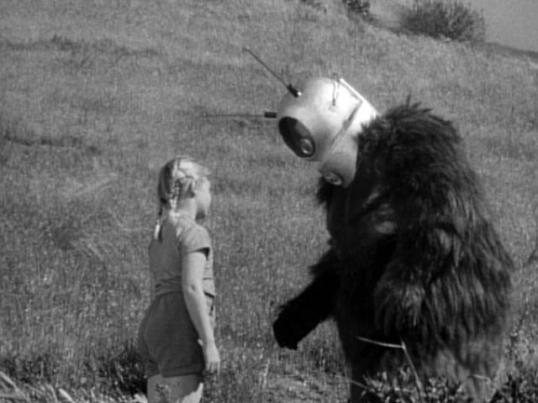
I realize I shared this last year as well, but hey, it’s Robot Monster!  It’s a movie about what happens when Earth is invaded by a gorilla wearing a diving helmet.  (For some reason, it also causes the dinosaurs to come back to life.)  It’s one of the most compulsively watchable bad movies ever made so how could I be expected to resist the opportunity to share it again?

Seriously, it’s Robot Monster!

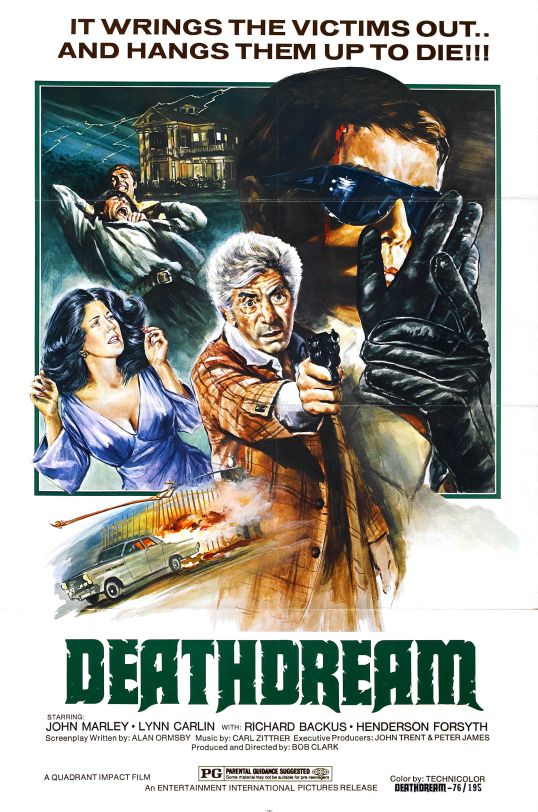
The TSL’s Daily Horror Grindhouse: Deathdream (dir by Bob Clark)


deathdream_poster_01

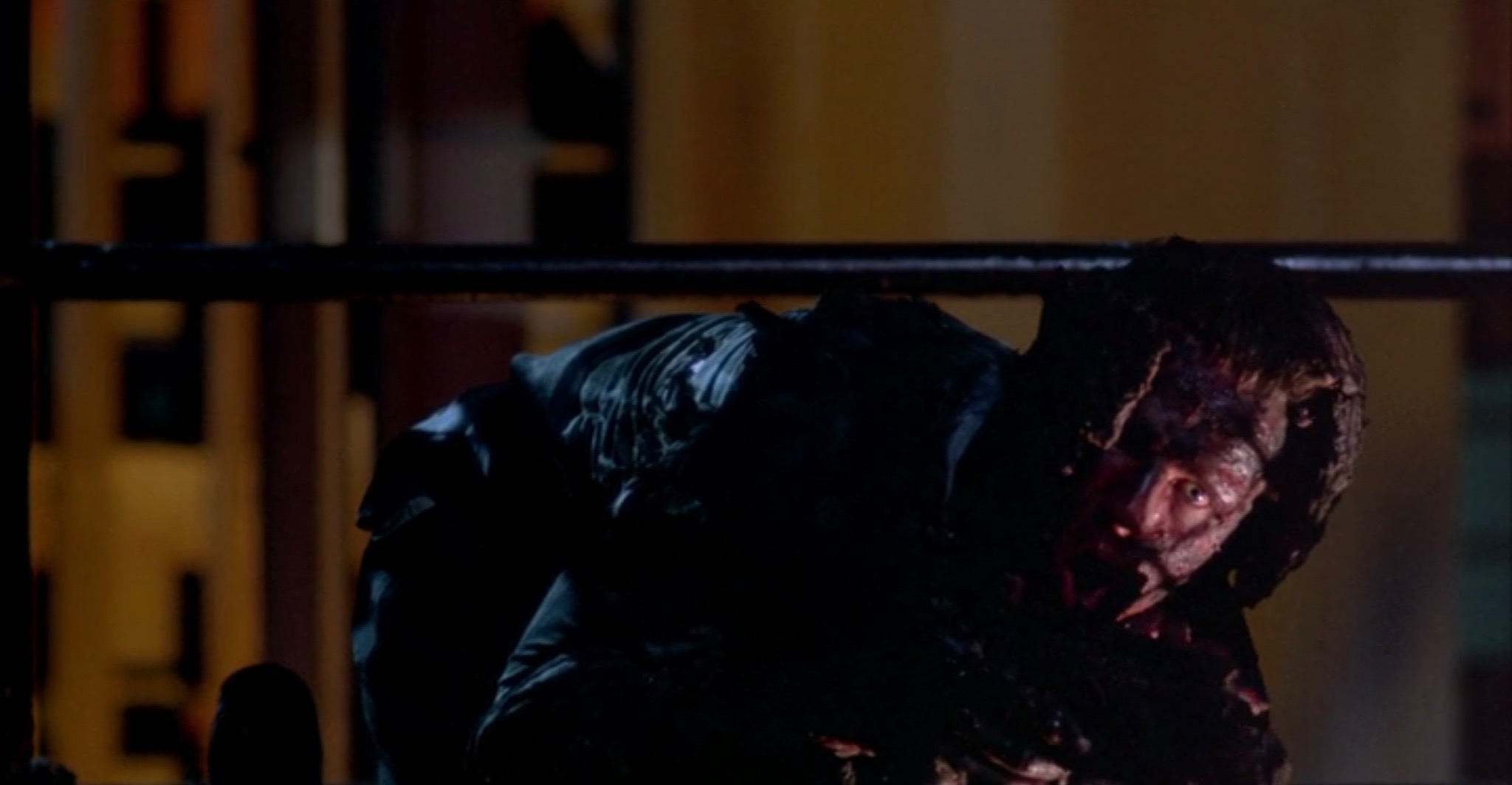
The 1974 film Deathdream opens with American soldier Andy Brooks (played by Richard Backus) on patrol in Vietnam. When he’s suddenly shot by an unseen sniper, he hears his mother’s voice calling out to him, telling him that he promised to come home. With the voice filling his head, Andy closes his eyes.

Sometime later, back in America, Andy’s family has been informed that Andy was killed in action. His father (John Marley, who you might recognize as the man who played Jack Woltz in The Godfather) and his younger sister (Anya Ormsby) have managed to accept the fact that Andy is dead but his mother (Lynn Carlin) remains in denial. Oddly enough, his mother is apparently proven to be correct in her doubts when Andy suddenly shows up at the front door.

The family (and, eventually, the entire community) welcomes Andy home but it quickly becomes apparent that Andy has returned as a far different person than when he left. Now pasty and emotionless, Andy spends most of his day sitting around listlessly. It’s only at night that Andy seems to have any energy and he spends those hours wandering around town and hanging out in the local cemetery.

It quickly becomes apparent to his father that Andy is no longer quite human. However, his devoted mother continues to insist that nothing is wrong with Andy and, once it becomes apparent just what exactly Andy is doing in order to survive, she becomes just as fanatical about protecting him as his father is about destroying him.

Not surprisingly, Deathdream is more than just a zombie film.  When Andy suddenly shows up on his family’s doorstep, he’s more than just a decaying monster.  He’s also a metaphor for the unease that viewers in the 70s would have felt about the state of American society.  (Of course, in many ways, contemporary viewers share that same unease.)  Andy goes off to war and it literally robs him of his humanity.  I would also argue that, in its way, Deathdream serves as a satire of the type of complacent society that sends young people off to fight for their lives and then expects them to come back exactly the same as they were before they left.  No matter how strange Andy’s behavior becomes, the people around him are willing to either ignore it or make excuses for it.  Andy’s mother emerges as a stand-in for everyone who willfully refuses to acknowledge the human consequences of war.

Deathdream is one of those wonderful horror films that deserves to be better known than it is. Deathdream was an early credit for the legendary effects artist Tom Savini and, while the film itself is not especially gory, Savini’s work can definitely be seen in the scenes where Backus’s body slowly decays. Screenwriter Alan Ormsby and director Bob Clark (who later went on to direct the far different A Christmas Story) perfectly creates and maintains a deceptively low-key atmosphere of perpetual unease while the cast elevates the entire film. Backus makes for an all-too plausible ghoul and Marley is great as a man struggling to understand what his son has become. The film is totally stolen, however, by Lynn Carlin who is both poignant and frightening as Andy’s devoted mother.

If you haven’t discovered Deathdream yet, this Halloween is the perfect season to do so.

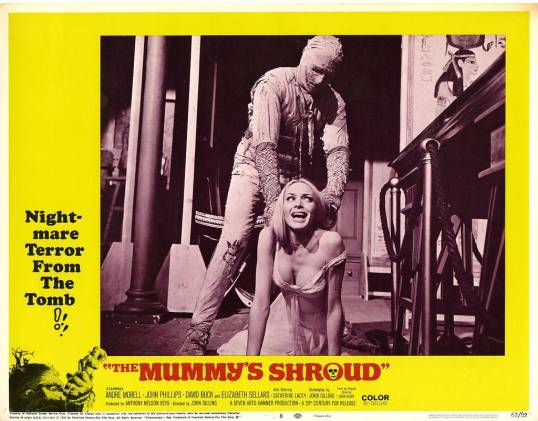
Horror Film Review: The Mummy’s Shroud (dir by John Gilling)


360394-mummies-the-mummys-shroud-lobby-card

In this underrated horror film from the legendary Hammer Studios, a British archaeological expedition travels to Egypt and makes the mistake of entering a mummy’s tomb.  As often happens, it turns out that the tomb is cursed and everyone who sets foot inside of it is destined to be tracked down and murdered by a mummy!

That’s pretty bad news for some of members of the expedition.  Among those who are now on the Mummy’s list, there’s Sir Basil Waldron (Andre Morrell) who, in the film’s most effective moment, finds himself talking to a toothless fortune teller who cackles as she tells him, “You are going to die!”  (Needless to say, a 7 foot tall Mummy is soon standing behind him).  And then there’s Claire (Maggie Kimberly), the linguist who translated the curse.  And there’s the expedition’s hilariously pompous financial backer, Stanley Preston (John Phillips), along with Stanley’s son, Paul (David Buck).  And finally, there’s poor Mr. Longbarrow (Michael Ripper), Stanley’s press agent.  If you’ve seen any other Hammer films from the late 60s, you’ll recognize the majority of the cast and you will probably be able to guess everyone’s fate from the minute they first appear on screen.

That, of course, is part of the fun!


First released in 1967 and often dismissed as being one of the lesser horror films to come out of Hammer Studios, The Mummy’s Shroud is actually a pretty effective film.  I watched it late last night, with lights out and the sound of rain pounding on the windows outside and I have to admit that, even if nothing about the film surprised me, it still had enough eerie moments that I found myself watching for sudden shadows and the sound of heavily wrapped feet.

And why not?  Mummy’s are scary!  Even if you don’t know all of the grotesque details that go into the mummification process, Mummy’s just look frightening.  It’s the bandages, to be honest.  The bandages keep you from knowing exactly who is doing the stalking but, at the same time, you know that if those bandages were unwrapped, you wouldn’t want to see what’s hiding underneath them.  By their very existence, Mummies are proof of the finality of death.

And The Mummy in The Mummy’s Shroud is frightening!  He towers over all of the “human” actors in the film and when he attacks, he does it with a sudden and savage cruelty.  Perhaps the death that disturbed me the most was the death of poor Mr. Longbarrow, who is literally lifted up off of his feet and tossed out of a window.  He crashes to the street below and, briefly, the screen is awash with Hammer’s trademark red blood.  It’s a disturbing scene, both because Longbarrow is one of the few likable characters in the film and also because the Mummy could have just as easily and much more efficiently strangled him.  Instead, the Mummy had to be mean about it.

Seriously, there’s nothing more frightening than a sadistic mummy.

The Mummy’s Shroud may not be one of Hammer’s best films but still, it’s an efficient little horror film and one that, I think, many other horror critics have been a bit too quick to dismiss.


Halloween Film Review: R.L. Stine’s Mostly Ghostly: Who Let The Ghosts Out? (2008, dir. Rich Correll)


IMG_8569

Wow, this one is much better than the sequel. Except for one issue that I will bring up when I get to it.

IMG_8588

That’s Max Doyle (Sterling Beaumon) who is really into magic. And that’s Phears (Brian Stepanek) behind him who is considerably more of an actually scary character than he is in the sequel. In the sequel he is an absolute joke. Here he’s just like Nukie, but that’s getting ahead of myself to the problem with this movie. Max has moved into a house that once held a family that Phears murdered (although in the sequel we find out he only made them ghosts, but didn’t actually kill them). He pops out of the mailbox and goes into Max’s room. Max is practicing his magic when he says some words that catch Phears’ ears. We will find out that those words are part of a spell that can be used to send Phears away and not just some fancy magic sounding words as Max believes. Then we hear voices whispering from the vents. Phears refer to them as his children, and leaves the room.

IMG_8618

After we get introduced to Max’s family, the two other important parts of the movie are shown to us. First, are the two kids above. They are ghosts of two kids that lived at the house, but were killed by Phears along with their family. We occasionally see the ghost of her mother, but she’s barely in the film. The second thing is where those voices are coming from. There’s an invisible hole in a wall in the basement. On the other side is where Phears comes from and where he has a bunch of spirits he is waiting to unleash on the world. Phears needs to find the ghost kids because there is a spell and a ring that could ruin his plans, which they may have knowledge of.

That’s the setup. The kid just wants to just do his magic show at school and his greatest dream is to have Ali Lohan’s character be his assistant. But the two ghost kids, the “tunnel” in his basement, and Phears are having none of that. Hell, Phears literally splits Max’s dog Buster in half, emerges from the dog’s body, then shows that he can strip the skin off of Max and make it hurt next time. The dog then does snap back together though. So, this establishes that Phears can travel inside animals. In fact, he refers to himself as “the animal traveler”. Now is where the real problem in the film comes out.

IMG_8738

That’s not the little girl ghost. That’s Phears having taken on her form. He takes on her form, the little boy ghost, and Max in quick succession in front of his underlings before revealing his plan to travel amongst them. Then he turns into a humanized form of himself. By that I mean he turns into the actor without all his makeup on.

IMG_8748

That’s the same actor who played Arwin from The Suite Life. Makes sense since the Mom is played by Kim Rhodes who was the Mom on The Suite Life. The problem is that they showed that he can take on the form of other people and not just a humanized form of himself. Once you know he can do that, then just like when you find out Nukie can turn into light and fly anywhere, you wonder why the hell he doesn’t use this incredibly useful ability. I mean, go and replace the Mom. She’s the character that Max trusts the most and the film even provides a scene where he could have done it. Or replace Ali Lohan’s character to stick close to Max. This movie even sets up a scene where knowing that he can shapeshift, we expect him to do something with that ability which makes sense, but he doesn’t.

IMG_8856

You see that? That’s a scene near the end of the movie where Phears pops out of a mouse on a teacher while she is alone in a classroom. Makes sense to get her alone by disguising himself as a mouse. Then he freezes her. Makes sense so that she can’t tell anyone what she just saw. Then he takes on her form so he can easily move about the school without anyone noticing someone who doesn’t belong. Nope, he turns into the humanized form of himself. What? Why do all that setup and then not have him do that? It’s really the only material problem with this film.

IMG_8781

The rest of the film is a mixture of comedy and scares as it builds to Max finally getting the full spell and ring to send Phears away…till the sequel.

The movie ends with a cockroach laughing sinisterly, then the movie Joe’s Apartment (1996) begins.

IMG_8983

If you can get past Phears not using that incredibly useful ability for anything useful, then this is perfectly fine. It’s much better than the sequel.

Horror on The Lens: The Embalmer (dir by Dino Tavella)


For today’s horror on the lens, we present, for your viewing pleasure, a 1965 Italian thriller called The Embalmer.  It’s also known as the Monster of Venice.

This film tells the story of a madman who lives in the catacombs in Venice, where he wanders around in a skull mask and embalms dead bodies.  Why does he embalm dead bodies?  Because he loves eternal beauty, of course!

Occasionally, he comes up to the surface and he wanders around Venice while wearing scuba gear.  Nobody finds that to be strange but then again, that’s Venice for you.

(As I’m sure I’ve mentioned a few times in the past, I spent the summer after high school in Italy.  I loved Venice!)

Anyway, as far as Venice-set thrillers are concerned, The Embalmer is no Don’t Look Now.  But it still has a few atmospheric scenes and the whole thing is filmed on location and in beautiful black-and-white.  It’s also fairly tame for an Italian horror film, so it might be good for those viewers who are looking for a thriller that doesn’t necessarily feature a lot of blood.


The Daily Horror Grindhouse: Patrick Still Lives (dir by Mario Landi)


Patrick_Still_Lives

From the mid-60s to the early 80s, filmgoers could be sure of one thing.  If a film was in any way successful in America or Europe, an Italian filmmaker would end up directing an unofficial sequel.  These films usually had next to nothing to do with the original film, beyond having a similar title and occasionally duplicating a few plot points.  (Since these films were always dubbed before being released in non-Italian markets, dialogue, character names, and even plot points were often arbitrarily changed to take advantage of whatever film was currently popular at the box office.)  Occasionally, you’d have a film that managed to overcome its “unofficial sequel” status.  For instance, Lucio Fulci’s Zombi 2 may have started out as a fake sequel to Dawn of the Dead but, thanks to Fulci’s skill as a director, the film transcended its origins and managed to establish its own identity.

Far more typical, however, was the case of Patrick Still Lives, a 1980 film that was sold as being a sequel to the Australian horror classic, Patrick.  Though the film’s title suggests that it was meant to be a sequel, nobody involved in the production of Patrick had anything to do with Patrick Still Lives.

Patrick Still Lives follows the same basic plot as Patrick.  A young man named Patrick (Gianni Dei) may be in a coma but he has psychic powers that he uses to kill various people.  Again, Patrick falls in love with a woman, in this case a secretary named Lydia (Andrea Belfiore).

There are, of course, a few differences.  Whereas Patrick opened with the title character murdering his mother and her lover, Patrick Still Lives opens with a hilariously awkward sequence in which Patrick gets struck in the head by something thrown from a passing car.  Or, at least, that’s what I think happened.  The way the scene is shot, it’s really hard to tell what exactly happens.  At one point, Patrick is standing on the side of the road.  Suddenly, he’s clutching his head and collapsing to the ground and we hear a car speeding away on the soundtrack.  Patrick’s head is covered in ketchup, which I assume is meant to be blood.

Next thing we know, Patrick is in a coma and, with his eyes always open, he’s even duplicating the infamous stare that made the first film so memorable.  Fortunately, Patrick’s father is a doctor who runs a spa.  He keeps Patrick hidden in a locked room, where he’s wired to three other comatose people.

Eventually, five people show up at the spa.  They’re looking to spend a relaxing weekend away from it all but Patrick is planning on killing them all…

There’s a few things that you notice immediately about Patrick Still Lives.  First off, everyone’s naked, but, on the plus side, everyone has, at the least, an okay body and the men get naked too.  The nudity is so gratuitous and so excessive that it actually becomes amusing. By the time the film’s male lead (who, it should be noted, had quite an impressive pornstache) was standing naked at a dresser and casually lighting a cigarette while ominous music played on the soundtrack, I simply could not stop laughing.

Secondly, you notice just how amazingly violent and bloody this film is.  Whenever Patrick’s glowing eyes are superimposed over a scene, it means that someone is about to die in the most violent way possible.  Dogs attack.  A hook is driven into a face.  An automatic car window is used as a tool for decapitation.  The film’s most infamous scene features Mariangela Giordano being skewered, in close-up, by a fireplace poker.

That’s right — Patrick Still Lives is yet another Italian horror film that features Mariangela Giordano dying in the most unpleasant way possible.  As such, along with Giallo in Venice and Burial Ground: The Nights of Terror, it forms an unofficial trilogy of films in which Mariangela Giordano is brutally murdered.  Oddly enough, all three of these films were produced by Giordano’s then-boyfriend, Gabriele Crisanti.  If my boyfriend ever produces a horror film, I better be one of the survivors and that’s all I’ll say about that.

The third thing that you notice about Patrick Still Lives is the dialogue.  Now, I’m not sure if Patrick Still Lives ever got a “true” (and dubbed) release here in the States.  I do know that my DVD features everyone speaking in Italian, with English subtitles.  I have to admit that I’ve always resented that, in the U.S., so many Italian horror films are only available in a dubbed version.  Often the dubbing is so terrible that it detracts from the film’s overall effectiveness and makes it impossible to fairly judge the performances.  Well, with Patrick Still Lives, I got to see an Italian horror film in the original Italian and … well, the performances were just as bad in Italian as they probably would have been in badly dubbed English.

That said, I did enjoy reading the subtitles, largely because they were hilariously bad.  It was almost as if someone had typed the film’s Italian dialogue into Google translator and transcribed the results.  My favorite line?  “The cause of death was fatality.”

Anyway, Patrick Still Lives is a pretty crappy film and I don’t recommend it unless you’re a diehard fan of Italian exploitation films.  I do, however, recommend that you watch Zombi 2.  That’s a really good film.

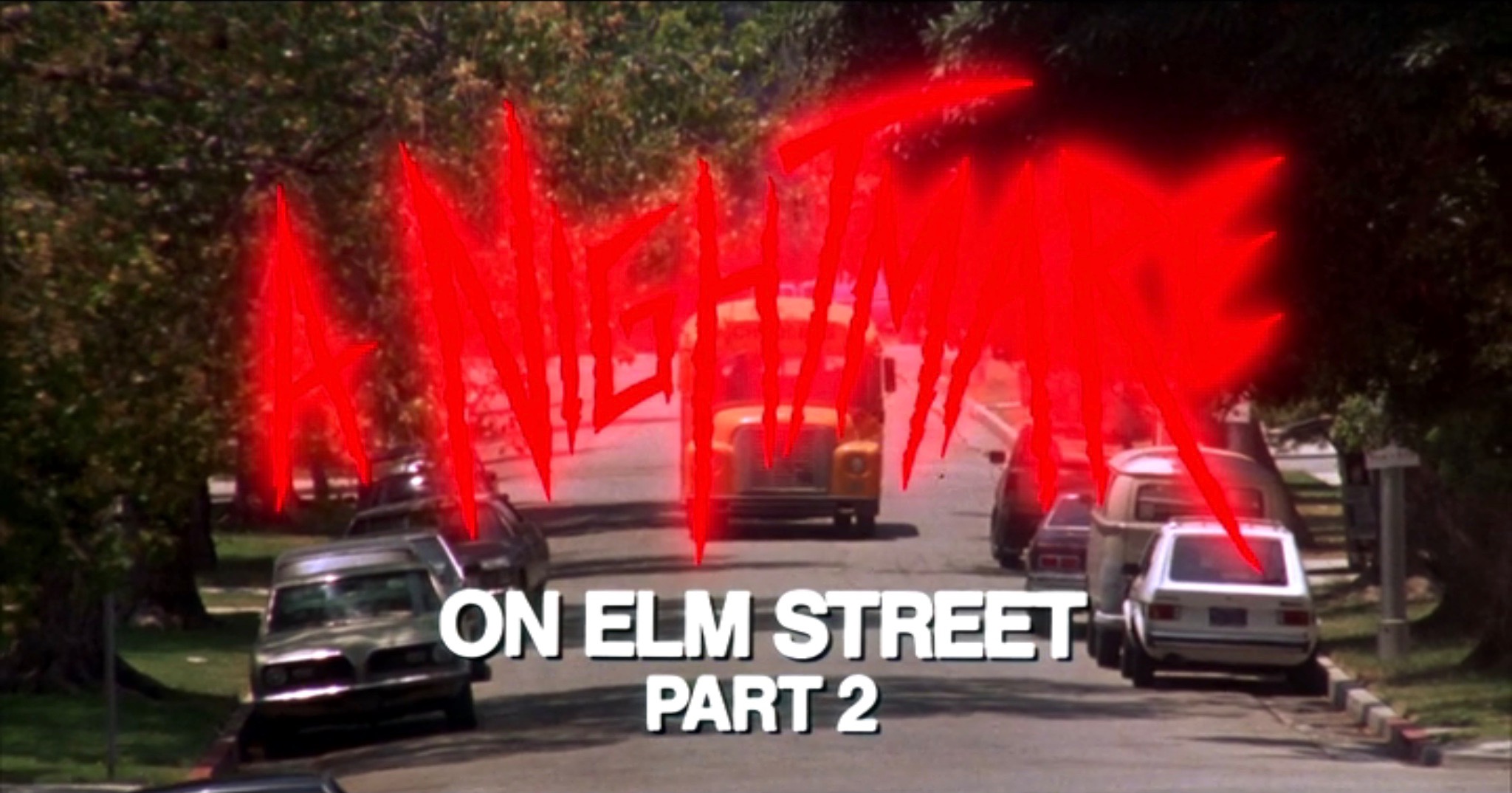
Horror Film Review: A Nightmare On Elm Street Part 2: Freddy’s Revenge (1985, dir. Jack Sholder)


IMG_8022

You’ll have to forgive me, but I watched A Nightmare On Elm Street (1984) back on September 6th, 2008. So it’s been awhile. Luckily, this film doesn’t really ask you to know anything about the original. Also on the plus side, I’ve reviewed Rock: It’s Your Decision (1982) and Law Enforcement Guide To Satanic Cults (1994) this year, so imaginary subtext is still fresh in my mind.

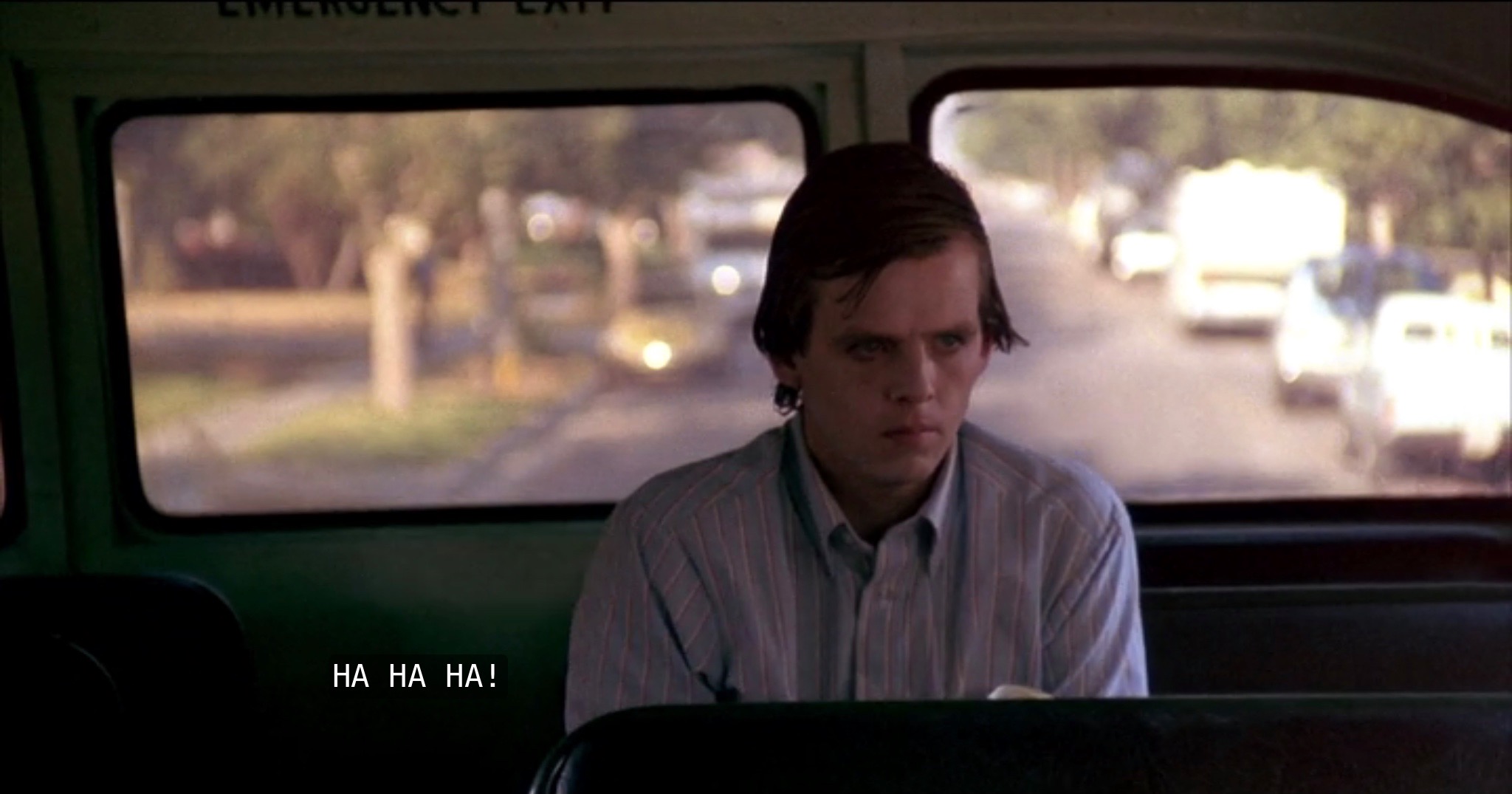
IMG_8029

The movie opens up with Jesse Walsh (Mark Patton) riding the bus. Just in case we didn’t notice that Robert Englund is driving the bus, the movie makes sure we know right away that something isn’t right. They have Jesse looking like he doesn’t think very highly of himself in real life. Of course Freddy Kruger is driving the bus and a nightmare sequence ensues. Then we cut to Jesse waking up sweating. Heat plays a major role in this film because of course it does since Freddy was burned.

IMG_8053

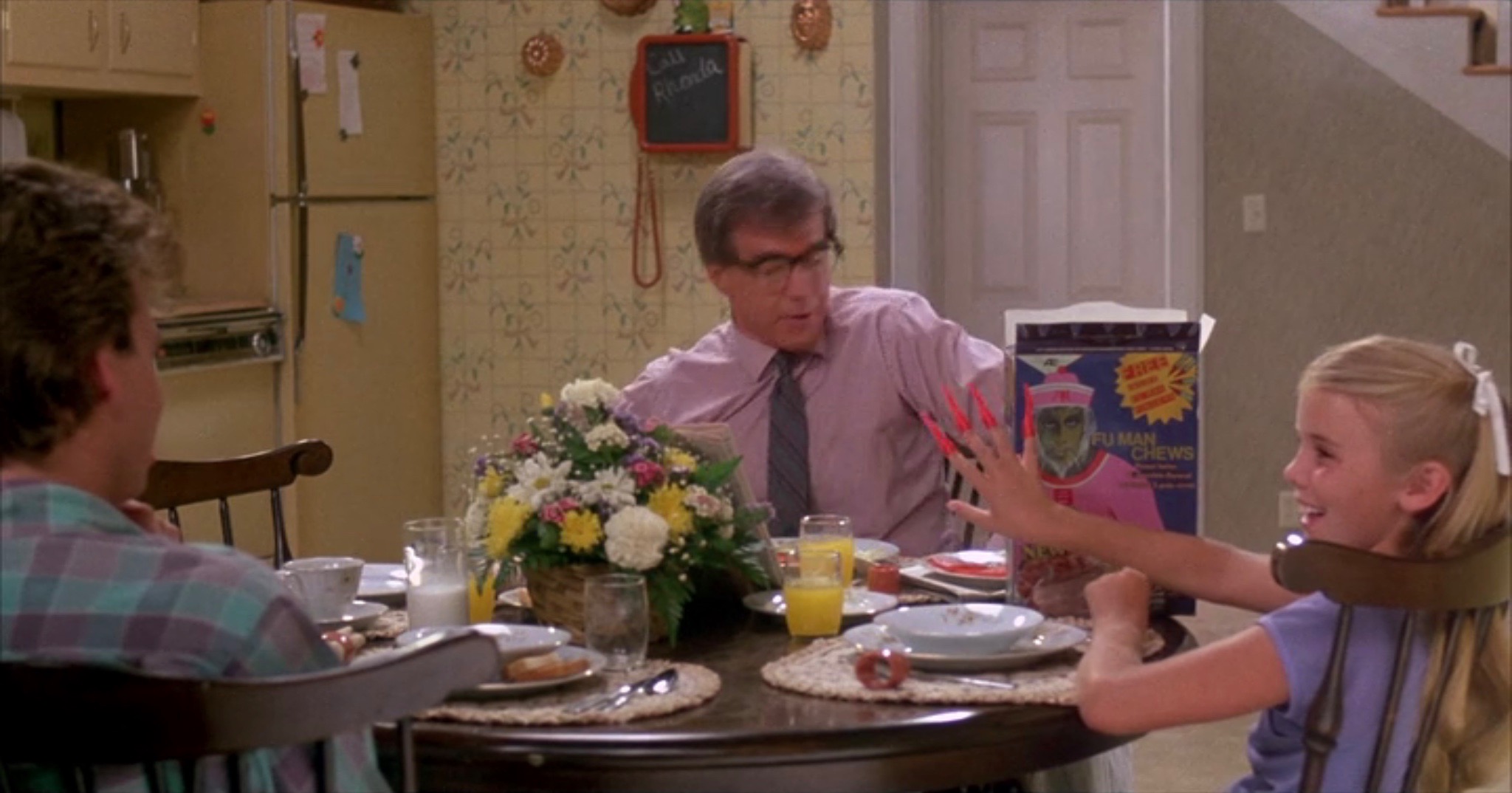
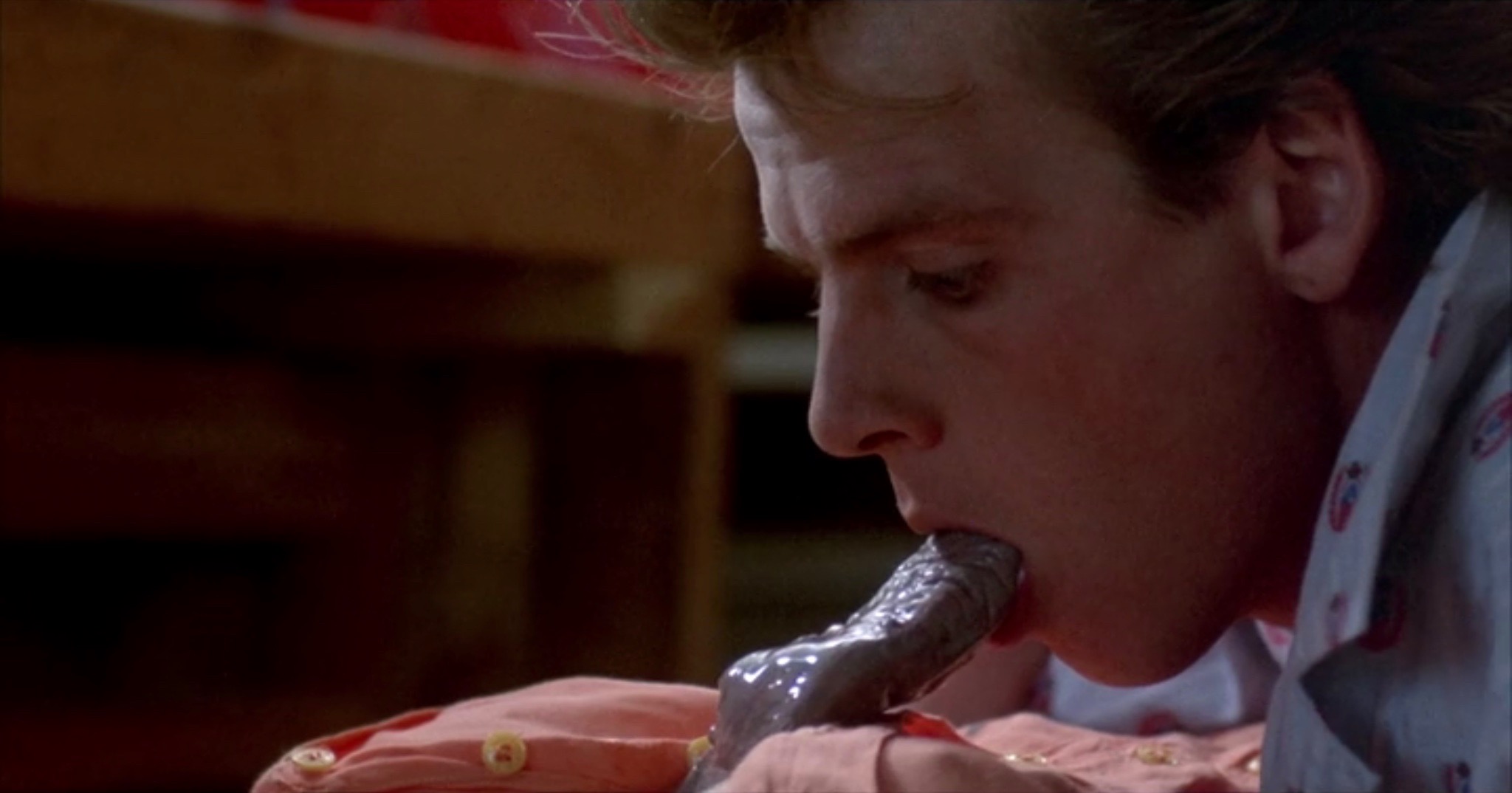
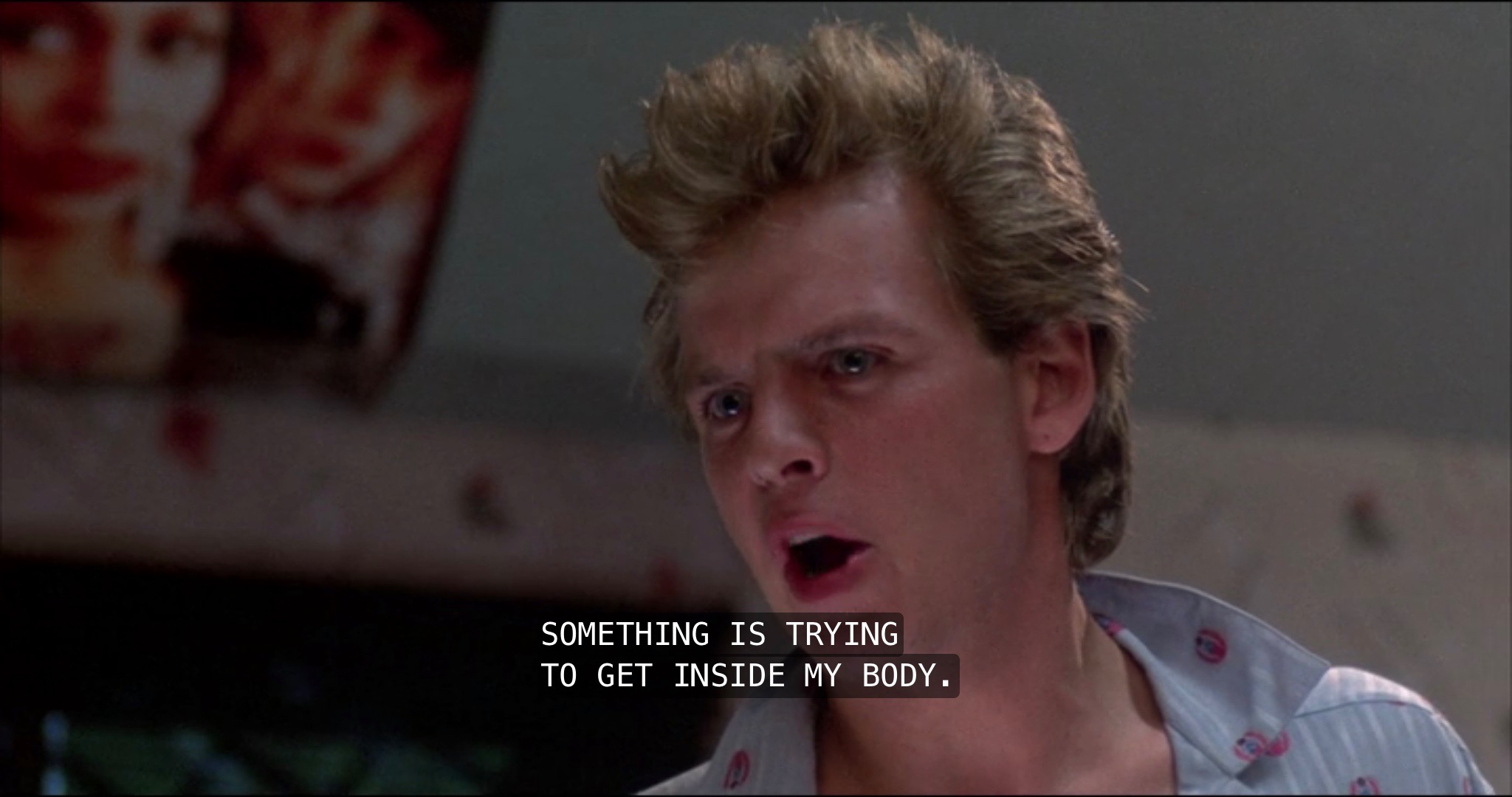
Unfortunately, Jesse does go downstairs to find that Fu Man Chews cereal is very real. That’s scary! This movie is cerebral. I remember the original also playing with what was real and imagined, but here it’s a little different. The things here are mostly real in that something really is happening in Jesse and it does have him take actions in the real world against his will. Freddy isn’t something that gets you in your dreams. In this sequel, Freddy is inside Jesse slowly but surely taking hold of him. Doesn’t really fit with the first one, but who cares. It’s much better than just getting a retread of the original.

IMG_8092

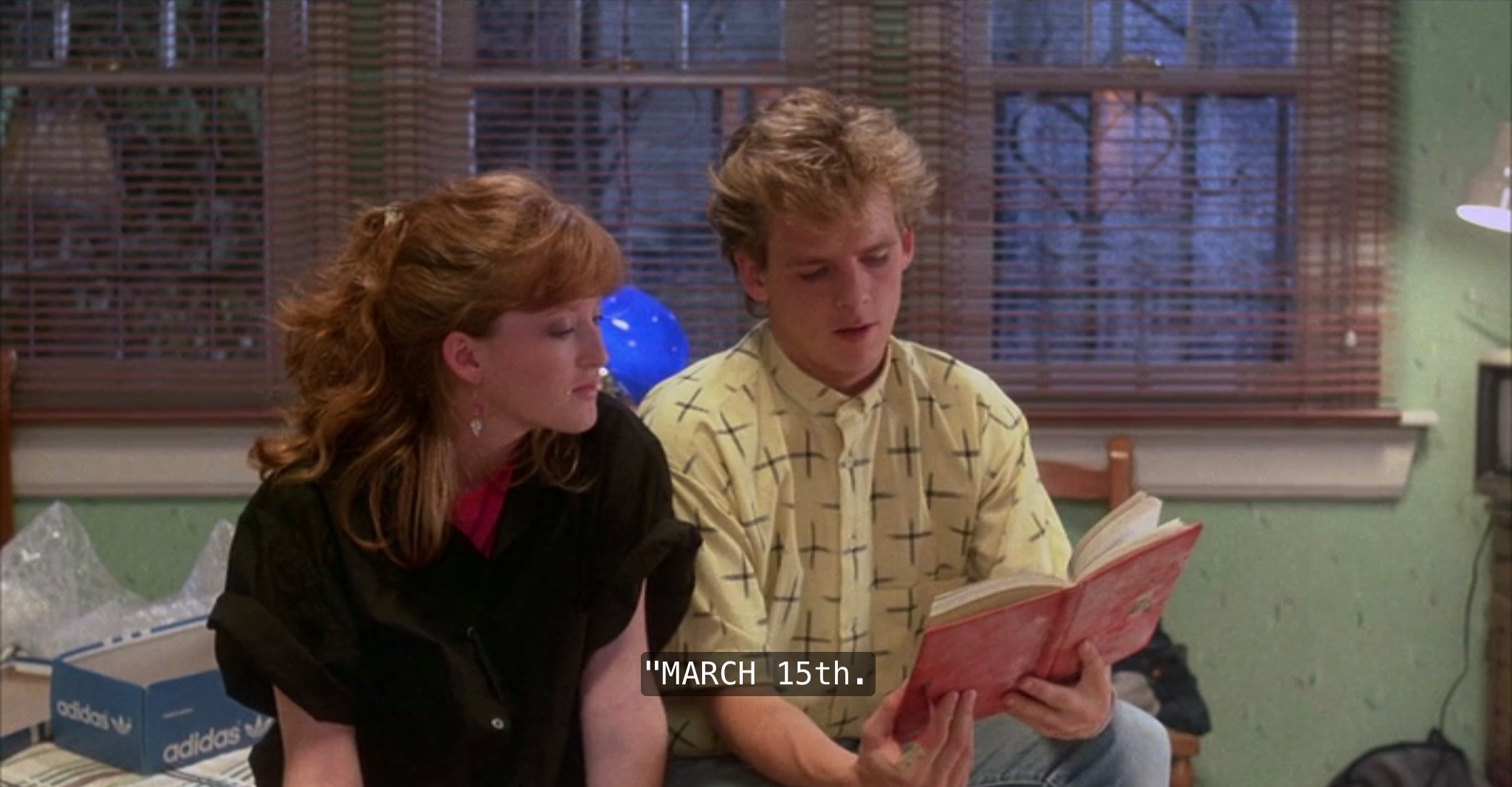
Pretty quickly, Jesse and his girlfriend Lisa (Kim Myers) find a diary written by the girl from the first film. They find it because it turns out Jesse’s family has recently moved into the house from the first movie, unbeknownst to anyone but the dad. One of the things people might latch onto in the hopes of reading gay subtext into this movie here is the “No (out of town) Chicks” sign on his door. Yes, because kids in high school are totally not so juvenile to have something like that on their door. And just in case we don’t remember that kids at that age are that juvenile. When Jesse and his friend are forced to do pushups by their coach on the field because they were fighting, they of course assume the coach must be “queer” because they know he frequents an S&M club.

IMG_8679

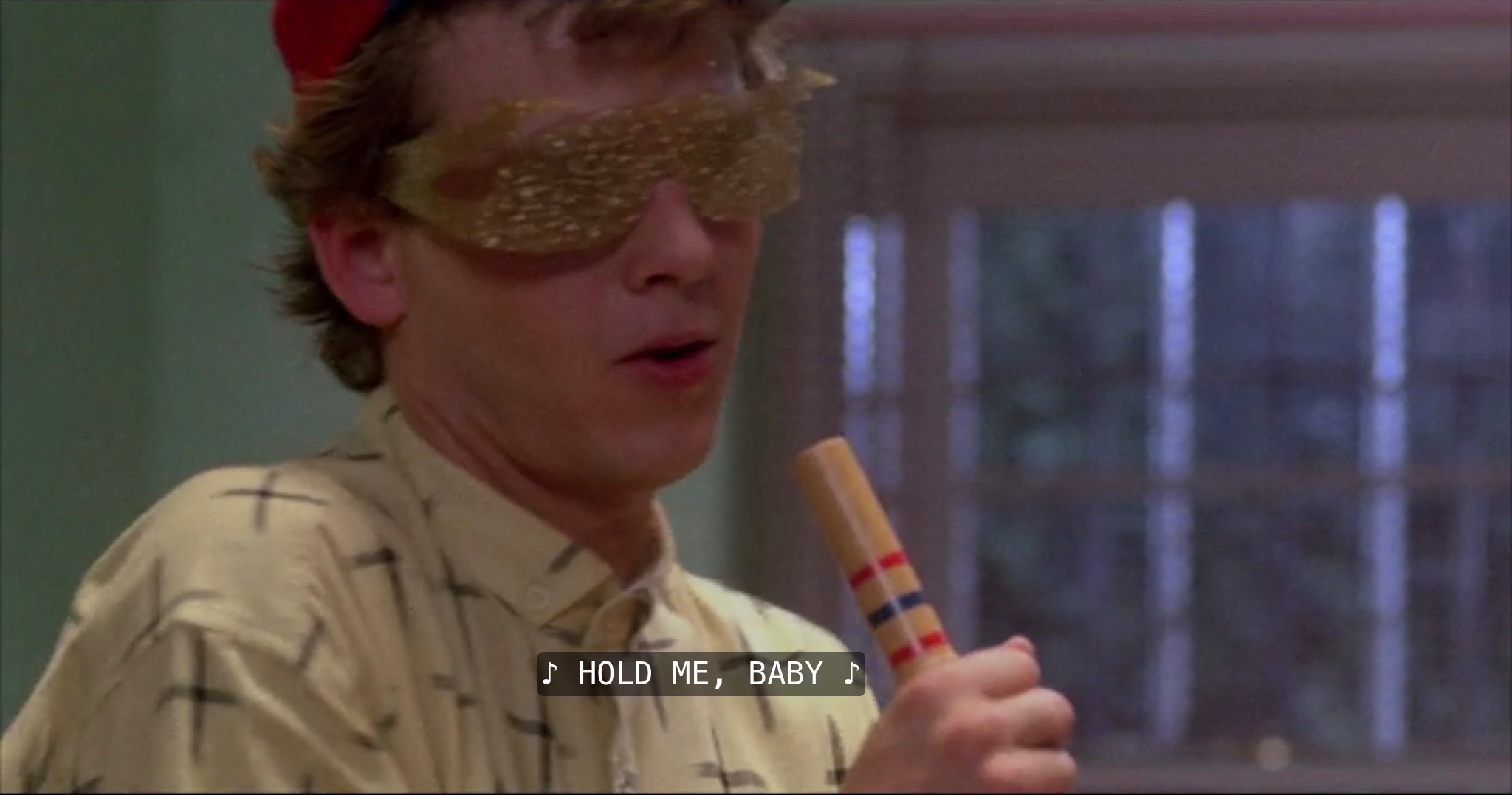
While we are here. I believe the cleaning the room scene pictured above means he’s gay about as much as I believe the girls from Teen Witch (1989) went home and made out with each other after the I Like Boys musical number.

As stupid as they are, these kind of scenes are all over 1980s movies. Remember this one from Risky Business (1983)?

Hell, going back to Teen Witch again. The infamous Top That! rap is just as goofy.

IMG_8163

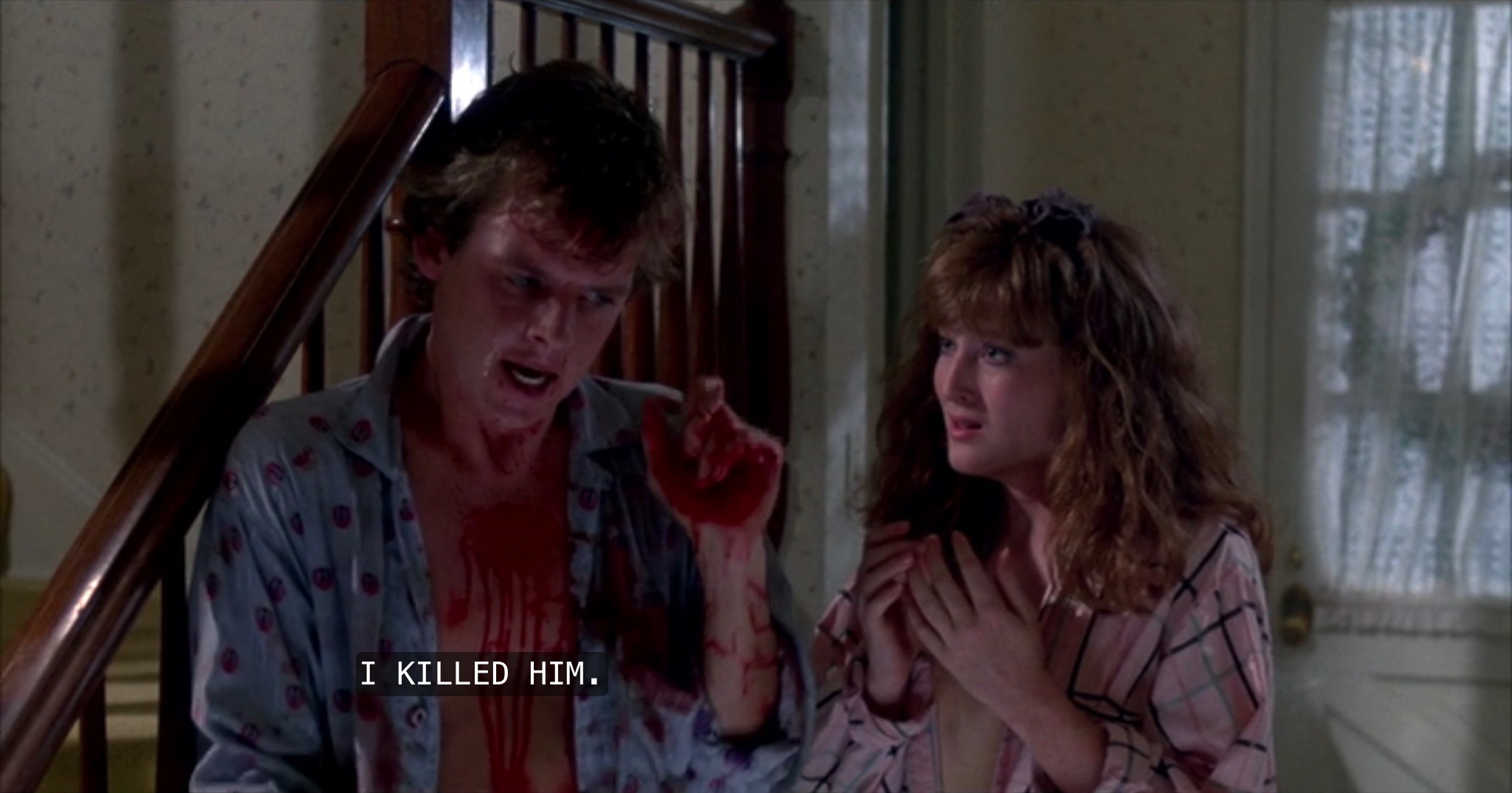
The first time we really see Freddy truly taking hold is when Jesse appears to leave his house in the middle of the night. He goes to the S&M club where his coach goes. It takes no time at all for the coach to spot him and punish him by making him run laps at the school gym. Of course they didn’t mention the coach was into S&M for anything. I can’t think of one off the top of my head, but movies from this period loved to throw in characters who were perceived sexual deviants, then punish or kill them in a manner similar to what turns them on. That’s what happens here to the coach. However, instead of Jesse waking up in his bed to find out the coach is dead the next day. He is actually brought home by the police, meaning it really happened. This obviously scares the crap out of Jesse.

IMG_8176

And things only spin further and further out of control as Freddy manifests himself more and more in reality. This is another scene I’m sure is supposed to seal the deal on the gay subtext.

IMG_8370

The gay is trying to get out of him so he flees being with his girlfriend to barge in on his friend. Of course he goes to his friend. This isn’t a big budget film we’re talking about here. The coach is dead, his parents think he’s on drugs, and Freddy just manifested himself while he was with Lisa. Who else is he going to go to but his friend? He’s the only other character of consequence left in the movie.

IMG_8385

And this line that Jesse says shortly after coming into his friend’s room means a penis if you are in middle school. This is where the film does run into some issues for me. Up until now, the movie did a good job of showing Jesse slowing losing his mind as Freddy took further and further control, but now he literally appears to jump into reality as if Jesse were an incubator. It eventually kind of explains it, but I wish they could have smoothed this out a bit more. Especially seeing how good of a job I think Mark Patton did up till now with the character of Jesse.

IMG_8440

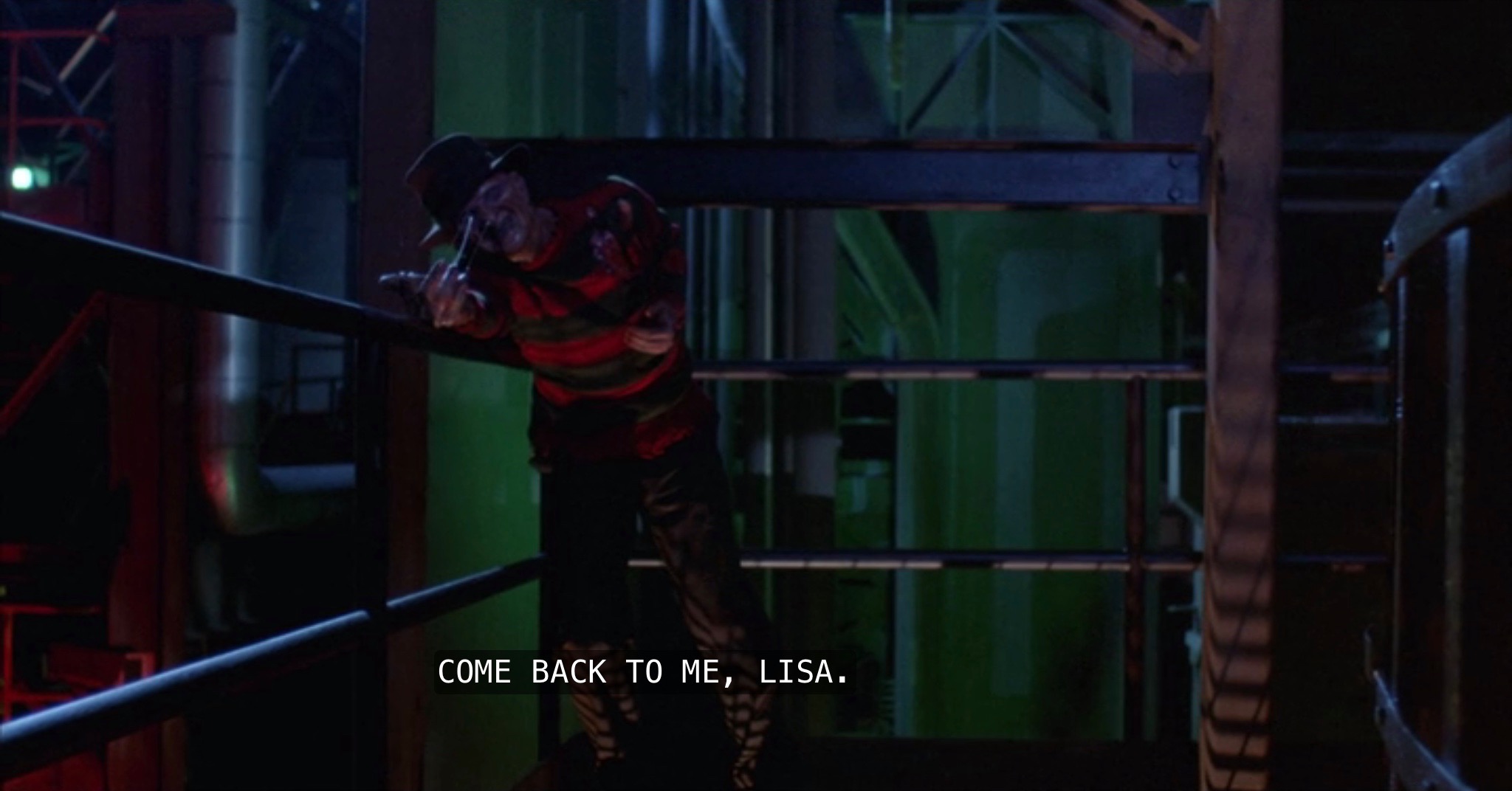
After Freddy runs wild at a party, Lisa goes to where Freddy used to work. There was a scene earlier where Lisa took Jesse there.

IMG_8522

This is where Lisa tries to get Jesse to fight Freddy’s control over him. In fact, we can hear Jesse sometimes and it’s clear that Freddy hasn’t destroyed Jesse quite yet. Or you can read this as reparative therapy with Lisa trying to call Jesse back to being straight. Even going so far as to kiss him because that’s never used in films to draw characters back from the dark side in a movie.

IMG_8543

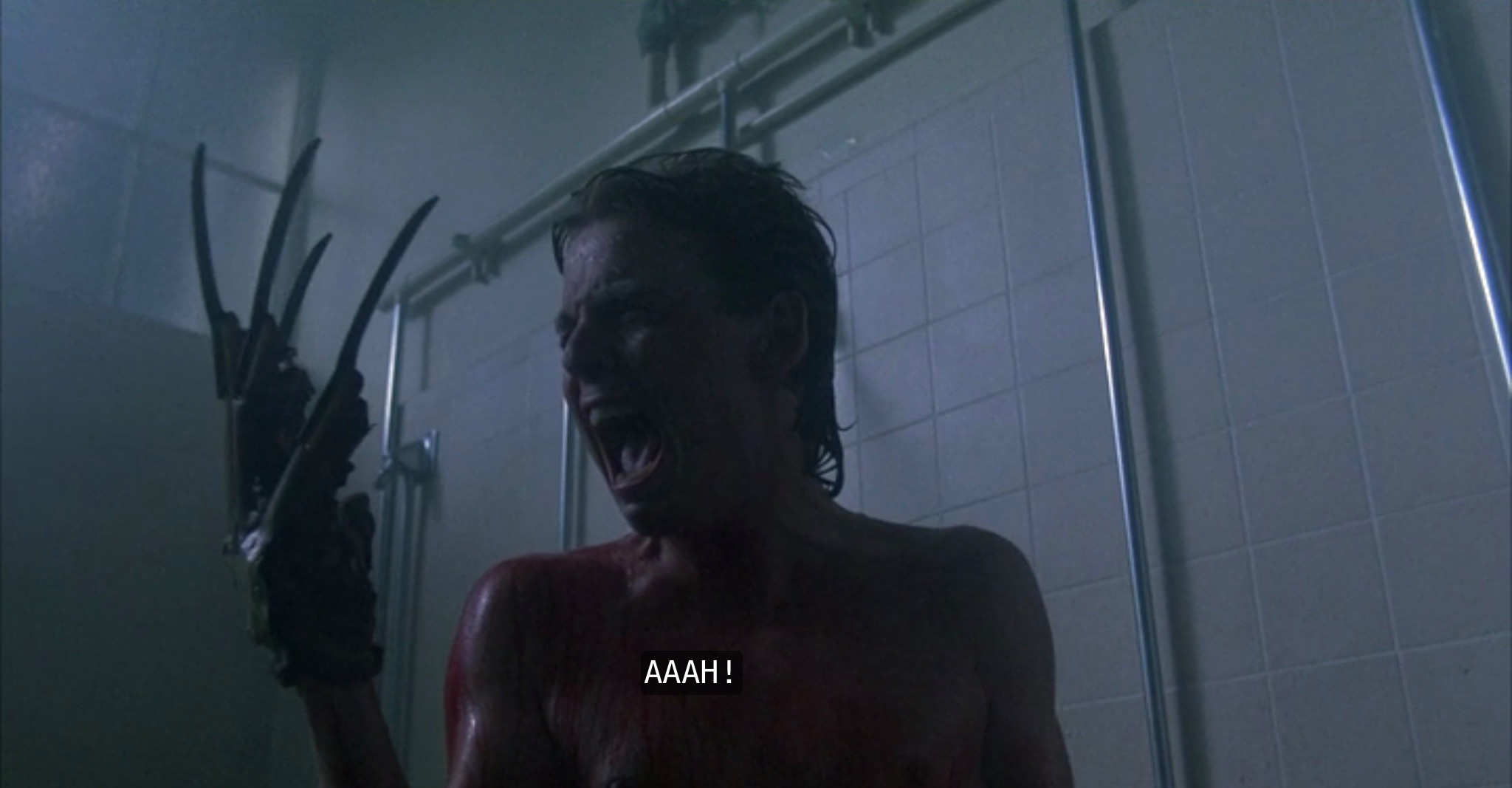
Then we get the ending of Ghostbusters (1984) in that Jesse emerges from the charred outer skin of Freddy. And then that little bit at the end of the movie just in case we weren’t sure that they were going to make more of these movies.

IMG_8564

And I’m sure you can read this the way you can the ending of Taxi Driver (1976) in that Jesse has only resolved this episode, but hasn’t dealt with the real issue. And I’m just coming up with these things off the top of my head without actually referring to anyone else’s posts.

As a follow up to the original, I like it. They tried to do something different that still drew from the source material. I really did like Mark Patton’s performance in this.

As a horror movie in general. It’s not really scary in the traditional sense. You don’t perceive something or someplace as now being dangerous and a source of fear like a regular horror movie does. In that sense, it’s actually even scarier because Jesse does nothing, but is simply taken over just because. Near the end of last year my brain turned on me and I wound up in the emergency room. They didn’t know what was wrong with me and sent me home. It took around five days or so to come out of it. While I was in it, among other things, I honestly believed I was trapped in some sort of Matrix-like prison that just looked like reality. I kept looking for anything that could be a flaw in what my brain kept telling me wasn’t real. It’s an absolutely terrifying thing.

As for the supposed gay subtext in the movie. It’s just not there. You can add up all the scenes you want and apply any meanings you want to them, but it doesn’t means it’s there. I’m transgender and Terminator 2: Judgement Day (1991) meant something to me as a kid. It doesn’t mean that the scenes where Robert Patrick is seen having transformed into a woman didn’t strike a note in me because they did. But it doesn’t mean that there is transgender subtext in it or anything that happens to have shapeshifting between genders. So please don’t take what I said as trying to take away something that might be special to you. I have no desire to do that. It’s just that you are reading your own meaning into it, not one that was hidden away and discovered by you.

Now I need to get back to something less serious. I’m in the middle of the first Mostly Ghostly movie and it’s not as stupid so far, but pretty close.

Horror Film Review: Patrick (dir by Richard Franklin)


Patrick_(film)

Patrick, a 1978 horror film from Australia, opens with the title character (played by Robert Thompson) watching as his mother makes love to her boyfriend.  The first thing that we notice about Patrick is his stare.  It’s intense and more than a little unsettling.  (Actually, to be honest, the first thing we notice about Patrick is his head of blonde hair.  But that stare is a close second.)  The next thing that we notice about Patrick is that he doesn’t speak.  Instead, he just stares.  Eventually, when his mother and her boyfriend are taking a bath, Patrick drops a heater into the water and electrocutes both of them.

Yes, Patrick has some issues.

When we next meet Patrick, three years have passed.  He’s in a coma now and spends all of his time laying in a bed in a private hospital.  Everyone says that he’s brain dead, despite the fact that he still reflexively spits.  The head nurse, the bitter Matron Cassidy (Julia Blake), hates the fact that Patrick is being kept alive.  As she tells a new nurse, she feels that he is a waste of space and she wishes that she could just turn off the machines that are keeping Patrick alive.

Strangely, Patrick shows no physical signs of having been in a coma for three years.  (One doctor points out that Patrick hasn’t even lost any weight during his time in the hospital.)  And then, there’s the fact that Patrick’s eyes are always open.  Even in a coma, he has the same intense stare.

An idealistic new nurse named Kathie (Susan Penhaligon) takes an interest in Patrick.  Over the objections of Matron Cassidy, Katie tries to talk to Patrick.  Kathie becomes convinced that Patrick’s spitting is not merely a reflex action but it’s actually his attempt to communicate.  Kathie becomes obsessed with proving the Patrick can still respond to the outside world.

And, in any other film, this is the type of storyline that would ultimately lead to a very inspiring conclusion, in which the idealistic nurse’s faith is validated and the stricken patient is finally allowed to find a measure of happiness and dignity.

However, Patrick is a horror film.

Kathie does eventually discover that Patrick can see and hear.  Patrick does know what’s going on in the outside world.  But what Kathie doesn’t expect is that Patrick turns out to be a bit of an obsessively jealous pervert.  Also, it turns out that Patrick has the power of telekinesis.  Soon, he’s using a typewriter to send Kathie messages like, “It’s time for Patrick’s handjob.”

Patrick also uses his powers to punish any man who he feels is getting too close to Kathie.  This includes Kathie’s husband, Ed (Rod Mullinar).  First, Patrick causes Ed to seriously burn his hands on a hot casserole dish.  Then he traps Ed in an elevator, forcing Kathie to beg for her husband’s life.

Patrick is a surprisingly well-acted and effective little horror film, one that spends as much time on maintaining the proper melancholy atmosphere as it does on trying to shock the audience.  The end result is an intelligent little gem that will make you think even as it attempts to scare you.  That said, my main memory of Patrick will always be that stare.  Seriously, it was so creepy!

A remake was released in 2013 but I have yet to see it.  However, I have seen the film’s unofficial Italian sequel and that’s what I’ll be reviewing next!


Hallmark Review: Jesse Stone: Lost In Paradise (2015, dir. Robert Harmon)


IMG_8234

Well, it’s been 5 years since I last watched a Jesse Stone movie. That was Jesse Stone: No Remorse (2010). I remember that one being quite awful. This one isn’t. I hope this is a sign that Hallmark is pivoting when it comes to the material in their films. Yes, it’s just an average detective story, but it looks, feels, and uses much more adult material. Thank goodness! At times I feel like I’m watching Hallmark: The Heart Of Infantile Adults network. Yes, Jesse bitches a little bit about cellphones in this, but I buy that as part of his character, not as something put in to pander to people who don’t like cellphones. In fact, he really doesn’t complain about cellphones in general, but about texting.

IMG_8226

The first question on your mind is probably whether you can jump into the series with this film. Yes, but you will feel like you have been dropped into a moving current. You really won’t be lost, but it seems to very much pick up where it left off. In this case, Jesse Stone (Tom Selleck) is working in Paradise, Massachusetts. The movie revolves around an unsolved killing that has been attributed to a man known as the Boston Ripper, played by Luke Perry. But it’s still an open case cause they really can’t quite pin it on him even though they have put him behind bars for three similar murders. Stone is curious to figure it out.

IMG_8299

There’s also this subplot involving this girl that Stone finds on the street and helps out. It might have ties to earlier material, but the only tie to the material in this movie I noticed is that helping her is like preventing a possible future victim of someone like the Boston Ripper.

IMG_8327

There’s honestly not much else to say. The case is somewhat interesting, but the movie really isn’t about the case in particular. It’s like the title suggests, Jesse Stone is lost in the metaphorical paradise and lives in the literal town of Paradise. It’s about a transitory period in his life. Heck, they even put up this title card at the start just in case you don’t pick up on that.

IMG_8233

If you’re used to the usual Hallmark mystery movies, then this isn’t one of them. It’s a welcome change. Nothing special, but I recommend it.