In late summer of 2010 the anime and film community lost one of its brightest stars with the passing of Satoshi Kon. With Miyazaki getting up there in age there was now a clamor to see who would take on the mantle that Kon had left behind with his passing. It didn’t take long for many fans of anime to finally look at Mamori Hosoda as the heir apparent. While Hosoda’s body of work as a feature-length animation film director hasn’t been as extensive as Kon’s or Miyazaki’s what he has done has garnered a near universal acclaim for their excellent storytelling, fully-conceived characters and lush, humanistic animation style.
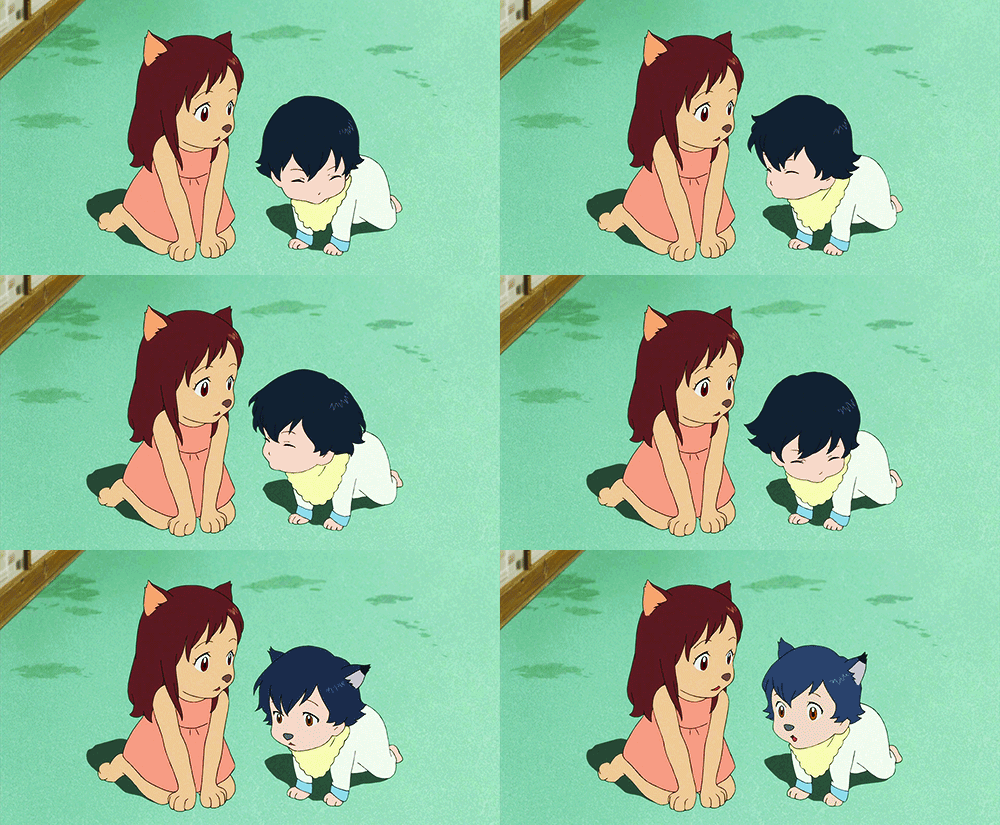
In 2009’s most people were finally made aware of Hosoda’s skill as a director with the worldwide success of Summer Warsand this success made people look forward to what his next film would be. It took three years, but in 2012 Hosoda and anime fans were finally given his next film with the animated film Wolf Children Ame and Yuki (Ōkami Kodomo no Ame to Yuki). It would be a departure from the scifi themes which has been Hosoda’s go to themes for his first two films.
Wolf Children explores the themes of the unconventional family unit of a single mother of two children born of her love and relationship with an Okami (a sort of spirit-animal who can turn from human to wolf). It’s these two young children, Ame and Yuki (who have inherited their father’s gift for turning into wolves themselves), who become the focus of the film. The two children must navigate their childhood and teenage years knowing that they’re different from the rest of the kids in school and both must make the life-altering decisions to follow their own paths whether it be as a human or as a wolf.
To say that the film skews more towards the naturalistic and humanistic themes of the Hayao Miyazaki films would be an understatement. Hosoda doesn’t steal from the master, but instead takes what made the Miyazaki films such timeless and global classics to spin his own tale on the role of a mother’s love for her children even after suffering through a terrible loss and right up to the exploration of nature. So much of the wonder in this film comes from the two children exploring the wild nature around them. It’s a joy to see and at times will even bring tears to some.
It’s no wonder that Hosoda has become the latest name to be seen as Miyazaki’s next heir apparent. While it’s unfair to put so much on Hosoda to accomplish he seems to be more than willing to take on the task and have done so with surprising success.
Wolf Children Ame and Yukimight be a slight departure from Hosoda’s two previous works, but it just goes to show that he’s a director who is willing to branch out thematically and stylistically. This latest film might not be on the same level as his two previous, but it’s definitely one that should help build his reputation as one of the best director’s in the anime and film community.
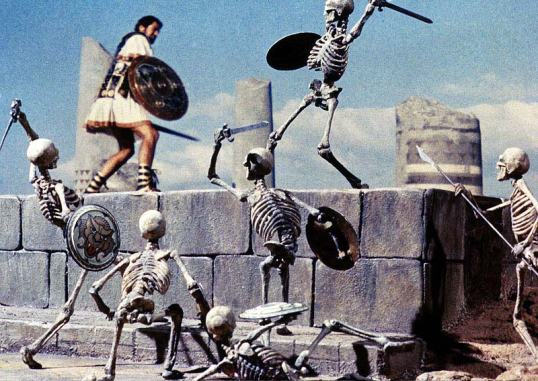
Earlier today came news that one of the legends of cinema passed away at the age of 93. Ray Harryhausen has been such an influential figure to many of the filmmakers, authors and artists working today. His stop-motion work and films were the fuel that fired up the imaginations of uncounted kids. I am one of those kids and even decades since I first saw my first Harryhausen film I still consider some of his works all-time favorites. His fantastical work will continue to fire up the imaginations of future children to come and maybe someone from those will grow up to be the next great fantasy filmmaker, author and artist.
There are so many scenes created by Harryhausen that it would be difficult to choose one for the latest “Scenes I Love”, but I will go with the scene I love best from the very first Harryhausen film I ever saw. I speak of the now classic “Skeleton Fight” sequence which provides the climactic scene for Jason and The Argonauts.
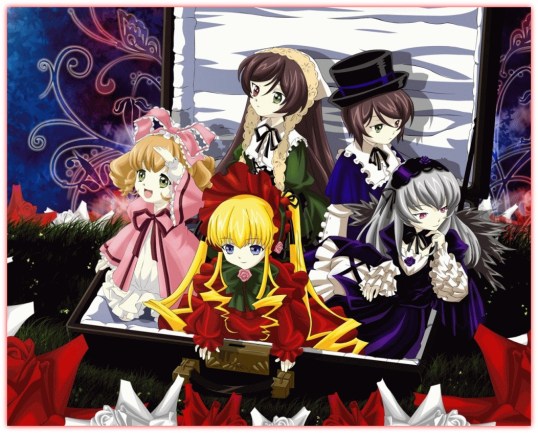
When I first returned to watching anime and reading manga a little over 4 years ago one of the series that I really enjoyed and continue to enjoy since has been the series from the art duo of Peach-Pit. This series about living dolls and one hikikomori boy named Jun Sakurada reminded me that anime wasn’t just cute and disposable entertainment with simple writing. This series wasn’t just cute to look at, but had writing that struck a balance between comedy, drama and, for a series about dolls, it was dark and melancholy.
Rozen Maiden is the name of the series.
Now comes word that the manga that is still on-going will be receiving a new series (already two seasons and two OVA’s have been released) after almost 6 years of no new anime content. There’s no word of when the new Rozen Maiden series will premiere in Japan and whether it’ll get licensed for a release in North America, but just the news that the project has been green-lit should delight fans of the series. For one thing it’ll mean more desu.
Timur Bekmambetov is one filmmaker that can never be said to hold things back visually on any of his films. He has a style that can be called a combination of the Wachowski Brothers and Zack Snyder. Now one can read that and just groan. The Wachowskis and Snyder are not what one would call the paragon of the filmmaking community. What they do tend to do are create pop-friendly and consumer-friendly films. Whether thse films are of high quality is another thing altogether.
Bekmambetov is an interesting filmmaker from Kazakhstan (who could easily pass for what we imagine Genghis Khan to look like if he was still alive) whose brand of action films tend to focus on all style with little to no substance. For some audiences this just means dumb, brainless fare that has no reason to be paid to see, but I tend to think these same people who shout loudest about how these type of films are dumbing down it’s audiences secretly watch them like crack addicts once they’re on cable. Bekmambetov’s latest film, Abraham Lincoln: Vampire Hunter, definitely follows his unique action and storytelling template he’s established with past films as Nightwatch, Daywatchand Wanted.
The film lives and dies on the simple conceit that one of the United States’ greatest Presidents was also vampire hunter of some skill. We see how an encounter with the vampire which led to the death of Abe’s mother (who had died of the condition known at the time as milk sickness) propels him through the intervening years to plot revenge on the same vampire. It’s during a failed attempt at revenge that he’s noticed by one Henry Sturgess (played by Dominic Cooper) who sees another potential vampire hunter in the young man (adult Lincoln played by one Benjamin Walker who could easily pass for a very young Liam Neeson). We get the usual training montage where Sturgess teaches Abe the finer points in vampire hunting and killing. It’s only proper that Abe would end up picking the rail-splitting axe he’s more comfortable in using than the more practical firearms.
Abraham Lincoln: Vampire Hunteris almost a straight adaptation of Seth Grahame-Smith’s novel of the same name. Some minor subplots are discarded to keep the film moving in the one path the filmmakers and screenwriter (Grahame-Smith himself) decided to concentrate on. It’s this one thing that really pushes the film into a level that would win an audience to it’s cause or lose them altogether. This thing I speak of is the idea that slavery was due to the vampires who have set themselves as the so-called shadow aristocracy of the South and needed a ready source of food to keep themselves hidden from the humans. Yes, slavery was started and made into a near industrial level by vampires. This in turn moves Lincoln to move beyond just vengeance on the vampires who have affected his life from such an early age and instead go towards abolishing slavery from the country as a way to destroy the vampires once and for all.
These are heady ideas that doesn’t seem to fit well with historical facts and figures. Yet, the film does a good enough job of keeping things serious with just the right amount of over-the-top action sequences that Bekmambetov has become well-known for. One such action sequence involves Lincoln and a vampire having a chase scene involving a huge horse stampede. They fight in and amongst the stampeding equines and then on and above them. It’s a sequence that’s equal parts exciting and ludicrous that one just has to either sit back and enjoy it or stand up and walk out. Which is the film in a nutshell. One either goes all-in on the film’s story or folds mentally.
This is not to say that the film has no flaws. It has some glaring flaws that threatened to push the film over the edge of being a fun action flick into all-out dreck. For starters the vampires themselves made for good villains, but Rufus Sewell as the leader of the American vampires (who happens to call himself Adam) looked bored with the whole proceedings. There were brief moments when the charm that we expect from vampire leaders show, but it’s far and few between. Most of the time Sewell looks to be just standing in a particular scene looking bored. The rest of his clan of vampires are no better though Marton Csokas asBart, one of Adam’s lieutenants and main supplier of slaves, did such an over-the-top performance that one wouldn’t be surprised to catch a glimpses of scenery stuck between his teeth.
It’s really the performance by Benjamin Walker in the title role that keeps the film afloat. He has a commanding presence on the screen and he’s able to be convincing as Lincoln both as a young man and then as the elder statesman (some very good old man make-up effects that put the elder Peter Weyland make-up in Prometheus to shame). Mary Elizabeth Winstead as Mary Todd Lincoln also does a good job in what could’ve been a thankless role, but she didn’t look out of place in this peculiar period piece.
The action sequences themselves were choreographed well even though Bekmambetov was still relying a lot of his own brand of slo-mo to accentuate the cool kills Lincoln makes with his silver-coated axe. After awhile this gimmick began to get repetitious, but then again one shouldn’t be surprised to see such a thing over-used in a Bekmambetov film. If one has seen his three previous films then they should know what to expect. Yet, even this doesn’t detract from what this film ultimately turned out to be and that’s just plain fun despite lacking in the acting in certain roles and the sensational, some would say tasteless, use of the Civil War and slavery to tell a story about a vampire-killing President.
Abraham Lincoln: Vampire Hunterwill not make filmmakers like Christopher Nolan, Lars Von Trier and Michael Haneke quake in their shoes. It’s not a film that was made to win awards (though I can see it being nominated for best fight sequence in the MTV Movie Awards). What this film does seem to succeed enough in doing is be a fun and exciting film that rises above it’s source material on the strength of it’s lead and the action created by it’s filmmaker. For a genre film it certainly did a better job of mashing together disparate ideas than last year’s Cowboys & Aliens. Maybe if this film is enough of a success we’ll finally get some movement in the planned film adaptation of Seth Grahame-Smith’s other literary classic mash-up: Pride and Prejudice and Zombies. One can only hope.
“The one constant through all the years, Ray, has been baseball. America has rolled by like an army of steamrollers. It has been erased like a blackboard, rebuilt and erased again. But baseball has marked the time.” — Terence Mann
I have always been a fan of baseball. I would say that baseball has been the one thing which has always remained constant for me throughout the years. Other sports may be flashier, faster and more violent, but baseball I’ve always equated as part of America’s national identity. This is why 1989’s Field Of Dreams by Phil Alden Robinson continues to resonate for me and for legions of baseball fans everywhere.
The film is based off of the W.P. Kinsella’s novel, Shoeless Joe, and tells the story of one Ray Kinsella and his titular field of dreams. It’s a film which sees Ray not just building a baseball field in his field of corn despite financial problems bringing him and his family closer to losing everything, but it also sees him traveling across the country to find a reclusive writer in Terence Mann (J.D. Salinger in the novel). It’s afilm which offers an insight to what makes baseball and the American identity so intertwined as the film finally offers Ray a chance to finally realize that the very baseball field he has built in his cornfield has granted many a second chance to realize their dream. For this film that dream is to be able to play baseball once more and this second chance becomes important to the ghosts of baseball’s past who have fallen from baseball’s grace through a scandal which had them banned from the game they love.
I’ve never been a big Kevin Costner fan, but his work in this film as Ray Kinsella showed me why people saw in him talent as an actor and not just a pretty face up on the screen. His real-life love for baseball shows in his performance as Ray whose own love for baseball becomes a personal journey for redemption and reunion with a father who also shared his love for the sport. The performances by Amy Madigan as Ray’s supportive wife was quite good and allowed the character not to be eclipsed by Costner’s excellent work as Ray. Even James Earl Jones as the writer Terence Mann gives the film a level of gravitas which just added to the film’s intimate yet epic nature. But it’s the breakout performance by Ray Liotta as the ghost of baseball great Shoeless Joe Jackson. Liotta’s screentime was limited to mostly in the latter part of the film, but his presence dominated every moment he was on the screen.
Field of Dreams has been called just a good baseball film by some, but for many people who have seen and loved it see it as more than just a film about baseball. It’s a film that shows Americana at it’s best and most nostalgic. Shows how one sport has become such a positive influence on the relationship between children and their fathers. It’s a film that dares to show genuine affection and love to the idea of letting someone follow their dream despite many outside influences and obstacles trying to get in their way. There’s a reason the film was nominated for an Oscar Best Picture. Even voters who are so used to rewarding films that look at the darker and more depressing side of the human condition could see the inherent quality in a film which looks at the brighter and more hopeful side of the equation.
While Christopher Nolan’s The Dark Knight Rises is the most anticipated summer blockbuster for this upcoming 2012 then it would be safe to say that the most anticipated film for 2012 for some would be Peter Jackson’s The Hobbit: An Unexpected Journey.
This is a film that has been years in the making and even more years in development hell as the rights to J.R.R. Tolkien’s novel, The Hobbit, was entangled through many different studios. Once those entanglements were finally resolved and the film set to be put into production the film suffered more setbacks as budget and script rewrites kept things from starting. The original filmmaker picked to helm this two-part prequel, Guillermo Del Toro, had to back out after years of delays though he still remains as producer and his ideas and conceptual art and design has become the foundation for the film.
The film finally got the greenlight to start filming once Peter Jackson stopped searching for Del Toro’s replacement and took on the role as director once again. While Del Toro was a great choice I think most fans of the original trilogy were glad that Jackson decided to just take up the director’s chair once more. Who else knew the world of Middle-Earth on film better than the man who made what was called the unfilmable novel into the new millenium’s iconic film trilogy.
Like the production of the Lord of the Rings trilogy, Jackson and his geniuses at WETA have been pretty good with showing fans progress made on the films through video blogs released by Jackson himself. With just a year left to go before part one of this two-part prequel premieres we finally have the first official teaser trailer to the film and I must say that it’s great. Even from just snippets shown in the teaser one could see some of Del Toro’s more darker concepts and influence in the film’s look and tone. But then some of it also comes from Jackson himself whose early background as a filmmaker was all about dark, macabre subjects and themes.
The Hobbit: An Unexpected Journey is set for a December 14, 2012 release.
Been awhile since I was able to find and post a new AMV (anime music video) which means the pickings have been slim. But as I was writing up the post commemorating the site’s 1000th post milestone I was listening to some J-Pop as background music and one particular song came on. It was BONNIE PINK’s “Ring a Bell” which was used as the opening song for the very fun and beautiful JRPG Tales of Vesperia. As soon as I finished writing up the milestone post I searched YouTube for AMV’s which used this song and after finding a couple AMV’s which used it I settled on the best one I was able to find.
The latest AMV is from YouTube user XValkyrieAngelX and it was titled Kobato – Ring a Bell. I knew of the song, but the anime used was one I’ve heard about but never had the opportunity to watch: Kobato.
First off, the editing work by XValkyrieAngelX was very good. She didn’t make the video too cluttered and confusing with massive amounts of quick edits and cuts. Her use of particular video effects was timed well with the song that they weren’t distracting. One thing she was also able to do was keep the AMV relatively spoiler-free. The anime itself has been called one of the many romance-comedy that continues to be quite popular in Japan and pretty much with most anime fans so the video shows of the romance side of the anime but not enough to ruin the whole story.
The song “Ring a Bell” is one of those catchy J-Pop ballads which just sticks to one’s mind and won’t let go. Using this song really matches up well with the visuals used from Kobato. One of the best compliments I could ever give an AMV creator is that they were able to convince me to watch an anime I’ve only remotely heard of just based on watching them use it in one of their videos. Kobato – Ring a Bell is one such AMV and as soon as I finished watching it I went over to Amazon and, lo and behold, the DVD was up for pre-ordering and I went ahead and pre-ordered it.
XValkyrieAngelX has more AMV’s uploaded in her YouTube account and this one has given me reason to watch the rest of her work.
Just been watching The Social Network on Starz and I couldn’t help but think back to this important scene from one of my favorite films of all-time. It was the film which propelled Arnold Schwarzenegger from just being a bodybuilding icon but into superstar film icon. The scene occurs during the part of the film where Conan has just gone through years of becoming the best pit-fighter in all the lands and now repaing the accolades from other warriors, warlords and women. One of the warlords (looking like a Mongol horselord) asks the important question that everyone should be asking: “What is best in life?”
The scene finishes with Conan answering this important life question. An answer which actually has it’s roots from a much more detailed quote from the greatest conqueror in history: Genghis Khan. A quote that goes like so…
“The greatest pleasure is to vanquish your enemies and chase them before you, to rob them of their wealth and see those dear to them bathed in tears, to ride their horses and clasp to your bosom their wives and daughters.” – Genghis Khan
Conan’s answer is quite similar but has been simplified for the film, but still retains it’s impact. This is a life lesson everyone should live by. Mark Zuckerberg definitely lives by them.
“Arise, arise Riders of Théoden (Riders of Rohan)! Fell deeds awake: fire and slaughter! Spear shall be shaken, shield be splintered, a sword-day, a red day, ere the sun rises! Ride now, ride now! Ride for ruin… and the world’s ending! Death! Death! Forth Eorlingas!” – Theoden, King of Rohan
This marks the final “Scenes I Love” series from Peter Jackson’s fantasy epic, The Lord of the Rings. The last couple days have seen a favorite scene picked from the first two film. Today’s pick was a tie between two scenes. One a third of the way into The Return of the King with the second being two-thirds in and a logical consequence of the first scene picked. I could’ve easily picked one over the other, but I’ve always seen the two as connected in some way. I also didn’t want to pick one over the other so we have two scenes instead of one. I say that’s a bonus for everyone.
The first scene was (continues to be one of my most favorite scenes ever put on film) the lighting of the beacons which signals Gondor’s call for aid to it’s far neighboring kingdom of Rohan. This scene just builds and builds until the rousing “Gondor theme” reaches it’s peak and shows each beacon lighting up one right after the other until it reaches the mountain peaks outside Rohan. No matter how often I see this scene (especially now on blu-ray) I can’t help but still feel a sense of awe at what Peter Jackson and his crew pulled off. One buys into the scene and just marvels at the sequence. A film which, up until the lighting of the beacons, had such a hopeless tone to it suddenly had hope appear.
The second scene finally sees the culmination of the lighting of the beacons. Rohan has responded in force as every able-bodied man and his horse have gathered on a rise above Pelennor Fields. With Theoden knowing the forces of Sauron arrayed and besieging Mina Tirith dwarfs even his own cavalry force he nonetheless orders his men to charge the Mordor lines to help break the siege. His speech in this scene trumps even Aragorn’s own rousing speech later on in the film which is saying much. The charge of the Rohirrim down into the Mordor lines gets a nice assist from Howard Shore’s score which begins with the “Rohan theme” signalling the arrival of the Rohirrim to the battle then transitioning to the “Nature theme” which is heard for the first time in full orchestral mode before returning to the “Rohan theme” as the Rohirrim charge finally crashes into the Mordor lines.
The charge itself looked great when I saw it on the big-screen and still the best way to see it. Barring not seeing it on the big-screen the best option would be to see it on blu-ray and on a large HDTV screen. The wide, overhead shot of the massed cavalry gradually gaining speed with Theoden at the elongating tip in the middle makes for great, epic filmmaking. The scene sells itself as Jackson used hundreds of extras in real armor and on charging horses (with CGI copies expanding their numbers into the thousands) to show true weight to the scene. I recommend to those who want to revisit this scene to watch it again but using their surround sound system on high and feel the thundering hooves of the charging Rohirrim until they crash into the Mordor lines. It’s the only way to see and experience the scene.
Yesterday, I had chosen my favorite scene from Peter Jackson’s The Lord of the Rings: The Fellowship of the Ring. Today, I just finished re-watching the sequel to that film (though I think of it more as the second act of a 12-hour film), The Two Towers. From this second act I chose the one of the three climactic sequences in the film: Gandalf the White’s arrival and subsequent charge of the Rohirrim to break the siege of Helm’s Deep.
This second act had so many excellent scenes. From the last march of the Ents as they go to war against Isengard, to Gandalf’s descent and fight against the Balrog right up to the hour-long battle for Helm’s Deep. In the end, it was the charge by Gandalf, Eomer and the Rohirrim which sealed the deal for me. It wasn’t just the dramatic entrance of these characters to save their friends, but Howard Shore’s score which really added to the scene.
I love how just as the Rohirrim charge was about to smash into the front ranks of the Uruk-Hai spearmen the sun behind the charge peaked above the top of the incline and blinded the defenders at the bottom. For someone who has studied military tactics and maneuvers in battle this was a textbook use of the sun at a charging forces back to blind and confuse the enemy. Many who saw this film probably just saw it as just part of the scene, but not I. This is the major reason why this scene was my favorite in The Lord of the Rings: The Two Towers.




 Through the Shattered Lens