4 Shots From 4 Films: Special Moon Edition


4 Shots From 4 Films is just what it says it is, 4 shots from 4 of our favorite films. As opposed to the reviews and recaps that we usually post, 4 Shots From 4 Films lets the visuals do the talking.

Today, we pay tribute to the moon!  It’s time for….

4 Shots From 4 “Moon” Films

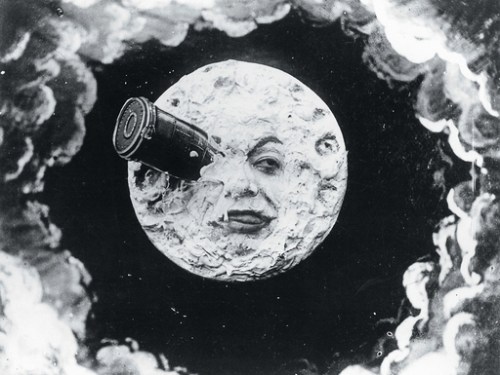
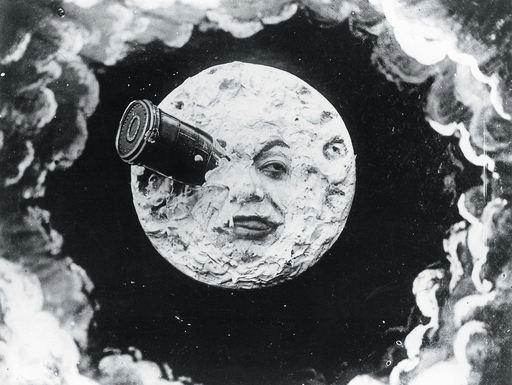
A Trip to the Moon (1902, dir by Georges Melies)

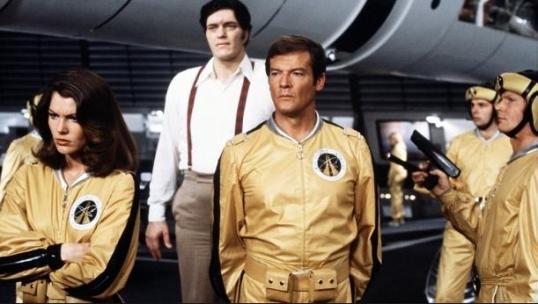
Moonraker (1979, dir by Lewis Gilbert)

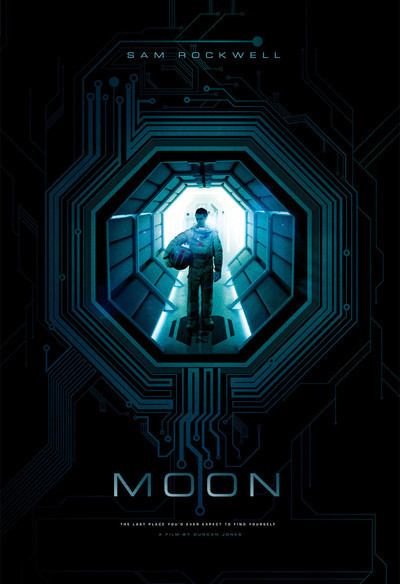
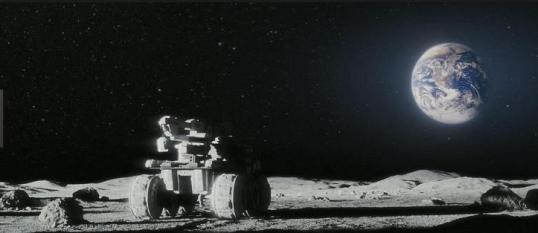
Moon (2009, dir by Duncan Jones)

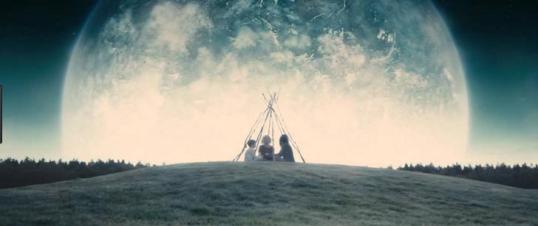
Moonrise Kingdom (2012, dir by Wes Anderson)

Live Tweet Alert: Join #FridayNightFlix for Source Code!


As some of our regular readers undoubtedly know, I am involved in a few weekly live tweets on twitter.  I host #FridayNightFlix every Friday, I co-host #ScarySocial on Saturday, and I am one of the five hosts of #MondayActionMovie!  Every week, we get together.  We watch a movie.  We tweet our way through it.

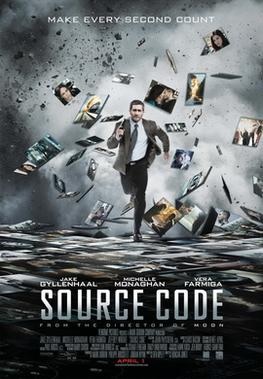
Tonight, at 10 pm et, I will be hosting #FridayNightFlix!  The movie?  2011’s Source Code! 

Can Jake Gyllenhaal prevent a bombing on a train?  That sound like a simple premise but, in Source Code, things get much more complicated.  This twisty sci-fi thriller from Duncan Jones was one of my favorite films of 2011 and I look forward to watching it with the Friday Night Flix crew!

If you want to join us this Friday, just hop onto twitter, start the movie at 10 pm et, and use the #FridayNightFlix hashtag!  I’ll be there tweeting and I imagine some other members of the TSL Crew will be there as well.  It’s a friendly group and welcoming of newcomers so don’t be shy.

Source Code is available on Prime!

See you there!

Moon, Review by Case Wright, Happy Horrorthon! *Some Spoilers*


Happy Horrorthon! My midterms are done; so, I have this brief window to be analytical that doesn’t involve Petroleum, Carbon, A piston, or some sort of torque. This film is the kind of horror film that I like that dares to be political. Duncan explores the hidden cost and ineffectiveness of best intentions. You have an intractable problem, but is the solution actually helping and are the people advocating it trustworthy? Moon presents the problem: Global Warming. The solution that is marketed and sold to the world is fusion by strip mining the Moon and sending the fuel back to earth. There are scenes where we see scars on the moon from the strip mining. Are we creating a new problem? Is the solution a net wash? Is the solution financing an evil regime? Why is environmentalism immune to cynicism? The exploitation of an unlimited labor? Have corporations done anything ever to warrant even our limited trust? These are the questions that Duncan forces us to confront with horror.

I know that this sounds ham-fisted, but the political statements are brilliantly subtle. This is not a right-wing political film either; on the contrary, it’s about presenting the moral imperative of considering unintended consequences as we push to solve real problems.

My eyes rolled so hard at the opening though when a corporate ad from Lunar, the mining company, pushed their “Green Energy” solution that I almost turned it off because the last thing I needed post-midterms was someone scolding me for 97 minutes. However, the opening was visually stunning; so, I hung with the film. Also, it starred Sam Rockwell and he’s awesome. This was the directorial debut of Duncan Jones who is immediately identified as David Bowie’s son, but you don’t need to confirm that with Wiki because he looks just like his Dad.

We are in a future where fossil fuels are thing of the past and fusion via strip mining the moon is providing the world with a New Eden; at least, that’s what the totally trustworthy corporation is telling us in it’s slick ad.

(Now, if you want to really end ALL fossil fuels, the solution is to perfect Tesla Coils and wirelessly transmit electricity this would obviate the need for batteries and would power the world constantly. Horrorthon is not just for great commentary; it’s for learning! )

The film is a one-man/two man show….huh…just wait. Sam Bell is a moon worker on a three year contact, maintaining the moon harvesters as they strip mine this essential rock that keeps our axis stable. In this future, the job of astronaut is less Neil Armstrong and more horrible non-union factory job. Sam is dirty, breaking down, beginning to hallucinate, and bored to tears. The live-link to planet earth has not functioned since his arrival and he’s surrounded by nearly completed hobbies like whittling towns from his memories. We are forced to see the horror of a human being in profound loneliness and hopelessness for our needs.

The next plot point has Sam checkinng on a malfunctioning harvester; however, he has a vision of his daughter and he crashes. We see him pass out as he’s being buried alive. Sam wakes to his only companion- a robot with Kevin Spacey’s voice. Important note is that this film was from 2009. Sam’s suspicious that there might be something outside of the ship and the robot appears to be able to talk live with the evil corporate leaders from earth. Sam is determined to investigate outside the ship. After a brief sabotage, Sam is able to investigate the moon harvester. He discovers a busted up copy of himself.

He’s confronted with Lunar’s answer to the high cost of unions, labor complaints, and pay: you don’t negotiate with employees, you grow them. If things go really wrong like two clones meet, you send in goons to kill them, and wake up new disposable people. What’s is so painful is that the corporation gave the clone’s a 3 year lifespan; so, we watch Sam Bell Prime disintegrate slowly in scene after scene, including one where he spits out a molar… yeeeeech. While we see the human toll, we also see the moon missing huge chunks of itself as result of the mining. So, we are committing this horrible evil, but is this clean energy just creating a new and unintended problem? We are so desperate to not think things through that we greenlight an idea to destroy our own moon and credulously accept corporate talking points.

This film was thoughtful and painful. Duncan Jones forces us to think take some time and… THINK. What are we doing? Maybe doing something just to do something isn’t the answer? We are confronted what we don’t want to consider: how did this sausage end up in this package? I’m not seeing any pollution; therefore, it’s not happening. Our society is less owl and more ostrich every day.

Happy Horrorthon!

Sundance Film Review: Moon (dir by Duncan Jones)


With this year’s Sundance Film Festival getting underway in Colorado, I’m going to be spending the next few days looking at some films that caused a stir at previous Sundance Film Festivals.  Today, I’m taking a look at the 2009’s Moon.

It’s time for all good people to praise Sam Rockwell.

As far as I’m concerned, Sam Rockwell is one of the patron saints of character acting.  Is there anything that he can’t do?  He can do comedy.  He can do drama.  He can play the cool, older guy, like he did in The Way, Way Back.  He can play the nerdy, weirdo as he’s done in too many movies for me to list.  He can play a mentor and he can play a student.  He can make you laugh and he can make you cry.  He’s one of those actors who can seamlessly transition from small indie films to huge blockbusters without missing a beat.  Rockwell won an Oscar for his performance in Three Billboards Outside Ebbing, Missouri and he might just win another one for playing President George W. Bush in Vice.  He can even dance, as anyone who has seen him in Iron Man 2 can tell you.  Rockwell’s been acting since he was a teenager and he’s definitely earned the right to be known as one of our greatest actors.

For that reason, it can sometimes be a little bit difficult to decide just which performance is Rockwell’s best.  He’s appeared in so many different movies and he’s played so many different characters.  Even when the movie’s bad, Rockwell is usually great.  However, if I had to sit down and pick one Rockwell performance as being the epitome of everything that makes him a great actor, I’d probably go with his performance in Duncan Jones’s contemplative sci-fi film, Moon.

In Moon, Rockwell plays a man named Sam.  Sam has spent three years living on the dark side of the moon.  He works for shadowy Lunar Industries.  His job is to mine the moon for helium-3, an alternative energy source that is now all the rage on Earth.  It’s a lonely job for Sam.  He gets up every day.  He rides his lunar rover across the stage.  He returns to the sterile facility, where he lives.  Sometimes, if he’s lucky, he gets recorded messages from his wife and daughter.  His only companion is a robot named GERTY.  Though Sam trusts GERTY, we know better, if just because GERTY speaks with the voice of Kevin Spacey.

From the minute we meet Sam, we can see how living on the Moon has affected him.  He’s quiet and a bit meek.  After three years of isolation, Sam accepts whatever he has to accept to survive.  He doesn’t complain about rarely getting to talk to his family.  He doesn’t question why he has to work alone.  Whatever fight Sam once had in him is gone.  Now, Sam just wants to finish out his time and go home.

And then, one day, Sam is driving the lunar rover when he has a sudden hallucination and then passes out.  He ends up crashing into a crater….

Suddenly, Sam wakes up at the facility.  However, it doesn’t take long to notice that this Sam seems different from the Sam who we met at the start of the movie.  The Sam who wakes up in the facility is younger and angrier than the Sam who we first met.  This new Sam is less willing to accept everything that GERTY tells him.  Even more strangely, this new Sam is convinced that he’s just arrived on the moon….

And then the new Sam meets the old Sam….

In Moon, Sam Rockwell gives two empathetic and memorable performances as the same person.  Old Sam is beaten down by life.  New Sam is angry and just a little bit arrogant.  And yet, what makes the performance so brilliant is that you can easily see how the New Sam could eventually transform into the Old Sam.  Thanks to both Rockwell’s performance and the film’s stark imagery, it’s easy to see how the isolation could eventually rob Sam of his passion, his will to fight, and his intellectual curiosity.  When the Old Sam meets the New Sam, he’s reminded that there used to be more to his life than just the drudgery of his daily routine.  And when the New Sam meets the Old Sam, he’s confronted with what a future of isolation means to him.

Of course, the new Sam and the Old Sam weren’t meant to meet.  And now that they have met, Lunar Industries is on their way to clean up the mess….

Released in the same year as James Cameron’s bombastic Avatar, Moon is a low-key and thoughtful science fiction film, a meditation on isolation and identity.  Duncan Jones directs the film in a stark and low-key style, allowing the film’s story to play out at its own pace.  As visualized by Jones, the lunar landscape is impressive the first time you see it and increasingly bleak with each subsequent look.  Far more than Ridley Scott did in The Martian, Jones captures what it actually is to be totally alone.  (That no critics compared The Martian and Moon, despite their obvious similarities, is astounding to me.)

Featuring Sam Rockwell at his absolute best, Moon is a sci-fi film that remains haunting and powerful, even after films with bigger budgets and flashier special effects have faded into obscurity.

4 Shots From 4 Films: A Trip To The Moon, Moon, Apollo 18, Melancholia


4 Shots From 4 Films is just what it says it is, 4 shots from 4 of our favorite films. As opposed to the reviews and recaps that we usually post, 4 Shots From 4 Films lets the visuals do the talking.

Happy End of the World Day!

(In certain cultures….)

4 Shots From 4 Films

A Trip to the Moon (1902, dir by Georges Melies)

Moon (2009, directed by Duncan Jones)

Apollo 18 (2011, dir by Gonzalo López-Gallego)

Melancholia (2011, dir by Lars Von Trier)

Playing Catch-Up With The Films of 2016: Warcraft (dir by Duncan Jones)


Last night, my cousin and I watched Warcraft, which is a film that has been called “the worst of 2016” by several critics.

Personally, I don’t think it’s the worst film of 2016.  It didn’t make me physically ill, like Hardcore Henry did.  My cousin — who, unlike me, has actually played all of the Warcraft games and therefore came into the film already knowing who and what everything was — says that he enjoyed it.  On the basis of both Moon and The Source Code, I think Duncan Jones is a genius who will eventually emerge as one of the most important directors working right now.  Dominic Cooper is in Warcraft and so is Ben Foster.  They’re both fairly unrecognizable (thought not as unrecognizable as Clancy Brown!) but they’re also two excellent actors and I’m always happy to see them listed in the credits.  Visually, the film was well-designed though it was impossible for me not to think about the Make Love, Not Warcraft episode of South Park.

But I have to say that no film has ever left as totally confused as Warcraft.  I got that the film was about a war between Orcs and humans.  And I appreciated the fact that the film attempted to give all of the Orcs their own individual personalities and culture.   If I wanted to, I could probably spend a few 100 words talking about how the war in Warcraft can serve as a metaphor for every war currently being fought in the real world.

But seriously, I spent nearly the entire film trying to keep straight who was who.  The cast was huge and the dialogue was full of people and creatures talking about magic and honor and history and tradition and sacrifice and why so-and-so had to do this to such-and-such because of something that happened to someone else centuries ago and it made my head hurt trying to keep up with it all.  I eventually gave up.  My cousin was enjoying the film and, in the end, that’s all that mattered.

Plus, there was a cute little orc baby!  I liked him and his story reminded me of the story of Moses floating away in that basket.

Anyway, Warcraft was slaughtered by critics and, because it cost a ton of money to make, it didn’t make any money back.  So, the film probably won’t get the sequel that the ending was obviously designed to set up.  However, I get the feeling that, next year, Warcraft will be a popular film to live tweet whenever it shows up on SyFy.

It may have been the most incoherent film of 2016 but it wasn’t necessarily the worst.

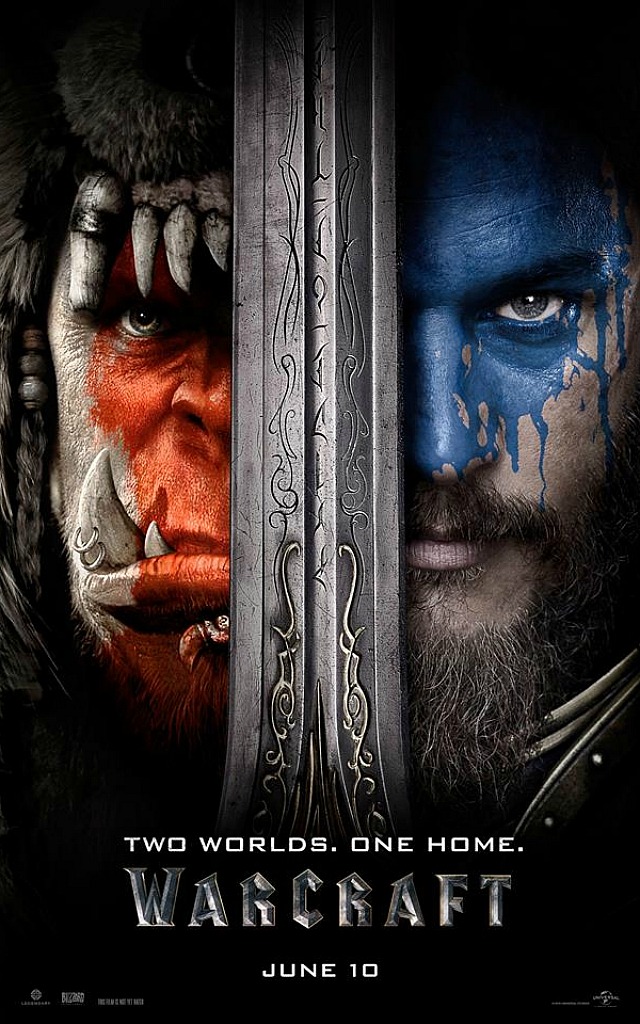
Warcraft Official Trailer (For The Film…Not The Game…I Know, Right!)


Warcraft

Warcraft was a game on the PC that I played for hours on end. It was the closest thing gamers had to a video game version of the Warhammer Fantasy property. the title had two popular sequels and gave birth to the biggest, most popular and most addictive MMORPG in history. I mean, World of Warcraft, led to couples getting divorces, players getting into real fights outside the game and even getting together in holy matrimony for reals.

So, Hollywood seeing a cash cow when it sees one had been trying to get a live-action film based on the Warcraft property for years. So many different directors had been attached to make it (from Uwe Boll right up to Sam Raimi) but in the end Duncan Jones got the job to bring Azeroth (and Draenor) to life on the big-screen.

With the film still months away, Universal and Legendary Pictures look to start the hype train going by releasing the first official trailer for Warcraft with much fanfare.

Catching Fire Has A Director


After two weeks of speculation, Catching Fire (the sequel to The Hunger Games) has a director and the winner is…

Francis Lawrence!

Francis Lawrence is known for directing music videos, Constantine, I Am Legend, and Water For Elephants.

I’ve never seen Constantine, I thought I am Legend was boring, and I enjoyed Water For Elephants but it’s hard not to feel that, after considering names like David Cronenberg, Alfonso Cuaron, Bennett Miller, and Duncan Jones, Lionsgate selected the most generic candidate in the mix.  

I’m sure that there will be a lot of people complaining about the selection but, to be honest, it’s not like Gary Ross was all that inspiring a director before Hunger Games.  In the end Catching Fire’s success is going to be more about Jennifer (as opposed to Francis) Lawrence.

Two weeks ago, we did a poll to see who you thought should direct Catching Fire and Hanna’s Joe Wright won a fairly easy victory.

A Quickie With Lisa Marie: The Source Code (dir. by Duncan Jones)


Okay, I’ll admit it right now: I’m way too late in reviewing this film.  Seriously, if you were planning on seeing The Source Code, then you’ve probably already seen it by this point.  You already have your own opinion about the film.  Why do you need hear mine?  You’re probably saying, “Girl, move on.”

And to that I say: “I do what I want!”

Anyway…

The Source Code is a surprisingly smart and occasionally even moving little sci-fi thriller.  Jake Gyllenhaal plays Colt Stevens, an army helicopter pilot who, as the film begins, awakens to find himself on a commuter train with no idea who he is or how he got there.  The woman sitting across from him (played by Michelle Monaghan) seems to know he is.  The confused Gyllenhaal wanders around the train trying to figure out who he is.  He goes into the train’s restroom, looks in the mirror, and sees a stranger staring back at him.  And then the entire train blows up.

Suddenly, Gyllenhaal wakes up again.  He’s apparently trapped in a dark chamber with his only link to the outside world being a computer screen.  An army officer (Vera Farminga) appears on the screen and explains to him that he was sent into the past in order to find out who bombed the train.  And he will continually be sent back into the past to relive the few minutes before the bomb goes off.  He’s told that the past cannot be changed, the people on the train cannot be saved, and his only mission is to discover who planted the bomb. 

It’s a clever little plot (one that would do Philip K. Dick proud) that has a lot more twists and turns than is obvious from a simple recap.  Along with a smart script, the film has a cast who bring a lot of conviction and nuance to their roles.  Jake Gyllenhaal, in particular, redeems himself after his unfortunate work in Love and Other Drugs.  However, the film’s real hero is director Duncan Jones who gives The Source Code both a heart and a brain.  His work here confirms that talent that was evident in Moon and I’m looking forward to what he gives us next.

10 Reasons Why I Hated Avatar


(The opinions in this review are mine and mine alone.  They reflect the feelings of Lisa Marie Bowman and not the feelings of any other editor on this site.  To prove that the opinions below are solely mine, check out this very positive review of Avatar that was posted on this very site last December.)

In case you didn’t already know this from my previous reviews, I’m going to confess something here.  I hated Avatar.  It was probably my least favorite film of 2009.  How much did I hate Avatar?  Well, I didn’t care much for The Hurt Locker either but I still cheered when it won best picture because it meant that Avatar didn’t. 

Most of my friends and family loved Avatar and, I’m proud to say, that none of them have allowed our difference of opinion to effect our relationship.  Indeed, most Avatar fans have been very tolerant of my dissenting views.  However, there’s always an exception.  From the 1st time I ever openly admitted to disliking Avatar, I have had to deal with a small but vocal group of people who not only disagree but apparently feel that I’ve committed a crime against humanity.  So, why bring it up now?  Because on Thursday, Avatar is going to be released on DVD and Blu-ray.  In honor of that event, here are 10 reason why I personally hated Avatar

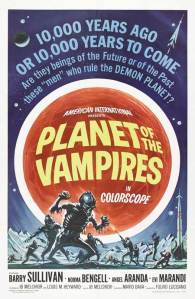
1) Ironically enough, most people who love Avatar will probably agree with the majority of my criticisms.  They’ll argue that yes, the story is predictable and yes, James Cameron is heavy-handed as both a writer and a director but none of that matters because of all the brilliant visual effects.  They’ll argue that Cameron made a whole different world, Pandora, come to life.  To a certain extent, they’re right.  Cameron does manage to make Pandora believable and wow, Pandora certainly turns out to be a boring planet.  Seriously, does that jungle cover the entire freaking planet?  However, regardless of my personal feelings about Pandora, James Cameron is hardly the 1st director to make an alien world believable.  Peter Jackson did it with his Lord of the Rings trilogy and the same can, arguably, be said of the Narnia films.  Even earlier, Mario Bava did it with Planet of the Vampires and he did it with a lot less money.  Of course, none of these films were in 3-D but so what?  Just because the mundane appears to be inches in front of your nose doesn’t make it any less mundane.
2) Speaking of mundane, wouldn’t you be let down if, when you first met the members of a totally alien race, they all turned out to be a bunch of movie stereotypes?  The Na’vi appear to have developed their entire culture as the result of a steady diet of Hollywood westerns, New Age self-help books, and some 16 year-old’s half-assed understanding of what it means to be a Pagan.  I remember when I first saw Avatar, it was impossible for me not to compare it unfavorably with District 9, a film that addressed many of the same themes and issues as Avatar but did it with a much lower budget and a much more intelligent script.  This was especially evident when one compares Avatar’s Na’vi with District 9’s prawns.  While the prawns were believable as both individual characters and as representatives of a totally alien race, the Na’vi are essentially the reflections of James Cameron’s sophomoric noble savage fantasies.

3) District 9 wasn’t the only great science fiction film to come out in 2009.  There was also Moon, which featured a great performance by Sam Rockwell and excellent direction from Duncan Jones.  When /Film asked Jones for his opinion of Avatar, Jones replied, “…at which point in the film did you have any doubt what was going to happen next?”  It’s a good question. 

In all honesty, I’m a horror girl.  I haven’t seen much science fiction and therefore, I’m not as well acquainted with the genre’s clichés as I am with horror.  However, I can still say that, at no point, did anything that happened in Avatar take me by surprise.

Of course, some of my favorite movies were (and are) very predictable.  Georges Polti argued that there were really only 36 basic plots available to use in fiction so its understandable that you’re going to come across the same one used several times.  However, a predictable plot can be forgiven if maybe that plot features at least a few interesting characters or maybe an occasional unexpected line of dialogue.  Avatar, however, can’t even manage this.  Our hero is an impulsive man of action.  The villains are all evil because … well, they just are.  In the manner of most oppressed races in American film, the Na’vi are noble savages who require a white guy to come save them.  The only lines of dialogue that I remember are the ones that made me roll my eyes.  I’m talking about stuff like a bunch of 22nd century marines being greeted with “You’re not in Kansas anymore.”  Well, that and “I see you,” which was apparently included in the script so that it could serve as the title of a syrupy theme song.

4) Strangely enough, even though the movie took absolutely no narrative risks, it was still full of plot holes and things that just didn’t make much sense. 

For instance, why does Quaritich promise to give Jake back his legs (“your real ones”)?  I mean, does Quaritich have them sitting in a freezer somewhere? 

As part of his deal with Quaritich, Jake agrees to make videos about the Na’vi.  Oddly enough, it appears that he’s still making the videos even after he turns against Quaritich and you have to wonder exactly why.  Also, Jake records many of these videos in an isolated, apparently one-room outpost occupied by him and two other scientists yet the scientists are later shocked and outraged when told that Jake was making the videos.  Okay, what did they think he was doing all that time?  Were they just not listening to what he was saying? 

What exactly was the backstory of Sigourney Weaver’s character and when exactly did she join Sully in the Na’vi camp?   And why were the Na’vi willing to let her into their tribe when they would only grudgingly accepted Sully even after the Goddess selected him?  I mean, if Weaver already had such a great relationship with the Na’vi, it seems like she could have saved a lot of time by just taking Sully straight to them.  (Editor’s Note: According to the comments below, this issue actually was addressed in the film. — LMB)

Sully, after the final battle, decides to stay on Pandora and he might as well since the Tree of Souls (good God!) transferred his soul into his Na’vi body.  But what’s in it for Max and Norm?  We seem them at the end (though really, Norm should be dead) standing there pointing guns at all the humans that are leaving.  Norm, at least, could still probably hang out in his avatar but what about Max?  Why is Max, who has had nothing to do with Na’vi, so quick to join the revolution?

I’m sure a lot of this is because scenes were edited out and I know that Cameron has a reputation for reinserting those scenes once his movies come out on DVD and blu-ray.  Well, more power to him.

5) The film suffers from a really bad case of the white man’s burden disease.  This is another one of those films where a caucasian character befriends an oppressed minority and, with remarkably little dissent, manages to appoint himself as the leader of that minority.  It’s a fantasy, one in which members of the bourgeoisie (like James Cameron) can live out their childhood fantasies of being outlaws without having to worry about  (unlike actual “outlaws,”) being punished for taking their stand.

Once again, it’s hard not to compare Avatar with District 9.  Both of them feature lead characters who are transformed into aliens.  The difference is that, with the exception of one brief scene, Jake Sully accomplishes the transformation rather easily and quickly becomes the best Na’vi there is while in District 9, poor Sharlto Copley is terrified by the process and, even though it does lead to him understanding the prawns (and ironically, learning how to show a little humanity), the movie never pretends that Copley isn’t losing his own individuality in the process of transforming.

6) The lead character is named Jake Sully.  Did James Cameron get frustrated and just use a Random Generic Movie Hero Name Generator to come up with that?  I wonder if Nick Sully was Cameron’s 2nd choice.  It’s not that there’s anything wrong with either name.  It’s just that it feels so generic.  Of course, the leader character is going to be named Jake and, of course, he’s not going to be an intellectual and, of course, Sigourney Weaver’s going to spend the whole movie making sarcastic comments about how stupid he is.  Speaking of which…

7) Sigourney plays Dr. Grace Augustine.  Her character and her performance are typical of a rather annoying Hollywood tradition, that of portraying any “strong” female as a total and complete bitch.  If you want the audience to know they’re supposed to take a woman seriously, have that woman spend the entire movie pissed off about something, as if the only way a woman can be strong is by sacrificing anything that might make her unique.  Now, there’s a lot I could say about why, from a cultural perspective, American movies often seem to be so conflicted about how to portray any woman who is neither an Eve nor a Lillith.  But in the case of Avatar, its hard not to feel that it comes down to screenwriter Cameron’s inability to make any of his characters interesting unless something nearby is exploding.

8 ) And while we’re on the subject of misunderstood women…okay, let’s say you discover a planet and this planet is a lush, beautiful paradise.  Why the Hell would you then call it Pandora?  Yes, I understand that newly discovered planets are usually named after mythological figures.  But there’s still usually some sort of vague logic behind the names.  For instance, Mars was named after the God of War because of its red hue.  Venus was often considered to be the most beautiful star in the sky.  Mercury has the fastest orbit.  Jupiter’s the biggest planet.  Pluto (before it got downgraded) was considered the darkest and coldest of the planets.  Pandora, however, was the woman who opened up the jar that released everything terrible, evil, and destructive into the world.  Why would anyone name a planet after her?  It’s possible, of course, that all the good names were taken.  Of course, it’s also possible that this is just another example of how thuddingly obvious Avatar is in its symbolism and subtext.

9) Speaking of obvious, what about the villain played by Stephen Lang?  More specifically, what about that accent?  It’s true that Cameron doesn’t exactly encourage his villains to be subtle.  Just check out Billy Zane in Titanic.  Zane, however, at least appeared to be having a little fun at his director’s expense.  He, alone among the cast, seemed to realize that Titanic was a silly melodrama and so he gave something of a silly performance.  It’s no great secret that it’s often more important to have a good villain than to have a good hero.  A good villain usually has some sort of motivation beyond just being the villain.  This is something that Cameron has never seemed to be able to grasp.  Whenever I see a military figure show up in a James Cameron movie, I get the same feeling that I get whenever a preacher shows up in a Stephen King novel.  Automatically I know that they’re going to turn out to be evil and I find myself dreading having to even waste the time with the “shocking” discovery of that evil. 

10) Perhaps most importantly, this is a movie that wants to preach peace but celebrate war.  Avatar contains all the trendy environmental messages that you’d expect from a Hollywood film but — even though director Cameron seems to be in a state of denial about it — the film’s heart is with its villanous soldiers.  Much as how Titanic, for all the rhetoric about the passengers in third class, was really only interested in portraying the lives (and deaths) of those in first class, Avatar spends a lot of time talking about trees but is much more interested in blowing them up with the destruction of the Home Tree serving as the money shot.

To be honest, I don’t mind a little hypocrisy when it comes to movies.  Most exploitation films celebrate hypocrisy.  The filmmakers knew it and, for the most part, the audiences knew it.  The fact that a movie like Child Bride could be advertised as “an important movie every parent must see!” became something of a shared joke between the filmmaker and his audience.  Rather than being hypocritical, the exploitation filmmaker is simply inviting his audience to join in a conspiracy against the forces of dullness.

Unfortunately, Avatar is not an exploitation film.  If Avatar was simply a B-movie, none of the my previous complaints would matter.  They would add to the film’s rogue charm.  Avatar, however, is too expensive to be considered an exploitation film.  And James Cameron, as he proved when he went ballistic over Kenneth Turan’s negative review of Titanic and as he has continued to prove with his recent comments regarding global warming, does not have the sensibility of a B-movie maker.  Arguably, he once did.  This is a man who, after all, did the special effects for Galaxy of Terror and made his directorial debut with Piranha IIThe Terminator was a great B-movie, right down to the accusations of plagiarism from Harlan Ellison.  However, as he’s become the most financially succesful director in history, Cameron has lost that B-movie sensibility. 

In other words, James Cameron takes himself seriously now and that, ultimately, is the main reason I hated Avatar.  It just takes itself too damn seriously.

Yes, I’ve read quite a few favorable reviews that have argued that Avatar‘s sole purpose is to entertain and that people like me who occasionally expect unique characters and an interesting story should just lie back and enjoy it.  I’ve seen the term “popcorn epic” used in quite a few reviews. 

I’m sorry but I’m not buying it.  If Avatar was truly setting out to be a “popcorn epic,” than I’d be a lot more willing to cut it some slack.  However, when the script contains lines about how on Earth, humans have “destroyed all the green,” and when the villains are accused of launching a “shock and awe” campaign, it’s ludicrous to then argue that Avatar isn’t setting itself up to be judged by a higher standard. 

It becomes hard to escape the fact that Cameron, regardless of how well he handles the special effects, has essentially made a stupid movie about deep issues.

As I said before, the majority of the people I know love Avatar.  I don’t hold it against them or think any less of them because, ultimately, movies are a subjective experience.  Whether or not a movie is good has less to do with the actual movie and more to do with the person watching it.

It would be nice to have the same courtesy extended to me .  Since I first revealed my opinion of Avatar on a non-Avatar related message board, I have found myself frequently attacked by little fanboys who apparently cannot handle the fact that one human being didn’t enjoy Avatar.  I’ve been told that, as a female, I can’t be expected to understand Avatar.  I’ve been accused of being “unimaginative,” “a snob,” “a bitch,” and my personal favorite “the type of cunt who cried at the end of the Blind Side.” 

I realize the risk I’m taking by openly admitting my dislike of Avatar but then again, movies are supposed to inspire conversation and not just pavlovian agreement.  So, in conclusion, I’ll just admit that yes, I am female and yes, I did cry at the end of The Blind Side, and yes, I hated Avatar.