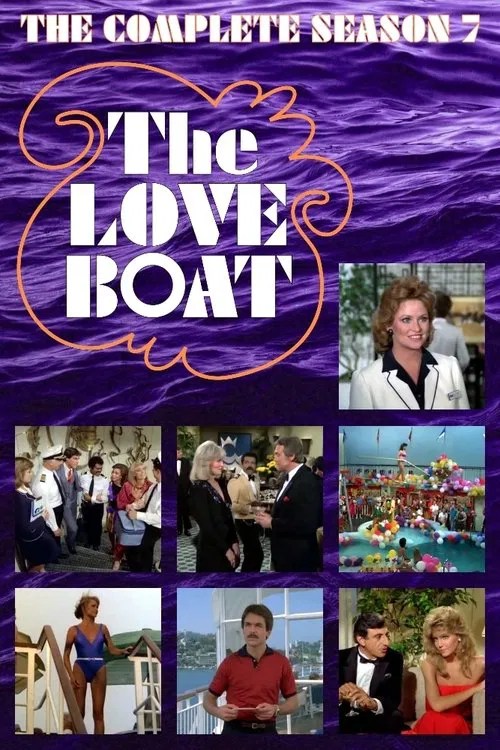
Welcome to Retro Television Reviews, a feature where we review some of our favorite and least favorite shows of the past! On Wednesdays, I will be reviewing the original Love Boat, which aired on ABC from 1977 to 1986! The series can be streamed on Paramount Plus!
(Dir by Richard Kinon, originally aired on December 3rd, 1983)
A detective (Don Gordon) tells Isaac and Gopher that he suspects a woman named Doris will be boarding the boat. She’s supposed to testify in a high-profile divorce case and she’s been dodging the process servers. The detective mentions that there’s a reward for turning Doris in. That definitely get Gopher and Isaac’s attention.
And Doris (Markie Post) is on the boat! Except she is pretending to be a teenager named Dee Dee and she’s speaking in an annoying squeaky voice. Jerry Howard (Clark Brandon) meets Dee Dee and develops a crush on her. Meanwhile, Jerry’s father, Phil (Geoffrey Scott), meets Doris and develops a crush of his own! In the end, Doris falls in love with Phil and Jerry …. well, Jerry gets his heart broken but he claims not to care. Phil is amused. As for the divorce case, it’s settled so Doris doesn’t have to testify after all!
(And no, there’s no reward for Isaac and Gopher. In fact, Stubing threatens to fire them.)
While that’s going on, author Daniel Baker (Tom Poston) wants to enjoy a romantic cruise with his wife (Abby Dalton) but he’s being blackmailed by his assistant, Wendy (Leslie Easterbrook). Wendy knows that Daniel plagiarized sections of his book and she threatens to reveal the truth unless Daniel has an affair with her. This is one of those storylines that would have worked better if some different casting choices had been made. As it is, noted sex symbol Tom Poston feels miscast.
Finally, Julie has a blind date boarding the boat. He turns out to be a nerdy, overweight guy named Leonard Gluck (Walter Olkewicz). Julie has nothing in common with Leonard and is planning on dumping him. But then Leonard dumps her first and Julie has a crisis of confidence. This story had the potential to reveal a new side of Julie but, in the end, Leonard revealed that he only dumped Julie to make her like him and Julie’s confidence was restored, along with her rule about not dating fat guys.
This was not a great cruise. It took me two minutes to get sick of Dee Dee’s voice. Oh well — not every trip can be a winner!
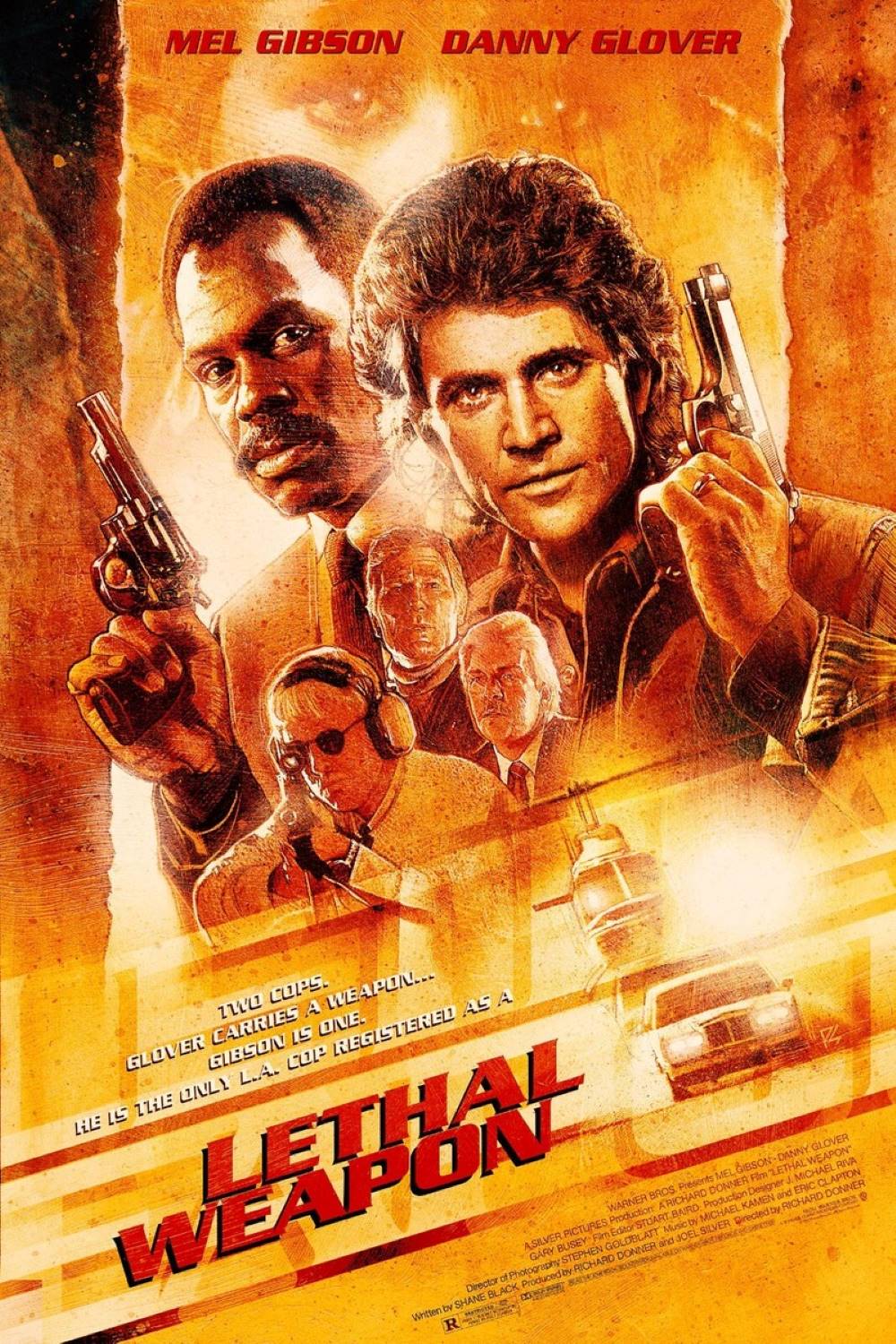
Lethal Weapon is one of those action movies that looks like pure genre formula on paper but somehow plays like lightning in a bottle on screen. From the opening moments, it feels like a film that knows exactly what kind of ride it wants to deliver and leans into that mission with confidence, attitude, and just enough heart to make the bullets and explosions actually matter.
The premise itself is as straightforward as they come, and that simplicity is part of the charm. Martin Riggs is the textbook “cop on the edge,” a former special forces sniper whose life has completely fallen apart after the death of his wife. He’s volatile, depressed, and teetering on the edge of suicidal, which gives everything he does an extra layer of danger. On the other side of the pairing is Roger Murtaugh, a seasoned detective staring down his 50th birthday, trying to balance a long career in homicide with the quiet, constant pull of his family at home. When these two are thrown together and assigned to a case involving drugs, dead bodies, and shady ex-military criminals, the story plays out across familiar beats: suspicious deaths, escalating confrontations, close calls, and a trail that leads them deeper into a dangerous operation. The crime plot is pulpy and direct rather than twisty, but the film uses it as a sturdy framework rather than the main point of interest, keeping the investigation moving while the characters come into focus. Much of that sharp setup and snappy progression comes from Shane Black’s script, which crackles with knowing genre savvy, pitch-perfect banter, and a keen eye for how personal pain fuels action-hero antics.
What really makes Lethal Weapon feel alive is how much time it spends letting Riggs and Murtaugh exist as people before they fully morph into the “classic duo” that pop culture remembers. The film doesn’t rush past the small stuff. Riggs is introduced living in a rundown trailer on the beach with his scruffy dog for company, drinking and stumbling through life with the casual recklessness of someone who genuinely doesn’t care if he sees tomorrow. Those early moments of him alone, flirting with self-destruction, give his later heroics a sense of tragic context: he’s not just fearless, he’s half-convinced he has nothing left to lose. Murtaugh’s introduction is a complete contrast: a crowded home, kids, a loving wife, and the kind of loud, chaotic domestic life that’s full of relatable irritation and warmth. Seeing him grumble through birthday milestones or awkwardly handle family situations does more for his character than any speech about his years on the force could. These slices of everyday life build a strong emotional foundation so that when the bullets start flying, there’s something at stake beyond catching bad guys. Black’s writing shines here, weaving those intimate details into the thriller beats without ever feeling forced or preachy.
The chemistry between Mel Gibson and Danny Glover is the film’s true secret weapon. Gibson plays Riggs as an unpredictable live wire, able to flip from goofy physical comedy to chilling seriousness in an instant. He sells the idea that this is a man barely keeping it together, yet still razor-sharp when it comes to the job. There’s a constant sense that his jokes and antics are a flimsy barrier over something very raw. Glover, by contrast, keeps Murtaugh grounded and human; his performance is packed with little sighs, muttered reactions, and weary facial expressions that speak volumes. He comes across as a guy who has seen too much, loves his family, and genuinely wants to do the right thing, but is exhausted by how hard that is in practice. Their initial friction hits the expected “mismatched partners” beats: Murtaugh thinks Riggs is unstable and dangerous, while Riggs treats Murtaugh like a fussy old man who doesn’t get it. Yet as they move through stakeouts, interrogations, and gunfights, their banter evolves from pure irritation into an easy rhythm filled with barbs, mutual respect, and eventually real affection. Shane Black’s dialogue is the glue for all of it—witty, profane, and laced with just enough vulnerability to make the laughs land harder and the tension feel real.
Richard Donner’s direction is a huge part of why all of this clicks as well as it does. He has a knack for blending big, commercial genre instincts with an eye for character detail, and Lethal Weapon is a textbook example of that balance. He stages action scenes with clear geography and rhythm, so even when things get loud and chaotic, you always know where you are and what everyone is trying to do. At the same time, he’s just as interested in the quiet beats: a pause on Riggs’ face after a joke lands flat, Murtaugh’s body language when he walks into his noisy home after a brutal day, the way a conversation in a car can shift from banter to confession in a couple of lines. Donner keeps the film moving at a brisk pace, but he knows when to let a shot linger or a silence hang long enough to tell you what the characters can’t quite say out loud. His tonal control—jumping from dark to funny to tense without completely losing the thread—is a big reason the movie doesn’t collapse under its own genre juggling, and it pairs beautifully with Black’s script that sets up those shifts so precisely.
Tonally, Lethal Weapon walks a tricky line, and that’s a big part of its identity. On one hand, this is a story with genuinely dark undercurrents. Riggs’ suicidal impulses are not a throwaway character quirk; the film gives time to scenes where he nearly acts on them and struggles in a very raw way with his grief and loneliness. The case they’re working breaks open into territory involving drugs, exploitation, and violence that’s sometimes nasty rather than cleanly heroic. On the other hand, the film is full of humor, ranging from quick one-liners to broad physical bits. The Murtaugh household provides a lot of that levity: awkward conversations with his kids, Riggs stumbling through family dynamics, and the contrast between domestic calm and the chaos of the streets. The movie often jumps from heavy emotional beats to comedic ones and back again, and while the transitions can be abrupt, that mixture is part of what keeps it from feeling like just another grim cop story. The laughter doesn’t erase the darker material, but it does give the movie a sense of momentum and charm that keeps it entertaining instead of oppressive. Black’s screenplay nails this push-pull, using humor as both release valve and revelation.
As an action film, Lethal Weapon delivers a steady run of sequences that are energetic, clear, and tactile. The action is built around physical stunts, dangerous-looking falls, and gunfights that feel chaotic without becoming incoherent. One memorable sequence has Riggs dealing with a jumper on a rooftop in a way that instantly tells you everything about his mentality and willingness to risk himself. Another set piece in a more open, exposed environment lets the film escalate tension step by step before violence finally erupts. Through it all, Donner keeps a strong sense of spatial clarity; you can track where the characters are, what they’re trying to do, and how each decision raises the stakes. The fights feel scrappy and painful rather than overly slick, and that slightly rough quality actually works in the movie’s favor, making each impact land harder. Riggs, especially, moves like a human weapon, hurling himself into situations with a recklessness that ties directly into his psychological state, all fueled by Black’s clever plotting that makes those risks feel personal.
Underneath the gunfire and explosions, there’s a surprisingly sturdy emotional core tying everything together. Riggs’ grief isn’t just window dressing; it’s the lens through which his every decision makes sense. The movie doesn’t lecture you about what he’s feeling, but it shows it—through quiet moments alone, through the anger that erupts at all the wrong times, and through the way he throws his body into danger almost as if daring the world to take him out. Murtaugh’s arc is more subtle but still strongly drawn. He’s at an age where he has to confront the reality that he can’t keep pace with younger, more reckless colleagues forever, and yet his sense of duty keeps pulling him into situations where his family might lose him. Throughout their investigation, Murtaugh’s protective instincts—toward his loved ones, toward Riggs, and toward innocent people caught in the crossfire—become as important as his skills as a detective.
The relationship that develops between Riggs and Murtaugh is the heart of the film and the main reason it sticks in the memory. At first, Murtaugh just wants to survive partnering with a man he genuinely believes might be unhinged, while Riggs seems to treat their pairing as just another chaotic twist in a life already off the rails. As they trade confessions, back each other up in tight spots, and slowly understand what the other is carrying, their bond shifts into something like brotherhood. Murtaugh becomes a kind of anchor for Riggs, offering not just backup in a fight but also a place at the table, both literally and figuratively. Riggs, in turn, forces Murtaugh out of his comfort zone, reminding him that he still has plenty of courage and fire left in him. The film doesn’t turn their connection into a sentimental soapbox, but it lets small moments—a shared laugh after a narrow escape, a quiet conversation after the chaos—do the emotional lifting, with Black’s words giving those scenes their understated power.
If there’s a clear weak spot, it’s that the villains are fairly thinly drawn, operating more as looming threats than fully realized characters. They are dangerous and organized, capable of serious brutality and clearly involved in serious criminal operations, but the movie doesn’t spend much time exploring their motivations or inner lives. They’re the kind of antagonists designed to be obstacles: formidable enough to make the heroes’ victories feel earned, but not so complex that they distract from the central duo. For a character-driven action film, that trade-off mostly works. When Lethal Weapon is firing on all cylinders, the tension doesn’t come from wondering what the bad guys will do next so much as from seeing how Riggs and Murtaugh will handle whatever gets thrown at them and what that reveals about who they are.
Structurally, the film keeps a tight pace, always nudging the story forward even when it pauses for character beats. Expository scenes rarely feel like dry info dumps; they’re often laced with jokes, personal jabs, or subtle shifts in how the two leads relate to each other. The downtime moments—a quiet drink, a shared meal, a conversation in a car between partners who would rather pretend they’re fine—are as important as the louder ones. By the time the case ramps up to its most intense passages, there’s been enough time with these characters to care less about the mechanics of the plot and more about whether these two damaged, stubborn men can come out the other side with something to hold onto.
What ultimately makes Lethal Weapon work so well is that it doesn’t settle for being just a checklist of genre requirements. Yes, it has gunfights, dark humor, car chases, and tough-guy posturing. But wrapped around all of that is a story about grief, aging, loyalty, and how unlikely partnerships can change the trajectory of a person’s life. Donner’s steady hand behind the camera, Shane Black’s razor-sharp script, and the powerhouse performances turn what could have been a forgettable cop thriller into something much more memorable. For anyone who enjoys action movies that care as much about the people pulling the triggers as the bullets they fire, Lethal Weapon stands out as a defining entry in the buddy-cop mold, powered by the messy, heartfelt dynamic at its center and the sure-footed craftsmanship that brings it all together.
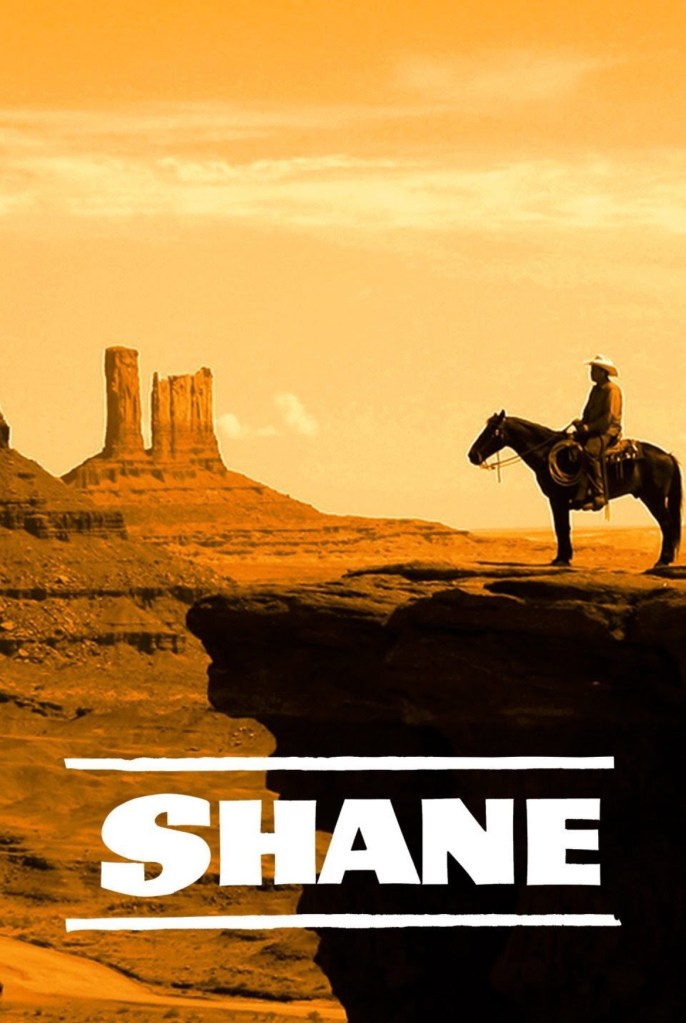
Episode 3 opens with Shane (David Carradine) and Joey (Christopher Shea) watching as geese are flying over the ranch on their way south. Joey wonders how the geese know to go south. Shane tells him that it’s instinct, almost like they have an internal clock telling them when it’s time to go. It seems like we’re supposed to be reading something deeper into this conversation, like maybe it’s time for Shane to be heading out.
In the next scene, Shane and Marian Starett (Jill Ireland) are at Sam Grafton’s General Store. Sam (Sam Gilman) agrees to loan the Starett’s money for the purchase of some hogs. It seems that disease has struck their stock. They offer a 20 acre stand of wheat to Sam as their collateral. Unfortunately, soon after the deal is made, a herd of cattle stampede the wheat, destroying any potential crop and leaving them with no ability to purchase the hogs. Shane and the Staretts immediately suspect that Rufe Ryker (Bert Freed) is behind the stampede based on his desire to have their land at any cost. Threats are made, but Ryker denies it.
With these financial difficulties as a backdrop, a group of men show up at Sam’s saloon looking for Shane. The leader of the bunch is Johnny Wake (Don Gordon), a guy Shane has ridden with in the past. He’s come to see if he can buy Shane and his gun for $300 to help with a range war they’re involved in. Normally, Shane would be able to say no, but with the Starett’s farm in trouble, it may now be time for Shane to leave. Is Shane like one of the wild geese? Did Ryker stampede the wheat field? Will Shane go back to his old ways with Johnny Wake and the funky bunch? We’ll soon find out.
I liked this episode. Ryker was set up to be such an A-hole in the pilot, but I found myself believing him when he told Shane that he was not responsible for the stampede that ruined the Starett’s wheat. He’s still an A-hole though. I also liked that there’s some tension between Shane and Marian in this episode. She makes it clear that no matter how bad things are financially for their family, she will never accept “blood money” as help. They look at each other longingly several times over the course of the episode’s 45 minutes. Is this heading towards a big smooch at some point? I like that little Joey gets to say “I love you, Shane” as he’s leaving the farm in this episode. Finally, I like that Shane gets to actually use his gun here. I won’t spoil who it’s used on, but I will admit that it’s satisfying.
Three episodes in, and I’m really enjoying the series! I can’t wait to check out Episode 4!
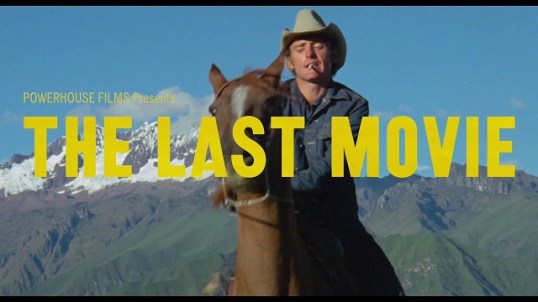
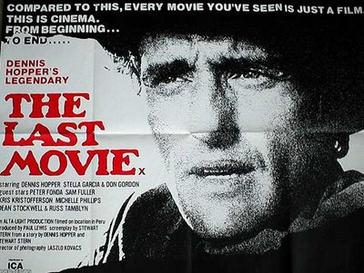
The story behind the making of 1971’s The Last Movie is legendary. It’s also a bit of a cautionary tale.
In 1969, Hollywood was stunned by the box office success of an independent, low-budget counter-culture film called Easy Rider. Easy Rider not only made a star out of Jack Nicholson but it was also the film that finally convinced the studios that the way to be relevant was not to continue to crank out big budget musical extravaganzas like Doctor Doolittle and Hello, Dolly! Instead, it was decided that the smart thing to do would be to hire young (or, at the very least, youngish) directors and basically just let them shoot whatever they wanted. The resulting films might not make much sense to the executives but, presumably, the kids would dig them and as long as the kids were paying money to see them, everyone would continue to get rich. Because Dennis Hopper had directed Easy Rider, he suddenly found himself very much in demand as a director.
Of course, almost everyone in Hollywood knew Dennis Hopper. Long before he became an icon of the counter-culture, Dennis Hopper had been a part of the studio system. John Wayne even referred to Hopper as being his “favorite communist.” Everyone knew that Dennis could be a bit arrogant. Everyone knew that Dennis was very much into drugs and that, as a result, he had a reputation for being a bit unstable. Everyone knew that Dennis Hopper deliberately cultivated an image of being a bit of a wild man and a revolutionary artist. But Dennis Hopper had just directed Easy Rider and Universal was willing to give Hopper some money to go down to Peru and direct his follow-up.
The Last Movie was a film that Hopper had been planning on making for a while. The film’s original script told the story of an aging and broken-down stuntman named Kansas who retires to Mexico and searches for a gold mine with a friend of his. Hopper first tried to get the film going in 1965, with Montgomery Clift in the lead role. After Clift died, Hopper tried to interest John Wayne in the starring role but, though Wayne enjoyed having Hopper in his films so that he could threaten to shoot him whenever Abbie Hoffman said something shocking, he had no interest in being directed by him. When Universal finally agreed to put up the money for the film, Hopper offered the lead role to Jack Nicholson. Nicholson turned it down and told Hopper that it was obvious that Dennis wanted to play the role himself. Dennis decided that he agreed with Nicholson and he cast himself as Kansas. Dennis also made the fateful decision to not only change the story’s setting to Peru but to also film on location.
Dennis and a group of friends flew down to Peru, which, at that time, was the cocaine capitol of the world. Drug use was rampant on the set, with Dennis reportedly being one of the main offenders. The cast and crew filmed during the day and partied at night and no one was particularly sure what the film was supposed to be about. Amazingly, Hopper finished filming on schedule and within budget but, much as he did with Easy Rider, he also overfilmed and ended up with 40 hours of footage. Not wanting to be bothered by the studios, Hopper edited the footage in his compound in Taos, New Mexico. Working slowly and continuing to consume a large amount of drugs and alcohol, Hopper still managed to put together a film that had a straightforward storyline. When Hopper showed his initial cut to filmmaker Alejandro Jodorowsky, the director of El Topo accused Hopper of being too conventional in his approach, which led to Hopper chopping up the film and reassembling it. Finally, after spending over a year working with the footage, Hopper turned in his final edit.
Universal had no idea what to make of the film that Hopper delivered to them. Still, they released it with the hope that the same crowd that loved Easy Rider would embrace The Last Movie. While the film did win an award at the Venice Film Festival, critics hated it and, even worse, audiences stayed away. The film’s reception was so overwhelmingly negative that Hopper found himself largely exiled from Hollywood, with only a few directors (like Francis Ford Coppola) willing to take the chance of working with him. It wasn’t until the 80s, when he finally got clean and sober, that Dennis Hopper was able to reestablish himself as a character actor and, ultimately, a beloved cultural institution.
But what about The Last Movie? Was is it really as bad as the critics claimed? Or was it, as some more recent reviewers have suggested, an unacknowledged masterpiece that was ahead of its time? I recently watched The Last Movie to find out for myself.
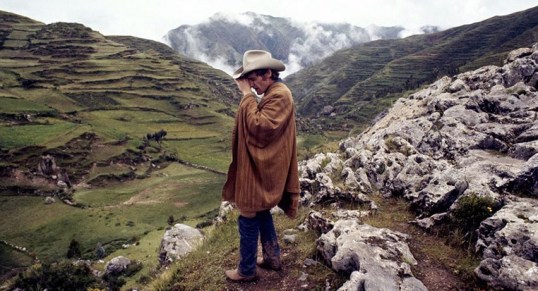
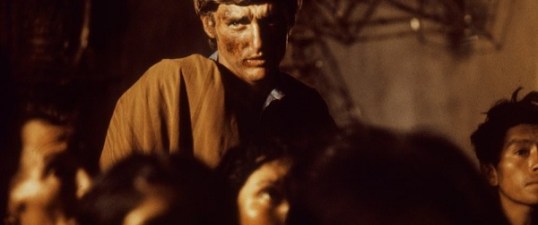
Despite its reputation, The Last Movie gets off to a pretty strong start. Samuel Fuller (playing himself) is directing a hilariously over-the-top and violent western in the mountains of Peru. Kansas (Dennis Hopper) is working as a stuntman. He’s fallen in love with a local sex worker named Maria (Stella Garcia). Kansas is meant to be an aging Hollywood veteran, someone who has broken a lot of bones and who carries a lot of aches as a result of his line of work. (One can see why Hopper initially imagined an actor like John Wayne in the role.) He knows that this is going to be his last job and, as we see over the first 25 minutes of the film, he feels alienated from the rest of the cast and crew. Admittedly, Hopper does appear to be a bit too young for the role. The ideal Kansas would have been someone like Ben Johnson, L.Q. Jones, or perhaps Warren Oates. But, still, Hopper does a good job of capturing Kansas’s mixed feelings about the western that’s being filmed around him.
A lot of familiar faces pop up in the film’s fictional western. Dean Stockwell plays an outlaw. Jim Mitchum, Russ Tamblyn and Kris Kristofferson plays his associates. Peter Fonda is the youthful sheriff. Michelle Phillips is the daughter of the town’s banker and apparently, she’s also the girlfriend of one of the outlaws. We watch as the actors pretend to shoot guns and kill each other while the cameras are rolling, just to get up off the ground once “Cut” is yelled. When a local Indian who has been cast as an extra grows upset at the violence, an assistant director explains to him that no one really dies while the cameras are rolling. When shooting wraps, the film company goes home but Kansas stays behind with Maria. One day, the local priest (Tomas Milian) warns Kansas that the local indigenous people have moved into the abandoned film set and are trying to shoot their own movie. Kansas discovers that they have built wooden cameras and wooden boom mics and that their chief is giving orders in the style of Sam Fuller. They’re also firing the guns that the Americans left behind.
The first part of the film works quite well. Hopper’s camera captures the beautiful and isolated Peruvian landscape. The violent western is a pitch perfect and affectionate parody of a generic studio film. Though Hopper is a bit too young for the role, he still does a good job of capturing Kansas’s alienation from his fellow Americans. Even more importantly, the first part of the film seems to have an identifiable theme. The American film crew invaded an isolated part of Peru and changed the culture of the natives without even realizing it. Now, they’ve left but the natives are still dealing with the after effects of the American “invasion.” It’s easy to see, within that part of the story, a critique of both American culture and American foreign policy.
The second part of the film is where things start to fall apart. Kansas meets an old friend named Neville (Don Gordon). Neville has discovered a gold mine in the Peruvian mountains. With Kansas as his partner, he tries to get a businessman named Harry Anderson (Roy Engel) to invest in it. Kansas and Neville try to impress Harry and his wife (Julie Adams, best-known for being stalked by The Creature From The Black Lagoon). Kansas and Neville take the Andersons to a brothel and, in the process, Kansas offends Maria. Kansas then paws Mrs. Anderson’s fur coat and mentions that human beings are covered in hair. For all of their efforts, Harry will not invest, no matter how desperately Neville begs him to reconsider.
The second part of the film drags, with many of the scenes being obviously improvised between Hopper, Gordon, Garcia, Engel, and Adams. Unfortunately, the improved conversations aren’t particularly interesting and they tend to go on forever. Usually a reliable character actor, Don Gordon ferociously chews the scenery as Neville and it doesn’t take long before one grows tired of listening to him yell. (Gordon was far more impressive in Hopper’s Out of the Blue.) With the use of improvisation and overlapping dialogue, the second half of the film tries to feel naturalistic but instead, it’s a migraine-inducing method exercise gone wrong. It’s also during the second part of the film that a “scene missing” title card flashes on the screen, an indication that the discipline that Hopper showed as a director during the beginning of the film is about to be abandoned.
Finally, the third part of the film — well, who knows? The final 25 minutes of the film is collection of random scenes, some of which may be connected and some of which may not. The natives have decided that the only way to properly end their “film” is to kill Kansas. Kansas is shot several times and rides away on his horse. Suddenly, Kansas is back at his home and Maria is taunting him for getting shot. Then, Kansas is riding his horse again. Then suddenly, Dennis Hopper and Tomas Milian are laughing at the camera. A script supervisor tries to get Dennis to look at the shooting schedule while Dennis drinks. This happens:
Milian points out that the blood on Hopper’s shirt is dry. Hopper looks at his shoulder, where Kansas was previously shot, and says that someone needs to add his scar before he can shoot the scene. Ah! So, now we’re acknowledging that it’s all just a movie. Thanks, Dennis! Suddenly, Dennis is Kansas again and he’s collapsing over and over again in the dust. He appears to be dead but no, now he’s Dennis again and he’s standing up and smiling at the camera. And now, he’s singing Hooray for Hollywood. And now, suddenly, Kansas and Neville are talking about The Treasure of the Sierra Madre and then….
Well, let’s just say that it goes on and on before finally ending with a scrawled title card.
It’s a disjointed mess and it’s all the more frustrating because the first 30 minutes of the film is actually pretty good. But then, Dennis apparently remembered that he was supposed to be the voice of the counter-culture and he gave into his most pretentious impulses. Of course, just because a film is a mess, that doesn’t mean that it can’t be entertaining. And again, the first part of the film is entertaining and third part of the film is weird enough that it’ll hold most people’s attention for at least a few minutes. But the middle section of the film is so slow and pointless that it pretty much brings down the entire film.
In the end, what is The Last Movie about? In The American Dreamer(a documentary that was filmed while Hopper was editing The Last Movie in New Mexico), Hopper spends a lot of time talking about revolution and taking over Hollywood but The Last Movie is hardly a revolutionary film. The film is at its most alive when it is focused on the shooting of its fictional western. For all the satirical pokes that The Last Movie takes at the studio system, it’s obvious that Hopper had a lot of affection for Old Hollywood and for directors like Sam Fuller. Kansas may say “Far out,” but he’s hardly a hippie. Even the film’s jumbled finale seems to be saying, “It’s all Hollywood magic!” In the end, the film’s call for a new style of cinema is defeated by its love for the old style of cinema.
Instead, I think The Last Movie works best when viewed as a portrait of paranoia. Hopper himself admitted that he was naturally paranoid and the heavy amount of drugs that he was doing in the 70s didn’t help. One reason why Hopper filmed in Peru and edited in New Mexico was so the studios couldn’t keep track of him and, while directing, he worried about being arrested by the Peruvian secret police. As an actor, Hopper plays Kansas as being someone who views the world with caution and untrusting eyes. He doesn’t trust the other members of the film crew. He loves Maria but he’s still convinced that she’s going to betray him. Even the natives ultimately try to destroy him and the script supervisor tries to get him to stick to the shooting schedule. The film works best as a disjoined portrait of one man’s paranoid and fatalistic world view.
The Last Movie pretty much ended the studio’s attempts to harness the counter-culture by giving money to self-described revolutionaries. The new wave of directors — like Spielberg and Lucas — may have shared Hopper’s then-politics but they weren’t looking to burn down the system. (Hopper himself later became a Republican.) The Last Movie may not have been the literal last movie but it was, for a while at least, the last of its kind.
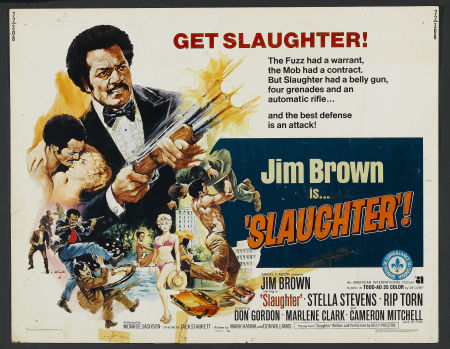
Jim Brown is one bad mother… no wait, that’s Richard Roundtree as Shaft! Jim Brown is one bad dude as SLAUGHTER, a 1972 Blaxploitation revenge yarn chock full of action. Brown’s imposing physical presence dominates the film, and he doesn’t have to do much in the acting department, ’cause Shakespeare this ain’t – it’s a balls to the wall, slam-bang flick courtesy of action specialist Jack Starrett (RUN ANGEL RUN, CLEOPATRA JONES , RACE WITH THE DEVIL) that doesn’t let up until the last second, resulting in one of the genre’s best.
Ex-Green Beret Slaughter (no first name given) is determined to get the bad guys who blew up his dad’s car, with dad in it! Seems dear ol’ dad was mob connected and knew too much. Slaughter’s reckless abandon in seeking revenge lands him in hot water with Treasury agents, and he’s “persuaded” to assist them in taking down…
Detective Eileen McHenry (Raquel Welch) has just been given her new assignment and she is about to find out that there is never a dull day in the 87th Precinct. How could there be when the precinct’s top detectives are played by Burt Reynolds, Tom Skerritt, and Jack Weston? Or when Boston’s top criminal mastermind is played by Yul Brynner? There is always something happening in the 8th Precinct. Someone is stealing stuff from the precinct house. Someone else is attacking the city’s homeless. Even worse, Brynner is assassinating public officials and will not stop until he is paid a hefty ransom!
Based on the famous 87th Precinct novels that Evan Hunter wrote under the name Ed McBain, Fuzz has more in common with Robert Altman’s MASH than The French Connection. (Skerritt and Bert Remsen, who plays a policeman in Fuzz, were both members of Altman’s stock company.) Much like Altman’s best-regarded films, Fuzz is an ensemble piece, one that mixes comedy with tragedy and which features several different storylines playing out at once. Scenes of homeless men being set on fire are mixed with scenes of Reynolds and Weston going undercover as nuns. (Of course, Burt does not shave his mustache.) Since it was written by Hunter, the film’s script comes close to duplicating the feel of the 87th Precinct novels. Unfortunately, Richard A. Colla was a television director and Fuzz feels more like an extended episode of Police Story or Hill Street Blues than a movie. Unlike Altman’s best films, Fuzz‘s constantly shifting tone and the mix of comedy and drama often feels awkward. Fortunately, Fuzz does feature good performances from Reynolds, Westin, Skerritt, and Brynner, along with a great 70s score from Dave Grusin. Raquel Welch is never believable as cop but she’s Raquel Welch so who cares?
The Mafia just pissed off the wrong ex-Green Beret.
After his father is blown up by a car bomb, Captain Slaughter (Jim Brown) single handily wipes out the Cleveland mob. Only one gangster, Dominic Hoffo (Rip Torn), escapes to South America. The Treasury Department (represented by Cameron Mitchell) sends Slaughter and two other agents (Don Gordon and Marlene Clark) after Hoffo. Along with being a ruthless gangster, Hoffo is a viscous racist and is convinced that he will be able to easily take care of Slaughter. Hoffo does not understand how much trouble he’s in. No one stops Slaughter.
Produced by American International Pictures, Slaughter is one of the classic blaxploitation films. While it may not have the political subtext of some of the best blaxploitation films, Slaughter is a fast and mean action film, directed in a no nonsense manner by B-movie veteran Jack Starrett. There is not a wasted moment to be found in Slaughter. It starts and ends with cars exploding and, in between, it doesn’t even stop to catch its breath.
In the 1970s, Richard Roundtree was John Shaft, Ron O’Neal was Superfly, Jim Kelly was Black Belt Jones, Fred Williamson was Black Caesar, and Jim Brown was Slaughter. Whatever skills Jim Brown lacked as an actor, he made up for with sheer presence. He commanded the screen. Whether he was playing football on television or beating down the Mafia in the movies, no one could stop Jim Brown. Slaughter is Brown at his toughest. Rip Torn is the perfect villain, screaming out racial slurs even when Slaughter has him trapped in an overturned car. Jim Brown has said that, of all the films he has made, Slaughter is one of his three favorites. (The other two were The Dirty Dozen and Mars Attacks!)
Slaughter‘s cool factor is increased by the presence of Stella Stevens, playing the role of Ann, Hoffo’s mistress. It only takes one night with Slaughter for Ann to switch sides. Nothing stops Slaughter.
Steve McQueen was the personification of 60’s screen cool in BULLITT, a stylish action film directed by Peter Yates. It’s the first of producer Philip D’Antoni’s cop trilogy, both of which (THE FRENCH CONNECTION and THE SEVEN-UPS) I’ve previously covered. Unlike those two films, the grittiness of New York City is replaced by the California charm of San Francisco, and the City by the Bay almost becomes a character itself, especially in the groundbreaking ten minute car chase between McQueen’s Mustang and the bad guy’s Dodge Charger.
Style permeates the film from the get-go, with the snappy opening credits montage by Pablo Ferro. Then we get right into the story, as San Francisco detective Frank Bullitt is assigned to guard mob witness John Ross, scheduled to testify before a Senate Subcommitte on crime. Hot shot politician Walt Chalmers wants Bullitt because of his reputation and PR value with the papers. Things go awry when Ross…
In this episode of the Twilight Zone, a con man (Harry Townes) has the ability to change his face to make himself appear like anyone he wants to be. Needless to say, this ability doesn’t quite work out as well for him as he might have hoped.
This episode originally aired on January 1st, 1960.
(If the video is not showing up below — some browsers apparently have problems showing embedded videos from Hulu — you can watch the episode at http://www.hulu.com/watch/440771.)
The 1980 Canadian film Out of the Blue opens with a terrifying scene. Don Barnes (Dennis Hopper), drinking a beer and playing with his daughter while driving a truck, crashes into a school bus. The bus is full of children, many of whom are seen being thrown into the air as the truck literally splits the bus in half.
Don is sent to prison. His wife, Kathy (Sharon Farrell), becomes a drug addict. His daughter, Cebe (Linda Manz), grows up to be an angry and alienated teenager. Cebe spends her time either aimlessly wandering around her economically depressed hometown or else ranting about the phoniness of society to anyone who will listen (and quite a few who won’t). Much like the killer cops in Magnum Force, all of her heroes are dead. Occasionally, she sees a pompous therapist (Raymond Burr) whose liberal humanism turns out to be just as empty as the reactionary society that Cebe is striking out against. Cebe’s heroes are Elvis, Sid Vicious, and her father.
When Don is finally released from prison, he returns home and he announces that he’s straightened out his life. He promises that he’ll stay sober and he’ll be a good father. That, of course, is all bullshit. Soon, Don is struggling to hold down a job and spending his time drinking with his friend Charlie (Don Gordon). Anyone who has ever had to deal with an alcoholic father will be able to painfully relate to the scenes where Don goes from being kind and loving to demonic in a matter of seconds.
Eventually, it all leads to a violent ending, one that is powerful precisely because it is so inevitable.
Out of the Blue is one of my favorite films, one that I relate to more than I really like to admit. Directed in a raw and uncompromising manner by Dennis Hopper, Out of the Blue is a look at life on the margins of society. And while some would argue that not much happens in the film between the explosive opening and the equally explosive ending, nothing needs to happen. The power of the film comes not from its plot and instead from the perfect performances of Linda Manz, Dennis Hopper, Sharon Farrell, and Don Gordon. Only Raymond Burr feels out of place but there’s a reason for that.
As much as I love Out of the Blue as a movie, I love the story of its production as well. Originally, Out of the Blue was to be your typical movie about a rebellious teen who is saved by a patient and compassionate counselor. Dennis Hopper was originally just supposed to co-star. However, after the shooting started to run behind schedule, the film’s original director was fired. Hopper talked the producers into letting him take over as a director.
This was the first film that Hopper was allowed to direct since the 1971 release of the infamous flop, The Last Movie. Hopper, who was then best known for his drug use and his alcoholism, promised to be on his best behavior. However, he then proceeded to secretly rewrite the entire film.
When Raymond Burr showed up to shoot his scenes, he was under the impression that he was still the star of the film. Hopper essentially proceeded to shoot two separate films. One film followed the original script and starred Raymond Burr. The other was Hopper’s vision. When it came time to take all of the footage and edit together the film that would be called Out of Blue, only two of Burr’s scenes made it into final cut and, in both of those scenes, Burr’s character is portrayed as being clueless.
Out of the Blue is not a happy film but it’s a good one. More people need to see it.




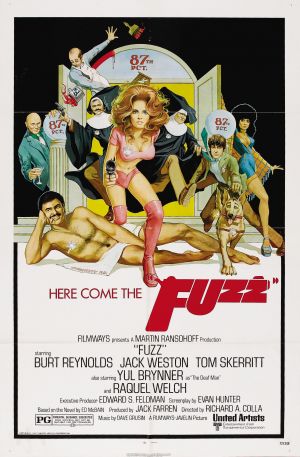 Detective Eileen McHenry (Raquel Welch) has just been given her new assignment and she is about to find out that there is never a dull day in the 87th Precinct. How could there be when the precinct’s top detectives are played by Burt Reynolds, Tom Skerritt, and Jack Weston? Or when Boston’s top criminal mastermind is played by Yul Brynner? There is always something happening in the 8th Precinct. Someone is stealing stuff from the precinct house. Someone else is attacking the city’s homeless. Even worse, Brynner is assassinating public officials and will not stop until he is paid a hefty ransom!
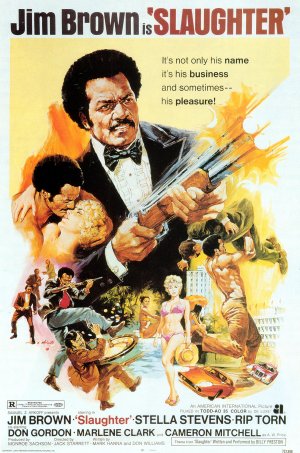 The Mafia just pissed off the wrong ex-Green Beret.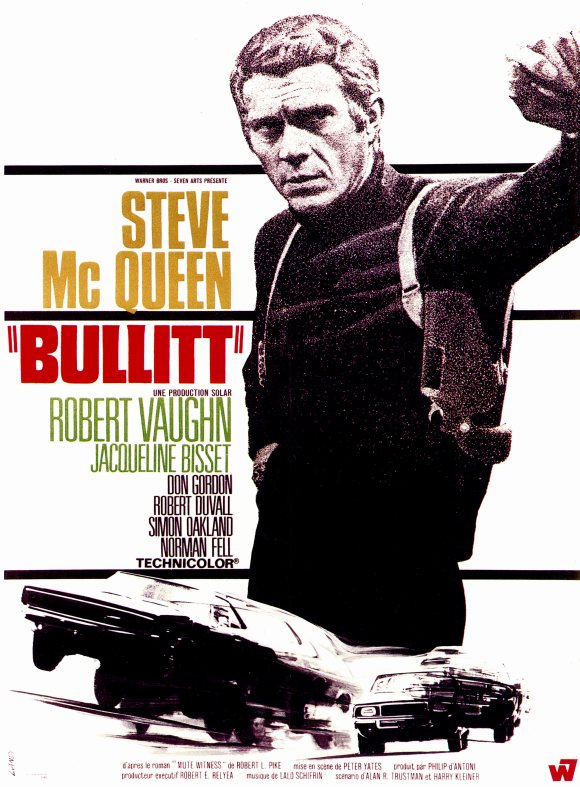


 Through the Shattered Lens