Review: 48 Hrs. (dir. by Walter Hill)


“This ain’t no god damn way to start a partnership.” – Reggie Hammond

48 Hrs. bursts onto the screen with a gritty prison breakout that sets the stage for chaos in the foggy streets of San Francisco, where a pair of ruthless killers slip away after gunning down a cop’s partner in cold blood. Jack Cates, the surviving detective, is left battered and furious, piecing together a case that points to a slick convict named Reggie Hammond holding the key to the crooks’ whereabouts—and a stash of stolen cash. With time ticking down, Jack pulls strings to get Reggie out on a 48-hour pass, thrusting these two polar opposites into a reluctant alliance that turns the city into their personal battlefield of bullets, banter, and bad blood.

From the jump, Jack comes across as the ultimate rough-around-the-edges cop, nursing a flask under his trench coat, snapping at colleagues, and charging headfirst into danger like a man who’s got nothing left to lose. His apartment is a mess of empty bottles and regret, and his rocky relationship with his girlfriend underscores how the job has chewed him up and spit him out, leaving him more beast than man. Reggie, by contrast, rolls in with street-honed swagger, his prison jumpsuit barely containing the energy of a guy who’s survived by being quicker on his feet and sharper with his mouth than anyone around him. He’s got a girlfriend waiting with that hidden money, and no intention of playing nice with a cop who’s eyeing him like fresh meat.

The beauty of their pairing lies in how the film lets their friction spark from the very first shared car ride, where Jack’s growled commands clash against Reggie’s nonstop ribbing, turning a simple stakeout into a verbal demolition derby. Picture them peeling out after a lead goes south, tires screeching through narrow alleys while Reggie gripes about the beat-up car and Jack slams the dash in frustration—it’s these raw, unscripted-feeling moments that make the movie breathe. As they hit up seedy bars, chase informants through strip joints, and dodge ambushes, the script peels back layers: Jack’s not just a bully, he’s haunted by close calls; Reggie’s bravado masks real fear of ending up dead or broke.

One standout sequence drops them into a hillbilly roadhouse packed with hostile locals, where Reggie grabs the mic for an impromptu takedown that flips the room from menace to mayhem, buying them time while Jack backs him up with sheer firepower. It’s tense, hilarious, and perfectly timed, showing how their skills complement each other—Jack’s brute force meeting Reggie’s silver tongue—in ways neither saw coming. The villains, led by a stone-cold Luther and his trigger-happy sidekick, keep the heat cranked high, popping up for savage hits that leave bodies in the gutter and force the duo to improvise on the fly, like hot-wiring rides or shaking down lowlifes for scraps of intel.

Walter Hill’s direction keeps it all taut and visceral, with handheld cameras capturing the sweat and grime of every punch thrown or shot fired, no glossy filters to soften the blows. The San Francisco backdrop shines through rain-slicked hills, neon-lit dives, and shadowy piers, giving the action a grounded, almost documentary edge that amps up the stakes. Sound design punches too—the roar of engines, the crack of gunfire, the thud of fists—layered over a pulsing ’80s score that shifts from funky grooves during chases to ominous drones in quieter beats, mirroring the push-pull between comedy and threat.

Diving deeper into the characters, Jack’s arc feels earned through small touches: a hesitant phone call to his ex, a flicker of respect when Reggie saves his skin, moments that humanize the hardass without forcing redemption. Reggie evolves too, his initial scam-artist vibe giving way to flashes of loyalty, like when he risks his neck to protect that cash not just for himself, but to build something real outside the walls. Supporting roles flesh out the world—the precinct captain barking orders, the sultry singer tangled with the bad guys, Reggie’s tough-as-nails woman who won’t take guff—but they never overshadow the core duo, serving as sparks for conflict or comic relief.

Pacing-wise, the film rarely pauses for breath, clocking in under two hours yet packing in a full meal of twists, from double-crosses at motels to a frantic foot chase across rooftops that leaves you winded. The 48-hour ticking clock adds urgency without gimmicks, every dead end ramping tension as dawn breaks on their deadline. Humor lands organically too, not from slapstick but from character-driven zingers—Reggie calling out Jack’s outdated tough-guy schtick, Jack grumbling about Reggie’s flashy clothes—keeping the tone light even as blood spills.

Of course, watching through modern eyes, the dialogue packs some era-specific punches, with raw language around race, cops, and crooks that reflects ’80s attitudes head-on, for better or worse. It’s unapologetic, mirroring the film’s macho pulse, but adds texture to the time capsule feel, making replays fascinating for how boldly it leaned into taboos. The women, while fierce in spots, often play second fiddle to the bromance brewing, a hallmark of the genre that 48 Hrs. helped cement before it evolved.

What elevates this beyond standard action fare is how it nails the buddy dynamic’s slow burn: no instant high-fives, just gradual thaw from shared survival, culminating in a dockside finale where alliances solidify amid explosions and last stands. The editing zips between high-octane set pieces and downtime breather scenes, like a roadside diner heart-to-heart that reveals backstories without halting momentum. Cinematography plays with shadows and neon to heighten paranoia, turning everyday spots into pressure cookers.

Influence-wise, you can trace lines straight to later hits—the grizzled vet and smooth-talking newbie formula got refined here, blending Lethal Weapon grit with Beverly Hills Cop wit years ahead of schedule. Performances anchor it all: the leads’ chemistry crackles, carrying weaker beats on sheer charisma, while Hill’s lean style ensures every frame earns its keep. Runtime flies because it’s efficient, no fat, just muscle.

Final stretch ramps to operatic violence on those windswept docks, bullets flying as personal scores settle, leaving our heroes bloodied but bonded in a way that feels hard-won. 48 Hrs. endures as a rowdy blueprint for the genre, blending laughs, thrills, and toughness into a package that’s addictive on first watch and rewarding on revisit. It’s got heart under the bruises, edge in the jokes, and a vibe that’s pure ’80s adrenaline—grab it for a night of no-holds-barred entertainment that still packs a wallop over four decades later.
Scenes That I Love: Cyrus’s Speech From The Warriors


Cyrus?

He’s the one and only.

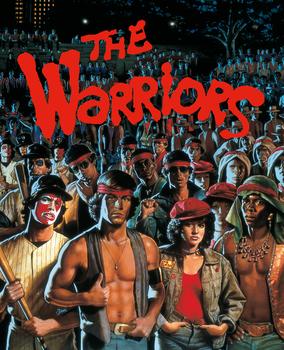
From 1979’s The Warriors , here’s a scene that I love.  Playing the role of Cyrus, the man who could bring all of the gangs of New York together, is Roger Hill.  Playing the role of his assassin is the great David Patrick Kelly.

Cyrus knew what he was talking about but the world wasn’t ready for him.

Can you dig it?

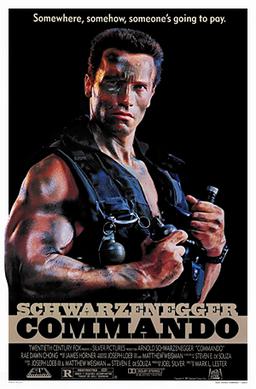
Commando (1985, directed by Mark L. Lester)


John Matrix (Arnold Schwarzenegger) is a former colonel in the U.S. Amy Special Forces.  He was one of the best at what he did but he’s now retired from all that and lives in the mountains of California with his young daughter, Jenny (Alyssa Milano).  When Capt Bennett (Vernon Wells), Martix’s former comrade-in-arms, kidnaps Jenny, Matrix is told that he has 11 hours to assassinate the leader of the country of Val Verde so that General Arius (Dan Hedaya) can launch a coup.  Knowing that the bad guys are planning on killing both him and Jenny no matter what he does, Matrix instead takes out Arius’s men as he makes his way to where Jenny is being held captive.

Commando is one of my favorite Schwarzenegger films.  It has some of the best one-liners (“I like you, Sully, I kill you last,”), some of the best character actors (Sully is played by David Patrick Kelly), and also one of Schwarzenegger’s best performances.  In Commando, Schwarzenegger shows that he’s willing to poke fun at himself, which was something that set him apart from many of the action heroes of the 80s.  (Stallone eventually learned how to poke fun at himself but it took a very long time.)  At his California home, Matrix chops down and carries a tree without breaking a sweat.  During a chase through a mall, Matrix easily lifts up a phone booth.  Matrix may be trying to save the life of his daughter but he still takes the time to come up with one-liners and fall in love with flight attendant Cindy (Rae Dawn Chong).  Commando is essentially just a big comic book brought to life and Schwarzenegger understands that and gives a very knowing, self-aware performance.  Director Mark Lester wastes no time getting to the action and the result is one of the most entertaining action films of the 80s.

Believe it or not, Commando was originally envisioned as being a Gene Simmons picture.  When the KISS frontman turned down the film, the script was rewritten for Arnold Schwarzenegger.  Schwarzenegger made this film after The Terminator and it was another box office success.  As for Gene Simmons, he would have to wait for Runaway to make his action debut.

Demolition Man (1993, directed by Marco Brambilla)


File written by Adobe Photoshop¨ 4.0

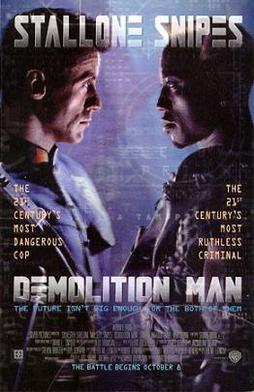
In the near future, law-breakers and other destructive types are not put in prison but are instead cryogenically frozen and left in suspended animation until they’ve served out their sentences.  The most fearsome criminal in the world, Simon Phoenix (Wesley Snipes) has been frozen but so has his nemesis, Detective John Spartan (Sylvester Stallone).

In the far future, Los Angeles is a part of a megalopolis named San Angeles.  Envisioned and watched over by a seemingly benign dictator named Cocteau (Nigel Hawthorne), San Angeles is a wannabe utopia where cursing leads to an automatic fine and all of the restaurants are Taco Bell.  When he’s thawed out for a parole hearing, the suddenly super-powered Phoenix makes his escape.  The police, no longer knowing how to deal with violence, make the reluctant decision to thaw out John Spartan.  Assigned to work with the enthusiastic Lenina Huxley (Sandra Bullock), Spartan must navigate this strange future to defeat Phoenix.

For some reason, Demolition Man never seems to get the respect that it deserves.  Made at a time when both the Rambo and the Rocky franchises appeared to be over, Demolition Man features one of Stallone’s most appealing performances as he deals with a society where just saying a bad word can cause a scandal.  Just as Spartan proves that his brand of destructive police work still has its place in the future, Stallone proved that he could still carry an action movie in 1993.  There’s a lot of knowing humor to Stallone’s performance.  After a series of failed comedies in the 80s, Demolition Man was the movie that proved that Stallone could be intentionally funny.  Stallone is also surrounded by one of his strongest supporting casts.  Wesley Snipes attacks his villainous role with gusto while Denis Leary breaks out his stand-up routine as Edgar Friendly, the leader of San Angeles’s rebels.  This is also the film that led to Sandra Bullock getting cast in Speed and she’s so incredibly adorable here that even Stallone breaks out into a smile while acting opposite her

(In 1993, you couldn’t turn on television without seeing Sandra Bullock saying, “All restaurants are Taco Bell.”)

Demolition Man is an action film and it lives up to its name, with all the demolition that a viewer could want.  Even more so, It’s also a satire, of both Stallone’s previous films and what was then known as “political correctness.”  Demolition Man’s portrayal of a sterile society where everyone had been programmed to be docile and inoffensive wasn’t that far off from what a lot of politicians were then promoting for America at large.  Luckily, John Spartan was around to put an end to that.  The end result is one of Sylvester Stallone’s most memorable films.

Last Man Standing (1996, directed by Walter Hill)


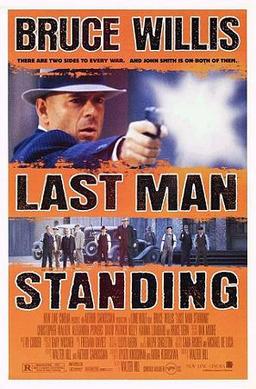
During the 1920s, at the height of prohibition, a mysterious man named John Smith (Bruce Willis) arrives in the dusty town of Jericho.  Jericho sits on the border, between Texas and Mexico, and it is the site of a gang war.  The Italian mob, led by Fred Strozzi (Ned Eisenberg) and Giorgio Carmote (Michael Imperioli), is trying to move in on the Irish mob, led by Doyle (David Patrick Kelly) and his fearsome gunman, Hickey (Christopher Walken).  After the members of the Irish mob destroy his car and leave him stranded in town, Smith offers his services as a gunman to the Italians.  Strozzi hires him but it turns out that Smith has his own agenda and soon, he is manipulating both gangs against each other.

Last Man Standing was Walter Hill’s remake of Yojimbo, with Bruce Willis playing an Americanized version of Toshiro Minfune’s wandering ronin.  (Hill does the right thing and gives Kurosawa credit for the film’s story.)  Now, it should be understood that this is in no way a realistic film.  It makes no sense for two Chicago-style gangs to be fighting over a ghost town in Texas.  Even when it came to smuggling in liquor during the prohibition era, most of it came over the Canadian border rather than the Texas border.  But Walter Hill has always been more about filming the legend than worrying about realism.  He’s the ultimate stylist, creating movies the come together to create an American mythology.  Last Man Standing is a work of pure style, a combination western/gangster movie that pays tribute to the ultimate samurai film.  Gangsters meeting in the desert while tumbleweed rolls past may not make sense but Hill knows a good visual when he sees one and he makes it work.  The plot is taken from Yojimbo.  The western setting is taken from A Fistful of Dollars.  And the gangsters are pure Americana.

Willis, back in his action star heyday, is quick with a gun and a quip and he gets a few scenes that show that, while he may be bad, he’s not as bad as the gangsters in charge of the town.  Hill surrounds Willis with a cast of great character actors, including Bruce Dern as the cowardly sheriff and William Sanderson as the owner of the hotel.  Though he might not be as well-known as some members of the cast, I especially liked Ken Jenkins as the Texas Ranger who informs Willis that he has ten days to finish up his business before the Rangers come to town and kill whoever is still standing.  And then you’ve got Walken, in one of his best villainous roles.  Hickey doesn’t show up until pretty late in the movie but we’ve spent so much time hearing about him that we already know he’s the most dangerous man in Texas and Walken gives a performance that lives up to the hype.

Unappreciated when it was first released, Last Man Standing has stood the test of time as one of Walter Hill’s best.

48 Hrs (1982, directed by Walter Hill)


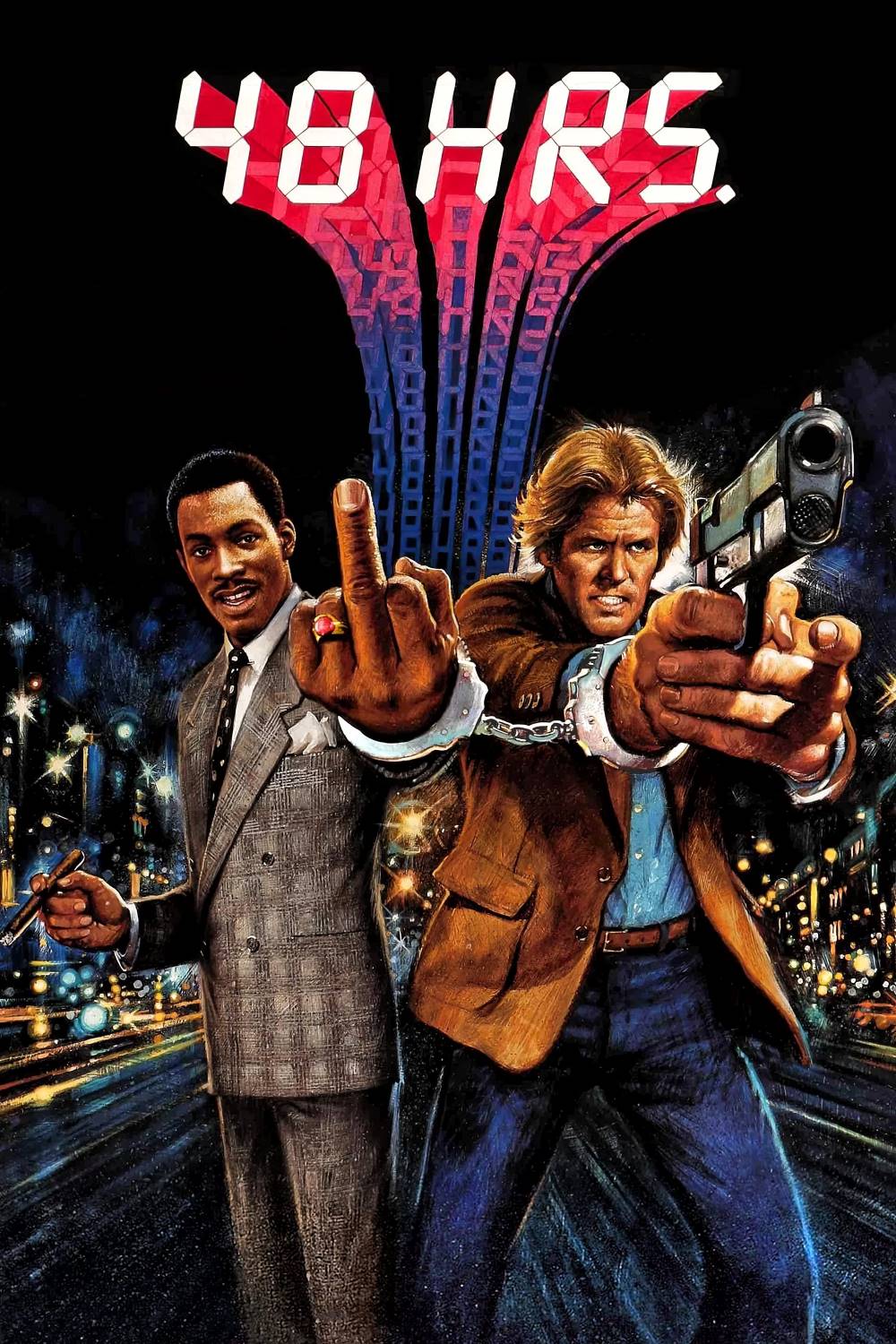
48 Hrs. begins with a violent and bloody jailbreak.  The fearsome Billy Bear (Sonny Landham) helps his criminal associate, Albert Ganz (James Remar), escape from a chain gang and kills several guards in the process.  Billy and Ganz then head to San Francisco, where they start killing their former associates while searching for Luther (David Patrick Kelly).  Another bloody shootout leaves several detectives dead and SFPD Detective Jack Cates (Nick Nolte) looking for revenge.

That’s not the way you might expect one of the most famous comedies of the 80s to begin.  It’s not until Jack arranges for another associate of of Ganz’s to be released from prison for 48 hours that anything humorous happens in the film.  However, because Reggie Hammond is played by Eddie Murphy, 48 Hrs. quickly becomes very funny.

Murphy was appearing on Saturday Night Live when he was cast in 48 Hrs, in a role that was written with Richard Pryor in mind.  One of the first things that Murphy requested was that the character’s name be changed from Willie Biggs to Reggie Hammond.  Murphy made the role his own and watching him, it’s hard to believe that he was only 21 and also that 48 Hrs was his first film.  Murphy performs with the confidence of a natural movie star.  He’s good in the film’s most famous scene, where he pretends to be a cop and talks down an entire bar full of rednecks.  (I can’t repeat his most famous line but everyone knows it.)  But Murphy is even better in the scenes where he’s just reacting to Nolte’s slovenly cop.

The comedy in 48 Hrs comes from the mismatched partnership and initially hostile chemistry of Jack Cates and Reggie Hammond.  Cates has a job to do while Reggie, understandably, wants to enjoy as much freedom as he can before he gets sent back to prison.  The humor is so effective because it’s almost entirely character-based.  There are no gags but there are two well-written characters with differing ways of looking at the world who have to learn how to work with each other.  The two of them start out disliking and distrusting each other but ultimately become best friends, even if Jack does punch Reggie and Reggie does keep trying to steal Jack’s lighter.  Because this is a Walter Hill movie, there’s still a lot of action.  Nolte and Murphy may make you laugh but there’s nothing funny about full-on psycho performances of James Remar and Sonny Landham.  48 Hrs. not only allows Murphy and Nolte to show off their comedic ability but it also allows them to be true action heroes.

Popular with critics and audiences, 48 Hrs. was the most commercially successful film of 1982.  It set the standard for most buddy-cop movies to this day and it introduced the world to Eddie Murphy.

Scenes That I Love: “Can You Dig It?” From The Warriors


Cyrus?

He’s the one and only.

From 1979’s The Warriors (which was directed by Walter Hill, who celebrates his birthday today), here’s a scene that I love.  Playing the role of Cyrus, the man who could bring all of the gangs of New York together, is Roger Hill.  Playing the role of his assassin is the great David Patrick Kelly.

Cyrus knew what he was talking about but the world wasn’t ready for him.

Can you dig it?

Retro Television Reviews: Miami Vice 1.19 “The Home Invaders”


Welcome to Retro Television Reviews, a feature where we review some of our favorite and least favorite shows of the past!  On Mondays, I will be reviewing Miami Vice, which ran on NBC from 1984 to 1989.  The entire show is currently streaming on Tubi!

This week, Crockett and Castillo take down some home invaders.  Yes, Crockett and Castillo.  Not Crockett and Tubbs.  Read on to find out why.

Episode 1.19 “The Home Invaders”

(Dir by Abel Ferrara, originally produced by March 15th, 1985)

Always do your research.

Philip Michael Thomas does not appear in this episode of Miami Vice.  At the start of the episode, it’s mentioned that he’s in New York, visiting Valerie Gordon.  It’s a line that sounds like it was written at the spur of the moment and, when I heard it, I assumed that there had been some sort of behind-the-scenes drama between Thomas and the producers.  Fortunately, before I went with that and said something snarky, I actually looked up the reason for Thomas’s absence and I discovered that he was injured performing a stunt in the previous episode.  Thomas missed this episode because he was recovering.  As well, this was the only episode that he missed during the entire run of Miami Vice.

Thomas may be absent but that doesn’t mean that crime is going to take a break in Miami.  A series of violent home invasions lead to Crockett and Castillo getting temporarily assigned to the robbery division.  Crockett is excited to be working under his former boss and mentor, Lt. John Malone (Jack Kehoe).  Castillo quickly realizes that Malone has gotten rusty and that his investigation into the robberies has been sloppy.

This is a moody episode, with the emphasis as much on Crockett’s disillusionment with his old boss as with the efforts to catch the home invaders.  That said, the home invaders are a scary bunch.  Led by Esai Morales and David Patrick Kelly, they are totally ruthless and willing to kill anyone who fails to move quickly enough.  The scenes in which they break into various mansions and threaten the inhabitants are difficult to watch and it definitely captures the trauma of having your personal space invaded and your sense of safety destroyed.

(When I was 17, our house was broken into and, for months, I couldn’t sleep through the night.  Almost every night, I was woken up by what I thought was the sound of someone breaking into my house and I would end up walking through the house in my nightclothes, carrying a golf club for protection.  One night, I nearly hit my sister when she came out of the kitchen with a midnight snack.  It may sound funny now but, at the time, it was terrifying.)

It ends with a shootout that’s violent even by the standards of Miami Vice.  Castillo and Crockett gun down the bad guys and it’s hard not to notice that, while Crockett seems to be clearly upset by the fact that he had to kill a few men, Castillo barely shows any emotion at all.  Castillo is effective because he holds back his feelings about everything.  That’s also why Castillo, and not Crockett, is capable of seeing that Lt. Malone is past his prime.  With the home invaders neutralized, Malone tells Crockett that he’s quitting the force.  His days of being an effective detective are over.  The job and all of the terrible stuff that he deals with on a daily basis has left him burned out and it’s hard not to notice that he and Crockett are the same age.  Fighting crime in Miami takes a toll.

This episode was directed by Abel Ferrara, who keeps the action moving quickly and who fills the screen with ennui-drenched images of people who are not sure whether they’re making any difference at all.  This is an effective episode, even without the presence of Ricardo Tubbs.

Live Tweet Alert: Join #FridayNightFlix for Commando!


As some of our regular readers undoubtedly know, I am involved in a few weekly live tweets on twitter.  I host #FridayNightFlix every Friday, I co-host #ScarySocial on Saturday, and I am one of the five hosts of #MondayActionMovie!  Every week, we get together.  We watch a movie.  We tweet our way through it.

Tonight, at 10 pm et, #FridayNightFlix has got 1985’s Commando!

How much do you like Sully?

If you want to join us this Friday, just hop onto twitter, start the movie at 10 pm et, and use the #FridayNightFlix hashtag!  It’s a friendly group and welcoming of newcomers so don’t be shy.

Commando is available on Prime and Tubi!  See you there!

Scenes That I Love: Cyrus’s Speech From The Warriors


Cyrus?

He’s the one and only.

From 1979’s The Warriors (which I watched earlier tonight as a part of the #FridayNightFlix live tweet), here’s a scene that I love.  Playing the role of Cyrus, the man who could bring all of the gangs of New York together, is Roger Hill.  Playing the role of his assassin is the great David Patrick Kelly.

Cyrus knew what he was talking about but the world wasn’t ready for him.

Can you dig it?