Retro Television Reviews: The Love Boat 2.21 “A Good and Faithful Servant/The Secret Life of Burl Smith/Tug of War/Designated Lover”


Welcome to Retro Television Reviews, a feature where we review some of our favorite and least favorite shows of the past!  On Wednesdays, I will be reviewing the original Love Boat, which aired on ABC from 1977 to 1986!  The series can be streamed on Paramount Plus!

This week, we have a special 90-minute episode of The Love Boat!

Episode 2.21 “A Good and Faithful Servant/The Secret Life of Burl Smith/Tug of War/Designated Lover”

(Dir by Roger Duchowny, originally aired on February 17th, 1979)

It’s a Mills family reunion as John, Juliet, and Haley all board The Love Boat.  Despite being related, the three of them appears in three separate and unconnected stories.  (There is one moment where Juliet walks past John and he gives her a slightly quizzical  “Do I know you?” look.)

John Mills plays Bertram MacDonald, the long-time butler and chauffeur to Estelle Castlewood (Celeste Holm).  Estelle has booked herself a vacation cruise on the Pacific Princess and she’s surprised to discover that Bertram has also booked a cruise.  As Bertram explains it, the only time that he can take a vacation is when Celeste takes a vacation.  At first, Bertram promises to stay away from Celeste during the cruise so that they can both enjoy their vacations without feeling like employer and employee.  However, fate keeps bringing them together and soon, Bertram tells Celeste that he has to resign from his position because he’s now in love with her.  Fortunately, Celeste is also in love with him so it all works out.  Upon returning to America, Bertram again drives Celeste home but, this time, Celeste sits up front with him instead of in the back of her limo.  This was a rather sweet story, largely because John Mills and Celeste Holm had a lot of chemistry and, being two veteran actors, they both knew exactly how to deliver their sentimental dialogue without making it sound overly calculated.

Juliet Mills plays Millicent, who is separated from Sherman (David Hedison).  Millicent boards the cruise with her 8 year-old son, Lucas (Keith Coogan) and she is shocked to discover that Sherman has decided to take the cruise as well.  Lucas blames himself for the separation but, fortunately, he gets a pep talk from a real-life baseball star, Reggie Jackson.  (Yes, I did ask my sister who he was.)  Even better, Sherman and Millicent realize that they still love each other and agree to call off the divorce.  Yay!  Again, this was another story that worked because of the chemistry between the two leads.  Juliet Mills and David Hedison were convincing as a couple who, for all of their ups and downs, were still willing to give their marriage another chance.

Now, you may be wondering what Reggie Jackson was doing on the cruise.  It turns out that Reggie is an old friend of Isaac Washington’s.  Apparently, Isaac was known as “Freight Train Washington” in high school.  Reggie went on to become a multi-millionaire athlete while Isaac went on to become a bartender on a cruise line.  When Reggie boards the boat, he tells Isaac that he doesn’t want anyone to know that he’s famous.  However, in an amusing twist, Reggie soon becomes frustrated when he gets what he asked for. He’s soon reduced to telling people that he’s Reggie Jackson, just to have them reply that he looks nothing like Reggie Jackson.  Not even Captain Stubing believes that he’s Reggie Jackson!  Fortunately, Reggie is finally able to convince Cleo (Telma Houston) that he is who he says he is and the two of them leave the boat together.  As an actor, Reggie Jackson was a bit stiff but he still had decent comedic timing and it was hard not to be amused at his growing frustration over being anonymous.

Finally, Haley Mills plays model Cheryl Tyson.  Gopher is excited that Cheryl is going to be on the cruise.  She’s his favorite model!  He even has a big poster on the wall next to his bed in his cabin.  Unfortunately, every time that Gopher is near Cheryl, he loses the ability to speak in complete sentences.  As such, Gopher spends the majority of the episode fantasizing outlandish, film-inspired scenarios that all lead to him sweeping Cheryl off her feet.  Gopher imagines himself as an explorer, an admiral, a knight, a spy, and as Humphrey Bogart in Casablanca.  He imagines himself as Elton John, performing Pinball Wizard as the Love Boat crew dances around.  He even imagines being in a love triangle with Julie and Cheryl.  Eventually, Cheryl gives him a pity date and it’s …. well, this whole storyline was pretty stupid.  Fred Grandy was likable in the role and Gopher could be an amusingly goofy character but his fantasies were just so silly and poorly written that I couldn’t wait for them to be over.  It’s nice that the show finally gave Grandy a showcase but neither he nor Haley Mills were particularly well-served by this episode.

This was an uneven episode.  Even though the stories featuring John and Juliet Mills and Reggie Jackson were nicely done, the Hayley Mills/Fred Grandy stuff took up the majority of the episode and it dragged the whole thing down.

Next week …. Freight Train Washington falls in love!

Retro Television Reviews: The Love Boat 1.7 “Julie’s Old Flame / The Jinx / The Identical Problem”


Welcome to Retro Television Reviews, a feature where we review some of our favorite and least favorite shows of the past!  On Wednesdays, I will be reviewing the original Love Boat, which aired on ABC from 1977 to 1986!  The series can be streamed on Paramount Plus!

Love, exciting and new!

Let it go, it floats back to you!

We all float down here!

Episode 1.7 “Julie’s Old Flame / The Jinx / The Identical Problem”

(Directed by Don Weis, originally aired on November 12th, 1977)

The Love Boat is jinxed!

Or, at least, that’s what the crew assumes when they meet Horace and Henrietta McDonald (played by Ray Bolger and Harriet Nelson).  Horace and Henrietta first met when they were children and they’ve been in love ever since.  In fact, they met each other on a cruise.  Unfortunately, that cruise was the Titanic!

(Remember, when this episode aired, it had been 65 years since the Titanic sank.  So, there were still a few elderly survivors around.)

Anyway, the crew worries that Horace and Henrietta might bring bad luck with them and, before you know it, everyone’s getting injured.  Doc Bricker gets hit by a door and ends up having to wear a bandage on his head.  Gopher trips in the lounge.  Isaac gets whiplash after falling in the pool.  Julie ends up wearing an eye patch.  To be honest, I think the crew is just clumsy.

While the crew is trying not to die, identical twins Ellen and Helen (Diana Canova) are trying to keep the crew from realizing that they’re both on the boat.  (They only bought one ticket.)  One of the twins falls in love with Doc Bricker.  The other can’t stand him.  Bricker being Bricker, he really doesn’t care how the twins feel about him.  He just wants to get laid.  Still, Bricker spend most of the episode very confused and very afraid of the Titanic jinx.

Meanwhile, Julie is shocked when she discovers that Buddy Stanfield (David Hedison) is on the cruise!  Buddy is a wealthy and handsome attorney and he’s also Julie’s former lover.  They had a whirlwind romance in Paris but then Julie discovered that Buddy was married and her heart was broken.  Now, Buddy claims that he’s divorced and Julie starts to fall for him again.  It’s pretty obvious that Buddy is lying but who can blame Julie when he’s played by the classy and suave David Hedison.  Hedison played Felix Leiter in Live and Let Die and License to Kill.  In between dealing with the jinx, the crew tries to proect Julie from Buddy.  Of course, Buddy’s wife eventually shows up but at least Julie has her friends to support her!

Anyway, this was a pretty predictable episode and the plot with the twins was way too silly to believed.  It didn’t help that the twins appeared to be in their early 20s while Doc Bricker is in his 40s at least.  But David Hedison was a perfect cad and Ray Bolger (who, of course, is best-remembered for playing the Scarecrow in The Wizard of Oz) and Harriet Nelson were an adorable couple.  This episode was nothing special but it was still enjoyable while it lasted.

Retro Television Reviews: Fantasy Island 1.4 “Family Reunion/Voodoo”


Welcome to Retro Television Reviews, a feature where we review some of our favorite and least favorite shows of the past!  On Tuesdays, I will be reviewing the original Fantasy Island, which ran on ABC from 1977 to 1996.  The entire show is currently streaming on Tubi!

Smiles, everyone!  We have two very strange fantasies this week and a few memorable guest stars!

Episode 1.4 “Family Reunion/Voodoo”

(Directed by George McGowan, originally aired on February 18th, 1978)

Finally!  After four weeks of trying to figure out how exactly the island works, I finally watched an episode that explained what Tattoo’s actual job is.  Apparently, Tattoo is an accountant.  It’s his job to keep track of how much money the island has in its treasury and to order stuff for the resort.  It’s also his job to rent things for the fantasies.  This episode, he mentions that it’s not cheap to rent a bear.  Mr. Roarke gives him a slightly disapproving look but no matter.  Tattoo’s correct.  Bears are not cheap.

As for the fantasies, they’re both kind of strange in this episode.

The more peaceful of the fantasies involves Tony (Tom Fridley) and Ann (Kathy Kurtzman) and their desire for their parents, Harry (John Gavin) and Evelyne (Juliet Mills), to get back together.  The fantasy involves tricking Harry and Evelyne into returning to the summer camp where they first met and having them fall in love all over again.  (Yes, it’s The Parent Trap, all over again.)  Unfortunately, Harry and Evelyne are accompanied by their new significant others, Stuffy McBorington (David Hedison) and Slutty LaGolddigger (Mary Frann.)  Actually, I guess those weren’t really their names but they might as well have been.  Fortunately a sudden rain storm and a visit from the expensive bear convinces Harry and Evelyne to dump Stuffy and Slutty and give love another chance.  Yay!

Meanwhile, on the other side of the island, Mr. Roarke has recreated a Haitian rubber plantation!  Jane Howell (Lauren Tewes, who I’ve also been watching on The Love Boat) is an amnesiac who might be the daughter of the plantation’s owner.  She, her adoptive parents (Howard Duff and Marjorie Lord), and her fiancé (Gary Collins) spend the night at the plantation.  However, it turns out that they’re not alone.  Mr. Roarke has also brought over a voodoo priest (Ernie Hudson!) who is determined to drive Jane mad!  It’s a really weird story that ends with not one twist but two.  It’s also an effectively creepy story, which makes it all the stranger that it’s paired with a light-hearted Parent Trap homage.

To me, the most interesting thing about this episode is that so many of the guest stars were veterans of the horror (or at least, the supernatural) genre.  The Family Reunion storyline features Juliet Mills (Beyond The Door), David Hedison (The Fly), and John Gavin (Psycho).  (Interestingly enough, David Hedison played Felix Leiter in two James Bond films while Gavin would have played Bond in Diamonds are Forever if Sean Connery hadn’t agreed to return to the role.)  Meanwhile, Voodoo features Lauren Tewes (who appeared in Eyes of a Stranger and Twin Peaks: The Return) and Ernie Hudson (Ghostbusters).  It’s an interesting mix of actors and it’s fun to see them all wandering around the island at the same time.

I enjoyed this episode.  Family Reunion was agreeably silly while Voodoo was creepy and melodramatic.  Add to that, Ricardo Montalban seemed to be having a genuinely good time as the mysterious Mr. Roarke.  He made the island seem like a fun place to visit, even with the bears and the voodoo hijinks.

Next week, more fantasies!  And more smiles!

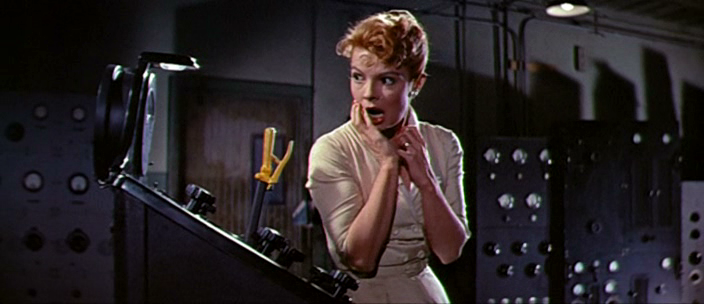
Scenes That I Love: “Help me!” from The Fly


The Fly (1958, D: Kurt Neumann)

One of the great things about the original, 1958 version of The Fly is that, even though it starred Vincent Price, Price didn’t play the Fly.  Instead, for once, Price was allowed to be the voice of reason, the guy who said, “Maybe don’t mess around with the laws of time and space.”

Today’s scene that I love is from the ending of the original Fly.  Supposedly, Price had a hard time filming this scene because whenever he heard the recording of David Hedison crying out, “Help me!,” he would start laughing.  Still, if you know what spiders actually do to the flies that they capture, you can’t help but sympathize with our misdirected scientist in the web.  Destroying him with a rock was probably the most merciful thing that anyone could do.

Film Review: The Greatest Story Ever Told (dir by George Stevens)


The 1965 biblical epic, The Greatest Story Ever Told, tells the story of the life of Jesus, from the Nativity to the Ascension.  It’s probably the most complete telling of the story that you’ll ever find.  It’s hard to think of a single details that’s left out and, as a result, the film has a four hour running time.  Whether you’re a believer or not, that’s a really long time to watch a reverent film that doesn’t even feature the campy excesses of something like The Ten Commandments.

(There’s actually several different version of The Greatest Story Ever Told floating around.  There’s a version that’s a little over two hours.  There’s a version that’s close to four hours.  Reportedly, the uncut version of the film ran for four hour and 20 minutes.)

Max von Sydow plays Jesus.  On the one hand, that seems like that should work because Max von Sydow was a great actor who gave off an otherworldly air.  On the other hand, it totally doesn’t work because von Sydow gives an oddly detached performance.  The Greatest Story Ever Told was von Sydow’s first American film and, at no point, does he seem particularly happy about being involved with it.  von Sydow is a very cerebral and rather reserved Jesus, one who makes his points without a hint of passion or charisma.  When he’s being friendly, he offers up a half-smile.  When he has to rebuke his disciples for their doubt, he sounds more annoyed than anything else.  He’s Jesus if Jesus was a community college philosophy professor.

The rest of the huge cast is populated with familiar faces.  The Greatest Story Ever Told takes the all-star approach to heart and, as a result, even the minor roles are played by actors who will be familiar to anyone who has spent more than a few hours watching TCM.  Many of them are on screen for only a few seconds, which makes their presence all the more distracting.  Sidney Poitier shows up as Simon of Cyrene.  Pat Boone is an angel.  Roddy McDowall is Matthew and Sal Mineo is Uriah and John Wayne shows up as a centurion and delivers his one line in his trademark drawl.

A few of the actors do manage to stand out and make a good impression.  Telly Savalas is a credible Pilate, playing him as being neither smug nor overly sympathetic but instead as a bureaucrat who can’t understand why he’s being forced to deal with all of this.  Charlton Heston has just the right intensity for the role of John the Baptist while Jose Ferrer is properly sleazy as Herod.  In the role Judas, David McCallum looks at the world through suspicious eyes and does little to disguise his irritation with the rest of the world.  The Greatest Story Ever Told does not sentimentalize Judas or his role in Jesus’s arrest.  For the most part, he’s just a jerk.  Finally, it’s not exactly surprising when Donald Pleasence shows up as Satan but Pleasence still gives a properly evil performance, giving all of his lines a mocking and often sarcastic bite.

The Greatest Story Ever Told was directed by George Stevens, a legitimately great director who struggles to maintain any sort of narrative momentum in this film.  Watching The Greatest Story Ever Told, it occurred to me that the best biblical films are the ones like Ben-Hur and The Robe, which both largely keep Jesus off-screen and instead focus on how his life and teachings and the reports of his resurrection effected other people.  Stevens approaches the film’s subject with such reverence that the film becomes boring and that’s something that should never happen when you’re making a film set in Judea during the Roman era.

I do have to admit that, despite all of my criticism of the film, I do actually kind of like The Greatest Story Ever Told.  It’s just such a big production that it’s hard not to be a little awed by it all.  That huge cast may be distracting but it’s still a little bit fun to sit there and go, “There’s Shelley Winters!  There’s John Wayne!  There’s Robert Blake and Martin Landau!”  That said, as far as biblical films are concerned, you’re still better off sticking with Jesus Christ Superstar.

4 Shots From 4 Films: Rest in Peace, David Hedison


4 Shots From 4 Films is just what it says it is, 4 shots from 4 of our favorite films. As opposed to the reviews and recaps we usually post, 4 Shots From 4 Films lets the visuals do the talking. David Hedison (1927-2019) was a working actor for over 70 years, starring on stage, screen, and TV. Though he played in virtually every genre, Hedison is perhaps best known for his work in some classic science-fiction, as well as portraying CIA agent Felix Leiter in two James Bond films. Word as hit the internet he passed away July 18 at the age of 93, and in his honor, we present 4 Shots from the Films of David Hedison. Job well done, sir!

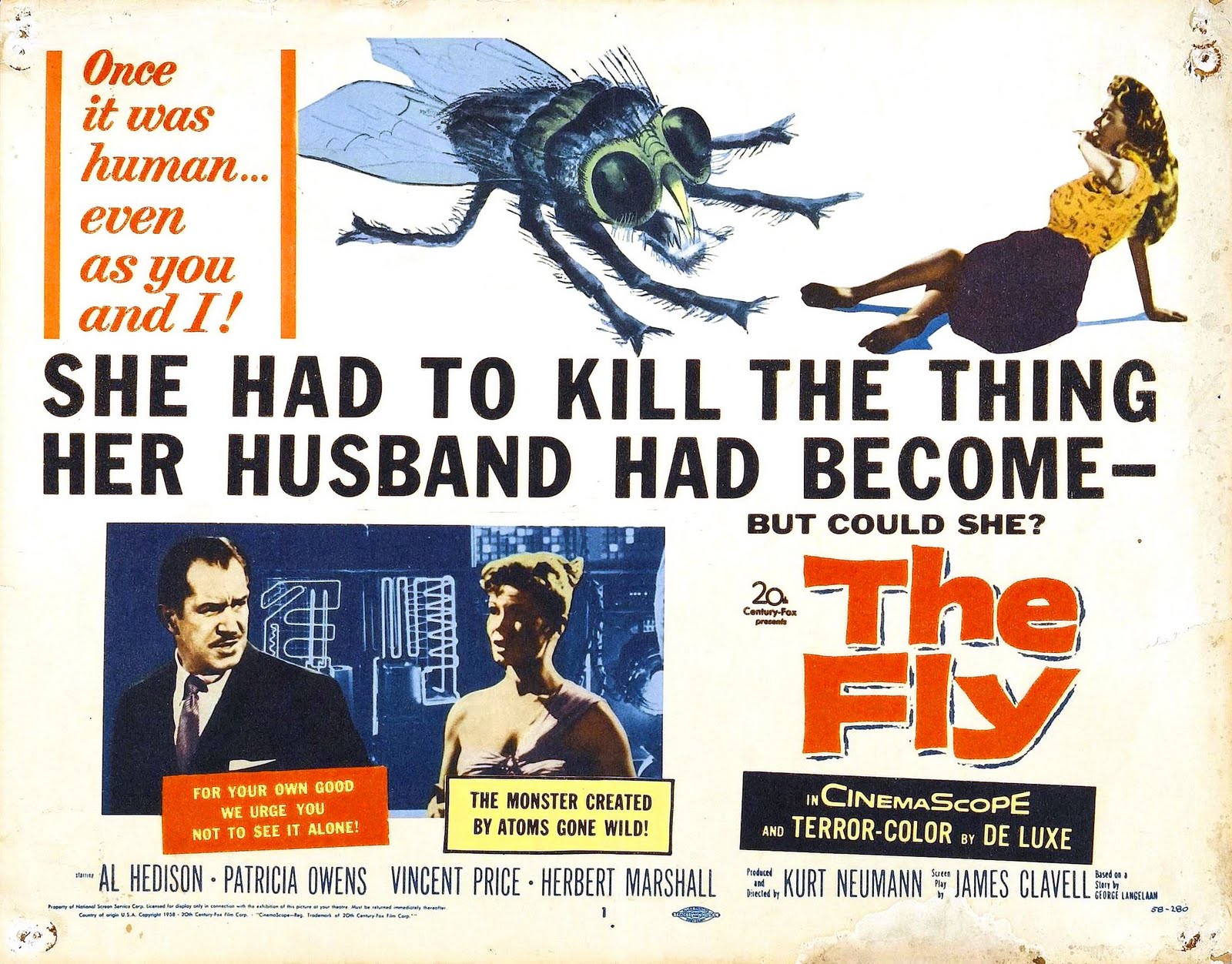
The Fly (1958, D: Kurt Neumann)

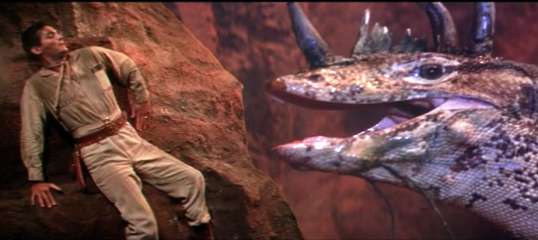
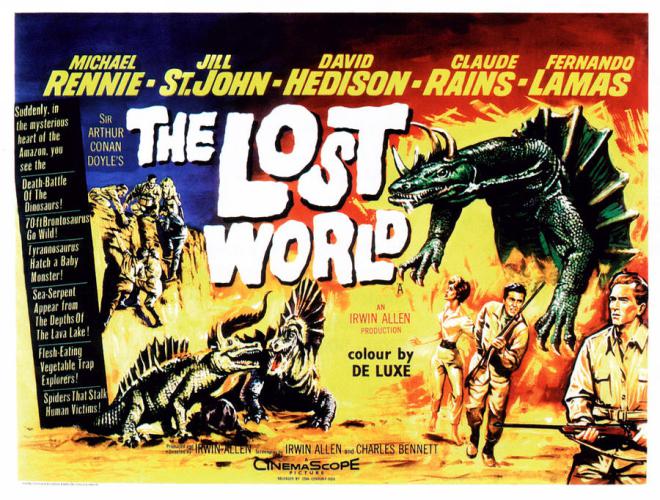
The Lost World (1960, D: Irwin Allen)

The Cat Creature (TV-Movie 1973, D: Curtis Harrington)

Live and Let Die (1973. D: Guy Hamilton)

And for good measure, here’s David Hedison as Commander Crane in the sci-fi TV series VOYAGE TO THE BOTTOM OF THE SEA (1964-68)

  RIP David Hedison (1927-2019)

A Movie A Day #260: The Naked Face (1984, directed by Bryan Forbes)


Dr. Judd Stevens (Roger Moore) is a mild-mannered Chicago psychologist who has never been in any trouble, so why has one of his patients and his receptionist been murdered?  Lt. McGreavy (Rod Steiger), who has a personal grudge against Stevens, thinks that the doctor himself might be responsible.  Dr. Stevens thinks that the first murder was a case of mistaken identity and that he is being targeted for assassination.  Detective Angeli (Elliott Gould) says that he is willing to consider Stevens’s theory but can Stevens trust him?  Or should Dr. Stevens put his trust in a veteran P.I. (Art Carney) or maybe even his newest patient (Anne Archer)?
An example of one of the “prestige” pictures that Cannon Films would produce in between Chuck Norris movies, The Naked Face has the potential be intriguing but both the direction and the script are too formulaic to be effective.  Even though the movie does not work, it is always interesting to see the non-Bond films that Roger Moore made while he was playing the world’s most famous secret  agent.  In The Naked Face, a lot of time is spent on establishing Judd Stevens as being the exact opposite as James Bond.  Stevens doesn’t drink or smoke and he is devotedly loyal to the memory of his dead wife.  When someone offers him a gun, Stevens replies, “I don’t believe in them.”  Unlike Bond, Dr. Stevens does not have the ability to come up with one liners.  He barely ever cracks a smile.  Moore is miscast in the role but he still does a better job than Rod Steiger, who bellows all of his lines, and Elliott Gould, who spends the movie with his head down.  I don’t blame him.

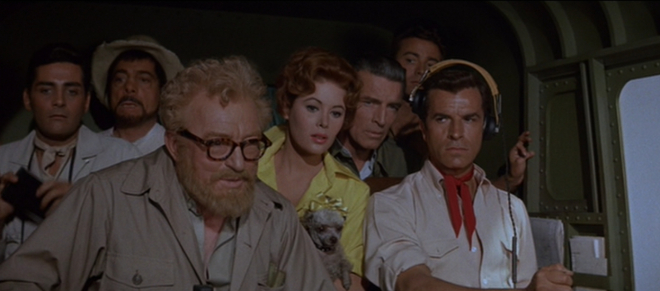
One final note: As much as The Naked Face tries to distance itself from the Bond films, it does feature one other connection beyond the casting of Moore.  David Hedison, who plays Dr. Stevens’s friend and colleague, also played Felix Leiter in Live and Let Die and Licence to Kill.

Jurassic Joke: THE LOST WORLD (20th Century Fox 1960)


gary loggins's avatarcracked rear viewer

Sir Arthur Conan Doyle’s adventure novel THE LOST WORLD was first filmed in 1925 with special effects by the legendary Willis O’Brien  . O’Brien gets a technical credit in Irwin Allen’s 1960 remake, but his wizardry is nowhere to be found, replaced with dolled-up lizards and iguanas designed to frighten absolutely no one. This one’s strictly for the Saturday matinee kiddie crowd, and though it boasts a high profile cast, it’s ultimately disappointing.

Genre fans will appreciate the presence of The Invisible Man himself, Claude Rains , in the role of expedition leader Professor Challenger. The 71 year old Rains is full of ham here, playing to the balcony, and still managing to command the screen with his sheer talent. Challenger claims to have discovered “live dinosaurs” in the remote Amazon rainforest, a claim scoffed at by the scientific community, especially rival Professor Summerlee (the equally hammy Richard Hayden). The crusty Challenger…

View original post 314 more words

A Movie A Day #5: ffolkes (1979, directed by Andrew V. McLaglen)


A group of terrorists, led by Lou Kramer (Anthony Perkins, at his bitchiest) and Harold Schulman (Michael Parks), have hijacked Esther, a supply ship that services two North Sea oil rigs, Ruth and Jennifer.  Kramer demands that the British government pay him 25 millions pounds.  If he’s not paid, he’ll blow up the two oil rigs, destroying the British economy and causing a catastrophic environmental disaster.  Kramer has also rigged the Esther with explosives.  If anyone tries to board the boat, he will blow both the ship and himself up, taking the crew with him.

The British Prime Minister (Faith Brook, playing Margaret Thatcher) could pay the ransom or she could call in counter terrorism expert, Rufus Excalibur ffolkes (Roger Moore).

(Though the name undoubtedly looked odd to American audiences, ffolkes is a common Welsh surname and is often spelled with both fs lowercase.)

Made in between The Spy Who Loved Me and Moonraker, ffolkes was Roger Moore’s attempt to defy the typecasting that had defined his career.  Other than his loyalty to Queen and country, ffolkes has very little in common with James Bond.  James Bond was a suave smoker who bedded several women per film, lived in a hip London flat, drank Martinis, and was always ready with a quip.  ffolkes is humorless, drinks Scotch, hates cigarette smoke, and lives in an isolated castle.  The biggest difference between Bond and ffolkes?  Embittered by one bad marriage, ffolkes has no interest in women and refuses to work with them.  Instead, ffolkes loves cats.

ffolkes had always been overshadowed by Moore’s work as James Bond but it holds up well as a good, old-fashioned adventure film.  In many ways, Anthony Perkins’s Kramer feels like a predecessor to Die Hard‘s Hans Gruber and, if ffolkes had been released ten years later, it probably would have been referred to as being “Die Hard at sea.”  If you can get used to him playing someone other than James Bond, Roger Moore does a good job as the eccentric ffolkes and James Mason provides welcome support as ffolkes’s only friend.

Though ffolkes was a box office disappointment, it retains a cult following and it used to show up regularly on British television.  (I saw it at least once every summer that I went to the UK.)  When it was originally released in the U.K., it was called North Sea Hijack.   When it was released in the U.S., presumably under the assumption that American audiences wouldn’t be able to find the North Sea on a map, the title was changed to ffolkes, which probably left audiences more confused than the North Sea ever would have.  When the movie was first broadcast on American television, the title was changed yet again, this time to Assault Force.

To quote Roger Moore: “The film has so many title changes that I’ve lost count.  But everyone seems to like the character I played.”

For tomorrow’s movie a day, it’s another film where Roger Moore did not play James Bond, The Cannonball Run.

roger-moore-is-ffolkes

Halloween Havoc!: THE FLY (20th Century Fox 1958)


gary loggins's avatarcracked rear viewer

fly1

THE FLY is one of those films you’re probably familiar with if you’re a horror/sci-fi fan. I’ve seen it many times, but was under the impression it was a black & white movie (probably due to early viewings as a young’un, deprived of color TV). So when I rewatched it again in glorious Technicolor, I was pleasantly surprised. This tale of science gone wrong has held up well, and its iconic scene of The Fly’s unmasking still manages to jolt the viewer (even if you know it’s coming!).

fly2

The film’s framing device finds us witnessing Helene Delombre murdering her husband Andre by squishing his head and arm under a huge hydraulic press (and it’s a pretty gruesome demise), then calling her brother-in-law Francois to tell him. Francois is stunned, to say the least, and gets ahold of his friend Inspector Charas. They drive over to the Delombre Freres (the movie’s set in Montreal)…

View original post 827 more words