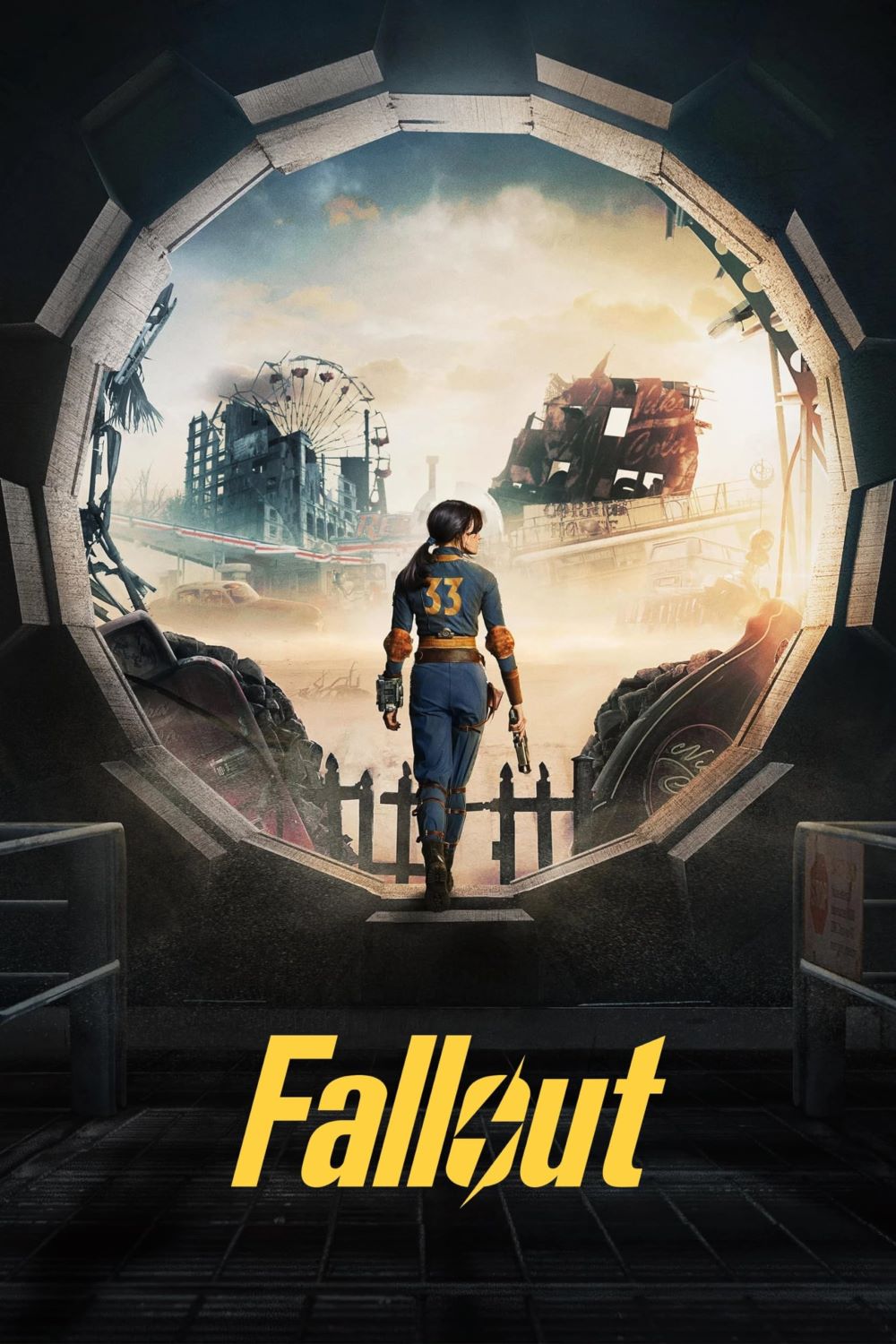
Review: Fallout (Season 1)


“War never changes. You look out at this Wasteland, looks like chaos. But here’s always somebody behind the wheel.” — The Ghoul

Fallout’s first season lands like a mini-nuke: messy around the edges, but undeniably powerful and surprisingly fun. It’s one of those adaptations that feels comfortable being both a love letter to the games and its own weird, often hilarious beast.

Set a couple of centuries after nuclear war, Fallout drops viewers into a retro-futurist wasteland where 1950s aesthetics collide with irradiated horror and corporate evil turned up to eleven. The show splits its focus between three main threads: Lucy, a bright-eyed vault dweller forced to leave her underground utopia; Maximus, an eager but insecure squire in the Brotherhood of Steel; and The Ghoul, a bounty hunter whose past life as a pre-war actor slowly bleeds through his charred exterior. The decision to juggle these perspectives is smart, because each storyline scratches a different itch: Lucy carries the emotional core and fish-out-of-water comedy, Maximus gives the militaristic, power-armor fantasy with a side of satire, and The Ghoul supplies the hard-boiled noir edge and moral ambiguity. The result is a season that rarely feels static; even when one plotline stalls a bit, another kicks in with fresh energy.

The tone is one of the show’s biggest strengths. Fallout leans hard into pitch-black humor without ever completely undercutting the stakes, which is harder to pull off than it looks. Limbs fly, heads explode, dogs get eaten, and yet the show keeps finding a way to make you laugh at the absurdity without turning the apocalypse into a joke. The violence is graphic and frequent, but it usually serves a purpose: to remind you that this world is brutal, even when the characters are cracking wise or bartering over chems. If the games felt like wandering into a deranged theme park built on the ruins of civilization, the series captures that same feeling of “this is horrible, but also kind of hilarious.” That balance, more than any specific lore reference, is what makes it feel like Fallout rather than just another grimdark sci-fi show.

Performance-wise, the casting is pretty inspired. Ella Purnell plays Lucy with this mix of optimism, naivety, and stubborn decency that could easily have been grating, but instead becomes the emotional anchor of the whole season. She brings just enough steel to the character that her idealism feels like a choice, not a default setting. Aaron Moten’s Maximus is a slower burn, and early on he risks fading into the background as “generic soldier guy,” but the more the show digs into Brotherhood politics, insecurity, and the pressure to be “worthy” of power armor, the more interesting he becomes. Walton Goggins, though, more or less walks away with the show. As The Ghoul, he’s vicious, funny, and weirdly tragic, and the flashbacks to his pre-war life give the season some of its most compelling dramatic beats. There’s a sense of continuity in his performance between the slick actor he was and the monster he becomes that keeps the character from feeling like a one-note cowboy caricature.

Visually, Fallout looks a lot better than a streaming adaptation of a video game has any right to. The production design leans into practical sets and tactile props where possible, and it pays off. Power armor has real heft, the vaults look lived-in rather than just glossy sci-fi hallways, and the wasteland feels like a place where people actually scrape out a living instead of just a CGI backdrop. The show has fun with the franchise’s iconography—Nuka-Cola, Pip-Boys, Vault-Tec branding, goofy radios—but it rarely pauses to point and wink too hard. The design team clearly understands that Fallout is basically “atomic-age corporate optimism weaponized into apocalypse,” and that theme is baked into everything from costumes to billboards rotting in the sand. Even the creature designs, like the mutated critters and ghouls, walk that line between unsettling and cartoonishly over-the-top, which fits the overall tone.

On the writing side, the structure of the season feels very much like an RPG campaign. Episodes often play like individual “quests” that build toward a bigger mystery: Lucy stumbling into a bizarre settlement, Maximus dealing with Brotherhood politics, The Ghoul chasing a lead that intersects with both of them. That quest-chain structure gives the first half of the season a propulsive, almost episodic energy, and it’s one reason the show is so watchable. At the same time, this approach has trade-offs. Sometimes character development feels a bit checkpoint-driven—people change because the story needs them to for the next “quest,” rather than as a smooth emotional progression. You can occasionally see the writers nudging the pieces into place, especially as the season barrels toward the finale.

Fallout sits in an interesting sweet spot when lined up against another prestige video game adaptation like HBO’s The Last of Us. Instead of treating the games as a sacred script that must be recreated line for line, it treats the Fallout universe as a shared sandbox—a tone, a style, a set of rules—rather than a fixed storyline that must be obeyed. Where The Last of Us is largely a faithful retelling of Joel and Ellie’s journey, Fallout seems far more interested in asking, “What else can happen in this world?” instead of “How do we restage that iconic mission?” It borrows the franchise’s black-comedy vibe, retro-futurist Americana, and corporate dystopia, then builds mostly original plots and character arcs on top.

That choice immediately gives the writers room to play. They’re not constantly checking themselves against specific missions, boss fights, or famous cutscenes; they’re free to jump around the timeline, invent new factions or townships, and reframe old ideas in ways that a beat-for-beat adaptation could never manage without sparking outrage. This approach also lets Fallout add to the lore instead of just reanimating it in live action. Because it’s not locked into recreating a particular protagonist’s path, the show can explore corners of the wasteland that were only hinted at in the games, complicate existing factions, or take big swings with backstory and world history. That kind of freedom inevitably creates some continuity friction for hardcore fans, but it also keeps the series from feeling like a lavish, expensive recap of something players already experienced with a controller in hand. Where The Last of Us excels by deepening and humanizing a story many already know, Fallout thrives by expanding its universe sideways, treating the source material as a toolbox rather than a template—and that makes it feel more like a genuine new chapter in the franchise than a live-action checklist.

Thematically, the show has more on its mind than explosions and fan-service, which is nice. Fallout keeps circling back to questions about corporate power, the illusion of safety, and how far people will go to preserve their own little slice of control. Vault-Tec’s smiling fascism is a blunt but effective metaphor for real-world systems that promise protection while quietly planning for everyone’s demise. The Brotherhood of Steel, meanwhile, becomes a vehicle for exploring militarized religion, hierarchy, and the dream of “owning” technology and knowledge. None of this is subtle, but Fallout isn’t a subtle franchise to begin with, and the series has enough self-awareness to let its satire stay sharp without slowing everything down for speeches. When it hits, it feels like the writers are asking, “Who gets to decide what’s worth saving when everything’s already gone?”

Where the season stumbles most is consistency. The pacing isn’t always smooth; some mid-season episodes are stacked with memorable set pieces and character moments, while others feel like they’re mostly there to set up endgame twists. The finale, in particular, is likely to be divisive. On one hand, it ties several plot threads together, drops a couple of bold lore swings, and sets up future seasons with a few big, crowd-pleasing reveals. On the other hand, it rushes emotional payoffs and leans heavily on explaining rather than letting certain developments breathe. The shift in tone in the last episode is noticeable enough that some viewers may feel like they suddenly switched to a slightly different show. It’s not a deal-breaker, but it does mean the season ends with more “wow, that was a lot” than a clean emotional landing.

As an adaptation, this freedom-to-expand strategy pays off by appealing to longtime fans and welcoming newcomers without getting bogged down in purist debates. Fans of the games will catch tons of details, locations, and tonal echoes that feel like affectionate nods rather than empty easter eggs. At the same time, the show isn’t just re-skinning existing game plots, which is a good call. It feels like a side story in the same universe rather than a strict retelling. That said, the lore choices late in the season—especially around the broader timeline and certain factions—are bound to spark arguments. If someone is deeply attached to the canon of the older games, some of the retcons and reinterpretations might play like a slap in the face. If someone is more relaxed about canon and just wants an entertaining, coherent story in that world, the show will probably land much better.

The writing of individual scenes shows a lot of care, especially in the way humor and dread coexist. Some of the best moments aren’t the big action beats but the small conversations: a strange, tense chat in a ruined diner, a piece of pre-war media resurfacing at the worst possible time, or a casual bit of wasteland banter that suddenly turns threatening. The dialogue sometimes leans too modern for the retro setting, but the rhythm feels natural enough that it rarely jars. When the show is firing on all cylinders, it nails that specific Fallout flavor: characters staring at incomprehensible horror and responding with a joke, a shrug, or a desperate sales pitch.

If there’s one area where the season could improve going forward, it’s in fleshing out the secondary cast and giving certain arcs more emotional weight. Some supporting characters are memorable and sharply drawn, while others feel like they exist mainly to be lore-delivery devices or cannon fodder. The world feels rich enough that it can absolutely sustain more side stories and slower, character-focused detours. A little more breathing room for relationships—whether friendships, rivalries, or romances—would help the big twists land harder and keep the show from occasionally feeling like it’s sprinting from spectacle to spectacle.

Overall, Fallout’s first season is a strong, confident debut that understands what made the games stand out without being slavishly beholden to them. It’s funny, brutal, stylish, and surprisingly character-driven for a show that spends so much time reveling in bloodshed and nuclear kitsch. The missteps in pacing and the polarizing choices in the finale keep it from being flawless, but they also signal a series willing to take risks rather than play it safe. For viewers who enjoy genre TV with personality, and for gamers who have been burned by adaptations before, this season is absolutely worth the trip into the wasteland. It doesn’t just survive the jump to live action; it stomps into it in full power armor, flaws and all.

The Films of 2024: Horizon: An American Saga: Chapter One (dir by Kevin Costner)


Horizon: An American Saga: Chapter One is the rather unwieldy title of the first part of what Kevin Costner has said will be an epic four-part movie about the settling of the American frontier.

It’s very, very long.

It has a running time of three hours, during which time a lot of characters are introduced and a lot of plotlines are initiated but, because this is the only first chapter, none of them come to a close.  In fact, as the film ends, it’s still a mystery as to how some of the characters are even related.  I watched all three hours and I took my ADD meds this morning so you can be assured that I was actually paying attention.  That said, I still struggled to keep track of who everyone was or even where they were in proximity to each other.  Indeed, it was only towards the end of the film that I realized that several years were supposed to have passed over the course of the first chapter’s running time.

That’s not to say that the film is a disaster.  While it’s not quite the nation-defining epic that Costner obviously envisioned it as being, it’s also not quite the cinematic atrocity that several critics made it out to be.  It’s a throwback of sorts, to the epic westerns of old.  As such, the film features taciturn gunslingers, a woman with a past, dangerous outlaw families, fierce Indian warriors, and a wise Indian chief who has dreamed of the coming of the white man.  The film is full of actors — like Michael Rooker, Sienna Miller, Sam Worthington, Danny Huston, Will Patton, James Russo, Dale Dickey, and Kevin Costner himself — who feel as if they belong to a different era of filmmaking.  Just about everyone in the film is heading to the settlement of Horizon, which sits in Apache territory.  Despite the efforts of the Indians to kill every settler who shows up, they keep coming.  As one army officer explains it, the Indians have made the mistake of thinking that the settlers will come to believe the land is cursed while the settlers, all of whom are full of American optimism, instead chose to believe that the previous settlers were unlucky but that the next wave of settlers will make it work.  Costner has the right visual sensibility for a western.  The film reveals a director who is obviously in love with the Western landscape and the film is at its best when it simply frames the characters against the beauty of the frontier.  But when it comes to actually telling a compelling story, he struggles.  There are a lot of moving parts to the first chapter of Horizon and the problem is not that they don’t automatically connect but instead that Costner never gives us any reason to believe that they’ll ever connect.  There are no visual clues or bits of dialogue to assure the viewer that everything they’re watching is going to eventually pay off.  Costner asks his audience to have faith in him and remember that he directed Open Range and Dances With Wolves while forgetting about The Postman.

The first hour, which features a brutal raid on the settlement by a group of Indians, is the strongest.  It really drives home the brutality of what we now call the old west.  In the style of Michael Cimino’s The Deer Hunter, Costner closely observes the individual customs of the film’s settlers and carefully introduces several appealing characters who leave the viewer feeling as if they’ve met a very special and very unique community of people.  That makes it all the more devastating when the majority of those characters are subsequently wiped out with casual cruelty in a raid led by the Indian warrior Pionsenay (Owen Crow Shoe).  (Later — much later — a tracker played by Jeff Fahey will show similar brutality while wiping out a group of Apaches.)  The first hour establishes the frontier as being beautiful but also dangerous and it also drives home the mix of determination, desperation, and even madness that led so many to follow Horace Greeley’s advice and “Go west!”  Though the film was shot in early 2023, the brutality of the raid brought to mind the terrible images of the October 7th attacks on Israel.  The subsequent scenes in which Pionesenay and his followers ridiculed those in the tribe who wanted peace mirrored the current schism that’s driving apart the worldwide Left.  The U.S. Army, for their part, arrives a day late and can only offer up not-so subtle condescension.  The surviving settlers, however, remain determined to make a home for themselves.

The second hour focuses on Hayes (played by Costner), who rides into a mining town and gets involved with a family of outlaws who are looking for the woman who shot their father.  The second hour is a bit more of a traditional western than the first hour, though some of the violence is still shockingly brutal.  (Even being comedic relief won’t save you in this film.)  Abbey Lee gives a good performance as the woman with a past and a baby and Kevin Costner is  …. well, he’s Costner.  He could play this type of role in his sleep.

The third hour is a mess, introducing a wagon train and featuring a miscast Luke Wilson as the leader of the settlers and Jeff Fahey giving a strong performance as a ruthless tracker.  The third hour meandered as a whole new set of characters were introduced and I was left to wonder why the film needed new characters when the characters from the first two hours were perfectly adequate.  It was during the third hour that I started to really get impatient with the film and its leisurely approach to storytelling.

The film ends with a montage of what we can expect from the next few chapters of Horizon and I will say that the montage actually looked pretty cool.  That’s because the montage was almost totally made up of action scenes, with none of the padding that caused Chapter One to last an unwieldy three hours despite only having 90 minutes worth of story.  Still, one has to wonder if we’ll actually get to see the next three chapters.  The first chapter bombed at the box office and didn’t exactly excite critics.  Costner is producing and financing the films himself and I doubt he’ll give up on them.  The Horizon saga will be completed but will it made it to theaters or will it just end up on streaming?  Personally, I think the whole thing would work best as a miniseries but who knows?  (If Horizon was airing on Paramount, it would probably be a Yellowstone-style hit.)  All I really do know is that Chapter Two has yet to be released.  And that’s a shame because, for all of Chapter One‘s flaws, I’d still like to see how the story turns out.

Here Are The 2022 Gotham Winners!


The Gotham Awards were handed out last night and Everything Everywhere All At Once took best picture.  Danielle Deadwyler may have been snubbed by the Spirit Awards but that didn’t prevent the Gothams from honoring her performance in Till.  While the Gothams may not be as strong an Oscar precursor as some of the other groups that will be handing out prizes over the next two months, every win helps.

Here are all the winners:

Breakthrough television under 40 minutes
“Abbott Elementary” (ABC)
“As We See It” (Amazon Prime Video)
“Mo” (Netflix)
“Rap Sh!t” (HBO Max)
“Somebody, Somewhere” (HBO)

Breakthrough television over 40 minutes
“Pachinko” (Apple+)
“Severance” (Apple+)
“Station Eleven” (HBO Max)
“This Is Going To Hurt” (AMC+)
“Yellowjackets” (Showtime)

Television performers:
Bilal Baig (“Sort Of”)
Ayo Edebiri (“The Bear”)
Janelle James (“Abbott Elementary”)
Matilda Lawler (“Station Eleven”)
Britt Lower (“Severance”)
Melanie Lynskey (“Yellowjackets”)
Sue Ann Pien (“As We See It”)
Minha Kim (“Pachinko”)
Zahn McClarnon (“Dark Winds”)
Ben Whishaw (“This Is Going To Hurt”)

Breakthrough nonfiction series
“The Andy Warhol Diaries”
“The Last Movie Stars”
“Mind Over Murder”
“The Rehearsal”
“We Need to Talk About Cosby”

Breakthrough director
Charlotte Wells (“Aftersun”)
Owen Kline (“Funny Pages”)
Elegance Bratton (“The Inspection”)
Antoneta Alamat Kusijanovic (“Murina”)
Beth De Araújo (“Soft & Quiet”)
Jane Schoenbrun (“We’re All Going to the World’s Fair”)

Best screenplay
Kogonada (“After Yang”)
James Gray (“Armageddon Time”)
Lena Dunham (“Catherine Called Birdy”)
Todd Field (“Tár”)
Sarah Polley (“Women Talking”)

Breakthrough performer
Frankie Corio (“Aftersun”)
Kali Reis (“Catch the Fair One”)
Gracija Flipovic (“Murina”)
Anna Diop (“Nanny”)
Anna Cobb (“We’re All Going to the World’s Fair”)

Outstanding supporting performance
Mark Rylance (“Bones and All”)
Brian Tyree Henry (“Causeway”)
Ke Huy Quan (“Everything Everywhere All at Once”)
Raúl Castillo (“The Inspection”)
Gabrielle Union (“The Inspection”)
Nina Hoss (“Tár”)
Noémie Merlant (“Tár”)
Hong Chau (“The Whale”)

Oustanding lead performance
Cate Blanchett (“Tár”)
Danielle Deadwyler (“Till”)
Dale Dickey (“A Love Song”)
Colin Farrell (“After Yang”)
Brendan Fraser (“The Whale”)
Paul Mescal (“Aftersun”)
Thandiwe Newton (“God’s Country”)
Aubrey Plaza “(Emily the Criminal)”
Taylor Russell (“Bones and All”)
Michelle Yeoh (“Everything Everywhere All At Once”)

Best international feature
“Athena”
“The Banshees of Inisherin”
“Corsage”
“Decision to Leave”
“Happening”
“Saint Omer”

Best documentary feature
“All That Breathes”
“All the Beauty and the Bloodshed”
“I Didn’t See You There”
“The Territory”
“What We Leave Behind”

Best feature
“Aftersun”
“The Cathedral”
“Dos Estaciones”
“Everything Everywhere All at Once”
“Tár”

Here Are The Independent Spirt Nominations!


The nomination for the Independent Spirit Awards were announced earlier today.

Making a very good showing were Tar, Women Talking, and Everything Everywhere All At Once.  Not showing up at all was Darren Aronofsky’s The Whale, which failed to even pick up a lead performance nomination for Brendan Fraser.  Seeing as how Fraser has been viewed as being the Oscar front runner for a few months now, his lack of a nomination definitely took observers by surprise.

Anyway, here are all the nominees!

FILM CATEGORIES

Best Feature
“Bones and All” (MGM/United Artists Releasing)
“Everything Everywhere All at Once” (A24)
“Our Father, the Devil” (Resolve Media)
“Tár” (Focus Features)
“Women Talking” (MGM/United Artists Releasing)

Best Director
Todd Field – “Tár” (Focus Features)
Kogonada – “After Yang” (A24)
Daniel Kwan, Daniel Scheinert – “Everything Everywhere All at Once” (A24)
Sarah Polley – “Women Talking” (MGM/United Artists Releasing)
Halina Reijn – “Bodies Bodies Bodies” (A24)

Best Lead Performance

Cate Blanchett – “Tár” (Focus Features)
Dale Dickey – “A Love Song” (Bleecker Street)
Mia Goth – “Pearl” (A24)
Regina Hall – “Honk for Jesus. Save Your Soul.” (Focus Features)
Paul Mescal – “Aftersun” (A24)
Aubrey Plaza – “Emily the Criminal” (Roadside Attractions)
Jeremy Pope – “The Inspection” (A24)
Taylor Russell – “Bones and All” (MGM/United Artists Releasing)
Andrea Riseborough – “To Leslie” (Momentum Pictures)
Michelle Yeoh – “Everything Everywhere All at Once” (A24)

Best Supporting Performance

Jamie Lee Curtis – “Everything Everywhere All at Once” (A24)
Brian Tyree Henry – “Causeway” (A24/Apple Original Films)
Nina Hoss – “Tár” (Focus Features)
Brian D’Arcy James – “The Cathedral” (Mubi)
Ke Huy Quan – “Everything Everywhere All at Once” (A24)
Trevante Rhodes – “Bruiser” (Onyx Collective)
Theo Rossi – “Emily the Criminal” (Roadside Attractions)
Mark Rylance – “Bones and All” (MGM/United Artists Releasing)
Jonathan Tucker – “Palm Trees and Power Lines” (Momentum Pictures)
Gabrielle Union – “The Inspection” (A24)

Best Breakthrough Performance
Frankie Corio – “Aftersun” (A24)
Garcija Filipovic – “Murina” (Kino Lorber)
Stephanie Hsu – “Everything Everywhere All at Once” (A24)
Lily McInerny – “Palm Trees and Power Lines” (Momentum Pictures)
Daniel Zolghardi – “Funny Pages” (A24)

Best Screenplay
“After Yang” (A24) – Kogonada
“Catherine Called Birdy” (Amazon Studios) – Lena Dunham
“Everything Everywhere All at Once” (A24) – Daniel Kwan, Daniel Scheinert
“Tár” (Focus Features) – Todd Field
“Women Talking” (MGM/United Artists Releasing) – Sarah Polley

Best First Screenplay
“Bodies Bodies Bodies” (A24) – Sarah DeLappe, Kristen Roupenian
“Emergency” (Amazon Studios) – K.D. Dávila
“Emily the Criminal” (Roadside Attractions) – John Patton Ford
“Fire Island” (Searchlight Pictures) – Joel Kim Booster
“Palm Trees and Power Lines” (Momentum Pictures) – Jamie Dack, Audrey Findlay

Best First Feature
“Aftersun” (A24) – Charlotte Wells (director), Mark Ceryak, Amy Jackson, Barry Jenkins, Adele Romanski (producers)
“Emily the Criminal” (Roadside Attractions) – John Patton Ford (director), Tyler Davidson, Aubrey Plaza, Drew Sykes (producers)
“The Inspection” (A24) – Elegance Bratton (director), Effie T. Brown, Chester Algernal Gordon (producers)
“Murina” (Kino Lorber) – Antoneta Alamat Kusijanović (director), Danijel Pek, Rodrigo Teixeira (producers)
“Palm Trees and Power Lines” (Momentum Pictures) – Jamie Dack (director), Leah Chen Baker (producer)

John Cassavetes Award (Given to the best feature made for under $1,000,000)
“The African Desperate” (Mubi) – Martine Syms (writer, director, producer), Rocket Caleshu (writer, producer), Vic Brooks (producer)
“A Love Song” (Bleecker Street) – Max Walker-Silverman (writer, director, producer), Jesse Hope, Dan Janvey (producers)
“The Cathedral” (Mubi) – Ricky D’Ambrose (writer, director), Graham Swon (producer)
“Holy Emy” (Utopie Films) – Araceli Lemos (writer, director), Giulia Caruso (writer, producer), Mathieu Bompoint, Ki Jin Kim, Konstantinos Vassilaros (producers)
“Something in the Dirt” (XYZ Films) – Justin Benson (writer, director, producer), Aaron Moorhead (director, producer), David Lawson Jr. (producer)

Best Cinematography
“Aftersun” (A24) – Gregory Oke
“Murina” (Kino Lorber) – Hélène Louvart
“Neptune Frost” (Kino Lorber) – Anisia Uzeyman
“Pearl” (A24) – Eliot Rockett
“Tár” (Focus Features) – Florian Hoffmeister

Best Documentary
“A House Made of Splinters” (Madman Entertainment) – Simon Lereng Wilmont (director), Monica Hellström (producer)
“All that Breathes” (HBO) – Shaunak Sen (director, producer), Teddy Leifer, Aman Mann (producers)
“All the Beauty and the Bloodshed” (Neon) – Laura Poitras (director, producer), Howard Gertler, Nan Goldin, Yoni Golijov, John Lyons (producers)
“Midwives” (POV) – Snow Hnin Ei Hlaing (director, producer), Mila Aung-Thwin, Ulla Lehmann, Bob Moore (producers)
“Riotsville, U.S.A.” (IFC Films) – Sierra Pettengill (director), Sara Archambault, Jamila Wignot (producer)

Best Editing
“Aftersun” (A24) – Blair McClendon
“The Cathedral” (Mubi) – Ricky D’Ambrose
“Everything Everywhere All at Once” (A24) – Paul Rogers
“Marcel the Shell with Shoes On” (A24) – Dean Fleischer Camp, Nick Paley
“Tár” (Focus Features) – Monika Willi

Robert Altman Award (Given to one film’s director, casting director and ensemble cast)

“Women Talking” (MGM/United Artists Releasing) – Sarah Polley (director), John Buchan, Jason Knight (casting directors), Shayla Brown, Jessie Buckley, Claire Foy, Kira Guloien, Kate Hallett, Judith Ivey, Rooney Mara, Sheila McCarthy, Frances McDormand, Michelle McLeod, Liv McNeil, Ben Whishaw, August Winter (ensemble cast)

Best International Film
“Corsage” (Austria/Luxembourg/France/Belgium/Italy/England) – dir. Marie Kreutzer
“Joyland” (Pakistan/USA) – dir. Saim Sadiq
“Leonor Will Never Die” (Philippines) – dir. Martika Ramirez Escobar
“Return to Seoul” (South Korea/France/Belgium/Romania) – dir. Davy Chou
“Saint Omer” (France) – dir. Alice Diop

Producers Award (presented by Bulleit Frontier Whiskey  – The Producers Award, now in its 26th year, honors emerging producers who, despite highly limited resources, demonstrate the creativity, tenacity and vision required to produce quality independent films.)
Liz Cardenas
Tory Lenosky
David Grove Churchill Viste

Someone to Watch Award (The Someone to Watch Award, now in its 29th year, recognizes a talented filmmaker of singular vision who has not yet received appropriate recognition)
Adamma Ebo – “Honk for Jesus. Save Your Soul”
Nikyatu Jusu – “Nanny”
Araceli Lemos – “Holy Emy”

“The Truer Than Fiction Award” (The Truer Than Fiction Award, now in its 28th year, is presented to an emerging director of non-fiction features who has not yet received significant recognition)
Isabel Castro – “Mija”
Reid Davenport – “I Didn’t See You There”
Rebeca Huntt – “Beba”

Here Are The 2022 Gotham Nominations!


And just like that, the 2022 Awards Season began.

The 2022 Gotham Nominations were announced earlier today.  While the Gothams have recently started to get some attention as an Oscar precursor, it is important to remember that the Gothams are specifically designed to honor low-budget, independent films.  There’s some very strict rules about which films are eligible and which are not.  So, don’t be shocked at the lack of nominations for something like The Fabelmans.  Spielberg has never been eligible for a Gotham.

If any one film is really going to benefit from these nominations, it’s probably Everything Everywhere All At Once.  Seeing as how it’s been a while since Everything Everywhere came out, the Gotham nominations may (or may not) serve to remind the members of the Academy of the excitement that was generated by the film earlier in the year.

Here are the Gotham nominations for 2022.  The winners will be announced on November 28th.

Breakthrough television under 40 minutes
“Abbott Elementary” (ABC)
“As We See It” (Amazon Prime Video)
“Mo” (Netflix)
“Rap Sh!t” (HBO Max)
“Somebody, Somewhere” (HBO)

Breakthrough television over 40 minutes
“Pachinko” (Apple+)
“Severance” (Apple+)
“Station Eleven” (HBO Max)
“This Is Going To Hurt” (AMC+)
“Yellowjackets” (Showtime)

Television performers:
Bilal Baig (“Sort Of”)
Ayo Edebiri (“The Bear”)
Janelle James (“Abbott Elementary”)
Matilda Lawler (“Station Eleven”)
Britt Lower (“Severance”)
Melanie Lynskey (“Yellowjackets”)
Sue Ann Pien (“As We See It”)
Minha Kim (“Pachinko”)
Zahn McClarnon (“Dark Winds”)
Ben Whishaw (“This Is Going To Hurt”)

Breakthrough nonfiction series
“The Andy Warhol Diaries”
“The Last Movie Stars”
“Mind Over Murder”
“The Rehearsal”
“We Need to Talk About Cosby”

Breakthrough director
Charlotte Wells (“Aftersun”)
Owen Kline (“Funny Pages”)
Elegance Bratton (“The Inspection”)
Antoneta Alamat Kusijanovic (“Murina”)
Beth De Araújo (“Soft & Quiet”)
Jane Schoenbrun (“We’re All Going to the World’s Fair”)

Best screenplay
Kogonada (“After Yang”)
James Gray (“Armageddon Time”)
Lena Dunham (“Catherine Called Birdy”)
Todd Field (“Tár”)
Sarah Polley (“Women Talking”)

Breakthrough performer
Frankie Corio (“Aftersun”)
Kali Reis (“Catch the Fair One”)
Gracija Flipovic (“Murina”)
Anna Diop (“Nanny”)
Anna Cobb (“We’re All Going to the World’s Fair”)

Outstanding supporting performance
Mark Rylance (“Bones and All”)
Brian Tyree Henry (“Causeway”)
Ke Huy Quan (“Everything Everywhere All at Once”)
Raúl Castillo (“The Inspection”)
Gabrielle Union (“The Inspection”)
Nina Hoss (“Tár”)
Noémie Merlant (“Tár”)
Hong Chau (“The Whale”)

Oustanding lead performance
Cate Blanchett (“Tár”)
Danielle Deadwyler (“Till”)
Dale Dickey (“A Love Song”)
Colin Farrell (“After Yang”)
Brendan Fraser (“The Whale”)
Paul Mescal (“Aftersun”)
Thandiwe Newton (“God’s Country”)
Aubrey Plaza “(Emily the Criminal)”
Taylor Russell (“Bones and All”)
Michelle Yeoh (“Everything Everywhere All At Once”)

Best international feature
“Athena”
“The Banshees of Inisherin”
“Corsage”
“Decision to Leave”
“Happening”
“Saint Omer”

Best documentary feature
“All That Breathes”
“All the Beauty and the Bloodshed”
“I Didn’t See You There”
“The Territory”
“What We Leave Behind”

Best feature
“Aftersun”
“The Cathedral”
“Dos Estaciones”
“Everything Everywhere All at Once”
“Tár”

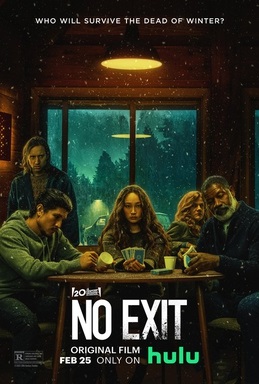
Film Review: No Exit (dir by Damien Power)


After she learns that her mother is in the hospital and possibly on the verge of death, Darby (Hannah Rose Liu) breaks out of drug rehab, steals a car, and starts driving to Salt Lake City.  However, what Darby doesn’t know is that she’s also driving straight into a blizzard.  Soon, Darby is forced to take shelter at a nearby state park visitors center.

Darby isn’t the only person seeking shelter that night.  There’s a married couple, Ed (Dennis Haysbert) and Sandi (Dale Dickey).  Ed is a veteran of the Marine Corp while Sandi is a nurse.  There’s Ash (Danny Ramirez), who has the friendliest smile to ever be seen in the middle of a blizzard.  And then there’s Lars (David Rysdahl), who is distinguished by his long hair and his nervous mannerisms.  When Darby first enters the visitors center, Lars is curled up in a corner and loudly snoring.

And then there’s Jay (Mila Harris).  Jay is a child who happens to be bound and gagged in one of the vehicles parked outside.  When Darby discovers her, she has to not only save the child’s life but also figure out which one of the people in the visitors center is responsible for kidnapping her.

Clocking in at a brisk 90 minutes, No Exit is full of twists and turns.  I’ll do my best to keep spoilers to a minimum in this review.  Not all of the film’s twists work, of course.  There’s a few moments that, in hindsight, didn’t exactly make sense.  After watching the film, you could spend hours debating why certain characters did the things that they did, assuming that you were so inclined and that you could actually find anyone else willing to sit through your analysis.  However, the film itself is so quickly paced and well-directed that it doesn’t matter that the story itself is occasionally a bit implausible.  From the minute Darcy breaks out of that rehab, the film captures the viewer’s attention and it doesn’t let go until the final credits start to roll up the screen.  This is an entertaining B-movie, one that makes good use of its isolated location and its talented cast.  Havana Rose Liu especially deserves a lot of credit for her sympathetic lead performance as Darby.  Darby is a cynic and a survivor but she still has enough humanity inside of her to risk her life for a stranger.

The film looks great, with its scenes of cars driving through the raging snow storm and the film’s cast gathered in the somewhat tacky visitors center.  All of the snow falling reminded me of i’m thinking of ending things and I have to admit that a part of me kept expecting there to be some sort of a metaphysical twist towards the end of the film.  I found myself wondering if the visitors center would be revealed to be Hell, which wasn’t a totally outlandish idea when one considers that the film shares the same name as Sartre’s famous play.  But no, No Exit is a thriller that deals with concerns that are very much earthbound.  It’s an well-executed thriller and an entertaining way to spend 90 minutes.  It can currently be viewed on Hulu.

Never Nominated: 16 Actresses Who Were Never Nominated For An Oscar


The late actress Deborah Kerr was nominated for six Oscars over the course of her distinguished career.  She never won and, in fact, she currently holds the record for the most Best Actress nominations without a victory.

But, at least, Deborah Kerr was nominated!

The 16 actresses below have never been nominated for an Oscar, despite some excellent and compelling performances.  10 of them still have a chance to be nominated.  Sadly, 6 of them are no longer with us.

  1. Emily Blunt

Emily Blunt came close this year.  She received a SAG nomination for her performance in Girl On The Train and some of the critics groups also honored her work.  However, when the Oscar nominations were announced, Meryl Streep was nominated for a film nobody saw and Emily Blunt was nowhere to be seen.  This year, she’s in good company, as neither Amy Adams nor Annette Bening picked up expected nominations either.  Personally, I didn’t care much for Girl on the Train.  I would have much rather seen Blunt nominated for Looper, Sicario, or even Edge of Tomorrow.  Blunt will be nominated eventually.

2. Dale Dickey

You may not know Dale Dickey’s name but you’d recognize her if you saw her.  She usually plays characters who are strong, outspoken, and occasionally a little scary.  You never want to get on the bad side of someone played by Dale Dickey.  To date, Dickey’s most award-worthy role was in Winter’s Bone.  She also had a memorable (if small) role in Hell or High Water, playing the bank teller who, when asked if the men who robbed her were black, replies, “Their skin or their souls?”

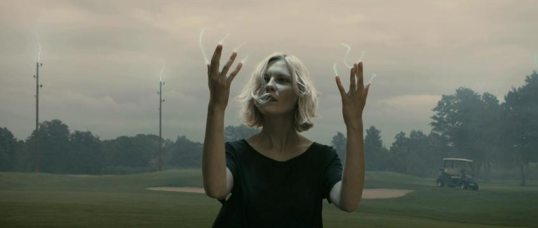
Melancholia

3. Kirsten Dunst

As a result of Bring It On, Dunst is often thought of as being the ideal cheerleader.  But, by far, her most award-worthy turn was in a film that was about as different from Bring It On as possible, Melancholia.  Dunst was just twelve when she was first mentioned, for her performance in Interview With A Vampire, as a potential nominee.  She was also very good in Marie Antoinette and the overlooked Crazy/Beautiful.  Dunst fell off the radar for a while but she’s been quietly making a comeback.

4. Greta Gerwig

Greta Gerwig is my spirit animal.  She deserved a nomination for Francis Ha and for Damsels in Distress before that.  She’ll be nominated some day.

5. Rebecca Hall

Rebecca Hall received some Oscar buzz last year for Christine.  I haven’t seen Christine but I think that her performances in 2008’s Vicky Christina Barcelona and especially 2010’s Please Give were criminally overlooked.

6. Katharine Isabelle

Though Isabelle is best known for Ginger Snaps, I think she deserved a nomination for last year’s underrated 88.  One of the best actresses working today, Isabelle will hopefully get a role worthy of her talents.

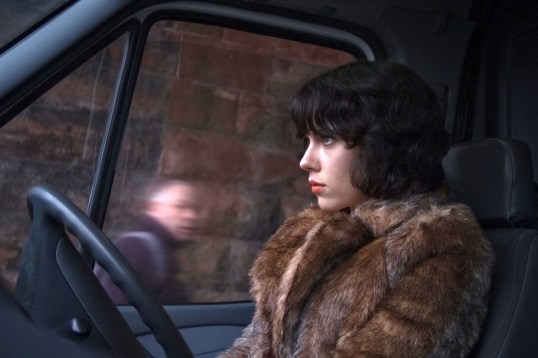
Film Review Under the Skin

7. Scarlett Johansson

It’s a bit of a shock that Scarlett Johansson has yet to be nominated.  Her work in Lost in Translation was just as important to that film’s success as Bill Murray’s.  And her performance in Under the Skin remains one of the bravest pieces of acting to ever be put on screen.

8. Ashley Judd

Unfortunately, Ashley Judd now seems to be more concerned with political activism than acting.  It’s been a while since she’s appeared in a really great role (and no, the Divergent movies don’t count).  Judd’s best work came in the 90s, when she gave award-worthy performances in Ruby in Paradise, Heat, and especially Normal Life.

9. Kelly MacDonald

Scottish actress Kelly MacDonald doesn’t make enough movies but it’s still hard not to feel that she’s been overlooked by the Academy.  Not only did she hold her own in Trainspotting but her performance in No County For Old Men provided that otherwise cold film with a much-needed heart.

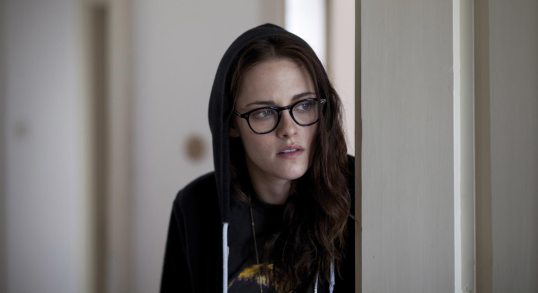
Kristen Stewart

10. Kristen Stewart

Kristen Stewart managed to survive the Twilight films and has emerged as a consistently interesting actress.  Her work in Clouds of Sils Maria won her a Ceasar but was overlooked by the Academy.  Before that, Stewart did excellent work in Into the Wild, Adventureland, Still Alice and Welcome to the Rileys.

Sadly, these six unnominated actresses are no longer with us:

  1. Rita Hayworth

That the wonderful Rita Hayworth was never nominated — not even for Gilda — is nothing less than mind-blowing.

2. Myrna Loy

Myrna Loy was an actress who was such a natural that she made it look easy.  Perhaps that’s why she wasn’t even nominated for The Thin Man.

Marilyn

3. Marilyn Monroe

Perhaps one of the most tragic actresses in the history of Hollywood, Monroe was never nominated despite giving some of the most iconic performances in film history.  I would even make the case that she deserved a nomination for her tiny cameo in All About Eve.

4. Maureen O’Hara

Despite great performances in classic films like The Quiet Man and Miracle on 34th Street, Maureen O’Hara was never nominated for the Oscar she deserved.

detour1

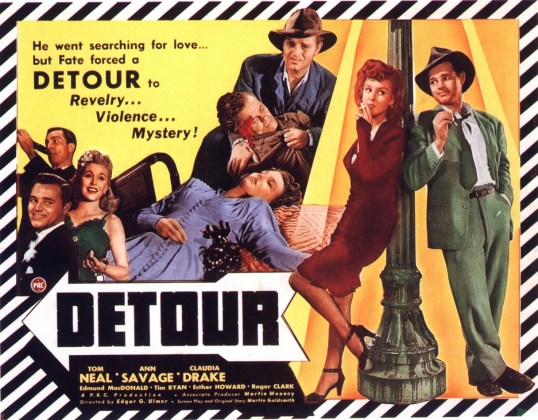
5. Ann Savage

You may not recognize the name but if you’ve ever seen Detour, you know Ann Savage.  Savage largely appeared in low-budget noirs and she always gave performances that were just as fierce as her last name.

Edie!

Edie!

6. Edie Sedgwick

Sadly, Edie never got a chance to play a truly award-worthy role.  Actually, since almost all of her films were underground Andy Warhol movies, it’s debatable whether she ever played a role at all.  During the 1960s, as one of the top models in New York (a so-called “youthquaker”), Edie was best known for being herself.  But, whenever I see Edie in an old Warhol film like Vinyl or even in something like Ciao! Manhattan, I see what a great actress she could have been if she’d only been given the chance.

Edie Sedgwick (1943 -- 1971)

Edie Sedgwick (1943 — 1971)

Film Review: Hell or High Water (dir by David Mackenzie)


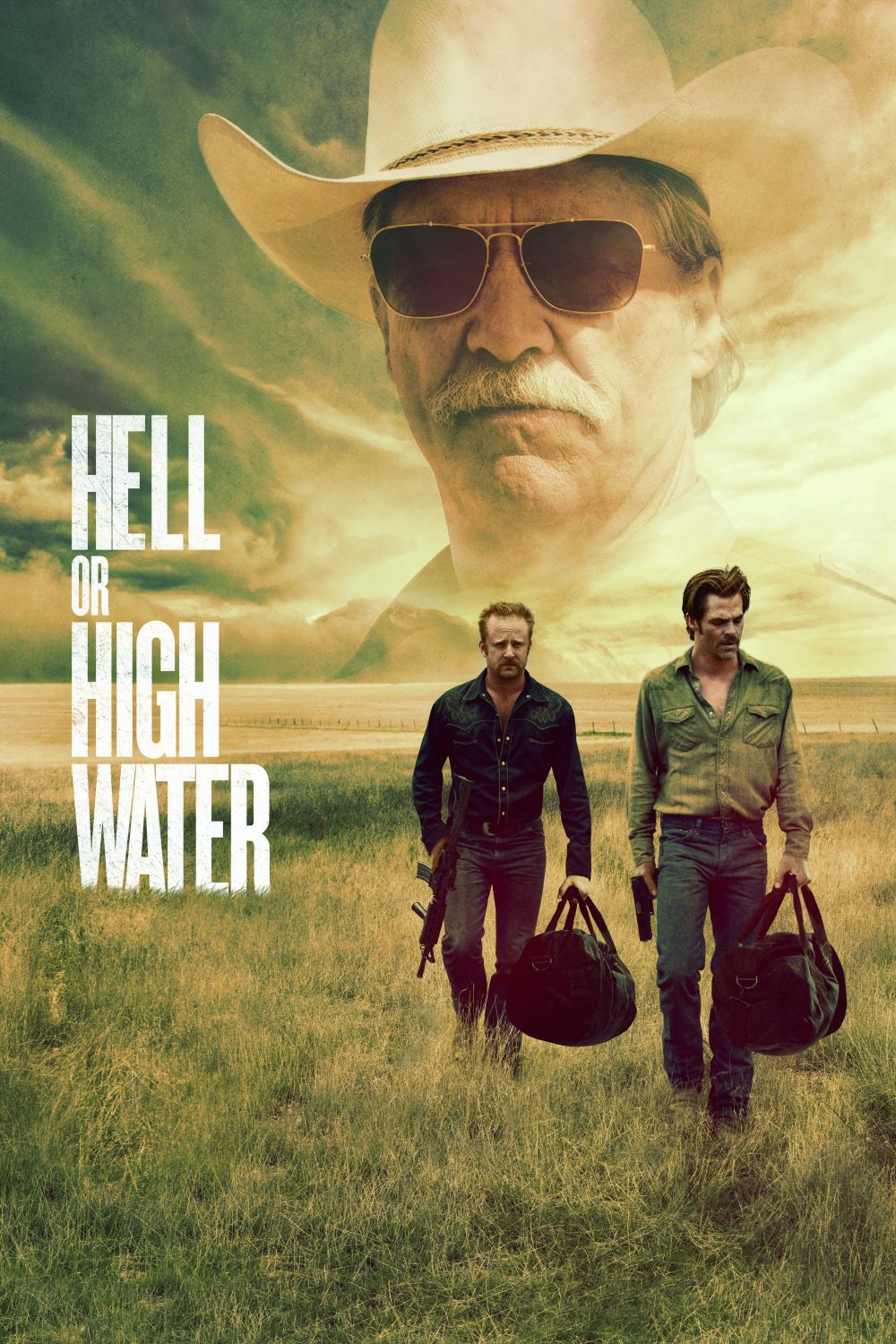
The Texas-set film Hell or High Water features four excellent lead performances.  There’s Chris Pine and Ben Foster, playing brothers and robbing banks.  And then there’s Jeff Bridges and Gil Birmingham, as the two Texas Rangers who are attempting to hunt the brothers down.

But for me, my favorite character was the waitress who, during the latter half of the film, serves lunch to the two Texas Rangers.  When Bridges asks her how she’s doing, she replies, “Hot and not in the good way.”  When the two Rangers start to order their food, she stops them and tells them that everyone who comes in the diner orders the same thing except for one “asshole from New York” who tried to order a trout.  “We ain’t got no goddamn trout!”  It’s a short scene but it’s one of my favorites because, if you’ve ever spent any time in West Texas, you know that this scene is probably the most realistic in the entire film.

My second favorite character was a banker teller played by the great Dale Dickey.  When the Rangers ask her if the men who robbed her bank were black, she replies, “Their skin or their souls?”  You just have to hear the way that she delivers it.  In theory, that should be an awkward line but Dale Dickey makes it sound totally natural.

In fact, everything about Hell or High Water seems totally natural.  For a film about bank robbers, it’s actually a deceptively low-key film, one that is as memorable for its quiet moments as its shoot outs.  When the violence does come, it’s all the more jarring because the movie has spent so much time focusing on the tranquil stillness of the West Texas landscape.

(That said, I should point out that the film was actually shot in New Mexico.  But, quite frankly, New Mexico is pretty much just West Texas with more Democrats.)

Hell or High Water is a film that’s all about the little details.  The film opens with a bank robbery and, as the camera gracefully circles the bank, we catch a glimpse of graffiti announcing that the artist did 4 tours in Iraq and that “bailouts (are) for banks, not for me.”  At its heart, Hell or High Water is about the many people who have been left out of this so-called “economic recovery,” in which we’re all supposed to have such faith despite having seen little evidence of its existence.  While the rich get richer, the struggle of the people in Hell or High Water is ignored by everyone but them. And so, the people do what they can to survive.  For some, that means robbing banks.  For others — like a wonderfully snarky group of witnesses in a diner — that means refusing to admit that they saw anything happen.  If you want to see a realistic portrait of economic uncertainty and populist revoltuon, don’t waste your time with the cutesy bullshit and bourgeois Marxism of The Big Short.  Watch Hell or High Water.

Of course, not everyone is willing to turn a blind eye to the bank robbing brothers.  Hell or High Water is not just about economic anxiety.  It’s also about the unique struggle of being a bank robber in a part of the country where literally everyone has a gun.  (During one robbery, Pine asks an old customer if he has a gun on him.  “Damn right I got a gun on me!” the old man snaps back.)  As opposed to so many other films, Hell or High Water gets West Texas right.

(It’s probably not a coincidence that we’re told the brothers robbed a bank in Archer City, the home of legendary Texas writer, Larry McMurtry.)

As for the film’s cast, Jeff Bridges and Ben Foster get the two “showiest” roles.  Jeff Bridges plays a Texas Ranger who is only a few days away from retirement and who enjoys needling his partner.  (One of the main delights of the film is the comedic interaction between Bridges and Gil Birmingham.)  Ben Foster is the more reckless of the two brothers, an ex-con who declares that everyone is his enemy but, at the same time, shows himself to be willing to do anything to protect his brother.  Both Bridges and Foster give excellent performances and Foster, in particular, reminds us that he’s one of the most exciting actors working today.

And yet, for me, the true anchor of the film is Chris Pine.  Chris Pine, of course, is best known for starring in the last three Star Trek films.  And while he was always an adequate lead in those films and he gave a wonderfully self-aware performance in Into The Woods, none of his past films prepared me for just how good a job he does in Hell or High Water.  Pine gives a quiet and rather subtle performance and, when we first see him, we automatically assume that he’s been dragged into the criminal life by his more flamboyant brother.  But as the film progresses, we start to realize that there’s more to both the character and to Chris Pine as an actor.  By the end of the film, we’re forced to reconsider everything that we previously assumed about everyone.

Speaking of end of the film — let’s just say that Hell or High Water has one of the best final scenes of 2016.  Like the film itself, it’s deceptively low-key but it leaves you reeling.

It took me a while to see Hell or High Water but I’m glad I did.  Come Hell or high water, you should see it too.

Embracing the Melodrama #57: Winter’s Bone (dir by Debra Granik)


winters-bone

I can still remember what it felt like, back in 2010, as I stepped out of the theater where I had just watched Winter’s Bone.  I had just spent 100 minutes engrossed in that film’s world and it was somewhat jarring to suddenly find myself back in my world.  The air around me was still.  The clear sky above me seemed to be a totally new shade of blue.  The sounds of passing cars and overheard conversations echoed in my head.  When I walked, I felt as if I was moving at a different, dreamier pace than everyone else, as if I was still only partially back in my world.

That’s the type of film that Winter’s Bone is.  It’s a film about life on the fringes, a portrait of a very real part of America that a lot of people don’t even realize exists.  It’s a film that sticks with you and dares you to try to forget the people who it has introduced you to and the stories that it tells.

Winter’s Bone takes place in the Ozarks, a society and world that is dominated by meth and secrets.  Speaking as someone who still has family who live on the outskirts of the world depicted here, I can say that Winter’s Bone gets both the big picture and the little details right.  Everything from the unbreakable cycle of poverty to the defiant resilience of the people is depicted just as it is.  Make no mistake about it — the people in Winter’s Bone may not have much but they do have their pride.  It’s portrayed best in the scene where meth head Teardrop (John Hawkes) glares down the county sheriff (Garret Dillahunt), letting him know that, regardless of who is wearing the uniform, this is Teardrop’s world.

Teardrop is the uncle of 17 year-old Ree Dolly (Jennifer Lawrence), who is considering joining the army once she graduates from high school but, for now, spends all of her time taking care of her mentally ill mother and her two younger siblings.  Her father, who is one of the county’s best meth cooks, was recently arrested and has a court date approaching.  However, he has apparently skipped bail and disappeared.  When Ree is told that, unless her father shows up for his court date, she and her family will lose their house, Ree sets out to try to find him.

05_Flatbed_1 - JANUARY

Ree, however, knows that her father would never have jumped bail and she also knows that there’s no way he died in a meth lab fire, as some people are claiming.  She knows that her father has been murdered but, unlike Teardrop, Ree has no interest in getting revenge.  She just wants to find his body so she can prove that he’s dead and her family can keep their home.  Unfortunately, even this brings Ree into conflict with the local crime boss.

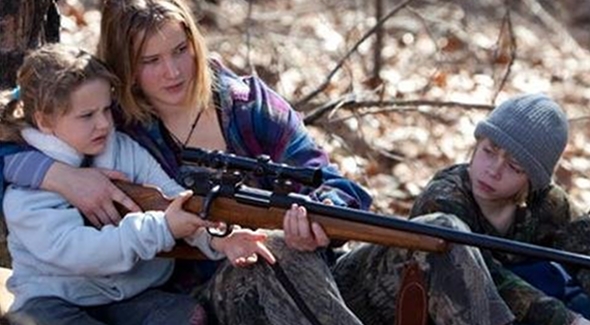
Taking place on a blasted landscape of dilapidated farms, rusty pickups, and the burned ruins of abandoned meth labs, Winter’s Bone is an unusually powerful piece of Southern gothic. It’s also a film that — unlike a lot of other acclaimed movies — actually gets better with repeat viewings.  When you first see it, you’re overwhelmed by the film’s bleakness.  When it ends, you’re not sure if you should be happy or sad.  The second time, however, you can better appreciate the skill with which director Debra Granik tells her story, the way she frames Ree against the landscape as if Ree was the lone hero in a classic western and how the scenes where Ree searches for her father in a swamp are full of shadows and menace.  The third time, you can better appreciate the performances of characters actors like John Hawkes, Garret Dillahunt, and especially Dale Dickey.  The fourth time, you no longer have any doubts.  Winter’s Bone is one of the best films that you’ve ever seen.

And, through it all, Jennifer Lawrence is there and reminding you why she became a star in the first place.  She may have won her Oscar for Silver Linings Playbook and she may be best known for being the face of The Hunger Games franchise but Winter’s Bone remains Jennifer Lawrence’s best and bravest performance.  Without a hint of vanity or reluctance, Lawrence portrays Ree as a resilient and unsentimental survivor and you can’t help but cheer her on as she refuses to back down to any authority, legal or otherwise.  By the end of the film, you know that Ree is probably as trapped as anyone but you can’t help but hope that she’ll somehow find something better.

If you haven’t seen Winter’s Bone, you need to.

Target Practice

Review: True Blood S5E12 “Save Yourself”


(BE WARNED!  SPOILERS AND PROFANITY AHEAD)

As I sit here writing this, it’s been about an hour since the 5th season finale of True Blood and I’m still trying to figure out how to start my review of the episode.  Foolishly, I’ve got the finale of that terrible Aaron Sorkin male egofest, The Newsroom, on for background noise and I’m hoping that it ends with the entire cast getting staked and exploding into red goo.  It’s only a distraction though from confronting the issue of what happened during the final five minutes of True Blood tonight.

Seriously — what the fuck was that?

Up until Bill drank what remained of Lilith’s blood, the season finale was playing out in a rather predictable fashion.  Don’t get me wrong.  It was exciting and there were plenty of good scenes but it all felt somewhat familiar and I was fairly sure that Eric and Sookie would confront Bill and Sookie would be able to talk some sense into him.  I knew there would be some sort of macabre twist at the end because it is True Blood and all.  I thought maybe Lafayette’s demon would pop up or maybe Roman would suddenly materialize out of thin air.  What I was not expecting was that Bill would dissolve into a red puddle just to then suddenly rise out of the pool of blood as some sort of male Lilith.  As Sookie so correctly put it, “Fuuuuuuuuuck….”

Though tonight’s finale was dominated by the fall of the Vampire Authority, there were a few other things going on.

First off, dumbass Andy is now a father as Maurella, the faerie he impregnated earlier this season, gave birth to four girls.  Somewhat inconveniently for Andy, she did so at the exact same time that he was trying to explain the situation to Holly.  Even more inconveniently, Maurella then promptly vanished, leaving Andy to raise the four babies.  To be honest, I wasn’t really a huge fan of this plotline when it was introduced last week and I’m still not.  That said, it could be interesting to see, in season 6, how all the show’s vampires react to having four new sources of faerie blood in Bon Temps.  Especially since it now appears that humans, vampires, and practically everyone else is going to be very much at war with each other.

Speaking of war, the war for control the wolfpack was finally resolved during tonight’s episode and, not surprisingly, it was won by Alcide who not only defeated J.D. but killed him as well.  A friend of mine e-mailed me during the show to say, “I know you ladies love this Alcide guy but the werewolves bore me shitless…” I have to say that my friend is right on both counts.  We do love Alcide and yes, the werewolf storylines are never as interesting as whatever’s going on with the vampires.

And, believe me, a lot was going on with the vampires tonight.

Last week ended with Russell, having just feasted on a faerie, now approaching the faerie night club while Sookie and friends vainly tried to hold him back.  Tonight’s episode began with Eric and Nora conveniently showing up and promptly saving the day by killing Russell.  That’s right — Russell exploded into red goo.  He’s dead and you know what?  I’m going to miss him.  Denis O’Hare brought such a wonderfully decadent sense of evil to the show and, to be honest, it was hard not to feel that he (and the character) deserved a better send off than just being killed during the pre-credits sequence.

I was probably not alone in hoping that the Rev. Newlin would be killed right alongside Russell but instead, the sleazy little toadsucker managed to scurry off and was missing for the rest of the episode.  This, however, did prove convenient for Sam and Luna because, with Newlin nowhere to be found, that allowed Luna to shift into Newlin’s form and then try to walk out of the Authority HQ with Emma (who was still in adorable wolf puppy form).  In the past, I’ve often felt that Michael McMillan has gone a bit overboard with his performance as the Rev. Newlin but he deserves all the credit in the world for his performance in tonight’s episode.  Luna-as-Newlin was a wonder to behold.

Unfortunately, right when Luna/Newlin is on the verge of escaping on wolf puppy, she’s grabbed by a very angry Rosalyn.  Apparently, the video tape of Newlin and Russell attacking that frat house has been released by the U.S. Government and Rosalyn drags Luna/Newlin downstairs to the media room so that she can do an interview and practice a little damage control.  However, during the interview, Luna/Newlin starts to have convulsions and shifts back into Luna form.  Before she apparently faints, Luna manages to tell the world that humans are being held captive at the Authority HQ.  I’m not really sure what was happening to Luna, if it was a lingering effect of her having been shot earlier this season or something even worse.  Fortunately, for Luna, she was saved from Rosalyn’s wrath by Sam who, having shifted into a fly earlier, flew into Rosalyn’s mouth and then apparently shifted back to human form inside of her, causing Rosalyn to explode into one big mess.

While this was going on, the Authority HQ was being attacked by Eric, Nora, Sookie, Tara, and Jason (who, oddly enough, is now having hallucinations where his dead, and surprisingly bigoted, parents talk to him).  After killing every vampire that they come across and freeing Jessica and Pam (which leads to a Pam/Tara makeout session), Eric and Sookie go to confront Bill, who has just finished staking the final member of the authority, Salome.

And that, of course, led us to this season’s final scene — Bill being reborn as some sort of blood God.

So, is Bill now truly evil?  Are Pam and Tara a couple?  Is Jason going crazy?  Is Luna dying?  Can a war between humans and vampires be prevented?  And who, in their right mind, would trust dumbass Andy with one baby, let alone four?

For answers to all of those questions, we’re going to have to wait until season 6…

Random Observations

  • Tonight’s unofficial scene count: 60.
  • I have to admit that I was somewhat disappointed with tonight’s finale.  It’s not that it was a bad episode as much as it just really annoyed me that, after taking so long to reach this point, tonight’s finale still didn’t resolve or explain much of anything.  Nor did it even really attempt to.  That said, I’ll still return to watch season 6 so, obviously, tonight’s episode must have done something right.
  • Again, I was disappointed with how easily Russell was finally dispatched.  I also wish that Rosalyn and Salome hadn’t been killed off as they were both interesting characters and I think the series could have done more with them.
  • I also felt bad for Chelsea, the receptionist.  My sympathy is always with the receptionists.
  • Does Lafayette still have that demon inside of him?
  • Is Emma going to be in Wolf Puppy form forever?
  • I have mixed feelings about season 5 on True Blood.  It definitely was not a season to use to introduce someone to True Blood for the first time.  That said, I also think that this season featured a lot of really good moments and I’m looking forward to Season 6.
  • Hopefully, Season 6 will not feature any Iraqi fire demons.
  • I also had a lot of fun recapping each episode here on the Shattered Lens and thank you to everyone who read them!  It was fun!
  • By the way, The Newsroom did not end with Jeff Daniels getting a stake driven through his heart and that’s a shame.