Retro Television Review: St. Elsewhere 1.1 “Pilot”


Welcome to Retro Television Reviews, a new feature where we review some of our favorite and least favorite shows of the past! On Fridays, I will be reviewing St. Elsewhere, a medical show which ran on NBC from 1982 to 1988.  The show can be found on Hulu!
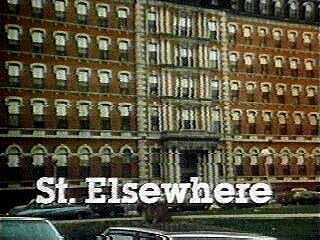
When I started reviewing Homicide, Jeff suggested that I should also review St. Elsewhere because the two shows shared a similar sensibility and a lot of behind-the-scenes personnel.  (Homicide showrunner Tom Fontana started out as a writer on St. Elsewhere.)  Apparently. a few characters from St. Elsewhere would eventually cross-over to Homicide.  Since I’m planning on soon reviewing two shows that were descended from HomicideOz and The Wire — it only seemed right to also review a show that was Homicide’s ancestor.

Though the show aired largely before my time, St. Elsewhere is definitely a show that I have heard about.  Everyone who follows American pop culture has either read about or seen the show’s infamous final episode and knows about the Tommy Westphall Universe Hypothesis.  Obviously, I can’t get into it now because that would be a spoiler but we’ll discuss it when the time comes!

For now, let’s start at the beginning, with the pilot!

Episode 1.1 “Pilot”

(Dir by Thomas Carter, originally aired on October 26th, 1982)

St. Eligius is a hospital in Boston that has obviously seen better days.  From the outside, it looks old.  On the inside, the hallways have the dim and dull look of a building that hasn’t been renovated in over ten years.  As Dr. Mark Craig (William Daniels, long before he played Mr. Feeney on Boy Meets World) angrily puts it, the hospital gets no respect in Boston.  It’s seen as being a “dumping ground” for patients who can’t afford anything better.  Dr. Craig is world-renowned heart surgeon whose wealthy patients have donated what few improvements the hospital has seen over the past few years.  (“All of our clocks now read the same time!” Dr. Craig brags at one point.)  But not even Dr. Craig can change the hospital’s reputation as being secondary to Boston General.

There are actually a few good things about St. Eligius.  For one thing, a young Denzel Washington is on staff, playing resident Phillip Chandler.  Denzel doesn’t get to do much in the pilot but still, his presence fills the viewer with confidence.  St. Eligius is also home to a world-renowned liver specialist, Dr. Daniel Auschlander (played by Norman Lloyd, who also worked with Hitchcock and Orson Welles).  Auschlander has liver cancer but the hospital chief-of-staff, Dr. Donald Westphall (Ed Flanders), assures everyone that Auschlander will probably “out live us all.”  (And he was right, to an extent.  Norman Lloyd lived to be 106 years old before passing away in 2021.  Ed Flanders died, tragically by suicide, in 1995.)  St. Eligius is a teaching hospital and the residents want to make a good impression by keeping their patients alive.  That’s always a good thing.

At the same time, how secure can you feel when Howie Mandel is one of the residents?  Mandel plays Dr. Wayne Fiscus, who wears a baseball cap and acts …. well, he acts a lot like Howie Mandel.  Like Washington, Mandel doesn’t do a lot in the pilot.  He does get a subplot where he apparently has sex in the morgue with goth pathologist Cathy Martin (Barbara Whinnery) but otherwise, we don’t see him treating a patient or anything like that.  Still, it’s a bit jarring to see Howie Mandel as a doctor.  I would not necessarily want him for my doctor because he’s to be easily distracted.  Maybe he’ll change my mind as the series progresses.

Speaking of sex, Dr. Ben Samuels (David Birney) has gonorrhea and spends most of the pilot approaching doctors and nurses and informing them of his conditions and suggesting that they might want to get tested themselves.  That’s not exactly the best way to be introduced to a character but it also lets us know that this show is not just going to be about dedicated doctors who spend all of their time worrying about their patients and making amazing medical discoveries.  Instead, this show is also about doctors who get venereal diseases.  Has anyone checked on Fiscus in the morgue?

(That said, Dr. Samuels does get a scene where he saves the life of a woman who was injured in a terrorist bombing, as if the show does want to make sure that we know that he can do his job, even if he is spreading VD through the hospital.)

The majority of the episode follows Dr. Jack Morrison (David Morse), a first-year resident who has been working several 24-hour shifts and who complains, at one point, that he hasn’t seen his wife for days.  Dr. Morrison gets upset when a surgeon wants to operate on one of his patients, a 15 year-old girl named Sandy (Heather McAdams).  Morrison believes that surgeons always want to cut into somebody.  Morrison gets even more upset when Sandy’s mother requests that Sandy be transferred to Boston General, which has a reputation for being a better, more modern hospital.  In fact, Morrison is so upset and exhausted that he forgets to file a death certificate for a patient who dies during the night.  As a result, it’s believed that the patient, who has a reputation for being violent, has gone missing and is stalking the hospital.  Dr. Annie Cavanero (Cynthia Sikes) spends the entire episode looking for a dead man, which at least gives her an excuse to visit every ward and introduce the viewers to the members of the show’s ensemble cast.

Having lost my mom to cancer and now my Dad to Parkinson’s, I was hesitant about reviewing St. Elsewhere.  (Actually, I was hesitant about reviewing any medical show.)  When my Dad was in the hospital, I felt like I couldn’t get anyone to give me a straight answer about his condition and I often felt the doctors were talking down to me.  To be honest, my worst conflicts were with the nurses, one of whom told me that I would have to “lose the attitude” before she would explain why my father had been moved to the Delirium Ward.  (It didn’t help that, at the same time my Dad was in the hospital, there was a huge storm that left us without power for a week.)  At the same time, there were other doctors who were helpful.  The staff at the rehab center that my dad was sent to were also wonderful.  I have my regrets about agreeing to hospice care but the nurse who was assigned to my Dad was very empathetic and totally understanding whenever I asked her for a cigarette.  (Under normal circumstances, I don’t smoke because I have asthma but seriously, the stress was killing me.)  I’m bitter and angry about a lot of what happened but I’m also thankful for the small moments of kindness.

Watching a show set in a hospital was not easy for me but the pilot of St. Elsewhere appealed to me with its mix of melodrama and humor.  There was a quirkiness to it that I appreciated.  William Daniels made me laugh with his annoyed rant about how little respect the hospital received.  Most of all, I cared about whether or not Dr. Morrison would still be alive at the end of his shift.  David Morse’s performance won me over.  He’s the type of doctor that I would want to have.  Well, actually, I’d probably want Denzel to my doctor but Dr, Morrison could assist.  Just keep Dr. Howie Mandel away from me.  Nothing against him but he seemed to be having way too much fun at the hospital….

Most importantly, the show ended with a cat.

Next week, the drama continues at St. Elsewhere!
Film Review: Rustin (dir by George C. Wolfe)


In Netflix’s Rustin, Colman Domingo plays Bayard Rustin.

A Quaker, a pacifist, a leader of the civil rights movement, and a former communist, Bayard Rustin was an early advisor to Martin Luther King, Jr.  Rustin commitment to non-violent protest was a huge influence on King’s own activism and Rustin helped King to organize the Southern Christian Leadership Council.  Rustin was one of King’s closest advisors but he was distrusted by other leaders of the movement because of both his independent nature and the fact that he was a gay man at a time when homophobia was the law of the land.  In fact, Rustin opens with Rustin’s rivals, the NAACP’s Roy Wilkins (Chris Rock) and U.S. Rep. Adam Clayton Powell, Jr. (Jeffrey Wright), letting King know that it would be in his best interest not to be associated with someone like Bayard Rustin.  Rustin, thinking that King will stand with him, offers to resign from the SCLC and is stunned when King (Aml Ameen) accepts his resignation.

After spending three years in relative obscurity and watching as younger civil rights activists start to reject the non-violence that is at the core of his philosophy, Rustin comes up with the idea that will become the 1963 March on Washington.  Putting aside his hurt feelings, Rustin works with King and several other civil rights leaders to organize the March and, at the same time, he once again finds himself being attacked for being both gay and a former member of the Communist Party.  Even while organizing the march, Rustin pursues a doomed relationship with a deeply closeted clergyman (Johnny Ramey).

It’s an important story but the film itself is sabotaged by both its script and its direction.  The script, which was co-written by Dustin Lance Black, is heavy on exposition and monologues but there’s few moments in which the characters really get to come alive.  Meanwhile, George C. Wolfe’s direction is stagey and stodgy.  Visually, the film has the aesthetic of a well-produced made-for-TV movie.  For all the time that is spent on the planning of the March of Washington, the event itself is recreated in a rushed and rather flat matter.  One could argue that the filmmakers felt that the real event is so iconic that there would no way to really do it justice and perhaps the filmmakers were correct in that.  Still, one can’t help but feel that Wolfe should have at least tried to capture some of the event’s electricity.  The film, to its credit, captures the hard work that went on behind-the-scenes of the civil rights movement but there are very few moments that feel spontaneous or as if they have a spark of life actually being lived in front of the camera.

Fortunately, the film is blessed to feature Colman Domingo in the title role.  Playing a larger-than-life figure, Domingo gives a performance that is big, charismatic, flamboyant, and sensitive.  As played by Domingo, Rustin is a collection of seemingly conflicting traits.  At times, he’s confident to the point of being arrogant but, when he finds himself shunned by the other leaders of the civil rights movement, he reveals the insecurity hiding underneath the surface.  Rustin is hyperactive yet focused, angry yet forgiving, and self-absorbed yet compassionate.  One of the film’s best moments comes when Rustin responds to an innuendo-filled attack on him by throwing himself into planning every detail of the March.  Rustin is surrounded by people telling him that, as a black man and a gay man, he will always be a second-class citizen and an outsider.  Rustin refuses to accept that and Domingo captures the intelligence, wit, and determination that allowed Rustin to continue to fight, against amazing odds, for equality.

The film doesn’t tell us much about Rustin’s life after the March on Washington.  In later years, Rustin, while remaining a socialist, became a strong anti-Communist and was also an outspoken supporter of Israel.  Today’s Left would probably not have much use for the moderate Bayard Rustin and, with his commitment to non-violence, it’s doubtful that Rustin would have much use for many of them.  Despite his prominence in the Civil Rights movement and the importance of his work, Rustin is still not as well-known as he should be.  Perhaps this movie, despite its flaws, will change that.

Retro Television Reviews: The Master 1.3 “State of the Union”


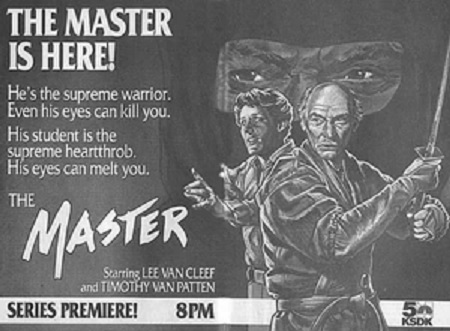
Welcome to Retro Television Reviews, a new feature where we review some of our favorite and least favorite shows of the past! On Fridays, I will be reviewing The Master, which ran on NBC from January to August of 1984. The show can be found on Tubi!

This week, The Master stands up for the working man!

Episode 1.3 “State of the Union”

(Dir by Alan Myerson, originally aired on February 3rd, 1984)

“Hi, I’m Max Keller and this is how I start my morning.”

So begins yet another episode of The Master!  This time, McAllister (Lee Van Cleef) is forcing Max (Timothy Van Patten) to start his day by running.  McAllister says that it’s a part of Max’s ninja training but I think it’s more a case of McAllister just seeing how many stupid things he can force Max to do before Max says, “Enough!”

This week finds Max and McAllister in Clearwater, California.  In order to make a little money, Max enters a dirt bike race.  It turns out that Max is very well-known on the dirt bike circuit and he even runs into an old friend named Hog (Mickey Jones) at the race.  Hog only shows up for a few minutes.  He shakes Max’s hand, jokes about the fact that Max is traveling with a hamster and a weird old man, and then he pretty much disappears from the episode.

McAllister watches the race while stroking Max’s pet hamster.

Try to get that image out of your head.

Anyway, Max does not win the race.  Instead, the race is won by Carrie Brown (Crystal Bernard).  At the finish line, Carrie is nearly run over by one her competitors, Chad Webster (Cotter Smith).  Chad is the son of the owner of the local cannery.  It turns out that Carrie also works at the cannery. Max takes an immediate liking to Carrie and decides that he should also get a job at the cannery.

McAllister points out that Carrie is attractive.  Max replies, “Does your ninja training make you immune to such things?”  McAllister shrugs.  It’s kind of an odd scene.

Anyway, at the cannery, Max quickly learns that there’s more to Carrie than just 80s hair and dirt bike racing.  Carrie is also a union organizer!  She’s carrying on her late brother’s dream of unionizing the cannery.  This largely means handing out flyers and encouraging people to go to a meeting. 

How bad are things at the cannery?  They’re so bad that an older worker gets crushed by a palette.  Fortunately, McAllister and Max show up just in time to help out.  Through the use of one of his magic throwing ticks, McAllister is able to send the palette crashing into the ocean.  While Max proceeds to flirt with Carrie, attentive viewers will see the worker — who is now probably crippled for life — being carried away in the background.  Despite having saved the guy’s life, neither Max nor McAllister ever ask about him again.

Anyway, you know where all this is heading.  Carrie wants to unionize the workers.  Chad and his buddies try to intimidate the workers into not joining the union.  At a meeting at the local church, Max gives a speech about how the workers have to get organized.  There are plenty of fights and car chases and yet another bar brawl.  That Max just can’t say out of trouble!

McAllister also joins Max on the dirt bike so that he can throw ninja stars at the bad guys.  This leads to some pretty bad rear projection shots.

In the end, Chad is revealed to have murdered Carrie’s brother.  The cannery votes to unionize and Max and McAllister promptly leave town because even they know better than to work at a union shop.  Though it’s not specifically stated, I imagine that the cannery probably closed two months and Carrie ended up following in the lead footsteps of Jimmy Hoffa.

This episode was a bit silly, largely because neither perky Crystal Bernard nor perpetually mush-mouth Tim Van Patten were believable as firebrand labor activists.  Lee Van Cleef seemed to be largely bored with the whole thing.  Fortunately, next week’s episode features a guest appearance from George Lazenby so maybe that will liven things up on The Master.

We’ll find out soon!

Lisa Reviews An Oscar Nominee: The Post (dir by Steven Spielberg)


So, I finally sat down and watched the 2017 film, The Post.

The Post is something of an odd film.  Imagine if someone made a film about the production of a movie.  And imagine if, instead of focusing on the actors or the members of the crew or even the director, the film was instead about the studio executives sitting back in Hollywood and debating whether or not they should agree to give the director another million dollars to complete the film.  Imagine dramatic scenes of the execs meeting with their accountants to determine whether they can spare an extra million dollars.  Imagine triumphant music swelling in the background as one of the execs announces that they’ll raise the budget but only in return for getting to pick the title of the director’s next film.  The Post is kind of like that.  It’s a film about journalism that’s more concerned with publishers and editors than with actual journalists.

To be honest, The Post‘s deification of the bosses shouldn’t really be that much of a shock.  This is a Steven Spielberg film and a part of Spielberg’s legend has always been that, of all the young, maverick directors who emerged in the 70s, he was always the one who was the most comfortable dealing with the studio execs.  As opposed to directors like Martin Scorsese, Brian DePalma, and Francis Ford Coppola, Spielberg got along with the bosses and they loved him.  While his contemporaries were talking about burning Hollywood down and transforming the culture, Spielberg was happily joining the establishment and reshaping American cinema.  No one can deny that Spielberg is a talented filmmaker.  It’s just that, if anyone was going to make a movie celebrating management, you just know it would be Steven Spielberg.

Taking place in the early 70s, The Post deals with the decision to publish The Pentagon Papers, which were thirty years worth of classified documents dealing with America’s involvement in the Vietnam War.  Since the Pentagon Papers revealed that the government spent several decades lying to the American people about the situation in Vietnam, there’s naturally a lot of pushback from the government.  It all leads to one of those monumental supreme court decisions, the type that usually ends a movie like this.  And while the film does acknowledge that there were journalists involved in breaking the story, it devotes most of its attention to editor Ben Bradlee (Tom Hanks) and publisher Katharine Graham (Meryl Streep).

Gasp as Ben and Katharine debate whether to publish the story!

Shudder as Katharine tries to figure out how to keep the Post from going bankrupt.

Watch as Ben Bradlee talks to the legal department!

Thrill as Katharine Graham learns that her family friends, John F. Kennedy and Lyndon B. Johnson, weren’t always honest with her!

And listen, I get it.  The Post isn’t as much about Nixon and the Vietnam War as it’s about Trump and the modern-day war on the media.  And yes, we get plenty of scenes of Tom Hanks explaining why freedom of the press is important and the movie ends in typical Spielberg fashion, with triumphant music and all the rest.  But watching The Post, it’s hard not to think about other films that celebrated journalism, films like All The President’s Men and Spotlight.  Both of those films featured scenes of editors supporting their reporters.  In fact, All The President’s Men featured Jason Robards playing the same editor that Tom Hanks plays in The Post.  But Spotlight and All The President’s Men focused on the journalists and the hard work that goes into breaking an important story.  Robards and Spotlight‘s Michael Keaton played editors who were willing to stand up and defend their reporters but, at the same time, those films emphasized that it was the underpaid and underappreciated reporters who were often putting their careers (and sometimes, their lives) on the line to break a story.  Whereas Spotlight and All The President’s Men showed us why journalism is important, The Post is content to merely tell us.

The Post was a famously rushed production.  Shooting started in May of 2017 and was completed in November, all so it could be released in December and receive Oscar consideration.  Production was rushed because Spielberg, Streep, and Hanks all felt that it was important to make a statement about Trump’s treatment of the press.  While I can see their point and I don’t deny that they had noble intentions, a rushed production is still going to lead to a rushed film.  The Post is a sloppy film, full of way too much on-the-nose dialogue and scenes that just seem to be missing Spielberg’s usual visual spark.  It feels less like a feature film and more like a well-made HBO production.  Tom Hanks and Meryl Streep give performances that are all surface.  Streep’s performance is all mannered technique while Hanks occasionally puts his feet up on his desk and furrows his brow.

It gets frustrating because, watching the film, you get the feeling that there’s a great movie to be made about the Pentagon Papers and the struggle to publish them.  I’d love to know what the actual reporters went through to get their hands on the papers.  But The Post is more interested in management than the workers.

All through 2017, The Post was touted as being a sure Oscar front-runner.  When it was released, it received respectful but hardly enthusiastic reviews.  In the end, it only received two nominations — one for best picture and one for Streep.  In a year dominated by Lady Bird, Shape of Water, Get Out, and Three Billboards Outside Ebbing, Missouri, The Post turned to be a nonfactor.  For all the hype and expectations, it’s the film that you usually forget whenever you’re trying to remember everything that was nominated last year.