4 Shots From 4 Films – some of Brad’s “favorite westerns” edition!


4 Shots From 4 Films is just what it says it is, 4 shots from 4 of our favorite films. As opposed to the reviews and recaps that we usually post, 4 Shots From 4 Films lets the visuals do the talking!

I thought I’d try one of these “4 shots” posts. It’s really hard for me not to say anything, because each of these movies mean a lot to me, and the western remains my favorite genre even if I am a little stuck in the past. I’ll probably take a stab at a review of each of these films at some point. I hope you enjoy!

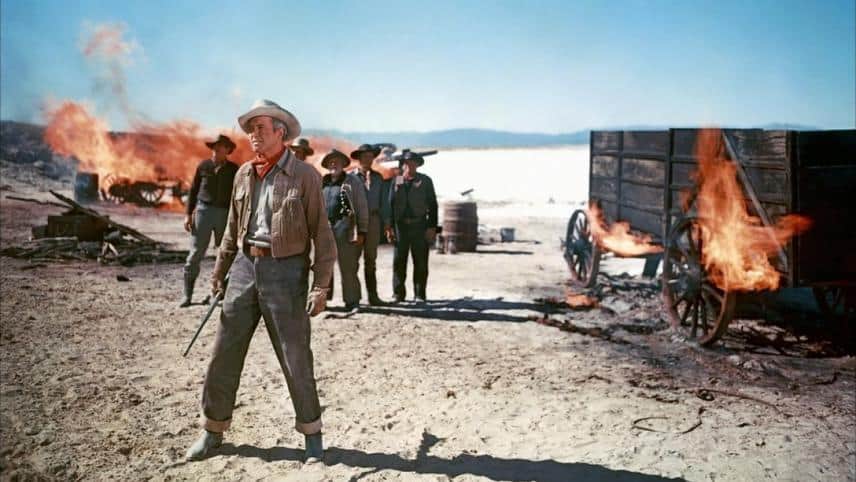
THE MAN FROM LARAMIE (1955)

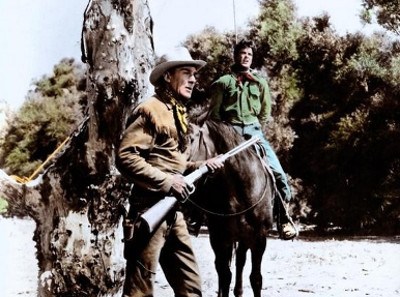
RIDE LONESOME (1959)

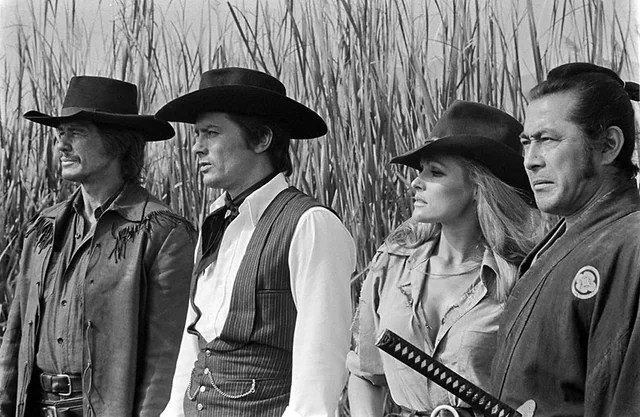
RED SUN (1971)

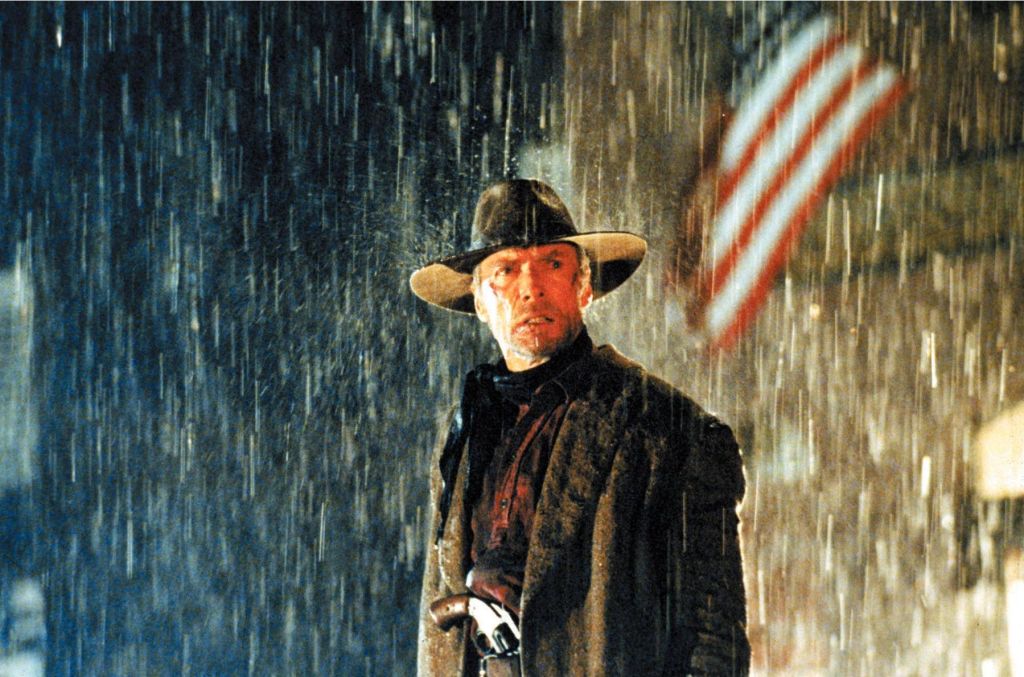
UNFORGIVEN (1992)

Happy Birthday in heaven, Telly Savalas! Who loves ya, baby??


Telly Savalas was born on January 21, 1922 and he died on January 22, 1994. When I think of Savalas, I first think of his most famous character, KOJAK (1973-1978).

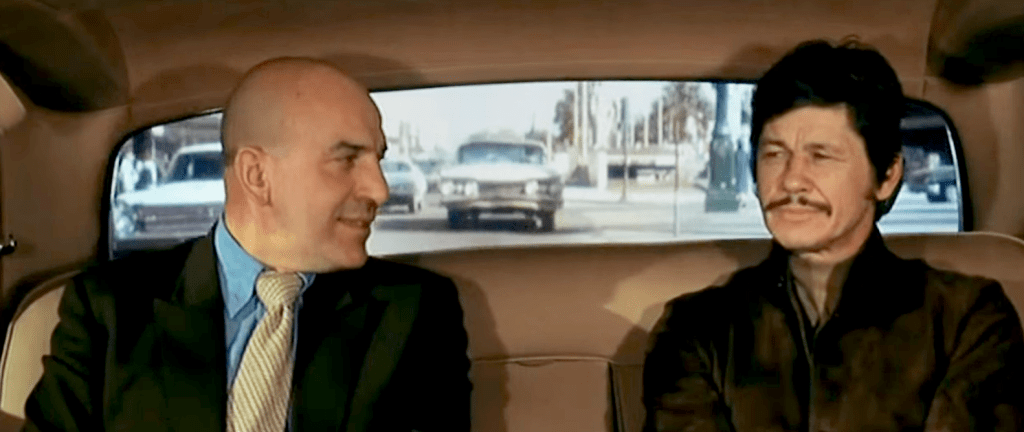
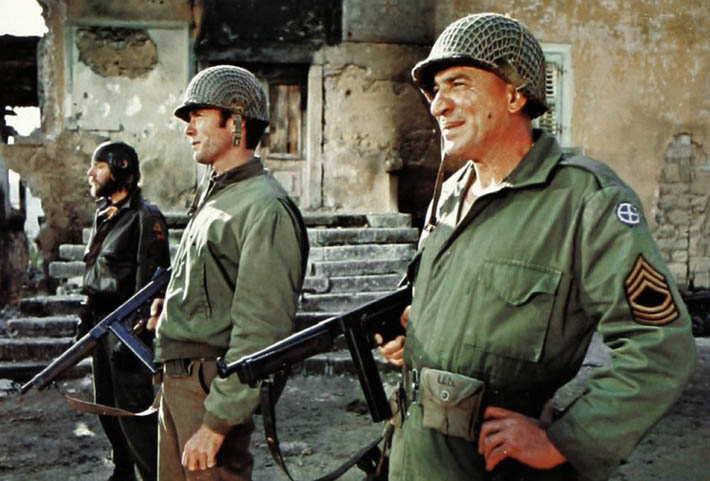
After that I think of his work with my movie hero, Charles Bronson. They worked together on THE DIRTY DOZEN (1967) and VIOLENT CITY (1970). They were also in the BATTLE OF THE BULGE (1965), but they didn’t share any scenes together. I’ll always remember Savalas in the movie KELLY’S HEROES (1970). This was one of my son’s favorite movies when he was growing up. He watched it constantly.

Based on this work, Telly Savalas will always be one of my favorite actors! Happy birthday, sir, and thanks for countless hours of entertainment in my life!

Scene That I Love: Lee Van Cleef, Clint Eastwood, and Klaus Kinski in For A Few Dollars More


In 1925, on this very date, Lee Van Cleef was born in Somervillve, New Jersey.  In honor of what would have been Lee Van Cleef’s 100th birthday, here he is with Klaus Kinski and Clint Eastwood in For A Few Dollars More.

There’s not a lot of dialogue in this scene but when you had actors like Eastwood, Kinski, and Lee Van Cleef, you didn’t need a lot of dialogue to make an impression.

Lisa Reviews An Oscar Winner: Unforgiven (dir by Clint Eastwood)


The 1992 Best Picture winner, Unforgiven, begins as a story of frontier justice.

In Kansas, a young and cocky cowboy who calls himself the Schofield Kid (Jaimz Woolvett) rides up to an isolated hog farm.  He’s looking for Will Munny (Clint Eastwood), a notorious outlaw with a reputation for being a ruthless killer.  Instead, he just finds a broken down, elderly widower who is trying to raise two young children and who can barely even manage to climb on a horse.  Will Munny, the murderer, has become Will Munny the farmer.  He gave up his former life when he got married.

The Schofield Kid claims to be an experienced gunfighter who has killed a countless number of men.  He explains that a group of sex workers in Wyoming have put a $1,000 bounty on two men, Quick Mike (David Mucci) and his friend, Davey Bunting (Rob Campbell).  Quick Mike cut up one of the women when she laughed at how unimpressively endowed he was.  While Davey didn’t take part in the crime, he was present when it happened and he didn’t do anything to stop it.  The local sheriff, a man named Little Bill Daggett (Gene Hackman), had Davey give the woman’s employer several horses as compensation.  The Kid wants Munny to help him collect the bounty.

At first, Munny refuses to help the Kid.  But, when he realizes that he’s on the verge of losing his farm, Munny changes his mind.  He and his former partner, Ned Logan (Morgan Freeman), join with the Kid and the three of them head to Wyoming.  Along the way, they discover that the Kid is severely nearsighted and can hardly handle a pistol.

Meanwhile, in the town of Big Whiskey, Wyoming, Little Bill ruthlessly enforces the peace.  He’s a charismatic man who is building a house and bringing what many would consider to be civilization to the Old West. When we first meet Little Bill, he seems like a likable guy.  The town trusts him.  His deputies worship him.  He has a quick smile but he’s willing to stand his ground.  But it soon becomes apparent that, underneath that smile and friendly manner, Bill is a tyrant and a petty authoritarian who treats the town as his own personal kingdom.    Little Bill has a strict rule.  No one outside of law enforcement is allowed to carry a gun in his town.  When another bounty hunter, English Bob (Richard Harris), comes to town to kill the two cowboys, Little Bill humiliates him and sends him on his way but not before recruiting Bob’s traveling companion, writer W.W. Beauchamp (Saul Rubinek), to write Bill’s life story.  Bill’s not that much different from the outlaws that he claims to disdain.  Like them, Bill understands that value of publicity.

Unforgiven starts as a traditional western but it soon becomes something else all together.  As the Schofield Kid discovers, there’s a big difference between talking about killing a man and actually doing it.  Piece-by-piece, Unforgiven deconstructs the legends of the old west.  Gunfights are messy.  Gunfighters are not noble.  Davey Bunting is the only man in town to feel guilty about what happened but, because he’s included in the bounty, he still dies an agonizing death.  Quick Mike is killed not in the town square during a duel but while sitting in an outhouse.  Ned and Munny struggle with the prospect of going back to their old ways, with Munny having to return to drinking before he can once again become the fearsome killer that he was in the past.  And Little Bill, the man who says that he’s all about taming the west and bringing civilization to a lawless land, turns out to be just as ruthless a killer as the rest.  A lot of people are dead by the end of Unforgiven.  Some of them were truly bad.  Some of them were good.  Most of them were in the wrong place at the wrong time.  Everyone’s got it coming, to paraphrase Will Munny.

With its violent storyline, deliberate pacing, and its shots of the desolate yet beautiful western landscape, Clint Eastwood’s film feels like a natural continuation of the Spaghetti westerns that he made with Sergio Leone.  (Unforgiven is dedicated to both Leone and Don Seigel.)  Unforgiven was the first of Eastwood’s directorial efforts to be nominated for Best Picture and also the first to win.  It’s brutal meditation on violence and the truth behind the legends of the American frontier.  Eastwood gives one of his best and ultimately most frightening performances as Will Munny.  Gene Hackman won his second Oscar for playing Little Bill Daggett.

Unforgiven holds up well today.  Hackman’s Little Bill Dagget feels like the 19th century version of many of today’s politicians and unelected bureaucrats, authoritarians who claims that their only concern is the greater good but whose main interest is really just increasing their own power.  Unforgiven remains one Clint Eastwood’s best films and one of the best westerns ever made.  Leone would have been proud.

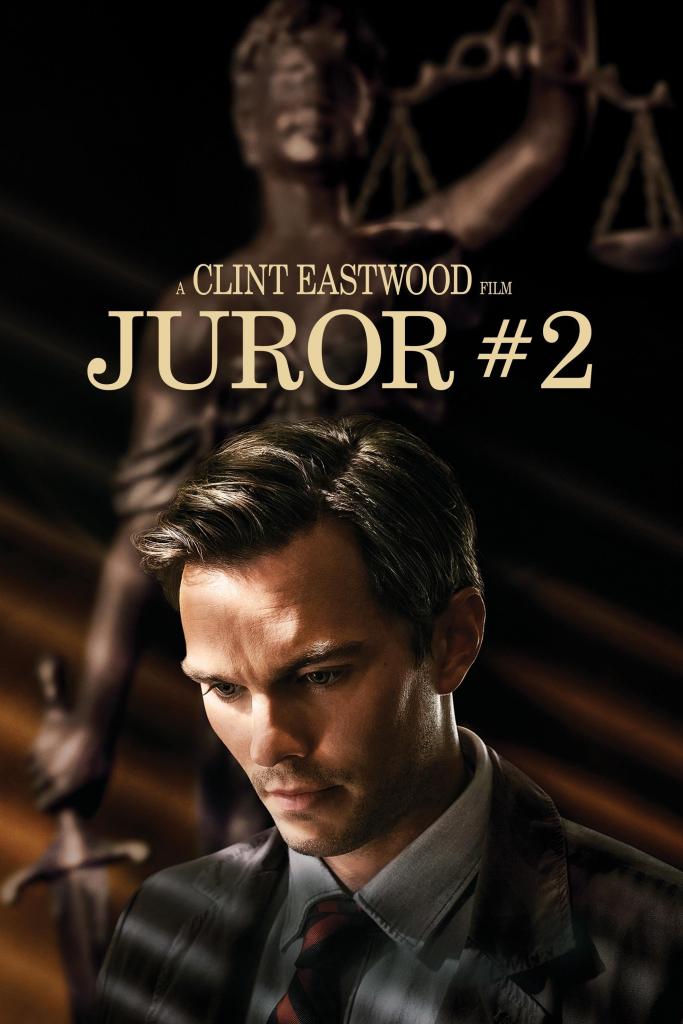
JUROR #2 (2024) – Another Gift from Clint Eastwood


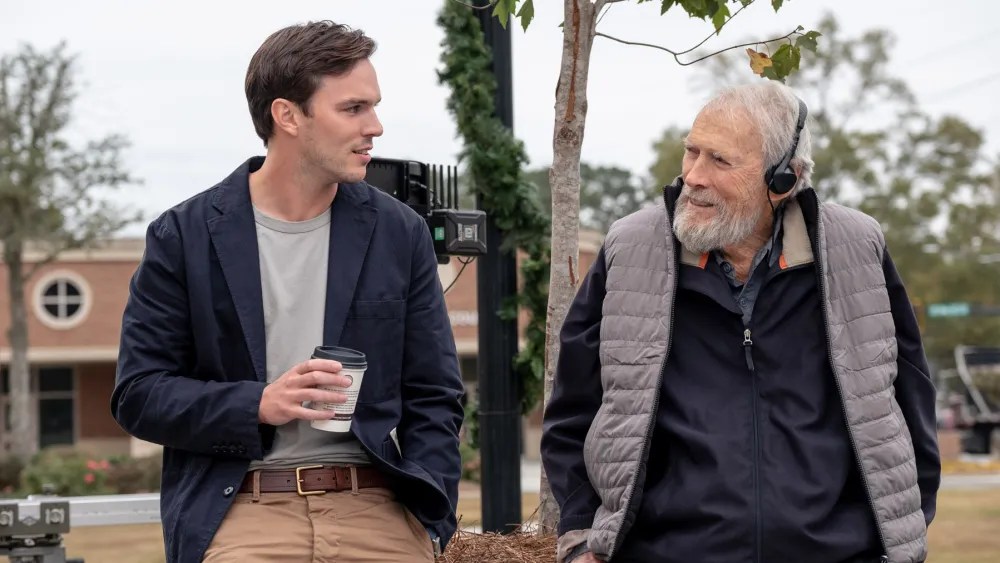
I’ve really been looking forward to seeing JUROR #2, Clint Eastwood’s most recent directorial effort, since I first read about it a year or two ago. Any film from the aging icon is a gift to his fans at this point, so it seems appropriate that I watched it for the first time on Christmas Eve. I still don’t understand the release strategy for the film, considering it was released in a few theaters and then pushed out to streaming platforms a little over a month later. That seems strange for a movie with this kind of pedigree, but I guess that doesn’t really matter at this point. 

The plot revolves around Justin Kemp (Nicholas Hoult), a seemingly nice guy who’s going to be a dad any day now. I know that because his wife Allison (Zoey Deutch) looks like she could pop at any moment. He tries to use that pregnancy to get out of jury duty, but to no avail. Of course he gets selected to serve. As District Attorney Faith Killebrew (Toni Collette) begins laying out the facts of a horrific murder case against James Michael Sythe (Gabriel Basso), Justin begins to immediately realize that the wrong guy may have been arrested for the crime. How does he know they’ve got the wrong guy? Because Justin now thinks that he may be the one responsible for an accidental hit and run killing of the victim, Kendall Carter (Francesca Eastwood). The remainder of the film deals with Justin’s moral dilemma as he attempts to serve on the jury, protect his own freedom, and not send an innocent man to jail. This plot does require a pretty big suspension of disbelief, but if you’ll just go along with it, the movie does present some interesting ideas.

I’ll say right off the bat that I like JUROR #2. This was a relief to me because as much as I wanted to like Eastwood’s prior film CRY MACHO, at the end of the day it just wasn’t a very good movie. I’ve always enjoyed courtroom thrillers, and it doesn’t seem we get to see many of them anymore. Our main character Justin Kemp has a troubled past, but he’s truly turned his life around. The fact that he now finds himself in a seemingly impossible moral position is a strong hook that pulled me in. Director Eastwood takes his time here and tightens the grip on Justin, leaving him with few options, as he tries to figure out what to do. I’ve never served on a jury, and I’ve never really wanted to. I’m not sure I want the responsibility of deciding a person’s guilt or innocence. Eastwood’s film doesn’t change my mind in this area. It shows us some jurors who have made up their minds based on pre-conceived notions, regardless of the evidence. It shows us other jurors who want to convict just so the trial can be over and they can get on with their lives. It shows us witnesses who are willing to identity people just to please the prosecution. Considering what we know as the audience, these are glaring but realistic weaknesses of our nation’s system of justice. 

Eastwood assembled a good cast with Nicholas Hoult, Toni Collette, J.K. Simmons, and Kiefer Sutherland, actors that I always find worth watching. Hoult and Collette do most of the heavy lifting. JUROR #2 is set in Georgia, and I appreciate that Hoult, who’s from England, and Collette, who’s from Australia, don’t overdo the southern accents. J.K. Simmons is very impressive as an ex-cop who’s serving on the jury who is convinced of the defendant’s innocence. Unfortunately, his character exits the film fairly early, and he’s sorely missed. I’ve been a big fan of Kiefer Sutherland since I was a teenager, and I consider “24” one of my all time favorite shows. His role is pretty small here. He’s good, but from what I’ve read, he really just wanted to work with Eastwood. I also enjoyed seeing Gabriel Basso (Hillbilly Elegy) and Francesca Eastwood (Clint’s daughter) in the film. 

Clint Eastwood amazes me. In his legendary six decade career, he has been a part of some of the best films of all time. DIRTY HARRY, THE OUTLAW JOSEY WALES, and UNFORGIVEN are included in my list of all-time favorites. JUROR #2 is not in their league, and it’s certainly not a perfect film. But it is an entertaining film that tells an interesting story and even makes you think a little bit. And with that I say, thanks for another gift, Clint! 

THE DEAD POOL – the 5th and final Dirty Harry adventure!


Dirty Harry Callahan has brought so much joy into my life. I remember when I was in 5th Grade in 1983, the hot phrase was “Go ahead. Make my day.” You heard that phrase everywhere. It may have been said by Dirty Harry in the 4th Harry Callahan adventure, SUDDEN IMPACT, but it transcended the movie and became a cultural phenomenon. Somewhere between 1983 and 1988, I was able to watch all of the Dirty Harry films, DIRTY HARRY, MAGNUM FORCE, THE ENFORCER and SUDDEN IMPACT. I just loved Harry. He was always sticking it to his superiors, and then doing whatever it took to take out the bad guys. That was an amazing combination for me. I was 14 years old when the 5th and final Dirty Harry film, THE DEAD POOL, was released into the theaters in July of 1988. This was the first Dirty Harry film to be released after our family got our VCR in the mid 80’s. I couldn’t wait to rent it. 

In THE DEAD POOL, Harry Callahan (Clint Eastwood) finds himself the target of crime boss Lou Janero, as Harry was crucial in his arrest and subsequent conviction. This high profile news story has caught the attention of the horror film director, Peter Swan (Liam Neeson). It’s seems Swan and some of his friends are playing a twisted game called “the dead pool” where they predict the deaths of certain celebrities based on various factors going on in their lives. Harry Callahan is a local celebrity and Swan includes him on his list due to his role in the Janero conviction. This “dead pool” game is leaked to reporter Samantha Walker (Patricia Clarkson) after the murder of Johnny Squares (Jim Carrey), who’s on Peter Swan’s list. As celebrities who are on Swan’s list continue to die, Harry and his partner Al Kwan (Evan C. Kim) try to figure out if Swan is behind the killings, or if someone else is trying to frame him, all while trying to keep themselves alive!

There are so many cool and interesting things about THE DEAD POOL. First, there has never been a character any more awesome than Harry Callahan, as played by Clint Eastwood. He will do whatever it takes to get the bad guys, regardless of what his superiors think. As a rule follower, I absolutely love Harry’s approach to life and live vicariously through him. Only vigilante Paul Kersey, played by Charles Bronson in the DEATH WISH films, rivals Callahan in his willingness to fight for justice, everyone else be damned! Second, future superstar actor Jim Carrey has the role of Johnny Squares, the drug-addicted rocker whose death kicks off the public’s knowledge of the dead pool. In hindsight, it’s fun seeing Carrey as a working actor in 1988, while also knowing that he’d become one of the biggest stars in the world over the next decade. It’s also pretty cool seeing a pre-superstar Liam Neeson as horror director Peter Swan. Third, in the late 80’s, I loved the rock group Guns N Roses. The group members are in this film in two places. They’re in the sequence where a harpoon stunt goes wrong, as well as at the funeral of Johnny Squares. Hell, guitarist Slash gets to fire the harpoon! Their hit song “Welcome to the Jungle” also has a prominent part in the film. I loved their other hits “Sweet Child of Mine,” and “Paradise City,” when I was a teenager. Fourth, I always love Harry’s catchphrases from the films. Each Dirty Harry film has its own catchphrase, including examples like “Do you feel lucky?” and “Go ahead. Make my day.” In THE DEAD POOL, various bad guys get “you’re shit out of luck.” Shit is a favorite curse word of my family, so I like this one. Fifth, THE DEAD POOL has a crazy car chase sequence. In this sequence, Harry and his partner Al Kwan find themselves chased by a remote-controlled car packing a bomb. It makes for some interesting visuals as the tiny car chases them through those familiar streets of San Francisco. It’s not often that filmmakers can come up with a new way to present a car chase, but they do a great job here. Finally, I enjoy seeing the media getting skewered in THE DEAD POOL. Patricia Clarkson’s reporter character has a solid arc as she goes from someone at the beginning of the movie who will do anything to get an exclusive story, to someone who is even willing to forego the exclusive if it’s the “right thing to do.” Our media is a hopeless mess these days where opinion is treated as facts, and actual facts are treated as an option. Where’s Dirty Harry to clean this up in 2024? 

I’m a fan of THE DEAD POOL, and I probably watch it every year or two. If you haven’t ever seen it, or if it’s been a while, I’d definitely recommend it! 

Live Tweet Alert: Join #FridayNightFlix For Coogan’s Bluff


As some of our regular readers undoubtedly know, I am involved in a few weekly live tweets on Twitter and Mastodon.  I host #FridayNightFlix every Friday, I co-host #ScarySocial on Saturday, and I am one of the five hosts of #MondayActionMovie!  Every week, we get together.  We watch a movie.  We tweet our way through it.

Tonight, at 10 pm et, #FridayNightFlix presents 1968’s Coogan’s Bluff, starring Clint Eastwood!

If you want to join us this Friday, just hop onto twitter, start the movie at 10 pm et, and use the #FridayNightFlix hashtag!  It’s a friendly group and welcoming of newcomers so don’t be shy.

Coogan’s Bluff is available on Prime and Tubi!  See you there!

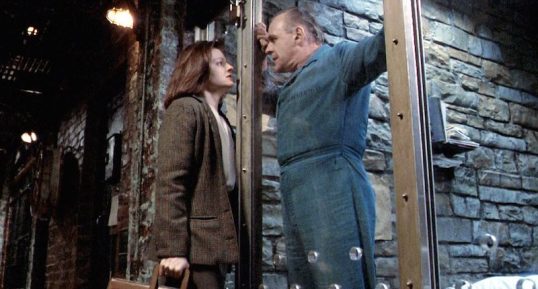
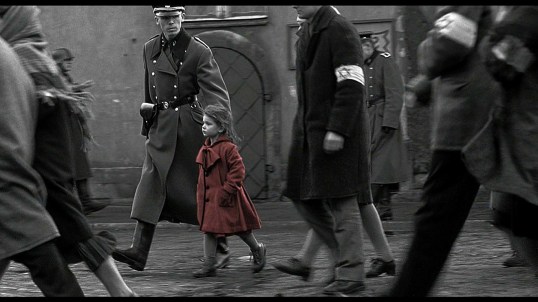
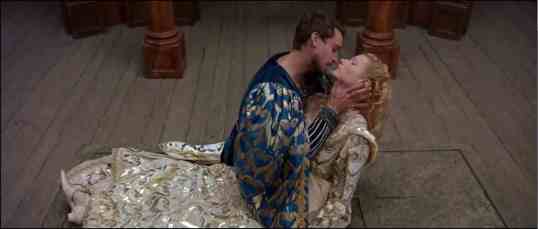
4 Shots From 4 Best Picture Winners: The 1990s


4 Shots From 4 Films is just what it says it is, 4 shots from 4 of our favorite films. As opposed to the reviews and recaps that we usually post, 4 Shots From 4 Films lets the visuals do the talking!

Today, I’m using this feature to take a look at the history of the Academy Award for Best Picture.  Decade by decade, I’m going to highlight my picks for best of the winning films.  To start with, here are 4 shots from 4 Films that won Best Picture during the 1990s!  Here are….

4 Shots From 4 Best Picture Winners: The 1990s

The Silence Of The Lambs (1991, dir by Jonathan Demme, DP: Tak Fujimoto)

Unforgiven (1992, dir by Clint Eastwood, DP: Jack N. Green)

Schindler’s List (1993, dir by Steven Spielberg, DP: Janusz Kamiński)

Shakespeare In Love (1998, dir by John Madden, DP: Richard Greatrex)

Rest in Peace, David Soul


I just heard that actor David Soul passed away yesterday, at the age of 80.

Horror fans, of course, will always remember David Soul for playing Ben Mears in Tobe Hooper’s adaptation of Salem’s Lot.  Personally, I’ll remember him for his chilling performance as a vigilante motorcycle cop in 1973’s Magnum Force.

In the scene below, Soul and his fellow vigilantes confront Inspector Callahan in a parking garage.  Though he doesn’t get the scene’s best line (“All of our heroes are dead,” is delivered by Kip Nevin), Soul does get to explain why he and his fellow motorcycle cops are doing what they’re doing.

It takes a good actor to believably intimidate Clint Eastwood.

David Soul, R.I.P.

The Unnominated: Play Misty For Me (dir by Clint Eastwood)


Though the Academy of Motion Picture Arts and Sciences claim that the Oscars honor the best of the year, we all know that there are always worthy films and performances that end up getting overlooked.  Sometimes, it’s because the competition too fierce.  Sometimes, it’s because the film itself was too controversial.  Often, it’s just a case of a film’s quality not being fully recognized until years after its initial released.  This series of reviews takes a look at the films and performances that should have been nominated but were, for whatever reason, overlooked.  These are the Unnominated.

In 1971, Clint Eastwood made his directorial debut with Play Misty For Me.

Eastwood plays Dave Garver, a DJ at a Carmel-By-The-Sea jazz station who has ambitions to some day go national.  Every night, a woman named Evelyn (Jessica Walter) calls Dave and asks him to “Play Misty for me.”  Eventually, Dave meets Evelyn in a bar and he takes her home with him.  After sleeping with her, Dave tells Evelyn that he’s only interested in having a casual relationship.  Evelyn, however, reveals that she has a far different interpretation of casual.  Soon, Evelyn is dropping by Dave’s house unannounced and acting rather clingy, even appearing to attempt suicide when Dave tries to tell her that he’s not interested in having a serious relationship with her.

At first, it’s hard not to feel bad for Evelyn.  Yes, she’s obviously unstable.  Yes, she’s clingy.  Yes, the scene in which she intentionally ruins Dave’s interview for a national job is difficult to watch.  But there’s something so sincere and desperate about her need to have someone in her life that, again, it’s hard not to have sympathy for her.  When she claims that Dave took advantage of her when they first met, she’s got a point.  Dave obviously felt that Evelyn was a one-night stand that he would never have to see again.  Evelyn feels differently.

Things chance when Dave eventually runs into his former girlfriend, Tobie Williams (Donna Mills).  Dave and Tobie tentatively restart their relationship.  When Evelyn finds out, she goes from being clingy to be homicidal.  She goes from trashing Dave’s place to attacking Dave’s housekeeper to attacking Dave and Tobie themselves.

An assured directorial debut, Play Misty For Me shows that Eastwood had a strong directorial sensibility from the start.  (It also shows, during an extended sequence in which Dave and Tobie attend a jazz festival, that Eastwood was always capable of being rather self-indulgent.)  Eastwood uses the film to deconstruct his own confident persona, with Dave going from being a somewhat callous womanizer to ultimately being terrified for his life.  The film is dominated by Jessica Walter’s performance as Evelyn.  Walter is sad and terrifying, often in the same scene.  Though the film doesn’t dig into what happened in Evelyn’s past to drive her to such extremes, Jessica Walter’s performance leaves no doubt that she’s someone who has been hurt by the world and is now so desperate for love and protection that she’ll strike out at anyone who she feels is denying it to her.

As a horror movie that was directed by an actor who, at the time, was still not a favorite of the critics, it’s perhaps not surprising that the Academy ignored Play Misty For Me.  Still, it’s a shame.  If nothing else, Jessica Walter’s performance was far more memorable that Janet Suzman’s nominated turn in the painfully dull Nicholas and Alexandra.  It’s a brave performance and one that more than deserved to be honored.

Previous entries in The Unnominated:

  1. Auto Focus 
  2. Star 80
  3. Monty Python and The Holy Grail
  4. Johnny Got His Gun
  5. Saint Jack
  6. Office Space