Lisa Marie Picks The 50 Best Films of The Past 3 Years


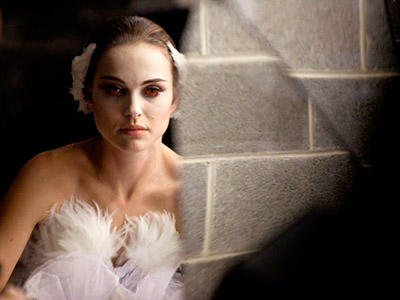
Black-Swan_400

As of this month, I have been reviewing films here at the Shattered Lens for 3 years.  In honor of that anniversary, I thought I’d post my picks for the 50 best films that have been released in the U.S. since 2010.

Without further ado, here’s the list!

  1. Black Swan (directed by Darren Aronofsky)
  2. Exit Through The Gift Shop (directed by Banksy)
  3. Hanna (directed by Joe Wright)
  4. Fish Tank (directed by Andrea Arnold)
  5. Higher Ground (directed by Vera Farmiga)
  6. Shame (directed by Steve McQueen)
  7. Anna Karenina (directed by Joe Wright)
  8. The Cabin In The Woods (directed by Drew Goddard)
  9. 127 Hours (directed by Danny Boyle)
  10. Somewhere (directed by Sofia Coppola)
  11. Life of Pi (directed by Ang Lee)
  12. Hugo (directed by Martin Scorsese)
  13. Inception (directed by Christopher Nolan)
  14. Animal Kingdom (directed by David Michod)
  15. Winter’s Bone (directed by Debra Granik)
  16. The Artist (directed by Michel Hazanavicius)
  17. The Guard (directed by John Michael McDonagh)
  18. Bernie (directed by Richard Linklater)
  19. The King’s Speech (directed by Tom Hooper)
  20. Bridesmaids (directed by Paul Feig)
  21. Tinker, Tailor, Soldier, Spy (directed by Thomas Alfredson)
  22. Django Unchained (directed by Quentin Tarantino)
  23. Never Let Me Go (directed by Mark Romanek)
  24. Toy Story 3 (directed by Lee Unkrich)
  25. The Girl With the Dragon Tattoo (directed by Niels Arden Oplev)
  26. Young Adult (directed by Jason Reitman)
  27. Sucker Punch (directed by Zack Snyder)
  28. The Master (directed by Paul Thomas Anderson)
  29. Incendies (directed by Denis Villeneuve)
  30. Melancholia (directed by Lars Von Trier)
  31. Super (directed by James Gunn)
  32. Silver Linings Playbook (directed by David O. Russell)
  33. Scott Pilgrim Vs. The World (directed by Edgar Wright)
  34. The Last Exorcism (directed by Daniel Stamm)
  35. Skyfall (directed by Sam Mendes)
  36. Easy A (directed by Will Gluck)
  37. Harry Potter and the Deathly Hallows Parts 1 and 2 (directed by David Yates)
  38. The Avengers (directed by Joss Whedon)
  39. How To Train Your Dragon (directed by Chris Sanders and Dean DeBois)
  40. Win Win (directed by Thomas McCarthy)
  41. Les Miserables (directed by Tom Hooper)
  42. Take This Waltz (directed by Sarah Polley)
  43. Cave of Forgotten Dreams (directed by Werner Herzog)
  44. Rust and Bone (directed by Jacques Audiard)
  45. Cosmopolis (directed by David Cronenberg)
  46. Ruby Sparks (directed by Jonathan Dayton and Valarie Faris)
  47. Brave (directed by Mark Andrews and Brenda Chapman)
  48. Martha Marcy May Marlene (directed by Sean Durkin)
  49. Jane Eyre (directed by Cary Fukunaga)
  50. Damsels in Distress (directed by Whit Stillman)

Trailer: Man of Steel (2nd Official)


ManofSteel

The very first Man of Steel trailer was underwhelming and played out more like a Terence Malick production. A lot seem to have happened between the release of that first official to the latest one which Warner Brothers premiered earlier today. Where the first trailer was all about serene images of Kal-El in his Clark Kent persona going through his Jack London phase this second trailer delves more into the persona of an emergent Superman who fears that the world he intends to protect from General Zod may not and will not be ready to accept his as their savior.

We get to see more glimpses of the action Man of Steel seem to have more of than the underwhelming reboot done by Bryan Singer just a couple years ago. There’s scenes of entire high-rises collapsing and what looks like Superman battling either Zod or, at the very least, Zod’s minions. We also get to see some of the other cast members from Costner’s Pa Kent to Diane Lane as Ma Kent. We already get to see Michael Shannon as General Zod and Richard Schiff as S.T.A.R. Labs director Dr. Emil Hamilton. The film doesn’t give it out but whether Emil Hamilton is an ally of Superman or a potential enemy the film will have to answer.

The story has a lot of the gritty, realistic DNA that Christopher Nolan’s Dark Knight trilogy had but the impressive visuals that Zack Snyder has become well-known for. It’s going to be interesting to see if the Nolan narrative aesthetic will be able to co-exist with the Snyder flair for imagery.

We’ll find out in June 14, 2013 if all the questions being asked about this second reboot of the Superman franchise will be positive ones or more of the case of opportunity and potential wasted.

Which Way Forward For The “Batman” Movie Franchise? Take Seventeen : Costume Survey


One of these days, I probably really should get around to playing the Batman : Arkham City video game. Of course that means buying a video game system of some sort and that will inevitably lead to getting more games and more games means less time for things like movies and comics. It could even mean less time with my wife, at which point I know I’d be well and truly beyond all help. So I think I’ll refrain.

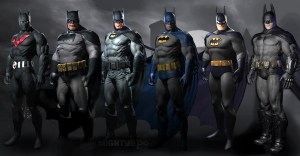
But still — a fair amount of what we’ve been discussing in this little (okay, not so little) Bat-thread of mine seems to revolve around ideas presented in this Arkham City game, and it’s rather flabbergasting that I’m freely swiping so many concepts for my imaginary new Bat-movie-trilogy from something I really have no first-hand experience with — but hey, that’s the way it goes sometimes, I guess. All of which brings us to the above-reproduced CG menu from the game.

How does that follow, you ask? Well, we’re at the point in our first Bat-flick where, having hinted at aspects of the costume in silhouette-fashion, and having given the new Batmobile it’s so-called “full reveal,” it’s time for Batman to arrive at the Gotham City docks and crash the little party Lucchesi and his men are holding there, so now seems like as good a time as any to show the Bat-costume in all its glory, hence the picture at the top of the post — which also comes, no surprise, from Arkham City. Apparently you can actually pick which of the various Bat-suits used over the years you want your Batman character to wear in the game, and that pic represents the menu of options that you as a player have to choose from.

Let me start by saying that none of them are exactly perfect for what I have in mind for Batman’s look in this new trilogy, but one of them sure comes damn close, in my opinion. Keep in mind, we’ve already shown that this particular iteration of the Batman is wearing his Kevlar-armor bodysuit underneath his costume, so the suit serve as his armor in and of itself as it has in the Christopher Nolan and, to a lesser extent, Tim Burton Bat-films. So that rules out, going from left to right,  option three and six as pictured. So — it’s survey time! In the next, shall we say, 24 hours, should you feel so inclined, please chime in here and let me know the following :

*Which of the remaining options you  would choose for Batman to wear in the new hypothetical trilogy;

*And which one you think I have picked out.

If nobody responds — it is the weekend after all — I’ll just chime in tomorrow night with my own choice, as well as detailing the small change or two (or three) I’d make to get things exactly as I picture them. Any and all opinions are welcome, of course, but in the end, as they say, there can be only one, and being the dictator of this thread means I’ll have the final say, but if you can lay out a solid argument in favor of your selection, it may just be enough to get me to change my mind!

Until tomorrow night, then!

Which Way Forward For The “Batman” Movie Franchise? Take Seven : What’s In A Name?


That right there, friends, is my personal favorite Batman logo.

I know, I know — it’s far too campy and cartoonish to fly in today’s movie market, but the hypothetical Bat-trilogy we’re cooking up in this series of posts is, as we’ve established, probably going to have a lot more emphasis on the heroic and detective aspects of the character than it is on the “Dark Knight” aspects. and as such, I like to think having this new trilogy go out under an “old school” logo like that would be a pretty cool thing. And while this particular logo may not be the exact logo from the old Adam West Batman TV show per se, it’s still pretty close, at least thematically, so any way you slice it, I’m sure it’s a no-go.

That being said, there is a somewhat “retro” logo that I think would form a rather apropos visual backbone for this new trilogy, namely this one from the late-80s/early-90s  DC Bat-books —

Sure, it’s still not quite the perfect look, but it’s pretty cool , evokes just the right touch of the past, yet still wouldn’t be totally off-putting to a contemporary audience. It would, of course, inevitably be tinkered and toyed with, but that’s more than okay, since my point isn’t so much that it’s a perfect logo, by any means, merely that its design would form a nice visual basis for whatever sort of logo the series would, inevitably, end up with.

But you know what? It’s not logos I’m here, specifically, to talk about. That’s just a side issue, although one that fits in with what I am actually here to talk about which is — plot details, right? Well, that was the plan. And it’s still the plan. But it’s going to have to wait until Monday because I’m still cooking up a few minor details and tomorrow my free time is limited and I’m firmly committed to reviewing the latest Before Watchmen book for my own website, http://trashfilmguru.wordpress.com. So plot stuff is coming, I promise — on Monday.

What’s the whole subject here today, then? Apart from logos, that is? Well, titles. Because is strikes me that what we’re gonna call these flicks is actually, you know, kind of important. And as good as I thought Batman Begins was as a film, I still think it’s kind of a stupid title. With the whole “Dark Knight” concept being one this series is sort of moving away from, or at least toning down, starting things off with a flick called something like The Dark Knight Returns is out, too — and would just cause confusion with the Frank Miller book of the same name, anyway.

The basic title of Batman is probably a no-go, too, since it’s been used twice already, in both the 1960s and 1980s, but I do, ideally, want this series to have more a Batman feel than a Dark Knight feel, so what does that leave us with? I have to admit it was something I was kind of struggling with in my mind, until I realized that sometimes the most basic names are the best, and sometimes the most workable solutions to problems are hiding in plain sight, to wit —

How about we just call these things Batman IBatman II, and Batman III? Sure, it’s basic, maybe even (okay, definitely) unimaginative, but what the heck? Most of the folks out there would just say they want a ticket for “Batman,” whichever “Batman” it is, when they get to the box office anyway, so it’s definitely functional, at any rate. And yes, the idea of putting a I in the title of the first flick might be a bit presumptuous, but having “Episode I” in the title for The Phantom Menace didn’t hurt its performance at the gate any (nor did uniformly horrible reviews), and for a more current example of the same concept working out okay take a look at Atlas Shrugged, Part I, which has a sequel on the way even though the first movie lost tens of millions of dollars and was laughed off even by many of the same members of the “Cult Of Rand” at which it was squarely — and, frankly, solely — aimed. So maybe openly stating one’s intent to make more films in a series in the title of the first film is one way to guarantee that said successive films will happen?

Nah. I think that that theory’s a pretty dubious one at best, too, and I know full well that Atlas Shrugged, Part II  is only happening because a couple of Rand-fans with very deep pockets agreed to finance a trilogy from the outset, but still — I think Batman III, and III works (or rather would  work, mustn’t get ahead of myself) just fine, even if it doesn’t exactly reek of brilliance and/or originality.

I’ll be back Monday with — I swear! — the first plot details, but until then you’ve got 48 hours to tell me why this idea is brilliant, stupid, or somewhere in the middle —

Which Way Forward For The “Batman” Movie Franchise? Take Six : Should It Stay Or Should It Go? Part Two


I’ll be honest — I’ve never played the apparently-insanely-popular Batman : Arkham City video game — or any Batman-related video game, for that matter  As far as I understand it, though, the idea behind it is that there’s been a jailbreak of some sort at Arkham Asylum and all the “lunatic” criminals — uhhhmmmm — “housed” there are now loose on the streets of Gotham.

Neat idea, and it seems to be catching, as there’s an Arkham City comic book mini-series being published by DC as we speak. Wonder where they got it the concept from in the first place? Oh yeah — it was the central plot conceit in the third act of Christopher Nolan’s Batman Begins, although the video game, apparently, ups the ante quite considerably.

All of which leads us, in an admittedly rather roundabout way, to the subject of today’s “What I’d Do Next With The Who ‘Batman’ Movie Franchise” thing, namely — which specific plot points and/or characters from Nolan’s trilogy would I keep in the franchise’s inevitable relaunch (which, if you’ll recall, is going to be of the “soft” variety)? Well, let’s take a look at precisely that —

As preamble, let me state that I need, once again, to beg your indulgence, dear reader, for a day or so here because all I’m going to do here today is give you a laundry list of the specific items I’d keep, but not go so far as to explain why. Fear not, though, the why is coming — and in detail! — over the next several days as I lay out in detail the specific plotline I have in mind for the new hypothetical trilogy we’re planning here (we did, in fact, decide it was going to be another trilogy a few weeks back, remember? I wouldn’t blame you if you didn’t). So here’s what I’d keep, and tomorrow I’ll start in on why I’m keeping this stuff — or rather, my plot outline should, if its communicated even semi-coherently (always a gamble with me) demonstrate on its face this “why” factor I’m harping on about.

Needless to say, the “Arkham jailbreak” idea makes the cut. I have no desire to have it be on as grand a scale as the video game probably depicts, or even as grand as Nolan’s original iteration of the event, but it’s gonna be in there, as is the guy who was behind it in the movie, Dr. Jonathan Crane, aka The Scarecrow, although in somewhat reduced form. I like The Scarecrow. I like the whole “fear gas” thing. I think it worked, and can work again, albeit with a different spin, I think, on things. And speaking of villains —

My hypothetical new trilogy will, indeed, feature many of the same principal baddies as Nolan’s films. I’m thinking, specifically, that in addition to The Scarecrow, we’ll be looking at Harve “Two-Face” Dent again, in a dramatically expanded role, Ra’s Al Ghul in a somewhat reduced role (and not until the second film), The Joker is an essentially similar role (lead villain in the second film), and Catwoman in, like Two-Face, a very much expanded role. In fact, as I’m looking at things right now, but Harvey Dent and Selina Kyle will feature prominently in all three imaginary (sigh) films of our imaginary (sigh again) trilogy.

As for what else I’d keep from the Nolan flicks, I’m thinking the idea of a somewhat younger Bruce Wayne (at least to start with) is a keeper, as are supporting cast members Lucius Fox, corrupt cop Lieutenant Flass, and, of course, Alfred Pennyworth and Jim Gordon. There will be differences in how they’re depicted, though, that range from the subtle to the radically different.

I guess that’s what we call a bit of a “teaser” for the next installment in this series of posts, isn’t it? Well, rest assured, friends, I’m on a definite roll here (even if it’s only in my own mind), and part seven of this ever-evolving thang will go up at some point tomorrow, barring unforeseen calamity of some sort, knock wood.I hope to see you back here then as I begin to take these pieces, add in some others (naturally), and then show you just how I think this whole unwieldy jigsaw should be put together.

Which Way Forward For The “Batman” Movie Franchise ? Take Five : Should It Stay Or Should It Go? Part One


It’s funny how life works, isn’t it? Three weeks ago I said I’d be back here in a week to continue this series on how I think the Batman film franchise should be relaunched, and that week off became two, became three — anyway, I apologize, but I’m back. I could bore you with the usual litany of excuses as to why my absence was longer than expected, all of which are, in this case, true — busy at work, lots of shit going on outside of work, etc., but I’ll spare you all that (whoops!, guess I sort of subjected you to them in an off-handed manner already), and simply say for those of you who actually look forward to these little rants of mine, I sincerely apologize for the delay.

That being said, not all my time between posts has been wasted. For example, I had the good fortune to purchase, and subsequently read, an excellent little book by one Dr. Julian Darius, published under the auspices of his own imprint, Sequart Literacy & Research Organization, called Improving The Foundations : Batman Begins From Comics To Screen that’s set me to thinking about all this shit in a far more serious and cohesive manner than I had before.

Darius’ little tome essentially tracks back all the various threads that went into Christopher Nolan’s Batman Begins and while the whole book makes for some pretty fascinating reading, I have to admit that the stuff I found most interesting was in the section that covered the various version of Batman that didn’t make it to the big (and small) screens in the period between Joel Schumacher’s Batman & Robin debacle and Nolan’s first flick. I won’t rehash any of it here because I honestly want folks who are interested to read Darius’ book, as well as to support Sequart because they’re a fine bunch of folks, but I will say this much — reading through all that has given me a much better understanding of what won’t work when the time comes to relaunch Batman on celluloid and, more importantly perhaps, why it won’t work.

All of which brings me, rather neatly, full-circle in terms of where I’d been intending to take this series of posts anyway. I promised this next segment would deal with the elements I’d keep from the Nolan series, but before I delve into the nitty-gritty of the details, which I’ll do tomorrow, let me just state for the record the one overarching philosophical approach practiced by Nolan and screenwriter David S. Goyer that I would most definitely stick with : a “scattershot,” pick-n’-choose approach to adapting/borrowing material from the comics and reformulating all these disparate elements into a version that works best for cinema.

While a more literalist approach to translating the Dark Knight’s origins to the silver screen would have been to say “let’s just do a pretty faithful adaptation of Frank Miller and David Mazzuchelli’s Batman : Year One” — an approach the studio even tried by bringing in Miller himself to write a treatment based on his comic — the Nolan/Goyer tandem was happy to borrow some of the best, or at least best-suited-for-cinematic-adaptation, elements not only from Year One, but from the old 1970s Batman stories by Denny O’Neil and Neal Adams, from the previously-discussed-in-these-parts Batman : The Long Halloween by Jeph Loeb and Tim Sale, and even from Miller’s legendary, though-in-no-way-an-origin-story Batman : The Dark Knight Returns. And as the Nolan bat-series wore on, they continued this approach of borrowing liberally from disparate periods of the Caped Crusader’s history and adapting the stuff they were grabbing to better suit their overall vision (Bane certainly didn’t start out as a vigilante for the 99% crowd, for instance — he was just a typical 1990s ripped-on-‘roids villain in a wrestling mask).

So even more than any particular plot details, I think the most valuable lesson whoever Warners hires to helm the next chapter in the Caped Crusader’s cinematic exploits can take from Nolan is this overall “take what you want and put it all together in whatever way suits you best” approach. Details matter, to be sure, and we’ll delve into those a bit more tomorrow, but for the time being, since I promised to be almost painstakingly focused/ incremental here, I just wanted to set the stage beforehand by saying that approach is one that I think by and large served the last Bat-trilogy well, at least in terms of overall concept if not always in its execution, and that I can think of no coherent reason to chuck it overboard and go for a more “this must be just like the comics” approach that’s only going to make die-hard, long-time readers of Batman’s adventures on the printed page happy while alienating pretty much anyone and everyone else. And on that note, I’ll save the rest for tomorrow’s (I promise!) installment.

Which Way Forward For The “Batman” Movie Franchise? Take Four : The Power Of Three


There are those who insist that good things come in multiples of three and there are those who will tell you that bad things tend to come in threes — both camps have a Star Wars trilogy they can point to as evidence for their pet theory, and while neither are strictly correct, on a purely rational level, neither side is technically wrong, either.

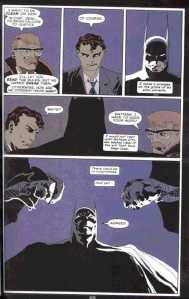
So let’s just face facts here and admit there are some good movie trilogies and some bad ones, that within the good ones some better than others, and that within the bad ones some are better than others. All of which brings us back to that rooftop scene we started this “Rebooting Batman'” series with, from Jeph Loeb and Tim Sale’s The Long Halloween miniseries, the second page of which is reproduced above (and I apologize for its crookedness, it’s the only scan of this particular page I could find online).

Quite clearly, the latest cinematic iteration of the Dark Knight Detective, as helmed by Christopher Nolan, was a trilogy, and flaws aside, I think that by and large structuring the whole thing this way, whether by accident or design, by and large worked, story-wise. We got a beginning, middle, and end to Batman’s career, and a forth installment probably would have been pushing things a bit much (okay, fair enough, folks who didn’t like the Nolan films probably feel like three was too many, but that’s another matter for another time). I guess I’m in the minority on this, but I would have liked to see Tim Burton get a third crack at the bat-franchise, as well. It certainly would have been better than Batman Forever.

And this is the point at which attentive readers will tell me to back the fuck up for just a minute and pick up on that “all of which brings us back to the rooftop scene” bit. Your wish is my command. Quite clearly, the Harvey Dent/Commissioner Gordon/Batman triumvirate that forms the thematic core of The Long Halloween is what I’d like to see at the center of the entirely-hypothetical next Bat-trilogy I’m building in my head, even if I’d take pretty much no other cues from this particular book whatsoever. I mentioned last time around that giving Bruce Wayne and/or Batman a real life that included some actual friends apart from Alfred would be an idea that I. and a lot of fans out there, would be receptive to. And of course, we all know that the story of Harvey Dent is, ultimately, a tragic one that could translate well into a central theme spread out over three flicks. I’m still working out all the details as to how to do it in my head — like I said in a previous post, I’m very much making this up as I go along — but how about this for starters? In our new Bat-trilogy, Dent, Gordon, and Batman start as uneasy allies, and are pretty firm, honest-to-goodness friends by the end of the first flick. Perhaps even to the point where Batman decides to clue them in on his secret identity (although that’s not, strictly speaking, necessary — just something to keep in mind).

If Warner Brothers were to decide to give this hypothetical “soft reboot”‘s director a three-picture guarantee, absolutely not unheard of in the movie business, then that would seem a natural enough relationship to build a trilogy around, and we can get into Harvey’s inevitable turn for the worse as we move into discussions of (the again completely hypothetical) parts two and three. If the first flick were to be a complete and utter flop, then hey, they can always fire everybody, go back to the drawing board, and us fanboys and fangirls can endlessly debate the “great Batman trilogy that never was,” which is always a pretty fun little time-waster in and of itself, as well.

So, to recap, here’s where we are right now — the next Bat-flicks are going to have a shift in tone toward the more heroic, old-school, brains-over-bran interpretation of the character that will result in a bit less “dark” an overall tone; we’ve established Detroit at the central filming location for Gotham City; we’re going the “soft reboot” route by going back to an earlier point in Batman’s career but not obsessing over the details of his origin too explicitly; and we’re planning for a trilogy of films from the outset, one with a genuine story of friendship between Batman, DA Harvey Dent, and Police Commissioner Jim Gordon at its core.

Sound good? Sound bad? Now’s the time to chime in, and I do appreciate all your comments, both good and bad, so far. On a minor “housekeeping” note, I’ll probably be stepping away from this series for the next week or so as I attend to some business on my “main” site (trashfilmguru.wordpress.com, in case you didn’t know), but will be checking, and responding to, comments on here just the same. A guy’s only got so many hours in a day to write, and I’ve been running a series of comic reviews over there that I really want to wrap up in the next few days before showing the love of my life (yes, that would be my wife) a terrific time for her upcoming 30th birthday. Once that’s all taken care of, I’ll be back to the task at hand here with the next entry in our series, which will focus on which details I’d keep, and which I’d scrap, from the Nolan series of Bat-films. Then we can finally get into the plot of the films themselves proper, followed by arguably the most fun part of all, ideal casting choices for all the characters!

Oh, and maybe we should start bandying about some names as to who we’d like to see directing these flicks in an ideal world, as well? But I did say one thing at a time was going to be the order of the day here, didn’t I? Must try to stick with that — if at all humanly possible!

Which Way Forward For The “Batman” Movie Franchise? Take Three : Setting The Tone


They just don’t draw Batman like that anymore, do they? These days, he’s a “ripped” steroid freak in a high-tech suit of armor who’s usually either thrashing someone to within an inch of their life or brooding silently. Ever since Frank Miller’s legendary Dark Knight Returns story — which, I’ll grant you, is still probably the single-best Batman story ever — he’s been getting increasingly somber, morose, and violent. Miller himself even portrayed him, essentially, as a child-abusing psychopath in All-Star Batman & Robin, The Boy Wonder. The films,  Joel Schumacher aberrations aside, have been getting increasingly darker over time, as well. People thought Tim Burton’s Batman flicks were a little too dark, so Warner went to Schumacher for a “course correction” that fell flat on its face, and then Christopher Nolan came along with the most popular, and darkest, cinematic version of Batman yet.

Then came the midnight premier of The Dark Knight Rises in Aurora, Colorado.

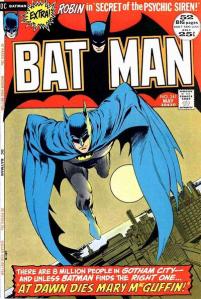
I would argue that even before that tragedy, this whole “increasingly dark” thing had run its course, but now I think a change in tone is positively essential. Which is not to say that Batman should ever go back to the light-hearted goofiness of the 1960s TV series. Modern audiences like a Dark Knight who is — well, dark. But I think the right tone was struck in books like the one pictured above, by the legendary 1970s Batman creative team of writer Denny O’Neil and artist extraordinaire Neal Adams. Their Batman was a serious, determined, perhaps even obsessive guy, but he was as much a man of intellect as of action, and at the end of the day he was a hero first and foremost, and could always be counted on to do the right thing. I think modern audiences are ready for that again after seeing Bruce Wayne essentially degenerate into basket-case status by the beginning of Nolan’s third flick, only to heroically redeem himself at the end. Let’s pick any new series up from that point — not storywise, mind you, but tonally.

To be a bit more specific about what I have in mind — think maybe a little more Michael Keaton and a little less Christian Bale. I liked Keaton’s take on the character — you felt like he was a decent guy at heart who just had this fundamental inability to resolve a gaping hole left in his life by his parent’s murder and had enough money and free time to channel that pain in a really — well — weird  direction, but would give all that up for a normal life in a heartbeat if he could just, ya know, figure out how to. Keaton;s cracking of the Joker’s poison code in Batman was also one of the few instances in any of the 1989-and-onwards Bat-films where we actually saw the Caped Crusader putting to use something that his name has always been, and always should be, synonymous with, namely his detective skills. I think it would be a great step in the right direction to see the next version on Batman on the big screen be just as at home in the Batcave’s crime lab or poring over information on its super-computer as he is kicking ass in a rainy alleyway.

I don’t think there’s any need for Schumacher camp, much less 60s-style uber-camp, but by all means, you can lighten things up a bit and still give us an essentially dark and mysterious character. 1970s Batman was pretty much all about that. And any Batman that’s going to “work and play well with others” in the inevitable Justice League movie DC’s cooking up will have to be at least a little more of a “joiner” than Bale and Nolan’s take on the character was.

To that end, I propose giving Bruce Wayne some actual friends apart from Alfred, a love interest who doesn’t get murdered, and an actual social life that’s not an OTT front from his crime-fighting activities and nothing more. But I promised to stay focused, and will get a bit more into the details of that tomorrow, as I examine the relationship that I think should be at the core of the next bat-series, and how it ties back into the rooftop scene from The Long Halloween that I started this whole thing with. I’ll also be getting into why I think a trilogy should be the plan for the next series from the outset — I know, I know, I said one thing at a time, but trust me, the “two” topics really are one and the same. In the meantime, of course, if you think I’m barking up the wrong tree with those whole “tone down the darkness a notch” stuff, now’s the time to say so!

Which Way Forward For The “Batman” Movie Franchise? Take Two : Building A Better Gotham


If there’s one area (and actually I think there are several, but that’s rather beside the point and I promised to remain focused like a laser beam on each individual subtopic in this “Batman reboot” series of posts) where I think Tim Burton’s Bat-flicks had it all all over Christopher Nolan’s it’s in their depiction of Gotham City. Not only did Burton’s Gotham have a fantastic Metropolis-gone-gothic look thanks to the late Anton Furst, but it felt like an intrinsically different sort of place than a real city, a place where you could sort of actually believe guys might run around in bat costumes and Joker facepaint , while Nolan’s Gotham was just, essentially, New York only a little grimier (even if his first two films were shot in Chicago).

I understand the reasoning behind making Gotham less fantastic, of course, and those reasons do make sense — Nolan’s Batman was supposed to be a more “realistic” character, to the extent that a billionaire who dresses up like a bat can ever be called “realistic,” and Joel Schumacher’s CGI Gotham was such an over-the-top visual disaster that a back-to-basics approach to Bruce Wayne’s hometown was a predictable enough move to make.

Still, I think something was lost, and that Batman works a bit better with at least some level of the fantastic still involved in its primary geographic setting. To that end, I think  there are basically three things any self-respecting Gotham of the potential “soft reboot” of the Bat-franchise we were talking about should have —

1. It should look at least a little bit different than a garden-variety major US city. You needn’t construct anything as elaborate as Furst’s amazing two-city-block long set, but a city that has some fairly spectacular architecture in the form of bridges, tall buildings, etc. that you can focus in on would be a definite plus, especially if they’re all a bit past their prime and have seen better days, since Gotham pretty has to be a grimy place by definition. Some constructed set pieces that could stand in as fictitious local landmarks would be a plus, as well, so to that end it would be helpful if the filming location for future Batman flicks had something of an emptied-out urban core where you could build an Arkham Asylum, or a neat-looking miniature version of Wayne tower, etc. I’m thinking an ideal sort of look would combine elements of New York as depicted in Zack Snyder’s Watchmen combined with a toned-down Gothic feel at least somewhat reminiscent of furst’s Gotham, albeit scaled way the hell back.

2. There should be some ritzy neighborhoods or suburbs where you can find adequate exterior footage for Wayne Manor and its grounds. I don’t think the next Bruce Wayne needs to live in a fucking castle like Bale’s version, but certainly a “stately manor” that exudes old-school wealth and prestige and hearkens back to the city’s more prosperous days before it became Crime Capitol, USA (which Gotham pretty much always  is).

3. As alluded to in the first two points, the majority of the city should be run down, and obviously well past its prime — a city in desperate need of a champion.

Finally, for reasons that will be made more clear as I get into the nuts and bolts of the plot outline I have in mind for this whole “soft reboot” thing, I think it would be essential for the city-to-stand-in-for-Gotham to be close to some wooded and even mountainous areas, since while the focus of this flick is most assuredly not going to be on the minutiae of the Batman’s origins per se, I still think some “flashback”-style sequences that show rugged wilderness survival-type training are going to be in order.

I suppose this is all rather just moot speculation since they’ll probably just film the next flick in Vancouver and it’ll look just fine because it pretty much always does no matter what, but just for the sake of fun speculation, I have something else in mind here — a locale that combines everything we’re looking for in terms of a run-down urban core; some truly spectacular architecture of its own; essentially empty areas that might as well hang a sign up saying “will build to suit;” palatial, ultra-wealthy, “old money” suburban areas; and fairly reasonable access to densely-wooded, geographically rugged forest. Batman Begins was filmed in Iceland, the UK, and Chicago, respectively, in order to capture all these various aspects, but you can do all this in exactly one place here in the good ol’ USA, and the state government is eevn actively engaged in rolling out the red carpet to film production in recent years, seeing the economic boom it’s brought to its northerly neighbor in Toronto.

Yes, folks, I think the next principal filming location for Gotham City — the ideal place to set the geographic tone for a re-launched, re-loaded (even if it’s done “softly”) Bat-franchise — should be (drumroll please) : Detroit!

I assure you, friends, I’m not kidding. Given the kind of place I think would work best for this “sot reboot,” as outlined in my (admittedly makeshift) criteria above, I think the much-maligned Motor City would be absolutely ideal, and bringing the production there would have the added bonus of generating great publicity for the film due to the positive economic impact it would have on an area that sure could use it. A multi-million-dollar Hollywood production setting up shop in Detroit? You can bet the city fathers (and mothers) would positively roll out the red carpet for Warner Brothers, and everything you would need is  literally right there at your fingertips. Honestly, this idea’s almost too damn good. But maybe you’ve got a better one, in which case, please chime in before I move on to step three, which will concentrate on the overall tone of the film itself (now that we’ve — okay, I’ve — established a great location) tomorrow!

Trash Film Guru Vs. The Summer Blockbusters : “The Dark Knight Rises”


At this point, I wonder if it’s even possible to separate today’s tragic events in Aurora, Colorado from any discussion about The Dark Knight Rises and simply analyze the film based on its own merits. If so, it takes a harder heart than mine, so before we even get started here let me say that my heart goes out to all the victims of this completely senseless tragedy, as well as their families and friends. In the days to come we can analyze the motivations, the warning signs that may or may not have been missed, and debate the proper courses of policy action to take in the wake of this absolutely senseless tragedy, and that’s all well and good — we still, and hopefully always will, live in a free society where the open debate and discussion about how best to address any situation, even and perhaps especially tragic ones like this, is not only absolutely appropriate, it’s absolutely necessary. So let’s remember that before we go and start calling people “anti-second amendment gun-grabbing liberal extremists” for merely suggesting that it might be a smart idea to figure out ways for guys like this accused suspect to not get their hands on private arsenals, and before we start suggesting that somehow various Batman-related movies and comics may have “inspired” the killer. If those are your views, fine, express them and have at it, but do respectfully, calmly, and in a mature fashion, please — assuming those who don’t agree with us are somehow “the enemy,” or placing a higher value on ascribing blame for a problem than on finding ways to prevent the situation from happening again, will only guarantee more tragedies in the future. But let’s all take a deep breath and let the police and various other investigative bodies do their work before we assume we know anything, much less that we know everything (or, at the very least, all we need to) about the situation. For now I think we can all agree that this kind of senseless violence represents an unconscionable act of cruelty and that there are no, and never will be, any justifications for it whatsoever.

And speaking of toning down the rhetoric and behaving like adults, can we also all agree that any online critic — be they “professional” or “amateur” — should be free to express reservations, even outright dislike, for this or any film without being subjected to harassment, personal attack, and even death threats? It’s just a movie, people, even if it’s a really big one, and there’s nothing in this world more subjective than one’s own reaction to and/or interpretation of a work of art in any medium. If people who have opposing views from our own on issues like gun control, public safety policy, and any others that may arise in the discussions resulting from today’s  horrific acts in Aurora are not our “enemies” — and, again, they’re not — then surely people who have differing opinions than our own in regards to a goddamn film aren’t, either. If you can’t wake up to what’s really important in life in the wake of an incident like this, then I genuinely feel sorry for you, but please — dial it all back a notch or shut the hell up if you’re absolutely incapable of being reasonable and level-headed. It’s all about perspective, folks — as in, keeping things in it.

All that being said, I don’t mind segueing into discussion of the film itself by stating immediately and for the record that I absolutely loved The Dark Knight Rises. I was, quite frankly, expecting to, but yesterday I got a bit jumpy. I had read various postings online about how the basic premise here amounted to “Batman comes out of retirement to save the 1% from having their wealth redistributed,” and leaving aside the fact that I find the politics behind such a plot conceit completely antithetical to my own, it just sounded like a pretty lackluster way in which to wind up one of the biggest series in film history and like Nolan was sacrificing inspiration for the sake of being overtly topical.

I needn’t have worried. Yes, the film can certainly be read in such a manner if you strain awfully hard to do so, but it can be read with a more progressive leaning, if such in your inclination, as well, to wit : yes, the principal villain of the piece, one ‘roided-out, breathing-apparatus-of-some-sort-wearing pseudo-revolutionary named Bane (superbly portrayed by Tom Hardy with a kind of chilling nonchalance that’s absolutely palpable) does, in fact, set about “giving Gotham back,” as it were, to the dispossessed masses for his own purposes, but it’s what those purposes are, and the way in which they’re revealed, that gives lie, in my view, to the whole “Batman as champion of the 1% taking on a guy who’s suckered the 99% into falling for him”  interpretation of the movie. I shan’t say anything too specific out of respect for those who may be reading this before they actually see it, but I will say this much : the fact that Bane is (apparently) a tool more for a rival to the corporate throne of Bruce Wayne than he is any “champion of the people,” and that even that turns out to be a ruse when it’s revealed that he’s bringing down Gotham for another set of reasons entirely, reasons which tie right back to the first film in Nolan’s series, are enough for me to dismiss both the conservative championing of this movie and the liberal hand-wringing over it with relative ease. In short, maybe we all need to learn to actually see these movies for ourselves before taking to the web and opining on their political content. And yes, I include myself among those I’m (mildly) castigating here.

All of which is not to say that Nolan (who co-wrote the script for this with his brother, Jonathan) doesn’t have an agenda here — it seems to me, quite clearly, that he does. And what, pray tell, would that agenda be? I’m glad you asked (okay, glad asked) — but first, a bit of background : back when Nolan first arrived on the scene with films like Memento and Insomnia, it was pretty commonplace to hear his work compared to that of fellow Brit-come-to-Hollywood Alfred Hitchcock. Some of that died down a but when he took over the Batman franchise and his career moved squarely into blockbuster territory, but like the so-called “Master Of Suspense” himself, I think our guy Chris has taken a perverse delight in having us all on a bit. Sure, his budgets are a lot bigger now, and he’s definitely able to pack a much bigger wallop, aesthetically speaking, than he used to, but underneath all of that pomp and circumstance, I still think he’s the same guy who lives to confound our expectations and use his work to comment, above all else, on itself.

If I haven’t lost you entirely by this point, and I sincerely hope I haven’t please allow me to explain : true, on the surface, a story that revolves around how Bruce Wayne/Batman (Christian Bale, of course, who turns in a performance here that’s incredibly multi-layered as he goes from broken to redeemed to more broken than ever to quietly triumphant, complete with physical changes to match), against the wishes of mentor/father-figure Alfred (Michael Caine, as always the beating human heart of the film and here displaying the type of range few characters with his limited screen time are ever even given the opportunity to sink their acting teeth into) comes out of a self-imposed eight-year exile spurred on equally by the threat of Bane and the mysterious allure of a fetching costumed cat-burglar (Anne Hathaway, never specifically referred to as “Catwoman,”  who knocks it out of the park here as sex-appeal-with-a-social-conscience — notice how she only steals from the well-off, and is even portrayed as being sympathetic to the surface level of Bane’s machinations, ultimately false as she knows them to be), aided as always by Morgan Freeman’s beleaguered-but-hardly-dead-yet-by-a-long-shot Lucius Fox, Gary Oldman’s ethically-conflicted-but-still-holding-out-hope police commissioner, Jim Gordon, an idealistic young Detective named Blake (Joseph Gordon-Levitt, who embodies a kind of hope for the future every time he’s on screen), and a mysterious ally on his company’s board of directors named Miranda (Marion Cotillard, who’s fetchingly dangerous in her own, non-slinky-suited way), hardly sounds like it has the makings of being a truly personal directorial statement, especially when you consider that it’s got a $250 budget and a remit from the studio to keep hitting us with everything it’s got from start to finish.

And yet, that’s exactly what Christopher Nolan has delivered here. Yes, the action set-pieces are spectacular, the effects are out of this world, Wally Pfister’s cinematography is (as we’ve come to expect by now) absolutely breathtaking, and the metaphorical punches are precisely placed, perfectly executed, and pack one heck of a wallop. It’s all big-scale spectacle on a scale we’ve never seen before and backed up by brains, to boot. In short, this isn’t The Avengers, which can certainly be viewed on an intellectual level and with at least a degree of thoughtfulness involved should you so choose, but where such things aren’t necessary to fully enjoy the film. In a Nolan blockbuster, you’d better put on your thinking cap or you’ll be left in the dust.

It’s what all that thought and action, inextricably linked as they are, is put in service to, though, that really sets The Dark Knight Rises apart and reveals Nolan to be, and I say this with all due respect, a bit of a devious trickster under all that pomp and circumstance. As has been established, this film has more than enough red meat to either appease and/or infuriate both ends of the political spectrum as generally defined, and Nolan indulges himself on a scale so grand that it’s absolutely certain to provide ample fodder for both his detractors and admirers, and now, with all these pieces set, there’s nothing left for him to do but — sit back, laugh, and watch us all have it online, on television, at work, even around the family dinner table. Our reactions to how we view his movie will, in fact have already, mirror the conflict of ideals, as well as the grand-scale physical destruction, shown on screen (although, again, let’s keep it level-headed and in proportion to its actual relevance to our daily existences, please). I don’t think he started out this Batman series with the intention of it becoming The. Biggest. Thing. Ever. To. Happen. In. Movie. History. But, now that it is, he’s making the most of the opportunity and, like his predecessor Hitchcock, whose greatest character was always himself, and whose films ultimately functioned as self-commentary on their own creation and existence, he’s laid a masterfully-prepared, air-tight, $250 million dollar trap here, that once you’ve seen, you have no choice but to play into.

Some may call that cynical, and perhaps they’re right to a certain degree, but it’s cynicism with purpose, executed with almost pristine attention to detail. Even he ending, which I won’t give away, is a supreme act of self-referential commentary on where any future filmmaker could take this series, should they be daring/and or stupid enough to pick up Nolan’s gauntlet. It’s all part of an intricate puzzle designed to do nothing so much as reflect itself back upon itself , and us, once the last piece is in place, and nothing this truly audacious has ever, cinematically speaking,  been attempted on a scale this large before. Think David Lynch’s Inland Empire, only delivered on a level pretty much anyone can understand and appreciate, if not actually and actively like (although early indications are that most audiences really do love this flick), and you’ll have something of an idea of what’s been achieved here.

It may take awhile before everyone is able to fully appreciate what Nolan’s achieved here — hell, we’re still debating Hitchcock’s entire oeuvre decades later — but that’s all part of the plan, as well. This is self-contained, self-propagating, self-constructed, self-sustaining genius (a term I never use lightly) of the highest order, and the most accomplished act of thoughtful pranksterism in movie history. Tomorrow, I’ll be seeing it again — and I bet Chris Nolan isn’t surprised in the least.