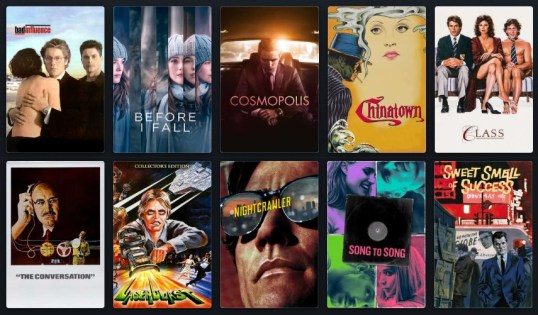
10 Films For The Weekend (7/25/25)


Leaving Soon

With the end of July approaching, I decided to take a look at what would soon be leaving Tubi.  I should mention that just because these films are leaving Tubi, that doesn’t mean they’re not going to start streaming somewhere else.  In fact, I imagine the reason that they’re leaving is because they’re going to start streaming somewhere else.  Here’s a few worthwhile films that are currently listed as “leaving soon” on Tubi.

Sweet Smell of Success (1957) stars Burt Lancaster as a viscous columnist and Tony Curtis as his henchmen.  When Lancaster discovers that his sister is dating a jazz musician, Lancaster decides to destroy the man’s life.  One can view this film as a satire on the tabloids, a metaphor for McCarthyism, or a commentary on cancel culture.  All those interpretations are legitimate.  Then again, it can also be viewed as just being a tremendously enjoyable and endlessly quotable pulp masterpiece, a noir where the damage isn’t done by bullets but instead by words.  Here’s the link on Tubi.

Terence Malick’s Song to Song (2017) is an intriguing Texas-set film.  It’s a Malick film and, in many ways, it’s Malick at his most self-indulgent.  There are times when the film, with its languorous shots and its multiple narrators, almost becomes a self-parody.  But there are also images that are so strikingly beautiful that they stick with you.  A talented cast — Michael Fassbender, Ryan Gosling, Natalie Portman, Val Kilmer, and others — wanders through the film and offers up tantalizing hints of what’s going on underneath the surface of their ennui-drenched lives.  It’s left to the viewer to decide what it all means.  It’s a Malick film and, because of that, worth taking a chance on.  Here’s the link on Tubi.

Based on a novel by Don DeLillo and directed by David Cronenberg, Cosmopolis (2012) is a surreal film that follows a businessman (Robert Pattinson) as he is driven around New York.  This is one of those films that people seem to either love or hate.  I loved it and I thought this was the first film that showed Pattinson was capable of doing more than just Twilight.  In a key supporting role, Paul Giamatti gives a notably disturbing performance.  Here’s the link on Tubi.

What would you do if you had the chance to live the last day of your life over and over again?  That’s the question asked by one of my favorite films of the past ten years, Before I Fall (2017).  This is a film that brough back memories of me and my friends in high school and left me wondering if I needed to apologize to anyone.  Here’s the link on Tubi.

I’m still annoyed (if not necessarily surprised) that Nightcrawler (2014) was thoroughly ignored by the Academy.  Jake Gyllenhaal definitely deserved, at the very least, a nomination for his performance as a sociopath who finds a successful career in crime journalism.  Bill Paxton and Rene Russo give excellent supporting performances.  This may be a mainstream film but its heart belongs to the grindhouse.  Here’s the link on Tubi.

Finally, what can I say about Chinatown (1974) that hasn’t already been said by a hundred other critics?  It’s one of the best noirs ever made and it’s debatable whether or not Jack Nicholson has ever been better than he was here.  Along with an intriguing mystery, the film features one of the most loathsome villains of all time, John Huston’s Noah Cross.  Faye Dunaway is excellent as the femme fatale with a devastating secret.  Here’s the link on Tubi.

Odds and Ends

After watching Chinatown, why not check out Francis Ford Coppola’s The Conversation (1974)?  I have to admit that I envy those who were alive in 1974 and who got to see the second Godfather, Chinatown, and The Conversation when they were all first released.  What’s it like to live during a cinematic golden age?  The Conversation is a brilliant thriller, featuring Gene Hackman at his best.  This is a true masterpiece of paranoia and it can be viewed on Prime.

If you’re in the mood for something completely different, the dramedy Class (1983) features Andrew McCarthy as a nerdy student who has an affair with the mother (Jacqueline Bisset) of his roommate (Rob Lowe).  It’s a very 80s film and definitely a guilty pleasure.  It can be viewed on Prime.

Speaking of Rob Lowe, he plays a bad guy in the enjoyably melodramatic Bad Influence (1990).  James Spader plays the good guy for once, an adorably nerdy guy who discovers that his new best friend doesn’t exactly have his best interests at heart.  Directed by Curtis Hanson, Bad Influence is sordid fun.  It can be viewed on Prime.

Finally, I should mention that I bought a copy of Gianni Russo’s autobiography this week.  Russo is the entertainer who played Carlo Rizzi in The Godfather and who appeared in a handful of other films, usually playing a gangster.  I’m disappointed to say that Russo did not write about the experience of co-starring in the gloriously absurd, totally 70s sci-fi flick, Laserblast (1978).  Fortunately, you can watch the film for yourself.  Russo’s role is actually pretty small but the Claymation aliens are just adorable!  This is also probably the only film ever made to feature Eddie Deezen as a bully.  Laserblast is on Prime.

You can check out last week’s films but clicking here!


4 Shots From 4 Films: Special 1974 Edition


4 Or More Shots From 4 Or More Films is just what it says it is, 4 shots from 4 of our favorite films. As opposed to the reviews and recaps that we usually post, 4 Shots From 4 Films lets the visuals do the talking!

Today, we pay tribute to a great year in cinema.  It’s time for….

4 Shots From 4 1974 Films

The Godfather Part II (1974, dir by Francis Ford Coppola, DP: Gordon Willis)

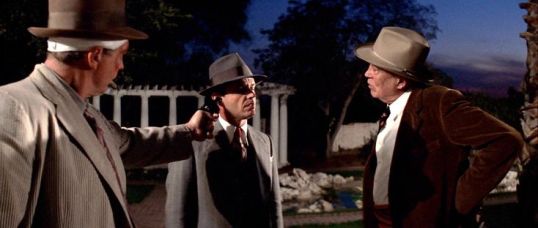
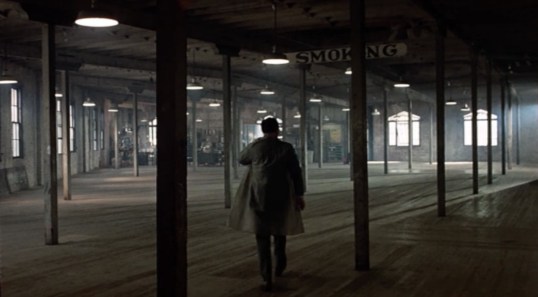
Chinatown (1974, dir by Roman Polanski, DP: John A. Alonzo)

The Conversation (1974, dir by Francis Ford Coppola, DP: Bill Butler and Haskell Wexler)

The Texas Chainsaw Massacre (1974, dir by Tobe Hooper, DP: Daniel Pearl)

8 Shots From 8 Films: Special Robert Evans Edition


4 Or More Shots From 4 Or More Films is just what it says it is, 4 shots from 4 of our favorite films. As opposed to the reviews and recaps that we usually post, 4 Shots From 4 Films lets the visuals do the talking!

95 years ago today, Robert Evans was born in New York City.  He started out working in his brother’s clothing business but a chance meeting with actress Norma Shearer led to him becoming an actor.  And while Evans, by his own account, was not a particularly good actor, he did prove himself to be very skilled at playing the games of Hollywood.  Evans eventually moved from acting to production, first as an executive at Paramount and then as an independent producer.

He lived a life as glamorous and tumultuous as the stars of his pictures and his memoir, The Kid Stays In The Picture, is considered to be one of the classic show biz autobiographies.  He hung out with cinematic rebels like Jack Nicholson and Robert Towne and counted Secretary of State Henry Kissinger as a friend.  He suggested that Francis Ford Coppola should direct The Godfather and, when Paramount put pressure on Coppola to cut the film down to two hours, it was Evans who famously announced that a two-hour Godfather was nothing more than a trailer.  He lost Ali MacGraw to Steve McQueen and, again by own account, he lost a lot of potentially productive years to cocaine.  (The Cotton Club scandal is one of the wildest in the history of Hollywood, though it should be noted that Evans himself was never charged with any wrongdoing.)  But, for all that he lost, Evans continues to gain admirers as being the epitome of the producer who was willing to take chances.  For all of his flamboyance, Evans had an eye for good material and the willingness to protect his directors.  In many ways, he was as important to the cinematic revolution of the 70s as the directors that he hired.  When Evans passed away in 2019, it was truly the end of an era.

Here, in honor of the birth and legacy of Robert Evans, are 8 Shots from 8 Films that Evans produced, either as studio chief at Paramount or as an independent producer.

8 Shots From 8 Robert Evans Films

Rosemary’s Baby (1968, dir by Romnn Polanski, DP: William A. Fraker)

Love Story (1970, dir by Arthur Hiller, DP: Richard Kratina)

The Godfather (1972, dir by Francis Ford Coppola, Cinematography by Gordon Willis)

Chinatown (1974, dir by Roman Polanski, DP: John A. Alonzo)

Marathon Man (1976, dir by John Schlesinger, DP: Conrad Hall)

The Cotton Club (1984, dir by Francis Ford Coppola, DP: Stephen Goldblatt)

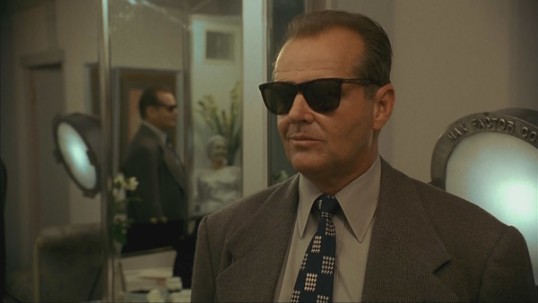
The Two Jakes (1990, dir by Jack Nicholson, DP: Vilmos Zsigmond)

Sliver (1993, dir by Phillip Noyce, DP: Vilmos Zsigmond)

10 Oscar Snubs From the 1970s


Ah, the 70s. The decade started with the collapse of the studio system and the rise of the so-called movie brats. For the first half of the decade, Hollywood was producing the type of challenging films on which they would never again be willing to take the risk. The 70s were indeed a second cinematic golden age, full of anti-heroes and dark endings. Then, in 1977, Star Wars changed all of that and ushered in the era of the blockbuster. The 1970s gave the world disco, The Godfather, and some of the best Oscar winners ever.  It also gave us more than a few snubs.

1971: Dirty Harry Is Totally Ignored

Dirty Harry may be one of the most influential films ever made but the Academy totally snubbed it.  My guess is that, with The French Connection coming out that same year, the Academy only had room for one morally amibiguous cop film in its heart.  Still, Dirty Harry has certainly held up better than the nominated Nicholas and Alexandra.  Both Clint Eastwood and Andrew Robinson gave performances that were award-worthy as well.  Say what you will about Eastwood’s range, I defy anyone not to smile at the way Harry snarls when he discovers that the man he’s talking to teaches a constitutional law course at Berkley.

1971: Gimme Shelter Is Not Nominated For Best Documentary Feature

Considering that Woodstock won the Documentary Oscar the previous year, it only seems appropriate the Gimme Shelter should have won the following year.  In the end, the Academy decided to celebrate the best of the 60s while snubbing the worst of it.

1972: Burt Reynolds Is Not Nominated For Deliverance

If you’ve ever seen Deliverance, you know how important a character Lewis Medlock (played by Burt Reynolds) was.  Not only was he the one who persuaded everyone to spend the weekend risking their lives on a canoeing trip but he also set the standard for “manlinness” that the rest of his friends tried to live up to.  When Lewis ends up getting a compound fracture and is forced to spend the rest of the film deliriously lying in a canoe, it’s a reminder that nature and fate don’t care how confident or outspoken you are.  Reynolds was perfectly cast.  1972 was a strong year with a lot of worthwhile nominations and, to be honest, there’s really not a bad or an unworthy performance to be found among the acting nominees.  Still, it’s hard not to feel that the Academy should have found some room for Burt Reynolds.

1974: John Huston Is Not Nominated For Chinatown

In the role of Chinatown‘s Noah Cross, John Huston gave one of the great villainous performances.  Cross represented pure avarice and moral decay, a man who committed terrible crimes but who, the film suggested, was also responsible for creating not only modern Los Angeles but also providing a home for Hollywood.  Admittedly, there were a lot of good performances to choose from and I certainly can’t complain that the Academy awarded the Oscar for Best Supporting Actor to Robert De Niro, who deserved it.  Still, in retrospect, John Huston’s evil turn was at least as strong as Fred Astaire’s likable (and nominated) turn in The Towering Inferno.

1974 and 1975: John Cazale Is Not Nominated For Best Supporting Actor

John Cazale had a brief but legendary career.  A noted stage actor, Cazale made his film debut in 1972 with The Godfather.  He played Fredo, the Corleone son who couldn’t get any respect.  He final film, released after his early death from cancer, was 1978’s The Deer Hunter.  Cazale appeared in a total of five films, every one of which was nominated for Best Picture.  That this talented actor was never nominated for an Oscar just doesn’t seem right.  But for which film should he have been nominated?

Godfather Part II received three nominations for Best Supporting Actor: Robert De Niro, Lee Strasberg, and Michael V. Gazzo.  Personally, I would probably replace Gazzo with Cazale.  Cazale’s performance as Fredo was one of the strongest parts of Godfather Part II.  Who can forget Fredo’s legendary meltdown about always being overlooked?  I would also say that Cazale deserved a nomination for his performance in Dog Day Afternoon, in which he played Sal and provided the film with some of its saddest and funniest moments.  Neither Fredo nor Sal survive their films and, in both cases, it’s impossible not to feel that they deserved better than the world gave them.

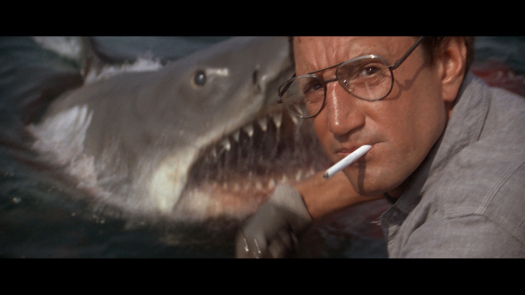
1975: Steven Spielberg Is Not Nominated For Jaws

Seriously, what the Heck?  Jaws totally reinvented the movies.  It received a deserved nomination for Best Picture but the true star of the film, Steven Spielberg, was somehow not nominated.

1976: Martin Scorsese is Not Nominates For Taxi Driver

Seriously, what the Heck?  Taxi Driver totally reinvented the movies.  It received a deserved nomination for Best Picture but the true star of the film, Martin Scorsese, was somehow not nominated.

1977: Harrison Ford Is Not Nominates For Star Wars

Harrison Ford, despite having had the type of career for which most actors would sacrifice their soul, has never had much success with the Oscars.  He’s been nominated exactly once, for Witness.  That he’s never won an Oscar just feels wrong.  The fact that he wasn’t even nominated for playing either Han Solo or Indiana Jones feels even more wrong.  In the role of Solo, Ford bring some much needed cynicism to Star Wars.  His decision to return and help the Rebels destroy the Death Star is one of the best moments in the film.

1978: National Lampoon’s Animal House Is Totally Ignored

This film deserved a nomination just for the scene in which John Belushi destroyed that annoying folk singer’s guitar.  Seriously, though, this is another film that, more or less, defined an era.  I’m not saying it deserved to win but it at least deserved a few nominations.

1979: Dawn of the Dead Is Not Nominated For Best Picture

Considering the Academy’s general resistance to honoring horror, it’s not really a shock that Dawn of the Dead was not nominated for Best Picture but still, it would have been nice if it had happened.

Agree?  Disagree?  Do you have an Oscar snub that you think is even worse than the 10 listed here?  Let us know in the comments!

Up next: The 80s arrive and the snubs continue!

Dawn of the Dead (1978, dir by George Romero)

8 Shots From 8 Films: Special Robert Evans Edition


4 Or More Shots From 4 Or More Films is just what it says it is, 4 shots from 4 of our favorite films. As opposed to the reviews and recaps that we usually post, 4 Shots From 4 Films lets the visuals do the talking!

92 years ago today, Robert Evans was born in New York City.  He started out working in his brother’s clothing business but a chance meeting with actress Norma Shearer led to him becoming an actor.  And while Evans, by his own account, was not a particularly good actor, he did prove himself to be very skilled at playing the games of Hollywood.  Evans eventually moved from acting to production, first as an executive at Paramount and then as an independent producer.

He lived a life as glamorous and tumultuous as the stars of his pictures and his memoir, The Kid Stays In The Picture, is considered to be one of the classic show biz autobiographies.  He hung out with cinematic rebels like Jack Nicholson and Robert Towne and counted Secretary of State Henry Kissinger as a friend.  He suggested that Francis Ford Coppola should direct The Godfather and, when Paramount put pressure on Coppola to cut the film down to two hours, it was Evans who famously announced that a two-hour Godfather was nothing more than a trailer.  He lost Ali MacGraw to Steve McQueen and, again by own account, he lost a lot of potentially productive years to cocaine.  (The Cotton Club scandal is one of the wildest in the history of Hollywood, though it should be noted that Evans himself was never charged with any wrongdoing.)  But, for all that he lost, Evans continues to gain admirers as being the epitome of the producer who was willing to take chances.  For all of his flamboyance, Evans had an eye for good material and the willingness to protect his directors.  In many ways, he was as important to the cinematic revolution of the 70s as the directors that he hired.  When Evans passed away in 2019, it was truly the end of an era.

Here, in honor of the birth and legacy of Robert Evans, are 8 Shots from 8 Films that Evans produced, either as studio chief at Paramount or as an independent producer.

8 Shots From 8 Robert Evans Films

Rosemary’s Baby (1968, dir by Romnn Polanski, DP: William A. Fraker)

Love Story (1970, dir by Arthur Hiller, DP: Richard Kratina)

The Godfather (1972, dir by Francis Ford Coppola, Cinematography by Gordon Willis)

Chinatown (1974, dir by Roman Polanski, DP: John A. Alonzo)

Marathon Man (1976, dir by John Schlesinger, DP: Conrad Hall)

The Cotton Club (1984, dir by Francis Ford Coppola, DP: Stephen Goldblatt)

The Two Jakes (1990, dir by Jack Nicholson, DP: Vilmos Zsigmond)

Sliver (1993, dir by Phillip Noyce, DP: Vilmos Zsigmond)

44 Days of Paranoia #25: Chinatown (dir by Roman Polanski)


Our latest entry into the 44 Days of Paranoia is a dark masterpiece.  Based on a script by Robert Towne, directed by Roman Polanski, and starring Jack Nicholson, 1974’s Chinatown is one of the greatest films ever made.

Chinatown takes place in 1940s Los Angeles.  Private Investigator Jake Gittes (Jack Nicholson) is hired by a woman (Diane Ladd) who claims that her name is Evelyn Mulwray.  She wants Gittes to follow her husband, Hollis, and discover whether he’s having an affair.  Gittes gets some pictures of Hollis with a young woman (Belinda Palmer) and hands them over to Evelyn.

The next day, the pictures are published on the front page of the newspaper and Gittes is confronted by another woman (Faye Dunaway) who explains that she — and not the woman who hired him — is the actual Evelyn Mulwray.  Gittes then learns that Hollis has turned up dead, drowned in a reservoir.

Gittes suspects that Hollis was murdered and launches his own investigation.  This eventually leads Jake to Hollis’s former business partner, Noah Cross (John Huston).  Noah also happens to be the father of Evelyn and he offers double Gittes’s fee if Gittes will track down Hollis’s younger girlfriend.

As his investigation continues, Gittes discovers that Hollis’s murder was connected to both the continued growth of Los Angeles as a city and a truly unspeakable act that occurred several years in the past.  Nobody, it turns out, is what he or she originally appears to be.  To say anything else about the plot would be unfair to anyone who hasn’t seen Chinatown before.

Since I first started reviewing films for this site, one of the things that I’ve discovered is that it’s actually easier to review a bad film than a good film.  It’s easier to be snarky and cynical about the latest film from Michael Bay or Roland Emmerich than it is to explain why a film works.  There’s a famous saying about pornography: “I don’t know what it is but I know it when I see it,” and sometimes that’s the way I feel whenever it comes time to try to review a great film.

Consider Chinatown.  At its heart, Chinatown is an homage to the old film noirs of the 40s and 50s.  Now, I have to admit that I’ve lost track of how many noir homages I’ve seen.  It seems like every director has to make at least one hard-boiled, morally ambiguous detective film.  Chinatown has all of the familiar elements — the hero is a private investigator, Evelyn Mulwray initially appears to be a classic femme fatale, the dialogue is appropriately cynical, and the plot is full of twist and turns.  Even the film’s theme of political conspiracy serves to remind us that most noirs used their detective stories as a way to explore the hidden underbelly of American society.

And yet, with Chinatown, Polanski, Nicholson, Towne, and producer Robert Evans took all of those familiar elements and used them to create one of the greatest films ever made.

Why is Chinatown such a great film?

Some of the credit has to go to Jack Nicholson who, in the role of Jake Gittes, gives perhaps his best performance.  As I mentioned above, Gittes is, in many ways, a stock character but Nicholson brings so much nuance and depth to the role that it doesn’t matter.  Nicholson’s trademark cynicism and sarcasm are both to be found here but he also brings a cocky recklessness to the role.  Gittes is such a charismatic and likable hero and so confident in himself that it makes the film’s ending all the more shocking.

As good as Nicholson is, he’s matched at every turn by John Huston’s Noah Cross.  Noah Cross is one of the most vile characters to ever appear on-screen, which is why Huston’s rather courtly performance is all the more disturbing.  When Gittes confronts Noah about the worst of his many crimes, Cross simply responds that a man is never sure what he’s capable of until he does it.  Huston delivery of the lines leave us with little doubt that Noah believes every word of what he’s just said.

In the end, though, most of the credit has to go to Roman Polanski’s direction and Robert Towne’s script.  Towne’s script provides a genuinely challenging and thought-provoking mystery, while Polanski’s stylish direction keeps the view continually off-balance and unsure of who is telling the truth.  Reportedly, Polanski and Towne had a contentious relationship, with Polanski changing the ending of Towne’s script to make the film much more downbeat.  In the end, Polanski made the right choice.  The film ends the only way that it possibly could.

Or, to quote the famous line: “It’s Chinatown.”

Other Entries In The 44 Days of Paranoia 

  1. Clonus
  2. Executive Action
  3. Winter Kills
  4. Interview With The Assassin
  5. The Trial of Lee Harvey Oswald
  6. JFK
  7. Beyond The Doors
  8. Three Days of the Condor
  9. They Saved Hitler’s Brain
  10. The Intruder
  11. Police, Adjective
  12. Burn After Reading
  13. Quiz Show
  14. Flying Blind
  15. God Told Me To
  16. Wag the Dog
  17. Cheaters
  18. Scream and Scream Again
  19. Capricorn One
  20. Seven Days In May
  21. Broken City
  22. Suddenly
  23. Pickup on South Street
  24. The Informer

My Top Ten Books About The Movies


I love movies and I love books so I guess it would stand to reason that I love books about movies the most of all.  (I also love movies about books but there are far fewer of those, unfortunately.)  Below are my personal favorites.  I’m not necessarily saying that these are the ten greatest film books ever written.  I’m just saying that they’re the ones that I’m always happy to know are waiting for me at home.

10) Soon To Be A Major Motion Picture by Theodore Gershuny — This is one of the great finds of mine my life.  I found this in a used bookstore and I bought it mostly because it only cost a dollar. Only later did I discover that I had found one of the greatest nonfiction books about the shooting of a movie ever written!  Gershuny was present during the filming of a movie called Rosebud in the early 70s.   I’ve never seen Rosebud but, as Gershuny admits, it was a critical disaster that managed to lose a ton of money.  The book provides a fascinating wealth of backstage gossip as well as memorable portraits of director Otto Preminger and actors Robert Mitchum (who was originally cast in the lead role), Peter O’Toole (who took over after Mitchum walked off the set), and Isabelle Huppert.   If nothing else, this book should be read for the scene where O’Toole beats up critic Kenneth Tynan.

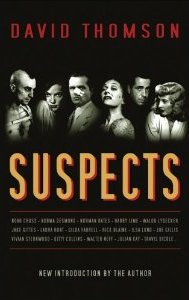
9) Suspects by David Thomson — A study of American cinema noir   disguised as a novel, Suspects imagines what would happen if George Bailey from It’s a Wonderful Life fell in love with Laura from the movie of the same name.  Well, apparently it would lead to Sunset Boulevard’s Norma Desmond having an affair with Chinatown’s Noah Cross and to one of George’s sons, sensitive little Travis, getting a job in New York City as a Taxi Driver.  And that’s just a small sampling of what happens in this glorious mindfuck of a novel.

8 ) Profondo Argento by Alan Jones — Long-time fan Alan Jones examines each of Dario Argento’s films (even Argento’s obscure historical comedy The Five Days of Milan) and proceeds to celebrate and (in many cases) defend Argento’s career.  Jones also interviews and profiles several of Argento’s most frequent collaborators — Daria Nicolodi, Asia and Fiore Argento, Simon Boswell, Claudio Simonetti, Keith Emerson, George Romero, Lamberto Bava, Michele Soavi, and many others.  Jones’ sympathetic yet humorous profile of Luigi Cozzi is priceless.

7)  Spaghetti Nightmares by Luca Palmerini — Spaghetti Nightmares is a collection of interviews conducted with such Italian filmmakers as Dario Argento, Ruggero Deodato, Umberto Lenzi, Lucio Fulci, and others.  Among the non-Italians interviewed are Tom Savini (who, as always, comes across as appealingly  unhinged) and David Warbeck.  (Sadly, both Warbeck and Fulci would die shortly after being interviewed.)  What makes this interesting is that, for once, Argento, Fulci, et al. are actually being interviewed by a fellow countryman as opposed to an American accompanied by a translator.  As such, the subsequent interviews turn out to be some of the most revealing on record.

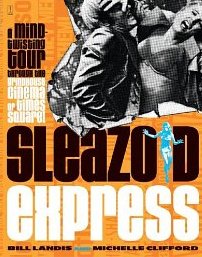
6) Sleazoid Express by Bill Landis and Michelle Clifford — Landis and Clifford’s book is both a history and a defense of the old grindhouse theaters of New York City.  Along with describing, in loving and memorable detail, some of New York’s most infamous grindhouses, they also write about some of the more popular movies to play at each theater.  Along the way, they also offer up revealing profiles of such legendary figures as David Hess and Mike and Roberta Findley.  Reading this book truly made me mourn the fact that if I ever did find myself in New York City, I won’t be able to hit the old grindhouse circuit.

5) Beyond Terror: The Films of Lucio Fulci by Stephen Thrower — Fulci has always been a terribly underrated director and, indeed, it’s easy to understand because, in many ways, he made movies with the specific aim of alienating and outraging his audience.  It requires a brave soul to take Fulci on his own terms and fortunately, Stephen Thrower appears to be one.  Along with the expected chapters on Fulci’s Beyond Trilogy and on Zombi 2, Thrower also devotes a lot of space to Fulci’s lesser known works.  Did you know, for instance, that before he became the godfather of gore, Fulci specialized in making comedies?  Or that he also directed two very popular adaptations of White Fang?  Thrower also examines Fulci’s often forgotten westerns as well as his postapocalyptic sci-fi films.  And, best of all, Thrower offers up a defense of the infamous New York Ripper that, when I read it, actually forced me to consider that oft-maligned film in a new light.  That said, Thrower does admit to being as confused by Manhattan Baby as everyone else.

4) Immoral Tales by Cathal Tohill and Pete Toombs — Tohill and Toombs offer an overview of European “shock” cinema and some of the genre’s better known masters.  The book contains perhaps the best critical examination of the work of Jean Rollin ever written.  The authors also examine the work of Jesus Franco and several others.  This is a great book that reminds us that the Italians aren’t the only ones who can make a great exploitation film.

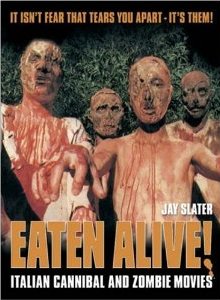
3) Eaten Alive by Jay Slater — This book offers an overview of the Italian film industry’s legendary cannibal and zombie boom.  Along with reviewing every Italian movie to feature even the slightest hint of cannibalism or the living dead (this is one of the few books on Italian cinema that discusses both Pasolini and Lucio Fulci as equals), Eaten Alive also features some very revealing interviews with such iconic figures as Catriona MacColl, Ian McCullough, and especially Giovanni Lombardo Radice.  Radice, in fact, also contributes a memorable “guest” review of one of the movies featured in the book.  (“What a piece of shit!” the review begins.)  Memorable reviews are also contributed by Troma film founder Lloyd Kaufman who brilliantly (and correctly) argues that Cannibal Holocaust is one of the greatest films ever made and Ramsey Campbell who hilariously destroys Umberto Lenzi’s infamous Nightmare City.

2) The Book of the Dead by Jamie Russell — If, like all good people, you love zombies then you simply must do whatever it takes to own a copy of this book.  Starting with such early masterpieces as White Zombie and I Walked With A Zombie, Russell proceeds to cover every subsequent zombie film up through George Romero’s Land of the Dead.  Russell offers up some of the best commentaries ever written on Romero’s Dead films, Fuci’s Beyond Trilogy, Rollin’s Living Dead Girl, and Spain’s Blind Dead films.   The pièce de résistance, however, is an appendix where Russell describes and reviews literally ever zombie film ever made.

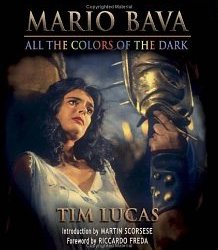
1)  All The Colors Of the Dark by Tim Lucas  — This is it.  This is the Holy Grail of All Film Books.  If you’ve ever asked yourself if any book is worth paying close to 300 dollars, now you have your answer.  This one is.  Tim Lucas offers up the most complete biography of director Mario Bava ever written.  In fact, this may be the most complete biography of any director ever written!  Lucas examines not only Bava’s life but also every single movie that Bava was ever in any way connected to, whether as a director or as a cameraman or as the guy in charge of the special effects.  This is 1,128 pages all devoted to nothing but the movies.  This is the type of book that makes me thankful to be alive and I owe a huge debt of gratitude to Tim Lucas for writing it.