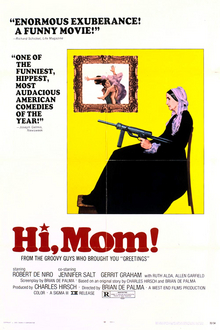
Film Review: Hi, Mom! (dir by Brian De Palma)


Released in 1970, Hi, Mom!, tells the story of Jon Rubin (played by a 26 year-old Robert De Niro).  The somewhat spacey and kind of creepy Jon has just returned to New York City from Vietnam.  After moving into a run-down apartment building and meeting the building’s superintendent (Charles Durning), Jon is hired to direct a pornographic film by producer Joe Banner (Allen Garfield).  Jon’s idea to simply point his camera at his building and to film his neighbors as they go about their day.  As quickly becomes apparent, Jon is mostly just looking for an excuse to watch and film Judy Bishop (Jennifer Salt).

Also living in the building is Gerrit Wood (Gerrit Graham), who is first seen triumphantly putting posters of Che Guevara and Malcolm X up in his apartment.  Gerrit is a freshly-minted political radical and the leader of a group of performance artists who put on a show called Be Black, Baby, in which the white audience members are forced to wear blackface and are then chased, attacked, and assaulted by black actors wearing whiteface.  (Gerrit himself is white.)  Jon is hired to play the police officer who beats and arrests the members of the audience at the end of the performance.  Of course, eventually, the real police show up….

An attempt at an episodic counter-culture comedy, Hi, Mom is definitely a product of the time in which it was made, both in its style and its thematic content.  Today, it’s best-known for being one of Brian De Palma’s early independent films and for featuring Robert De Niro in one of his first starring roles.  De Palma and De Niro aren’t exactly the first names that come to mind when one thinks about comedy and Hi, Mom shows that there’s a good reason for that.  As both a screenwriter who felt he had something important to say and a young director who was obviously eager to show off everything that he could do with a camera, Brian De Palma simply cannot get out of his own way.  Scenes are needlessly sped up.  Scenes are pointlessly slowed down.  The musical cues are obvious.  The dialogue is often so broad that it comes across as being cartoonish.  One gets the feeling that De Palma didn’t trust the audience to get the jokes so he went overboard to make sure everyone knew when to react.  All of the pointless camera trickery serves the same purpose that a laugh track would on an old sitcom.  Interestingly enough, the only sequence that really works as satire is the Be Black, Baby sequence and that’s because De Palma directs it in a semi-documentary fashion.  De Palma gets out of his own way and allow the sequence to develop a natural rhythm.  (Of course, seen today, the scene will bring to mind the upper class white liberals who pay money to have an activist lecture them about their privilege while having their friends over for dinner.)

As for Robert De Niro, he gives a typically nervy performance, one that feels like a dry run for his later work in Mean Streets, Taxi Driver, and King of Comedy.  Despite the reputation of those films, there are some genuinely funny moments to be found in all of them.  Most of them, like the classic Taxi Driver conversation between De Niro’s Travis and Peter Boyle’s Wizard, are funny because of how people react to De Niro’s obviously unhinged characters.  Both Taxi Driver and King of Comedy got mileage out of having normal people try to deal with De Niro’s unstable characters.  In Hi, Mom, everyone is equally wacky and, as such, De Niro doesn’t really have anyone to play off.  No one is really reacting to anything, De Niro-included.  (There is some spark to his scenes with Charles Durning and Allen Garfield but even those scenes seem to drag on forever.)

On the plus side, Hi, Mom! is was shot on the actual streets of New York City, guerilla-style.  (A “Re-Elect Mayor Lindsay” sign in the background confirms that the film was made on location in 1969.)  When De Palma isn’t getting in his own way with all of his fancy camera tricks, he manages to capture so memorably bleak images of New York City.  Hi, Mom! presents New York as being a dirty, crime-ridden, and menacing city but it also captures the odd grandeur of urban decay.  At its best, Hi, Mom! captures the love/hate relationship that many seem to have New York City.  The city feels both alive and dangerous at the same time.  Hi, Mom! is too uneven to work as a sustained satire but, as a documentary about New York at the end of the turbulent 60s, it’s worth watching.

I should mention that this was not the first time that De Palma and De Niro teamed up.  Indeed, De Niro was De Palma’s muse even before he met Martin Scorsese.  Hi, Mom! was a loose sequel to an earlier De Palma/De Niro film called Greetings.  (Like many of De Palma’s future films, both Greetings and Hi, Mom! were originally rated X but later re-rated R.)  De Palma and De Niro, of course, would both go onto have long Hollywood careers.  (They would later reunite for The Untouchables, a big-budget spectacle of a film that’s about as far from the grungy Hi, Mom! as one can get.)  De Palma’s career has had its ups and downs but, as of late, many of his films have been positively reevaluated.  As for De Niro, he can finally kind of play comedy.  That said, I’d rather watch Hi, Mom than Dirty Grandpa.
8 Shots From 8 Horror Films: 1980


4 Or More Shots From 4 Or More Films is just what it says it is, 4 shots from 4 of our favorite films. As opposed to the reviews and recaps that we usually post, 4 Shots From 4 Films lets the visuals do the talking!

This October, I’m going to be doing something a little bit different with my contribution to 4 (or more) Shots From 4 (or more) Films.  I’m going to be taking a little chronological tour of the history of horror cinema, moving from decade to decade.

Today, we take a look at a very important year: 1980

8 Shots From 8 Horror Films: 1980

Inferno (1980, dir by Dario Argento, DP: Romana Albano)

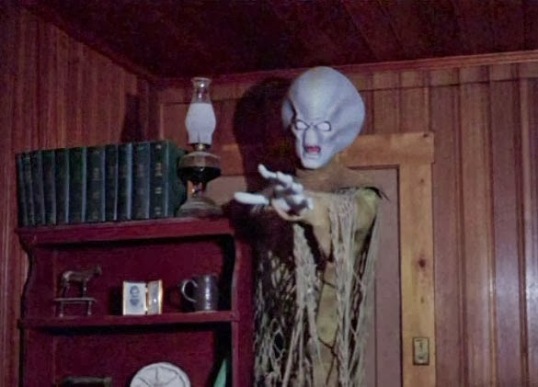
Without Warning (1980, dir by Greydon Clark, DP: Dean Cundey)

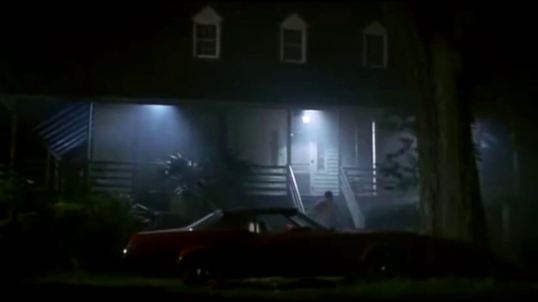
Friday the 13th (1980, dir by Sean S. Cunningham, DP: Barry Abrams)

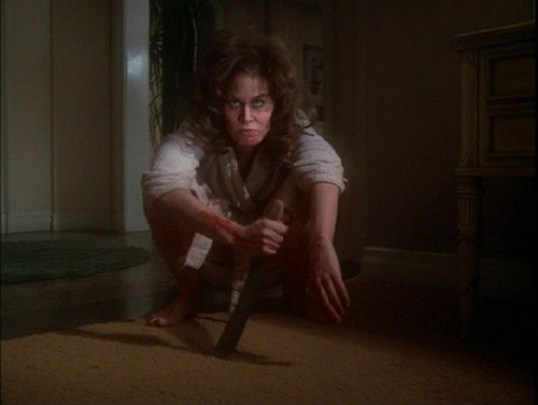
Maniac (1980, dir. William Lusting, DP: Robert Lindsay)

City of the Living Dead (1980, dir by Lucio Fulci, DP: Sergio Salvati)

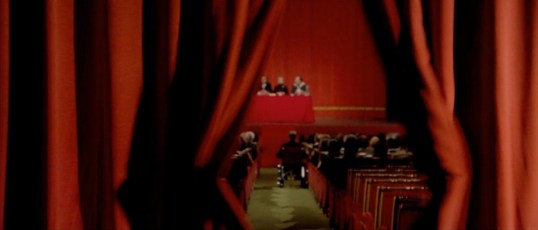
Dressed To Kill (1980, dir by Brian De Palma, DP: Ralf D. Bode)

Night of the Hunted (1980, dir by Jean Rollin)

The Shining (1980, directed by Stanley Kubrick, DP: John Alcott)

10 Shots From 10 Horror Films: 1975 — 1977


4 Or More Shots From 4 Or More Films is just what it says it is, 4 shots from 4 of our favorite films. As opposed to the reviews and recaps that we usually post, 4 Shots From 4 Films lets the visuals do the talking!

This October, I’m going to be doing something a little bit different with my contribution to 4 (or more) Shots From 4 (or more) Films.  I’m going to be taking a little chronological tour of the history of horror cinema, moving from decade to decade.

Today, we take a look at three very important years: 1975, 1976, and 1977!

10 Shots From 10 Films: 1975 — 1977

Deep Red (1975, dir by Dario Argento, DP: Luigi Kuveiller)

Trilogy of Terror (1975, dir by Dan Curtis. DP: Paul Lohmann)

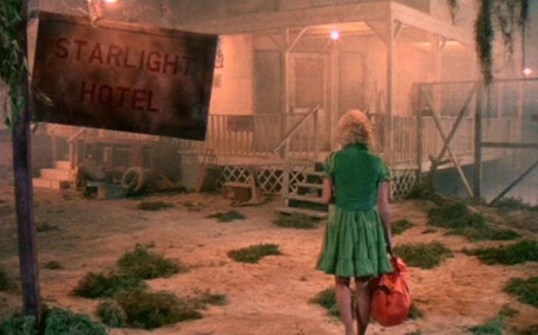
Eaten Alive (1976, dir by Tobe Hooper. DP: Robert Caramico)

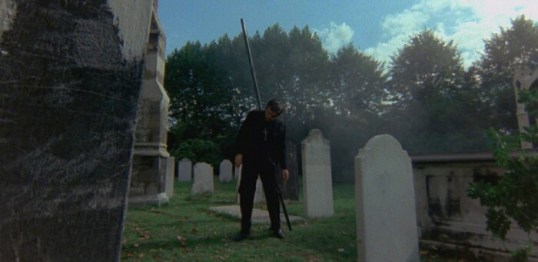
The Omen (1976, dir by Richard Donner, DP: Gilbert Taylor)

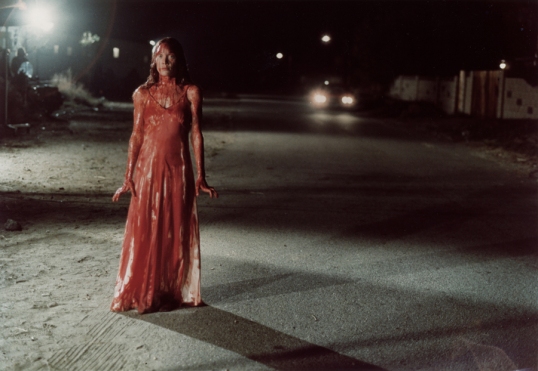
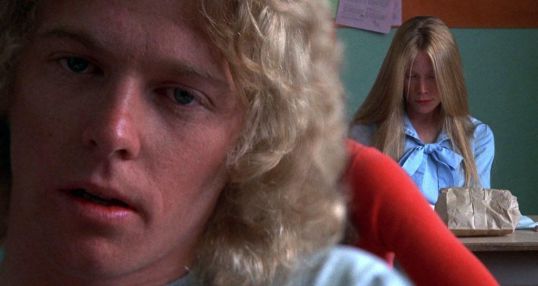
Carrie (1976, dir by Brian De Palma, DP: Mario Tosi)

Shock (1977, dir by Mario Bava, DP: Alberto Spagnoli)

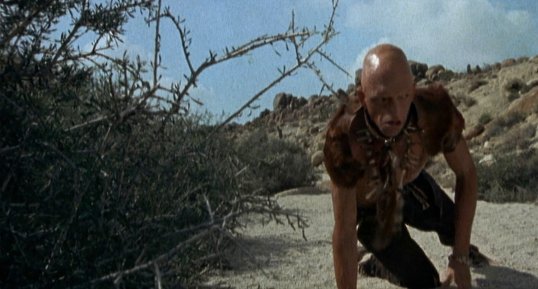
The Hills Have Eyes (1977, dir by Wes Craven, DP: Eric Saarinen)

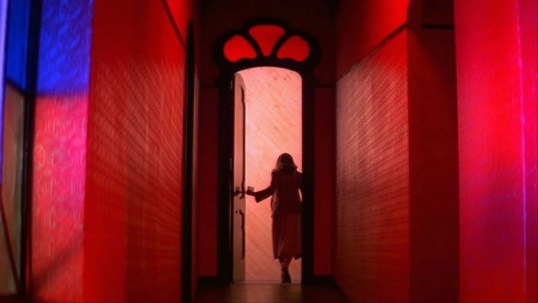
Suspiria (1977, dir by Dario Argento, DP: Luciano Tuvalia)

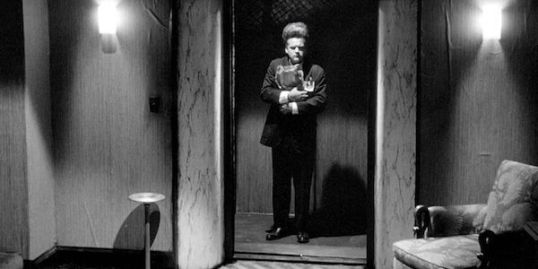
Eraserhead (1977, directed by David Lynch, DP: Frederick Elmes and Herbert Cardwell)

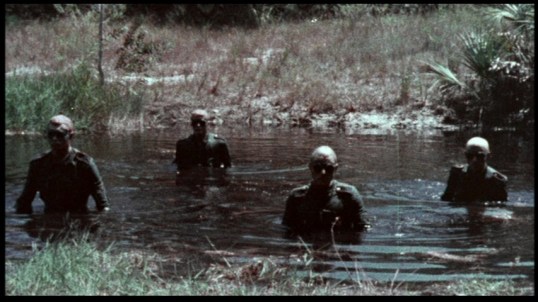
Shock Waves (1977, dir by Ken Wiederhorn, DP: Reuben Trane)

4 Shots From 4 Films: Special Brian De Palma Edition


4 Or More Shots From 4 Or More Films is just what it says it is, 4 shots from 4 of our favorite films. As opposed to the reviews and recaps that we usually post, 4 Shots From 4 Films lets the visuals do the talking!

Today is the birthday of Brian De Palma and that means that it is time for….

4 Shots From 4 Brian De Palma Films

Carrie (1976, dir by Brian De Palma, DP: Mario Tosi)

Dressed to Kill (1980, dir by Brian De Palma, DP: Ralf D. Bode)

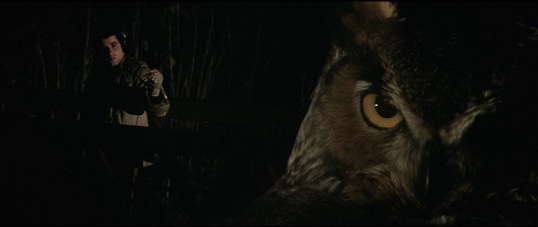
Blow Out (1981, dir by Brian De Palma, DP: Vilmos Zsigmond)

Scarface (1983, dir by Brian De Palma, DP: John A. Alonzo)

What Could Have Been: George Hamilton as Travis Bickle?


I was recently reading the IMDb trivia page for Martin Scorsese’s 1976 film, Taxi Driver. 

Taxi Driver is often held up as the being the ultimate New York horror story as well as being the quintessential Martin Scorsese/Robert De Niro collaboration.  In fact, the film is so identified with Scorsese, De Niro, and screenwriter Paul Schrader that it is easy to forget that it actually took a while for Scorsese and De Niro to become involved with the project.  Quite a few different directors showed interest in Schrader’s script before Scorsese signed on.  And, even though the role will always be associated with him, De Niro was not the only actor considered for the role of Travis Bickle.

That’s what brought me to the IMDb trivia page.  I wanted to see who else was considered for the role of Travis.  Here’s the list that I found: Jeff Bridges, Jack Nicholson, Dustin Hoffman, Warren Beatty, Burt Reynolds, Ryan O’Neal, Peter Fonda, Al Pacino, Jon Voight, Robert Blake, David Carradine, Richard Dreyfuss, Christopher Walken, Alain Delon, James Caan, Roy Scheider, Paul Newman, Marlon Brando, Martin Sheen, Elliott Gould, Alan Alda, and George Hamilton.  That’s quite a list!  And. for the most part, I don’t buy it for a second.

Don’t get me wrong.  It is known that Al Pacino was sent the script before Scorsese came on board.  And Scorsese himself has said that he offered the role to Dustin Hoffman.  (Hoffman says he turned down the role because Scorsese’s intensity freaked him out.)  Jeff Bridges was also a possibility and, if you read Schrader’s script and force yourself to forget about De Niro’s performance, you can actually imagine Bridges in the role.  I could also imagine a youngish Martin Sheen in the role.  He had just played Charlie Starkweather in Badlands so one can imagine him being considered for Travis.  Peter Fonda and Robert Blake seem possible as well.  Even David Carradine.

But some of the other names on that list …. Alain Delon?  Paul Newman?  Alan Alda?  GEORGE HAMILTON?

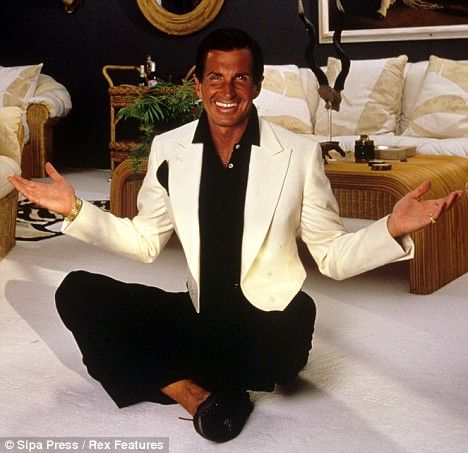
This George Hamilton?

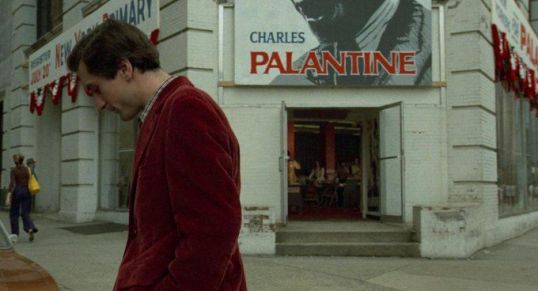
Listen, I like George Hamilton.  He’s a good comedic actor.  And I know that there were a lot of directors who took a look at Paul Schrader’s script and I also know that some of Travis’s most iconic moments — like the whole “You talkin’ to me?” scene — were improvised by De Niro and were not in the original script.  Taxi Driver could have gone in a lot of different directions.  But I’m just going to say right now that there is no way that George Hamilton was ever considered for the role of Travis Bickle.  It’s totally possible that Hamilton was considered for another role in the film.  I could imagine him as the presidential candidate, Charles Palantine.  I could also imagine him in the role of Tom, Palantine’s campaign manager.  Perhaps he was offered one of those roles and someone, reading that George Hamilton had turned down Taxi Driver, got it into their head that he was considered for Travis.

Or maybe …. someone just made the whole thing up.  I enjoy the IMDb trivia pages but I’ve come across a lot of information that simply is not true.  Despite what the page for the original Halloween says, I refuse to believe that John Belushi was considered for the role of Dr. Loomis.  For that matter, I also refuse to believe that Bill Murray was a runner-up for the role of Han Solo in Star Wars.  Sorry, IMDb trivia people.  I just don’t buy it.

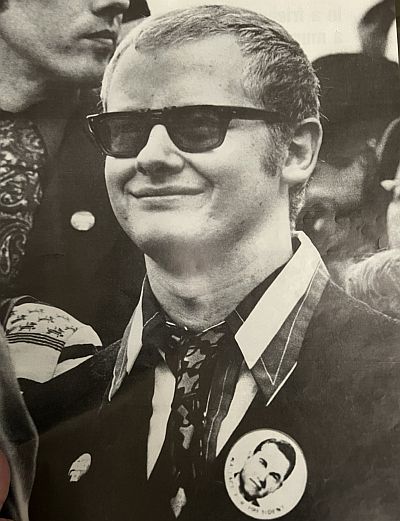
Arthur Bremer

Here’s what we do know.  Paul Schrader was originally inspired to create the character of Travis Bickle by Arthur Bremer, a non-descript 21 year-old Midwesterner who, in 1972, shot and nearly killed presidential candidate, George Wallace.  After the shooting, police turned up a diary in which Bremer wrote about his desire to be someone.  According to Bremer, he shot Wallace not as a political act but because he wanted to be famous.  Schrader later said that, while writing the script, the story became less about Bremer and more about Schrader’s own social isolation.

The script was optioned by the production team of Tony Bill and Julia and Michael Phillips.  They had just recently produced the Oscar-winning The Sting.  Originally, Tony Bill wanted to make his directorial debut with the film.  That was when the script was sent to Al Pacino.  Pacino turned down the role, reportedly because he didn’t want to work with a first-time director.  (Tony Bill, a former actor, later directed several films, most of which appeared to be taking place in a totally separate universe from Schrader’s vision of urban Hell.)

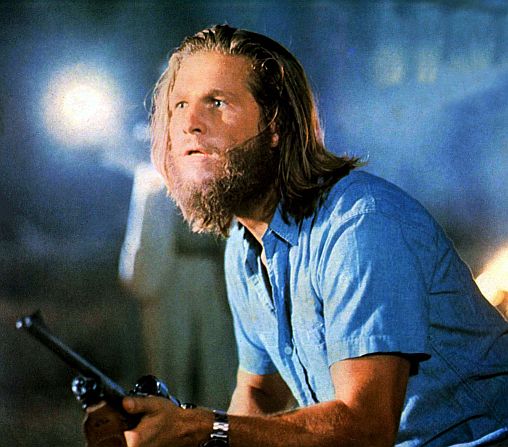
The script was eventually read by Brian De Palma, who voiced an interest in directing the film.  DePalma’s choice for the role of Travis Bickle?  Jeff Bridges.

Today, it might be hard to imagine the affable, laid-back Jeff Bridges as Travis Bickle but, if you read the script, it’s easy to see why De Palma considered him for the role.  Travis was written as being someone from the middle of the country, someone who was out-of-place in New York City.  Travis was meant to be lost in New York.  (Though Travis does say that he’s from the midwest in Scorsese’s film, Robert De Niro himself remains the prototypical New Yorker.)  At least initially, Bridges would have been a bit less obviously unstable than De Niro.  As good as Taxi Driver is, it always seems a bit strange that Betsy would agree to go out with De Niro’s Travis but it’s a bit easier to believe that she would take a chance on Jeff Bridges, with his charming smile and likable manner.  Bridges’s descent into madness would have been all the more devastating because he was such an outwardly affable presence.  I’m not saying it would have worked but I can still see what De Palma would have been going for in his version of Taxi Driver.

That said, De Palma did not make Taxi Driver.  He instead decided to do Carrie.  A young Steven Spielberg briefly showed interest in Taxi Driver (the mind boggles) before decided to do Jaws instead.  Eventually, after being introduced to Schrader by De Palma, Martin Scorsese agreed to direct the film.  After getting turned down by Dustin Hoffman, Scorsese offered the role to De Niro.

As for the rest of the cast, Rock Hudson would have been an interesting choice for the role of Sen. Palantine but he turned down the script because he was busy with a television show.  There was also some talk of casting former New York Mayor John Lindsay in the role but, in the end, the role was given to a writer named Leonard Harris.

The role of Tom was originally offered to Harvey Keitel.  Because Keitel wanted to play the pimp, Albert Brooks ended up as Tom.  Because there wasn’t much to Tom in the script, it was felt that, as a comedian, Brooks could bring some sort of life to the character.  Indeed, Brooks reportedly improvised the majority of his lines.

Despite the fact that producer Julia Phillips wanted to cast Farrah Fawcett in the role, Martin Scorsese selected Cybil Shepherd for the role of Betsy.  If you believe the IMDb, Meryl Streep was offered the role but turned it down.  (If I sound skeptical, it’s because Streep hadn’t even made her film debut at the time that Taxi Driver went into production.)  Glenn Close, Jane Seymour, and Susan Sarandon auditioned for the role.  Mia Farrow reportedly wanted the role but was turned down by Scorsese.

As everyone knows, Jodie Foster played the 13 year-old prostitute, Iris, in Taxi Driver.  A man named John Hinckley, Jr. was so obsessed with Foster’s performance that he went the same route as Travis Bickle and attempted to assassinate the president in an effort to impress her.  Foster, however, was only picked after Scorsese saw several up-and-coming actresses.  Reportedly, due to the success of The Exorcist, Linda Blair was seriously considered for the role.  Tatum O’Neal was also considered, after winning her Oscar for Paper Moon.  Scorsese came close to casting Melanie Griffith but then Tippi Hedren read the script and nixed the idea.  Among the others who supposedly read for Iris: Mariel Hemingway, Jennifer Jason Leigh, Heather Locklear, Kristy McNichol, Carrie Fisher, Ellen Barkin, Kim Basinger, Geena Davis, Michelle Pfeiffer, Brooke Shields, Debra Winger, Rosanna Arquette, Bo Derek, and Kim Cattrall.
Finally, actor George Memmoli was injured on the set of another film, which led to Scorsese playing the passenger who talks to Travis about murdering his wife.

In the end, the right director and the right cast were selected and Taxi Driver became a classic of urban paranoia.  Still, it’s always fun to play What If.  On Earth-2, someone is watching Jeff Bridges, Rock Hudson, Jane Seymour, and Melanie Griffith in Brian De Palma’s Taxi Driver.  And, on Earth-3, George Hamilton is polishing his Oscars and thinking about how playing Travis Bickle changed his life.

Horror Scenes That I Love: The Hypnosis Scene From Sisters


In this seriously creepy scene from the 1972 film Sisters, a reporter (Jennifer Salt) is hypnotized and made to believe that she was once a conjoined twin, attached to a psychotic model (played by Margot Kidder).  The scene was directed by Brian De Palma.

Enjoy!


4 Shots from 4 Brian De Palma Films: The Phantom of Paradise, Carrie, Dressed to Kill, Blow Out


4 Shots From 4 Films is just what it says it is, 4 shots from 4 of our favorite films. As opposed to the reviews and recaps that we usually post, 4 Shots From 4 Films lets the visuals do the talking.

Today, we honor the one and only Brian De Palma!

4 Shots From 4 Brian De Palma Films

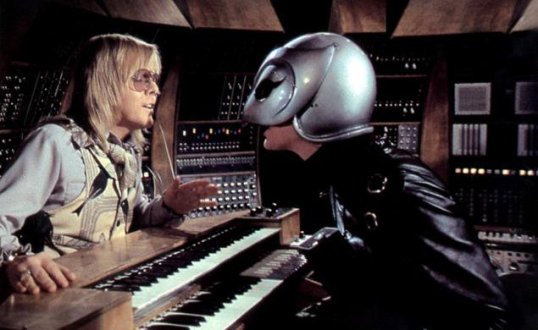
Phantom of Paradise (1974, dir by Brian De Palma)

Carrie (1976, dir by Brian De Palma)

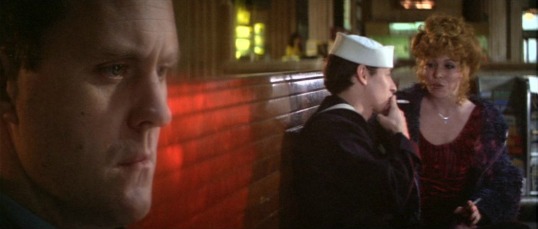
Dressed To Kill (1980, dir by Brian De Palma)

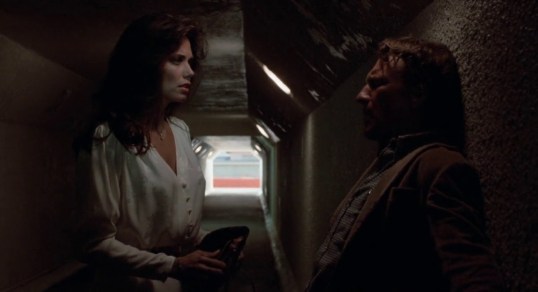
Blow Out (1981, dir by Brian De Palma)

4 Shots From 4 Films: Special Brian De Palma Edition


4 Shots From 4 Films is just what it says it is, 4 shots from 4 of our favorite films. As opposed to the reviews and recaps that we usually post, 4 Shots From 4 Films lets the visuals do the talking!

Today, we wish a happy 80th birthday to director Brian De Palma with….

4 Shots From 4 Films

Carrie (1976, dir by Brian De Palma)

Scarface (1983, dir by Brian De Palma)

Body Double (1984, dir by Brian De Palma)

The Untouchables (1987, dir by Brian De Palma)

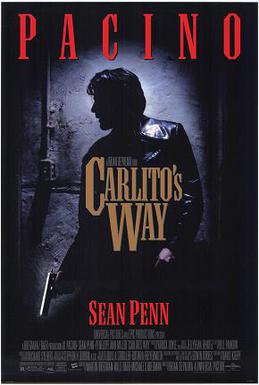
An Offer You Can Do Whatever You Want With #21: Carlito’s Way (dir by Brian De Palma)


It’s been a week so I guess it’s time for me to get back to reviewing mob movies, right?  Usually, I do my best not to take such a long break in-between reviewing films — especially when it’s a themed-series of reviews — but I just got busy this week.  It happens.  Luckily, even when we get busy, the movie’s remain ready to be watched and reviewed.

Last week, I reviewed Scarface and The Untouchables, two gangster films from Brian De Palma.  It only seems right to return to my look at the gangster genre by considering another Brian De Palma film.  Released in 1993, Carlito’s Way reunites De Palma with Scarface’s Al Pacino.  In Scarface, Pacino played a Cuban named Tony who was determined to get into the drug trade.  In Carlito’s Way, Pacino plays a Puerto Rican named Carlito who is desperate to escape the drug trade.

Carlito’s Way opens with Carlito getting released from prison in 1975.  He’s spent the past five years serving time on a drug conviction.  Originally, Carlito was sentenced to 30 years but his friend and attorney, David Kleinfeld (Sean Penn), managed to get the conviction thrown out on a technicality.  Now a free man, Carlito finds himself torn between two options.  He can either get involved, once again, in the drug trade or he can go straight.  Returning to his life of crime will mean once again doing something that he’s good at but it will also require him to deal with people who he can’t stand, like the sleazy Benny Blanco (John Leguizamo).  Going straight will mean escaping from New York with his girlfriend, a dancer named Gail (Penelope Ann Miller).  The problem is that it takes money to start a new life and there are people in New York who have no intention of allowing Carlito to leave.

Of the three De Palma-directed gangster films that I’ve recently watched, Carlito’s Way is probably the weakest.  De Palma has always been a frustratingly uneven director and Carlito’s Way contains some of his worst work and some of his best.  For instance, there’s a brilliant sequence where Carlito goes to a hospital to get revenge on someone who betrayed him and it is perhaps one of DePalma’s best set pieces.  But then there’s other scenes where DePalma’s trademark style feels rather empty and counterproductive.  Just when you’re starting to sympathize with Carlito’s predicament, DePalma will suddenly toss in a fancy camera trick and remind you that you’re just watching a film and that Carlito Brigante is just a character in that film.  That technique worked well in the satiric Scarface and the mythological Untouchables but it often feels unnecessary in Carlito’s Way.  

Al Pacino plays Carlito and, like DePalma’s direction, the end result is a bit uneven.  On the one hand, Pacino and Penelope Ann Miller have a likable chemistry, even if Carlito and Gail don’t really make sense as a couple.  On the other hand, this is one of those films where Pacino does a lot of yelling.  Sometimes it works and sometimes, it’s just too theatrical to be effective.  It’s hard not to compare Pacino’s performance here with his slyly humorous work in Scarface.  Tony Montana yelled because he genuinely enjoyed getting on people’s nerves.  The way that Tony expressed himself told us everything that we needed to know about the character.  Carlito yells because that was Al Pacino’s trademark at the time the film was made.

The best thing about the film is Sean Penn’s performance as David Kleinfeld.  Kleinfeld is one of the sleaziest character to ever appear in a movie and Penn seems to be having a good time playing him.  (Watching the film, I found myself wishing that Penn was willing to have that much fun with all of his roles.)  Penn doesn’t make Kleinfeld into a straight-out villain.  Instead, he portrays Kleinfeld as being a somewhat nerdy guy who thought it would be fun to pretend to be a gangster and who has snorted too much cocaine to understand the amount of trouble that he’s brought upon himself.  Just check out Penn in the scene where he’s dancing at a disco.  There’s a joy to Penn’s performance in Carlito’s Way that you typically don’t see from him as an actor.  He’s actually fun to watch in Carlito’s Way.

It’s a flawed film but fortunately, the movie’s good moments are strong enough to help carry the audience over the weaker moments.  The movie often threatens to collapse under the weight of its own style but it seems like whenever you’re on the verge of giving up on the film, De Palma’s kinetic camerawork will calm down enough to allow you to get at least mildly invested in Carlito’s predicament or Sean Penn’s amoral dorkiness will create an amusing moment and you’ll think to yourself, “Okay, let’s keep giving this a chance.”  Carlito’s Way may not be an offer that you can’t refuse but it’s still fairly diverting.

Previous Offers You Can’t (or Can) Refuse:

  1. The Public Enemy
  2. Scarface (1932)
  3. The Purple Gang
  4. The Gang That Could’t Shoot Straight
  5. The Happening
  6. King of the Roaring Twenties: The Story of Arnold Rothstein 
  7. The Roaring Twenties
  8. Force of Evil
  9. Rob the Mob
  10. Gambling House
  11. Race Street
  12. Racket Girls
  13. Hoffa
  14. Contraband
  15. Bugsy Malone
  16. Love Me or Leave Me
  17. Murder, Inc.
  18. The St. Valentine’s Day Massacre
  19. Scarface (1983)
  20. The Untouchables

4 Shots From 4 Films: Carrie, God Told Me To, The House With Laughing Windows, The Omen


4 Shots From 4 Films is just what it says it is, 4 shots from 4 of our favorite films. As opposed to the reviews and recaps that we usually post, 4 Shots From 4 Films lets the visuals do the talking!

This October, we’re using 4 Shots From 4 Films to look at some of the best years that horror has to offer!

4 Shots From 4 1976 Horror Films

Carrie (1976, dir by Brian De Palma)

God Told Me To (1976, dir by Larry Cohen)

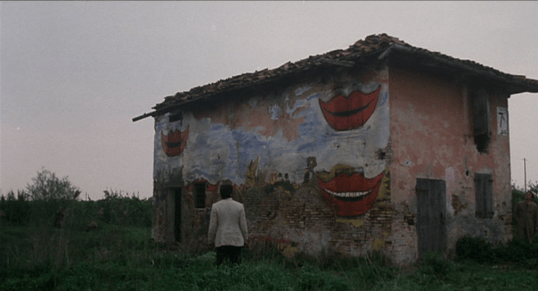
The House With Laughing Windows (1976, directed by Pupi Avati)

The Omen (1976, dir by Richard Donner)