Horror Book Review: Blood Meridian (by Cormac McCarthy)


“Whatever in creation exists without my knowledge exists without my consent.” — Judge Holden

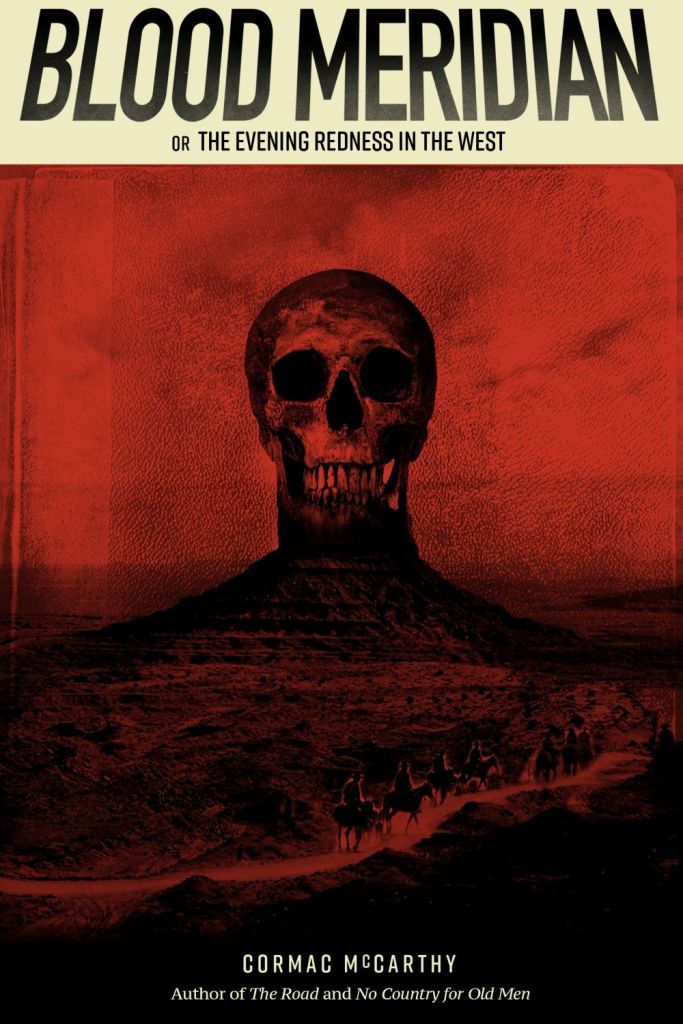
Blood Meridian initially appears to be a story set in the violent American West, but beneath the surface, it presents a profound exploration of evil—a world where history and cosmic darkness merge in a landscape drenched with blood and despair.

Cormac McCarthy’s novel defies easy classification. It follows the Kid, a teenage drifter who joins the ruthless Glanton gang of scalp hunters during the lawless 19th-century borderlands. Yet this story is not about heroism or conquest; rather, it reveals a brutal, merciless world governed by cruelty and cosmic malevolence.

No traditional heroes emerge here. Every character either inflicts horror or suffers it, trapped in an endless cycle of violence. The Kid moves passively through this brutal landscape, lacking the conviction or agency typical of Western protagonists. This moral ambiguity immerses readers in a narrative saturated by horror at every turn.

Violence permeates the novel—not merely through vivid depictions of scalping and massacres but as a fundamental force governing existence itself. Violence shapes life’s fragile and transient nature. Spilled blood binds the characters and marks a universe where death and cruelty endure indefinitely. The visceral portrayal underscores violence as a relentless ritual as pervasive and elemental as the landscape itself.

At the violent core stands Judge Holden—monstrous and compelling. His towering, hairless, albino form immediately signals his unnaturalness: massive, lacking body hair, and displaying a blank, eerily calm expression that can swiftly shift into chilling ferocity. This physical otherness aligns him with mythic terrors that transcend humanity.

Holden’s vast intellect spans languages, science, and philosophy, making him appear nearly godlike. Yet his worldview exalts war and violence as the universe’s ultimate realities. He declares, “war is god,” and insists everything exists only under his knowledge and consent. He casts violence as the ultimate power and true order, positioning himself both as agent and embodiment of these forces.

He bears striking resemblance to the archons of Gnostic thought—malevolent cosmic rulers who imprison humanity in suffering and ignorance. Holden’s bald, pale form and inscrutable nature make him a living symbol of the universe’s cold indifference to human pain and violence. He embodies cosmic cruelty and indifferent fate, physically manifesting the harsh, uncaring forces shaping mankind’s brutal destiny.

Holden shrouds the narrative with cosmic dread. His mysterious origins, command over knowledge and power, and seeming invincibility elevate him beyond mere man. He becomes an embodiment of eternal evil and incomprehensible cosmic forces that dominate the novel’s bleak universe.

The desert landscape intensifies this cosmic horror. It is not mere backdrop but a symbol of a universe indifferent to life and moral distinctions. Traditional binaries of good and evil dissolve into endless cycles of destruction. Mercy and justice vanish, replaced by an uncaring void that swallows hope and meaning. The environment thus anchors the story’s existential dread.

The Kid’s journey reveals the story’s psychological core—his slow destruction of innocence. Initially barely aware of right and wrong, he sinks deeper into the Gang’s savagery. The line between victim and perpetrator blurs until innocence disappears. This loss exposes a deeper horror: the self’s annihilation through human cruelty.

McCarthy’s prose reflects this mythic and cosmic scale. His dense, biblical cadence challenges readers but deepens the story’s epic tone. Sparse punctuation and sweeping descriptions evoke a vast, harsh world that feels inevitable and overwhelming. This rigorous style immerses readers in a mood of doom and fatalism, amplifying the narrative’s grim vision.

Philosophically, Blood Meridian meditates on timeless cosmic evil. Holden transcends mere antagonist status to become a metaphysical force of destruction, both ancient and eternal. The novel’s final scenes suggest this cosmic power will forever govern human suffering and violence.

The novel echoes ancient philosophies that portray evil as pervasive and intrinsic. Violence weaves into existence’s fabric, turning the universe into a dark battleground where malevolent forces prevail unchecked. The text confronts complex themes of fate, power, and the buried truths beneath history’s surface.

Seen holistically, Blood Meridian transcends its Western roots to emerge as a raw chronicle of violence, evil, and cosmic dread. It offers no solace or redemption—only exposure to a primal darkness where humanity’s basest impulses attain mythic significance.

This potent combination of brutal historical insight, existential horror, and mythic storytelling delivers an intense, unforgettable literary journey. The novel stands as both a frontier saga and profound philosophical inquiry into evil itself—forcing confrontation with humanity’s deepest darkness and the indifferent vastness of the cosmos.

By articulating these themes through complex narrative, striking symbolism, and demanding prose, McCarthy not only reconstructs the American West but also presents a timeless meditation on human nature and the universe—a work that challenges readers intellectually and viscerally in equal measure.

Horror Book Review: Blue World (by Robert R. McCammon)


“Even in a blue world filled with sorrow, the heart continues to seek love, light, and meaning beyond the darkness.”

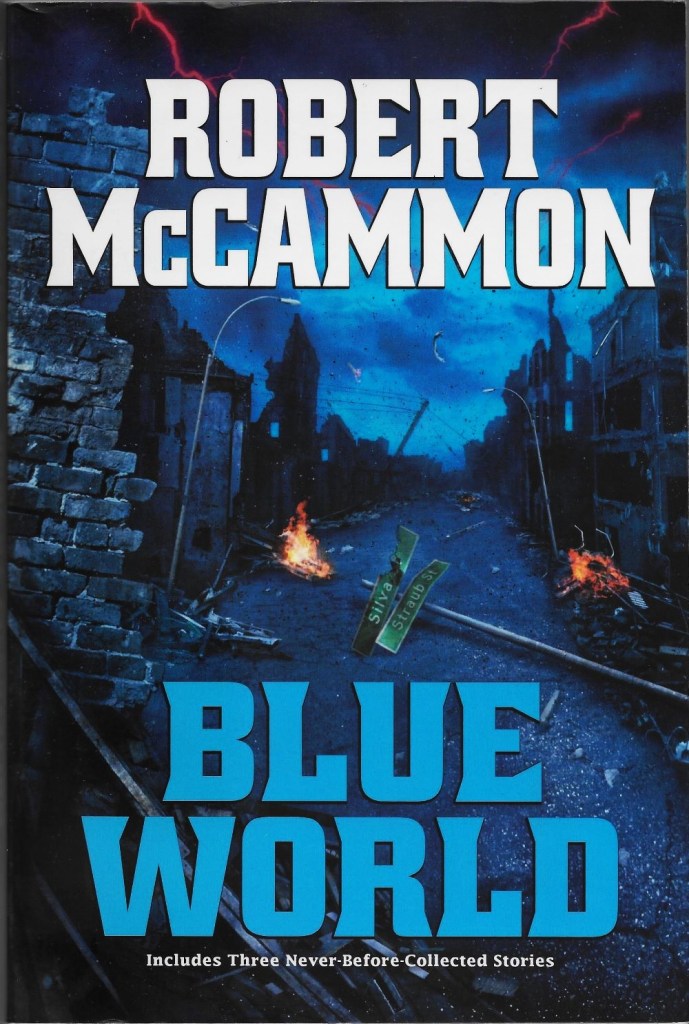
Robert R. McCammon’s Blue World is a captivating collection of short stories that showcases his mastery of horror, while also exploring themes that go beyond the usual genre boundaries. Originally published in 1990 and recently reissued by Subterranean Press, this collection serves as a natural companion to Stephen King’s Night Shift. Both authors start with classic horror ideas but make them their own through distinctive voices. For readers who enjoy stories that combine suspense and psychological depth with moments of quiet reflection, Blue World is a deeply rewarding read.

The collection features a wide range of stories that feel connected by McCammon’s strong sense of character and place. In many tales, ordinary settings—such as small towns and suburban streets—become stages for hidden dangers. For example, “He’ll Come Knocking at Your Door” starts off with a familiar neighborhood atmosphere that slowly reveals an undercurrent of menace. McCammon’s ability to turn the everyday into a place of suspense taps into a universal fear: that the safe and known can quickly become threatening.

Themes of change, survival, and the strain on the human mind surface in stories like “Strange Candy” and “I Scream Man!” His characters often face challenges that test not just their bodies, but their minds and morals. McCammon skillfully combines moments of fast-paced action with quieter, thoughtful passages, which make the terror hit deeper because we connect with the characters on an emotional level.

“Night Calls the Green Falcon” stands out for its creative blend of horror and nostalgia. It tells the story of a down-on-his-luck actor caught in the pursuit of a serial killer, echoing the style of old adventure serials with cliffhanger scenes. This story reveals McCammon’s talent for mixing different genres in fresh ways without losing emotional depth.

The most distinct story in the collection is the title novella, “Blue World.” Unlike the other stories, it steps away from supernatural horror and focuses on a very human and emotional tale. It follows a priest who falls in love with a porn star, and both become targets of an obsessed fan. McCammon uses this story to explore themes of love, faith, and redemption, diving into moral and emotional complexities rather than scares or ghosts.

This change in tone creates a thoughtful space within the collection, inviting readers to reflect on themes that contrast with the fear and darkness in other tales. While most stories rely on supernatural or psychological horror, “Blue World” confronts the dangers and redemption found in real human relationships, showing a different but equally compelling side of McCammon’s storytelling.

McCammon’s writing throughout is vivid and sensory, pulling readers into each story’s environment. Whether describing the sweaty tension of summer in “Yellowjacket Summer” or the bleak landscapes of “Something Passed By,” the settings are tangible and emotionally charged. This helps both the horror and the personal stories feel authentic and immediate.

Across the collection, McCammon’s characters stand out because they are fully realized people rather than simple victims or villains. They grapple with their fears and flaws in ways that feel realistic and relatable. Their struggles add psychological weight to the stories, making themes of loss, survival, and redemption more powerful.

Ultimately, Blue World is more than just a collection of horror stories—it is a showcase of Robert McCammon’s storytelling skill and emotional range. Much like King’s Night Shift, it offers a variety of stories from suspenseful shocks to deep, character-focused explorations. The inclusion of the novella “Blue World,” which steps outside the typical horror mold, adds richness to the collection and highlights McCammon’s ability to write compelling stories about human resilience and complexity.

For readers who enjoy a mix of supernatural thrills, strong characters, and thoughtful moments, Blue World provides a memorable journey through fear and hope, darkness and light. It stands as a significant work in modern horror literature and beyond, inviting readers to feel deeply as well as be scared. This collection proves that the craft of horror can encompass more than just fright—it can tell stories about the very heart of human experience.

Horror Book Review: ‘Salem’s Lot (by Stephen King)


“Within, walls continued upright, bricks met neatly, floors were firm, and doors were sensibly shut; silence lay steadily against the wood and stone of Hill House, and whatever walked there, walked alone.”
—Shirley Jackson, The Haunting of Hill House

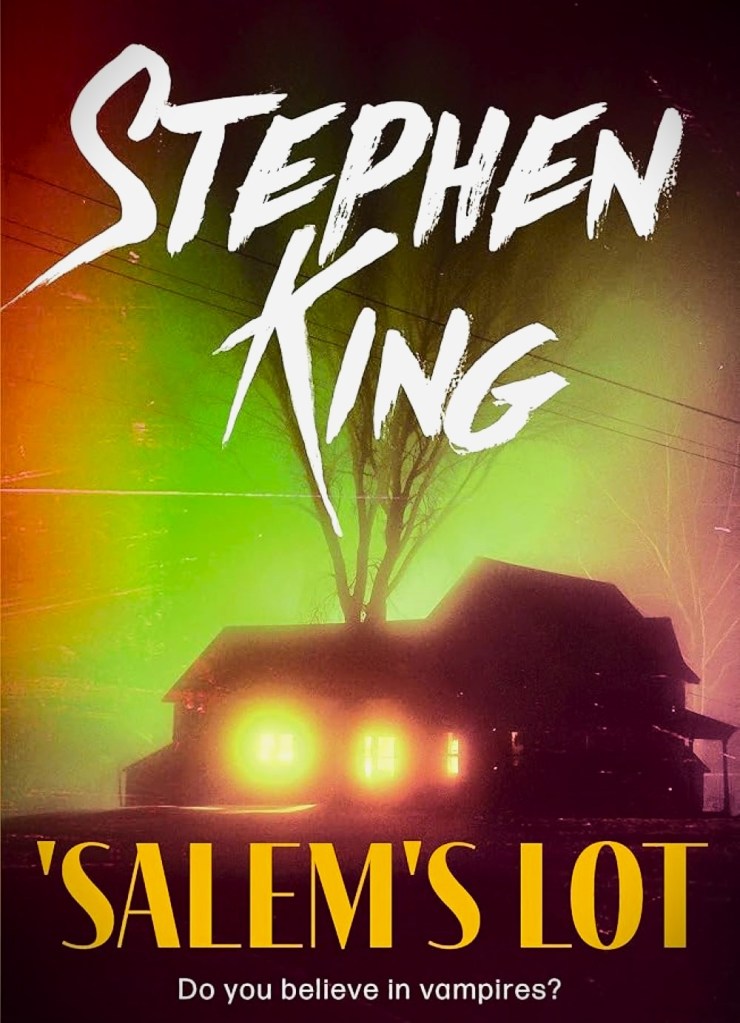
Stephen King’s Salem’s Lot opens with an unsettling and bold narrative choice. Instead of introducing the main characters or setting a conventional stage, the novel begins by showing two nameless figures—an older man and a younger companion, burdened by events already passed. These itinerants are fleeing a terrible evil, seeking refuge in a small Mexican village, suffused with mystery and dread. This brief but cryptic prologue hooks the reader immediately with a pervasive sense of unease and unanswered questions: who are these men, and what horror haunts them so far from home?

This unsettling beginning is not only risky but masterful. King, in just his second published novel, chooses to forgo straightforward exposition and instead promises that the narrative will move backward, retracing the dark events that led to this moment of flight and loss. The prologue casts a shadow into the past, preparing readers for a story where the darkness is already present and will only deepen.

Rewinding, the narrative places us in the small New England town of Jerusalem’s Lot—known to its inhabitants simply as “The Lot”—a quintessential small town in 1970s Maine. Here, Ben Mears, a novelist haunted by childhood trauma centered on the forbidding Marsten House, returns home with the intention of writing about the old mansion. The Marsten House is not just a setting; it is a malignant presence perched over the town like an ominous sentinel. Ben’s youth intrudes everywhere in his memory of that house—a place where something unknowable once touched him—and now, as an adult, he confronts both that past and the house again, its shadow casting unease over the town.

Ben isn’t the only arrival. Richard Straker sets up an antique shop, accompanied by his rarely seen partner, Kurt Barlow—an inscrutable figure whose very mention deepens the novel’s pervasive tension. King reveals Barlow’s presence slowly and indirectly, heightening the atmosphere without immediate confrontation.

King excels at immersing readers in the rhythms of small-town life. Through detailed observation of everyday routines, gossip, and personalities, he crafts a believable, textured community. Each townsperson—whether skeptical official, gossip-prone neighbor, child, or elder—is vividly realized, not as a simple archetype but as a living, breathing individual. Yet beneath this surface of normalcy lurks a pervasive darkness: secrets, resentments, and moral frailties accumulate like hidden mildew in the town’s corners.

In this, Salem’s Lot evokes the spirit of Peyton Place, the classic fictional small town where scandal and hypocrisy fester beneath neighborly facades. King’s Jerusalem’s Lot feels like a much darker cousin—a town where those faults and hidden sins once fodder for gossip become the very soil from which real, supernatural evil springs. While Peyton Place explored human failings within social dynamics, Salem’s Lot reveals how those failings create openings for Kurt Barlow’s vampiric menace. The town’s insularity, mistrust of outsiders, and collective denial become liabilities dooming it—not just morally, but existentially.

At the heart of this encroaching nightmare stands the Marsten House, a building elevated beyond mere backdrop into a living entity. Like Shirley Jackson’s Hill House, Richard Matheson’s Belasco House in Hell House, and King’s own later Overlook Hotel, the Marsten House is steeped in decades of violence and evil. Its walls seem to soak up past horrors; its windows serve as more than architectural features—they are eyes into the house’s dark soul. This physical presence is sinister and predatory, complicit in the nightmarish events it enables. To enter the house is to step into something corrupt and breathing, an organism as alive and malign as the vampire it conceals.

What makes Salem’s Lot especially powerful is how King integrates the supernatural into the texture of daily life. The fantastical elements do not feel imposed or alien but grow organically from the social dynamics, habits, and vulnerabilities of this small town. The horror is inevitable precisely because it grows from recognizable human weaknesses and communal blind spots. This fluid blending invites readers to experience terror as an intimate shattering of the ordinary, a disruption of the familiar.

Relationships anchor the emotional core of the narrative. Ben’s romance with Susan Norton, the steady wisdom of Matt Burke, the youthful courage of Mark Petrie—their humanity keeps the terror grounded and poignant. As vampirism spreads, these bonds are tested and shattered. Community, which once defined the town’s identity, fractures under suspicion and fear. Friends become threats; homes become prisons.

The looming Marsten House is a perfect emblem of this dual threat: a predator perched within the community itself. As Barlow turns neighbors into monsters, the house’s silent complicity looms ever larger. It is as much a character as any human, a sentinel feeding on the decay of place and spirit alike.

As the novel hurtles toward its climax, King heightens the tension with vivid, claustrophobic scenes inside the haunted mansion. The house’s corridors and rooms twist into traps, its atmosphere suffocating and oppressive. King’s mastery of sensory detail brings a visceral dimension to the horror, blending psychological terror with physical menace.

The conclusion returns to the somber tone of the prologue. Although some survive, the town is hollowed out—a ghostly husk abandoned to darkness. Evil is not eradicated but waits patiently, ready to thread its way back through the cracks. The cycle of horror, loss, and exile continues.

Stephen King’s unique strength in Salem’s Lot lies not only in his richly developed characters and finely drawn community but in how seamlessly he introduces supernatural horror into what reads like a real-time study of small-town life. The fantastical elements grow naturally from the social fabric, making the terror feel inevitable rather than contrived. This synthesis of realism and fantasy deepens the novel’s power.

King’s portrayal of Jerusalem’s Lot as a place rotting from within yet clinging to its veneer of normalcy offers a chilling echo of Peyton Place. But while Metalious’s town suffocated under scandal, Salem’s Lot is consumed by predation—the vampire feasting not only on blood but on the fractures of belonging and trust. It is both eerily familiar and profoundly alien: a place where monsters live not just in shadows, but in whispered suspicions and buried sins.

Through this blend of gothic haunted-house traditions, social critique, and psychological realism, Salem’s Lot endures as a masterpiece of horror. The Marsten House is not merely a setting but a sentinel, symbolizing accumulated evil watching over a doomed community. King’s novel terrifies not only with its monsters but with its intimate knowledge of how everyday life can harbor the seeds of nightmare beneath a calm surface.

A Book To Read This Weekend (6/6/25)


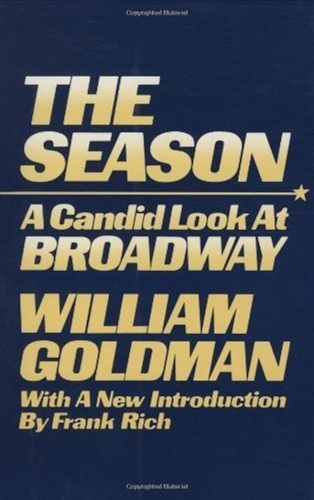
With the Tony Awards scheduled to be held and televised on Sunday, this weekend might be a good time to read William Goldman’s The Season.

First published in 1969, The Season was William Goldman’s very opinionated and very snarky look at the 1967-1968 Broadway season.  Best known as a screenwriter, Goldman took the money that he made from selling the script for Butch Cassidy and the Sundance Kid and spent a year going to Broadway show after Broadway show.  Many shows, he sat through multiple times.  The book features his thoughts on not just the productions but also the culture around Broadway.  Apparently, when the book was published, it was considered controversial because Goldman suggested that most Broadway critics played favorites and didn’t honestly write about the shows that they reviewed.  Goldman suggested that some performers were viewed as being untouchable while other worthy actors were ignored because they weren’t a part of the clique.  Today, that seems like common sense.  One need only look at a site like Rotten Tomatoes to see how pervasive groupthink is amongst film critics and also how carefully most reviews are written to ensure that no one loses access to the next big studio event.  In 1969, however, people were apparently a bit more naive about that sort of thing.

It’s an interesting book, especially if you’re a theater nerd like me.  That said, it’s also a bit of an annoying book.  There’s a smugness to Goldman’s tone, one that is actually present in all of Goldman’s books and essays and yes, aspiring screenwriters, that includes Adventures In The Screen Trade.  He clearly believed himself to be the smartest guy in the room and he wasn’t going to let you forget it.  It makes for a somewhat odd reading experience.  On the one hand, Goldman’s style is lively.  Goldman holds your interest.  On the other hand, there will be times when you’ll want to throw a book across the room.  When he hears two women talking about their confusion as to why they didn’t enjoy a show as much as they had hoped, Goldman describes walking up to them and offering to tell them.  It comes across as being very condescending.

That said, Goldman makes up for it in the chapters in which he explores some of the more troubled productions of the season.  His barbed dismissals of some of Broadway’s most popular performers still packs a punch and it remains relevant today as there are, to put it mildly, more than a few acclaimed performers who have been coasting on their reputations and their fandoms for more than a decade.  Goldman passed away in 2018.  One can only imagine what he would think of today’s celebrity-worshipping culture.

Finally, The Season does feature one beautiful chapter and it should be read by anyone who appreciates the character actors who carry movies and plays while the stars get all the credit.  Goldman’s look at play called The Trial of Lee Harvey Oswald features a powerful profile of actor Peter Masterson.  Goldman writes about a play that closed after 7 nights and which was not critically acclaimed but he turns the chapter into a celebration of truly good acting.  It’s the chapter that makes the rest of the book worth the trouble.

(Click here for last week’s Weekend Book!)

WHY NOT ME (by Lindsay Ireland) – Introducing Bradley’s Book Reviews!


I don’t read that often for recreational purposes. When I do read, it’s usually books about my favorite actors, actresses, directors, or movies in general. But every now and then, a book will pique my interest, and I’ll pick it up. Back in the late spring of 2024, my partner on the “This Week in Charles Bronson” podcast, Eric Todd, made me aware of a book called WHY NOT ME, a memoir from Lindsay Ireland, the niece of Jill Ireland and Charles Bronson. Eric had made contact with Lindsay and the two had some preliminary discussion about her appearing on the podcast. Eric told me that she shared stories of her own life, which included her spending summers as a child on the Vermont ranch of her famous aunt and uncle. As a lifelong Bronson fan, it seemed the book could offer some valuable insight into the life of my movie hero. I figured I could spend some time trudging through Lindsay’s personal life if it allowed me to get those valuable nuggets of information on Bronson and Ireland. I went ahead and bought WHY NOT ME and took it with me when my wife, Sierra, and I were on a relaxing weekend in Eureka Springs, Arkansas. I settled in on the balcony of the New Orleans Hotel, which overlooks a section of the beautiful downtown area and started reading. Here’s a quick summary of the book taken directly from Amazon:

“Lindsay Ireland enjoyed an idyllic childhood. She spent her summers in Vermont with her movie-star relatives where she rode horses, played detective with her cousin, and drank ice-cold lemonade. After the summer months, Lindsay returned to her loving family where her biggest worry was getting good grades in school. Then one day Lindsay noticed blood in her stool. Suddenly instead of carefree afternoons swimming in a lake or dressing her Barbie doll, Lindsay spent months in a sterile hospital room receiving intravenous fluids and, eventually, a life-saving ostomy surgery. At age eleven, Lindsay was diagnosed with her first autoimmune disease, and her life was never the same. In this candid memoir, Lindsay evolves from a girl living with an autoimmune disease into a young woman struggling to love a body that has continuously failed her, and, eventually, into a mother and wife who has fought to make herself visible despite her invisible illnesses.”

As alluded to above, I was interested in WHY NOT ME because I wanted to read Lindsay Ireland’s stories about Charles Bronson & Jill Ireland. And I was certainly in awe as Lindsay spoke of her times with her Uncle Charlie, Aunt Jill and her cousins in Vermont. Reading about my movie hero from her perspective was something I appreciated tremendously. But what really blew me away with this book is how connected I became to Lindsay’s personal life events, struggles and triumphs. Lindsay funneled her memories and writings through a lens of “the power of perspective.” It’s through this perspective that Lindsay speaks of how important her family has been to her over the years as she’s faced the fear of serious health issues in both her childhood and again as an adult. She spoke of the importance of making a good match with a therapist, and how that has helped her over the years. She spoke of how important it has been for her to learn to speak of the difficult things in her life, even if they make her uncomfortable. Lindsay’s strength in writing is her ability to share her own insecurities, the ways that she has been able to overcome them, and then make you believe that you can overcome them to! I was able to relate to so many of the things she shared, and I can see how much my own life could have improved if I had done these things earlier.

The one thing that probably stuck with me the most, however, is when Lindsay spoke of how hard it was when she was dealing with some very difficult issues in her life, yet she felt unseen and unheard, even from those people who loved her, wanted the best for her and had good intentions. This is where I decided I need to make the most improvement in my own life. It seems we can get so caught up in our own feelings and concerns that the needs of others, even those we love, can be neglected. Sadly, I know that there are times that I don’t show the concern, empathy or compassion that I should to other people. After finishing WHY NOT ME, I am determined to make sure that the people I love never feel unseen or unheard, especially my wife. I fail at times, mainly because I can be a smartass, and my wife might even roll her eyes or tease me if she reads this, but I truly never want her to feel unseen or unheard again.

If you want to hear more directly from Lindsay, or maybe even hear me or my buddy Eric bare our own souls, I’ve attached our podcast episode again for your viewing / listening pleasure!

Horror Novel Review: The Lifeguard by Richie Tankersley Cusick


I read 1988’s The Lifeguard earlier today.  It’s a fast read, which is always a good thing.

The book tells the story of teenage Kelsey, whose father has just died and whose mother is already getting ready to marry her new boyfriend, Eric.  Personally, I think mom is moving a bit too fast but then again, Eric’s rich and he invites Kelsey and her mom to spend the summer on Beverly Island.  Kelsey makes new friends.  She meets the people who might soon become her stepsiblings.  She develops a crush on two of her potential stepbrothers, shy Justin and the intimidating Neale.  And she gets involved in a potential murder when Beth, yet another of Eric’s children, disappears.  Did Beth drown or did she fall victim to the killer of Beverly Island?

This book was so silly.  Can Kelsey solve the mystery?  Even more importantly, can Kelsey decide which one of her future stepsibilings she wants to date?  Justin seems nice but Neal is so dark and mysterious.  Can Kelsey figure out why the mysterious old man keeps yelling at her?  Could he be the killer?  He seems like kind of an obvious choice but Kesley might as well go ahead and break into his boat just to be sure….

Apparently, this book is considered to be a bit of a cult classic, solely because of the cover.  And the cover is pretty cool.  The book itself is nothing special but I probably would have appreciated it more if I hadn’t already read countless old school YA books with the exact same plot.  I can only guess the R.L. Stine read The Lifeguard at some point.

This book also wins some points from me for having a ludicrously “happy” ending.  Everything works out even though, to be honest, nothing should have worked out.  Kelsey should have been traumatized for life and whatever plans her mom had to marry Eric should definitely have been cancelled!  Seriously, there’s some things that not even the best of relationships can survive!  That said, the ending was so over-the-top and — here’s that word again — silly, that I couldn’t help but appreciate it.