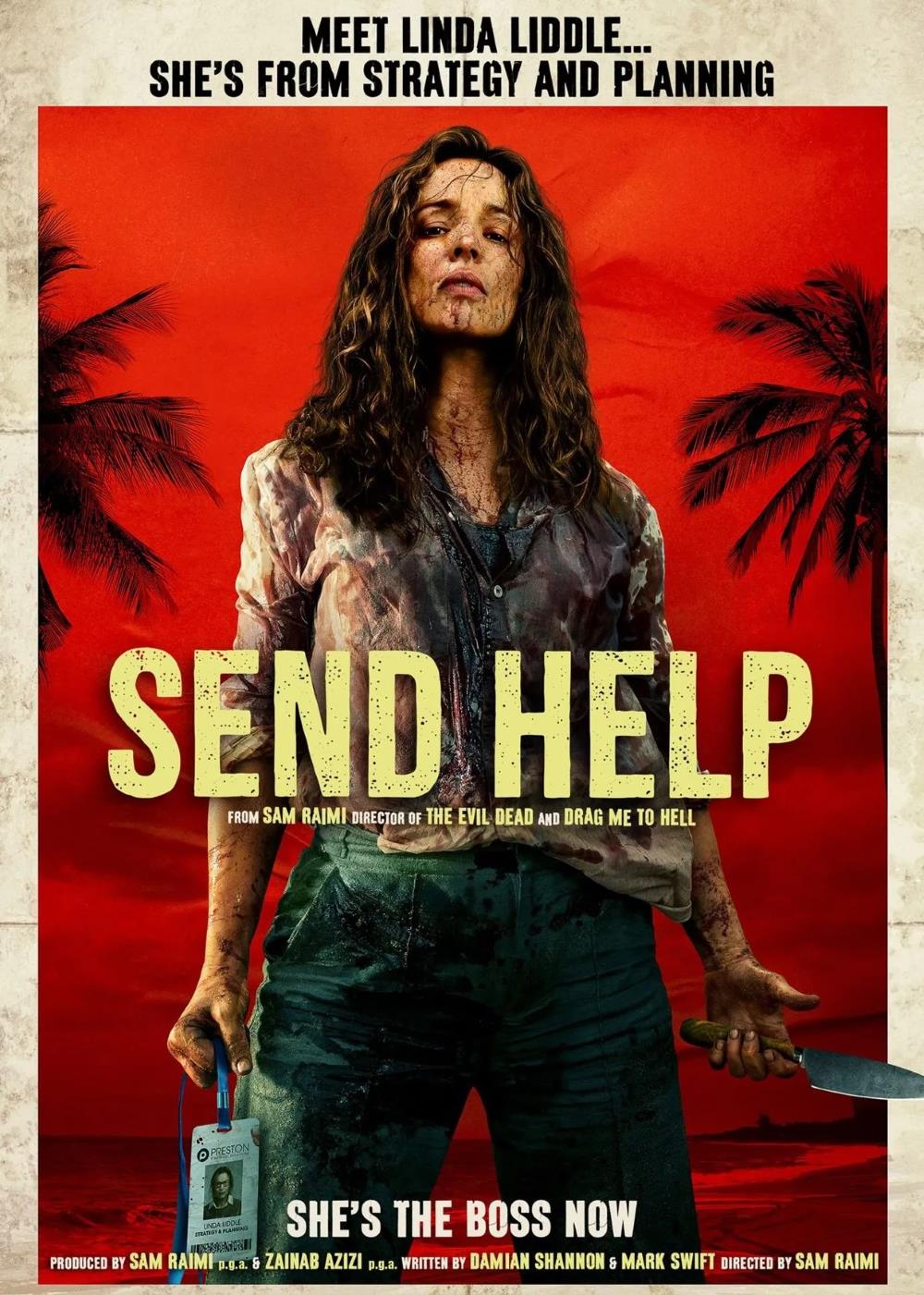
Review: Send Help (dir. by Sam Raimi)


“We’re not in the office anymore, Bradley.” — Linda Liddle

Sam Raimi’s Send Help is a nasty, funny, and surprisingly romantic little pressure cooker that strands two archetypes—the mousy doormat and the smug rich kid—on a desert island and then slowly turns the screws until the film’s “eat the rich” satire curdles into genuine horror. It is neither the triumphant, all‑timer comeback some fans might crave nor a lazy retread, but a confident mid‑budget horror‑comedy from a director who still knows exactly how to make an audience wince and cackle in the same breath.

Raimi and writers Damian Shannon and Mark Swift build Send Help on a simple but potent premise: Linda Liddle (Rachel McAdams), a meek corporate strategist and survival‑show obsessive, has been promised a promotion by her former boss, only for the new CEO—his son Bradley Preston (Dylan O’Brien)—to hand the job to his frat‑bro buddy Donovan and try to shuffle Linda into a dead‑end role. He finds her embarrassing and even comments on her smell; she swallows the humiliation until a company plane trip to a business summit ends in a violent crash, leaving Linda and Bradley as the only known survivors on a remote island in the Gulf of Thailand. Out here, Linda’s years of reality‑TV survival fandom and wilderness prepper skills suddenly matter, while Bradley’s only proven talents—golf, networking, and cruelty—are exposed as useless.

The first act, set in the office and on the doomed flight, plays as Raimi’s version of workplace horror, pitched somewhere between Drag Me to Hell’s moral fable and a nastier episode of The Office. McAdams leans into Linda’s awkwardness without turning her into a caricature, sketching a woman who has internalized decades of minor humiliations and found solace in parasocial survival fantasies. O’Brien, meanwhile, riffs on the archetype of the tech‑adjacent finance bro, weaponizing charm into something brittle and mean so that every “joke” lands like a micro‑aggression. Raimi shoots these early scenes with brisk, unfussy energy, reserving his more flamboyant camera moves for moments when Linda’s resentment starts to spike; the tonal hint is clear that the island will be where his signature style truly erupts.

Once the plane goes down, Send Help shifts into a survival thriller that gradually becomes a duel, and this is where the film finds its most compelling rhythm. Linda wakes up, builds a shelter, secures water, and—crucially—chooses to help the injured Bradley despite every reason not to, only to be met with the same entitled barking as in the office. She abandons him for days to bake in the sun and dehydrate, only to return at the brink and ration out water on her terms, turning what could have been a straightforward revenge fantasy into a looping series of power reversals. Raimi milks the island setting for physical comedy—failed fire‑starting, slapstick injuries, disgusting food gags—before undercutting the laughs with sudden spikes of cruelty and violence that remind you someone could easily die out here.

Raimi’s direction is where Send Help most clearly announces itself as his homecoming to horror. Even without demons or supernatural curses, he brings back the aggressive visual language: lunging crash zooms, canted angles that seem to tilt with Linda’s shifting moral compass, and kinetic tracking shots that whip around the camp as arguments turn into physical scuffles. The gore is heightened but not constant—geysers of blood appear at key turning points, functioning as exclamation marks on the escalating class war rather than wall‑to‑wall splatter. You can still feel the Three Stooges in the staging; even the nastiest beats often end on a punchline built around bodily fluids, improvised weapons, or the absurd indignity of almost dying because you slipped on a fish.

Tonally, the film walks a provocative tightrope between screwball rom‑com and survival horror, and your mileage will depend on how much whiplash you are willing to embrace. There are scenes that play almost like a twisted date movie—Linda cooking up makeshift dinners, trying to build a semblance of “home,” Bradley begrudgingly softening—only for the dynamic to swerve back into emotional manipulation or outright brutality. The film clearly flirts with the tradition of 1930s battle‑of‑the‑sexes comedies, but here the gender and class politics are sharper, and the potential for lethal violence never disappears. For some viewers, this constant oscillation will feel thrillingly unstable; for others, it may make the film’s ultimate stance on these characters’ relationship and culpability feel muddier than intended.

Narratively, Send Help borrows its class‑flipped survival template from the kind of satirical, wealth‑skewering stories where workers suddenly control the only skills that matter. The formerly “lowly” employee—in this case Linda rather than a bathroom janitor or ship’s cleaner—suddenly dictates the terms of existence, upending the old hierarchy once the corporate infrastructure is gone. Where broader ensemble satires linger on systemic critique, Raimi narrows the focus to a two‑hander and uses genre excess to explore how vengeance, desire, and survival blur together when the rules are erased. This narrower scope sometimes makes the class commentary feel schematic—you can spot each new reversal coming like a story beat in a screenwriting manual—but it also gives McAdams and O’Brien ample room to shade their roles.

Performance‑wise, McAdams is the film’s anchor and secret weapon. She charts Linda’s evolution from shy, apologetic office drone to ruthless island operator without losing sight of the character’s essential decency, so that her darker choices land as both cathartic and unsettling. O’Brien has the flashier arc in some ways, modulating Bradley from cartoonish jerk to scared, dependent man‑child and, eventually, something more morally ambiguous as he learns how to play the island power game himself. Their chemistry thrives on friction; the film is at its best when it lets them volley insults, bargains, and threats in long, increasingly twisted negotiations over food, shelter, and the possibility of rescue.

Where Send Help falters is largely in its final stretch, where Raimi has to decide just how far he’s willing to push the “eat the rich” fantasy and what that means for Linda’s soul. Without spoiling specifics, the climax leans into brutal spectacle and a last‑minute moral turn that some may read as a cop‑out and others as a necessary corrective to pure revenge porn. The thematic through‑line—that capitalism warps everyone it touches and that power corrupts even the formerly powerless—is coherent enough, but a few late plot contrivances and cameo‑style appearances from supporting players feel more functional than organic.

Ultimately, Send Help plays like a spiritual cousin to Drag Me to Hell: a small, mean moral tale about how a single workplace injustice can metastasize into something monstrous once the trappings of civilization fall away. It may not reinvent survival horror or class satire, and viewers hoping for the wild supernatural invention of Evil Dead II or the operatic sweep of Spider‑Man 2 might find it comparatively contained. But as a brisk, roughly 100‑minute showcase for Raimi’s enduring flair, anchored by a terrific McAdams performance and a gleefully ugly sense of humor, it is a welcome return to the genre that made his name—and a reminder that sometimes the scariest demons are just your coworkers, stripped of HR and given a machete.

Some Thoughts On Today’s Oscar Nominations Announcement


gary loggins's avatarcracked rear viewer

I really don’t mean to sound like your cranky old Uncle Elmo, but….

Seriously, Academy, I understand you don’t give two shits about Hollywood history. You prove that year after year with your truncated ‘In Memoriam’ segment, omitting far too many who’ve contributed to your industry. Last year, it was (among others) Don Gordon, Skip Homeier, Tobe Hooper, and Anne Jeffreys; the year before Gloria DeHaven, Madeleine LeBeau, William Schallert, Robert Vaughn… I get it. You’ve got to save time for those great “comedy” bits that Bob Hope wouldn’t touch with a ten-foot ski pole and lame musical production numbers, not to mention giving time for everyone to make their obligatory political statements. That’s why I put so much time and effort into my own yearly ‘In Memoriam’ tributes, so those you give short shrift to won’t be forgotten.

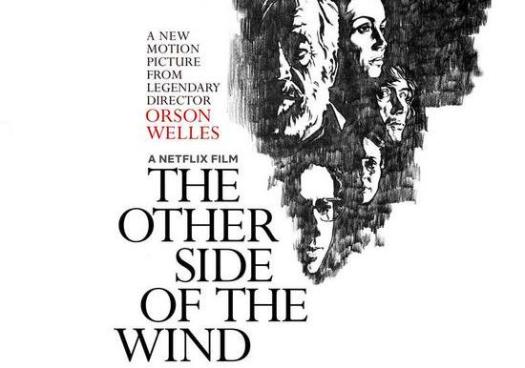
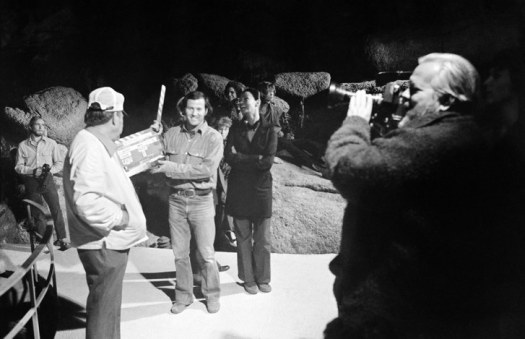
Orson Welles’ “The Other Side of the Wind”

But to completely…

View original post 394 more words

The Boston Society Of Film Critics Honors If Beale Street Could Talk and Lynne Ramsay!


Earlier today, the Boston Society of Film Critics announced their picks for the best of 2018.  Along with selecting If Beale Street Could Talk as best picture, they also gave best director to You Were Never Really Here‘s Lynne Ramsay.

Best Film: If Beale Street Could Talk
Runner-up: Shoplifters

Best Director: Lynne Ramsay (You Were Never Really Here)
Runner-up: Yorgos Lanthimos (The Favourite)

Best Actor: John C. Reilly (Stan & Ollie)
Runner-up: Ethan Hawke (First Reformed)

Best Actress: Melissa McCarthy (Can You Ever Forgive Me?)
Runner-up: Sakura Ando (Shoplifters)

Best Supporting Actor: Richard E. Grant (Can You Ever Forgive Me?)
Runners-up (tie): Brian Tyree Henry (If Beale Street Could Talk) and Steven Yeun (Burning)

Best Supporting Actress: Regina King (If Beale Street Could Talk)
Runner-up: J. Smith-Cameron (Nancy)

Best Ensemble: Shoplifters
Runner-up: The Favourite

Best Screenplay: Nicole Holofcener and Jeff Whitty (Can You Ever Forgive Me?)
Runner-up: Tamara Jenkins (Private Life)

Best Documentary: Won’t You Be My Neighbor?
Runner-up: Three Identical Strangers

Best Animated Film: Isle of Dogs
Runner-up: Ralph Breaks the Internet

Best Foreign Language Film: Shoplifters
Runner-up: Cold War

Best New Filmmaker: Bo Burnham (Eighth Grade)
Runner-up: Ari Aster (Hereditary)

Best Cinematography: Alfonso Cuarón (ROMA)
Runner-up: Lukasz Zal (Cold War)

Best Editing: Tom Cross (First Man)
Runner-up: Bob Murawski and Orson Welles (The Other Side of the Wind)

Best Original Score: Nicholas Britell (If Beale Street Could Talk)
Runner-up: Justin Hurwitz (First Man) and Jonny Greenwood (You Were Never Really Here)

The San Francisco Film Critics Circle Embraces Roma and Orson Welles!


The San Francisco Film Critics Circle announced their pics for the best of 2018 earlier today.  They picked Roma for Best Picture and they also rightfully honored Orson Welles for his work on The Other Side of the Wind.

Check out a list of their nominees here and check out the winners below!

Best Picture: ROMA

Best Director: Spike Lee (BlacKkKlansman)

Best Actor: Ethan Hawke (First Reformed)

Best Actress: Melissa McCarthy (Can You Ever Forgive Me?)

Best Supporting Actor: Michael B. Jordan (Black Panther)

Best Supporting Actress: Regina King (If Beale Street Could Talk)

Best Original Screenplay: Paul Schrader (First Reformed)

Best Adapted Screenplay: Charlie Watchel, David Rabinowitz, Kevin Willmott and Spike Lee (BlacKkKlansman)

Best Film Editing: Bob Murawski and Orson Welles (The Other Side of the Wind)

Best Cinematography: Alfonso Cuarón (ROMA)

Best Production Design: Hannah Bleacher (Black Panther)

Best Foreign Language Film: ROMA

Best Animated Feature: Spider-Man Into the Spider-Verse

Best Documentary: Won’t You Be My Neighbor?

Marlin Riggs Award (for courage & vision in the Bay Area film community): Boots Riley (Sorry to Bother You)

Special Citation Award (for and under-appreciated independent film): The Endless – a genre-bending story of emotionally estranged brothers starring and directed by Justin Benson and Aaron Moorhead


The San Francisco Film Critics Have A Favourite


On Friday, the San Francisco Film Critics Circle announced their nominations for the best of 2018!  Leading the way with 9 nominations: The Favourite!

Winner will be announced on Sunday, December 9th.  Here are the nominations:

Best Picture

“BlacKkKlansman”
“The Favourite”
“First Reformed”
“If Beale Street Could Talk”
“Roma”

Best Director

Alfonso Cuarón, “Roma”
Barry Jenkins, “If Beale Street Could Talk”
Spike Lee, “BlacKkKlansman”
Yorgos Lanthimos, “The Favourite”
Paul Schrader, “First Reformed”

Best Actor

Christian Bale, “Vice”
Willem Dafoe, “At Eternity’s Gate”
Ethan Hawke, “First Reformed”
Rami Malek, “Bohemian Rhapsody”
Viggo Mortensen, “Green Book”

Best Actress

Yalitza Aparicio, “Roma”
Toni Collette, “Hereditary”
Olivia Colman, “The Favourite”
Lady Gaga, “A Star is Born”
Regina Hall, “Support the Girls”
Melissa McCarthy, “Can You Ever Forgive Me?”

Best Supporting Actor

Mahershala Ali, “Green Book”
Adam Driver, “BlacKkKlansman”
Richard E. Grant, “Can You Ever Forgive Me?”
Michael B. Jordan, Black Panther”
Russell Hornsby, “The Hate U Give”

Best Supporting Actress

Amy Adams, “Vice”
Regina King, “If Beale Street Could Talk”
Thomasin McKenzie, “Leave No Trace”
Emma Stone, “The Favourite”
Rachel Weisz, “The Favourite”

Best Screenplay, Original

Bo Burnham, “Eighth Grade”
Alfonso Cuarón, “Roma”
Deborah Davis, Tony McNamara, “The Favourite”
Adam McKay, “Vice”
Paul Schrader, “First Reformed”

Best Screenplay, Adapted

Ryan Coogler, Joe Robert Cole, “Black Panther”
Debra Granik, Anne Rosellini, “Leave No Trace”
Nicole Holofcener, Jeff Whitty, “Can You Ever Forgive Me?”
Barry Jenkins, “If Beale Street Could Talk”
Charlie Wachtel, David Rabinowitz, Kevin Willmott, Spike Lee, “BlacKkKlansman”

Best Cinematography

Alfonso Cuaron, “Roma”
James Laxton, “If Beale Street Could Talk”
Robbie Ryan, “The Favourite”
Linus Sandgren, “First Man”
Lukasz Zal, “Cold War”

Best Original Score

Terence Blanchard, “BlacKkKlansman”
Nicholas Britell, “If Beale Street Could Talk”
Alexandre Desplat, “Isle of Dogs”
Ludwig Göransson, “Black Panther”
Justin Hurwitz, “First Man”

Best Production Design

Hannah Beachler, “Black Panther”
Eugenio Caballero, “Roma”
Fiona Crombie, “The Favourite”
Nathan Crowley, “First Man”
Mark Friedberg, “If Beale Street Could Talk”
Paul Harrod, Adam Stockhausen, “Isle of Dogs”

Best Film Editing

Tom Cross, “First Man”
Yorgos Mavropsaridis, “The Favourite”
Eddie Hamilton, “Mission: Impossible – Fallout”
Bob Murawski, Orson Welles, “The Other Side of the Wind”
Alfonso Cuarón, Adam Gough, “Roma”

Best Animated Feature

“Incredibles 2”
“Isle of Dogs”
“Mirai”
“Ralph Breaks the Internet”
“Spider-Man: Into the Spider-Verse”

Best Foreign Language Film

“Burning”
“Cold War”
“Let the Sunshine In”
“Roma”
“Shoplifters”

Best Documentary

“Free Solo”
“Minding the Gap”
“Shirkers”
“Three Identical Strangers”
“Won’t You Be My Neighbor?”

The Circle also announced the three finalists for their annual Special Citation Award for under appreciated independent films:

  • “Chained for Life,” Aaron Schimberg’s playfully penetrating satire about onscreen representations of disability
  • “The Endless,” a genre-bending story of emotionally estranged brothers starring and directed by Justin Benson and Aaron Moorhead
  • “Madeline’s Madeline,” Josephine Decker’s fluid collision of dream, reality and performance starring powerhouse newcomer Helena Howard

What A Long, Strange Trip It’s Been: Orson Welles’ THE OTHER SIDE OF THE WIND (Netflix 2018)


gary loggins's avatarcracked rear viewer

The day has finally arrived. November 2, 2018. I ordered a free trial of Netflix specifically so I could watch the completed version of Orson Welles’ final film, THE OTHER SIDE OF THE WIND . Welles worked on this project for over a decade, and the footage sat for decades more before finally being restored and re-edited. A film buff’s dream come true – perhaps. There were questions I needed answered. Was there enough salvageable material to make a coherent movie? Does it follow Welles’ vision? Would it live up to the hype? Was it worth the wait?

The answer: OH, HELL YEAH!!

Welles shot over ten hours of film, utilizing different film stocks (Super 8, 16mm, 35mm), switching back and forth from color to classic black and white, to create his movie, which is a documentary about the movie-within-the-movie’s director – a movie-within-a-movie-within-a-movie. It took six years (from 1970-76)…

View original post 719 more words