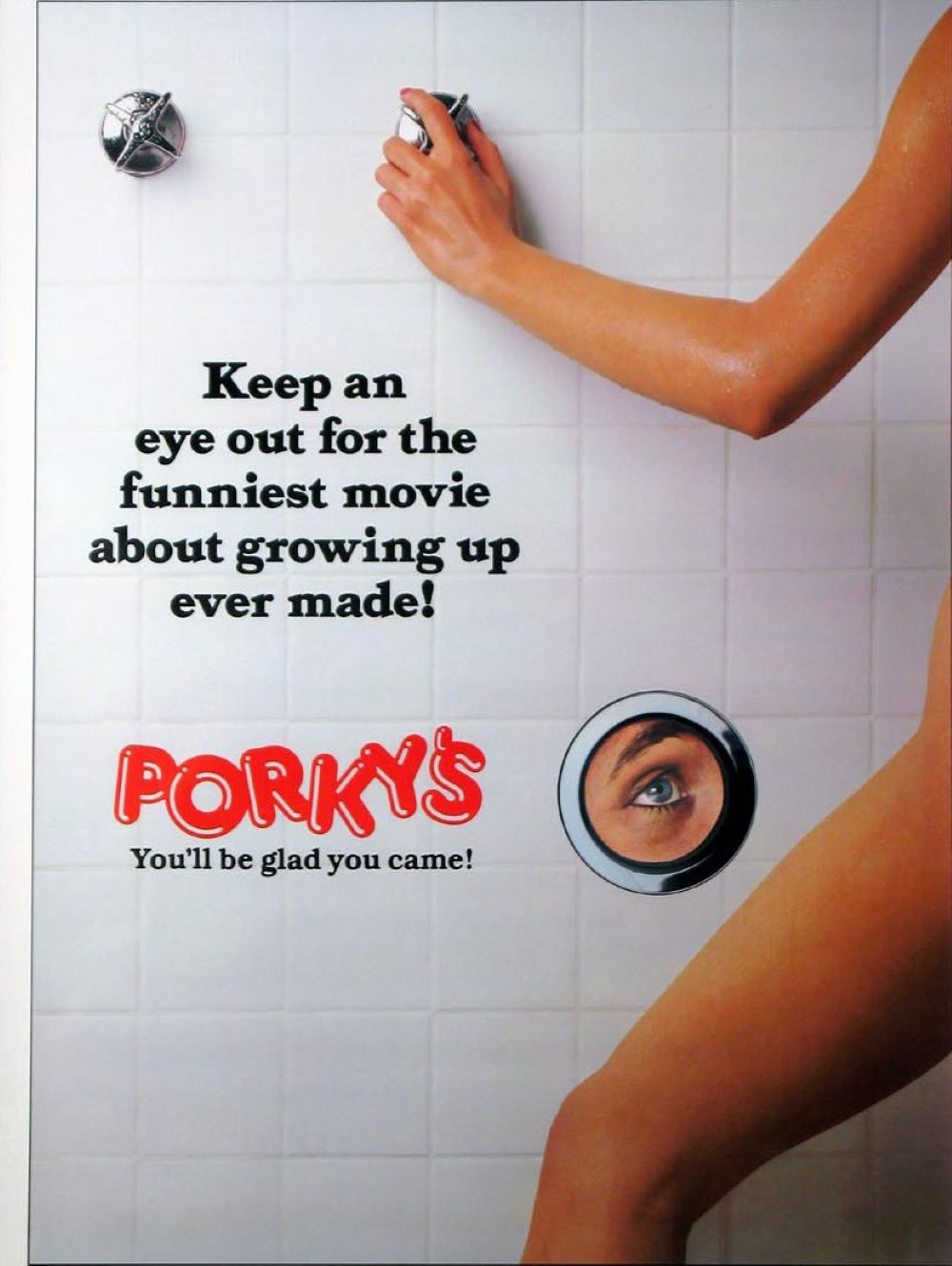
Guilty Pleasure No. 93: Porky’s (dir. by Bob Clark)


Porky’s is one of those movies that plays very differently depending on when you first see it. On the surface, it is a loud, lewd early‑’80s teen sex comedy about a bunch of high‑school boys in 1950s Florida trying to get laid and get even, but underneath the pranks and bare flesh there are streaks of surprisingly serious material about prejudice, masculinity, and power. That mix of dopey laughs and darker undercurrents is exactly what makes the film interesting to talk about, and also what makes it so divisive today.

Set in the 1950s and released in 1981, Porky’s follows a tight‑knit group of teenage boys whose main goals in life are sex, sports, and practical jokes. Their adventures eventually take them to Porky’s, a sleazy backwater strip club run by the hulking, corrupt Porky, who humiliates them and sets up the revenge plot that drives the back half of the film. Around that spine, the story wanders through locker‑room banter, elaborate pranks, and various attempts to sneak into the girls’ showers or otherwise spy on naked bodies. It is very much a “horny boys on the prowl” narrative, and the film never pretends to be anything else.

What keeps it from being just another disposable sex comedy is the way some of those side stories hit harder than expected. One of the kids is brutally abused by his father, and the film doesn’t treat it like a throwaway detail; those scenes have a rawness and anger that clash with the goofy tone elsewhere. There is also a thread about anti‑Semitism and racism in their community, with one character confronting his own bigoted upbringing as he befriends a Jewish classmate and pushes back against the prejudice around him. That material is handled in a pretty straightforward, earnest way, which is jarring given how crude the surrounding humor can be, but it does show that writer‑director Bob Clark had more on his mind than dirty jokes.

The humor, for better or worse, is what most people remember. Porky’s leans heavily on slapstick and sex‑obsessed gag setups: peeping through holes in shower walls, mistaken identities during sex, ridiculous anatomical bragging, prank phone calls, and elaborate schemes that escalate into full‑on chaos. Some of the set pieces are staged with real comic timing, and if you’re on its wavelength, these sequences can still land as big, cathartic laughs. Others feel juvenile in the worst way, stretching one joke way past its breaking point, or punching down at easy targets rather than punching up at the hypocritical adults the boys are constantly butting up against.

Viewed from today’s lens, a big chunk of that humor is undeniably uncomfortable. The movie is saturated with sexist, homophobic, and racist language, and a few of the “pranks” involving the girls are essentially sexual harassment played for laughs. At the time, it was sold as a gleefully politically incorrect romp; now, those same scenes read as mean‑spirited or creepy in a way that undercuts the supposed lighthearted tone. The film occasionally tries to complicate this by giving some of the female characters sharper edges or letting them turn the tables, but it never fully escapes the fact that the camera is mostly aligned with the boys and their fantasies.

That said, Porky’s is not entirely dismissive of its women. There are moments where adult women, in particular, are allowed to call out the boys’ behavior or assert their own sexuality in ways that undercut the usual “conquest” narrative. The movie also makes a point of ridiculing hypocritical authority figures—teachers, coaches, cops, and parents—whose prudish public morals don’t match their private behavior. When Porky’s is skewering bigotry, religious hypocrisy, and small‑town moral panics, it feels sharper and more progressive than its reputation as a dumb “tits‑and‑ass” comedy suggests. Those flashes of insight are part of why some viewers argue that, beneath the sleaze, the film is quietly critical of the very attitudes it seems to indulge.

Performance‑wise, the cast is made up largely of unknowns who sell the illusion that this is a real, scrappy group of friends rather than polished Hollywood teens. The camaraderie feels genuine; their constant ribbing, in‑jokes, and shifting alliances are believable enough that you can see why the movie became a touchstone for a certain generation of viewers. Bob Clark’s direction is surprisingly controlled for such an anarchic script. He keeps the story moving, balances multiple subplots, and stages the bigger comic payoffs in a way that feels almost like a live‑action cartoon. The downside is that this slickness can make the nastier gags pop more, for better and worse.

On a technical level, Porky’s is very much a product of its time, but not a cheap one. The period detail—cars, music, clothing, diners, and dingy roadside bars—helps sell the 1950s setting, giving the film a nostalgic sheen that softens some of its rougher edges. The soundtrack leans on era‑appropriate rock and roll, which adds energy to the locker‑room and party scenes. The film also doesn’t shy away from male nudity, which was less common in comedies of the time and adds to its reputation as equal‑opportunity when it comes to what it exposes, even if the gaze is still clearly tilted toward ogling women.

Where Porky’s can stumble is in tone. The shifts between broad farce and serious drama can be abrupt. One minute you are watching a drawn‑out gag about a teacher trying to identify a student by his anatomy; the next, you are plunged into a grim confrontation with an abusive parent. That whiplash can pull you out of the movie, because the emotional weight of the dramatic scenes doesn’t always get enough breathing room before the script lurches back to naughty antics. As a result, some viewers feel the darker elements trivialize real issues, while others think those same scenes give the film more substance than its imitators.

Even if someone has never seen Porky’s, they have probably felt its influence. The film was a massive box‑office hit relative to its budget and paved the way for a wave of raunchy teen comedies through the ’80s and ’90s, eventually echoing into movies like American Pie and beyond. Its success made it clear that there was a huge audience for R‑rated, adolescent sex comedies that mixed crude jokes with a veneer of coming‑of‑age sentiment. You can see its blueprint in later films: packs of horny friends, elaborate revenge schemes, school authority figures as comic foils, and a big, raucous set piece as the payoff.

Whether Porky’s “holds up” is going to depend a lot on your tolerance for outdated attitudes and offensive language. If you go in expecting a cozy nostalgia trip, you may be surprised by how sour some jokes taste now, and how casually the film treats behavior that would be framed very differently in a modern story. If you approach it as both a time capsule and the prototype of a genre, it becomes easier to see its strengths—the lively ensemble, the willingness to poke at racism and hypocrisy, the low‑budget ingenuity in its set pieces—alongside its very real flaws.

Porky’s is neither the hidden gem some defenders make it out to be nor the irredeemable trash its harshest critics describe. It is a messy, uneven, often funny, often cringeworthy movie that captures a particular moment in pop culture, both in what it laughs at and what it takes for granted. If you are curious about the roots of modern raunchy teen comedies and prepared for the rough, politically incorrect ride, it is still worth a look as a piece of film history and as an example of how comedy ages—for better and for worse.

Previous Guilty Pleasures

  1. Half-Baked
  2. Save The Last Dance
  3. Every Rose Has Its Thorns
  4. The Jeremy Kyle Show
  5. Invasion USA
  6. The Golden Child
  7. Final Destination 2
  8. Paparazzi
  9. The Principal
  10. The Substitute
  11. Terror In The Family
  12. Pandorum
  13. Lambada
  14. Fear
  15. Cocktail
  16. Keep Off The Grass
  17. Girls, Girls, Girls
  18. Class
  19. Tart
  20. King Kong vs. Godzilla
  21. Hawk the Slayer
  22. Battle Beyond the Stars
  23. Meridian
  24. Walk of Shame
  25. From Justin To Kelly
  26. Project Greenlight
  27. Sex Decoy: Love Stings
  28. Swimfan
  29. On the Line
  30. Wolfen
  31. Hail Caesar!
  32. It’s So Cold In The D
  33. In the Mix
  34. Healed By Grace
  35. Valley of the Dolls
  36. The Legend of Billie Jean
  37. Death Wish
  38. Shipping Wars
  39. Ghost Whisperer
  40. Parking Wars
  41. The Dead Are After Me
  42. Harper’s Island
  43. The Resurrection of Gavin Stone
  44. Paranormal State
  45. Utopia
  46. Bar Rescue
  47. The Powers of Matthew Star
  48. Spiker
  49. Heavenly Bodies
  50. Maid in Manhattan
  51. Rage and Honor
  52. Saved By The Bell 3. 21 “No Hope With Dope”
  53. Happy Gilmore
  54. Solarbabies
  55. The Dawn of Correction
  56. Once You Understand
  57. The Voyeurs 
  58. Robot Jox
  59. Teen Wolf
  60. The Running Man
  61. Double Dragon
  62. Backtrack
  63. Julie and Jack
  64. Karate Warrior
  65. Invaders From Mars
  66. Cloverfield
  67. Aerobicide 
  68. Blood Harvest
  69. Shocking Dark
  70. Face The Truth
  71. Submerged
  72. The Canyons
  73. Days of Thunder
  74. Van Helsing
  75. The Night Comes for Us
  76. Code of Silence
  77. Captain Ron
  78. Armageddon
  79. Kate’s Secret
  80. Point Break
  81. The Replacements
  82. The Shadow
  83. Meteor
  84. Last Action Hero
  85. Attack of the Killer Tomatoes
  86. The Horror at 37,000 Feet
  87. The ‘Burbs
  88. Lifeforce
  89. Highschool of the Dead
  90. Ice Station Zebra
  91. No One Lives
  92. Brewster’s Millions
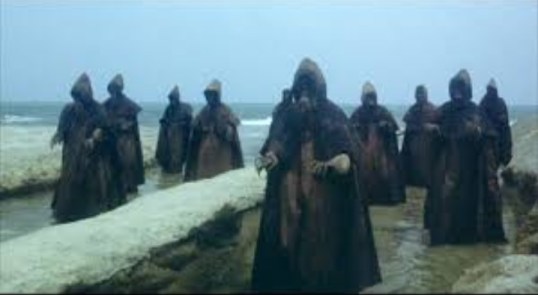
4 Shots From 4 Holiday Films: Special Horror Edition


4 Shots From 4 Films is just what it says it is, 4 shots from 4 of our favorite films. As opposed to the reviews and recaps that we usually post, 4 Shots From 4 Films is all about letting the visuals do the talking.

4 Shots From 4 Holiday Films

Silent Night, Bloody Night (1972, dir by Theodore Gershuny)

Silent Night, Bloody Night (1972, dir by Theodore Gershuny)

Black Christmas (1974, dir by Bob Clark)

Black Christmas (1974, dir by Bob Clark)

The Silent Partner (1978, dir by Daryl Duke)

The Silent Partner (1978, dir by Daryl Duke)

Christmas Evil (1980, dir by Lewis Jackson)

Christmas Evil (1980, dir by Lewis Jackson)

4 Shots From 4 Holiday Films


4 Shots From 4 Films is just what it says it is, 4 shots from 4 of our favorite films. As opposed to the reviews and recaps that we usually post, 4 Shots From 4 Films is all about letting the visuals do the talking.

I guess we could call this one “Christmas in the 80s.”

4 Shots From 4 Holiday Films

A Christmas Story (1983, dir by Bob Clark)

A Christmas Story (1983, dir by Bob Clark)

Brazil (1985, dir by Terry Gilliam)

Brazil (1985, dir by Terry Gilliam)

Die Hard (1988, dir by John McTiernan)

Die Hard (1988, dir by John McTiernan)

National Lampoon's Christmas Vacation (1989, dir by Jeremiah Chechik)

National Lampoon’s Christmas Vacation (1989, dir by Jeremiah Chechik)

Horror Scenes I Love: Sherlock Holmes vs Jack the Ripper in Murder By Decree


Though I may not agree with the film’s conclusions, Bob Clark’s 1979 film Murder By Decree is still the best of the Jack the Ripper films.

This scene, featuring the final battle between Sherlock Holmes (Christopher Plummer) and the Ripper, is not only full of fog-shrouded atmosphere but it also features one of the most savage portrayals of Jack the Ripper.


4 Shots From 4 Films: Special Bob Clark Edition


4 Shots From 4 Films is just what it says it is, 4 shots from 4 of our favorite films. As opposed to the reviews and recaps that we usually post, 4 Shots From 4 Films lets the visuals do the talking!

Today, we pay tribute to a filmmaker who got his start in Canada.  Though born in America, Clark spent most his career up north.  Though he’s today best remembered for directing the holiday classic, A Christmas Story, Clark started his career as a horror director.  In fact, long before telling the story of Ralphie and his BB gun, Clark directed one of the first Christmas slasher films.

Today, we honor the legacy of Bob Clark with….

4 Shots From 4 Bob Clark Films

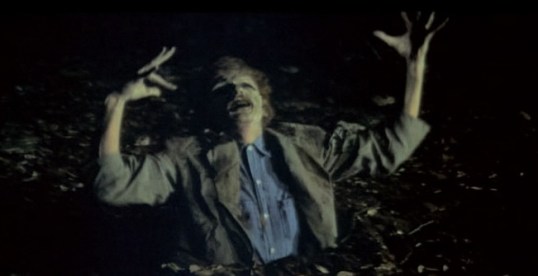
Children Shouldn’t Play With Dead Things (1972, dir by Bob Clark, DP: Jack McGowan)

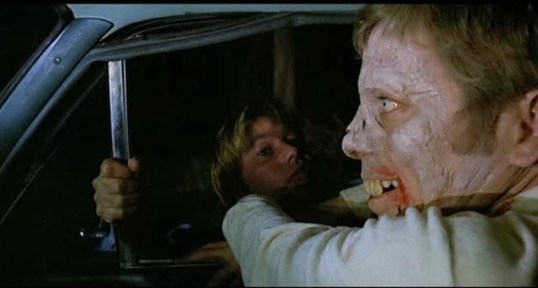
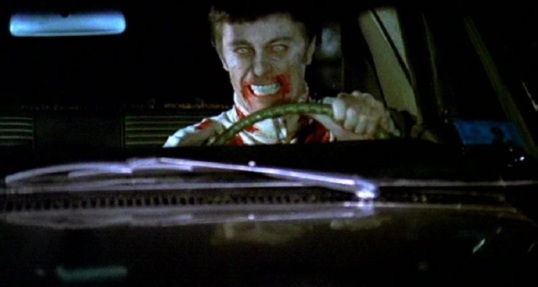
Deathdream (1974, dir by Bob Clark, DP: Jack McGowan)

Black Christmas (1974, dir by Bob Clark, DP: Reginald H. Morris)

Murder By Decree (1979, dir by Bob Clark, DP: Reginald H. Morris)

The TSL Horror Grindhouse: Children Shouldn’t Play With Dead Things (dir by Bob Clark)


The title of this 1972 film is definitely a case of truth in advertising.

Children definitely should not play with dead things!  I don’t care how mature they are or how lenient of a parent you’re trying to be.  When you see your child playing with a dead thing, it is on you to step forward and say, “Child, leave that dead thing alone unless you want to forever burn in Hell.”  I know that type of language might be traumatic for some children but you’ll be glad you did it.  You know who played with dead things when he was a child?  Jeffrey Dahmer!  And look how that turned out.  He got a miniseries made about him and became an internet meme.

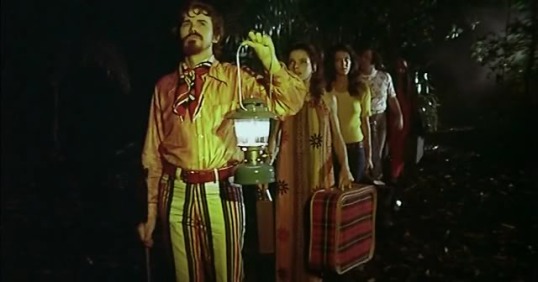
Now, it should be pointed out that they’re aren’t any children to be found in Children Shouldn’t Play With Dead Things.  The children of the title are actually a group of wannabe actors who are led by a pretentious douchebag named Alan (played by the film’s writer, Alan Ormsby).  With his mustache and his long hair and his hip clothes and his vocabulary of psychobabble and buzzwords, Alan considers himself to be quite the chic 70s gentleman.  He refers the other actors as being his “children,” and they let him get away with it.  Personally, I would be kind of insulted but whatever.

One night, Alan and his theatrical troupe ride a boat off to an island that is sitting off the coast of Miami.  The island is reputed to be haunted and Alan tells the actors several rather gruesome stories about things that have supposedly happened to the inhabitants of the island.  According to Alan, the island is used as a cemetery for criminals who were so vile that no one wanted to collect their bodies.

Why are the actors on the island?  Along with leading his theatrical troupe, Alan considers himself to be a bit of a warlock.  He wants to perform a ceremony at midnight and he expects his actors to help him out.  If they don’t help, they’ll lose their jobs.  If they do help, they’ll probably lose their lives.  Alan and his actors dig up the body of a man named Orville (played by the wonderfully named Seth Sklarey).  The ceremony that Alan performs at midnight fails to bring Orville back to life but it does cause the dead who were left in their graves to rise from the Earth as zombies.  The zombies are not happy that their island has been invaded and they’re especially not happy about Alan digging up Orville.

Children Shouldn’t Play With Dead Things is a mix of comedy and horror, with Alan’s pretentious foolishness dominating the first half of the film while the second features the zombies laying siege to a cottage.  It starts out slow but, once the zombies come to life, the film achieves a surreal grandeur.  For an obviously low-budget film, the zombie makeup is surprisingly effective and the zombies themselves are so relentless and determined in their pursuit of the living that they help Children Shouldn’t Play With Dead Things survive the inevitable comparisons to Night of the Living Dead.  The film’s final scene, which plays out in near silence, has an undeniable horrific power to it.

Children Shouldn’t Play With Dead Things was the third film to be directed by Bob Clark.  He also directed films like Deathdream, Black Christmas, Murder By Decree, and the infamous (and very financially successful) Porky’s.  Of course, his most beloved film is the one that we’ll all be watching in a little less than two months, A Christmas Story.

10 Shots From 10 Horror Films: 1973 and 1974


The Texas Chainsaw Massacre (1974, dir by Tobe Hooper, DP: Daniel Pearl)

4 Or More Shots From 4 Or More Films is just what it says it is, 4 shots from 4 of our favorite films. As opposed to the reviews and recaps that we usually post, 4 Shots From 4 Films lets the visuals do the talking!

This October, I’m going to be doing something a little bit different with my contribution to 4 (or more) Shots From 4 (or more) Films.  I’m going to be taking a little chronological tour of the history of horror cinema, moving from decade to decade.

Today, we take a look at two very important years: 1973 and 1974!

10 Shots From 10 Horror Films: 1973 and 1974

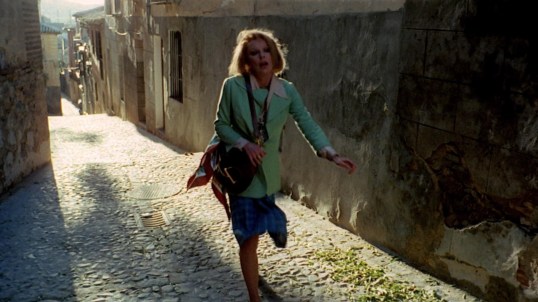
Female Vampire (1973, dir by Jess Franco, DP: Jess Franco)

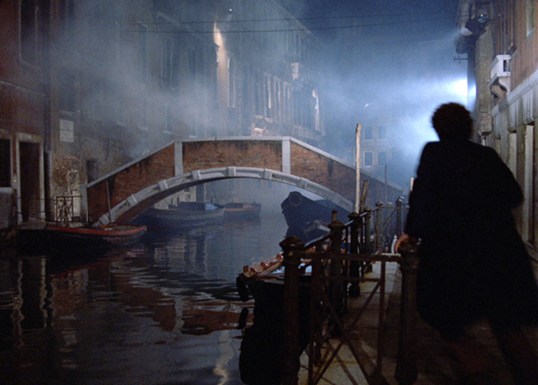
Don’t Look Now (1973, dir by Nicolas Roeg, DP: Anthony Richmond)

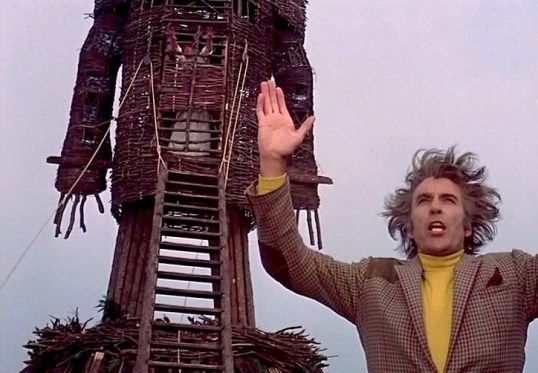
The Wicker Man (1973, dir by Robin Hardy. DP: Harry Waxman)

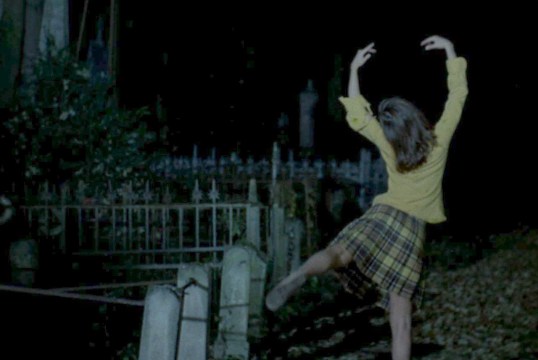
Lisa and the Devil (1973, dir by Mario Bava, DP: Cecilio Paniagua)

The Iron Rose (1973, dir by Jean Rollin)

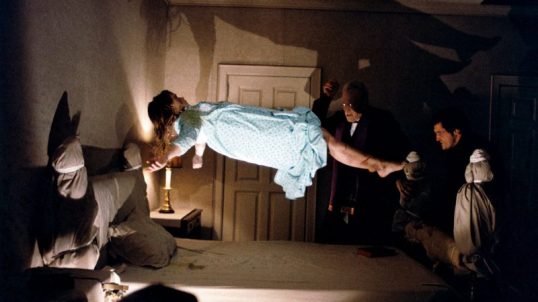
The Exorcist (1973, dir by William Friedkin, DP: Owen Roizman)

Black Christmas (1974, dir by Bob Clark, DP: Reginald H. Morris)

Deathdream (1974, dir by Bob Clark, DP: Jack McGowan)

The Ghost Galleon (1974, dir by Armando de Ossorio, DP: Raul Artigut)

The Texas Chainsaw Massacre (dir by Tobe Hooper, DP: Daniel Pearl)

8 Shots From 8 Horror Films: The Early 70s


4 Or More Shots From 4 Or More Films is just what it says it is, 4 shots from 4 of our favorite films. As opposed to the reviews and recaps that we usually post, 4 Shots From 4 Films lets the visuals do the talking!

This October, I’m going to be doing something a little bit different with my contribution to 4 (or more) Shots From 4 (or more) Films.  I’m going to be taking a little chronological tour of the history of horror cinema, moving from decade to decade.

Today, we take a look at the early 70s!

8 Shots From 8 Horror Films: The Early 70s

The Bird With The Crystal Plumage (1970, dir by Dario Argento, DP: Vittorio Storaro)

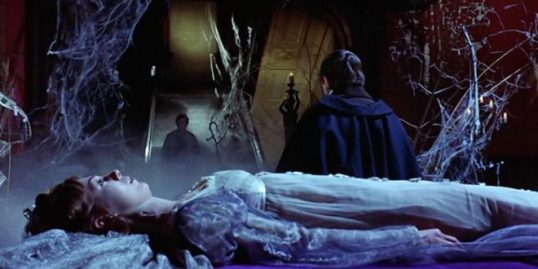
House of Dark Shadows (1970, dir by Dan Curtis, DP: Arthur Ornitz)

Hatchet For The Honeymoon (1970, dir by Mario Bava, DP: Mario Bava)

The Devils (1971, directed by Ken Russell, DP: David Watkin)

Tombs of the Blind Dead (1971, dir by Amando de Ossorio, DP: Pablo Ripoll)

Children Shouldn’t Play With Dead Things (1972, dir by Bob Clark, DP: Jack McGowan)

Last House on the Left (1972, dir by Wes Craven, DP: Victor Hurwitz)

Dracula A.D. 1972 (1972, dir by Alan Gibson, DP: Dick Bush)

4 Shots From 4 Bob Clark Films


4 Shots From 4 Films is just what it says it is, 4 shots from 4 of our favorite films. As opposed to the reviews and recaps that we usually post, 4 Shots From 4 Films lets the visuals do the talking!

Yesterday, we paid tribute to the great Canadian director, David Cronenberg.  Today, we pay tribute to another filmmaker who got his start in Canada.  Though born in America, Clark spent most his career up north.  Though he’s today best remembered for directing the holiday classic, A Christmas Story, Clark started his career as a horror director.  In fact, long before telling the story of Ralphie and his BB gun, Clark directed one of the first Christmas slasher films.

Today, we honor the legacy of Bob Clark with….

4 Shots From 4 Bob Clark Films

Children Shouldn’t Play With Dead Things (1972, dir by Bob Clark, DP: Jack McGowan)

Deathdream (1974, dir by Bob Clark, DP: Jack McGowan)

Black Christmas (1974, dir by Bob Clark, DP: Reginald H. Morris)

Murder By Decree (1979, dir by Bob Clark, DP: Reginald H. Morris)


Porky’s II: The Next Day (1983, directed by Bob Clark)


The teens of Angel Beach, Florida are back!  They’re still trying to get laid, they’re still playing pranks on each other, and, this time, they’re …. FIGHTING THE KLAN!?

Porky’s II continues with the first Porky’s mix of raunchiness and social commentary.  While Pee Wee (Dan Monahan) tries to get back at his friends for spending the whole previous movie making fun of the size of his dick, the other members of the large ensemble cast thwart an attempt by the Klan to keep them from putting on a Shakespearean showcase.  The Klan is upset that a Seminole has been cast as Romeo so they burn a cross and do everything they can to sabotage the production.  Also trying to keep the show from going on is the hypocritical Rev. Bubba Flavel (Bill Wiley) and Mrs. Balbricker (Nancy Parsons), who both consider Shakespeare’s plays to be obscene.  When Wendy (Kaki Hunter) discovers that one of the county commissioners has been lying about supporting the play, she humiliates him in public by pretending to vomit in a fountain and accusing him of impregnating her.  It’s slightly funnier than it sounds but just slightly.

The first Porky’s took a stand against anti-Semitism while the second Porky’s takes a stand against censorship and the Klan.  That’s actually pretty cool when you consider that both of these films are usually just thought of as being dumb sex comedies.  Just like the first film, Porky’s II may be raunchy but it has a conscience.  That was due to director Bob Clark, who obviously meant for the Porky’s films to be about more than just T&A.

Unfortunately, Porky’s II is never as funny as the first Porky’s.  Too many of the jokes are recycled from the first film and the cast’s habit of laughing at their own “humorous” lines is even more grating the second time around.  Even the film’s most famous scene, where Wendy humiliates the duplicitous commissioner, goes on for too long and doesn’t have as much of a payoff as it should.  The best scenes in the film are the scenes that were lifted from Hamlet, Romero & Juliet, and A Midsummer Night’s Dream.  You wouldn’t expect the ensemble of Porky’s to feature that many Shakespearean actors but apparently it did.  Fans of A Christmas Story, which was also directed by Clark and which came out the same year as Porky’s II, will especially want to pay attention to the MacBeth sword fight scene just because the famous holiday leg lamp makes an appearance.

Porky’s II is nowhere near as good or memorable as the first Porky’s but its heart is in the right place.  While not as big of a success as the first Porky’s, it still did well enough to lead to Porky’s III, which I’ll review tomorrow.