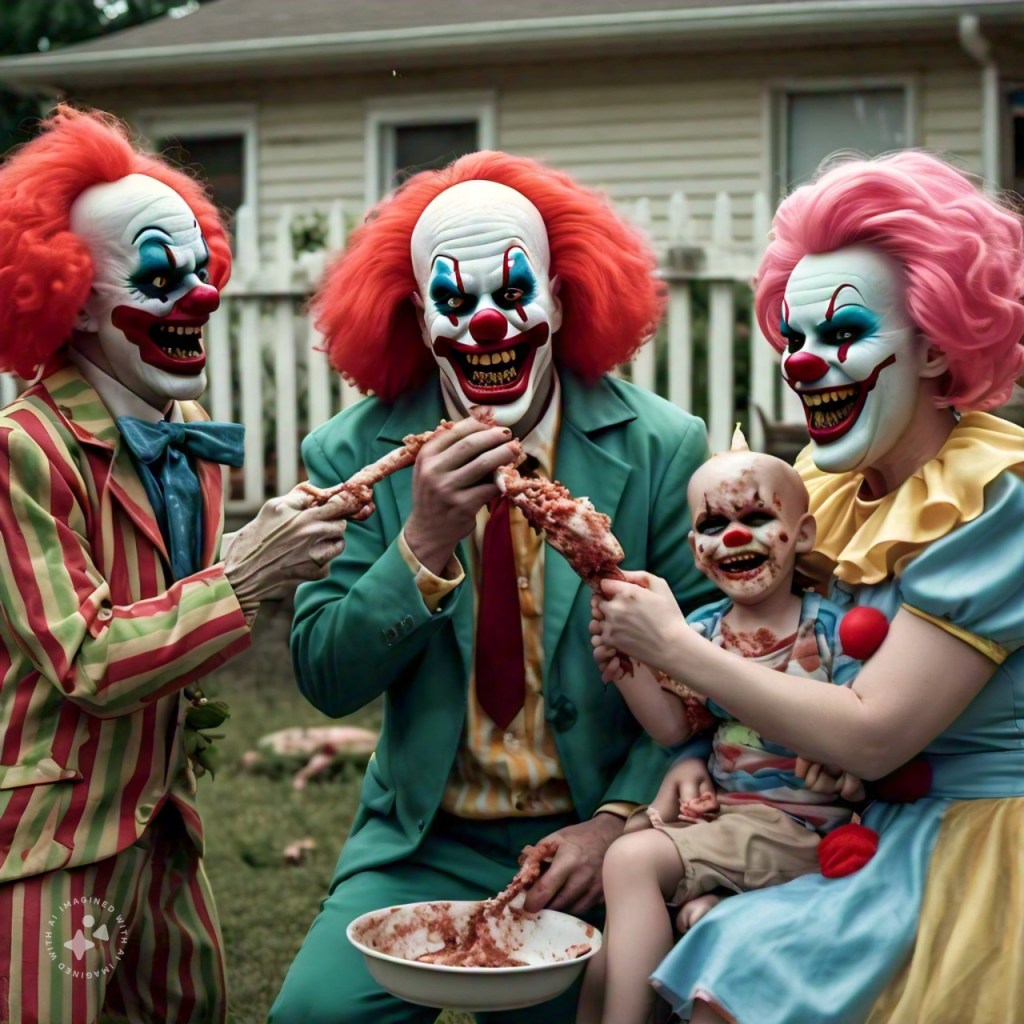
This was a hard book to review. I had avoided reading it for years because there’s an SA, but also- A CLOWN! Look, clowns are out to murder you! I mean for real they are clowns – see below
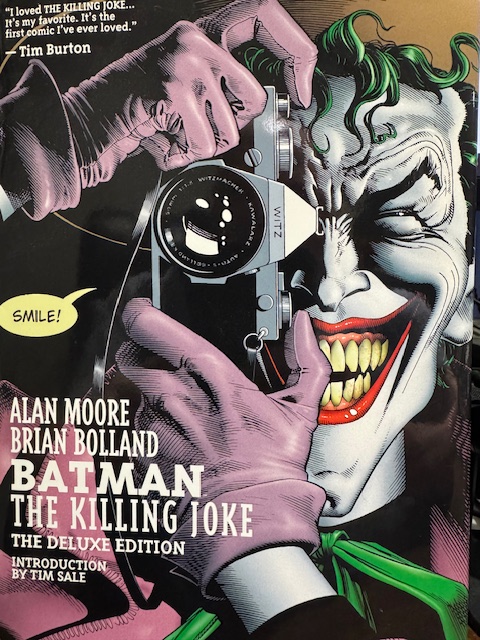
Why would you think these creatures would not want to murder your face?! Yes, they have balloon animals, but that that’s just to lure you into for their feeding! “The Killing Joke” is a Joker origin story and how he was born out of one bad day. We begin with Joker as a struggling comedian with a child on the way. He is desperate for cash and decides to participate in a heist to get out of poverty. The crooks that he teamed up with to do the heist target the Joker’s former job at a chemical plant had always planned on making him the fall guy for the heist. His wife dies by a product malfunction, sending Joker spiraling. Technically, Joker is not born until after he falls into the chemicals, but we see his name pre-Joker; so, maybe he was always Joker? I’m not sure.
The origin story is interwoven with the Joker shooting and SAing Commissioner Gordan’s daughter and generally driving him insane. There is also A LOT of nudity that I wasn’t prepared for with a fair amount of leather. Joker kidnaps Gordan, strips him nude, puts some leather on him, and then makes him look at horrify images of the SA. Honestly, why not just kill Joker? Of course, we would. We’d shoot him on sight as a terrorist. Instead of doing the normal choice and having Joker killed, Gordan wants him taken alive. WHY? Really, why? What more does he have to do? They make a point that Joker wants to show that anyone could be driven insane by one bad day, but the real insanity is not shooting all of these super villains on sight!
The book ends with a joke with the symbolism that life itself and all of the evil he committed was also a joke. It was purposefully ambiguous, but it did scare me- BECAUSE CLOWNS!
4 Or More Shots From 4 Or More Films is just what it says it is, 4 shots from 4 of our favorite films. As opposed to the reviews and recaps that we usually post, 4 Shots From 4 Films lets the visuals do the talking!
Today, we pay tribute to the year 1989! It’s time for….
4 Shots From 4 1989 Films
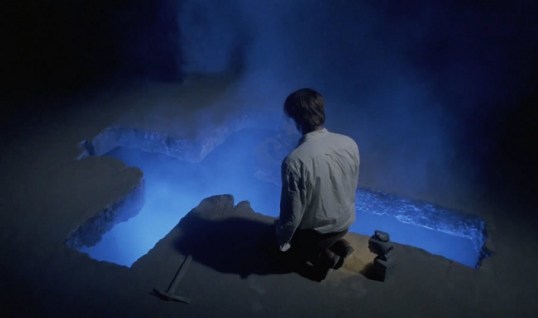
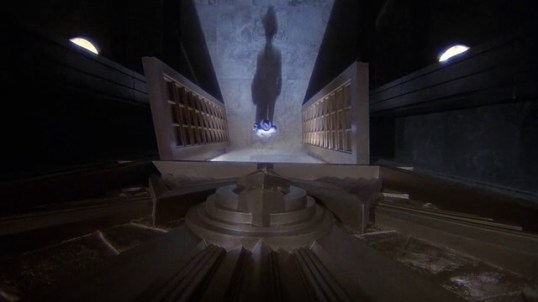
The Church (1989, dir by Michele Soavi, DP: Renato Tafuri)
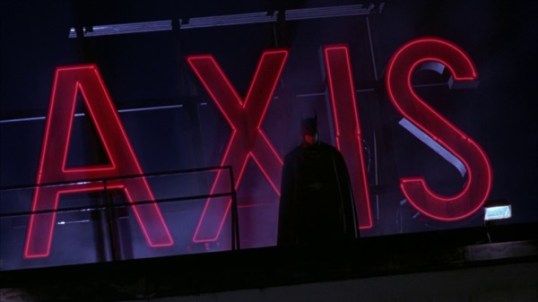
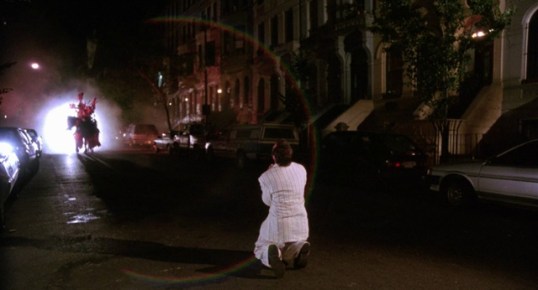
Batman (1989, dir by Tim Burton, DP: Roger Pratt)
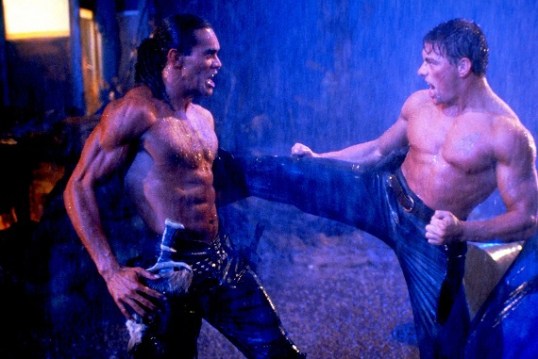
Cyborg (1989, dir by Albert Pyun, DP: Philip Alan Waters)
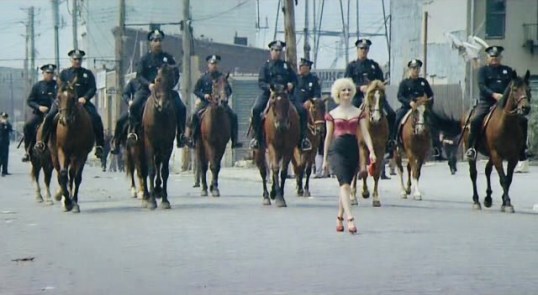
Last Exit to Brooklyn (1989, dir by Uli Edel, DP: Stefan Czapsky)
Jack Nicholson may have starred in CHINATOWN, ONE FLEW OVER THE CUCKOO’S NEST, and THE SHINING, but for a person born in 1973, the first movie I ever loved Jack Nicholson in was BATMAN (1989). I’ve been a fan ever since! Happy Birthday, Jack!
4 Shots From 4 Films is just what it says it is, 4 shots from 4 of our favorite films. As opposed to the reviews and recaps that we usually post, 4 Shots From 4 Films lets the visuals do the talking.
Yesterday, it was announced that the veteran cinematographer Roger Pratt passed away in December. Known for his work with Terry Gilliam and Tim Burton, Pratt left behind a legacy of visually stunning films. It’s time for…
4 Shots From 4 Roger Pratt Films
Brazil (1985, dir by Terry Gilliam, DP: Roger Pratt)
Batman (1989, dir by Tim Burton, DP: Roger Pratt)
The Fisher King (1991, dir by Terry Gilliam, DP: Roger Pratt)
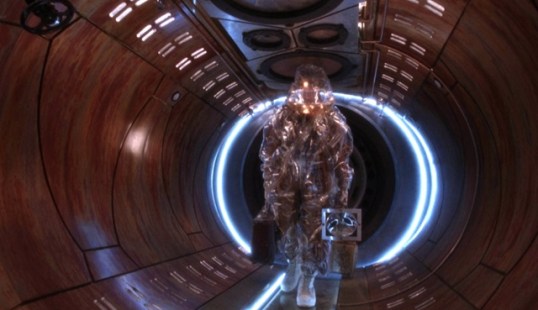
12 Monkeys (1995, dir by Terry Gilliam, DP: Roger Pratt)
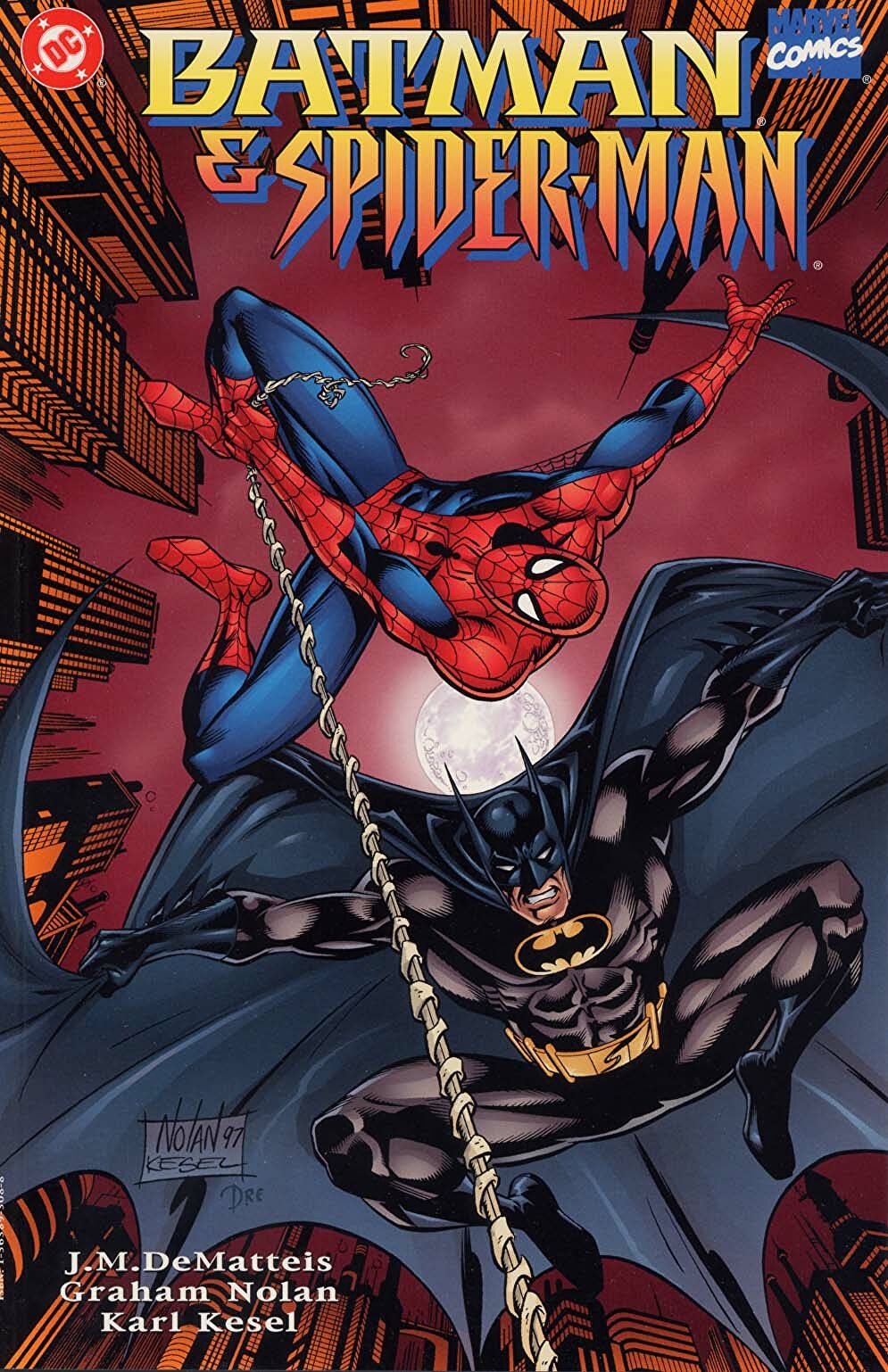
It’s easy to forget now but there was once a time when Marvel and DC would set aside their differences and their heroes (and sometimes, their villains) would team up. Spider-Man met Superman. The X-Men met the New Teen Titans. Darkseid met Galactus. Green Lantern met the Silver Surfer. Silver Surfer met Batman. Actually, a lot of Marvel heroes met Batman, everyone from the Hulk to Punisher to Daredevil to, again, Spider-Man. It makes sense. Batman, with his antisocial tendencies and his tragic backstory, had more in common with the typical Marvel hero than with Superman.
These events were never an official part of the Marvel or DC universe. Both companies eventually developed their own version of the multiverse and it was accepted that the Marvel/DC crossovers all took place in an alternate universe where Gotham City and Metropolis existed alongside Marvel’s version of New York City. Though these crossovers were not canonical, they always felt like a big deal. They were a chance to answer the age-old question of who would win in a fight, Batman or Spider-Man. It didn’t matter that the crossovers usually copped out on giving a definitive answer. Usually, the heroes would fight to a draw and then team up to battle the real enemy. That way both fandoms could be happy and there was still a reason to buy the next crossover.
The crossovers are something that will probably never happen again, not with the rivalry between the MCU and DCEU. It’s too bad because the crossovers were always enjoyable. The final Batman/Spider-Man crossover was called New Age Dawning and it was published twenty-five years ago, this month. Batman’s villain, Ra’s al Ghul, poisoned the wife of Spider-Man’s villain, Kingpin. Ra’s al Ghul thought he could blackmail the Kingpin into helping him sink the island of Manhattan. Instead, the Kingpin teams up with Spider-Man and Batman to defeat Ra’s plan. It’s a simple story but it ends on a note of grace, with Batman giving Spider-Man the cure for the poison and then Spider-Man taking it to the Kingpin. If the Batman/Spider-Man crossovers had to end, that was the way to end them, with two heroes coming together to do the right thing.
Here on the Shattered Lens, the love for Batman is very strong. There are too many Batman related articles to fully list, but for a good start, go with Ryan’s Which Way Forward for the Batman Franchise.
This isn’t so much a review for Batman as it’s just me looking back on the film.
I spent the Saturday Morning of June 24th, 1989 standing on a line that snaked around the white walls of the Sunrise Multiplex Cinema in Valley Stream. Thankfully, by the time I arrived, there were only a few people there. Most of them were my friends, so we were close to the door. The following year, the Sunrise would go down in history as being the only movie theatre I’ve ever known with metal detectors after a shooting around the release of The Godfather Part III prompted tighter security. Before then, anyone going into the theatre had a free run of the place. From that incident to the theatre’s shutdown in 2015, you always had to pass the metal detectors.
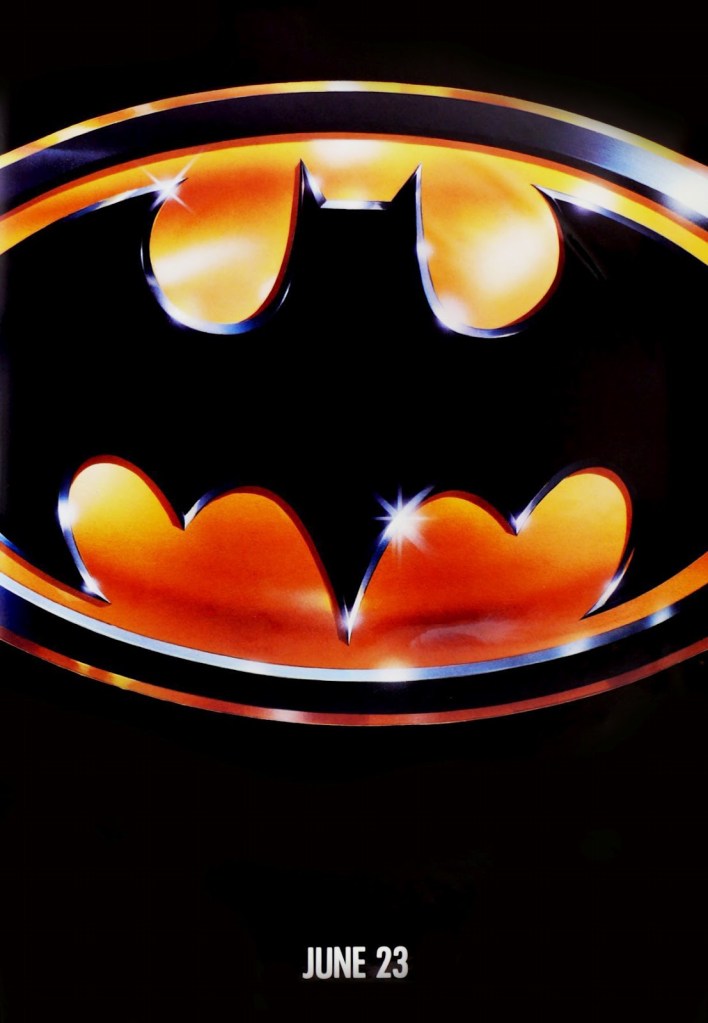
You knew Tim Burton’s Batman was going to be something grand when they first put up the posters in bus stations. The character was so well known that the poster was simply a black and gold Batsymbol with a date – June 23. In my neighborhood, the poster lasted a week before the bus stop’s glass was broken and it was stolen. This was how mad people were for the film. Although merchandise was already available, it moved at an incredible pace. For a film made before pre-Internet, the buzz was just amazing.
“Okay, Everyone, we know you’re looking forward to seeing the movie.”, came the announcement over the theatre’s loudspeaker, which caused a few murmurs from everyone. It was a smooth, business like voice, probably from someone who had never even heard of The Caped Crusader. “We’re going to open up the doors and we want everyone to proceed to the ticket booths in a nice, orderly fashion.”
I was 14 at the time. Batman was the first movie I ever saw without my family. My parents, a cop and a bartender, saw so much of the worst of NYC that they figured the best place for me was home. Still, since I was among friends they knew, I gave me a pass. It was a big deal. My friend Pierre and I had a plan, along with the 4 others that came with us. We’d head in, make for the ticket booth and go right in for our seats near the back right side.. No refreshments were necessary, since we could all go eat at the mall later on after the move was done. To make sure I didn’t miss anything, I had already read the novel for the story beforehand.
Anyone close to the door could see the theatre workers as they approached, keys in hand. The layout of the Sunrise was such that after stepping through the front door, you could cut to your immediate left or right down a open path to separate ticket booth. As the door unlocked, was pushed open and secured, someone from near the middle of the line decided it was time, declaring in a loud scream.
“Batman!!!!!”
It was madness. Utter madness. Bodies piled into the theatre in a mad scramble for the ticket booth. On the way there, I was shoulder blocked and fell to the floor. I instantly curled into a ball to keep from getting trampled, wondering if my parents were right about not letting me out. ‘Here lies Lenny…”, my epitaph would read. “…he died at the movies after being let outside on his own just once.”
Thankfully, I was scooped up to my feet a few seconds later by one of my friends.
“Go on! We’ve got your tickets! Head for the ticket guy, we’ll meet you there!” he yelled over the crowd passing us on sides.
“Okay!!” I’d been to the Sunrise tons of times, so I knew it well. I moved through the crowd, bypassing the concession stand, which was already developing a line of its own. I thought they were going to go in without me and leave me there. I don’t know they did it, but within a few minutes of reaching the ticket taker. most of my group caught up, tickets in hand for all of us.
The actual experience of Batman was a packed crowd with almost non-stop talking throughout. After all, the audience was made up of teens and DC fans that that were ravenous for anything Batman related. Superman had about four films by the time Batman premiered. I think the only real time the entire audience hushed was near the beginning when we first see Batman grab the one robber and they ask him what he is. After that, the crowd pretty much erupted in applause.
Of course, that line would become famous and reused over the years, such as it was with the WB’s Supernatural.
Even before the film was released, the buzz for Batman was immense.
Batman focuses on Gotham City, a grand town with a great deal of crime. Reports are coming in of a mysterious vigilante figure resembling a giant bat that’s taking down random criminals. Crime in Gotham is run by Boss Carl Grissom (Jack Palance, City Slickers), with his right hand man, Jack Napier (Jack Nicholson, The Departed). After discovering that Napier’s spent some quality time with his girl, Alicia (Jerry Hall, Urban Cowboy), Grissom sets him up so that he’ll be caught by the cops. Things don’t go as planned, and after falling into a vat of chemicals, Napier is reborn as The Joker. Can the Dark Knight defeat this new menace?
One of Anton Furst’s designs for Batman.
For me, one of the most interesting elements of Tim Burton’s Batman is how Jack Nicholson was the main draw for the film. Nicholson stands front and center in this film. If any real eyebrows were raised, it was over casting Michael Keaton as the Dark Knight. Keaton and Burton worked together on Beetlejuice, so there was some chemistry. However, when the announcement for Keaton being cast in Batman, most people were pretty skeptical. Keaton was known for playing more comedic roles, and playing the Batman required a more serious attitude. However, I’ve always felt that comedians are the most shocking when they take on a serious role. Some examples of this are Patton Oswalt in Big Fan, Robin Williams’ Academy Award winning performance in Good Will Hunting and most recently, Adam Sandler in Uncut Gems. I feel that worked for Keaton, and most viewers underestimated what he could bring to both Bruce Wayne and Batman. As Wayne, Keaton seems a bit subdued. As Batman, he’s a little scary simply because he doesn’t quite look like the kind of individual who would roam the streets at night dressed as a bat. My parents would later argue over Batman’s drop of Jack Napier at Axis Chemicals. I thought it was a situation where he just couldn’t hold on to him. My parents’ viewpoint was that Batman deliberately did it. We never really know for sure, but it did seem a little convenient that Batman couldn’t hold on to Napier. Overall, Keaton’s Batman plays second fiddle to Nicholson’s Joker, who also had a some sway in the design of the nemesis for the film.
Batman’s cast also includes Kim Basinger (L.A. Confidential) as Vicki Vale, Robert Wuhl (Bull Durham), Billy Dee Williams (Nighthawks) and Pat Hingle (Sudden Impact) as Commissioner Gordon, The cast is pretty perfect here, without anyone really falling out of step. Batman stories would grow more serious by the time Nolan would step in, but for the 1980s, it was just fine.
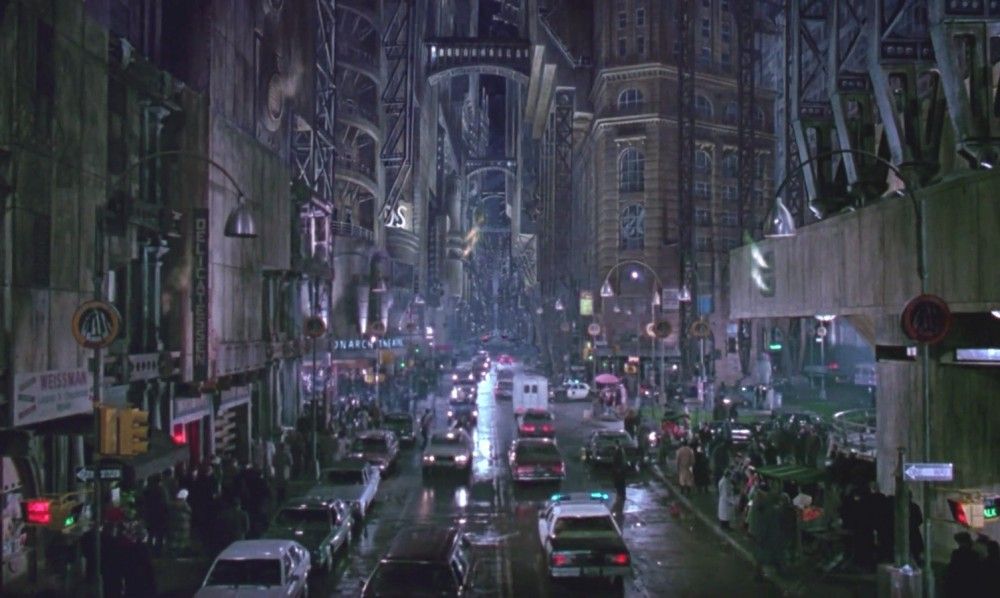
Anton Furst would win an Oscar for Best Art Direction for his design of Gotham City, which was for its time, quite dazzling. On par with some of the designs from Blade Runner and The Crow, Furst’s rendition of Gotham was dark and brooding, compared to the more modern backdrop of Batman Begins. In addition to Gotham’s look, Furst also helped design the Batmobile, which was based off the Chevy Impala (another Supernatural connection). When the film was released on home video, my family caught sight of the Batmobile up close on the street as it delivered VHS Copies to a video store in Manhattan. Although he died some years later, Furst’s work on Batman remains an influence on both the comics and future installments of the movies.
1989 was also a big year for Danny Elfman. His score for Batman would earn him a Grammy, and the main theme would become a definitive one for the Caped Crusader throughout the early 1990. Shirley Walker would build on the theme with her music from Batman: The Animated Series. It was also something of a surprise for Prince. With songs like Trust, Electric Chair and Vicki’s Waiting, Prince’s Batman Soundtrack is full of great hits that you really wouldn’t think would fit in a story like Batman. Still, they manage to do just fine, and even elevate scenes like the Joker’s entry in the Gotham Museum and the Balloon Parade.
Batman is not without a few problems. It gets a little long in the tooth in the film’s second half, particularly in the scenes leading up to the Monarch and Bruce losing his parents. It’s not a terrible slowdown, since it has to set the tone for some of the more spectacular fights later on. It could have been edited just a little tighter. Additionally, when compared to some of the modern versions, 1989’s Batman can feel a little bit dated (to me, anyway). That’s more of a nitpick, or where you stand on the Batman universe as a whole. Everyone has their favorite adaptation on the Caped Crusader.
Burton and Keaton would later reunite in 1992’s Batman Returns, and the franchise on a whole would take a different turn with Joel Schumacher’s takes in 1995’s Batman Forever and 1997 Batman & Robin.
One day, while defending Gotham City, Batman (Adam West) and Robin (Burt Ward) learn that there is a plot to abduct Commodore Schmidlap from his yacht. Quick! To the batcopter! Flying over the ocean, they locate the yacht but it turns out that the whole kidnapping plot was a ruse for a shark to attack Batman!
“Holy sardine!” Robin exclaims!
With the help of porpoise who bravely sacrifices its life to protect the Caped Crusader, Batman manages to escape. Back at police headquarters, Batman, Robin, Commissioner Gordon (Neil Hamilton), and Chief O’Hara (Stafford Repp) wonder which member of Batman’s rogue’s gallery of villainy could have been responsible for the ruse.
Batman says that it was pretty “fishy” what happened and that could possibly mean The Penguin (Burgess Meredith) was involved!
Robin points out that it happened “at sea” and C stands for Catwoman (Lee Meriweather)!
Batman then says that the shark was “pulling my leg” and that might mean it was working for The Joker (Cesar Romero)!
Chief O’Hara says that it all adds up to “a sinister riddle,” which can only mean one thing: The Riddler (Frank Gorshin)!
“The four of them,” Batman says, “working together…”
“Holy nightmare!” Robin exclaims!
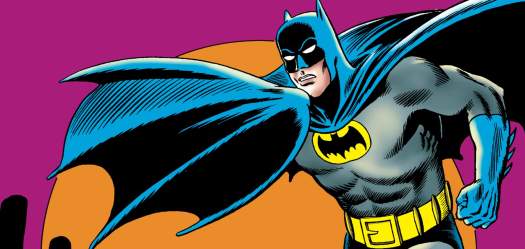
As you can probably guess, the tone of 1966’s Batman: The Movie is far different from the tone of more recent Batman films. That’s because Batman: The Movie was based on the light-hearted 60s TV show that made Batman a household name even while transforming the character from being a shadowy vigilante to being a comedic straight arrow, a proud square who regularly lectured the citizens of Gotham about respecting the forces of law and order.
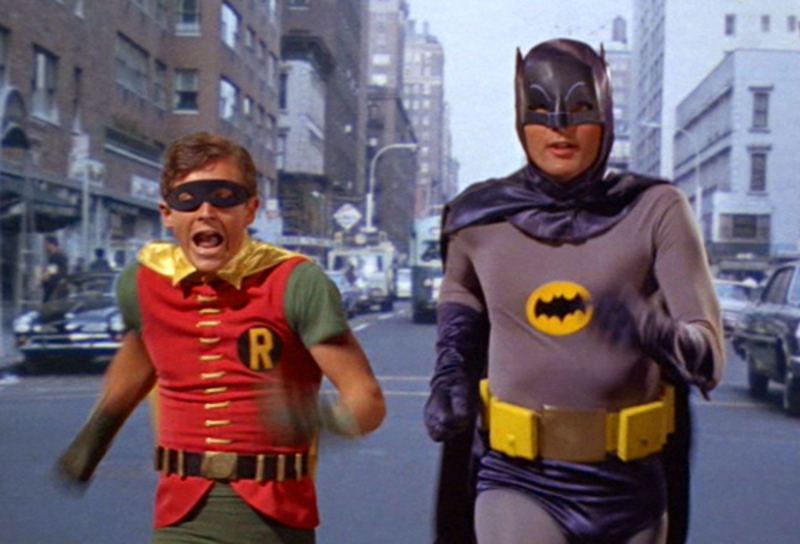
Batman: The Movie was released after the conclusion of the first season of the Batman televisions series and it featured nearly the entire cast of the show. (Lee Meriweather replaced Julie Newman in the role of the purring Catwoman.) The movie feels like an extended episode of the show, still using the same famous music and featuring scenes of Batman and Robin running in place with a street scene projected behind them. The attitude is one of affectionate parody, as opposed to the more cynical campiness of Joel Schumacher’s infamous films from the 90s. Adam West expertly deadpans his way through the main role while the underrated Burt Ward energetically plays the naïve and easily amazed Robin. Of the villains, Lee Meriweather is a sexier Catwoman than Anne Hathaway and there’s never been a better Riddler than Frank Gorshin. (Of the many actors who played Batman’s villains on the TV series, Gorshin was always the only one who seemed to understand that he was supposed to be playing someone dangerous.) At 104 minutes, Batman: The Movie runs out of steam before it ends but there’s still much here to entertain fans of the television show.
Of course, when I was growing up in the 90s, there was no easier way to lose credibility with most diehard Batman films than to admit to liking anything about the television series. The Batman TV series was widely blamed for people thinking that comic books were only meant for kids. Tim Burton was a hero for treating Batman seriously. Joel Schumacher was hated for taking the opposite approach. Batman and Robin was criticized for being too much like the TV show, right down to George Clooney doing a poor man’s Adam West impersonation in the main role. Despite the acclaim that greeted Batman: The Animated Series, It wasn’t until Christopher Nolan took control of the character that the cinematic Batman truly returned to his grim roots.
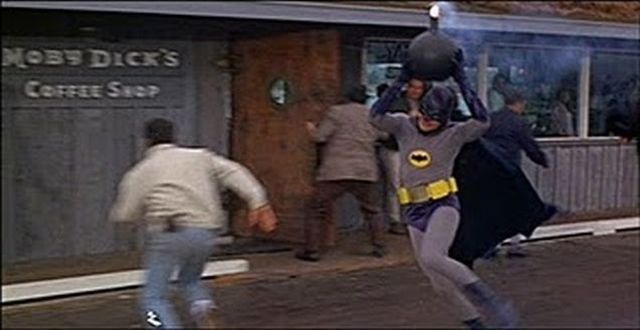
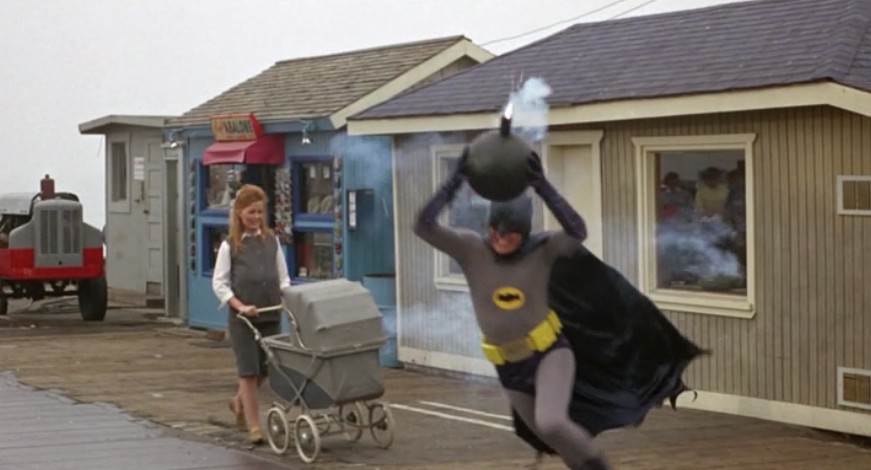
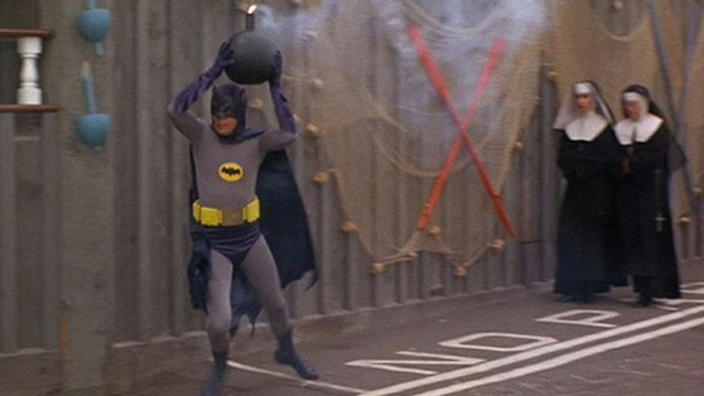
Since the conclusion of Nolan’s Dark Knight trilogy, there have been several versions of Batman. Ben Affleck took over the role for two films. Young Bruce Wayne and his doomed parents briefly appeared in Joker. Robert Pattinson is set to take over the role in The Batman. Now that everyone knows Batman as a grim avenger and countless actors have bragged about how they prepared for their roles in the Batverse by reading either The Killing Joke or The Dark Knight Returns, it’s easier to appreciate the more light-hearted approach of something like Batman: The Movie. After two decades of grim and serious Batmans being used as a metaphor for everything from PTSD to the surveillance state, the sight of a paunchy Adam West trying to find a place to safely dispose of a ridiculously oversized bomb can be a relief.
“Sometimes,” Batman says, “you just can’t get rid of a bomb!”
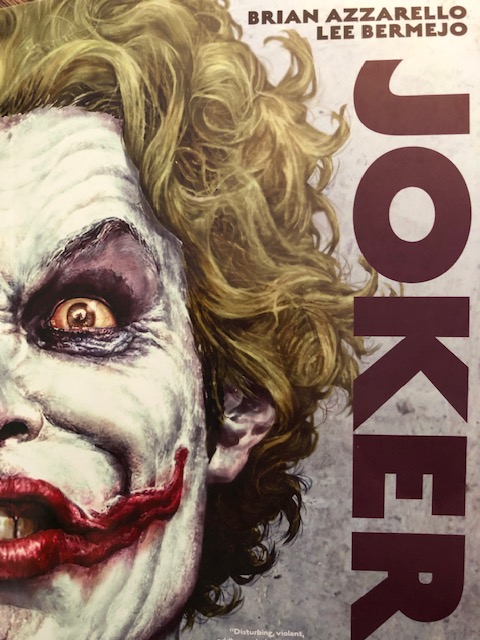
Happy Horrorthon! 2008 – Barack Obama was becoming a household name, I still had some hair, and Heath Ledger’s Joker brought the absolute evil of clowns to the silver screen. I understand that some of you might think that the comic Joker is not a horror comic, but guys it’s got a clown right there on the cover; they are ALL trying to kill you. IT COUNTS!
Brian Azzarello and Lee Bermejo sought to bring Ledger’s Joker into a comic form and dig a little deeper into the psychology of Joker and why someone would follow him. The story is narrated by Jonny Frost – a small time gangster- who wanted to be big. Jonny figures that he himself is not larger than life, but by being near bright evil, he too could shine like the moon does with the earth. He picks the Joker.
Christopher Nolan described the Joker as an absolute. He is an id of Corruption and destruction. In this story, the Joker has gotten out of Arkham….again. SIDE NOTE: what’s with Gotham?! They must have the single party liberal governing that we have in Seattle because you’d think they’d have a Three Strikes Rule or the Death Penalty by now. I mean, why let the Joker continue to keep breathing? I get how Batman has this weird code- he wears rubber, cape, lives in a cave, and is all kinds of weirdo, but why do the rest of Gotham’s citizens have it? Do they not vote? Do they have only one ballot choice? So, the Joker meets Jonny Frost the second that he leaves Arkham and Jonny works as a toady and hanger on for the majority of the book.
Jonny narrates the Joker’s return to power as he reaps through the underworld, but he burns most of his possessions down and kills all of his own henchmen and even shoots Jonny at the end. Really, the story depicted the Joker as a force of Anti-Creation. While it was a deeper dive into this Super Villain, it left me wanting because it was told through the lens of this mediocrity Jonny Frost. It says Joker right there on the cover so you’d think it would be all about the Clown Prince of Crime, but instead it was this tangential view of him. I would’ve been more captivated by a story just about the Joker without a go-between.
The story was strong and depicting LOTS AND LOTS of gore. In fact, the Joker kills more people than the Spanish Flu. He’s Lucifer and Death combined to cause havoc. In the end, we get the obvious conclusion that he’s just this disease of evil and that Batman is really just a treatment, but not a cure. It seems that Gotham’s real disease is a soft on crime public policy.
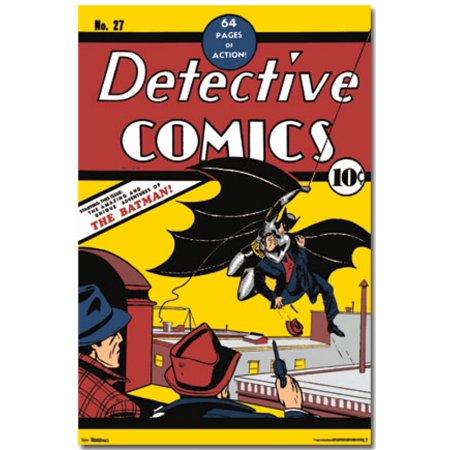
Whether you call him the Caped Crusader or the Dark Knight, it’s hard to believe Batman has been in the public eye for eighty years! Making his debut in Detective Comics #27 (cover dated May 1939) in a story titled “The Case of the Chemical Syndicate” by co-creators Bill Finger and Bob Kane, Batman has gone from mere comic book crimefighter to king of all media! Not bad for a poor little rich kid from Gotham City!
BATMAN BEGINS
Artist Bob Kane (1915-1998) had been toiling in the nascent comic book field for three years when DC’s superhero character Superman took off like a rocket. Comic houses were scrambling to compete in this new genre of costumed cavorters, and Kane came up with some sketches of a masked vigilante, basing his design on Lee Falk’s Phantom, Douglas Fairbanks’ ZORRO, and the 1930 horror/mystery THE BAT WHISPERS. Kane asked writer Bill Finger…



 Through the Shattered Lens
