Guilty Pleasure No. 93: Porky’s (dir. by Bob Clark)


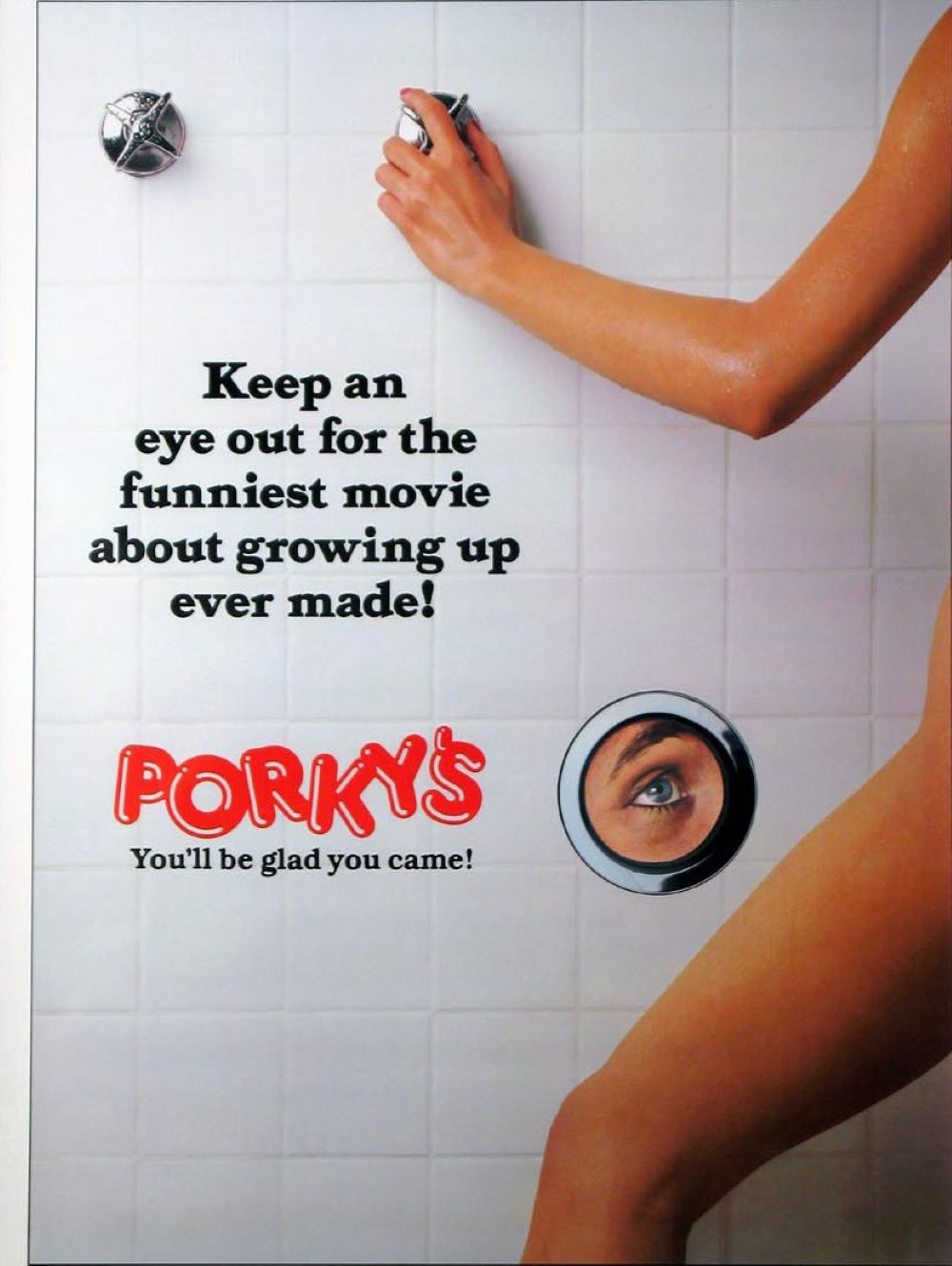
Porky’s is one of those movies that plays very differently depending on when you first see it. On the surface, it is a loud, lewd early‑’80s teen sex comedy about a bunch of high‑school boys in 1950s Florida trying to get laid and get even, but underneath the pranks and bare flesh there are streaks of surprisingly serious material about prejudice, masculinity, and power. That mix of dopey laughs and darker undercurrents is exactly what makes the film interesting to talk about, and also what makes it so divisive today.

Set in the 1950s and released in 1981, Porky’s follows a tight‑knit group of teenage boys whose main goals in life are sex, sports, and practical jokes. Their adventures eventually take them to Porky’s, a sleazy backwater strip club run by the hulking, corrupt Porky, who humiliates them and sets up the revenge plot that drives the back half of the film. Around that spine, the story wanders through locker‑room banter, elaborate pranks, and various attempts to sneak into the girls’ showers or otherwise spy on naked bodies. It is very much a “horny boys on the prowl” narrative, and the film never pretends to be anything else.

What keeps it from being just another disposable sex comedy is the way some of those side stories hit harder than expected. One of the kids is brutally abused by his father, and the film doesn’t treat it like a throwaway detail; those scenes have a rawness and anger that clash with the goofy tone elsewhere. There is also a thread about anti‑Semitism and racism in their community, with one character confronting his own bigoted upbringing as he befriends a Jewish classmate and pushes back against the prejudice around him. That material is handled in a pretty straightforward, earnest way, which is jarring given how crude the surrounding humor can be, but it does show that writer‑director Bob Clark had more on his mind than dirty jokes.

The humor, for better or worse, is what most people remember. Porky’s leans heavily on slapstick and sex‑obsessed gag setups: peeping through holes in shower walls, mistaken identities during sex, ridiculous anatomical bragging, prank phone calls, and elaborate schemes that escalate into full‑on chaos. Some of the set pieces are staged with real comic timing, and if you’re on its wavelength, these sequences can still land as big, cathartic laughs. Others feel juvenile in the worst way, stretching one joke way past its breaking point, or punching down at easy targets rather than punching up at the hypocritical adults the boys are constantly butting up against.

Viewed from today’s lens, a big chunk of that humor is undeniably uncomfortable. The movie is saturated with sexist, homophobic, and racist language, and a few of the “pranks” involving the girls are essentially sexual harassment played for laughs. At the time, it was sold as a gleefully politically incorrect romp; now, those same scenes read as mean‑spirited or creepy in a way that undercuts the supposed lighthearted tone. The film occasionally tries to complicate this by giving some of the female characters sharper edges or letting them turn the tables, but it never fully escapes the fact that the camera is mostly aligned with the boys and their fantasies.

That said, Porky’s is not entirely dismissive of its women. There are moments where adult women, in particular, are allowed to call out the boys’ behavior or assert their own sexuality in ways that undercut the usual “conquest” narrative. The movie also makes a point of ridiculing hypocritical authority figures—teachers, coaches, cops, and parents—whose prudish public morals don’t match their private behavior. When Porky’s is skewering bigotry, religious hypocrisy, and small‑town moral panics, it feels sharper and more progressive than its reputation as a dumb “tits‑and‑ass” comedy suggests. Those flashes of insight are part of why some viewers argue that, beneath the sleaze, the film is quietly critical of the very attitudes it seems to indulge.

Performance‑wise, the cast is made up largely of unknowns who sell the illusion that this is a real, scrappy group of friends rather than polished Hollywood teens. The camaraderie feels genuine; their constant ribbing, in‑jokes, and shifting alliances are believable enough that you can see why the movie became a touchstone for a certain generation of viewers. Bob Clark’s direction is surprisingly controlled for such an anarchic script. He keeps the story moving, balances multiple subplots, and stages the bigger comic payoffs in a way that feels almost like a live‑action cartoon. The downside is that this slickness can make the nastier gags pop more, for better and worse.

On a technical level, Porky’s is very much a product of its time, but not a cheap one. The period detail—cars, music, clothing, diners, and dingy roadside bars—helps sell the 1950s setting, giving the film a nostalgic sheen that softens some of its rougher edges. The soundtrack leans on era‑appropriate rock and roll, which adds energy to the locker‑room and party scenes. The film also doesn’t shy away from male nudity, which was less common in comedies of the time and adds to its reputation as equal‑opportunity when it comes to what it exposes, even if the gaze is still clearly tilted toward ogling women.

Where Porky’s can stumble is in tone. The shifts between broad farce and serious drama can be abrupt. One minute you are watching a drawn‑out gag about a teacher trying to identify a student by his anatomy; the next, you are plunged into a grim confrontation with an abusive parent. That whiplash can pull you out of the movie, because the emotional weight of the dramatic scenes doesn’t always get enough breathing room before the script lurches back to naughty antics. As a result, some viewers feel the darker elements trivialize real issues, while others think those same scenes give the film more substance than its imitators.

Even if someone has never seen Porky’s, they have probably felt its influence. The film was a massive box‑office hit relative to its budget and paved the way for a wave of raunchy teen comedies through the ’80s and ’90s, eventually echoing into movies like American Pie and beyond. Its success made it clear that there was a huge audience for R‑rated, adolescent sex comedies that mixed crude jokes with a veneer of coming‑of‑age sentiment. You can see its blueprint in later films: packs of horny friends, elaborate revenge schemes, school authority figures as comic foils, and a big, raucous set piece as the payoff.

Whether Porky’s “holds up” is going to depend a lot on your tolerance for outdated attitudes and offensive language. If you go in expecting a cozy nostalgia trip, you may be surprised by how sour some jokes taste now, and how casually the film treats behavior that would be framed very differently in a modern story. If you approach it as both a time capsule and the prototype of a genre, it becomes easier to see its strengths—the lively ensemble, the willingness to poke at racism and hypocrisy, the low‑budget ingenuity in its set pieces—alongside its very real flaws.

Porky’s is neither the hidden gem some defenders make it out to be nor the irredeemable trash its harshest critics describe. It is a messy, uneven, often funny, often cringeworthy movie that captures a particular moment in pop culture, both in what it laughs at and what it takes for granted. If you are curious about the roots of modern raunchy teen comedies and prepared for the rough, politically incorrect ride, it is still worth a look as a piece of film history and as an example of how comedy ages—for better and for worse.

Previous Guilty Pleasures

  1. Half-Baked
  2. Save The Last Dance
  3. Every Rose Has Its Thorns
  4. The Jeremy Kyle Show
  5. Invasion USA
  6. The Golden Child
  7. Final Destination 2
  8. Paparazzi
  9. The Principal
  10. The Substitute
  11. Terror In The Family
  12. Pandorum
  13. Lambada
  14. Fear
  15. Cocktail
  16. Keep Off The Grass
  17. Girls, Girls, Girls
  18. Class
  19. Tart
  20. King Kong vs. Godzilla
  21. Hawk the Slayer
  22. Battle Beyond the Stars
  23. Meridian
  24. Walk of Shame
  25. From Justin To Kelly
  26. Project Greenlight
  27. Sex Decoy: Love Stings
  28. Swimfan
  29. On the Line
  30. Wolfen
  31. Hail Caesar!
  32. It’s So Cold In The D
  33. In the Mix
  34. Healed By Grace
  35. Valley of the Dolls
  36. The Legend of Billie Jean
  37. Death Wish
  38. Shipping Wars
  39. Ghost Whisperer
  40. Parking Wars
  41. The Dead Are After Me
  42. Harper’s Island
  43. The Resurrection of Gavin Stone
  44. Paranormal State
  45. Utopia
  46. Bar Rescue
  47. The Powers of Matthew Star
  48. Spiker
  49. Heavenly Bodies
  50. Maid in Manhattan
  51. Rage and Honor
  52. Saved By The Bell 3. 21 “No Hope With Dope”
  53. Happy Gilmore
  54. Solarbabies
  55. The Dawn of Correction
  56. Once You Understand
  57. The Voyeurs 
  58. Robot Jox
  59. Teen Wolf
  60. The Running Man
  61. Double Dragon
  62. Backtrack
  63. Julie and Jack
  64. Karate Warrior
  65. Invaders From Mars
  66. Cloverfield
  67. Aerobicide 
  68. Blood Harvest
  69. Shocking Dark
  70. Face The Truth
  71. Submerged
  72. The Canyons
  73. Days of Thunder
  74. Van Helsing
  75. The Night Comes for Us
  76. Code of Silence
  77. Captain Ron
  78. Armageddon
  79. Kate’s Secret
  80. Point Break
  81. The Replacements
  82. The Shadow
  83. Meteor
  84. Last Action Hero
  85. Attack of the Killer Tomatoes
  86. The Horror at 37,000 Feet
  87. The ‘Burbs
  88. Lifeforce
  89. Highschool of the Dead
  90. Ice Station Zebra
  91. No One Lives
  92. Brewster’s Millions

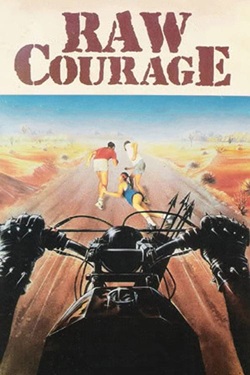
Raw Courage (1984, directed by Robert L. Rosen)


Three friends (Ronny Cox, Art Hindle, and Tim Maier) leave their families behind and go on a 72-mile run through the desert of New Mexico.  They’re marathon runners and they are trying to survive the ultimate challenge.  Instead, they run into a right-wing militia led by “Colonel” Crouse (M. Emmet Walsh) and Sonny (William Russ).  Soon, the joggers are being chased through the desert.  Their survival depends on if they have the raw courage to make it back to civilization.

Raw Courage was written and produced by Ronny Cox and I like to think that he made this movie as his way to get back at everyone who typecast him as a victim after Deliverance.  Cox’s jogger never gives up in Raw Courage, even while being chased through the broiling desert by a bunch of madmen on motorcycles.  Cox and Art Hindle both give good performances and their well-matched by Walsh and Russ.  (Unfortunately, Walsh’s role in pretty small.  Most of the actual villainy is committed by William Russ.)  Cox and Hindle both play intelligent men who just happened to find themselves in the wrong place at the wrong time.  That the victims are sympathetic and you actually care about whether or not they make it back to their families elevates the film.

The film does start to run out of gas towards the end.  The scenes of our heroes running through the desert start to get repetitive.  Raw Courage is still an exciting action film and it’s flat, made-for-TV look is probably less of a problem when viewed on YouTube than it was when the movie was initially released.  The film provides a rare starring role for Ronny Cox, four years before Robocop typecast him as everyone’s favorite corporate villain.  Cox delivers.  It’s a shame he didn’t get to play more heroes.

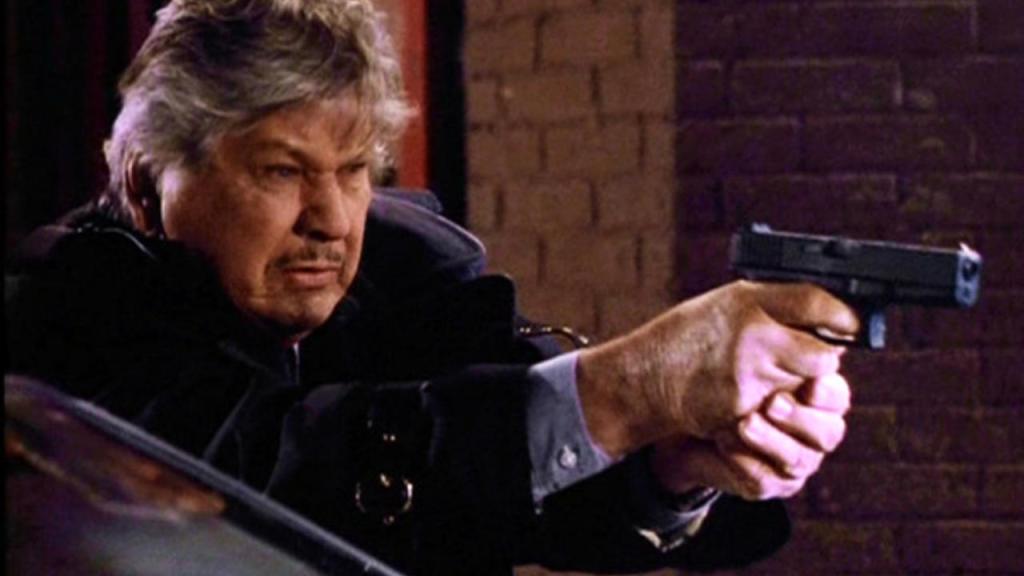
Brad reviews FAMILY OF COPS III: UNDER SUSPICION (1999) – Charles Bronson’s final film! 


Legendary actor Charles Bronson ended his five-decade career by starring in a series of made-for-TV movies, FAMILY OF COPS (1995), BREACH OF FAITH: A FAMILY OF COPS II (1997), and FAMILY OF COPS III: UNDER SUSPICION (1999). I was in my mid-twenties as this series played out, and I enjoyed each of the installments. Today, I’m going to take a look at the final film in the series, and the final film in Charles Bronson’s career.

FAMILY OF COPS III: UNDER SUSPICION opens with Milwaukee Police Inspector Paul Fein (Charles Bronson) and his detective son, Ben Fein (Joe Penny), investigating the double murder of a wealthy banker, Phillip Chandler, and his wife. Their initial suspect, the couple’s son Evan Chandler (Greg Spottiswood), is later found murdered, so they have to keep digging. They eventually uncover a money laundering scandal involving the current Chief of Police (Sean McCann) that may go all the way up to the Mayor (Art Hindle)! As usual, this series includes additional storylines involving other members of the family. One of the subplots involves Paul’s youngest son Eddie (Sebastian Spence), who’s racked with guilt over a S.W.A.T. raid gone wrong. Unable to open the warehouse door at the appropriate time, Eddie blames himself for the deaths of two cops. The other primary subplot involves Paul’s oldest daughter Kate (Barbara Williams), who finds herself pregnant with the child of her social worker boyfriend. Determined to have the baby whether her boyfriend hangs around or not, Kate must navigate their relationship and all the family drama while preparing for the possibility of being a single mother. 

As far as I’m concerned, the fact that this is Charles Bronson’s final film should make it a must watch for any person who considers themselves to be a fan of the icon. Making his debut in 1951 in the Gary Cooper film YOU’RE IN THE NAVY NOW, because he could “belch on cue,” Bronson’s final film would debut on CBS on January 10th, 1999, when he was 77 years old. At such an advanced age, Bronson still commanded the screen even though he was at the end of his career, and as time would tell, near the end of his life. He would be diagnosed in 2001 with Alzheimer’s disease and would pass away on August 30th, 2003. I savor every moment of this film, and while it makes me sad in some ways, in other ways I consider it my favorite of the series. Joe Penny steps up and takes a co-lead role in the film. He’s tough and sensitive, which adds another layer of depth to the foundation that Bronson had established in the first two movies. The series wouldn’t get another movie without Bronson, but I would have definitely been down for a Joe Penny led follow-up! This movie has a stronger sense of humor than we’ve seen in the earlier films, and I also like the main story as Paul Fein and his son take on systemic corruption in Milwaukee. While it’s still formulaic, I found the primary storyline to be more interesting than the generic crime stories in the first two installments. The subplots involving Eddie and Kate add some depth to the Fein family dynamics, but other than the fact that Kate is determined to keep her baby with or without her boyfriend’s help, the subplots didn’t make much of an impact for me. Also, there is one major departure in this installment, as Angela Featherstone does not return as the youngest daughter, Jackie Fein. Nicole de Boer steps into the role, and while she’s cute as a button, the character isn’t given much to do.

Overall, while FAMILY OF COPS III: UNDER SUSPICION is not in the same league as the great films made during Charles Bronson’s prime, it’s still a respectable close to his iconic career. It features good, committed performances, especially from Bronson and Joe Penny. The final shots of Charles Bronson looking over his movie family and smiling as they enjoy each other and share a meal together is a fitting end to his movie career, and one final celluloid glimpse into the man underneath the legendary facade.

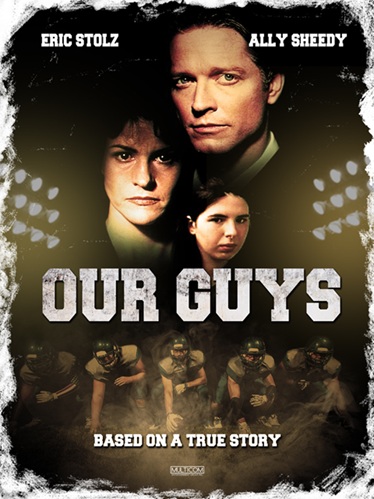
April True Crime: Our Guys by Bernard Lefkowitz and Our Guys (dir by Guy Ferland)


If there’s any true crime book that I recommend without hesitation, it’s Our Guys by Bernard Lefkowitz.

First published in 1997, Our Guys deals with a terrible crime that occurred in the leafy suburban community of Glen Ridge, New Jersey.  In 1989, it was an affluent community that loved its high school football team and where conformity and financial success were the most valued qualities the someone could have.  On March 1st, a 17 year-old girl was invited to a house party where, after she was convinced to head down to the basement, she was raped with a broomstick and a baseball bat by several members of the football team.  The girl was intellectually disabled and was later determined to have an IQ of 64.  Her name has never been revealed to the public.  In his book, Lefkowitz assigned her the pseudonym of Leslie Faber.

The crime was terrible.  So was the aftermath.  When one of the witnesses went to a teacher with what he saw happen in the basement, the town responded by rallying around the accused.  Initially, Leslie was accused of lying.  Then, as it became clear that something actually had happened in that basement, Leslie was accused of bringing it on herself.  Leslie, who was desperate to have friends and who was later determined to be psychologically incapable of saying “no” or even understanding what consent meant, was cast as a wanton seductress who led the members of the football team astray.  A girl who went to school with Leslie even tape recorded a conversation with Leslie in which Leslie was manipulated into saying that she had made the entire thing up.  It also undoubtedly didn’t help that some of the accused boys had fathers who were on Glen Ridge’s police force.

It’s a book that will leave you outraged.  Lefkowitz not only examined the crime itself but also the culture of the town and its general attitude that “boys will be boys.”  Despite the fact that they had a losing record and the fact that one of them was infamous for exposing himself every chance that he got, the football team was viewed as being made up as winners.  They were allowed to party every weekend with their parties becoming so legendary that they bragged about them in their yearbook quotes.  With a group of supportive girlfriends doing their homework for them, the football team was free to do whatever they wanted and, by the time they were seniors, they were infamous for being voyeurs.  While one football player would have sex, all the others would hide in a closet and watch.  When one of the football players stole $600 from one of his classmates, his father paid back the money and no one was ever punished.  In a town that valued material success above all else and viewed being different as a sign of weakness, Leslie and her family were treated as being outcasts.  In the end, three of the football players were sentenced to prison.  One was sentenced to probation.  A few others accepted plea deals and had their arrests expunged from the record.  Years later, one of the guys who was in the basement but not charged would murder his wife while home on leave from the military.

In 1999, Our Guys was adapted into a made-for-television movie.  Featuring Heather Matarazzo as Leslie, Ally Sheedy as the detective who investigated her rape, Eric Stoltz as the lawyer who prosecuted the case, and Lochlyn Munro as a cop who starts out on the side of the football team before realizing the truth, Our Guys simplifies the story a bit.  While the book focused on Glen Ridge and the culture of celebrating winners no matter what, the film focuses on Sheedy as the detective and her disgust with the suburbs in general.  Unfortunately, by not focusing on the culture of the town, the film presents the rape as being the bad actions of a group of dumb jocks as opposed to an expression of Glen Ridge’s contempt for anyone who was viewed as being on the outside.  What Lefkowitz showed through a precise examination of the town and its citizens, the film quickly dispenses by having Stoltz and Sheedy make a few pithy comments about how much the town loves it football team.  The story will still leave you outraged and Heather Matarazzo gives a heart-breaking performance as Leslie.  But, for those wanting the full story of  not only what happened in Glen Ridge but also how it happened, the book is the place to find it.

Guilty Pleasure No. 71: Submerged (dir by Fred Olen Ray)


THUNDERSTRIKE!

Listen, if you’re going to watch the 2000 film Submerged, you better be a  big fan of the term “Thunderstrike,” because it’s repeated so many times that one gets the feeling that the actors just loved saying it.

Thunderstrike is a satellite that was built by western businessman Buck Stevens (Dennis Weaver).  He and his daughter (Nicole Eggert) and her sort-of boyfriend (Hannes Jaenicke) are all flying to Hawaii so that they can conduct more tests on the Thunderstrike.  However, arms dealer Owen Cantrell (Tim Thomerson) wants the Thunderstrike for himself so he sends a mercenary named Jeff Cort (Coolio.  Yes, Coolio.) to steal the plans from the airplane.  The plan is to kill the pilot, substitute a new pilot, and then crash the plane into the ocean …. which is pretty much what happens, despite the best efforts of heroic CIA agent, Rex Manning (Maxwell Caulfield).

Actually, wait a minute.  Maxwell Caulfield’s character is named Jim Carpenter.  Well, I don’t care.  He’ll always be Rex Manning to me!

While Special Agent Mack Taylor (Brent Huff) tries to stop Cantrell from stealing the Thunderstrike, Captain Masters (Fred Williamson) tries to figure out a way to bring the plane to the surface.

If this sound familiar, it’s because Submerged has the same plot as Airport ’77.

If it looks familiar, it’s because Submerged lifts a lot of footage from Airport ’77, including the scene where the plane crashes, the scene where the plane settles on the ocean floor, and the scene where the plane is lifted off the ocean floor.  Even a scene of water pouring into plane is lifted from Airport ’77, which means that the plane in Submerged suddenly has a staircase that no one apparently noticed before.

Submerged was directed by the wonderful Fred Olen Ray and seriously, how can you not love it?  Between the cast and the fact that it features all of the best parts of Airport ’77, this is a film for which the term guilty Ppeasure was invented!  It helps that the cast, for whatever reason, appears to be taking the film rather seriously.  This film was Dennis Weaver’s final screen appearance and he seems to be having a ball playing a cheerful good old boy who can’t wait to put a dangerous satellite in the sky.

Plus, the film features Rex Manning!

Plus, Jack Deth!

Plus, Black Caesar!

Plus …. THUNDERSTRIKE!

Previous Guilty Pleasures

  1. Half-Baked
  2. Save The Last Dance
  3. Every Rose Has Its Thorns
  4. The Jeremy Kyle Show
  5. Invasion USA
  6. The Golden Child
  7. Final Destination 2
  8. Paparazzi
  9. The Principal
  10. The Substitute
  11. Terror In The Family
  12. Pandorum
  13. Lambada
  14. Fear
  15. Cocktail
  16. Keep Off The Grass
  17. Girls, Girls, Girls
  18. Class
  19. Tart
  20. King Kong vs. Godzilla
  21. Hawk the Slayer
  22. Battle Beyond the Stars
  23. Meridian
  24. Walk of Shame
  25. From Justin To Kelly
  26. Project Greenlight
  27. Sex Decoy: Love Stings
  28. Swimfan
  29. On the Line
  30. Wolfen
  31. Hail Caesar!
  32. It’s So Cold In The D
  33. In the Mix
  34. Healed By Grace
  35. Valley of the Dolls
  36. The Legend of Billie Jean
  37. Death Wish
  38. Shipping Wars
  39. Ghost Whisperer
  40. Parking Wars
  41. The Dead Are After Me
  42. Harper’s Island
  43. The Resurrection of Gavin Stone
  44. Paranormal State
  45. Utopia
  46. Bar Rescue
  47. The Powers of Matthew Star
  48. Spiker
  49. Heavenly Bodies
  50. Maid in Manhattan
  51. Rage and Honor
  52. Saved By The Bell 3. 21 “No Hope With Dope”
  53. Happy Gilmore
  54. Solarbabies
  55. The Dawn of Correction
  56. Once You Understand
  57. The Voyeurs 
  58. Robot Jox
  59. Teen Wolf
  60. The Running Man
  61. Double Dragon
  62. Backtrack
  63. Julie and Jack
  64. Karate Warrior
  65. Invaders From Mars
  66. Cloverfield
  67. Aerobicide 
  68. Blood Harvest
  69. Shocking Dark
  70. Face The Truth

Late Night Retro Television Review: Friday the 13th: The Series 2.11 “The Sweetest Sting”


Welcome to Late Night Retro Television Reviews, a new feature where we review some of our favorite and least favorite shows of the past! On Fridays, I will be reviewing Friday the 13th: The Series, a show which ran in syndication from 1987 to 1990. The show can be found on YouTube!

Agck!  Bees!

Episode 2.11 “The Sweetest Sting”

(Dir by David Winning, originally aired on January 16th, 1989)

I have never been stung by a bee or a wasp.

I’m extremely lucky.  All of my sisters and all of my cousins have been stung once or twice.  My mom was stung multiple times when I was little.  But I have never once been stung.  I once had a wasp fly straight into my hair and I was able to shake it out without it stinging me.  I have had bees land on my bare arm and just sit there without stinging.  I once knocked a wasp nest off of a farm doorway and the wasps, while obviously angry, made no attempt to sting me in retaliation.  For whatever reasons, the wasps and the bees have decided not to mar my beautiful skin with any of their stingers and I appreciate them for that.

Of course, I’m also very scared that they might someday change their mind.  I have no idea what it feels like to be stung but I know it’s painful.  On a more serious note, I have no idea whether or not I’m allergic to bees or wasps.  I appreciate their kindness but I’m still terrified of their capriciousness.

That’s why this somewhat silly episode of Friday the 13th freaked me out.  I say silly because it was about McCabe (Art Hindle), a psycho beekeeper who kept all of his bees in a cursed hive.  Whenever he would unleash the bees, the cheap special effects were so bad that it would have made me laugh if not for the fact that I’m already scared enough of innocent bees.  Imagine how I feel about cursed ones!

The bees produced cursed honey that can be used to restore the youth of people who allow themselves to be stung by McCabe’s bees.  (Because they’re magic bees, they don’t die after stinging someone.  I always understood that stinging someone caused a bee to be ripped in half so I’m not sure how the magic works but whatever.  I actually kind of feel bad for bees now.)  However, the people who accept McCabe’s youth treatment have to have a constant supply of honey and McCabe needs a constant supply of dead bodies so that his clients can fake their own deaths.  So, McCabe orders his clients to kill if they want to remain young.

To be honest, the whole plot kind of feels like it was made up on the spot but the great Canadian character actor Art Hindle gives an amusingly over-the-top performance as McCabe.  McCabe is the type of villain who laughs whenever he’s thinking about doing something evil.  There’s nothing subtle about Hindle’s performance but it works in the contest of the episode’s overall absurdity.  The bees are obviously fake.  Art Hindle chews up every piece of scenery he can get his hands on.  The episode’s a lot of fun.

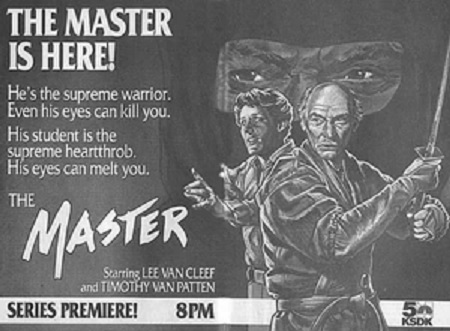
Retro Television Reviews: The Master 1.5 “High Rollers”


Welcome to Retro Television Reviews, a new feature where we review some of our favorite and least favorite shows of the past! On Fridays, I will be reviewing The Master, which ran on NBC from January to August of 1984.  The show can be found on Tubi!

Viva Las Vegas!

Episode 1.5 “High Rollers”

(Dir by Peter Crane, originally aired on March 2nd, 1984)

“Hi, I’m Max Keller….”

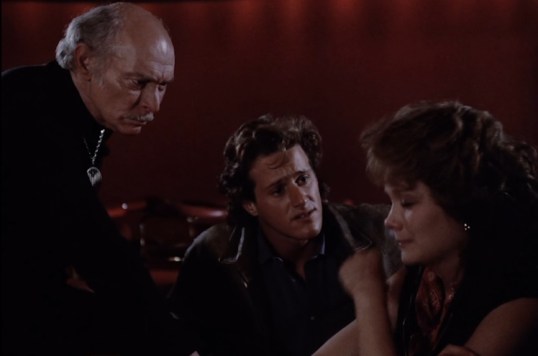
This week’s episode The Master opens with Max (Timothy Van Patten) and McAllister (Lee Van Cleef) standing on top of a mountain in the Nevada desert.  McAllister explains to Max that a ninja will sometimes be required to quickly descend from a roof or a cliff to the ground below.  (Uhmmm …. okay.)  McAllister has Max rappel down the side of the mountain.  Though hesitant at first, Max does so and reaches the ground fairly quickly.  However, before Max can brag too much on himself, he discovers that McAllister is already down there, waiting for him.

“Expect the unexpected,” McAllister explains.

I already mentioned this last week but I can’t help but feel that Max’s “ninja training” is mostly just McAllister amusing himself by seeing how far he can push his student.

Weekly ninja training completed, it’s time for Max and McAllister to drive to …. VEGAS, BABY!

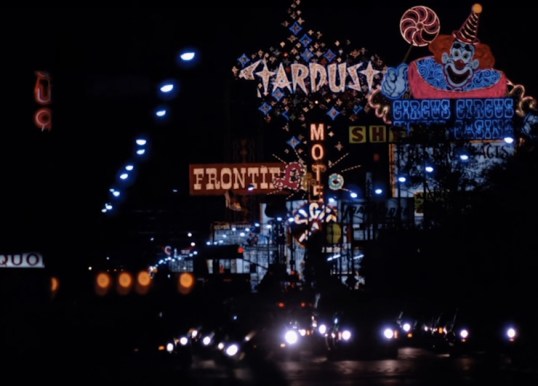
That’s right!  In this episode, Max and McAllister visit the ultimate American playground, Las Vegas.  Of course, there’s a long history of movies and television shows being filmed in Vegas.  In many ways, Las Vegas is the epitome of American ingenuity, a glitzy playground that has been built in an otherwise inhospitable desert.  Many great directors — from Martin Scorsese to Francis Ford Coppola to David Lynch to Paul Schrader — have found their inspiration in Las Vegas’s unique aesthetic.

Unfortunately, the Las Vegas that we see in The Master seems to be incredibly tacky.  There’s very little of the glitz and glamour that we typically associate with Las Vegas.  Instead, the action takes place in one rather dingy hotel and casino, the place where it looks like a month’s worth of chewing gum has been hidden under the tables and smashed into the carpet.  A group of thieves, led by the mysterious Blake (Art Hindle), are planning on forcing a showgirl named Tracy (Terri Treas) into helping them rob the hotel.  Tracy happens to be Max’s former girlfriend and, in fact, she’s the whole reason that he’s visiting Las Vegas in the first place.

Blake’s plan to rob the casino is ludicrously complicated.  Basically, his plan rests on convincing Tracy to flirt with the owner of the hotel and to convince him to invite her up to his room for a drink.  In the owner’s room, Tracy is to drug his drink and then, when he’s passed out, she’s supposed to steal his keys.  In order to make sure that she does this, Blake kidnaps her annoying 12 year-old daughter, Suzie (Angela Lee Sloan).

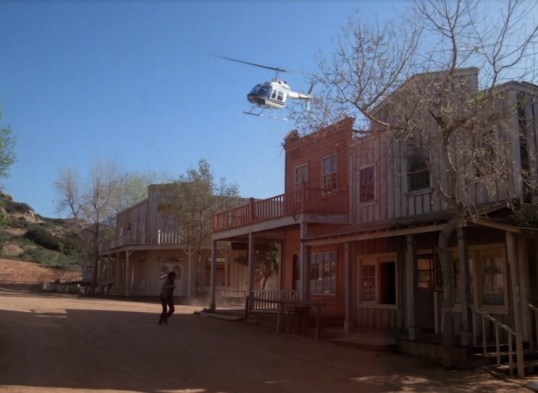
While Tracy is drugging the owner of the hotel, a bomb is set to explode at the nearby power station.  With all of Vegas plunged into darkness, it will be all the easier for Blake’s men to shoot tear gas into the casino.  While everyone’s disorientated, Blake will open the casino’s safe and then he and his associates will head to an abandoned western movie set in the middle of the desert.  From there, they will wait for the arrival of a helicopter that will take them to safety.

I mean, seriously, what happened to the concept of keeping things simple?  Blake’s plan is dependent on so many things happens at the exact right moment that there’s no way any halfway intelligent criminal would have agreed to have been a part of it.  Along with all of the obvious things that could go wrong, Blake also has failed to take into account that he might be followed to the old west town by a ninja and his idiot sidekick.

Which is pretty much what happens.  McAllister and Max show up at about the same time as the helicopter.

This leads to an elaborate fight in the old west town.  On the one hand, it’s a nice homage to Lee Van Cleef’s days as a spaghetti western star.  At once point, McAllister even tells Max that he feels oddly at home in the old west town.  “I always wanted to be a cowboy,” McAllister says.  On the other hand, it’s also pretty obvious that all of the action sequences and fight scenes feature not Lee Van Cleef but Lee Van Cleef’s much less stocky stunt double.  That takes away from the excitement of seeing Van Cleef return to his roots.

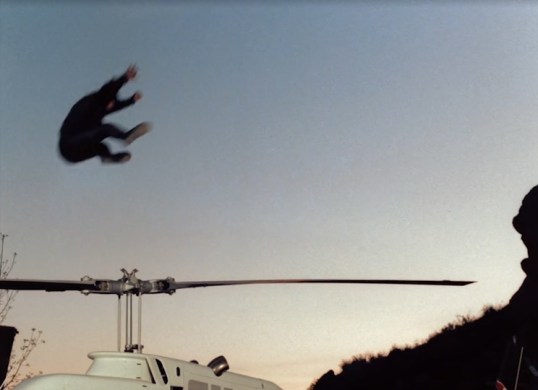
That said, there is a cool moment where Van Cleef’s stunt double jumps over the helicopter.

One of the good things about this episode is that we did learn a few new details about Max and McAllister’s relationship.  For instance, when Max wants to beat up Blake’s men, McAllister warns Max that he’s allowing his temper to control him.  Later, Max has an epiphany in which he realizes that, unlike Blake’s men, he could never bring himself to kill someone.  It’s actually a nicely human moment and it took me by surprise.  It’s a moment that suggests that The Master perhaps had higher ambitions than just being a typical action show.

We also learned a little more about Max’s backstory.  As he tells Tracy, his mother and his brother were both killed in a plane crash and he and his father had a falling out shortly afterwards.  Max says that he doesn’t know where his father is.  When Max says that, his relationship with McAllister suddenly makes a lot more sense.  Max puts up with McAllister because he’s looking for a new father figure.  That said, I’m still pretty sure that most of McAllister’s training exercises are just McAllister’s way of amusing himself at Max’s expense.

While I appreciated all of that, this episode was a bit too messy to really work.  The casino stuff was difficult to follow and, as I mentioned before, Blake’s big scheme was a bit too big for its own good.  I did like the fight scenes in the old west town but, unfortunately, the episode was nearly finished by the time that McAllister and Max arrived.  This episode had a lot of potential but it still felt like it was never as good as it could have been.

Next week: Max and McAllister hit up New Orleans!  Mardi Gras, baby!

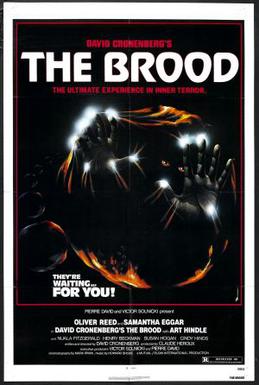
International Horror Film Review: The Brood (dir by David Cronenberg)


O Canada!
Our home and native land!
True patriot love in all of us command.
With glowing hearts we see thee rise,
The True North strong and free!
From far and wide,
O Canada, we stand on guard for thee.
God keep our land glorious and free!
O Canada, we stand on guard for thee.

Canada!  It always seems like such a nice country until you watch a David Cronenberg film.  Hailing from Toronto, Cronenberg started his film career with two satirical, black-and-white science fiction shorts and then went on to become one of Canada’s best-known filmmakers.  At a time when most people associated Canada with politeness and maple syrup, Cronenberg made visceral and often-disturbing films, ones that often mixed sexuality with graphic body horror.  At a time when the genre was being dominated by Italian filmmakers, Cronenberg brought a uniquely Canadian sensibility to horror.

Take 1979’s The Brood, for instance.

The Brood tells the story of one very doomed marriage.  Frank (Art Hindle) and Nola (Samantha Eggar) Carveth are fighting for custody of their five year-old daughter, Candice (Cindy Hinds).  (Not coincidentally, Cronenberg was going through his own custody battle when he first came up with the idea for The Brood.)  Nola, who has been emotionally scarred by both her alcoholic parents and her troubled marriage to Frank, is a patient at Somafree Institute.  Her psychotherapist, Dr. Hal Raglan (Oliver Reed), practices a technique called “psychoplasmics.”  Though it’s not easy to describe (and, wisely, Cronenberg doesn’t spend too much time trying to justify the science of it), it basically involves channeling anger and suppressed emotions into body modification.  What you or I might consider to be a hive or a welt is what Dr. Raglan would call a major breakthrough.

Frank is skeptical about Dr. Raglan’s theories but he still takes Candice to visit her mom.  However, when Candice returns from one visit bruised and scratched, Frank is convinced that Nola has been abusing her.  Hoping to both win custody of Candice and prove that Dr. Raglan’s methods are dangerous, Frank starts his own investigation into just what exactly has been happening at the Somafree Institute.

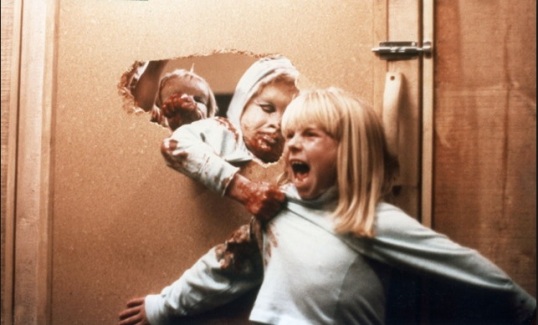
That’s when the children start to show up.  The children are small, with pale skin and light hair and oddly featureless faces.  They never smile.  They never speak.  They show up without any warning and violence always seems to follow them.  They attack both Nola’s mother and father.  When Nola suspects that Frank might be having an affair with Candice’s teacher, two of the children suddenly appear in her classroom.  Candice is scared of the children but still seems to have some sort of connection to them…

Even if you didn’t know this was a Cronenberg film, it would take just one look at the snow-covered landscape to identify The Brood as being a Canadian film.  As was often the case with Cronenberg’s early horror films, the imagery is frequently cold and chilly.  However, The Brood is not a cold film.  With its look at dysfunctional families and its emphasis on Frank’s attempts to protect his daughter, The Brood is actually one of Cronenberg’s most emotional films.  It’s a film about not only anger but also how people deal with that anger.  The killer kids are both literally and metaphorically children of rage.

Even by the standards of Cronenberg, things get grotesque.  Fortunately, the film’s talented cast keeps you interested, even when the bloody visuals might make you want to find a nice comedy to watch instead.  Art Hindle and Cindy Hinds are sympathetic as the father and daughter.  Oliver Reed keeps you guessing as to what exactly Dr. Raglan is actually trying to accomplish.  Nicholas Campbell and Robert A. Silverman, two members of the Cronenberg stock company, both make an impression in smallish roles.  And Samantha Eggar totally throws herself into her role, turning Nola into an absolutely terrifying monster.

Though it never quite reaches the flamboyant heights of either Scanners or ShiversThe Brood is still an effective horror film.  As opposed to some of his other films of the period, Cronenberg actually seems to not only care about the characters in the film but it also comfortable with encouraging us to care about them as well.  As a result, The Brood becomes about more than just trying to shock the audience.  The Brood is a film that sticks with you.

The Brood (1979, dir by David Cronenberg DP: Mark Irwin)

Horror on TV: Friday the 13th: The Series 2.11 “The Sweetest Sting” (dir by David Winning)


Tonight, for our horror on the lens, we have the eleventh episode of the 2nd season of Friday the 13th: The Series!

In this episode, a beekeeper (Art Hindle) uses killer bees to take out his enemies! AGCK! I have to admit that I am a little bit scared of bees, mostly because I’ve never been stung by one. There’s a part of me that will always be worried that I might be allergic to them. Plus, I think it’s kind of depressing that bees spend their whole life looking for someone to sting and then they die as a result. I feel bad for the bees, even as I fear them.

This episode originally aired on January 21st, 1989.

Porky’s II: The Next Day (1983, directed by Bob Clark)


The teens of Angel Beach, Florida are back!  They’re still trying to get laid, they’re still playing pranks on each other, and, this time, they’re …. FIGHTING THE KLAN!?

Porky’s II continues with the first Porky’s mix of raunchiness and social commentary.  While Pee Wee (Dan Monahan) tries to get back at his friends for spending the whole previous movie making fun of the size of his dick, the other members of the large ensemble cast thwart an attempt by the Klan to keep them from putting on a Shakespearean showcase.  The Klan is upset that a Seminole has been cast as Romeo so they burn a cross and do everything they can to sabotage the production.  Also trying to keep the show from going on is the hypocritical Rev. Bubba Flavel (Bill Wiley) and Mrs. Balbricker (Nancy Parsons), who both consider Shakespeare’s plays to be obscene.  When Wendy (Kaki Hunter) discovers that one of the county commissioners has been lying about supporting the play, she humiliates him in public by pretending to vomit in a fountain and accusing him of impregnating her.  It’s slightly funnier than it sounds but just slightly.

The first Porky’s took a stand against anti-Semitism while the second Porky’s takes a stand against censorship and the Klan.  That’s actually pretty cool when you consider that both of these films are usually just thought of as being dumb sex comedies.  Just like the first film, Porky’s II may be raunchy but it has a conscience.  That was due to director Bob Clark, who obviously meant for the Porky’s films to be about more than just T&A.

Unfortunately, Porky’s II is never as funny as the first Porky’s.  Too many of the jokes are recycled from the first film and the cast’s habit of laughing at their own “humorous” lines is even more grating the second time around.  Even the film’s most famous scene, where Wendy humiliates the duplicitous commissioner, goes on for too long and doesn’t have as much of a payoff as it should.  The best scenes in the film are the scenes that were lifted from Hamlet, Romero & Juliet, and A Midsummer Night’s Dream.  You wouldn’t expect the ensemble of Porky’s to feature that many Shakespearean actors but apparently it did.  Fans of A Christmas Story, which was also directed by Clark and which came out the same year as Porky’s II, will especially want to pay attention to the MacBeth sword fight scene just because the famous holiday leg lamp makes an appearance.

Porky’s II is nowhere near as good or memorable as the first Porky’s but its heart is in the right place.  While not as big of a success as the first Porky’s, it still did well enough to lead to Porky’s III, which I’ll review tomorrow.