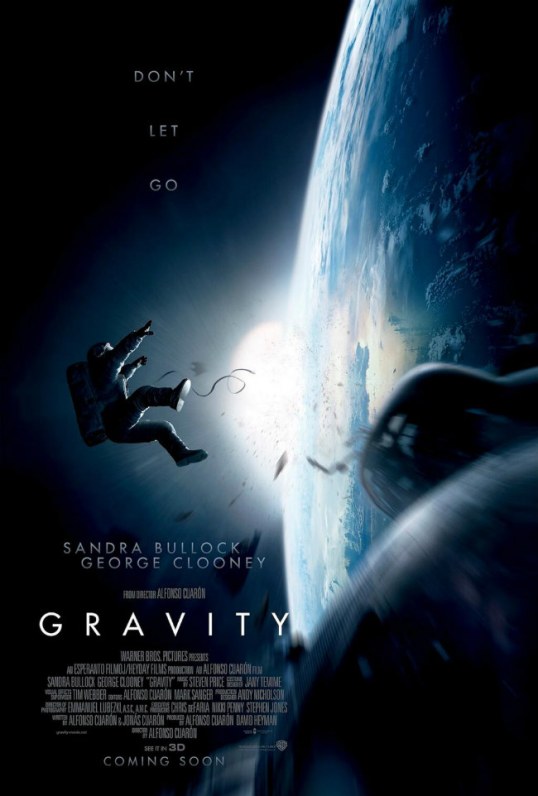
The Director’s Guild Awards were given out today and Alfonso Cuaron was named best director for Gravity. For those of you looking for some guidance while trying to predict the closest Oscar race in history, Gravity has now won honors from the DGA and the PGA, American Hustle took top honors at the SAG Awards, and 12 Years A Slave was honored by the PGA (where it tied for best picture with Gravity).
So does Gravity have the momentum now? Perhaps. However, Cuaron’s victory isn’t exactly a surprise. In fact, since before the Oscar nominations were first announced two weeks ago, a lot of Oscar watchers have been predicting that Gravity would win best director while 12 Years A Slave or American Hustle took best picture.
Or perhaps, even more intriguingly, perhaps American Hustle, Gravity, and 12 Years A Slave could end up splitting the vote and allow one of the other 6 nominees to somehow win a totally unexpected victory.*
Anything’s possible but, for now, here are the DGA winners:
FILM AWARDS
FEATURE FILM X — Alfonso Cuarón – “Gravity”
Paul Greengrass – “Captain Phillips”
Steve McQueen – “12 Years a Slave”
David O. Russell – “American Hustle”
Martin Scorsese – “The Wolf of Wall Street”
DOCUMENTARY FEATURE
Zachary Heinzerling – “Cutie and the Boxer” X — Jehane Noujaim – “The Square”
Joshua Oppenheimer – “The Act of Killing”
Sarah Polley -–”Stories We Tell”
Lucy Walker – “The Crash Reel”
TELEVISION AWARDS
DRAMA SERIES
Bryan Cranston – “Breaking Bad” (“Blood Money”)
David Fincher – “House of Cards” (“Chapter 1”) X — Vince Gilligan – “Breaking Bad” (“Felina”)
Lesli Linka Glatter – “Homeland” (“The Star”)
David Nutter – “Game of Thrones” (“The Rains of Castamere”)
COMEDY SERIES
Mark Cendrowski – “The Big Bang Theory” (“The Hofstadter Insufficiency”)
Bryan Cranston – “Modern Family” (“The Old Man & the Tree”)
Gail Mancuso – “Modern Family” (“My Hero”) X — Beth McCarthy-Miller – “30 Rock” (“Hogcock!/Last Lunch”)
Anthony Rich – “The Big Bang Theory” (“The Love Spell Potential”)
MOVIE/MINISERIES
Stephen Frears – “Muhammad Ali’s Greatest Fight”
David Mamet – “Phil Spector”
Beth McCarthy-Miller and Rob Ashford – “The Sound of Music”
Nelson McCormick – “Killing Kennedy” X — Steven Soderbergh – “Behind the Candelabra”
VARIETY/TALK/NEWS/SPORTS – SERIES
Dave Diomedi – “Late Night with Jimmy Fallon” (#799)
Andy Fisher – “Jimmy Kimmel Live” (#13-1810)
Jim Hoskinson – “The Colbert Report” (#10004) X — Don Roy King – “Saturday Night Live” (“Host: Justin Timberlake”)
Chuck O’Neil – “The Daily Show with Jon Stewart” (#19018)
VARIETY/TALK/NEWS/SPORTS – SPECIALS
Louis CK – “Louis CK: Oh My God”
Joel Gallen – “2013 Rock and Roll Hall of Fame Induction Ceremony”
Louis J. Horvitz – “55th Annual Grammy Awards”
Don Mischer – “85th Annual Academy Awards” X — Glenn Weiss – “67th Annual Tony Awards”
REALITY
Matthew Bartley – “The Biggest Loser” (“1501”) X — Neil P. DeGroot – “72 Hours” (“The Lost Coast”)
Paul Starkman – “Top Chef” (“Glacial Gourmand”)
J. Rupert Thompson – “The Hero” (“Teamwork”)
Bertram van Munster – “The Amazing Race” (“Beards in the Wind”)
CHILDREN’S PROGRAMS
Stephen Herek – “Jinxed”
Jeffrey Hornaday – “Teen Beach Movie”
Jonathan Judge – “Swindle” X — Amy Schatz – “An Apology to Elephants”
Adam Weissman – “A.N.T. Farm” (“influANTces”)
COMMERCIALS
Fredrik Bond
John X. Carey
Noam Murro X — Martin de Thurah
Matthijs van Heijningen
—–
*However, the best film of the year remains the unnominated Upstream Color.
However, 12 Years A Slave has been doing well with the smaller critics groups. Earlier today, it was named best picture by the Washington D.C. Area Film Critics Association.
Here’s the full list of winners from D.C.:
Best Picture: “12 Years a Slave”
Best Director: Alfonso Cuaron, “Gravity”
Best Actor: Chiwetel Ejiofor, “12 Years a Slave”
Best Actress: Cate Blanchett, “Blue Jasmine”
Best Supporting Actor: Jared Leto, “Dallas Buyers Club”
Best Supporting Actress: Lupita Nyongo, “12 Years a Slave”
Best Adapted Screenplay: John Ridley, “12 Years a Slave”
Best Original Screenplay: Spike Jonze, “Her”
Best Art Direction: Catherine Martin, “The Great Gatsby”
Best Cinematography: Emmanuel Lubezki, “Gravity”
Best Editing: Alfonso Cuarón and Mark Sanger, “Gravity”
Best Score: Hans Zimmer, “12 Years a Slave”
Best Foreign Language Film: “The Broken Circle Breakdown”
12 Years A Slave didn’t just win Boston today. It was also named best picture of the year by the New York Film Critics Online.
Personally, I’m hoping that next year, sites like AwardsDaily, AwardsWatch, Goldderby, and others will join together to form the Online Oscar Precursors Watchers Association and they’ll give out awards to the various critical groups. For example, they could hand out awards for the Best Jump On The Bandwagon, Best Out-Of-Nowhere winner, or the Honorary Award For The Award That Was Most Obviously Determined By A Desire To Tick People Off.
But, until that happens, here’s are the New York Film Critics Online’s pick for the best of 2013:
BEST PICTURE
“12 Years a Slave”
BEST DIRECTOR
Alfonso Cuaron (“Gravity”)
BEST ACTOR
Chiwetel Ejiofor (“12 Years a Slave”)
BEST ACTRESS
Cate Blanchett (“Blue Jasmine”)
BEST SUPPORTING ACTOR
Jared Leto (“Dallas Buyers Club”)
BEST SUPPORTING ACTRESS
Lupita Nyong’o (“12 Years A Slave”)
BEST SCREENPLAY
Spike Jonze (“Her”)
BEST BREAKTHROUGH PERFORMANCE
Adele Exarchopoulos (“Blue Is the Warmest Color”)
BEST MUSIC
“Inside Llewyn Davis”
BEST DEBUT DIRECTOR
Ryan Coogler (“Fruitvale Station”)
BEST CINEMATOGRAPHY
Emmanuel Lubezki (“Gravity”)
BEST DOCUMENTARY
“The Act of Killing”
BEST FOREIGN LANGUAGE FILM
“Blue Is the Warmest Color”
Earlier today, the Los Angeles Film Critics Association announced the picks for the best of 2013. There are a few things worth noting:
1) Her is coming on surprisingly strong.
2) James Franco won best supporting actor for Spring Breakers! Well, technically, Franco tied with Jared Leto for Dallas Buyers Club. But still, it’s good to see Franco’s audacious performance getting some recognition.
3) My favorite film of 2013 — Shane Carruth’sUpstream Color — came in second for best editing.
Here are the winners:
BEST PICTURE (tie)
“Gravity,” “Her”
BEST DIRECTOR
Alfonso Cuaron, “Gravity” Runner-up: Spike Jonze, “Her”
BEST ACTOR
Bruce Dern, “Nebraska” Runner-up: Chiwetel Ejiofor, “12 Years a Slave”
BEST ACTRESS (tie)
Cate Blanchett (“Blue Jasmine”); Adele Exarchopoulos (“Blue is the Warmest Color”)
BEST SUPPORTING ACTOR (tie)
James Franco, “Spring Breakers”; Jared Leto, “Dallas Buyers Club”
BEST SUPPORTING ACTRESS
Lupita Nyongo, “12 Years a Slave” Runner-up: June Squibb, “Nebraska”
BEST SCREENPLAY
“Before Midnight,” Julie Delpy, Ethan Hawke & Richard Linklater Runner-up: “Her,” Spike Jonze
BEST EDITING
“Gravity,” Alfonso Cuaron & Mark Sanger Runner-up: “Upstream Color,” Shane Carruth & David Lowery
BEST CINEMATOGRAPHY
“Gravity,” Emmanuel Lubezki Runner-up: “Inside Llewyn Davis,” Bruno Delbonnel
BEST PRODUCTION DESIGN
“Her,” K.K. Barrett Runner-up: “Inside Llewyn Davis,” Jess Gonchor
BEST MUSIC/SCORE
“Inside Llewyn Davis,” T Bone Burnett Runner-up: “Her,” Arcade Fire & Owen Pallett
BEST FOREIGN-LANGUAGE FILM
“Blue is the Warmest Color” Runner-up: “The Great Beauty”
BEST ANIMATED FEATURE
“Ernest and Celestine” Runner-up: “The Wind Rises”
BEST DOCUMENTARY/NONFICTION FILM
“Stories We Tell” Runner-up: “The Act of Killing”
This may have been posted before, I haven’t seen anything for it, but I’m not sure. Blew my mind, though, as the short version of this was shown as one of the trailers for seeing Elysium. It’s fantastic to watch something that you know is just a story, just a movie unfold in front you and yet feel like you’re moving with it.
I honestly believe Alfonso Cuaron’s Gravity may have the potential to actually give me motion sickness when I finally catch it in the IMAX (and I don’t suffer from it). I love how the camera is so free flowing here, trying to catch everything that’s going on. I spent most of this muttering…”Omigod! Reach for something! Anything!! Grab it, Dammit!” The following is an extended trailer for the film.
It’s been almost 7 years since Alfonso Cuarón had directed a film. His last one, Children of Men, was such an underappreciated piece of scifi filmmaking. Now, after all these years, he returns to the scifi genre for his latest film due out later this fall.
Gravity stars George Clooney and Sandra Bullock as a pair of astronauts who have become stranded in space after their space shuttle explodes and takes out the space station they’ve been sent to. The film literally is about just the characters Clooney and Bullock plays. It’s quite the sparse cast, but should also make for an interesting drama about two individual who must find a way to save themselves after being stranded in space with no way to contact Earth.
The film will be filmed fully digital with the 3D coming by way of post-production conversion. Even from the sequences put in the teaser it gives hints at 3D that looks to wow and immerse rather than annoy.
Gravity is set for an October 4, 2013 release date.
After two weeks of speculation, Catching Fire (the sequel to The Hunger Games) has a director and the winner is…
Francis Lawrence!
Francis Lawrence is known for directing music videos, Constantine, I Am Legend, and Water For Elephants.
I’ve never seen Constantine, I thought I am Legend was boring, and I enjoyed Water For Elephants but it’s hard not to feel that, after considering names like David Cronenberg, Alfonso Cuaron, Bennett Miller, and Duncan Jones, Lionsgate selected the most generic candidate in the mix.
I’m sure that there will be a lot of people complaining about the selection but, to be honest, it’s not like Gary Ross was all that inspiring a director before Hunger Games. In the end Catching Fire’s success is going to be more about Jennifer (as opposed to Francis) Lawrence.
For the latest “Scenes I Love” I had to pick one of the most powerful scenes in cinema in the past ten years. I happened to catch this scene once again while channel surfing and came across it just exactly where the scene in the clip begins. I speak of the Miracle Cease Fire scene in Alfonso Cuaron’s 2006 sci-fi dystopian (though the film does offer a glimmer of hope in the end) film, Children of Men.
This scene must be given some basic ground work to be understood why it was so powerful. In Children of Men the world hasn’t had a single birth for almost 18 years. In this mix is the only birth which has become the contention between a resistance group calling themselves the “Fishes” who are opposed to the government’s fascists policies concerning immigrants. So, with this in mind this scene comes across as powerful indeed.
The looks of everyone from the refugees, the armed “Fishes” to the government troops when they heard the baby crying in the arms of Kee as Clive Owen’s character escorted them from the battle-scarred tenement building was the pay-off that the film was building towards from the very first seconds of the film. Both sides intent on destroying each other stopped fighting just to be able to allow something which hasn’t happened in 18 years to find a safe haven from the fighting.
Cuaron’s direction of this scene also made it one of my favorite scenes ever in how he doesn’t try to preach that love and peace conquers everything. Once the baby’s cries were far enough from those who listened to it the fighting resumed in earnest. This scene had both hope and joy balanced with despair and futility all occurring in the same scene. It’s a shame this film wasn’t seen by many when it first came out during the 2006 Christmas season.
Well, we all knew it would have to end someday and now, it’s over. The Harry Potter film series, which began way back in 2001, is concluding right now in a theater near you. On Friday night, me, Jeff, my sister Erin, and our friend Evelyn went down to the AMC Valley View and we saw Harry Potter and the Deathly Hallows, Part 2.
The cinematic story of Harry Potter is over and yes, I did cry as I watched it end. I didn’t just cry because of the movie, though the movie itself is one of the best of the year and it has one of those wonderful endings that just makes it impossible to remain dry-eyed. No, I cried because — with this film — an era of my life is truly over.
When the first Harry Potter film came out, I was only 16 and still trying to deal with the fact that I had been diagnosed as being bipolar just a few weeks earlier. I felt alone and broken and destined to spend the rest of my life on the outside looking in. The three hours that I spent watching Harry Potter and the Sorcerer’s Stone were three hours when I didn’t have to worry about suddenly bursting into tears and having everyone around me worrying about whether or not I was actually taking my hated medication. For three hours, I could escape to another world where those who were different were celebrated precisely because they were different. For three hours, I could imagine that just maybe I had a special purpose for existing too and maybe I had benevolent wizards and witches looking out for me too. And I’m sorry if all that sounds trite in retrospect but, when you’re 16 and you think you’re too damaged to love, anything that gives you hope and pleasure in the present is a precious treasure.
Over the years, I eventually came to realize that being bipolar was hardly a curse and, as I matured and grew up and discovered new things, there was always a Harry Potter film either playing or about to come out. Whether I was escaping high school, graduating college, or dealing with just every good or bad thing that makes up life, Harry Potter — this character who I first met (in book form) when I was 13 — was always there. So, at the risk of sounding overdramatic, the end of Harry Potter is the end of a chapter of my life.
One final personal note: As I watched Harry Potter and the Deathly Hallows, Part Two, I had three dolls (or action figures, as boys insist on calling them) in my purse. These dolls — Harry, Hermione, and Ron — came out around the same time as the second Harry Potter film and my mom (who collected dolls) ordered them off of Ebay three years ago, shortly before she entered the hospital for the final time. Now, my mom was not a huge fan of the Harry Potter series but she knew that I loved it and that’s why she made those dolls her final gift to me.
And those are some of the reasons why I found myself crying as I watched the finale of Harry Potter. However, there’s another reason why I cried and that’s that this is just a great film and the perfect conclusion to the series.
Essentially, Harry Potter and the Deathly Hallows, Part Two starts up immediately after the conclusion of Part One. Dobby is dead, Lord Voldemort (a wonderfully neurotic Ralph Fiennes) and the Death Eaters are intent on destroying everything, and Severus Snape (Alan Rickman, wonderful as always) is in charge of Hogwarts. After spending the first part of Deathly Hallows as fugitives, Harry Potter, Ron Weasley, and Hermione Granger (Daniel Radcliffe, Rupert Grint, and Emma Watson) return to Hogwarts to take a final stand against Voldemort. Things end in a surprisingly bloody battle (this film is not for children) that leaves several characters dead and ultimately reveals that one wizard wasn’t the saint we always assumed he was while another is revealed to be the secret hero of the entire series.
Let’s get one question out of the way right now: will non-Harry Potter fans be able to follow this film? Uhmmm…no. Sorry. Then again, why would a non-Harry Potter fan be at a film called Harry Potter and The Deathly Hallows Part Two anyway? I mean, seriously, if you’re just going to film because everyone else is doing it than who are you to bitch anyway? This is what you non-Harry Potter fans need to do. Stop reading this review. Go watch the previous Harry Potter films. Watch them in order. Take your time because Deathly Hallows is going to be in theaters for a while. And then, once you’ve become immersed in the story, go see how it all concludes. And then come back here and read rest of this review.
Okay, so is everybody up to date?
Cool.
One of the more interesting features of the Harry Potter series is that so many different directors (each with his own definite, individual style) have been involved in bringing these films to the screen. Among Harry Potter fans, hours can literally be spent debating the merits (and weaknesses) of Chris Columbus, Alfonso Cuaron, Mike Newell, and David Yates. My own theory is that each director was perfectly suited for each film he directed. The audience-friendly vision of Chris Columbus was what the first two films needed, just as Prisoner of Azkaban needed Cuaron’s far darker vision and Mike Newell’s attention to character made Goblet of Fire one of the best of the Harry Potter films. And while David Yates may not be as well-known (or critically acclaimed) as Newell or Cuaron, he brings exactly the right tone to Harry Potter and the Deathly Hallows, a perfect combination of spectacle and humanity. It is to Yates’ credit that the scenes in which the characters simply talk to each other are just as compelling as the dramatic sequences where Voldemort and the Death Eaters attack Hogwarts. Yates understands that this material could easily come across as silly or childish and to his credit, he never allows the audience to simply dismiss this film as a lot of blathering about wands and CGI magic. As opposed to other directors who have given us summer blockbusters, Yates takes his film seriously.
And, fortunately, so does his cast.
One of the great pleasures of the Harry Potter series is that it’s given American audiences the chance to discover (and rediscover) some of the great British character actors and a lot of them show up (some for only a matter of minutes) here in the finale. Maggie Smith, Jim Broadbent, Julie Walters, Robbie Coltrane, Gary Oldman, John Hurt, David Thewlis, Emma Thompson, and Jason Isaacs all put in appearances. Kelly MacDonald has a great scene playing a ghost, Helena Bonham Carter is perfect as the evil Bellatrix Lestrange, and Alan Rickman is brilliantly ambiguous as Severus Snape. (And yes, Snape’s actions are explained in this film and yes, I did cry.)
Ralph Fiennes plays so many villains that I now find myself expecting him to show up killing people in every movie I see. He’s like a British Christopher Walken. Still, it’s easy to take an actor like Fiennes for granted. For the entire Harry Potter series to work, Lord Voldemort can’t just be an ordinary villain. He’s got to be the sum total of all things evil and deadly. You’ve got to believe that people would be scared to speak his name. Great heroes need a great villain and Fiennes’ Voldermort is a great villain.
Ultimately, however, the true credit for the success of the Harry Potter series belongs to three actors who have literally grown up on the movie screen — Daniel Radcliffe, Rupert Grint, and Emma Watson. The producers are fortunate indeed that the cute kids that they cast over a decade ago have all grown up to be talented, attractive, and likable actors. If the first part of Harry Potter and the Deathly Hallows seemed to showcase both Grint and Watson (almost to Radcliffe’s expense), part 2 is most definitely centered on Harry Potter. That doesn’t mean that Watson and Grint aren’t good in this film. They are and they get to share one of the best movie kisses of 2011. (As well, for those who keep count, Grint says “Bloody Hell,” three times in the film.) But, for obvious reasons, this film is all about Harry and Radcliffe’s performance as Harry. It’s a challenge for Radcliffe and it’s a challenge that he more than succeeds at conquering. As the film ended, I realized that I was sad to know that the adventures of Harry Potter were done but I was excited to see what the future will hold for Radcliffe, Grint, and Watson.
Incidentally, Harry Potter and the Deathly Hallows Part 2 has been released in both 3-D and 2-D. We saw the 3-D version and if you have any knowledge of how I feel about 3-D (and how motion sick I tend to get while watching 3-D films) then that should show you just much I love the Harry Potter series. I loved it so much that I was even willing to overlook my hatred of 3-D. The 3-D here (which was added after the film has already been filmed) doesn’t really add much to the movie. There were a few cool moments where I was all like, “Look, I can reach out and grab a piece of Voldemort,” but otherwise, the 3-D was a negligible factor as far as the overall film was concerned.
Still, there was one interesting thing about the 3-D. The theater we saw the movie in was half-way empty. At the same time, the neighboring theater — in which the 2-D version was playing — had a line of people waiting to get in. They were not only waiting to see the 2-D version, they were waiting to see a showing that wouldn’t even begin until a full 90 minutes after the 3-D version started. I mention this because, in the wake of Avatar, so many people have taken it for granted that 3-D is the future of movies and soon, as long as a film is in 3-D, we won’t have to worry about the difficult stuff like an interesting plot or compelling characters. However, 3-D has become an overexposed gimmick. For every film like Cave of Dreams that uses 3-D to craft an actual artistic statement, there’s a 1,000 films like Priest which use 3-D just because it’s an easy way to trick sucks into spending an extra dollars to see a crappy film.
What so many filmmakers seem to forget is that the majority of film goers are not looking for 3-D. We’re just looking for a good film. And sometimes — like with Harry Potter and the Deathly Hallows — we get lucky and we find a great film.
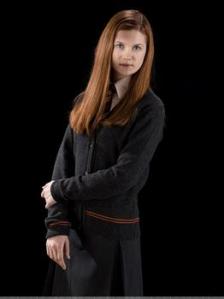
(Oh, and one last thing: I know everyone always expects me to claim to be just like Hermione but actually, I’ve always related more to Ginny Weasley. Like her, I’m the youngest of four siblings, I’ve got red hair, and I always get my man, in the end.)
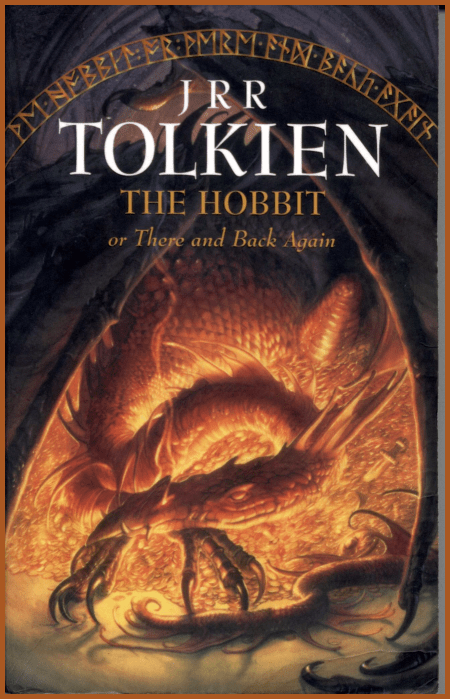
Now that Guillermo Del Toro has made it official that he’s leaving The Hobbit as director there’s now a scramble to find who will be replacing him on the project. Del Toro was universally hailed as the best choice the first time around when Peter Jackson made it known that he would only produce the two-part film and not get back to directing them. The many delays due to MGM’s financial troubles, script still not completed and casting still not done forced GDT to back away and could shelve the project for good.
The only thing keeping the project afloat is the fact that this project has a major fan-base already clamoring to see it made. With the huge success both critically and commercially of Jackson’s The Lord of the Rings Trilogy this two-part film adaptation of The Hobbit is pretty much a lock to do the same in the hands of the right filmmaker.
Jackson and studio heads holding the rights to the project will not want just any director. While Peter Jackson was still a little-known director and an outsider from the Hollywood scene when he began work on the original trilogy, this time around studio people will want a marketable name or, at the very least, a filmmaker who has the skills to follow Jackson’s work. Guillermo Del Toro was the perfect choice now someone else has to take up the baton.
Some have mentioned Peter Jackson as the only choice if he’d back off comments that he won’t direct but only produce. There’s a camp that say now’s the time to sign Sam Raimi who recently has left another mega-franchise and now available. Raimi is an interesting choice in that knows how to handle huge blockbuster projects and he definitely needs a home-run to follow-up a bad end as helmer of the Spider-Man franchise.
Another name to come up which I would welcome if Jackson doesn’t return as director is Guillermo Del Toro’s fellow countryman and one of his best friends: Alfonso Cuaron. Cuaron has shown himself to be one of his generation’s best. He’s done fantasy as helmer of the third Harry Potter film (universally seen as the best in the franchise) and may see tackling this blockbuster project as a major artistic challenge. I, for one, would hope Cuaron takes the job if offered.
The one dark horse name which has begun making the rumor mill about who may replace GDT is Jackson’s own protege, wunderkind filmmaker Neill Blomkamp. He’s worked with Jackson already and his first feature-length film, District 9, shows he has the storytelling and directing chops. The only drawback to him accepting the job if offered is that this will be a major-budgeted studio film which means it could turn into another Halo-clusterfuck where he commits and the project dies due to problems within the studio.
Other filmmakers have been mentioned like Brad Bird, Jean-Pierre Jeunet, Andrew Adamson, Tim Burton and Peter Weir just to name a few. In the end, my money is on either Jackson just taking the reins on the film if he thinks no one else would give the necessary commitment to the project it deserves, Cuaron takes on the job as a way to challenge himself or Jackson protege Blomkamp tackling something bigger as a way to add more cred to his growing reputation as one of the best young filmmaker of his generation.
Who do you think should take charge of The Hobbit now that Guillermo Del Toro has left?



 Through the Shattered Lens