Review: Kraven the Hunter (dir. by J. C. Chandor)


Kraven is Sony’s latest attempt to mine its Spider-Man-adjacent characters for cinematic gold, this time taking a stab at Sergei Kravinoff, better known as Kraven the Hunter. Even if you’re going in with rock-bottom expectations set by Morbius or the patchy Venom films, you might find yourself torn between mild intrigue and full-on indifference. The movie doesn’t bomb, but it certainly doesn’t soar either—it lands squarely in the “it’s fine, I guess” territory, buoyed by a handful of positive elements but weighed down by a laundry list of issues.

The film tries to position itself as a darker, grittier entry in Sony’s Spider-Man Universe but ultimately falls flat in several key areas. The movie follows Sergei Kravinoff (Aaron Taylor-Johnson), a man battling his toxic past and violent instincts, trying to define himself apart from his ruthless father, Nikolai (Russell Crowe). While Taylor-Johnson puts in a committed, physical performance and the action sequences deliver some visceral excitement—with brutal fight scenes and a snowy prison breakout standing out—the film struggles to transcend its predictable, shallow narrative.

One of the strongest aspects of Kraven is its commitment to visceral, intense action. The movie doesn’t shy away from bloody, fierce fights, embracing Kraven’s nature as a hunter rather than a hero. Physicality is a highlight here with Taylor-Johnson convincingly portraying the character’s power and agility. Some of the choreography—such as a snow-covered prison escape and a jungle chase—inject adrenaline into the movie, complemented by Russell Crowe’s imposing presence as the domineering father. Ariana DeBose’s Calypso and Alessandro Nivola’s Rhino provide interesting, if underdeveloped, counterparts that add flavor to the otherwise monochrome supporting cast.

However, the film is weighed down by a paint-by-numbers storyline that treads the well-worn path of antihero origin stories without adding fresh insight or emotional texture. The plot feels cliched and forgettable, with many moments so awkward and stilted that the dialogue and narrative flow could easily be accused of being AI-generated—and that accusation wouldn’t be out of place. This mechanical, artificial quality in the script creates a disconnect that makes characters seem like hollow archetypes rather than fully realized people. It’s as if the story was stitched together by a formula rather than human creativity, robbing the film of natural humor, depth, or emotional impact.

The biggest glaring example of this artificiality comes in the odd use of CGI for some of the characters’ facial movements. In particular, a scene with DeBose’s Calypso involved digital manipulation of her mouth and eyes to sync dialogue after filming, creating an uncanny, often distracting effect. This technique, reminiscent of the awkward, jarring movement of digitally animated mouths on still images, recalls the uncomfortable “Annoying Orange” vibe and highlights a troubling overreliance on technology rather than retakes or better production planning. It is a standout low point that further reinforces the impression of a rushed or overly engineered project.

The emotional core of Kraven revolves around the toxic father-son dynamic, which Crowe and Taylor-Johnson approach with convincing intensity, though the writing undermines their efforts with repetitive, obvious lines. The other characters, including Calypso, Rhino, and the Foreigner, suffer from limited screen time and one-dimensional arcs, often serving only to advance the plot mechanically rather than enrich the story. The film’s isolation from the broader Spider-Man universe also makes the stakes feel lower, leaving Kraven’s violent vendetta somewhat directionless and detached from broader consequences.

Visually, the film is inconsistent. While it nails gritty, physical action sequences, the CGI and digital alterations break immersion. The attempt at a darker, more grounded tone battles against these technical missteps and a narrative stuck in early-2000s superhero tropes.

Kraven offers some genuinely brutal action and committed performances but is hamstrung by a formulaic, AI-esque script and distracting technical glitches like the digital mouth-sync. It feels like a film caught between creative ambition and lazy execution, where flashes of potential are overwhelmed by awkward dialogue and uninspired plotting. For fans craving raw action or eager to see a Spider-Man villain on screen, it may be a mildly watchable diversion; for anyone seeking a fully fleshed-out, emotionally engaging story, Kraven is likely to disappoint.

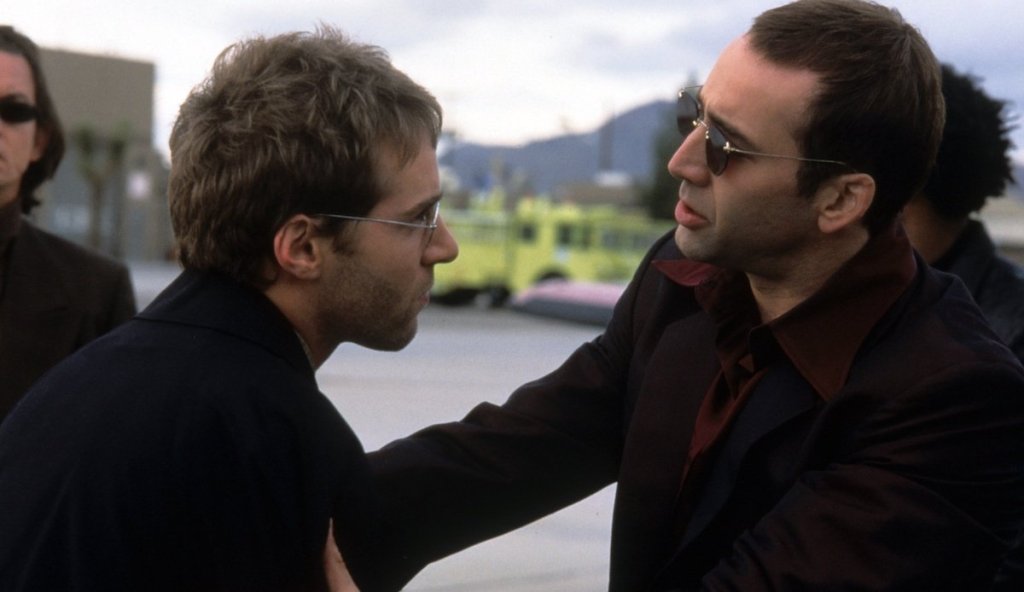
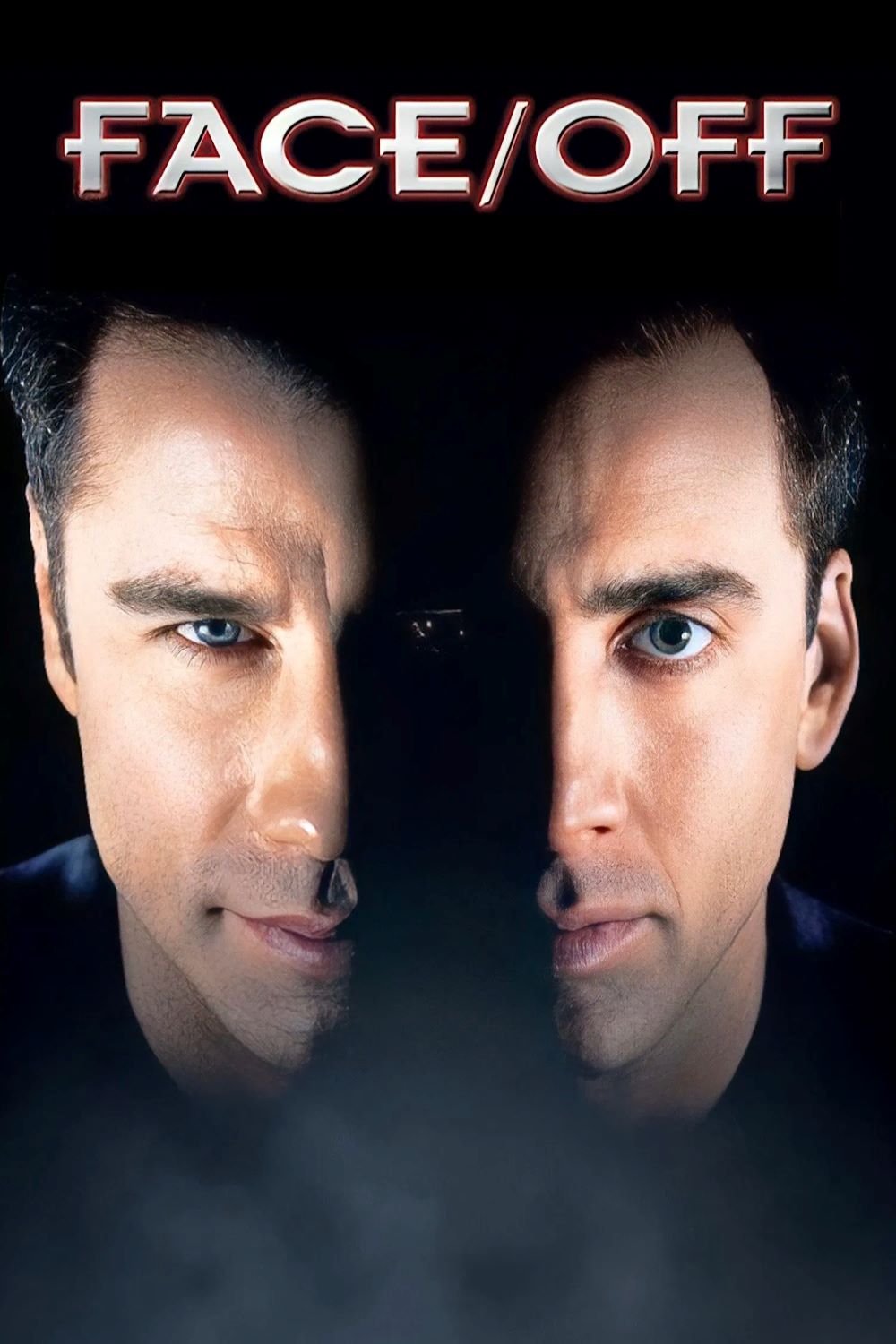
Brad’s “Scene of the Day” – Alessandro Nivola and Nicolas Cage in FACE/OFF (1997)!


Alessandro Nivola has some good credits in movies like MANSFIELD PARK (1999), AMERICAN HUSTLE (2013), and THE BRUTALIST (2024), but he’ll always be special to me as Pollux Troy, the younger brother of Nicolas Cage’s Castor Troy, in John Woo’s most awesome American film FACE/OFF!

In celebration of Nivola’s 53rd birthday, enjoy this little taste of late-90’s coolness (the link can only be watched on YOUTUBE, and it’s worth it):

April True Crime: The Wizard of Lies (dir by Barry Levinson)


For many people, Bernie Madoff is a still a name that summons hate.

Madoff was the owner of Bernard L. Madoff Investment Securities, a firm that was a family business.  He ran it with his two sons, Mark and Andrew, and he gained a reputation for being a financial wizard, someone who never lost money and who always returned a profit for everyone who trusted him with their money.  He was someone who took money from the famous and the ordinary, the rich and the middle class, and he promised everyone that he would do wonderful things with that cash.  He lived in a fabulous home in New York City.  He had business and political connections.  His firm was, at one point, ranked as the sixth biggest on Wall Street but Madoff, himself, tried to keep a low-profile.

Of course, Madoff was a liar.  While his brokerage firm actually did make money, the asset management part of his business was actually a massive Ponzi scheme.  He took his clients’ money for himself and then kept everyone at bay by sending them fake documents that showed how well their investments were doing.  As long as the economy remained strong, Madoff had nothing to worry about.  People gave him their money, assumed it was safe, and then went away.  But when the stock market crashed in 2008, Madoff realized that his panicked clients would be coming for their money and he wouldn’t be able to give it to them.

Overnight, Madoff’s life collapsed.  He spent the rest of his days in prison, having been turned in by his own sons.  One son committed suicide, the other would die of cancer with his last words apparently being that his father was dead to him.  It was the biggest case of financial fraud in United State history and the majority of Madoff’s clients lost all of the money that they had given to him.  It was subsequently learned that many people had spotted red flags when it came to Madoff and his business.  (The fact that Madoff claimed to never lose money should have been a huge one.)  But Madoff invested his money in politicians and he never faced a real investigation until it was too late.  Madoff spend the rest of his days as a symbol of everything wrong with Wall Street.

Not surprisingly, quite a few movies were inspired by Bernie Madoff’s crimes, some of them featuring characters based on him and a few being about the case itself.  Produced by HBO, 2017’s The Wizard of Lies stars Robert De Niro as Madoff, Michelle Pfeiffer as his wife, and Alessandro Nivola as his son, Mark.  Directed by Barry Levinson, The Wizard of Lies follows Madoff as his Ponzi scheme collapses and it shows how the grand deception started.  Robert De Niro plays Madoff as being essentially soulless, a sociopath who knew he would eventually get caught but who just couldn’t bring himself to stop stealing people’s money.  Indeed, as played by De Niro, Madoff comes across as being one of the most joyless criminal masterminds in history.  He’s fooled everyone but he can’t enjoy it.  The impression that one gets is that Bernie Madoff was a pretty boring guy.  Perhaps that’s why people were willing to trust him with their money.  Someone that boring had to be trustworthy!  Many people have claimed that there’s no way that Mark and Andrew Madoff couldn’t have know what their father was doing.  In the film, one gets the feeling that Mark and Andrew knew something was going on but they decided to willfully blind themselves to what was happening around them.  The film hints that was Madoff’s secret power.  No one wanted to admit that his success was too good to be true.

The Wizard of Lies really doesn’t reveal anything new about the Madoff case.  Madoff’s crimes were actually pretty simple.  He wasn’t a criminal genius.  He was just someone who understood the importance of telling people what they wanted to hear.  Still, it’s a well-acted movie and, if you’re just looking for the facts of the case, The Wizard of Lies will give them to you.

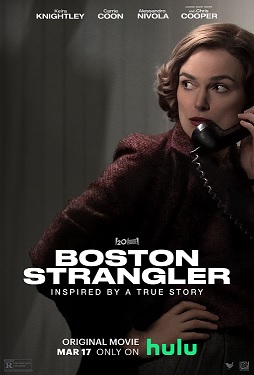
Film Review: Boston Strangler (dir by Matt Ruskin)


In the Boston of the early 1960s, Loretta McLaughlin (Keira Knightley) is a reporter for the Boston Record American.  Loretta is frustrated with a newsroom that is dominated by a boys club of aging, overweight, sexist old timers.  When she thinks that she’s discovered that there is a murderer targeting and strangling elderly women in Boston, she goes to her editor, Jack Maclaine (Chris Cooper), and asks to be allowed to write up a story about her suspicions.  Jack would prefer that Loretta write a story about the new toaster that’s been released by Sunbeam.

So, Loretta does some investigating on her own and she discovers that the police suspect that all of the recent murders are being committed by one man.  The story that she writes ends up on the front page and it even leads to her sharing a sip of whatever alcohol Jack has in his flask.  The Boston police initially deny Loretta’s story and it looks like Loretta is going to spend the rest of her career reviewing kitchen appliances.  But then the police just as suddenly confirm Loretta’s story and Loretta is back on the Strangler beat.  She’s partnered with a veteran reporter named Jean Cole (Carrie Coon).

Together, Loretta and Jean battle sexism while investigating not just the Strangler but also the police department’s incompetence.  Their reporting makes them local celebrities, with many people coming to them with the leads that the police couldn’t be bothered to follow up on.  Despite Jean’s warnings about getting too involved with the case, Loretta obsesses over the Strangler’s crimes.  Could the murderer be Daniel Marsh (Ryan Winkles), the boyfriend of one of the victim’s?  Could it be George Nassar (Greg Vrostros), a criminal who reportedly has a genius IQ?  Or could it be Albert DeSalvo (David Dastmalchian), the man who confesses to the crimes under the condition that his confession cannot be used in court and the belief that his family will be sent the reward money that would otherwise go to someone who helped the police to catch the Boston Strangler?  DeSalvo, who was given a life sentence for a series of rapes that he committed before and after the murders began, is never convicted of any of the murders but, with his confession, the murders are declared to be solved.  But are they?  Loretta is not so sure.

Boston Strangler is not the first film to be made about the murders but I think that it might be the first to seriously explore the theory that DeSalvo was lying when he confessed to the majority of the murders.  (As the film points out, DeSalvo’s cellmate just happened to be the same George Nassar who was also a suspect in the murders.)  1968’s The Boston Strangler, for instance, explained away the inconsistencies in DeSalvo’s confessions by suggesting the DeSalvo suffered from dissociative identity disorder and that DeSalvo himself didn’t understand what he was doing.  This latest version of the story, however, presents DeSalvo as being a streetwise, lifelong criminal who confessed because his lawyer, F. Lee Bailey, convinced him that he would get a book deal and that he would be sent to a mental hospital as opposed to a prison.  A title card at the end of the film informs us that DNA testing has confirmed that DeSalvo committed one of the 13 murders to which he confessed but that the other 12 murders remain unsolved.  While one might wonder why anyone would confess to a murder that they didn’t actually commit, it’s actually something that has happened on more than a few occasions.  Typically, the false confession will come from someone who, like DeSalvo, is already looking at a life sentence and who has nothing to lose by helping the police close the book on some unsolved crimes.  The confessor gets a little extra notoriety and maybe some special treatment and the cops get to increase their clearance rate.  In Boston Strangler, it’s suggested that DeSalvo’s confession was accepted because everyone wanted the crimes and the fear that went with them to just magically go away.

It’s an intriguing theory and one that has more evidence to back it up than the majority of conspiracy theories that one comes across online.  Unfortunately, Boston Strangler really doesn’t do the story much justice because it focuses on the least interesting part of it.  We don’t learn much about the investigation, DeSalvo, or the lives of the Strangler’s victims.  Instead, the film gets bogged down with newsroom politics, as Loretta demands to be taken seriously and Jean offers advice on how to play the political game.  Every journalism cliché is present, from the crotchety old editor to the afterwork bar to the publisher who doesn’t want to upset the city’s power brokers.  Admittedly, when it comes to journalists, there’s probably a good deal of truth to be found in all of those clichés but the film still leans a bit too heavily into them.  Every time we see Chris Cooper looking at the front page and taking a sip from his flask, we’re reminded that we’ve seen the exact same scene in a hundred other movies about newspapers.

As directed by Matt Ruskin, Boston Strangler has the washed-out, shadowy look that David Fincher used to good effect in Zodiac. The difference is that, in Zodiac, the shadows created a feeling of an all-enveloping evil slowly consuming the world.  Zodiac’s visual style felt as if it was showing the viewer a true picture of the heart of darkness.  In Boston Strangler, the visual style just leads the viewer to suspect that the director watched Zodiac before filming.  The film’s visuals are so washed-out that it actually becomes a bit boring to look at.  This is the rare film that makes Boston seem bland.  Interestingly, when the action briefly moves to Michigan, the visuals suddenly become much more colorful and interesting.  Perhaps by design, there’s a vibrancy to the Michigan scenes that is missing from the rest of the film.  Unfortunately, those Michigan scenes are very brief.

The cast is full of talent but the majority of the performers are let down by a script that doesn’t allow anyone to have more than one or two personality traits.  Keira Knightley speaks with a convincing Boston accent and has a few good scenes in which she shows that Loretta is coming to understand the true horror of the story she’s covering but the script itself doesn’t allow Loretta to have much of a personality beyond being outraged.  Carrie Coon, cast as potentially the most interesting character in the film, also feels underused.  As for Chris Cooper, he glowers with the best of them but the film can’t figure out much to do with him beyond having him drink from his flask.

There’s an interesting moment in the film in which it is suggested that DeSalvo built a false confession out of the details that he came across in Loretta and Jean’s stories about the crimes.  It’s a moment that suggests that the media itself has some culpability when it comes to the crimes of men like Albert DeSalvo and whoever else may or may not have been strangling women in 1960s Boston.  It’s perhaps the most honest moment of the film but it’s also a moment that’s not followed up on.  That’s a shame because it suggests the movie that Boston Strangler could have been if it hadn’t gotten so bogged down with all the journalism film clichés.  (Again, I would mention Zodiac as the prime example of how to do this type of film effectively.)  Boston Strangler hints at the bigger story but it never really goes far beneath the surface.

Playing Catch-Up: The Neon Demon (dir by Nicholas Winding Refn)


the-neon-demon-elle-fanning-900x0-c-default

What to say about The Neon Demon?

See, this is a film that you have to be careful about discussing.  From the moment that it premiered at Cannes last year, The Neon Demon was the love-it-or-hate-it film of 2016.

Those of us that loved The Neon Demon really, really loved it.

And those that hated it — well, let’s just say that they really, really hated it.  They complained that The Neon Demon was exploitive.  They found the subject matter to be sordid.  They accused the movie of being both pretentious and ultimately pointless.  The plot made no sense, they complained.  The film was overlong and featured about a handful of false endings.  It almost seemed as if Nicholas Winding Refn was taunting anyone who expected him to make a typical melodrama about life in Hollywood.

All of that is true but, honestly, what were these people expecting?  As a result of the success of Drive, many people have made the mistake of thinking that Nicholas Winding Refn is a mainstream director.  He’s not.  Refn is a provocateur.  He is a director who often dares his audience to walk away.  In The Neon Demon, each false ending challenges the audience’s assumption about how a story — any story — should end.  Some people, I’m sure, would complain that Refn is all style and no substance.  However, The Neon Demon is about a world where one’s worth is determined by their style.  Style is substance.  The world of The Neon Demon may be empty but the film is not.

For all the debate about the film’s deeper themes (or lack of them), The Neon Demon‘s story is a fairly simple and deliberately familiar one.  A teenage runaway comes to Hollywood, finds some success as a model, and discovers that the world of show business is not as romantic as she may have initially believed.  When we first see Jesse (Elle Fanning), she’s posing for her boyfriend and she’s pretending to be dead.  Death, beauty, and sex go hand-in-hand in The Neon Demon.

Jesse’s an interesting character, one who constantly challenges our assumptions.  At first, Jesse seems like a typical innocent.  She’s a virgin who is so introverted that she can barely carry on a conversation.  She lives in a cheap apartment, under the menacing gaze of her sleazy landlord (Keanu Reeves, having fun playing his skeezy character).  She has a boyfriend and on their dates, she tells him about how she’s always dreamed of being a star.  It’s only as the film progresses that you start to realize how little you actually know about Jesse.  That she’s a runway is implied early on.  We never learn what led to her running away.  In fact, we learn next to nothing about who she was before she appeared in Los Angeles.

In Los Angeles, Jesse is everything that the fashion industry values.  She’s beautiful and, even more importantly, she’s young.  We watch as Jesse goes to a casting call and we’re struck by the blank-look on her face.  We wonder if there’s anything going on underneath the surface.  Jesse has hallucinations, seeing a shining triangle and kissing her own reflection.  Someone asks her what it’s like to be desired.  She replies, “It’s everything.”

Jesse befriends Ruby (Jena Malone), a makeup artist who lives in a gigantic mansion, overlooking an empty swimming pool.  When Ruby isn’t working in the fashion industry, she works at a morgue, applying makeup to corpses and occasionally engaging in necrophilia.  She makes the dead beautiful so that they can be buried looking their best.  Again, beauty and death are intertwined throughout The Neon Demon.

Ruby has two other friends, Gigi (Bella Heathcote) and Sarah (Abbey Lee).  They’re both models, struggling to maintain their careers even as younger models, like Jesse, continue to flood into Los Angeles.  Gigi has had so much cosmetic surgery that none of her original features remain.  Gigi is neurotic and fearful.  Sarah, on the other hand, is confident and sarcastic.  When asked what she did the last time another model screwed her out of a job, Sarah calmly replies, “I ate her.”

Sarah isn’t necessarily joking either.  Without giving too much away, The Neon Demon features, among other things, a character eating an eyeball that another character has just thrown up.  Not surprisingly for a Refn film, there’s a lot of blood in The Neon Demon.  It’s a film that opens with fake blood and ends with very real blood.

Combining the visual sense of Dario Argento with the thematic concerns of Jean Rollin, The Neon Demon is a triumph of pure style.  The visuals are so strong that it’s impossible to look away, even when the film’s themes are deliberately obscure.  The Neon Demon is a surreal journey into the dark side of Hollywood, a mixture of ennui, alienation, decadence, and sacrifice.  It may not always make sense but it’s always fascinating to watch.

Personally, I think The Neon Demon would make a great double feature with La La Land.  Two triumphs of style, two very different views of Los Angeles.

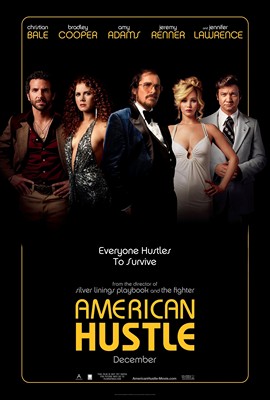
Shattered Politics #93: American Hustle (dir by David O. Russell)


American_Hustle_2013_poster

“Some of this actually happened.”

— Opening Title of American Hustle (2013)

I have always been surprised by how much some people hate the 2013 best picture nominee, American Hustle.  Even two years after the film was first released, you’ll still find people whining that the film felt like David O. Russell’s attempt to remake Goodfellas (yes, I have actually seen more than a few people online making this idiotic claim) or claiming that the movie was overrated or that there wasn’t anyone in the film that they could root for.  While every film has its detractors, I’m always a little bit taken aback by just how passionately some people dislike this film.

Some of it, of course, is because the film that beat American Hustle for best picture was the universally acclaimed 12 Years A Slave.  As hard as it may seem to believe now, there were a lot of people who thought that American Hustle might actually beat 12 Years A Slave.  Strangely enough, a lot of online film bloggers tend to take a Manichaen approach to the Oscars, viewing each year’s race in terms of good and evil. The film that they want to win represents good and, therefore, every competing film must represent evil.  It’s a pretty stupid and immature way of looking at things but, then again, the stupid and immature approach has worked pretty well for Sasha Stone and Ryan Adams over at AwardsDaily.com so who am I to criticize?

Of course, I don’t think it’s a coincidence that the majority of American Hustle‘s most strident online critics have been male.  I imagine that they watched the film and, in Amy Adams and Jennifer Lawrence, they saw every unresolved crush of their adolescence.  When Amy Adams successfully fooled Christian Bale and Bradley Cooper, these critics saw themselves being fooled.  When Jennifer Lawrence called Bale a “sick son of a bitch,” these critics felt that they were being called a sick son of a bitch.  American Hustle is a film about men who don’t know how to talk to women and that probably struck a little too close to home for a lot of those online critics.

(I imagine that the majority of online American Hustle haters probably preferred Rooney Mara’s version of the Girl with the Dragon Tattoo to Noomi Rapace’s.)

Of course, the truth of the matter is that American Hustle was one of the best films of a very good year.  Of all the films nominated for best picture of 2013, American Hustle was my personal favorite.

Based, very loosely, on true story, American Hustle is a period piece.  It takes place in the late 70s, which of course means that we get a lot of great music, a scene in a disco, and clothes that are both somehow ludicrous and to die for at the same time.  It’s a glamorous film about glamorous people doing glamorous and not-so-glamorous things and how can you not love that?

Irving (Christian Bale, giving a brave performance) is a generally nice guy who also happens to be a con artist.  His unlikely partner is Sydney (Amy Adams), a former stripper turned Cosmo intern.  When Sydney is working with Irving, she takes on a totally different identity and tells people that she’s Lady Edith Greensly, a British aristocrat who has international banking connections.  When Sydney plays Edith, she speaks in a posh British accent and what’s interesting is that her accent is often (deliberately) inconsistent.  However, as Irving points out, it doesn’t matter whether her accent is a 100% convincing or not.  What’s important is that people want her to be Lady Edith Greensly and people will make excuses for almost anything as long as it confirms what they want to believe.

Eventually, Irving and Sydney are arrested by ambitious and highly strung FBI Agent Richie DiMaso (Bradley Cooper).  Richie, who spends a good deal of the film with curlers in his hair, lives with his mother and has a boring fiancée who he doesn’t seem to like very much.  (Richie is also briefly seen sniffing coke, which might explain a lot of his more extreme behavior.)  Richie wants to make a name for himself and he views Irving and Sydney as his way to do so.  He blackmails them into helping him set up and arrest crooked politicians and businessmen.  Richie also finds himself growing obsessed with Sydney, who he believes to be English even after she tells him that she isn’t.

All of this eventually leads to Irving and Richie setting up the Mayor of Camden, New Jersey, Carmine Polito (Jeremy Renner).  Polito, who may be corrupt but who also seems to sincerely care about helping the citizens of his town, wants to revitalize gambling in Atlantic City.  Irving and Richie introduce him to FBI agent Paco Hernandez (Michael Pena), who is disguised as Sheik Abdullah and who they claim is interested in investing in Carmine’s plans.  This, of course, leads to a meeting both with a local Mafia don (Robert De Niro) and with several politicians who agree to help out the Sheik out in exchange for money.

(And no, the film did not lie.  This is based on a true story, believe it or not.)

Complicating things is the fact that Irving himself comes to truly like the generous and big-hearted Carmine and how can you not?  When the film was first released, Jeremy Renner was a bit overshadowed by Bale, Cooper, Adams, and Jennifer Lawrence.  However, Renner gives the best performance in the film, playing Carmine with a disarming mix of innocence and shrewdness.  He’s the type of guy who is smart enough to walk out on the first meeting with the fake sheik’s associates but who is still naive enough that he can be charmed by Irving.  When the fake sheik gives Carmine an equally fake knife as a gift, the look of genuine honor on Carmine’s face is heart-breaking.

The other big complication is Irving’s wife, Rosalyn (Jennifer Lawrence).  Rosalyn is jealous, unstable, unpredictable, and, in her own way, one of the smarter people in the film.  She’s also a bit of pyromaniac and, when she accidentally blows up a new microwave, you’re really not surprised.  (And, when Rosalyn starts to obsessively clean the house while singing Live and Let Die at the top of her lungs, I felt like I was watching a blonde version of myself.)  When Rosalyn starts to have an affair of her own, it leads to American Hustle‘s satisfying and twisty conclusion.

(Again, a lot of the same online toadsuckers who irrationally hate American Hustle seem to hold a particular contempt to Jennifer Lawrence’s performance in this film, as if to acknowledge that Lawrence — as always — kicks ass would somehow be a betrayal of Lupita Nyong’o’s award-winning performance in 12 Years A Slave.)

Don’t listen to the haters.  American Hustle is a great film, a stylish and frequently funny look at politics, corruption, and the ways that people con themselves into believing what they want and need to be true.

Film Review: Devil’s Knot (dir by Atom Egoyan)


After having spent close to a year hearing only negative things about it, I finally watched Atom Egoyan’s Devil’s Knot last night.  On the basis of what a lot of critics had said about the film, I have to admit that I was mostly watching it to see if I needed to include it on my upcoming list of the 16 worst films of 2014.

But you know what?

Devil’s Knot really isn’t a bad film.  It’s just an extremely unnecessary one.

Devil’s Knot opens with a title card that reads, “Based on a true story.”  Honestly, the title card could have just as easily read, “Based on a true story and if you doubt it, there’s four other movies you can watch.”  The trial, conviction, and subsequent imprisonment of the West Memphis Three is perhaps the most famous miscarriage of justice in recent history precisely because so many documentaries have been made about it.  Paradise Lost and Paradise Lost Part Three are two of the most disturbing true crime documentaries ever made.

(As for Paradise Last Part Two, it displays a stunning lack of self-awareness as it attempts to prove the guilt of John Mark Byers by using many of the same techniques that were used to convict the West Memphis Three.  The less said about it, the better.)

The story is so well-known that I almost feel like retelling it would be like taking the time to inform you that George Washington was our first president.  But here goes — in 1993, 3 eight year-old boys were murdered in the small town of West Memphis, Arkansas.  Three teenagers were arrested for the crime and, on the flimsiest of evidence, were convicted.  As is seen in the documentaries, their conviction had more to do with community hysteria and paranoia than anything else.  The supposed leader of the West Memphis Three, Damien Echols, was accused of being a Satanist.  Why?  Mostly because he wore black clothing.

Eventually — and largely as a result of the documentaries made about the case — the West Memphis Three would be freed from prison.  (However, their convictions would still legally stand, meaning that their exoneration would be limited to the court of public opinion.)  Devil’s Knot, however, doesn’t deal with any of that, beyond a lengthy scroll of “this is what happened after the movie” information that rolls up the screen after the final scene.  Instead, Devil’s Knot deals with the first trial of the West Memphis Three and the small town atmosphere of fear and hysteria that led to them being convicted in the first place.

And — though the film is surprisingly conventional when you consider the reputation of director Atom Egoyan — it’s all fairly well-done.  As a former resident of and frequent visitor to Arkansas, I was happy to see that Egoyan didn’t indulge in as many stereotypes as I feared he would.  (One need only watch the self-important Northern activists in Paradise Lost Two to see the attitude that I feared Egoyan would bring to the project.)  Reese Witherspoon is perfectly cast as the mother of one of the murdered boys.  Kevin Durand is properly intimidating at John Mark Byers.  Even Colin Firth manages to make for a convincing Arkansan.

But, ultimately, Devil’s Knot just feels so unnecessary.  It doesn’t bring anything new to the story and there’s ultimately nothing here that you couldn’t have learned from the original Paradise Lost.

Probably the best thing that I can say about Devil’s Knot is that it’s better than Paradise Lost Part Two.

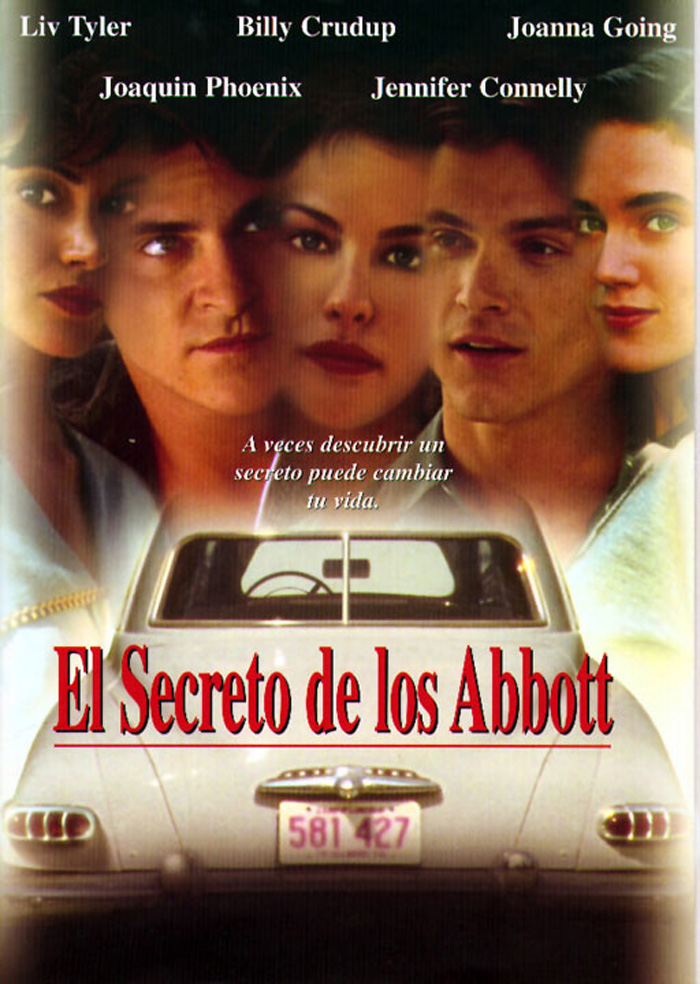
Embracing the Melodrama #45: Inventing the Abbotts (dir by Pat O’Connor)


First released in 1997, Inventing the Abbotts is a small town, romantic melodrama about two families in the 1950s.  One family is poor.  One family is rich.  As you can probably guess, each is fated to determine the destiny of the other.

Decades ago, Lloyd Abbott (Will Patton) and Holt were business partners.  However, after Lloyd had an affair with Holt’s wife (Kathy Baker), their friendship ended.  Lloyd eventually becomes the richest man in town and has three beautiful daughters: dutiful Alice (Joanna Going), wild Eleanor (Jennifer Connelly), and virginal Pam (Liv Tyler).  Holt is long since dead and his two sons, Jacey (Billy Crudup) and Doug (Joaquin Phoenix) live next door to the Abbotts.  While the bitter Jacey is obsessed with the Abbott family and ends up pursuing both Eleanor and the married Alice, Doug claims not to care about the Abbotts.  However, despite his claimed indifference, Doug soon finds himself falling in love with Pam.  Will Doug and Pam be together or will Lloyd succeed in keeping them apart?

To be honest, Inventing the Abbotts is not a particularly good film.  It moves way too slowly, Doug and Jacey frequently swtich personalities whenever the plot demands it, the story is way too predictable, the voice over narration is way too obvious, and Jennifer Connelly’s character leaves the film way too early.  This is one of those films that is determined to make sue that you never forget that it’s taking place in the 50s and you can be sure that every cliché that you associate with that decade will pop up at least once.  There are a few scenes that could have been easily been replaced with a picture of Joaquin Phoenix holding a sign reading, “It’s the 50s,” without causing us to miss out on any important information.

And yet, I still liked Inventing the Abbotts.  I think it really comes down to the fact that I’m the youngest of four sisters and therefore, I have a weakness for movies about sisters.  And the sisters in Inventing the Abbotts are all perfectly cast and believable as siblings so, for me, the movie was redeemed because of the number of scenes to which anyone who is a sister or who has a sister will be able to relate.

As such, despite its flaws, Inventing the Abbotts is definitely a guilty pleasure for me.

Your results may vary.

Inventing the Abbotts