Al Lettieri is one of my favorite cinematic bad guys based on his performance in MR. MAJESTYK (1974) with Charles Bronson. I’ll never forget how bad he wanted those Keys in the famous breakout sequence. Check it out!
Tag Archives: Al Lettieri
Happy Birthday in heaven to Al Lettieri! Enjoy this bad-ass scene from MR. MAJESTYK!
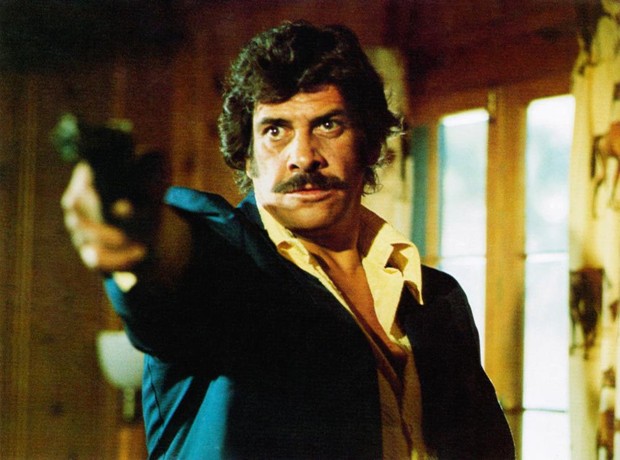
I love actor Al Lettieri. He was such an incredible “heavy” in classic movies like THE GODFATHER and THE GETAWAY.
I will always appreciate his performance as Frank Renda, one of the most badass bad guys that Charles Bronson ever faced in a movie. It’s a shame that he died so young, because he was an incredible actor. Enjoy this badass scene from MR. MAJESTYK, and remember one of the greats!
Film Review: The Don Is Dead (dir by Richard Fleischer)
“The Don is Dead!” shouts the title of this 1973 film and it’s not lying.
After the powerful and respect leader of the Regalbuto crime family dies, the Mafia’s governing body meets in Las Vegas to debate who should be allowed to take over the family’s operations. Frank Regalbuto (a smoldering Robert Forster) wants to take over the family but it’s agreed that he’s still too young and hot-headed. Instead, control of the family is given Don Angelo DiMorra (Anthony Quinn), an old school Mafia chieftain who everyone agrees is a man of respect. Don DiMorra will serve as a mentor to Frank while Frank’s main enforcers, The Fargo Brothers, will be allowed to operate independently with the understanding that they will still respond if the mob needs them to do a job. Tony Fargo (Forrest) wants to get out of the rackets all together while his older brother, Vince (Al Lettieri), remains loyal to the old ways of doing things.
Frank is not happy with the arrangement but he has other things to worry about. He knows that there’s a traitor in his family. While he and the Fargo brothers work to uncover the man’s identity so that they can take their revenge, Don Angelo falls in love with a Vegas showgirl named Ruby Dunne (Angel Tompkins). However, Ruby is engaged to marry Frank and, when Frank returns from taking care of the traitor, he is tipped off as to what has been happening in his absence. Frank goes crazy, nearly beating Ruby to death. Don Angelo declares war on Frank and the Fargo brothers are forced to decide which side they’ll serve.
In the 1970s, almost every crime film was either a rip-off of The French Connection or The Godfather. The Don Is Dead is unique in that it attempts to rip off both of them at the same time. The film opens French Connection-style with a couple of hoods trying to double-cross Frank during a drug deal, leading to shoot-out. (Keep an eye out for Sid Haig as one of Frank’s men.) The film is full of scenes that are meant to duplicate the gritty feel of The French Connection though, needless to say, none of them are directed with the cinema verité intensity that William Friedkin brought to that classic film. Meanwhile, Anthony Quinn plays a character who is very much reminiscent of Don Vito Corleone, even pausing at one point to tell Frank that “drugs are a dirty business.” The Godfather‘s Abe Vigoda and Al Lettieri show up in supporting roles and Robert Forster gives a performance that owes more than a little to James Caan’s Oscar-nominated turn as Sonny Corleone. (Interestingly enough, both Quinn and Forster were among the many actors considered for roles in The Godfather.)
Unfortunately, the film itself is slowly-paced and never really draws us into the plot. Director Richard Fleischer, who directed a lot of films without ever developing a signature style, brings none of the intensity that William Friedkin brough to The French Connection nor can he duplicate Francis Ford Coppola’s operatic grandeur. The Don is Dead plays out like a particularly violent made-for-TV movie. There’s a lot of talented people in the cast but they’re defeated by thinly drawn characters. Robert Evans often said that Coppola was hired to direct The Godfather because, as an Italian-American, he would bring an authenticity to the material that a non-Italian director would not be able to do. The Don Is Dead would seem to indicate that Evans knew what he was talking about.
Walking in the footsteps of MR. MAJESTYK – taking my love of cinema on down the road (Part 3)!
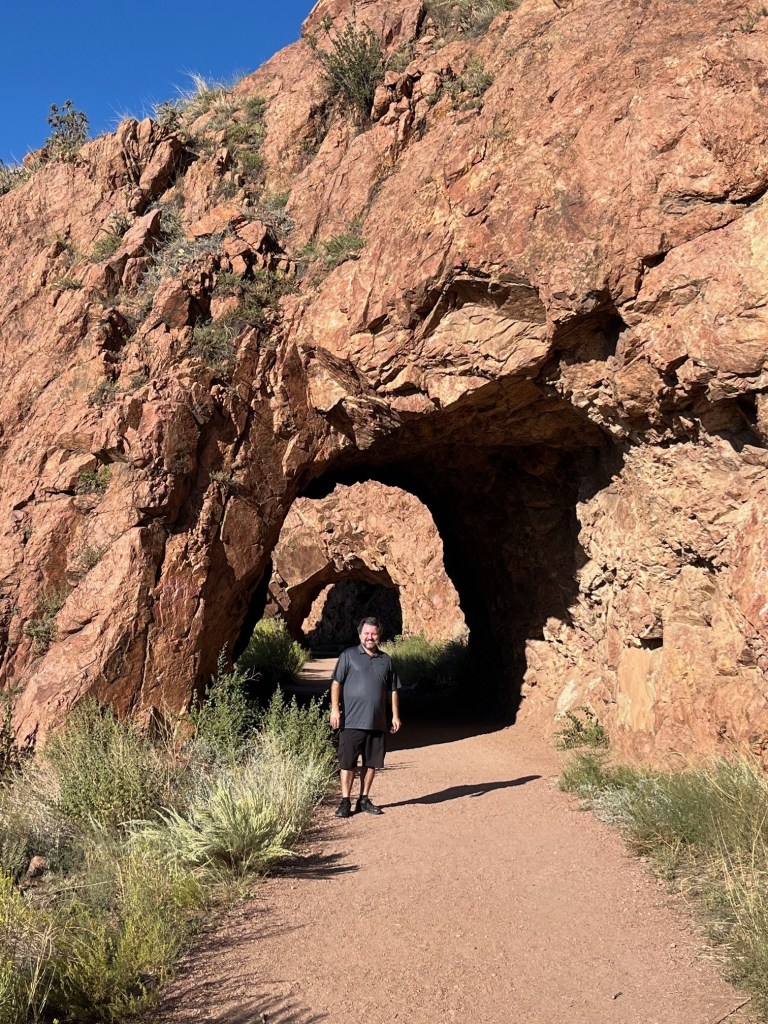
Some of my favorite trips have been related to my obsession with movies and Charles Bronson. Today, I share a wonderful day that my wife and I spent in Southern Colorado. I hope you enjoy!
In September of 2022, my wife and I attended two different out of state weddings. First, we drove to Casper, WY, and officiated a wedding for the children of some of Sierra’s long time friends. After leaving Casper, we headed towards Estes Park, CO, for another friend’s wedding. While sitting on the deck of our lodge in Estes Park, listening to a beautiful Rocky Mountain stream flowing down below, an amazing idea just hit me like a brick, and I wouldn’t let it go. So, I started researching the filming locations for Charles Bronson’s MR. MAJESTYK because I knew it was filmed in southern Colorado. While Sierra slept, I began planning out a route for our tour of the locations. The next morning I hit her up about my plan, and she was game. Man, I’m a lucky guy!
I always tell my friends on my “This Week in Charles Bronson” Facebook page that my visit to Southern Colorado on September 6th, 2022 was one of the great days of my life. As we visited the filming locations for MR. MAJESTYK in Canon City, Manzanola, and La Junta, I felt like I was hanging out with the spirit of Charles Bronson. One of the most interesting things about the experience is how similar the locations looked in 1974 and 2022, a span of 48 years. It’s so important to find that woman in life who let’s you be you, and Sierra spent time with me as I made videos of my experiece, reenacted certain scenes from the movie, and took pictures at every specific location I could find. We ended up spending that night at a hotel in Dodge City, KS, which somehow seems like the perfect ending to a fairy tale of a day!
I shared the picture at the top from the interesting “tunnel” locations in Canon City, Colorado. This was our first stop of the day. There’s an interesting scene in MR. MAJESTYK where melon farmer Vince Majestyk (Bronson) lures hitman Frank Renda (Al Lettieri) into his hunting country which featured those amazing rock tunnels. I always thought they were so cool. This is actually a hiking trail called The Tunnel Drive Trail that runs alongside the Arkansas River and Royal Gorge Route Railroad.
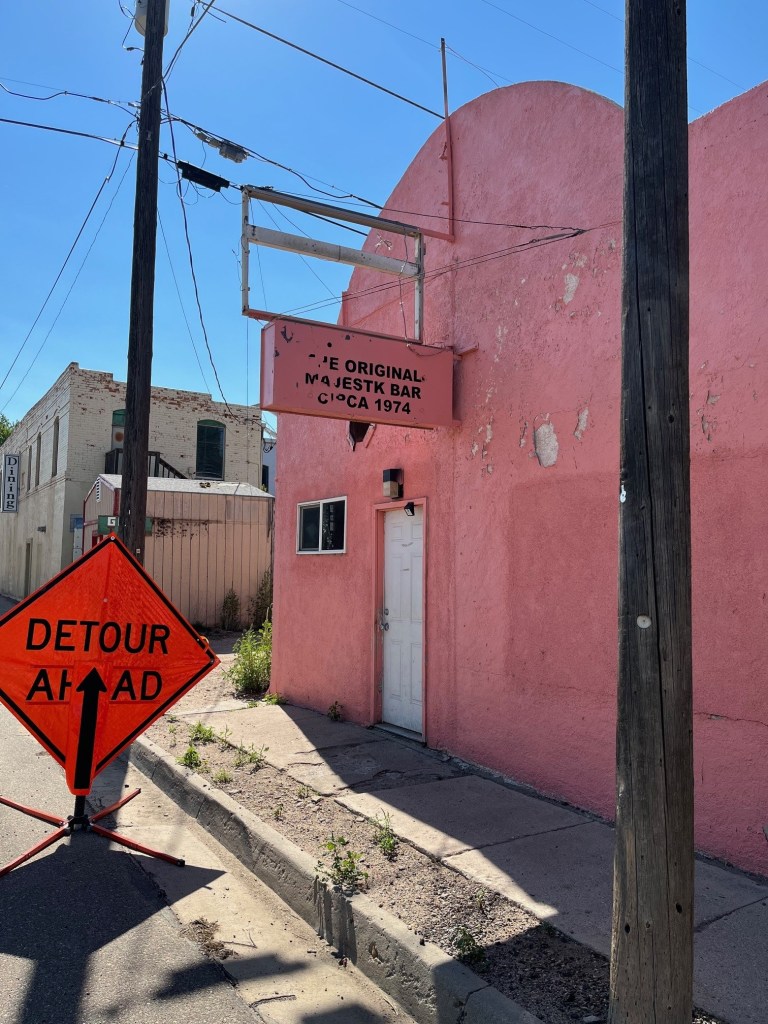
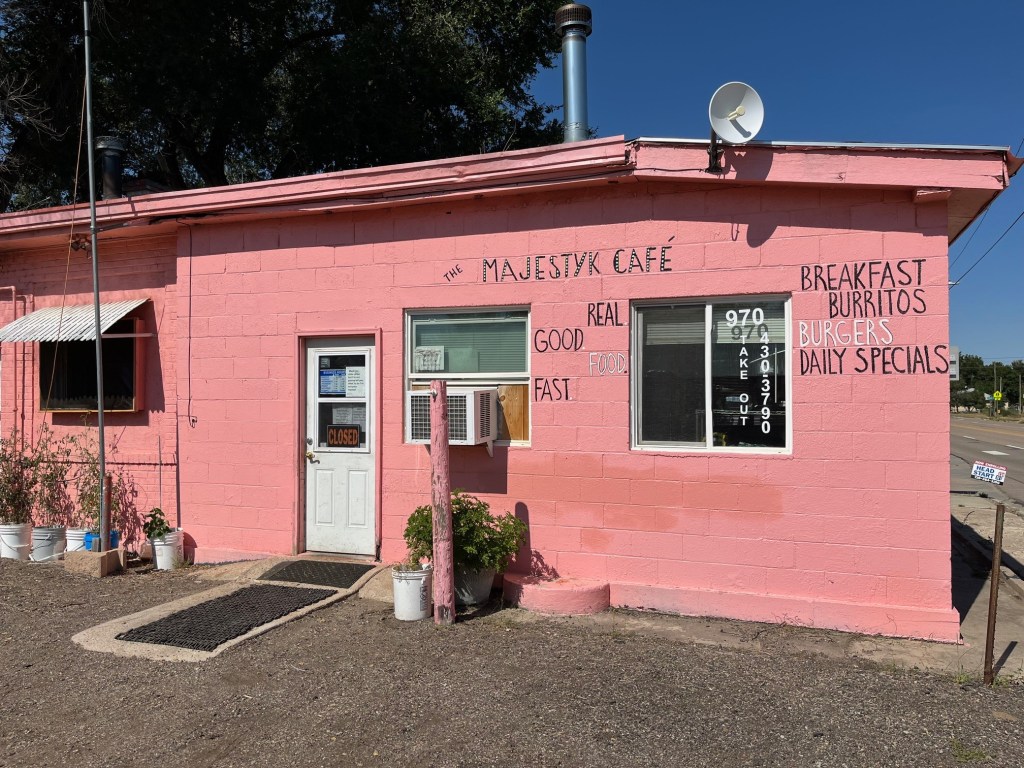
After leaving Canon City, we went to the town of Manzanola. This is the town where the bar and cafe sequences are filmed in MR. MAJESTYK. In the movie, the bar was painted white. For some reason, they’ve gone for pink at this point!

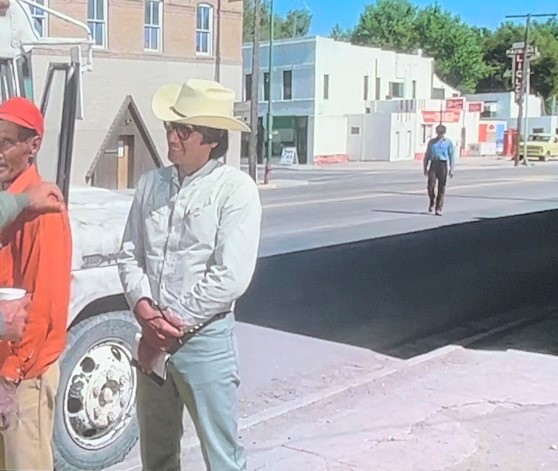
It was in Manzanola where I reenacted a scene where Vince Majestyk walks across the street to supervise the hiring of his melon picking crew. I found out that it’s actually a very busy highway, US Route 50, to be exact. I tried to cross the street about the same place where Charles Bronson did, but I also had to try to not to get run over. You can see a car passing by as I walk in the picture below. I made sure that interesting “triangle” doorway was present in both pictures.
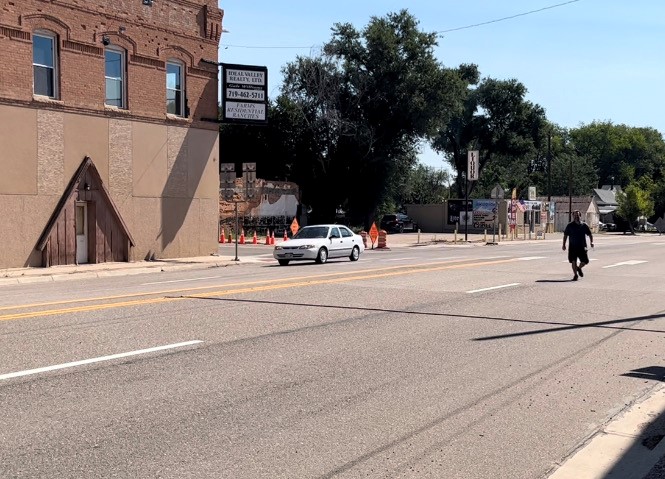
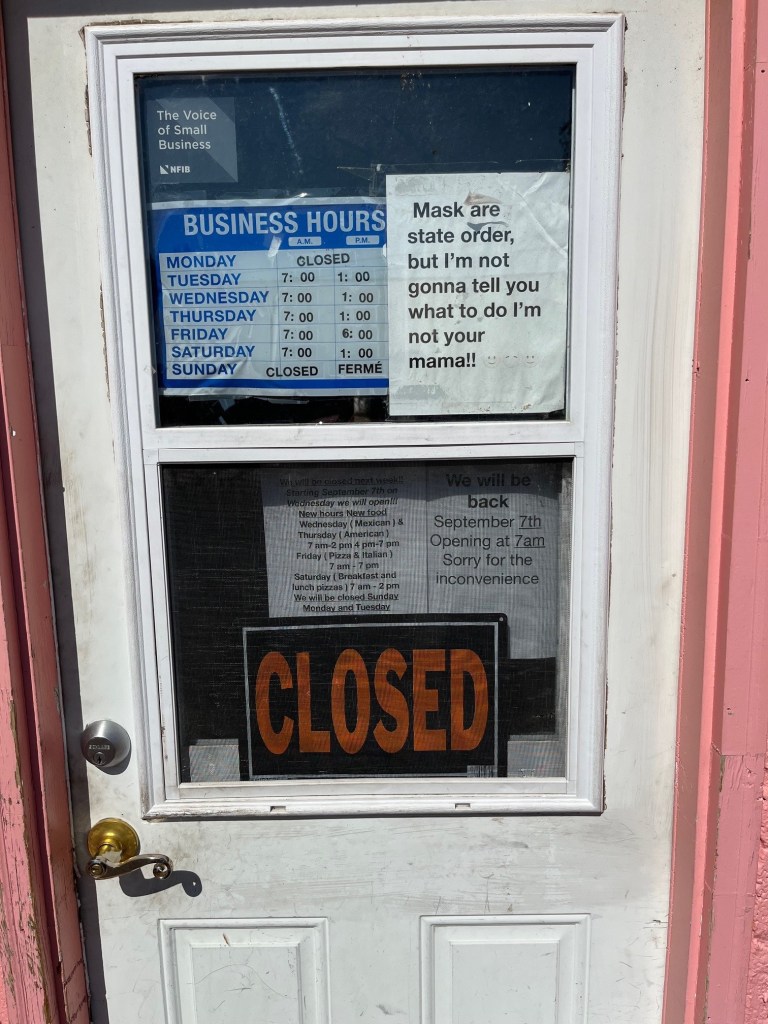
We were hoping to have lunch at “The Majestyk Cafe” in Manzanola, but it was closed the day after Labor Day in 2022. I found the owners’ thoughts on Colorado’s mask mandates at the time to be interesting. Check out the picture of the door below. If I ever make it out that way again, hopefully we’ll get to check out their lunch special!
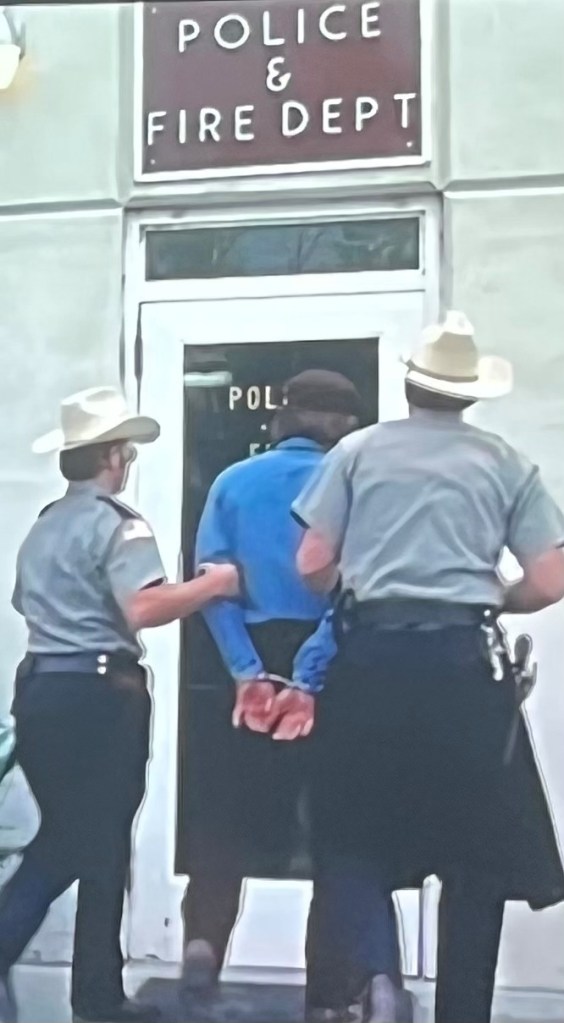
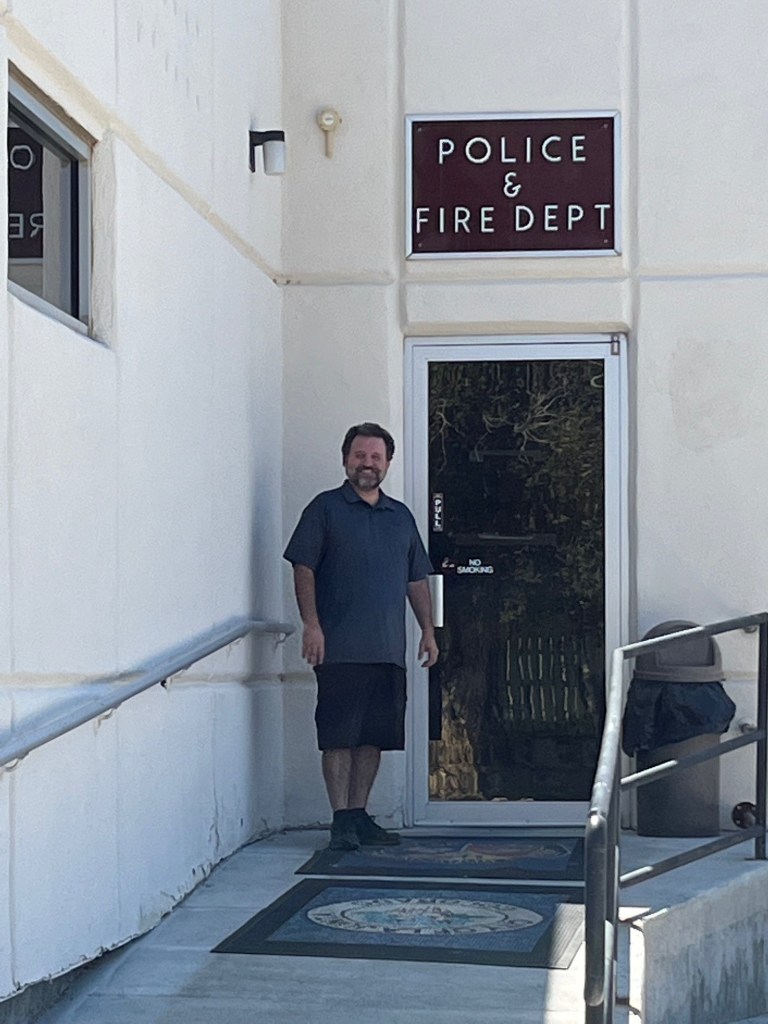
After leaving Manzanola, we went to La Junta where we visited a few more locations. You can see below that La Junta’s Police and Fire department building is still using the same signage.
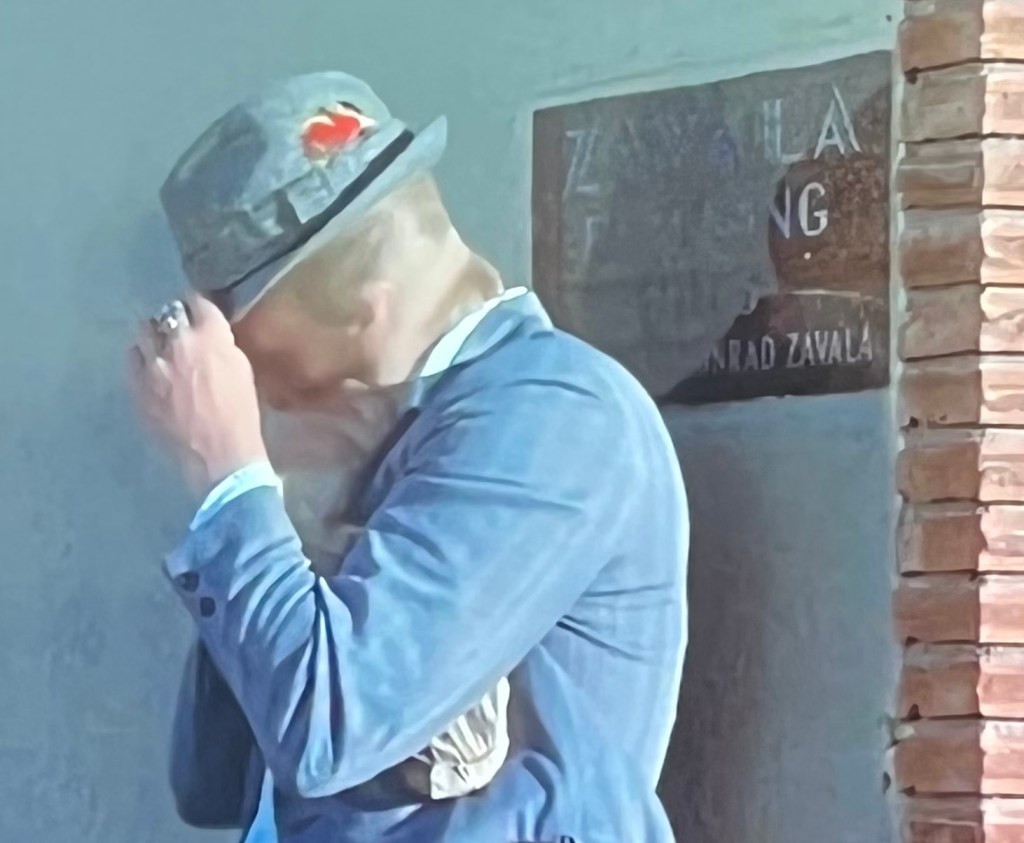
One of the best scenes in the entire film is the sequence where they break hitman Frank Renda out of the prison transport bus. That scene is also filmed in La Junta. It starts at the Zavala Building with one of Renda’s henchman putting a stocking over his head. You can see a plaque that says “Zavala Building” behind Taylor Lacher below. We found that spot.

I took so many more pictures that day. I also recorded several videos as I visited the various locations. They are documented as the “Adventures of the Colorado Crains” on the This Week in Charles Bronson YouTube page. It was an awesome day, and I hope you enjoyed a few of the highlights!
A Town Called Bastard (1971, directed by Robert Parrish)
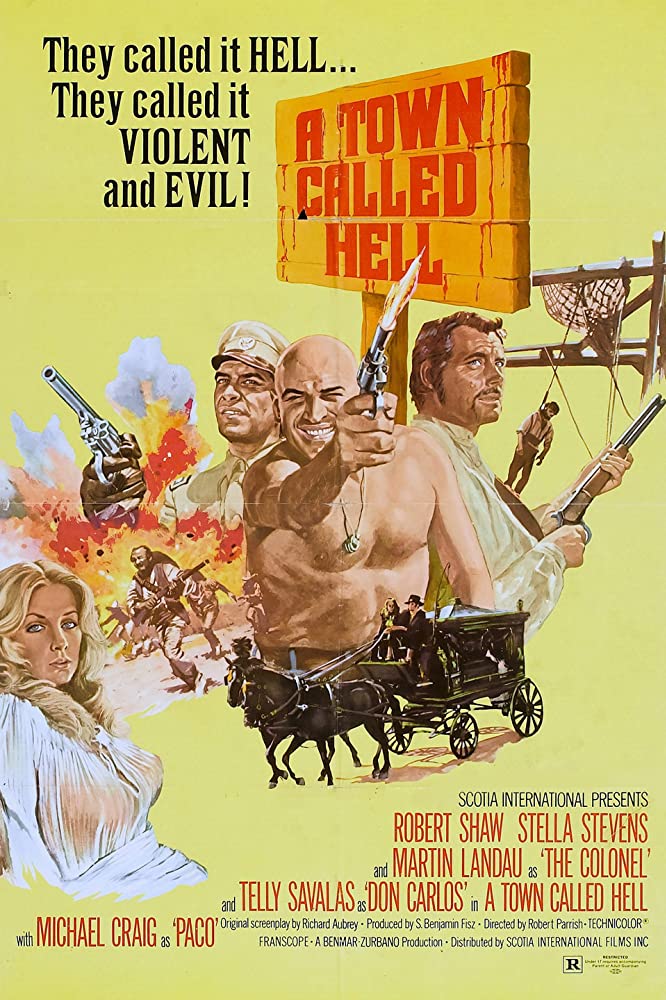 A Town Called Bastard is a British-produced Western that was shot in Spain and which was obviously designed to capitalize on the popularity of the Spaghetti westerns of the two Sergios, Leone and Corbucci. When the movie was released in the United States, the title was changed to A Town Called Hell because it was felt that Americans would find the word “bastard” to be too offensive. I’m not sure how naming your town Hell is somehow an improvement on naming a town Bastard but apparently, that was the thinking. Actually, the town is called Bastardo is both versions of the film so the American title makes less and less sense the more you think about it.
Of course, how you can expect a film to make sense when the opening scenes feature Martin Landau and the very British Robert Shaw as two Mexican revolutionaries who, in the year 1895, ride into the town town of Bastardo and murder almost everyone that they see. Ten years later, Robert Shaw is still living in the town but he’s now a priest and he’s renounced his formerly evil ways. The town itself is ruled by a ruthless outlaw played by Telly Savalas, who doesn’t bother to hide his New York accent despite playing a Mexican outlaw.
One day, a black carriage arrives in town. Inside the carriage is a glass coffin and inside the coffin in Stella Stevens, who is very much alive. Stevens’s husband was among those killed by Shaw and Landau back in the day and she offers gold to anyone who can avenge his death. Savalas is interested in the gold but then his character literally disappears from the film. Instead, Martin Landau rides back into town. He’s now a colonel in the Mexican army and is searching for a fugitive.
A Town Called Bastard has potential but it’s done in by poor casting and Robert Parrish’s inconsistent direction. The story is told so messily and the editing is so sloppy that it often feels like major scenes were left on the cutting room floor. (Just try to figure out what’s going on with Telly Savalas’s character, for example.) Stella Stevens has one or two good moments as the vengeful widow and her entrance into the town is one of the few interesting moments in the movie but both Savalas and Shaw overact in an attempt to hide just how miscast they are while Martin Landau’s main concern seems to be to get his paycheck and move on to the next movie.
In the end, A Town Called Bastard goes straight to Hell.
Footsteps (1972, directed by Paul Wendkos)
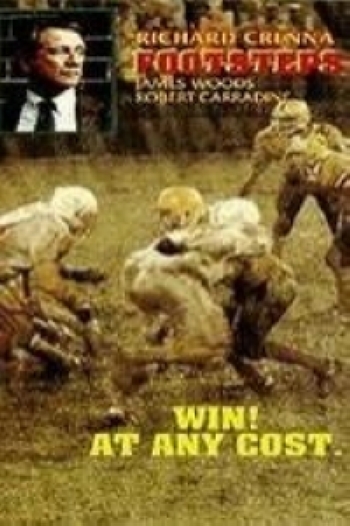 Paddy O’Connor (Richard Crenna) is a former football player-turned-coach whose record of success has been overshadowed by his own arrogance and heavy drinking. O’Connor has such a bad personal reputation that he’s found himself unemployable. Only one man is willing to give him a chance. Jonas Kane (Clu Gulager) played football with Paddy and he’s now coaches for a small college. Kane may not like O’Connor but he knows that O’Connor might be the key to turning around his team’s fortunes and, at the same time, saving Kane’s job. Kane hires O’Connor to serve as a his defensive coordinator.
At first, O’Connor’s cockiness rubs people the wrong way. It’s not until O’Connor moves offensive player J.J. Blake (Bill Overton) to defense that the team starts to win. And once the team stars to win, everyone’s problems with O’Connor disappear. Kane can only watch helplessly as O’Connor moves in on his girlfriend (Joanna Pettet), knowing that he owes his job to O’Connor remaining at the school.
However, when Blake gets a concussion, O’Connor is forced to decide whether or not to let him play. Boosters like Bradford Emmons (Forrest Tucker) want Blake to play, regardless the risk. The NFL scouts, who are looking for the next number one pick, want to see Blake on the field. Blake says he wants to play but O’Connor can tell that he’s lying about the extent of his injury. With everyone breathing down his neck and a syndicate of gamblers pressuring O’Connor to shave points so that the spread pays off, O’Connor has to decide what to do.
Though this made-for-TV movie may not be as well-known as some other films, it’s one of the best movies ever made about college football. Though it may be short (only 74 minutes), it still examines all of the issues that have always surrounded college football. Despite not getting paid for their efforts, the players risk serious and permanent injury during every game, just on the slight hope that they might someday make it to the NFL. The coaches, who are supposed to be looking after the players, are more interested in padding out their win-loss record and hopefully moving onto bigger and better-paying jobs. Meanwhile, aging alumni and boosters demand that the team win at all costs, regardless of what happens to the men on the field. Footsteps intelligently explores all of those issues and suggests that the risks are ultimately not worth the rewards.
Along with an intelligent script, Footsteps is helped by a talented cast. Crenna and especially Gulager both give excellent performance as the two rival coaches. Al Lettieri (Sollozzo from The Godfather) plays one of the gamblers. Beah Richards plays Blake’s mother, who makes the mistake of believing O’Connor when he says that he’s going to always have Blake’s best interests at heart. Ned Beatty has a small role as another assistant coach who is forced to make an important decision of his own. Keep an eye out for Robert Carradine and James Woods, both of whom have tiny roles.
As far as I know, Footsteps has never officially been released on DVD. I saw it late one night on the Fox Movie Channel.
More Of Bronson’s Best: Mr. Majestyk (1974, directed by Richard Fleischer)
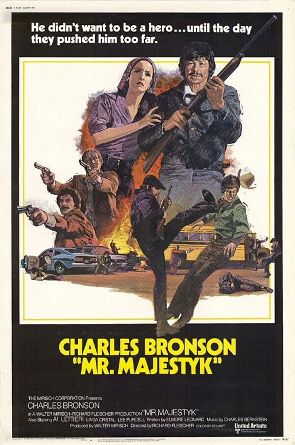 What happens when you combine the great tough guy writer Elmore Leonard with the great tough guy actor Charles Bronson?
You get Mr. Majestyk, one of Bronson’s finest films.
Vince Majestyk (Bronson) may be a former U.S. Army Ranger instructor and a decorated Vietnam vet but now that he has returned home to Colorado, all he cares about is running his watermelon farm. With a lucrative harvest approaching, Majestyk hires a group of unionized Mexican migrant workers, led by the fiery Linda Chavez (Linda Cristal), to pick his crops. When a local criminal named Bobby Kopas (Paul Koslo) shows up and demands that Majestyk hire his drunken crew instead, Majestyk does what Bronson does best. He gives Kopas an ass-kickin’ beat down.
After Kopas charges him with assault, the local police arrest Majestyk and, despite his request that he be allowed three days to finish harvesting his crop, Majestyk is thrown in jail. Also in the jail is a Mafia hitman named Frank Renda (Al Lettieri). Renda may be a tough guy but nobody’s tougher than Vince Majestyk. When Renda’s associates attempt to hijack a prison bus, Majestyk ends up hijacking it instead. Majestyk plans to hold Renda hostage until the police agree to give him his three days of freedom so he can get back to his farm. Renda even offers to pay him off but Majestyk doesn’t care about his money. He just cares about melons.
Because he was the only 1970s action star who could be believable as both a decorated combat veteran and a no-nonsense watermelon farmer, Charles Bronson is the only actor who could have brought Mr. Majestyk to life. Before he became an actor, Bronson worked for a living. From the age of ten until he enlisted in the Army, Bronson worked in the Pennsylvania coal mines, earning one dollar for each ton of coal that he mined. Though Bronson was never a great actor, his legitimately working class background allowed him to bring an authenticity to a role like Vince Majestyk that most other actors would have lacked. When Bronson says that all he cares about is bringing in the harvest on time, you believe him just as much as you believe him when he’s beating up Paul Koslo or hijacking a prison bus.
The rest of the cast is full of good 1970s actors who have never really been given their due. Al Lettieri may be best known for playing Sollozzo in The Godfather but he also does a good job as Frank Renda. Paul Koslo plays another one his sleazy villains here and does a great job as Bobby Kopas.
Mr. Majestyk was directed by Richard Fleischer but, with its colorful characters, working class hero, and modernized brand of frontier justice, the film is clearly the work of Elmore Leonard. Though Mr. Majestyk is credited as being based on a novel by Leonard, Leonard actually wrote the screenplay before the novel.
The combination of Elmore Leonard and Charles Bronson makes Mr. Majestyk one of the best action films of the 1970s.

Out of the Saddle: John Wayne in MCQ (Warner Bros, 1974)
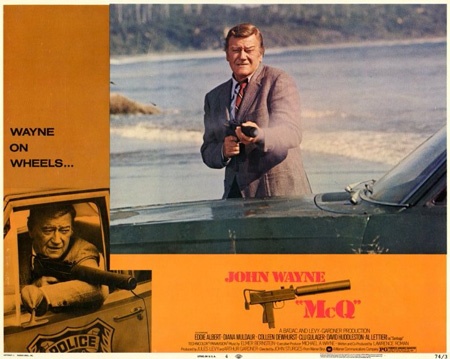
John Wayne didn’t get off his horse very often in the latter part of his career. The Duke hadn’t done a non-Western since 1969’s HELLFIGHTERS, but cop pictures were in style in the early 70s due to the success of movies like THE FRENCH CONNECTION and DIRTY HARRY. Wayne was actually offered the part of Dirty Harry Callahan and turned it down. But in 1974, Big John traded in his horse for a Pontiac Firebird in the action packed MCQ, directed by veteran John Sturges (GUNFIGHT AT THE OK CORRAL, THE MAGNIFICENT SEVEN, THE GREAT ESCAPE).

Wayne plays tough cop Lon McQ, who quits the force to investigate the murder of his former partner. He gets tangled up with drug dealers and corrupt officials, car chases and shootouts. Sound formulaic? It is, but the action scenes make up for a lame script. Duke basically plays the same character he did in most all his films, tough but tender, fair but firm. It’s kind of jarring to see Wayne in his (pretty bad) hairpiece instead of the usual cowboy hat, and tooling around the streets of Seattle in a muscle car rather than the dusty trail on his horse. He’s surrounded by a supporting cast full of familiar faces (Eddie Albert, Diana Muldaur, Colleen Dewhurst, Al Lettieri, David Huttleston, Clu Gulager), all of whom do their best with the clichéd script. MCQ plays like a TV movie of the week, which isn’t necessarily a bad thing, and fans of 70s action flicks will dig it.
John Wayne only made three more films after MCQ, including another cop movie, BRANNIGAN, and his swan song, 1976’s THE SHOOTIST, before succumbing to cancer in 1979. The Duke made much better movies then MCQ, but for a look at the star without his spurs and six-gun, it’s definitely worth watching.
(This post originally appeared, in slightly altered form, on the 2015 TCM Summer of the Stars Blogathon, hosted by Journeys in Classic Film)
Shattered Politics #31: The Godfather (dir by Francis Ford Coppola)
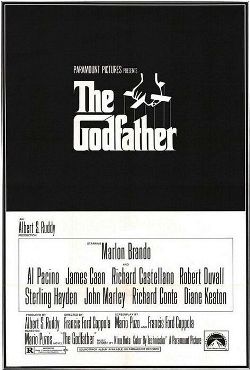
“I got something for your mother and Sonny and a tie for Freddy and Tom Hagen got the Reynolds Pen…” — Kay Adams (Diane Keaton) in The Godfather (1972)
It probably seems strange that when talking about The Godfather, a film that it is generally acknowledged as being one of the best and most influential of all time, I would start with an innocuous quote about getting Tom Hagen a pen.
(And it better have been a hell of a pen because, judging from the scene where Sollozzo stops him in the street, it looked like Tom was going all out as far as gifts were concerned…)
After all, The Godfather is a film that is full of memorable quotes. “Leave the gun. Take the cannoli.” “I’m going to make him an offer he can’t refuse.” “It’s strictly business.” “I believe in America….” “That’s my family, Kay. That’s not me.”
But I went with the quote about the Reynolds pen because, quite frankly, I find an excuse to repeat it every Christmas. Every holiday season, whenever I hear friends or family talking about presents, I remind them that Tom Hagen is getting the Reynolds pen. Doubt me? Check out these tweets from the past!
[tweet https://twitter.com/LisaMarieBowman/status/411891527837687810 ]
[tweet https://twitter.com/LisaMarieBowman/status/280387983444697088 ]
That’s how much I love The Godfather. I love it so much that I even find myself quoting the lines that don’t really mean much in the grand scheme of things. I love the film so much that I once even wrote an entire post about who could have been cast in The Godfather if, for whatever reason, Brando, Pacino, Duvall, et al. had been unavailable. And I know that I’m not alone in that love.
But all that love also makes The Godfather a difficult film to review. What do you say about a film that everyone already knows is great?
Do you praise it by saying that Al Pacino, Robert Duvall, James Caan, Diane Keaton, Marlon Brando, John Cazale, Richard Castellano, Abe Vigoda, Alex Rocco, and Talia Shire all gave excellent performances? You can do that but everyone already knows that.
Do you talk about how well director Francis Ford Coppola told this operatic, sprawling story of crime, family, and politics? You can do that but everyone already knows that.
Maybe you can talk about how beautiful Gordon Willis’s dark and shadowy cinematography looks, regardless of whether you’re seeing it in a theater or on TV. Because it certainly does but everyone knows that.
Maybe you can mention the haunting beauty of Nina Rota’s score but again…
Well, you get the idea.
Now, if you somehow have never seen the film before, allow me to try to tell you what happens in The Godfather. I say try because The Godfather is a true epic. Because it’s also an intimate family drama and features such a dominating lead performance from Al Pacino, it’s sometimes to easy to forget just how much is actually going on in The Godfather.
The Godfather tells the story of the Corleone Family. Patriarch Vito Corleone (Marlon Brando) has done very well for himself in America, making himself into a rich and influential man. Of course, Vito is also known as both Don Corleone and the Godfather and he’s made his fortune through less-than-legal means. He may be rich and he may be influential but when his daughter gets married, the FBI shows up outside the reception and takes pictures of all the cars in the parking lot. Vito Corleone knows judges and congressmen but none of them are willing to be seen in public with him. Vito is the establishment that nobody wants to acknowledge and sometimes, this very powerful man wonders if there will ever be a “Governor Corleone” or a “Senator Corleone.”
Vito is the proud father of three children and the adopted father of one more. His oldest son, and probable successor, is Sonny (James Caan). Sonny, however, has a temper and absolutely no impulse control. While his wife is bragging about him to the other women at the wedding, Sonny is upstairs screwing a bridesmaid. When the enemies of the Corleone Family declare war, Sonny declares war back and forgets the first rule of organized crime: “It’s not personal. It’s strictly business.”
After Sonny, there’s Fredo (John Cazale). Poor, pathetic Fredo. In many ways, it’s impossible not to feel sorry for Fredo. He’s the one who ends up getting exiled to Vegas, where he lives under the protection of the crude Moe Greene (Alex Rocco). One of the film’s best moments is when a bejeweled Fredo shows up at a Vegas hotel with an entourage of prostitutes and other hangers-on. In these scenes, Fred is trying so hard but when you take one look at his shifty eyes, it’s obvious that he’s still the same guy who we first saw stumbling around drunk at his sister’s wedding.
(And, of course, it’s impossible to watch Fredo in this film without thinking about both what will happen to the character in the Godfather, Part II and how John Cazale, who brought the character to such vibrant life, would die just 6 years later.)
As a female, daughter Connie (Talia Shire) is — for the first film, at least — excluded from the family business. Instead, she marries Sonny’s friend Carlo Rizzi (Gianni Russo). And, to put it gently, it’s not a match made in heaven.
And finally, there’s Michael (Al Pacino). Michael is the son who, at the start of the film, declares that he wants nothing to do with the family business. He’s the one who wants to break with family tradition by marrying Kay Adams (Diane Keaton), who is most definitely not Italian. He’s the one who was decorated in World War II and who comes to his sister’s wedding still dressed in his uniform. (In the second Godfather film, we learn that Vito thought Michael was foolish to join the army, which makes it all the more clear that, by wearing the uniform to the wedding, Michael is attempting to declare his own identity outside of the family.) To paraphrase the third Godfather film, Michael is the one who says he wants to get out but who keeps getting dragged back in.
And finally, the adopted son is Tom Hagen (Robert Duvall). Tom is the Don’s lawyer and one reason why Tom is one of my favorite characters is because, behind his usual stone-faced facade, Tom is actually very snarky. He just hides it well.
Early on, we get a hint that Tom is more amused than he lets on when he has dinner with the crude Jack Woltz (John Marley), a film producer who doesn’t want to use Johnny Fontane (Al Martino) in a movie When Woltz shouts insults at him, Tom calmly finishes his dinner and thanks him for a lovely evening. And he does it with just the hint of a little smirk and you can practically see him thinking, “Somebody’s going to wake up with a horse tomorrow….”
However, my favorite Tom Hagen moment comes when Kay, who is searching for Michael, drops by the family compound. Tom greets her at the gate. When Kay spots a car that’s riddled with bullet holes, she asks what happened. Tom smiles and says, “Oh, that was an accident. But luckily no one was hurt!” Duvall delivers the line with just the right attitude of “That’s my story and I’m sticking to it!” How can you not kind of love Tom after that?
And, of course, the film is full of other memorable characters, all of whom are scheming and plotting. There’s Clemenza (Richard S. Catellano) and Tessio (Abe Vigoda), the two Corleone lieutenants who may or may not be plotting to betray the Don. There’s fearsome Luca Brasi (Lenny Montana), who spends an eternity practicing what he wants to say at Connie’s wedding and yet still manages to screw it up. And, of course, there’s Sollozzo (Al Lettieri, playing a role originally offered to Franco Nero), the drug dealer who reacts angrily to Vito’s refusal to help him out. Meanwhile, Capt. McCluskey (Sterling Hayden) is busy beating up young punks and Al Neri (Richard Bright) is gunning people down in front of the courthouse. And, of course, there’s poor, innocent, ill-fated Appollonia (Simonetta Stefanelli)…
The Godfather is a great Italian-American epic, one that works as both a gangster film and a family drama. Perhaps the genius of the Godfather trilogy is that the Corleone family serves as an ink blot in a cinematic rorschach test. Audiences can look at them and see whatever they want. If you want them and their crimes to serve as a metaphor for capitalism, you need only listen to Tom and Michael repeatedly state that it’s only business. If you want to see them as heroic businessmen, just consider that their enemies essentially want to regulate the Corleones out of existence. If you want the Corleones to serve as symbols of the patriarchy, you need only watch as the door to Michael’s office is shut in Kay’s face. If you want to see the Corleones as heroes, you need only consider that they — and they alone — seem to operate with any sort of honorable criminal code. (This, of course, would change over the course of the two sequels.)
And, if you’re trying to fit a review of The Godfather into a series about political films, you only have to consider that Vito is regularly spoken of as being a man who carries politicians around in his pocket. We may not see any elected officials in the first Godfather film but their presence is felt. Above all else, it’s Vito’s political influence that sets in motion all of the events that unfold over the course of the film.
The Godfather, of course, won the Oscar for best picture of 1972. And while it’s rare that I openly agree with the Academy, I’m proud to say that this one time is a definite exception.
What could have been: The Godfather
I don’t know about you but I love to play the game of “What if.” You know how it works. What if so-and-so had directed such-and-such movie? Would we still love that movie as much? Would so-and-so be a star today? Or would the movie have failed because the director was right to reject so-and-so during preproduction?
I guess that’s why I love the picture below. Taken from one of Francis Ford Coppola’s notebooks, it’s a page where he jotted down a few possibilities to play the roles of Don Vito, Michael, Sonny, and Tom Hagen in The Godfather. It’s a fascinating collection of names, some of which are very familiar and some of which most definitely are not. As I look at this list, it’s hard not wonder what if someone like Scott Marlowe had played Michael Corleone? Would he had then become known as one of the great actors of his generation and would Al Pacino then be fated to just be an unknown name sitting on a famous list?
(This page, just in case you happen to be in the neighborhood , is displayed at the Coppola Winery in California.)
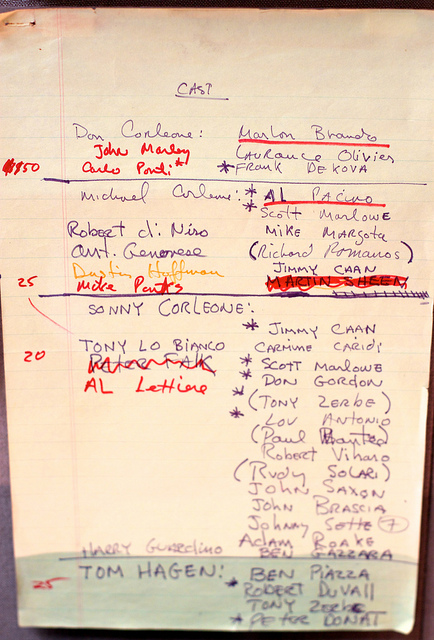
The production of the Godfather — from the casting to the final edit — is something of an obsession of mine. It’s amazing the amount of names — obscure, famous, and infamous — that were mentioned in connection with this film. Below is a list of everyone that I’ve seen mentioned as either a potential director or a potential cast member of The Godfather. Consider this my contribution to the game of What If….?
Director: Aram Avankian, Peter Bogdonavich, Richard Brooks, Costa-Gravas, Sidney J. Furie, Norman Jewison, Elia Kazan, Steve Kestin, Sergio Leone, Arthur Penn, Otto Preminger, Franklin J. Schaffner, Peter Yates, Fred Zinnemann
Don Vito Corleone (played by Marlon Brando): Melvin Belli, Ernest Borgnine, Joseph Callelia, Lee. J. Cobb, Richard Conte, Frank De Kova, Burt Lancaster, John Marley, Laurence Olivier, Carlo Ponti, Anthony Quinn, Edward G. Robinson, George C. Scott, Frank Sinatra, Rod Steiger, Danny Thomas, Raf Vallone, Orson Welles
Michael Corleone (played by Al Pacino): John Aprea, Warren Beatty, Robert Blake, Charles Bronson*, James Caan, David Carradine, Robert De Niro, Alain Delon, Peter Fonda, Art Genovese, Dustin Hoffman, Christopher Jones, Tommy Lee Jones, Tony Lo Bianco, Michael Margotta, Scott Marlowe, Sal Mineo, Jack Nicholson, Ryan O’Neal, Michael Parks, Robert Redford, Burt Reynolds, Richard Romanus, Gianni Russo, Martin Sheen, Rod Steiger**, Dean Stockwell
Sonny Corleone (played by James Caan): Lou Antonio, Paul Banteo, Robert Blake, John Brascia, Carmine Caridi, Robert De Niro, Peter Falk, Harry Guardino, Ben Gazzara, Don Gordon, Al Letteiri, Tony LoBianco, Scott Marlowe, Tony Musante, Anthony Perkins, Burt Reynolds***, Adam Roarke, Gianni Russo, John Saxon, Johnny Sette, Rudy Solari, Robert Viharo, Anthony Zerbe
Tom Hagen (played by Robert Duvall): James Caan, John Cassavettes, Bruce Dern, Peter Donat, Keir Dullea, Peter Falk, Steve McQueen, Richard Mulligan, Paul Newman, Jack Nicholson, Ben Piazza, Barry Primus, Martin Sheen, Dean Stockwell, Roy Thinnes, Rudy Vallee****, Robert Vaughn, Jerry Van Dyke, Anthony Zerbe
Kay Adams (played by Diane Keaton): Anne Archer, Karen Black, Susan Blakeley, Genevieve Bujold, Jill Clayburgh, Blythe Danner, Mia Farrow, Veronica Hamel, Ali MacGraw, Jennifer O’Neill, Michelle Phillips, Jennifer Salt, Cybill Shepherd, Trish Van Devere
Fredo Corleone (played by John Cazale): Robert Blake, Richard Dreyfuss, Sal Mineo, Austin Pendleton
Connie Corleone (played by Talia Shire): Julie Gregg, Penny Marshall, Maria Tucci, Brenda Vaccaro, Kathleen Widdoes
Johnny Fontane (played by Al Martino): Frankie Avalon, Vic Damone*****, Eddie Fisher, Buddy Greco, Bobby Vinton, Frank Sinatra, Jr.
Carlo Rizzi (played by Gianni Russo): Robert De Niro, Alex Karras, John Ryan******, Sylvester Stallone
Virgil “The Turk” Sollozzo (played by Al Letteiri): Franco Nero
Lucas Brasi (played by Lenny Montana): Timothy Carey, Richard Castellano
Moe Greene (played by Alex Rocco): William Devane
Mama Corleone (played by Morgana King): Anne Bancroft, Alida Valli
Appollonia (played by Simonetta Steffanelli): Olivia Hussey
Paulie Gatto (played by John Martino): Robert De Niro*******, Sylvester Stallone
—-
* Charles Bronson, who was in his mid-40s, was suggested for the role of Michael by the then-chairman of Paramount Pictures, Charlie Bluhdorn.
** By all accounts, Rod Steiger – who was then close to 50 – lobbied very hard to be given the role of Michael Corleone.
*** Some sources claim that Burt Reynolds was cast as Sonny but Brando refused to work with him. However, for a lot of reasons, I think this is just an cinematic urban legend.
**** Despite being in his 60s at the time, singer Rudy Vallee lobbied for the role of the 35 year-old Tom Hagen. Supposedly, another singer — Elvis Presley — lobbied for the role as well but that just seems so out there that I couldn’t bring myself to include it with the “official” list.
***** Vic Damone was originally cast as Johnny Fontane but dropped out once shooting began and announced that the project was bad for Italian Americans. He was replaced by Al Martino.
****** John P. Ryan was originally cast as Carlo Rizzi but was fired and replaced with Gianni Russo. Ryan went on to play the distraught father in Larry Cohen’s It’s Alive. Russo went on to co-star in Laserblast.
******* Robert De Niro was originally cast in this role but dropped out to replace Al Pacino in The Gang That Couldn’t Shoot Straight. Pacino, incidentally, had to drop out of that film because he was given the role of Michael in The Godfather.
 Through the Shattered Lens