The International Lens: Drunken Angel (dir by Akira Kurosawa)


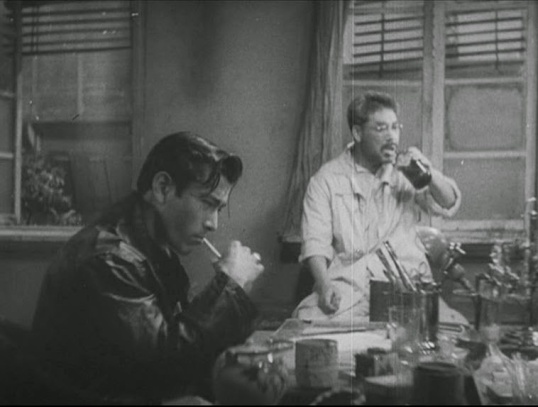
The 1948 Japanese film, Drunken Angel, tells the story of two seemingly different men living in a burned-out neighborhood in postwar Tokyo.

Sanada (Takashi Shimura) is an aging and world-weary doctor.  Though he may drink too much and he is occasionally too quick to snap at his patients, he truly cares about the people who live near his clinic.  He worries about the spread of tuberculosis, which was a very real concern in postwar Japan and which remains a concern to this day.  He continually tells his patients that they need to stop drinking and take better care of themselves, even though he does not seem to be capable of taking his own advice.

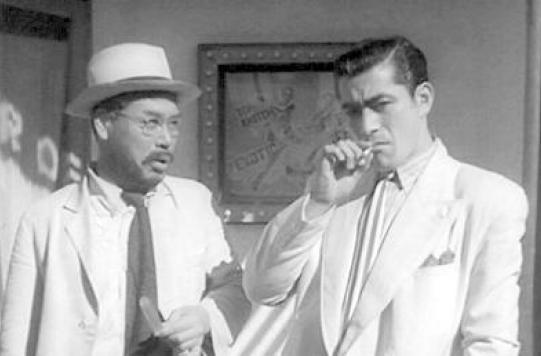
Matsunaga (Toshiro Mifune) is a young Japanese gangster, a member of the yakuza.  Matsunaga does everything with a swagger, one that he appears to have largely adapted from Hollywood gangster movies.  He not only dresses like an idealized version of an American gangster but he also smokes his cigarettes like one.  Everything about Matsunaga gives the impression that he’s desperate to prove that he’s something more than just a small-time hood living in a bombed-out neighborhood that’s centered around a poisonous bog.

One night, Matsunaga shows up at Sanada’s clinic.  He’s got a bloody hole in his hand.  Mastunaga claims that he walked into a door.  When Sanada responds with skepticism, Matsunaga adds that the door had a nail sticking out of it.  Sanada may not believe Matsunaga but he’s a doctor so he treats Matsunaga’s wound.  Sanada also diagnosis Matsunaga as suffering from tuberculosis and tells him that he has to stop drinking and womanizing.  Needless to say, Matsunaga is not pleased with this diagnosis.

Though they start out as antagonists, a weary friendship grows between the doctor and the gangster.  Matsunaga even starts to follow the doctor’s advice or, at least, he does until his boss, Okada (Reisaburo Yamamoto), is released from prison.  Under Okada’s influence, Matsunaga falls back into his own habits, drinking and going to nightclubs where the musicians perform Americanized music.  Okada is also the ex-boyfriend of Sanada’s nurse and, when he threatens to murder Sanada unless the doctor lead him to her, Matsunaga is finally forced to decide which of his two potential mentors will have his loyalty.

Taken on its own, Drunken Angel is an entertaining gangster film that features two memorable lead performances.  Takashi Shimura is likable as Sanada while Toshiro Mifune is dangerously charismatic as Matsunaga.  Director Akira Kurosawa originally planned for the film to focus solely on Sanada, with Matsunaga only playing a minor role.  Mifune, however, so impressed him that he ended up expanding Matsunaga’s role until Mifune was eventually the film’s co-lead.  (Following Drunken Angel, Kurosawa would go on to make 15 other films with Mifune.)  Kurosawa keeps the action moving at an exciting pace and he frames the story with haunting images of the dilapidated neighborhood that the two men call home.

However, Drunken Angel is even more fascinated with one consider that it was made at a time when Japan, having been defeated in World War II and still traumatized by the nuclear attacks on Nagasaki and Hiroshima, was still occupied by American forces.  The film was made at a time when it was still very much an open question as to what role Japan would play in a postwar world.  Would Japan become dominated by American culture (which, in this film, is represented by gangsters like Okada) or would it remain true to itself?  When Sanada warns Matsunaga that he is surrounded by toxic germs that are making him ill and threatening his future, he could very well have been talking about what Kurosawa perceived as being the threat of Americans transforming Japan into a westernized playground.

In the end, it’s a film that works on many levels, as a gangster film, as a portrait of a friendship, and as a metaphor for a people and a culture trying to find their place in a new and imperfect world.  If you haven’t seen it yet, now is the perfect time to do so.
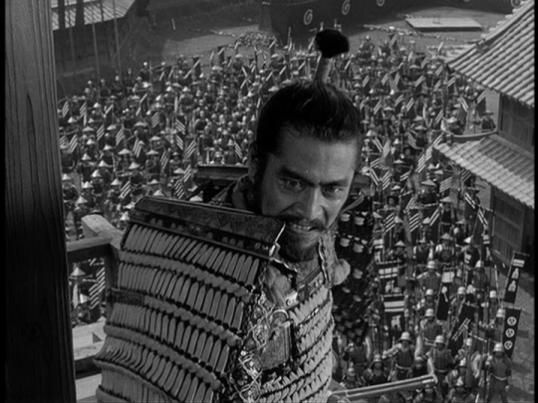
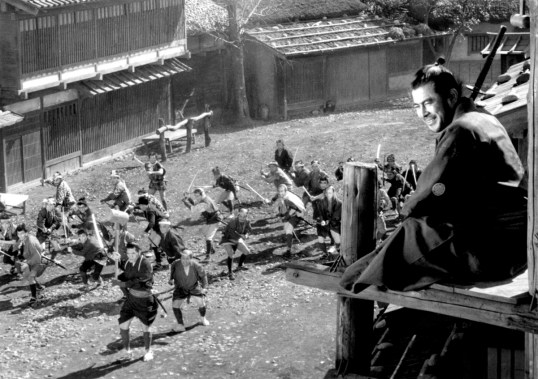
4 Shots From 4 Films: Special Toshiro Mifune Edition


4 Shots From 4 Films is just what it says it is, 4 shots from 4 of our favorite films. As opposed to the reviews and recaps that we usually post, 4 Shots From 4 Films lets the visuals do the talking!

100 years ago today, the great Japanese actor Toshiro Mifune was born in Qingdao, Shandong, China, which was under Japanese occupation at the time.  After working as a photographer and as an assistant cameraman, Mifune made his acting debut in 1947, playing a bank robber in Snow Trail.

Mifune would go on to become an international superstar, appearing in hundreds of films before his death in 1997.  Sixteen of those films would be directed by Akira Kurosawa and Mifune’s performances in Kurosawa’s yakuza and samurai films would go on to inspire actors the world over.  When Sergio Leone adapted Yojimbo into A Fistful of Dollars, Clint Eastwood based his performance on Mifune’s performance in the original.  George Lucas would later create the character of Obi-Wan Kenobi with Mifune in mind.

In honor of the man and his career, here are

4 Shots From 4 Films

Drunken Angel (1948, directed by Akira Kurosawa)

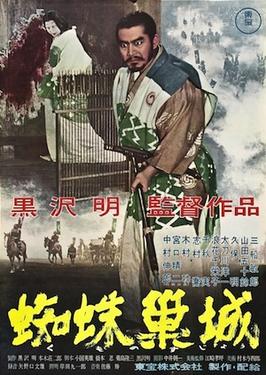
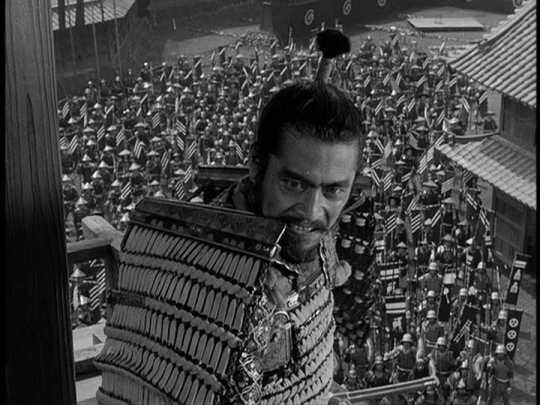
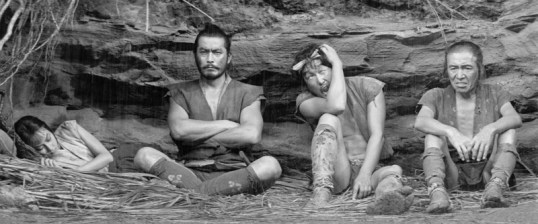
Throne of Blood (1957, directed by Akira Kurosawa)

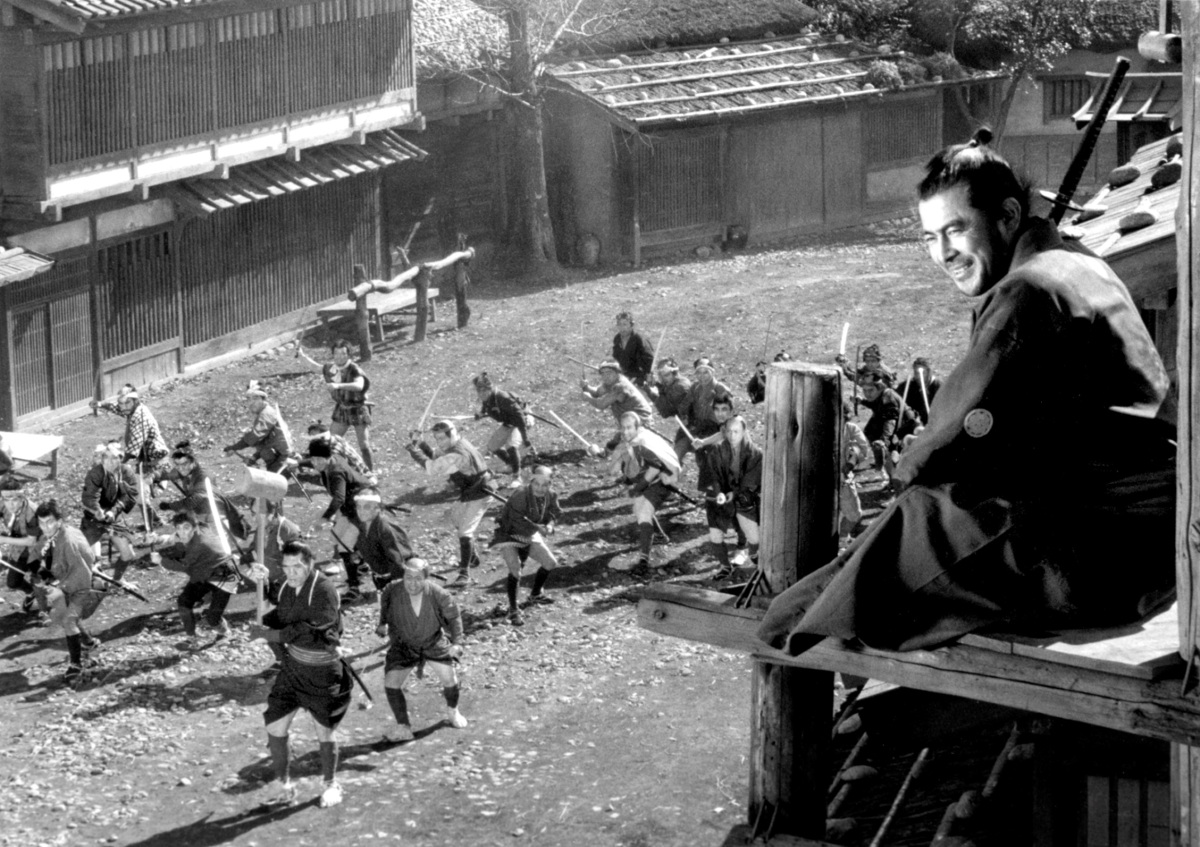
Yojimbo (1961, directed by Akira Kurosawa)

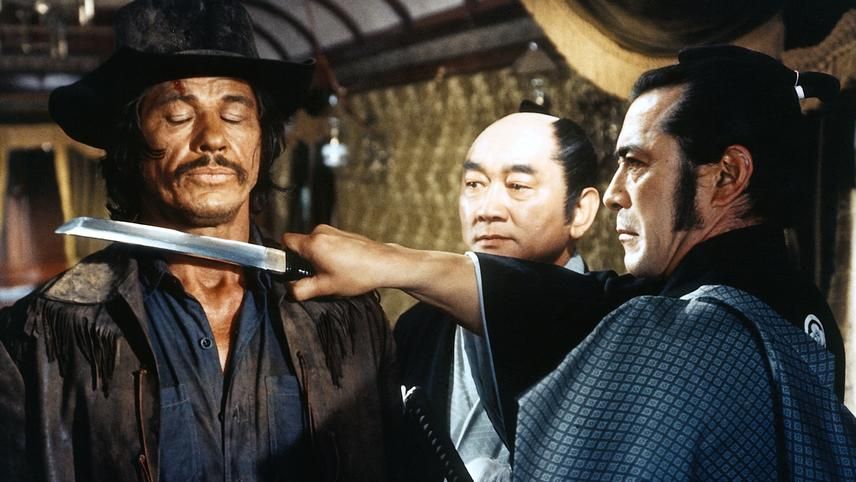
Red Sun (1971, directed by Terence Young)

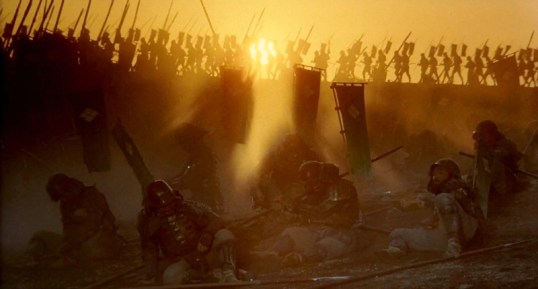
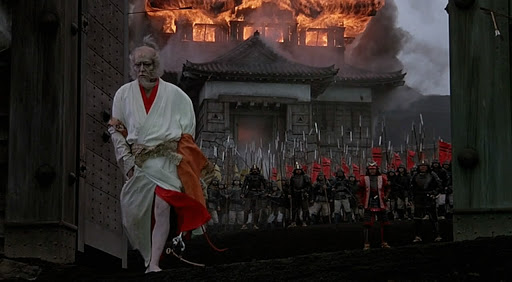
4 Shots From 4 Films: Special Akira Kurosawa Edition


4 Shots From 4 Films is just what it says it is, 4 shots from 4 of our favorite films. As opposed to the reviews and recaps that we usually post, 4 Shots From 4 Films lets the visuals do the talking!

110 years ago today, Akira Kurosawa was born.  Today, we honor the life of one of the most influential directors in film history and that means that it’s time for:

4 Shots From 4 Films

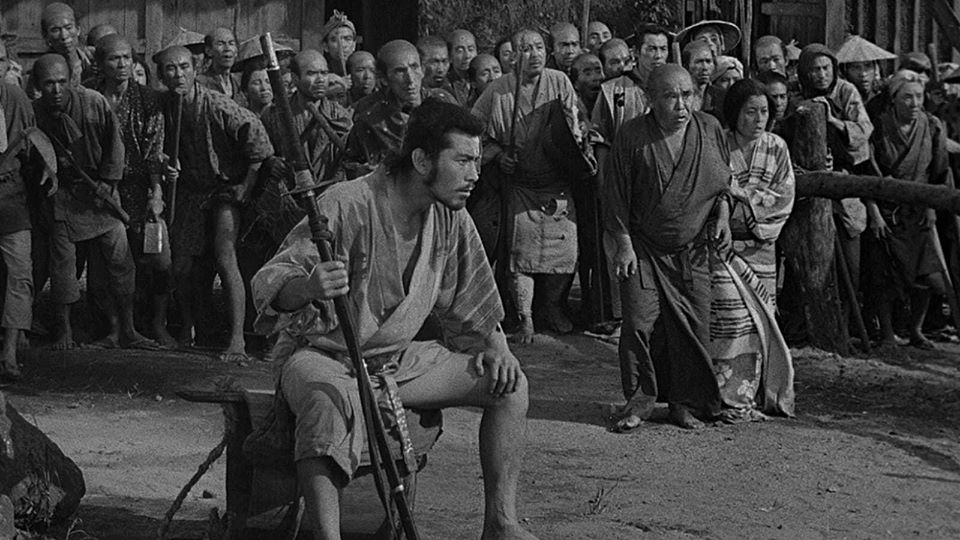
Seven Samurai (1954, directed by Akira Kurosawa)

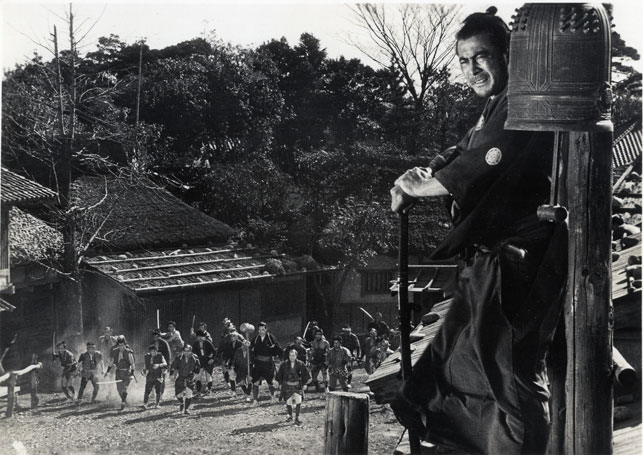
Yojimbo (1961, directed by Akira Kurosawa)

Ran (1987, directed by Akira Kurosawa)

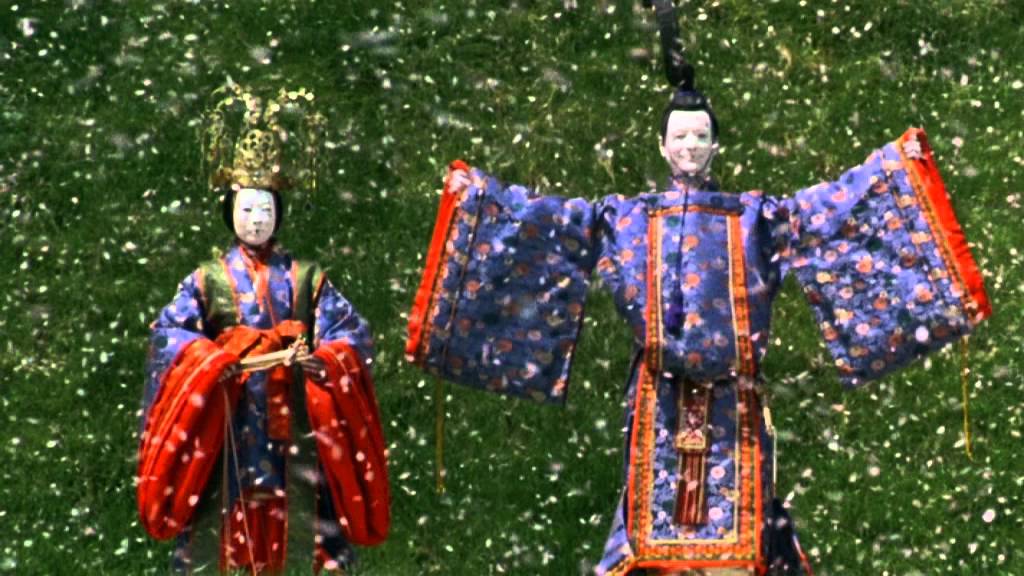
Dreams (1990, directed by Akira Kurosawa)

If you’re on lockdown right now and you’re not at already a familiar with Japan’s greatest director, this is a great time to discover the works of Akira Kurosawa!

4 Shots From 4 Films: Akira Kurosawa


4 Shots From 4 Films is just what it says it is, 4 shots from 4 of our favorite films. As opposed to the reviews and recaps that we usually post, 4 Shots From 4 Films is all about letting the visuals do the talking.

With the latest entry to the Star Wars franchise set to be released in just a few days I thought it was appropriate to share four particular scenes from one filmmaker who has been a huge influence on George Lucas’ vision for Star Wars. This filmmaker also became a huge influence on other master filmmakers such as John Ford, Steven Spielberg, Martin Scorsese, Francis Ford Coppola and Sidney Lumet just to name a few.

Many consider this filmmaker to be one of the greatest filmmakers who ever lived and in this humble individual’s opinion he was the greatest filmmaker who stood above all and whose storytelling and visual techniques would become part of the modern filmmaker’s toll bag.

The man I speak of is Akira Kurosawa.

4 SHOTS FROM 4 FILMS

The Hidden Fortress (dir. by Akira Kurosawa)

The Hidden Fortress (dir. by Akira Kurosawa)

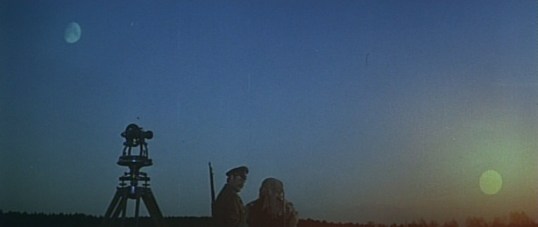
Dersu Uzala (dir. by Akira Kurosawa)

Dersu Uzala (dir. by Akira Kurosawa)

Yojimbo (dir. by Akira Kurosawa)

Yojimbo (dir. by Akira Kurosawa)

Kagemusha (dir. by Akira Kurosawa)

Kagemusha (dir. by Akira Kurosawa)

4 Shots From 4 Films (Setsuko Hara): Sound Of The Mountain, Tokyo Story, Late Spring, No Regrets For Our Youth


Apparently, Japanese actress Setsuko Hara passed away on September 5th, but it seems we are only hearing about it now. She is probably best known for the films she made with director Yasujirô Ozu, but she worked with other well known Japanese directors as well.

Sound Of The Mountain (1954, dir. Mikio Naruse)

Sound Of The Mountain (1954, dir. Mikio Naruse)

Tokyo Story (1953, dir. Yasujirô Ozu)

Tokyo Story (1953, dir. Yasujirô Ozu)

Late Spring (1949, dir. Yasujirô Ozu)

Late Spring (1949, dir. Yasujirô Ozu)

No Regrets For Our Youth (1946, dir. Akira Kurosawa)

No Regrets For Our Youth (1946, dir. Akira Kurosawa)

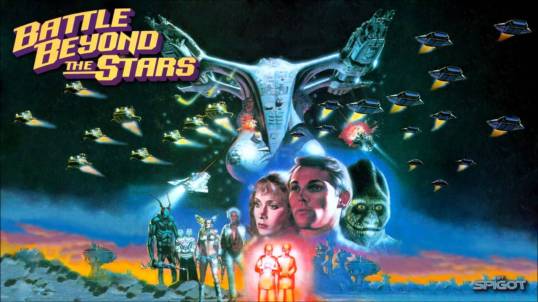
Guilty Pleasure No. 22: Battle Beyond the Stars (dir. by Jimmy T. Murakami)


maxresdefault

Two of my favorite films of all-time happen to be very similar. In fact, one could say that they’re pretty much the same films. I’m talking about Akira Kurosawa’s Seven Samurai and it’s Western-remake by John Sturges, The Magnificent Seven. Kurosawa’s film is one of the greatest films of all-time and it’s no wonder that many have taken the film’s story of the downtrodden hiring a band of misfits, rogues, but still honorable men to help them fight against huge odds.

One such film that tries to add onto Kurosawa film’s legacy was the Roger Corman-produced scifi-adventure film Battle Beyond the Stars. This 1980 film was one of Corman’s many attempts to cash-in on the Star Wars phenomena, but in his usual low-budget style.

For a low-budget scifi film, Battle Beyond the Stars happened to have quite a cast one doesn’t usually see in such productions. While it had such grindhouse and exploitation regulars as John Saxon and Sybil Danning, it also starred the wholesome Richard Thomas from The Waltons and George Peppard (who would later become famous with a new generation as Hannibal Smith of The A-Team). The film would be directed by Jimmy T. Murakami, but from watching the film one could see Corman’s fingerprints all over the production from the script which was pretty lean and cut to the basic outline of Kurosawa’s original film. There’s not much fluff to bog down the pacing of the film.

This film has always been a guilty pleasure of mine because it so resemble Seven Samurai and The Magificent Seven, but adds in it’s own unique style and look to a well-worn and well-trodden plot. It was much later that I found out that James Cameron had a major hand in the special effects work in the film. Think about that for a moment. The self-proclaimed “King of the World” who literally breaks film budget records every time he begins work on a film did FX work on battle Beyond the Stars whose effects budget probably wouldn’t buy a day’s worth of crafts table eating for his most modestly budgeted films.

Lisa Marie always loved to say that grindhouse and exploitation films are some of most honest films out there. There’s no bullshit to what we see on the screen. It’s filmmakers forced to be daring and inventive because the lack of resources forces them to think outside the box. Battle Beyond the Stars might be seen as a mediocre attempt to cash-in on a scifi cultural phenomena, but it does so with a go for broke mentality that makes it such a fun film to watch. It’s not the greatest thing Corman has ever produced and some would even call it a very bad film, but once one looked past it’s rough and flawed surface then one could see a gem in the rough hidden beneath.

Oh, this remake of the remake of the original also happened to star one Robert Vaughn who was one of original Magnificent Seven.

  1. Half-Baked
  2. Save The Last Dance
  3. Every Rose Has Its Thorns
  4. The Jeremy Kyle Show
  5. Invasion USA
  6. The Golden Child
  7. Final Destination 2
  8. Paparazzi
  9. The Principal
  10. The Substitute
  11. Terror In The Family
  12. Pandorum
  13. Lambada
  14. Fear
  15. Cocktail
  16. Keep Off The Grass
  17. Girls, Girls, Girls
  18. Class
  19. Tart
  20. King Kong vs. Godzilla
  21. Hawk the Slayer