Ghosts of Sundance Past: In The Company Of Men (dir by Neil LaBute)


The Sundance Film Festival is currently underway in Utah.  For the next few days, I’ll be taking a look at some of the films that have previously won awards at Sundance.

1997’s In The Company of Men is a film about two guys playing a series of very viscous jokes.

Howard (Matt Malloy) and Chad (Aaron Eckhart) are two mid-level executives who have been sent to work at a branch office for six weeks.  While Chad is talkative and aggressive, Howard is much more meek and often seems to be in awe of the far more confident Chad.  What the two men have in common is a lot of resentment and bitterness towards women.  Chad suggests that they should both date a woman at the same time and fool her into falling for both of them.  Then, they’ll both dump her at the same time.  Chad has even picked out a victim, Christine (Stacy Edwards), a deaf and introverted co-worker.

That Chad would come up with such a cruel scheme really isn’t a surprise.  From the first minute that we see Chad, we think we can tell what type of person he is.  Because this is a movie, we hold on to hope that Chad will somehow reveal that he’s not as bad as he seems but, in the end, the whole point of the film is that Chad is not only as bad as we initially think he is but he’s actually even worse.  Howard, on the other hand, comes across like a rather mild-mannered guy, the stereotypical nerdy mid-level manager who no one ever notices.  Howard could never come up with a scheme like this on his own but, once Chad suggests it, Howard agrees.  Howard is a natural follower.  He looks at Chad and he sees who he wants to be.  Chad looks at Howard and sees someone who he can easily manipulate.

Chad and Howard set their plan in motion and yes, it is difficult to watch as they both pretend to be falling in love with the sensitive Christine while making cruel fun of her behind her back.  Again, we know that at least one of the men is going to have second thoughts and try to back out of the plan.  We know this because we’re watching a movie.  We spend most of the movie hoping that Chad is going to be the one to find his conscience because Aaron Eckhart is the more charismatic of the two men and Chad is the one with whom Christine seems to be truly falling in love.  Instead, it’s Howard who falls in love with Christine while Chad remains as sociopathic as ever.  By the end of the film, Chad reveals just how manipulative he truly is and Howard discovers that Christine was not the only victim of Chad’s joke.

In The Company Of Men is not an easy film to watch.  The comments that Chad and Howard make are shockingly cruel, though one gets the feeling that they’re probably an accurate reflection of what men like Chad and Howard sound like when they’re in private.  Director Neil LaBute doesn’t make any effort to soften or excuse their misogyny.  It’s a testament to the talents of Eckhart, Malloy, and Edwards that we stick with the film.  In the end, In The Company Of Men is an unsettling portrait of misogyny and toxic masculinity, one that is made all the more disturbing by Aaron Eckhart’s charismatic performance as a truly despicable person.  The film uses Eckhart’s middle-American good looks to subversive effect and, even when he’s playing such a hateful character, there’s something undeniably fascinating about him.  You watch his performance of Chad and you’re almost desperate to find some sort of good inside of him.  It’s not there, though.  That’s what is truly frightening about In The Company Of Men.

As the 1997 Sundance Film Festival, In The Company Of Men won the Filmmaker’s Trophy.
The Films of 2024: The Bricklayer (dir by Renny Harlin)


Someone is assassinating commie journalists in Europe and making it appear as if the CIA is responsible.  O’Malley (Tim Blake Nelson) of the CIA suspects that the assassin is Michael Radek (Clifton Collins, Jr.), a former intelligence asset who faked his own death but who has now returned and is seeking vengeance on the Agency for the death of his wife and daughter.  O’Malley decides that Radek’s friend and former CIA handler, Steve Vail (Aaron Eckhart), is the only man who can track Radek down.

The problem is that Vail is as disillusioned with intelligence work as Radek.  Vail walked away from the Agency years ago and now spends his time listening to jazz and working as a bricklayer.  Vail explains that, when working with bricks, everything is predictable and everything fits together perfectly.  It’s the opposite of the chaotic world of spies and assassinations.  O’Malley think that Vail is full of crap and I would be tempted to agree if not for the fact that Aaron Eckhart is one of the few actors who can make you believe anything that he says.

At first, Vail refuses to help but then Radek sends a group of assassins to kill him.  That changes Vail’s mind.  Along with an inexperienced supervisor named Kate (Nina Dobrev), Vail heads to Greece to not only track down Radek but also discover the identity of a mole in the CIA.

The Bricklayer was advertised as being a return-to-form of sorts for director Renny Harlin.  In many ways, it’s a typical Harlin film.  For the most part, it looks good.  Some of the action scenes are exciting.  A car flips over and explodes.  At the same time, it never quite reaches the heights of Harlin’s heyday.  This film has neither the grandeur of Die Hard 2, the romantic sparks of The Long Kiss Goodnight, or the energy of Deep Blue Sea.  The film’s low-budget is definitely a factor in that.  There are scenes in the film that look about as cheap as some of the movies that Bruce Willis was making before he announced his retirement.

That said, The Bricklayer does what it does with efficiency and Renny Harlin still knows how to keep the action moving.  Though the story is a bit too familiar to really be intriguing, Aaron Eckhart makes for a surprisingly believable secret agent.  One thing I especially liked about Eckhart’s performance is that he didn’t go for the “grim” stereotype of the former intelligence agent.  As played by Aaron Eckhart, Steve Vail may have had his regrets but he wasn’t some sort of emotionless zombie.  He enjoyed jazz.  He enjoyed the work that he did as a bricklayer.  Though the rules of the genre demand that he and Nina Dobrev start the film as mild adversaries, they quickly developed a likable chemistry.

The Bricklayer is the epitome of an okay, middle of the road movie.  It’s neither good nor bad enough to be especially memorable but it’s entertaining enough if you’ve got 100 minutes to kill.

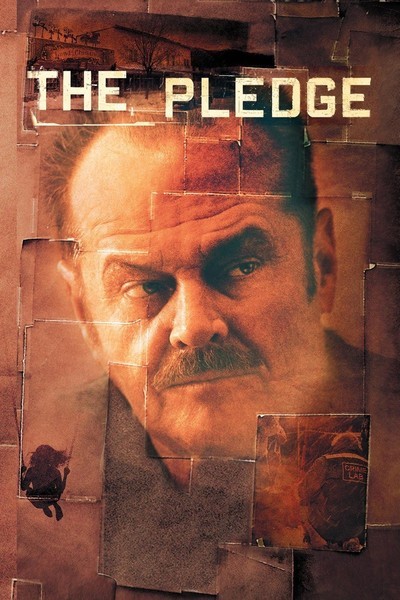
The Pledge (2001, directed by Sean Penn)


Jerry Black (Jack Nicholson) is a detective who, on the verge of retirement, goes to one final crime scene.  The victim is a child named Ginny Larsen and when Ginny’s mother (Patricia Clarkson) demands that Jerry not only promise to find the murderer but that he pledge of his immortal soul that he’ll do it, it’s a pledge that Jerry takes seriously.  Jerry’s partner, Stan (Aaron Eckhart), manages to get a confession from a developmentally disabled man named Jay Wadenah (Benicio del Toro) but Jerry doesn’t believe that the confession is authentic.  When Wadenah commits suicide in his cell, the police are ready to close the case but Jerry remembers his pledge.  He remains determined to find the real killer.

Even though he’s retired, the case continues to obsess Jerry.  He becomes convinced that Ginny was the latest victim of a serial killer and he even buys a gas station because it’s located in the center of where most of the murders were committed.  Jerry befriend a local waitress named Lori (Robin Wright) and, when Lori tells him about her abusive ex, he invites Lori and her daughter to stay with him.  Lori’s daughter, Chrissy (Pauline Roberts), is around Ginny’s age and when she tells Jerry about a “wizard” who gives her toys, Jerry becomes convinced that she’s being targeted by the same man who killed Ginny.  Even as Jerry and Lori fall in love, the increasingly unhinged Jerry makes plans to use Chrissy as bait to bring the killer out of hiding.

The Pledge was Sean Penn’s third film as a director.  As with all of Penn’s directorial efforts, with the notable exception of Into The Wild, The Pledge is relentlessly grim.  Freed, by virtue of his celebrity, from worrying about whether or not anyone would actually want to sit through a depressing two-hour film about murdered children, Penn tells a story with no definite resolution and no real hope for the future.  The Pledge is a cop film without action and a mystery without a real solution and a character study of a man whose mind you don’t want to enter.  It’s well-made and it will keep you guess but it’s also slow-paced and not for the easily depressed.

The cast is made up of familiar character actors, most of whom probably took their roles as a favor to Penn.  Harry Dean Stanton, Tom Noonan, Patricia Clarkson, Sam Shephard, Vanessa Redgrave, Helen Mirren, and Mickey Rourke have all got small roles and they all give good performances, even if it’s sometimes distracting to have even the smallest, most inconsequential of roles played by someone familiar.  Most importantly, The Pledge actually gives Jack Nicholson a real role to play.  Jerry Black is actually an interesting and complex human being and Nicholson dials back his usual shtick and instead actually makes the effort to explore what makes Jerry tick and what lays at the root of his obsession.

Though definitely not for everyone, The Pledge sticks with you and shows what Jack Nicholson, who now appears to be retired from acting, was capable of when given the right role.

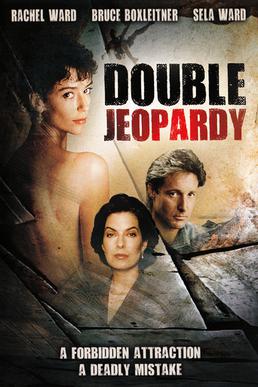
Double Jeopardy (1992, directed by Lawrence Schiller)


Salt Lake City is riveted by the sensational murder trial of mountain climber Lisa Burns Donnelly (Rachel Ward).  Lisa killed her ex-boyfriend, Eddie.  She says that she did it in self-defense after Eddie raped her.  The prosecution claims that she murdered Eddie after he caught her cheating on him with another man.  Lisa’s lawyer, Karen Hart (Sela Ward), is up for a judgeship.  Her husband, Jack (Bruce Boxleitner) is Lisa’s ex-boyfriend.  What Karen doesn’t know is that, other than Lisa, Jack is the only person who witnessed what happened the night of the murder because, just moments before, he and Lisa had been committing PG-13-rated adultery in her shower.

One of the interesting things — in fact, maybe the only interesting thing — about Double Jeopardy is that several online sellers claim that the film stars Aaron Eckhart.  It is true that Eckhart is in the movie.  It was shot in Salt Lake City while he was a student at BYU and it was his film debut.  However, Eckhart has about a minute of screen time and about five lines.  He plays a Marine named Dwayne who someone meets in an airport.  His big line is, “Semper Fi, babe!”

As for the film, since it’s set in Salt Lake City, there’s a lot of talk about how Lisa is being unfairly judged for her unconventional (read: non-Mormon) life style and there’s a heavy-handed subplot about Jack trying to put on a production of The Crucible but it doesn’t add up too much.  It would probably have been easier for the movie to make a point about religious and moral persecution if Lisa wasn’t actually guilty of murdering Eddie.  Instead, the movie leaves you thinking, “Maybe those Mormons have a point.”

Double Jeopardy tries hard to be something more than your standard legal thriller but it’s pretty forgettable.  Rachel Ward was always a great femme fatale and Sally Kirkland gives a good performance as the cop who sees through both Lisa and Jack.  The film was produced for Showtime at a time when cable was still trying to prove that it could provide original content worth paying for so there’s some cursing and sideboob tossed in, as if to say, “See?  You don’t get this on NBC!”  Otherwise, this is a by-the-numbers made-for-TV movie.

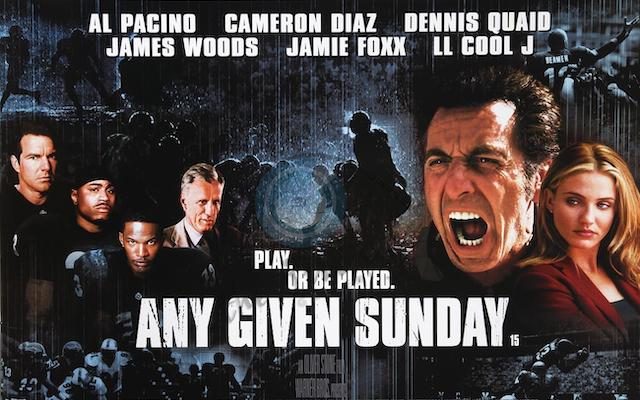
Any Given Sunday (1999, directed by Oliver Stone)


With Any Given Sunday, Oliver Stone set out to make the ultimate football movie and he succeeded.

Any Given Sunday is not just the story of aging coach Tony D’Amato (Al Pacino).  It’s also the story of how third-string quarterback Willie Beamon (Jamie Foxx) allows celebrity to go to his head while the injured starter, Cap Rooney (Dennis Quaid), deals with his own mortality and how, at 38, he is now over-the-hill.  It’s also about how the team doctors (represented by James Woods and Matthew Modine) are complicit in pushing the players beyond their limits and how the owners (Cameron Diaz) view those players as a commodity to be traded and toyed with.  It’s about how the Sharks represent their home city of Miami and how cynical columnists (John C. McGinley plays a character that is obviously meant to be Jim Rome) deliberately set out to inflame the anger of the team’s fans.  It’s about how politicians (Clifton Davis plays Miami’s mayor and asks everyone to “give me some love”) use professional sports to further their own corrupt careers while the often immature men who play the game are elevated into role models by the press.  It’s a film that compares football players to ancient gladiators while also showing how the game has become big business.  In typical Oliver Stone fashion, it tries to take on every aspect of football while also saying something about America as well.

In the role on Tony D, Pacino famously describes football as being “a game of inches” but you wouldn’t always know it from the way that Oliver Stone directs Any Given Sunday.  As a director, Stone has never been one to only gain an inch when he could instead grab an entire mile.  (Stone is probably the type of Madden player who attempts to have his quarterback go back and throw a hail mary on every single play.)  Tony tells his players to be methodical but Stone directs in a fashion that is sloppy, self-indulgent, and always entertaining to watch.  One minute, Al Pacino and Jim Brown are talking about how much the game has changed and the next minute, LL Cool J is doing cocaine off of a groupie’s breast while images of turn-of-the-century football players flash on the screen.  No sooner has Jamie Foxx delivered an impassioned speech about the lack of black coaches in the league then he’s suddenly starring in his own music video and singing about how “Steamin’ Willie Beamon” leaves all the ladies “creamin’.”  (It rhymes, that’s the important thing.)  When Tony invites Willie over to his house, scenes of Charlton Heston in Ben-Hur are on TV.  Later in the movie, Heston shows up as the Commissioner and says, about Cameron Diaz, “she would eat her young.”

Any Given Sunday is Oliver Stone at both his best and his worst.  The script is overwritten and overstuffed with every possible sports cliché  but the football scenes are some of the most exciting that have ever been filmed.  Only Oliver Stone could get away with both opening the film with a quote from Vince Lombardi and then having a player literally lose an eye during the big game.  Stone himself appears in the commentator’s both, saying, “I think he may have hurt his eye,” while the doctor’s in the end zone scoop up the the torn out eyeball and put it into a plastic bag.  Only Stone could get away with Jamie Foxx vomiting on the field during every game and then making amazing plays while a combination of rap, heavy metal, and techno roars in the background.  Stone regulars like James Woods and John C. McGinely make valuable appearances and while Woods may be playing a villain, he’s the only person in the film willing to call out the coaches, the players, the owners, and the fans at home as being a bunch of hypocrites.  Stone’s direction is as hyper-kinetic as always but he still has no fear of stopping the action so that Foxx can see sepia-toned images of football’s past staring at him from the stands.  Stone directs like defensive lineman on steroids, barreling his way through every obstacle to take down his target.  No matter what, the game goes on.

Any Given Sunday is the ultimate football movie and more fun than the last ten super bowls combined.

Here’s The Trailer For Midway


Earlier today, the first trailer for Midway was released.  Based on the famous World War II battle, Midway will be in theaters on November 8th.  Judging from the trailer, it would appear that this adaptation has more in common with Michael Bay’s Pearl Harbor than Christopher Nolan’s Dunkirk.

Of course, we shouldn’t be too surprised by that.  Midway is the latest film from Roland Emmerich and that’ll probably mean a lot of action, not a lot of character development, and maybe a half-assed debate about whether or not Shakespeare wrote Hamlet.  (I have to admit that I have never forgiven Emmerich for Anonymous, a film that not only promoted a silly conspiracy theory but which also accused Shakespeare of murdering Christopher Marlowe.)  Of course, Midway could still be a good film, even if it is a typical Emmerich production.  Sometimes, you just want to spend a few hours watching stuff blow up.

Midway does have a big cast: Ed Skrein, Patrick Wilson, Luke Evans, Aaron Eckhart, Nick Jonas, Mandy Moore, Dennis Quaid, Darren Criss and Woody Harrelson.  I don’t know if I’d say that was an intriguing cast, if just because Woody Harrelson and Dennis Quaid appear to be legally required to appear in ensemble war films like this.  Still, it’ll be interesting to see if Midway can do for Nick Jonas what Dunkirk did for Harry Styles.

Here’s the trailer:

Film Review: Sully (dir by Clint Eastwood)


sully_xxlg

The new film Sully is about several different things.

Most obviously, it’s about what has come to be known as the Miracle on the Hudson.  On January 15th, 2009, US Airways Flight 1549 had just departed from New York’s LaGuardia Airport when it was struck by a flock of geese.  (They say that it was specifically hit by Canadian Geese but I refuse to believe that Canada had anything to do with it.)  With both of the engines taken out and believing that he wouldn’t be able to get the plane back to either LaGuardia or an airport in New Jersey, the flight’s plot, Chelsey “Sully” Sullenberger (played by Tom Hanks) landed his plane on the Hudson River.  Not only did Sullenberger manage to execute a perfect water landing but he also did so without losing a single passenger.

I’m sure that we can all remember that image of that plane sitting on the river with passengers lined up on the wings.  We can also remember what a celebrity Sully became in the days following the landing.  At a time of national insecurity and cynicism, Sully reminded us that people are still capable of doing great things.  It also helped that Sully turned out to be a rather humble and self-effacing man.  He didn’t use his new-found fame to host a reality TV show or run for Congress, as many suggested he should.  Instead, he wrote a book, raised money for the National Suicide Prevention Lifeline, and appeared in two commercials for St. Jude Children’s Research Hospital.

Wisely, Sully opens after the Miracle on the Hudson, with Sully still struggling to come to terms with suddenly being a celebrity.  (That said, we do get to see the landing in flashbacks.  In fact, we get to see it twice and it’s harrowing.  The “Brace! Brace!” chant is pure nightmare fuel.)  Tom Hanks plays up Sully’s modesty and his discomfort with suddenly being a hero.  Even while the rest of the world celebrates his accomplishment, Sully struggles with self-doubt.  Did he make the right decision landing the plane on the Hudson or did he mistakenly endanger the lives of all the passengers and crew members?

A lot of people would probably say, “What does it matter?  As long as he succeeded, who cares if he actually had to do it?”  Well, it matters to Sully.  Some of it is a matter of professional pride.  And a lot of it is because the soulless bureaucrats at the National Transportation Safety Board are investigating Sully’s landing.  If it’s determined that he could have made it back to airport and that he unnecessarily endangered the lives of everyone on the plane, he could lose his job and his pension.  As we see in a few scenes with Sully’s wife (Laura Linney, who is somewhat underused), the Sullenbergers really need that pension.

That brings us to another thing that Sully is about.  It’s a celebration of not only individual heroism but individuality itself.  The NTSB claims that they have computer-generated recreations that prove Sully had enough time and fuel to return to an airport but, as Sully himself points out, the NTSB has ignored the human element in their recreations.  As a result of their obsession with regulation and procedure, the bureaucrats have forgotten that planes are not flown by computers but individuals who have to make split-second decisions.

That’s one of the things that I loved about Sully.  In this time when we’re constantly being told that our very future is dependent upon always trusting the bureaucrats and following their rules and regulations, Sully reminds us that the government is only as good as the people who work for it.  And, far too often, the people are smug and complacent morons.

(For the record, Sullenberger has said that the real-life hearings were not as confrontational as the ones depicted in the film.  However, even taking into account the dramatic license, the overall message still rings true.)

And finally, Sully is a film about what America has become in the wake of 9-11.  Just as in real-life, the film’s Sully suffers from PTSD in the days immediately following the Miracle on the Hudson.  Even while the rest of the world celebrates him, Sully has nightmares about what could have happened if he hadn’t made the landing.  When we watch as Sully’s plane collides with a New York skyscraper, it’s impossible not to be reminded of the horrible images of September 11th.  Not only does it drive home what was at stake when Sully made that landing but it also reminds us that, regardless of what some would want us to beg, there are still heroes in the world.  Not every story has to end in tragedy.  People are still capable of doing great things.  Heroism is not dead.  With tomorrow being the 15-year anniversary of the day when 3,000 people were murdered in New York, Pennsylvania, and D.C., it’s important to be reminded of that.

Sully is a powerful and crowd-pleasing film.  (The normally cynical audience at the Alamo Drafthouse broke into applause at the end of the movie.)  Director Clint Eastwood tells this story in a quick, no-nonsense style.  During this time of bloated running times, Sully clocks in at 97 minutes and it’s still a million times better than that 150-minute blockbuster you wasted your money on last week.  Toss in Tom Hanks at his best and you’ve got one of the best films of the year so far.

Here’s The Trailer For Incarnate!


Can someone please write another great role for Aaron Eckhart?  He’s such a good actor but it seems like whenever he actually gets to star in a movie, he ends up in stuff like I, Frankenstein.

Just judging from the trailer below, Incarnate might actually be worse than I, Frankenstein.  Time will tell!

(Then again, Incarnate is coming out in September so who knows?  Maybe it’s going to be an Oscar contender…)

(No, it’s not.)

(But it could be…)

(But it won’t.)

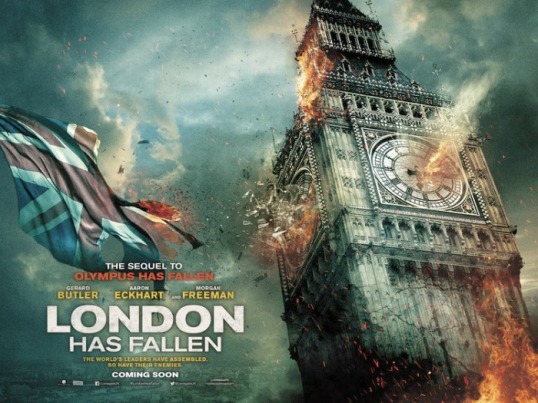
London Has Fallen Official Trailer


London Has Fallen

The White House under siege film Olympus Has Fallen from 2013 was a surprise hit and pretty much took the prize in the match-up between it and the bigger-budgeted White House Down starring Channing Tatum and Jamie Foxx. What the latter didn’t have was the presence of Morgan Freeman, the steadfastness of Aaron Eckhart and the utter badass that is Gerard Butler. Olympus Has Fallen had all three and thus was the better of the two films.

It didn’t take long for the studio who made Olympus Has Fallen to start on a sequel with the three core figures from the first film (Freeman, Eckhart and Butler) back to fight the evil of terrorism on all freedom-loving citizens. I think the studios just thought the audience who saw the first film loved just how much Gerard Butler’s character kept stabbing people in the face.

Here’s to hoping London Has Fallen didn’t try to fix what wasn’t broken…and more Gerard Butler stabbing people in the face.

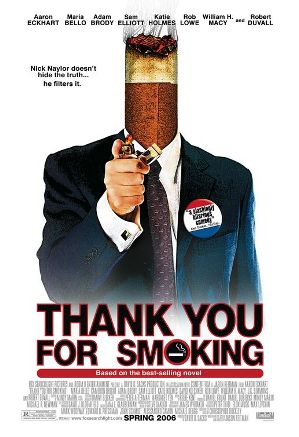
Shattered Politics #77: Thank You For Smoking (dir by Jason Reitman)


Thank_you_for_smoking_PosterI have always hated those Truth.com commercials.  Truth.com is an organization that claims to be dedicated to eradicating smoking.  Their smug commercials are essentially the height of hipster douchebaggery, a bunch of self-consciously cool people wandering around and harassing random people about whether or not they smoke.  And then, of course, there was the commercial where they all gathered outside a tobacco company and pretended to be dead.  Of course, the truth about Truth.com is that they are essentially the same people who, in high school, would get offended whenever anyone wore a short skirt.  I really can not stand people like that.  (And don’t even get me started on those assholes who appear in the Above The Influence commercials.)  Myself, I don’t smoke because I have asthma.  But, seriously, whenever I see a Truth.com commercial, I’m tempted to run down to 711 and start.

And so maybe that’s why I like the 2005 comedy Thank You For Smoking.

The hero of Thank You For Smoking is Nick Naylor (Aaron Eckhart), a lobbyist for the tobacco industry, who is first seen appearing on a talk show and winning over a hostile audience by announcing that the tobacco industry is going to be investing millions in researching way to keep young people from smoking and shaking the hand of a teenage honor student who is dying from lung cancer.  Over the course of the film, Nick shows us how he does business, everything from defending tobacco companies on talk shows to convincing a former Marlboro Man-turned-cancer-patient to drop his law suit.  When Nick isn’t working, he’s hanging out with his best friends (who are lobbyists for both the liquor and the gun industries), trying to bond with his son (Cameron Bright), or having sex with a reporter (Katie Holmes).

Now, in most movies, Nick Naylor would be the villain.  However, in Thank You For Smoking, Nick becomes a hero by default, if just because everyone who disagrees with him is even worse than he is.  Add to that, Nick has the benefit of being played by Aaron Eckhart while all of his opponents are played by balding actors with ugly beards.

Another reason that I liked Thank You For Smoking was because the main villain was a senator from Vermont and it’s about time somebody stood up to the tyranny of Vermont.  Ortolan Finistirre (William H. Macy) has built a career out of campaigning against the tobacco industries and why shouldn’t he?  Who, other than Nick Naylor, is willing to defend them?  Finistirre’s latest plan is to change the law so that every pack of cigarettes has to be branded with a skull and crossbones warning.

When Nick and Finistirre finally face off, it’s a battle between those who believe in allowing people the freedom to make their own choices and those who hide their totalitarian impulse behind claims that they’re working for the greater good.

Thank You For Smoking was Jason Reitman’s first film.  And while it may be a bit too episodic and it frequently struggles to maintain a consistent tone, it’s still a lot better than both Labor Day and Men, Women, & Children.