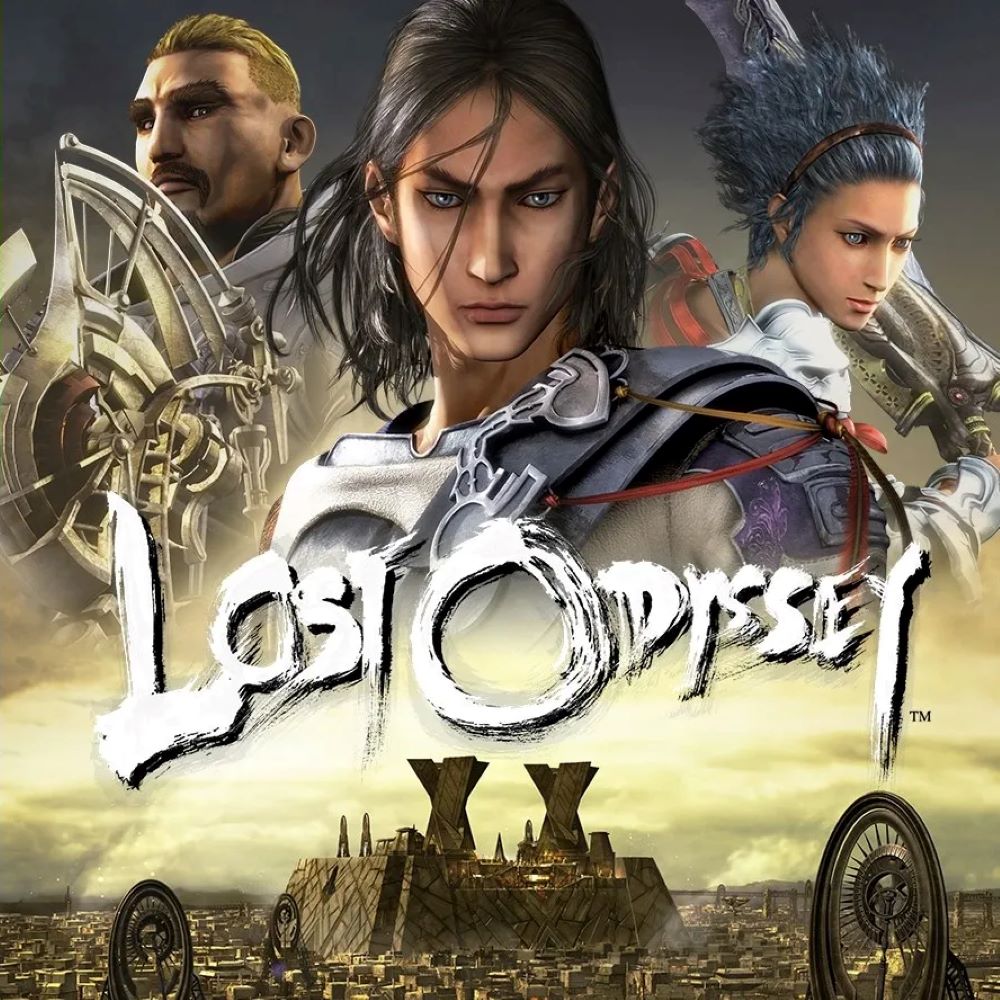
Review: Lost Odyssey


“When people die, they just… go away. If there’s any place a soul would go… It’s in your memories. People you remember are with you forever.” – Kaim Argonar

Lost Odyssey stands out as one of those RPGs from the late Xbox 360 era that doesn’t scream for attention with flashy mechanics or boundary-pushing innovations, but instead draws you in through its deeply introspective storytelling and a commitment to emotional depth that feels almost defiant in its restraint. Developed by Mistwalker’s Hironobu Sakaguchi—the mastermind behind the original Final Fantasy games—this title arrived in 2007 as a love letter to classic JRPG traditions, complete with turn-based combat, sprawling world exploration, and a narrative centered on immortality’s quiet horrors. It’s a game that rewards patience, asking players to linger in moments of melancholy rather than rushing toward bombastic climaxes, and in today’s landscape of hybrid action-RPGs like Clair Obscur: Expedition 33, it feels both timeless and a touch nostalgic.

The protagonist, Kaim Argonar, is an immortal wanderer who’s lived for over a thousand years, his memories eroded by time like sand slipping through fingers. This setup immediately sets Lost Odyssey apart, turning what could have been a rote hero’s journey into something far more personal and haunting. Kaim isn’t driven by prophecy or destiny in the typical sense; he’s haunted by fragments of lives long lost, piecing together his past while grappling with the present. Accompanied by a party of fellow immortals and mortals who bring their own baggage—Seth, a fierce queen-turned-revolutionary; Jansen, the wisecracking raconteur and black magic user; Mack, Cooke’s adventurous brother and a spirit magic specialist; Cooke, the earnest white mage sister; and others who evolve from archetypes into fully fleshed-out companions—the story unfolds across a world on the brink of magical and technological upheaval. Wars rage between nations like the Republic of Uhra and the Kingdom of Goht experimenting with dangerous “aether” energy, ancient gaia cults stir forgotten powers from the earth’s core, and a comically over-the-top villain named Gongora pulls strings from the shadows with his dream-manipulating sorcery. But it’s the immortals’ shared curse—living forever while everyone else fades—that grounds everything in raw, relatable humanity, forcing reflections on attachment, regret, and the passage of time.

What truly elevates the narrative are the “Thousand Years of Dreams,” a collection of over thirty short story interludes scattered throughout the game like hidden treasures, all penned by acclaimed Japanese author Kiyoshi Shigematsu. These vignettes replay key moments from Kaim’s (and later other immortals’) pasts: a father’s quiet desperation as his family starves during a harsh winter, a lover’s betrayal amid wartime chaos that shatters trust forever, a child’s innocent wonder abruptly ended by sudden violence in a peaceful village. They’re presented as dream sequences with minimal interactivity—just reading the poignant prose accompanied by subtle animations and ambient sounds—but their impact is profound, blending poetic introspection with raw emotional punches that make loss feel visceral and immediate. Shigematsu, known for his family-centered novels like Naifu and Bitamin F, infuses these tales with his signature themes of everyday struggles, parental love, and quiet resilience, drawing from his own life experiences such as overcoming a childhood stammering disorder. These aren’t mere filler; they mirror and deepen the main plot’s themes of memory, fleeting bonds, and the futility of outliving joy, often landing harder than the epic set pieces like airship chases or gaia temple collapses. In a fair assessment, though, not every dream hits the mark equally—some lean repetitive in their focus on tragedy and separation, and the heavy reliance on text-heavy exposition can test players who prefer more visual or interactive storytelling over contemplative reading.

Comparatively, the core plot treads more familiar JRPG ground, with globe-trotting quests to collect six magic seeds capable of restoring the world’s fading magic, infiltrate enemy strongholds like the White Citadel, and unravel a conspiracy involving dreamless immortals, experimental magic tech, and an impending apocalypse. It’s competently paced for its 40-60 hour runtime (longer for completionists), building to satisfying reveals about Kaim’s origins, the party’s interconnected fates, and the true nature of immortality in a world where magic is dying. Yet it lacks the moral ambiguity that makes contemporaries like Clair Obscur: Expedition 33 so gripping—that game thrives on tough choices where apparent triumphs often sow seeds of future doom, forcing players to question if their “expedition” against the Paintress is true heroism or just delayed hubris. Lost Odyssey flirts with similar existentialism—Kaim repeatedly forms bonds only to anticipate their inevitable fraying—but ultimately resolves in a more optimistic, collective salvation arc centered on hope and reunion. This makes it comforting for fans of straightforward fantasy epics with clear good-vs-evil lines, yet somewhat safe for a tale about eternal life, where deeper philosophical dives into immortality’s ethics, like the morality of intervening in mortal affairs, could have pushed boundaries further without alienating its audience.

The supporting cast shines as a counterbalance, with banter during airship travels and camp rests that humanizes even the most ancient immortals. Take Gongora, the flamboyant antagonist whose Shakespearean monologues, reality-warping sorcery, and personal grudge against his immortal brethren make him a delightfully theatrical foe worth rooting against. Or the mortal siblings Cooke and Mack, whose dynamic starts as lighthearted comic relief—pranks, inventions gone wrong, sibling squabbles—with Mack’s adventurous spirit driving bold escapades while Cooke provides steady white magic support, maturing into poignant growth arcs as they confront loss and responsibility together. Jansen brings levity as the wisecracking raconteur, spinning tales and unleashing black magic with reluctant flair that often steals scenes during downtime. Party chemistry fosters organic moments, like shared reflections on recent dreams or lighthearted ribbing during skill training, that deepen player investment over the long haul. Not all characters resonate equally; some, like the naive inventor Littleton or the initially whiny prince Tolten, lean into tropes without much subversion, leading to occasional eye-rolls amid the stronger portrayals from Seth’s fiery leadership. Still, the innovative “Immortal” skill-sharing system, where immortals permanently absorb abilities from fallen mortals via “Skill Link” beads, ingeniously reinforces the core theme: eternity doesn’t preclude learning, growth, or change through relationships with the temporary.

Combat embodies Lost Odyssey‘s old-school soul, sticking faithfully to turn-based roots with thoughtful layers that demand strategy over button-mashing reflexes. Battles unfold on a grid-like interface where positioning is crucial—front-row tanks like Kaim absorb hits for backline healers like Cooke and her white magic or mages like Jansen with his black magic arsenal, while the signature “Ring” system adds tension to every basic attack or spell: time your button presses precisely to hit colored rings for boosted damage, critical hits, or multi-hit combos. Condition management becomes key, as poison, sleep, paralysis, and weakness can derail even well-planned fights, encouraging thorough prep with items, protective spells, and the flexible “Skill Link” beads that let any character equip enemy-learned abilities like fire immunity or poison breath. Boss encounters ramp up dramatically with multi-phase patterns, status ailment spam, massive HP pools, and environmental hazards, rewarding exploitation of elemental weaknesses (fire vs. ice foes, etc.), party swaps, and layered buffs/debuffs for tense, chess-like victories.

Yet fairness demands noting the system’s notable flaws, which haven’t aged gracefully. Random encounters populate every screen with alarming density, leading to grindy slogs in weaker areas before you unlock enemy visibility via skills or items, and early-game pacing suffers from these constant interruptions amid tutorial-heavy chapters. Load times between battles and zone transitions feel archaic by modern standards—often 10-20 seconds on original hardware—and the lack of auto-battle, speed-up toggles, or robust fast travel exacerbates repetition for completionists chasing ultimate weapons, all 33 dreams, or optional gaia quests. Contrast this with Clair Obscur‘s slick hybrid combat, which fuses turn-based planning with real-time dodges, parries, and QTEs in a fluid “expedition” rhythm inspired partly by Lost Odyssey itself—every fight, from trash mobs to epic bosses, pulses with immediacy and the “dial of fate” mechanic that turns timing into life-or-death dance steps. Lost Odyssey prioritizes cerebral, menu-driven setups—buff-stacking, weakness chains, formation tweaks—over kinetic flair, appealing deeply to tacticians who savor the deliberate pace but alienating those craving Clair-style adrenaline and fluidity. It’s a classic strategic depth versus modern dynamic polish tradeoff, and your mileage will vary sharply based on tolerance for 2007-era JRPG rhythms.

​​

Exploration weaves together standard JRPG fare with moments of quiet wonder—roaming a vast overworld via massive airship (the Nautilus), delving into multi-floor dungeons with hidden chests and switch puzzles, solving environmental riddles involving weight balances, light beams, or wind currents—but injects personality through diverse biomes: mist-shrouded ancient ruins teeming with spectral foes, frozen tundras where blizzards obscure paths, volcanic badlands with lava flows and ash-choked air. Sidequests expand the lore meaningfully, like aiding immortal Seth’s rebel faction in underground networks, delving into sacred gaia shrines for permanent power-ups, or hunting elusive immortal encounters for rare skills, though many lesser ones boil down to repetitive fetch tasks or escort missions. The world map’s sheer scale impresses, hiding optional superbosses like the immortal-hunting Black Knights, treasure troves in hard-to-reach ledges, and secret dream triggers, but frequent backtracking without comprehensive fast travel can drag, especially post-game. Presentation captures the Xbox 360’s graphical peak for its time: cinematic FMV cutscenes rival Hollywood trailers in scope and polish, character models boast fluid animations, expressive facial captures (rare for 2007), and detailed costumes, while environments blend stunning pre-rendered backgrounds with real-time lighting and particle effects for moody, immersive atmospheres. Draw distance limitations, occasional texture pop-in, and lower-res models show their age on HD displays, but the art direction—shadowy, desaturated palettes evoking faded memories and encroaching oblivion—holds up remarkably well.

Nobuo Uematsu’s soundtrack remains the undisputed MVP, a masterclass in emotional orchestration blending sweeping orchestral swells with intimate piano solos and ethnic instrumentation. Battle themes like the pulse-pounding “Battle with Immortal” or tense “Boss Battle” drive adrenaline without overpowering, dream sequences float on delicate harpsichord, strings, and solo vocals for heartbreaking intimacy, and overworld motifs evoke vast, lonely skies over crumbling civilizations. It’s Uematsu post-Final Fantasy at his most evocative and personal, rivaling series highs and clearly influencing modern scores—direct echoes resonate in Clair Obscur‘s painterly OST, where swelling choirs and haunting flutes underscore expedition perils with a similar blend of grandeur, sorrow, and fragile hope. Voice acting offers a mixed bag: highs like Kaim’s gravelly, world-weary delivery from Jeff Kramer or Seth’s commanding fire from Sarah Tancer contrast with occasional stiff accents and wooden line reads in lesser roles. The English localization shines brightest in Shigematsu’s dreams—preserving nuanced melancholy and cultural subtlety—but occasionally clunks in casual banter or expository dumps.

Pacing represents Lost Odyssey‘s biggest double-edged sword, perfectly suiting its themes of slow erosion and reflection but testing modern attention spans. The game’s deliberate rhythm manifests in long linear chapters (Disc 1’s tutorial stretch, Disc 3’s sidequest marathon), mandatory backtracks to missed dreams or seeds, and optional hunts that balloon playtime to 70+ hours without always advancing the central plot. Mid-game lulls, particularly after major reveals like the immortals’ gathering or Gongora’s betrayal, lean heavily on grinding and collection, demanding commitment from players not fully hooked by the dreams. Technical quirks persist too: occasional frame drops in massive battles, finicky ring input timing on controllers, and long save/load cycles remind players of its 2007 origins, though Xbox One/Series backward compatibility smooths some edges with Auto HDR and FPS boosts. The game earned widespread praise for its story depth, Uematsu’s music, and emotional resonance, tempered by critiques of its dated combat pacing, grind, and conservative design in an era shifting toward action hybrids.

Against Clair Obscur: Expedition 33Lost Odyssey feels like the contemplative grandfather to a bold, innovative successor—Clair‘s tighter 20-30 hour sprint packs nonlinear branching choices, grotesque evolutions of its turn-based system, and a fractured, painterly world where expeditions literally rewrite reality through “painted” fates, with its combat’s “dial of fate” parries making every decision feel consequential and irreversible. Lost Odyssey sprawls longer and commits to strict linearity to pace out Shigematsu’s dreams methodically, trading reactive choice systems for patient, interior reflection on grief. Both excel at probing mortality’s sting—Clair through visceral, grotesque horrors and ambiguous victories, Lost Odyssey via intimate, lived-through tragedies—but Mistwalker’s effort prioritizes small-scale, personal grief over systemic reinvention or high-stakes moral quandaries.

Ultimately, Lost Odyssey endures as a balanced, heartfelt gem for JRPG purists and story enthusiasts: stellar writing from Kiyoshi Shigematsu anchors a solid but unflashy package, with Uematsu’s music, immortal hooks, and dream vignettes lingering longest in the mind. It’s not flawless—grindy encounters, safe plotting, and archaic pacing hold it from undisputed masterpiece status—but its emotional core crafts a rare resonance, blending melancholy fantasy with subtle wisdom about time’s toll. In an era dominated by Clair-like hybrids blending action and choice, it reminds why pure turn-based tales still captivate, offering a somber, patient journey for those willing to dream along with Kaim’s thousand years.
Film Review: The Concorde …. Airport ’79 (dir by David Lowell Rich)


In 1979’s The Concorde …. Airport ’79, Joe Patroni (George Kennedy) finally gets to fly the plane.

The plane is question is a Concorde, a supersonic airliner that can travel faster than the speed of sound.  When we first see the Concorde, it’s narrowly avoiding a bunch of dumbass hippies in a hot air balloon as it lands in Washington, D.C.  The recently widowed Joe Patroni joins a flight crew that includes neurotic Peter O’Neill (David Warner), who says that he has dreams in which he’s eaten by a banana, and suave co-pilot Paul Metrand (Alain Delon).  Because this is an Airport film, Mertrand is dating the head flight attendant, Isabelle (Syliva Kristel).  “You pilots are such men,” Isabelle says.  “It ain’t called a cockpit for nothing, honey,” Patroni replies.

(One thing that is not explained is just how exactly Joe Patroni has gone from being a chief technician in the first film to an airline executive in the second to a “liaison” in the third and finally to a pilot in the fourth.)

The Concorde is flying to Moscow with a stop-over in Paris.  There’s the usual collection of passengers, all of whom have their own barely-explored dramas.  Cicely Tyson plays a woman who is transporting a heart for a transplant.  She gets maybe four or five lines.  Eddie Albert is the owner of the airline and he’s traveling with his fourth wife.  (Of course, he’s old friends with Patroni.)  John Davidson is an American reporter who is in love with a Russian gymnast (Andrea Marcovicci).  Avery Schrieber is traveling with his deaf daughter.  Monica Lewis plays a former jazz great who will be performing at the Moscow Jazz Festival.  Jimmie Walker is her weed-smoking saxophonist.  Charo shows up as herself and gets kicked off the plane before it takes off.

The most important of the passengers is Maggie Whelan (Susan Blakely), a journalist who has evidence that her boyfriend, Kevin Harrison (Robert Wagner), is an arms trafficker.  Harrison is determined to prevent that evidence from being released so he programs a surface-to-air missile to chase the Concorde.  Patroni is able to do some swift maneuvers in order to avoid the missile, which means that we get multiple shots of passengers being tossed forward, backwards, and occasionally hanging upside down as Patroni flips over the plane.  Oddly no one really gets upset at Patroni about any of this and no one seems to be terribly worried about the fact that someone is obviously trying blow up their plane.  Even after the stop-over in Paris, everyone gets back on the Concorde!  That includes Maggie, who could have saved everyone a lot of trouble by just holding a press conference as soon as the plane landed in Paris.

A year after The Concorde came out, Airplane! pretty much ended the disaster genre.  However, even if Airplane! had never been released, I imagine The Concorde would have still been the final Airport film.  Everything about the film feels like the end of the line, from the terrible special effects to the nonsensical script to the Charo cameo and Martha Raye’s performance as a passenger with a weak bladder.  The first Airport film was an old-fashioned studio film standing defiant against the “New Hollywood.”  The second Airport film was a camp spectacular.  The third Airport film was an example of changing times.  The fourth Airport film is just silly.

And, really, that’s the main pleasure to be found in The Concorde.  It’s such an overwhelmingly silly film that it’s hard to look away from it.  For all of its weaknesses, The Concorde will always be remembered as the film that featured George Kennedy opening the cockpit window — while in flight — and shooting a flare gun at another plane.  As crazy as that scene is, just wait for the follow-up where Kennedy accidentally fires a second flare in the cockpit.  “Put that out,” Alain Delon says while David Warner grabs a fire extinguisher.  It’s a silly moment that it also, in its way, a great moment.

The Concorde brings the Airport franchise to a close.  At least George Kennedy finally got to fly a plane.

Film Review: Airport ’77 (dir by Jerry Jameson)


Airport ’77 is the one where the plane ends up underwater.

If the first two Airport movies emphasized the competence of the the crew in both the airplane and the airport, Airport ’77 takes the opposite approach.  The first of the Airport films to be released after Watergate, Airport ’77 is a cynical film where no one seems to be particularly good at his or her job.  Viewers should be concerned the minute they see that Jack Lemmon is playing Captain Don Gallagher, the pilot of the soon-to-be-submerged airplane.  As opposed to Charlton Heston or even the first film’s Dean Martin, Jack Lemmon was always a very emotional actor.  He excelled at playing characters who were frustrated with modern life.  Just as with Heston and Martin, Lennon plays a pilot who is having an affair with a flight attendant.  The big difference is that, this time, the pilot is the one who desperately wants to get married while the flight attendant (played by Brenda Vacarro) is the one who doesn’t want to get tied down.  As an actor, Lemmon didn’t have the arrogance of a Heston or the unflappability of Dean Martin.  Instead, Jack Lemmon was the epitome of midlife ennui.  He’s disillusioned and he’s beaten down.  He’s America at the tail end of the 70s.

Another sign that Airport ’77 is a product of the post-Watergate era is the character of co-pilot Bob Chambers (Robert Foxworth).  Chambers might seem like a nice and friendly professional but actually, he’s the one who comes up with the plan to knock out all of the passengers with sleeping gas and fly the plane into the Bermuda Triangle so that his partners-in-crime can steal the valuable art works in the cargo hold.  Chambers plans is to land the plane on an unchartered isle so that he and Banker (Monte Markham) can make their escape before the rest of the people on the plane even wake up.  Instead, Chambers turns out to be as incompetent a pilot as he is a criminal.  He crashes the plane into the ocean, where it promptly sinks to the bottom.  The impact wakes up the passengers, all of whom can only watch in horror as the ocean envelopes their plane.  With the water pressure threatening to crush the plane, Captain Gallagher and engineer Stan Buchek (Darren McGavin) try to figure out how to get everyone to the surface.

As usual, the passengers are played by a collection of familiar faces.  Olivia de Havilland and Joseph Cotten play former lovers who are reunited on the flight.  Christopher Lee is a businessman who is unhappily married to alcoholic Lee Grant.  Grant is having an affair with Lee’s business partner, Gil Gerard.  A young Kathleen Quinlan plays the girlfriend of blind pianist Tom Sullivan.  Robert Hooks is the bartender who ends up with a severely broken leg.  As the veterinarian who is called to doctor’s duty, M. Emmet Walsh gives the best performance in the film, if just because he’s one of the few characters who really gets to surprise us.  Actors like George Furth, Michael Pataki, and Tom Rosqui all wander around in the background, though I dare anyone watching to actually remember the names of the characters that they’re playing.  Airport ’77 has the largest number of fatalities of any of the Airport films, largely because even the good guys aren’t really sure about how to reach the surface.

George Kennedy returns as Joe Patroni, though his role is considerably smaller in this film than it was in the first two.   He shares most of his scenes with James Stewart, who plays the owner of the plane.  Fortunately, neither Stewart nor Kennedy were on the plane when it crashed.  Instead, they spend most of the movie in a control room, getting updates about the search.  They don’t get to do much in the film but it’s impossible not to smile whenever Jimmy Stewart is onscreen, even if he is noticeably frail.

Airport ’77 is the best-made of all of the Airport films.  The crash is well-directed and the scenes of water dripping into the plane are properly ominous.  There’s not much depth to the characters but Jack Lemmon and Darren McGavin are likable as the two main heroes and Christopher Lee seems to be enjoying himself in a change-of-pace role.  Olivia de Havilland and Joseph Cotten, two old pros, are wonderful together.  That said, Airport ’77 is never as much fun as the first two films.  Even with the plane underwater, it can’t match the spectacle of Karen Black having to fly a plane until Charlton Heston can be lowered into the cockpit.

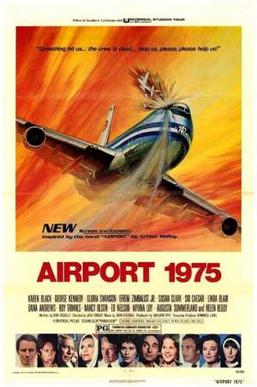
Film Review: Airport 1975 (dir by Jack Smight)


About halfway through 1974’s Airport 1975, Sid Caesar has one of the greatest lines in film history.

“The stewardess is flying the plane?”

Hell yeah, she is!  After a collision with another plane takes out the crew of a Broening 747, it’s up to head flight attendant Nancy (Karen Black) to keep the plane from crashing until another pilot can somehow be lowered into the cockpit of the stricken airliner.  Nancy’s never flown an airplane before but she is dating Al Murdock (Charlton Heston), who may be scared of commitment but who is still described as being one of the greatest pilots who has ever lived.  None other than Joe Patroni (George Kennedy) says that no one knows more about flying than Al Murdock.

George Kennedy is the only cast member to return from the original Airport.  When we previously met Patroni, he was the cigar-chewing chief mechanic for Trans World Airlines.  In Airport 1975, he’s suddenly an executive with Columbia Airlines.  His wife (Susan Clark) and his son (Brian Morrison) are also on the plane.  Joe Patroni and Al Murdock are determined to bring that plane safely to the ground in Salt Lake City and if that means dropping a pilot into the cockpit from a helicopter, that’s what they’ll do.  It’s all a question of whether or not Nancy can keep that plane from crashing while they round up a helicopter and a pilot.

Airport 1975 is so famous for being the movie where the stewardess is flying the plane that it’s often overlooked that it’s also the film where Linda Blair plays a young girl in need of a kidney transplant.  When Sister Ruth (Helen Reddy) sees that the girl has a guitar with her, Ruth sings a folk song that has everyone on the airplane smiling.  (If I was on a plane and someone started playing folk music, I’d probably jump out.  That may seem extreme but seriously, you don’t want to test me on how much I dislike the folk sound.)  This scene was, of course, parodied in Airplane!  In fact, it’s pretty much impossible to watch Airport 1975 without thinking about Airplane!

It’s also overlooked that Gloria Swanson is one of the many stars to appear in this film but Swanson is the only one playing herself.  Gloria Swanson starts as Gloria Swanson and I assume that this 1974 film was set in 1975 in order to generate some suspense as to whether or not Swanson was going to survive the crash.  Swanson talks about how, in 1919, Cecil B. DeMille flew her over California.  She does not talk about Joseph Kennedy or Sunset Boulevard and that’s a shame.  As I watched Airport 1975, I found myself thinking about how different the film would have been if Gloria Swanson had been the one who had to pilot the plane instead of Karen Black.

“Gloria Swanson is piloting the plane?”

As entertaining as that would have been, it would have meant missing out on Karen Black’s intense performance as Nancy.  At times, Nancy seems to be so annoyed with the situation that one gets the feeling that she’s considering intentionally crashing the plane into one of Utah’s mountains.  At other times, she seems to be at a strange sort of peace with whatever happens.  There’s a scene where she attempts to clear some of the clutter in the cockpit and an instrument panel falls on her head and it’s such a powerful moment because I know the exact same thing would have happened to me in that situation.  There’s another moment where I’m pretty sure she accidentally kills the first pilot who attempts to drop into the cockpit and again, it’s a mistake that anyone could have made.  The film doesn’t call her out on it because the film understand that none of us are perfect, except for Charlton Heston.

Speaking of which, Karen Black’s emotional performance contrasts nicely with the performance of Charlton Heston.  This is perhaps the most Hestonesque performance that Charlton Heston ever gave.  Al Murdock is confident, he doesn’t suffer fools, and he’s condescending as Hell.  Every time he calls Nancy “honey,” you’ll want to cringe.  And yet, it’s hard not to appreciate someone who can be so confident while wearing a tight yellow turtleneck.  Charlton Heston watches as the first pilot to attempt to enter the cockpit plunges to his death and immediately declares that it’s his turn to try.  “Get me in that monkey suit!” he snaps and it’s such a Heston moment that you have to love it.

There’s a ton of people in this movie.  Norman Fell, Jerry Stiller, and Conrad Janis play three rowdy drunks.  Erik Estrada, Efrem Zimbalist, and Roy Thinnes are the unfortunate members of the flight crew.  Dana Andrews has a heart attack while piloting a small private plane.  Myrna Loy appears not as herself but as Mrs. Delvaney, who spends almost the entire flight drinking.  Christopher Norris plays Bette, who says that she may look like a teenager but she prefers to be called “Ms. Teenager” and that she’s trained in Kung Fu.  Beverly Garland played Dana Andrews’s wife.  Larry Storch is an obnoxious reporter.  Character actor Alan Fudge plays Danton, the Salt Lake City controller who keeps Nancy calm until Charlton Heston can start snapping at people.

The first time that I watched Airport 1975, I was pretty dismissive of it but, over the years, I’ve rewatched it a few times and I have to admit that I’ve fallen in love with this wonderfully ridiculous film.  There’s just so many odd details, like American Graffiti showing up as the plane’s in-flirt entertainment and Sid Caesar saying that he’s only on the flight because he has a small role in the movie and he finally wanted to see it.  (It seems like it would have been cheaper to just go to a drive-in but whatever.)  And there’s Karen Black, giving the performance of a lifetime and letting us all know that, in 1975, the stewardess flies the airplane!

And she does a damn good job of it too!

Lisa Reviews An Oscar Nominee: Airport (dir by George Seaton)


First released in 1970, Airport is a real time capsule.

As one can guess from the title, it takes place over 12 hours at an airport.  The airport in question is a fictional one, Chicago’s Lincoln International Airport.  Over the course of one night, almost everything that can happen does happen.

A sudden snowstorm causes almost all of the other airports in the midwest to shut down for the night.  On Lincoln’s Runway 29, one of the airplanes gets stuck in the show when it lands.  No one is hurt but, until Joe Patroni (George Kennedy) and his men can dig out and move that plane, no one is going to be able to land on 29.

Runway 22 is still open but the homeowners association is currently picketing the airport to protest the amount of noise pollution that is caused whenever airplanes use Runway 22.  Using 22 in the middle of the night is sure to prove their point and make trouble for the airport.  Mel Bakersfield (Burt Lancaster), the airport manager, thinks that the only solution is to buy up all of the land around the airport but the Board of Commissioners disagrees.  Mel says that airports have to adjust to changing times but no one is willing to put up the money.

Mel is unhappily married to the wealthy and socially ambitious Cindy (Dana Wynter), who is not happy to learn that, due to the storm, Mel is going to miss an important dinner party.  Tanya Livingston (Jean Seberg), head of customer relations for Trans Global Airlines, is in love with Mel but Mel isn’t the type to cheat, even if his marriage is troubled.

On the other hand, Mel’s brother-in-law, pilot Vernon Demerest (Dean Martin, the hippest pilot in the sky), has absolutely no problem cheating on his wife (Barbara Hale).  Vernon is currently having an affair with flight attendant, Gwen Meighen (Jacqueline Bisset).  When Gwen tells Vernon that she’s pregnant, Vernon says that “it” can be taken care of in Sweden.  Gwen says that she wants to have the baby.

Meanwhile, Ada Quonsett (Helen Hayes, who won an Oscar for her performance here) is an elderly woman who has developed an addiction to stowing away on flights.  She manages to sneak onto a plane flying to Rome, the same plane on which Vernon is the co-pilot.  (Technically, Vernon is on the plane to evaluate the captain, who is played by Barry Nelson.  Yes, the same Barry Nelson who played Jimmy Bond in 1954’s Casino Royale and Mr. Ullman in The Shining.)  Ada ends up sitting next to a nervous man named D.O. Guerrero (Van Heflin).  Having failed as a businessman, Guerrero has a bomb in his briefcase and is planning on blowing himself and the airplane up so that his wife (Maureen Stapleton) can receive an insurance payment.

Seriously, that’s a lot of drama!  It seems like this airport has a little bit of everything!  But you know what this airport doesn’t have?  It doesn’t have the TSA groping people and telling them what they can and cannot take on the plane with them.  It doesn’t have the endless lines full of tired travelers who just want to be allowed to get on with their business.  It doesn’t have the suspicious atmosphere that has become a part of modern air travel.  Compared to the average airport experience of 2026, the movie’s airport is a paradise, full of people who are working hard, who are polite to each other, and who all seem to know what they’re doing.  I’d take the drama of 1970’s Airport over the reality of a modern airport any day.

Airport is very much a celebration of competent people getting the job done.  On the whole, we really don’t learn much about the characters played by Burt Lancaster, Dean Martin, Jean Seberg, Barry Nelson, and George Kennedy but we definitely learn that they’re all very good at their jobs.  Even Helen Hayes’s stowaway is meant to be likable precisely because she is so good at stowing away.  The only person who is portrayed as being a failure as Van Heflin’s D.O. Guerrero and he’s so upset about not being good at his job that he decides to blow himself up.  Though the film is full of split screens and dialogue that was probably risqué by the standards of a 1970 studio film, one gets the feeling that Airport probably felt old-fashioned even when it was first released.  One can only imagine what George Kennedy’s hard-working Joe Patroni would have thought about the characters in a film like Easy Rider.  About as close as Airport gets to the counterculture is Dean Martin mockingly calling Burt Lancaster “dad” while telling him to get his favorite runway cleared.  This is a film where even Dean Martin is a stickler for regulations.

Based on a best-selling novel, Airport is often listed as being one of the worst films to ever be nominated for best picture.  And …. well, okay, it’s definitely not a great film, especially when compared to some of the other films of the early 70s.  The film was the highest grossing film of 1970 and that, more than anything, probably explains why it was nominated.  Airport moves at a very deliberate pace and and visually, it is pretty flat.  It looks like a competently made television pilot.  When I first did a capsule review of Airport in 2010, I was fairly harsh towards it.  I have to admit, though, that when I recently rewatched the film, I actually kind of liked it.  Compared to today’s world, there’s something comforting about the competence of the characters in AirportAirport has its flaws and it definitely should not have been nominated for 11 Oscars but it presents a world that seems almost cozy compared to what we have to deal with nowadays.

Dean Martin as a pilot?  Helen Hayes as a chatty stowaway?  George Kennedy chewing on an unlit cigar and complaining to Burt Lancaster about how incompetent the TGA pilots are?  Hey, why not?  If it means not having to deal with the TSA and knowing that everyone is dedicated to getting me to where I’m going in comfort, I’m all for taking my next flight out Lincoln International.

4 Shots From 4 Films: Special Leon Isaac Kennedy Edition


4 Shots From 4 Films is just what it says it is, 4 shots from 4 of our favorite films. As opposed to the reviews and recaps that we usually post, 4 Shots From 4 Films lets the visuals do the talking.

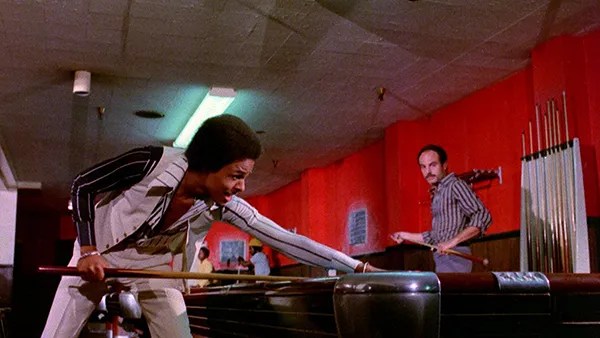
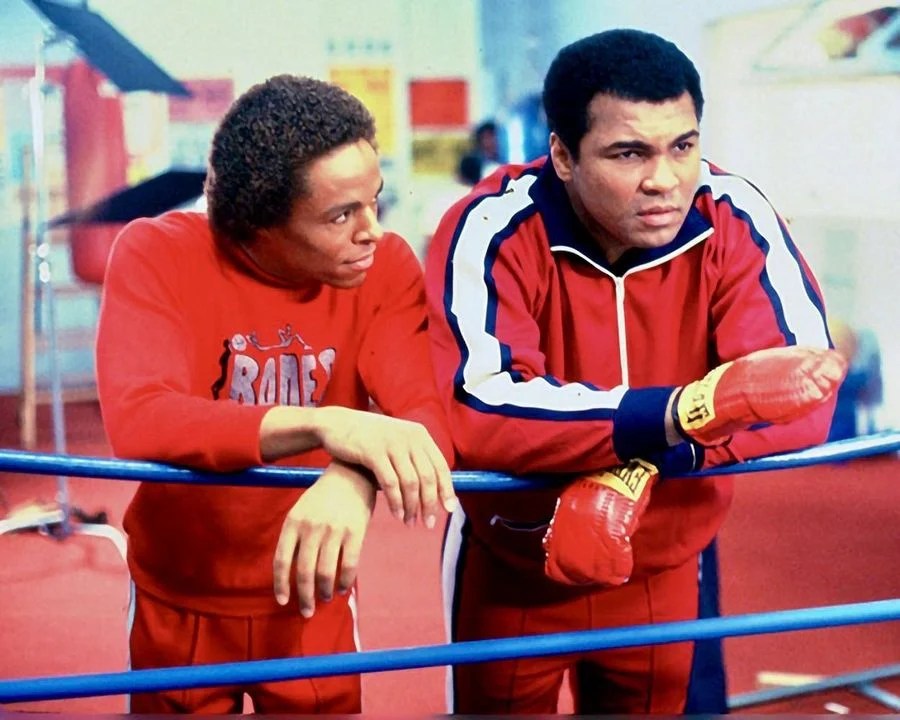
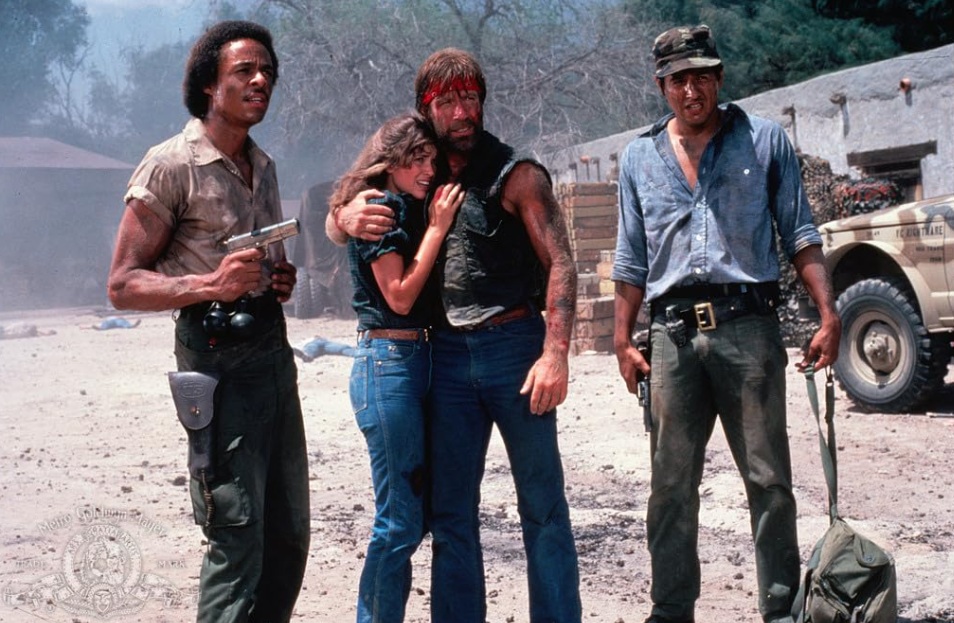
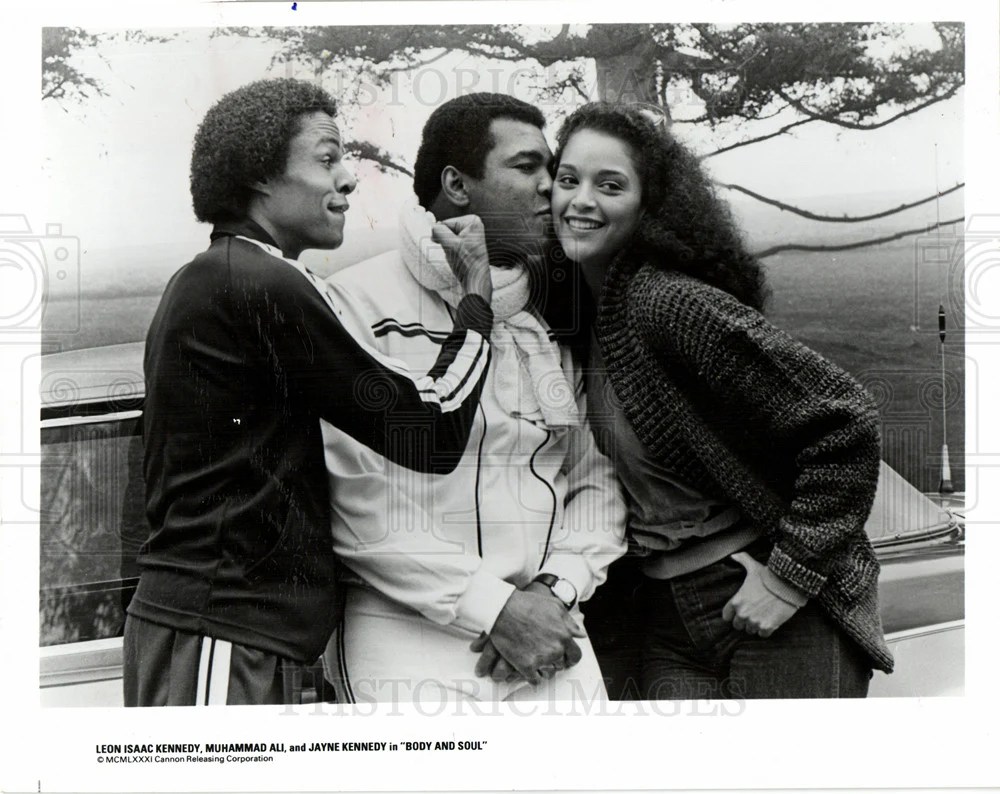
With today’s edition of 4 Shots From 4 Films, we wish a very happy birthday to the one and only Leon Isaac Kennedy!  Born in 1949, Leon Isaac Kennedy was working as a successful disc jockey by the time he turned 17.  (He was known as Leon the Lover.)  Kennedy went on to achieve cult fame by starring as prison boxer Too Sweet in the Penitentiary films, along with appearing opposite Muhammad Ali in Body and Soul and Chuck Norris in Lone Wolf McQuade.  Kennedy, who turns 77 today, has retired from acting and became an evangelist in the 90s.

4 Shots From 4 Leon Isaac Kennedy Films:

Death Force (1978, directed by Cirio H. Santiago)

Body and Soul (1981, directed by George Bowers)

Lone Wolf McQuade (1983, directed by Steve Carver)

Penitentary III (1987, directed by Jamaa Fanaka)

Music Video of the Day: The Heart of Rock & Roll by Huey Lewis and the News (1983, directed by Edd Griles)


Huey Lewis and the News don’t get the respect they deserve and no, that Patrick Bateman monologue doesn’t count.

The Heart of Rock & Roll was inspired by a gig that the band played in Cleveland.  Before the performance, Lewis felt that the band’s hometown of San Francisco had the world’s best rock music fans but, after being greeted by an enthusiastic crowd in Cleveland, he realized that there were true rock and roll fans all over America.  “The heart of rock and roll is in Cleveland,” Huey said but when it came time to write the song, it was decided that “still beating” sounded better.

(The band actually directed several regional versions of the song.  If you heard the song on the radio in Maryland, Huey included a shout-out to Baltimore.  If you were in Texas, he would mention Dallas and Houston.  In Canada, he gave credit to Toronto.)

The music video was directed by Edd Griles.  Shooting occurred in several different locations while the band was touring.  The New York shoot was the most difficult as it lasted for 13 hours and in freezing weather.  Amongst the rock and roll greats included in the video: Elvis Presley, Buddy Holly, Bill Haley, Roy Orbison, Little Richard, and Chuck Berry.

Enjoy!

Scene That I Love: A New Year Begins In The Godfather Part II


Happy New Year!

Well, the clock has now struck midnight on the West Coast and that officially means that it is 2026 in the United States!  What better way to start things off than by sharing a scene that I love from one of the greatest and most important films of all time, 1974’s The Godfather Part II?

The scene below takes place on New Year’s Eve.  The scene starts in 1958 and it ends in 1959.  Michael Corleone (Al Pacino) and his brother Fredo (John Cazale) are in Havana at the invitation of Hyman Roth (Lee Strasberg).  Roth know that Cuba could be a gold mine for the American mob but Michael, from the start, realizes that the country’s corrupt government is on the verge of collapse and that it’s about to be replaced by something even worse.  (Admittedly, that’s my opinion.  Director Francis Ford Coppola had a much higher opinion of Castro and the communists than I did.)   Tragically, it’s also in Havana that Michael realizes that Fredo betrayed him to his enemies.  On December 31st, 1958, as the new year is celebrated in Havana, the rebels ride into the city.  While the President of Cuba prepares to announce that he will be fleeing the country, Michael confronts his brother and tells him that he knows the truth.  Later, as they both attempt to flee the country, Michael and Fredo see each other on the streets.  Fredo runs from Michael, refusing his offer to help.  Though Fredo would eventually return to the family, the film’s ending revealed Fredo’s first instinct was the correct one.

Here’s a scene that I love, featuring great work from both Al Pacino and the brilliant John Cazale:

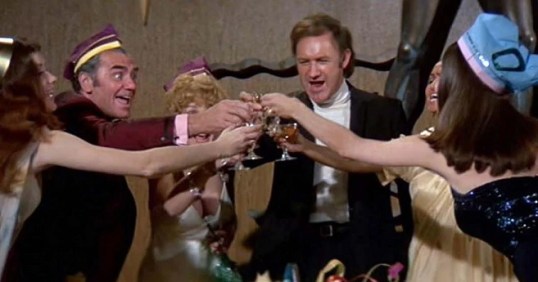
Scene That I Love: The New Year’s Countdown from The Poseidon Adventure


The Poseidon Adventure (1972, dir by Ronald Neame, DP: Harold E. Stine)

It’s nearly time!

As they prepare to count away the last few seconds of 2025 on the West Coast, here’s a scene from one of the greatest New Year’s Day films ever made.  Indeed, just as Die Hard is a great Christmas film, then 1972’s The Poseidon Adventure is a great New Year’s film.

So, let’s join with Gene Hackman, Ernest Borgnine, Stella Stevens, Shelley Winters, Red Buttons, and a host of other familiar faces as we count down.  2026 will undoubtedly bring some tidal waves but I remain confident that we will not be tipped over!