A Book To Read This Weekend (5/30/25)


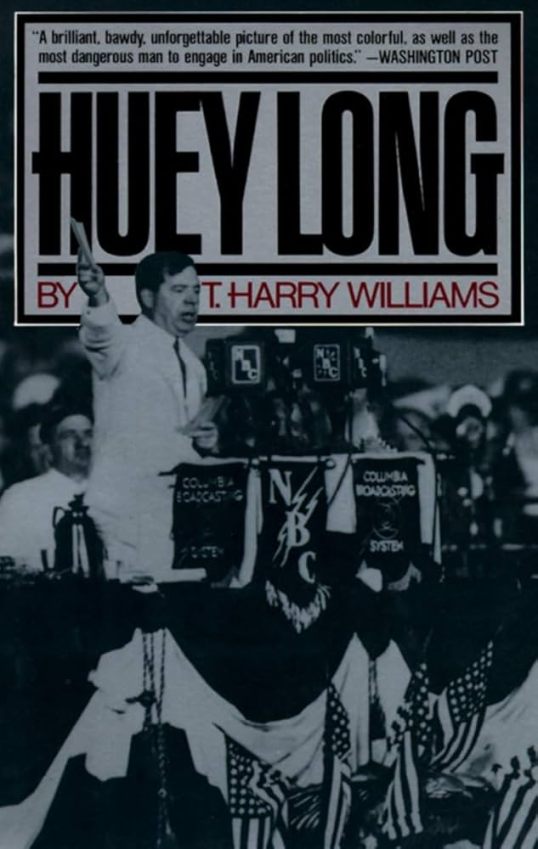
If you’ve got a lot of time to kill this weekend and if you’re interested in how a dictator could come to power in the United States of America, check out Huey Long by T. Harry Williams.

The winner of 1970’s Pulitzer Prize and the National Book Award, this 900-page book tells the story of Louisiana’s Huey Long.  Long went from being an outsider to being governor of his state to being a member of the United States Senate and finally, to the verge of running for the presidency.  The only that that stopped Huey from running for President in 1936 were multiple bullets, at least one of which was fired by the son of a political rival.  (The majority of them were probably fired by Long’s own bodyguards, with Huey falling victim to “friendly fire.”)  Huey was a controversial figure, a socialist who talked like a populist, a clever politician who pretended to be a buffoon, and a leader who was hates by many but who was also so beloved by many other that his family held control of Louisiana politics for decades after his death.

I first bought this book in high school.  My history teacher had assigned the class to write book reports about a political figure.  My teacher was impressed when I said that I would be writing about Huey Long.  Of course, I put off writing the report until the day before it was due.  I also put off reading (and, for that matter, even opening) the book.  When I mentioned this to my mom, she took one look at the 900-page biography that I hadn’t even started to read, and said, “Why did you pick such a long book!?”

(I always pick the longest books I can find.  I like to read and, when it comes to biographies, I like to get all the details.)

For the next few hours, I skimmed through the book as I wrote my report.  I wrote about his early political campaigns, the role he played in the elections of both Woodrow Wilson and Franklin Roosevelt, and the steady stream of corrupt flunkies that he brought into Louisiana’s government.  I included the details of Huey Long’s Share The Wealth plan and explained why Huey’s scheme was just a bunch of commie propaganda.  My teacher gave my report a 100 (and he added an “A++,” which he circled in red!), said that it was good enough for college, and commended me on my hard work.  My mom read my teacher’s comments and said I had more lives than a cat.

Even just skimming the book, I found Huey’s story to be fascinating.  He stood up to the power brokers.  He fought for the poor.  He took kickbacks from the same corporations that he claimed to despise.  He treated Louisiana like his own fiefdom.  He might have ordered a few murders.  And, years later, when I sat down and actually read the book, I discovered that Huey’s life was even more interesting than I initially realized.  Huey Long may be 900 words long but he lived his life in such an over-the-top fashion and the times in which he lived were so interesting that the book becomes a surprisingly quick read.  It helps that T. Harry Williams was a lively writer.  This isn’t some slow-moving, self-consciously scholarly tome.  This is a book that really captures the unique oddness of Louisiana and its politics.

If you’re looking for a long but rewarding read and if you’re a history nerd like me, check this book out.  And then watch All The King’s Men (the original, not the remake!).  Willie Stark, the governor at the heart of All The King’s Men, was based on Huey Long.  Somehow, Long lived a life that was even more dramatic than his fictional counterpart.

(Check out last week’s Books For The Weekend here!)


Live Tweet Alert: Join #FridayNightFlix for A Fistful of Dollars!


As some of our regular readers undoubtedly know, I am involved in a few weekly watch parties.  On Twitter, I host #FridayNightFlix every Friday and I co-host #ScarySocial on Saturday.  On Mastodon, I am one of the five hosts of #MondayActionMovie!  Every week, we get together.  We watch a movie.  We tweet our way through it.

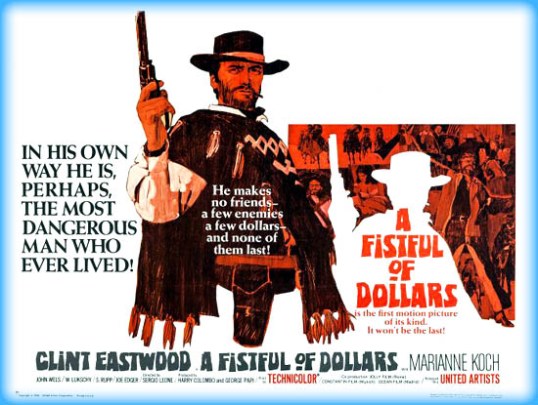
Tonight, at 10 pm et, I will be hosting #FridayNightFlix!  The movie?  A Fistful of Dollars, starring the great Clint Eastwood!

If you want to join us this Friday, just hop onto twitter, start the movie at 10 pm et, and use the #FridayNightFlix hashtag!  I’ll be there tweeting and I imagine some other members of the TSL Crew will be there as well.  It’s a friendly group and welcoming of newcomers so don’t be shy.

A Fistful of Dollars is available on Prime and Tubi!

See you there!

Scene That I Love: The End of Franklin J. Schaffner’s Planet of the Apes


The late director Franklin J. Schaffner was born 105 years ago today.

Though Schaffner won an Oscar for directing Patton, my favorite Schaffner film will always be Planet of the Apes.  In this scene, Charlton Heston discovers where he’s actually been for the entire movie.

4 Shots From 4 Films: Special Howard Hawks Edition


4 Or More Shots From 4 Or More Films is just what it says it is, 4 shots from 4 of our favorite films. As opposed to the reviews and recaps that we usually post, 4 Shots From 4 Films lets the visuals do the talking!

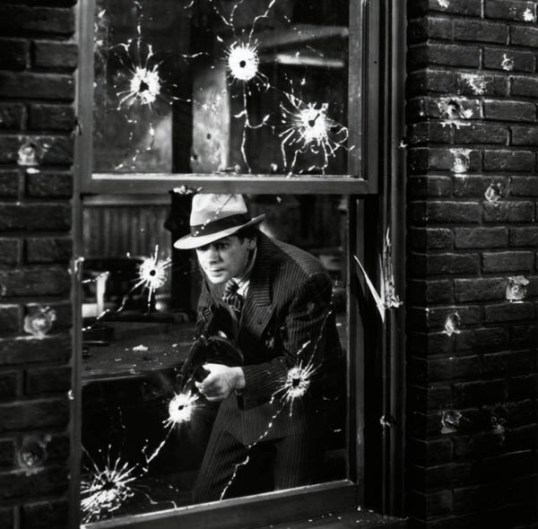
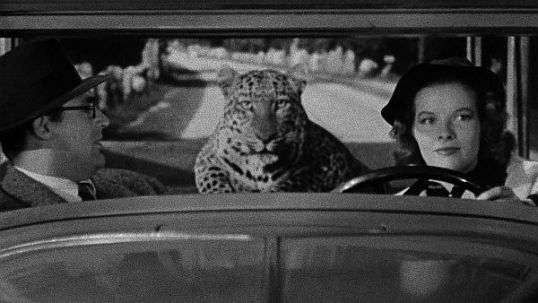
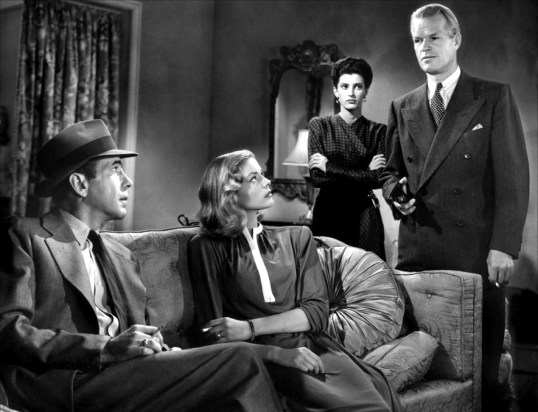
129 years ago, on this date, the great American filmmaker Howard Hawks was born in Indiana.  Over a career that spanned several decades, Hawks proved himself to be a master of every genre.  He made great crime films, great noirs, great comedies, and great westerns.  His influence continues to be felt to this day.  In honor of his legacy, it’s time for….

4 Shots From 4 Howard Hawks Films

Scarface (1932, dir by Howard Hawks, DP: Lee Garmes)

Bringing Up Baby (1938, dir by Howard Hawks, DP: Russell Metty)

The Big Sleep (1946, dir by Howard Hawks, DP: Sidney Hickox)

Rio Bravo (1959, dir by Howard Hawks, DP: Russell Harlan)

Music Video of the Day: 5 Minutes Alone by Pantera (1994, directed by Wayne Isham)


In an interview with Rolling Stone, Vinnie Paul explained how this song came about:

“The story behind this song is we were opening for Megadeth, and there was a guy that was flipping us off the whole show and so we stopped the show. And I was like, ‘Listen, in case you haven’t noticed there’s 18,000 people who really dig what we’re doing. You’re the only one doing that stupid shit without even having to egg the crowd on.’ Ten guys just jumped the guy and beat the shit out of him. His dad called the manager after all the lawsuits and this and that, and basically said, ‘Give me five minutes with that Phil Anselmo guy. I want to whup his ass.’ “

The music video, not surprisingly was directed by Wayne Isham.  Isham was one of those directors who worked everybody who was anybody.  Isham especially understood had to capture metal energy in video form.

Enjoy!

Scenes that I Love: The End of Dirty Harry


Today’s scene that I love comes from 1971’s Dirty Harry, in which Clint Eastwood, as “Dirty Harry” Callahan finally confronts the the Scorpio Killer (Andy Robinson) and asks him if he feels lucky.  Eastwood himself later said that Callahan’s badge must have been attached to a rubber band because he was somehow able to get it back in time for Magnum Force.

Brad’s “Song of the Day” – Merle Haggard & Clint Eastwood sing Bar Room Buddies! 


Did you know that Clint Eastwood once had a number one country hit?!! His duet “Bar Room Buddies” with country music icon Merle Haggard hit number one on the Billboard Hot Country Songs chart in July of 1980. Released as part of the soundtrack for BRONCO BILLY, the song spent a total of thirteen weeks on the chart. Clint’s not much of a singer, but it’s still a fun drinking song!

Enjoy my friends!

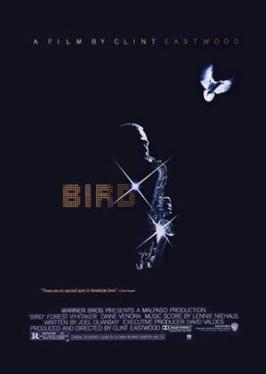
Bird (1988, directed by Clint Eastwood)


Forest Whitaker stars as the legendary saxophonist Charlie “Bird” Parker.  The film, which is structured around flashbacks and time jumps and features some of the most beautifully-done transitions that I’ve ever seen, follows Parker as he plays his saxophone, challenges the jazz purists who his own individual style, and looks for work in both America and France.  Along the way, we watch as he befriends and learns from Dizzy Gillespie (Samuel Wright), mentors a young trumpet player named Red Rodney (Michael Zelniker), and has a complex relationship with a white jazz lover named Chan Parker (Diane Venora).  Throughout his life, Charlie Parker struggles with his addiction to heroin and alcohol, occasionally getting clean to just then fall back into his habit.  To its credit, the film avoids most of the biopic cliches when it comes to portraying Parker’s addiction.  Parker accepts that he’s an addict, just as he accepts that he has a talent that is destined to revolutionize American music.

Director Clint Eastwood has always been a fan of jazz and he actually saw Charlie Parker perform when he was a young man.  His love of jazz had been present in almost every modern-era film that he has directed, staring with Play Misty For Me’s lengthy trip to the Monterey Jazz Festival.  Bird was a passion project for Eastwood, the first film that Eastwood directed without also appearing in.  (Eastwood doesn’t star in his second directorial effort, Breezy, but he does have a brief and silent cameo as a man standing on pier.)  Eastwood takes a nonlinear approach to telling the story, eschewing the traditional bopic format and instead putting the focus on Parker’s music.  Eastwood was able to get several never bef0re-released recordings of Parker performing and, when Whitaker is blowing into his saxophone in the film, we’re actually hearing Parker.  Eastwood’s direction captures the smoky atmosphere of the jazz clubs where Parker and Gillespie made their name while the nonlinear style reflects the feeling of just letting a song take you to wherever it’s going.  This is a movie about jazz that plays out like a jazz improvisation.

Forest Whitaker gives an amiable and charismatic performance as Charlie Parker, playing him as someone who has found both an escape and peace in his music, even as he physically struggles with the ravages of his drug addiction.  Whitaker won the Best Actor at Cannes for his performance in Bird.  Eastwood received the Golden Globe for Best Director.  Bird feels like it was labor of love for both of them.  Bird may not have set the box office on fire when it was originally released but it remains one of the best jazz films.