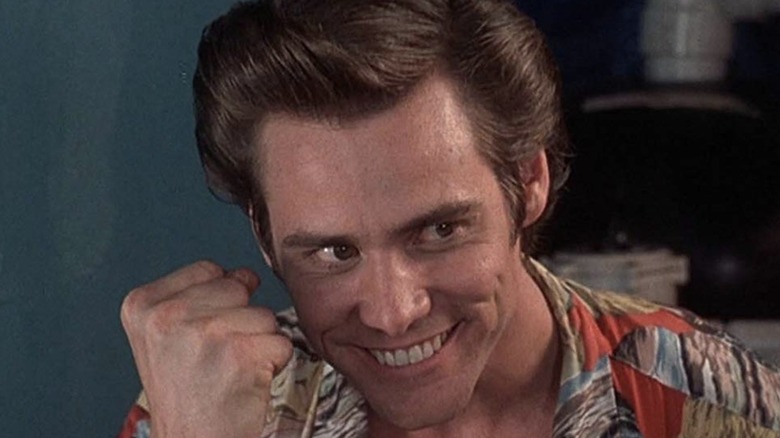
Happy 63rd Birthday, Jim Carrey! The ACE VENTURA (1994) montage sequence that made me a fan!


How many of you remember something specific that you did on February 9th, 1994? I do! I was sitting in a movie theater in Conway, Arkansas watching the goofy Jim Carrey comedy ACE VENTURA: PET DETECTIVE. I already knew he was a funny guy based on his various appearances on the sketch comedy show IN LIVING COLOR. I also remember seeing him in that vampire comedy ONCE BITTEN (1985) with Lauren Hutton when I was in junior high. To be honest though, when I was watching ONCE BITTEN in the mid-80’s, I was much more interested in Lauren’s character than I was in Jim’s. On this particular day in February of 1994, I was more interested in being at the theater because I had a major crush on the girl that was there with me. I figured the movie would be pretty silly, but that’s okay because I don’t mind silly comedies when they’re done right. Admittedly, I was also curious to see if Jim Carrey could actually carry a film by himself, and if the film would be as funny as the trailers I had seen.

I had settled in and was enjoying this film, when the montage shared below appeared on-screen, accompanied by Aerosmith’s “Line Up.” At the very end of the montage, when Ace Ventura resorts to chloroform to slow down the Dolphin player on the track, I probably laughed harder in the theater than I ever had up to that point in my life. I don’t think I’ve ever laughed as hard since either. The stars had all aligned and for that moment, I thought Jim Carrey was the funniest person on earth. Enjoy!

Song of the Day: Satch Boogie (by Joe Satriani)


There’s a saying amongst creatives that those “who can, do; those who can’t, teach”.

That label definitely doesn’t pertain to Joe Satriani. Not only is he one of rock’s greatest guitarists but he has also taught in one way or another some of the greatest rock and metal guitarists such as Alex Skolnick, Kirk Hammett, Stevie Vai and Larry LaLonde just to name a few.

Not just a genius on the guitar in a technical sense but also creatively as well. He has mastered many of the electric guitar techniques that’s become commonplace with guitarists in the rock and metal scene. Influenced by other greats such as Jimi Hendrix, Jeff Beck, Jimmy Page, Eric Clapton and Brian May, his many work shows some background in his fusion of jazz and rock that clearly makes him one of rocks virtuoso who stand amongst the Mount Rushmore of greats.

Just listen to “Satch Boogie” with special emphasis a the 1:50 mark.

Great Guitar Solos Series

4 Shots From 4 Films: Special Bootleggers Edition


4 Or More Shots From 4 Or More Films is just what it says it is, 4 shots from 4 of our favorite films. As opposed to the reviews and recaps that we usually post, 4 Shots From 4 Films lets the visuals do the talking!

Today is National Bootleggers Day so remember to speak easy!  In honor of everyone’s favorite entrepreneurs, it’s time for….

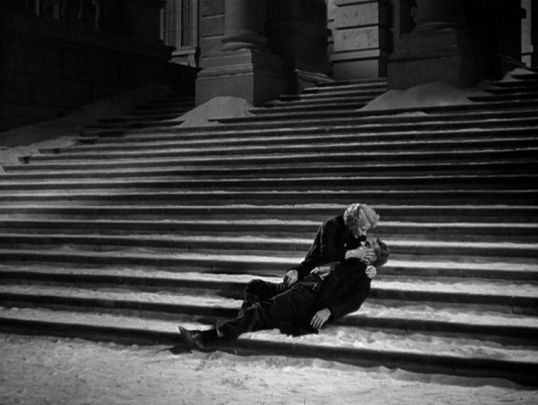
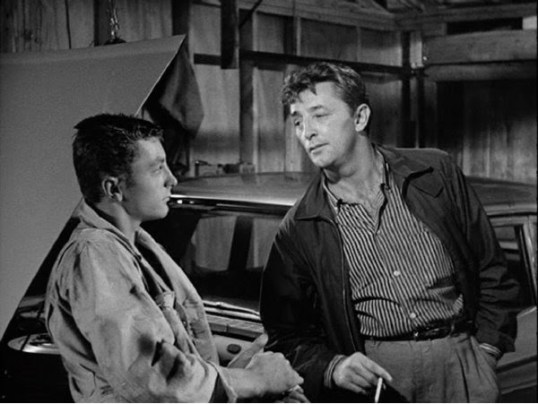
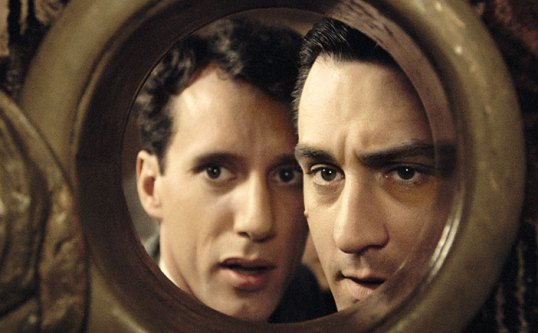
4 Shots From 4 Films About Bootleggers

The Roaring Twenties (1939, dir by Raoul Walsh, DP: Ernest Haller)

Thunder Road (1958, dir by Arthur Ripley, DP: David Ettenson and Alan Stensvoid)

Once Upon A Time In America (1984, dir by Sergio Leone, DP: Tonino Delli Colli)

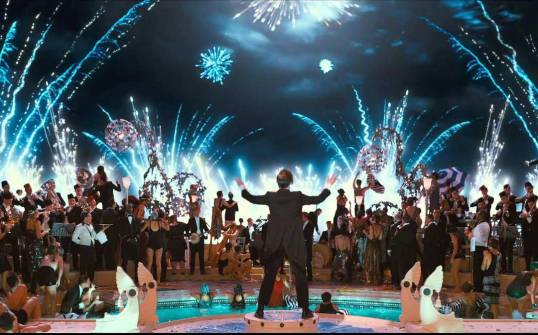
The Great Gatsby (2013, dir by Baz Luhrmann, DP: Simon Duggan)

Live Tweet Alert: Join #FridayNightFlix For Class of 1984!


As some of our regular readers undoubtedly know, I am involved in a few weekly live tweets on Twitter and Mastodon.  I host #FridayNightFlix every Friday, I co-host #ScarySocial on Saturday, and I am one of the five hosts of #MondayActionMovie!  Every week, we get together.  We watch a movie.  We tweet our way through it.

Tonight, at 10 pm et, #FridayNightFlix presents Mark Lester’s Class of 1984!

If you want to join us this Friday, just hop onto twitter, start the movie at 10 pm et, and use the #FridayNightFlix hashtag!  It’s a friendly group and welcoming of newcomers so don’t be shy.

Class of 1984 is available on Prime and Tubi!  See you there!

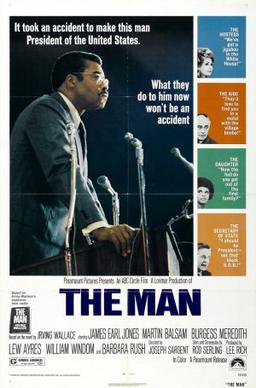
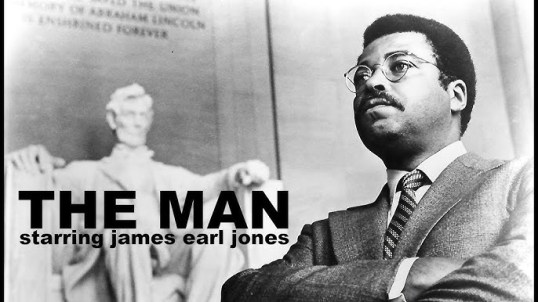
Starring James Earl Jones: The Man (dir by Joseph Sargent)


In 1972’s The Man, James Earl Jones stares as Douglass Dilman.

Dilman is a black college professor and a U.S. Senator.  To his friends, he’s a symbol of progress.  To his enemies, he’s a sell-out who is viewed as being improperly radical.  The U.S. Senate, eager to prove that it’s not a racist institution, has elected Dilman as the President Pro Tempore.  He is now fourth in line for the presidency but that doesn’t concern racist senators like Senator Watson (Burgess Meredith).  A lot would have to happen before Dilman would ever become President.

Needless to say, a lot does happen.

The President and the third-in-line Speaker of the House are attending a conference at a historic building in Frankfort when the roof collapses on them.  We don’t actually see this happen.  We just hear the people in the White House talk about how it’s happened.  We also don’t really learn many details about why the roof collapsed.  Someone nonchalantly says, “It’s an old building.”  Myself, I spent the entire movie waiting for some sort of big revelation of a conspiracy behind the roof collapse but it didn’t happen.  Apparently, in 1972, the Secret Service just let the President go anywhere without checking the place out first.  That said, it’s not a good thing when a serious movie opens with a dramatic plot development that, at the very least, draws a chuckle from the audience.  Seriously, we lost our President because a roof fell on him?  How is America ever going to live that down>

Vice President Noah Calvin (Lew Ayres) is wheeled into the White House cabinet room.  This was not the first time that a Ayres played a Vice President called upon to succeed the President.  Unlike in Advice and Consent, the Vice President announced that he cannot accept the honor of being sworn in because he’s too sick.  (Since when does the Vice President have the option to refuse to do his Constitutional duty?)  With Calvin putting the country ahead of his own ambition, Senator Watson announces that Secretary of State Eaton (William Windom) will be the new President.  No, Eaton says, Dilman will be the new president.  But once Dilman screws up and is either impeached or resigns, fifth-in-line Eaton will be sworn in.

Except …. it wouldn’t work that way.  Excuse me while I put my history/political nerd hat on….

First off, Calvin is apparently still Vice President so if Dilman did step down, Calvin would once again be the successor.  What if Calvin refused a second time?  As soon as the Speaker of the House died, the House of Representatives would elect a new Speaker and that person would be third-in-line.  And, as soon as Dilman became President, the Senate would elect a new President Pro Tempore and that person would be fourth-in-line.  In other words, Eaton is no closer to being President than he was before.

My reason for going  into all of this is to illustrate that The Man is a film about American politics that doesn’t really seem to know much about American politics.  That said, it does feature the great James Earl Jones as Douglass Dilman and Jones gives such a good and thoughtful performance that it almost doesn’t matter that no one else in the film seems to be taking it all that seriously.  Jones plays Dilman as being a careful and cautious man, one who understands that he occupies a huge place in history (Barack Obama was only 11 years old when this film came out) but whose main concern is just doing a good job as President.  Dilman finds himself in the middle.  On one side, he has advisors warning him not to scare America by being too radical.  On the other side, his activist daughter (Janet MacLachlan) brands Dilman a sell-out.  When a black student named Robert Wheeler  (Georg Stanford Brown) is arrested for assassinating a South African government official, Dilman’s first instinct is to believe Wheeler’s been framed but, as the film progresses, doubts start to develop and Dilman must decide whether or not to risk an international incident.  It’s an interesting story, well-played by James Earl Jones and Georg Stanford Brown.

It was originally mean to be a made-for-TV movie but, in order to capitalize on the excitement on the 1972 presidential election, it was released into theaters.  As a result, the film often has the cheap look of a made-for-TV movie and quite a few members of the cast give performances that feel more appropriate for television than the big screen,  (Some members of the cast, like Burgess Meredith, just overact with ferocious abandon.)  In the end, The Man is mostly of interest from a historical point of view.  (In 1972, the idea of a black man being elected President seemed so unrealistic that the movie actually had to drop the roof on 50% of the government just to get Dilman into the Oval Office.)  James Earl Jones, who would have turned 94 today, is the main reason to watch.
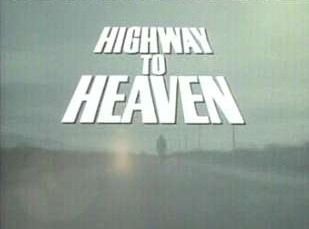
Late Night Retro Television Review: Highway to Heaven 3.9 “Code Name: FREAK”


Welcome to Late Night Retro Television Reviews, a feature where we review some of our favorite and least favorite shows of the past!  On Thursdays, I will be reviewing Highway to Heaven, which aired on NBC from 1984 to 1989.  The entire show is currently streaming on Freevee and several other services!

This week, the highway leads to college and R-rated movies!

Episode 3.9 “Code Name: FREAK”

(Dir by Michael Landon, originally aired on November 19th, 1986)

Jonathan and Mark have been assigned to work on a college campus.  While Jonathan gets to teach a computer class, Mark is assigned to be the resident assistant of a rowdy bunch of jocks who all live in the same dorm.  This episode continues the Highway to Heaven tradition of Mark always being humiliated by the assignment.  If I was Mark, I would be wondering why “the boss” always gives me the worst possible jobs.

Chris Gunn (Jeff Bryan Davis) is starting his first semester at the college.  He’s smart, he’s well-read, and he’s desperate to make friends with everyone.  Unfortunately, Chris is also only 13 years old and, even if he did graduate from high school, there’s no way he should be away from home at the college.  He has no friends.  No one invites him to any parties.  Chris is refused entry to an R-rated movie because he is not accompanied by an adult.

Chris’s roommate is Danny (Gary Hershberger), a football player who  is not quite as shallow as his fellow jocks.  When it looks like Danny might flunk his computer class, Danny’s frat brothers offer to accept Chris into the frat if Chris agrees to hack into Jonathan’s commercial and get the answers for the next big test. Chris does so but then double-crosses Danny by giving him all the wrong answers.  Chris’s not as naive as everyone thought!

Danny flunks the test and loses his spot on the football team.  When its learned that he cheated, Danny loses his scholarship and is expelled for refusing to reveal how he got the answers for the test.  Danny, knowing what happens to narcs, refuses to sell out and lit appears that he’s going to lose his scholarship as a result.  Stunned that Danny didn’t want to get him in trouble, Chris tells the truth to the school’s dean.  Danny is allowed to stay and after some prodding from Jonathan, the dean decides to allow Chris to stay as well.

Chris and Danny are both super-excited and have a new found respect for each other.  They celebrate by….

GOING TO AN R-RATED MOVIE!  Danny accompanies Chris so Chris gets to see a movie that’s he’s probably too young for!  Yay!

This is a prototypical episode of Highway to Heaven.  It’s unapologetically sentimental and rather predictable but it’s also so incredibly earnest and sincere that it doesn’t really matter.  We want to see everything work out for everyone and fortunately, it does.

Myself, it will never not amuse me that, after learning that he won’t be expelled and neither will Danny, Chris’s firth thought is that they should go catch an R-rated picture while they still have time.  And Danny agrees!  I always want to know what type of film are they watching.  Is it a slasher film or a mindless high school comedy or maybe something featuring a bunch of fast cars and occasionally juvenile behavior?

This was a classic episode.  I assume Danny and Chris are still best friends.

Film Review: Starman (dir by John Carpenter)


John Carpenter has directed 18 features film, from 1974’s Dark Star to 2010’s The Ward.  Some of his films have been huge box office successes.  Some of his films, like The Thing, were box office flops that were later retroactive recognized as being classics.  Carpenter has made mainstream films and he’s made cult favorites and, as he’s always the first to admit, he’s made a few films that just didn’t work.  When it comes to evaluating his own work, Carpenter has always been one of the most honest directors around.

Amazingly, Carpenter has only directed one film that received an Oscar nomination.

That film was 1984’s Starman and the nomination was for Jeff Bridges, who was one of the five contenders for Best Actor.  (The Oscar went to F. Murray Abraham for Amadeus.)  Bridges played the title character, an alien who is sent to Earth to investigate the population and who takes on the form of the late husband of Jenny Hayden (Karen Allen).  The Starman takes Jenny hostage, though its debatable whether or not he really understands what it means when he picks up her husband’s gun and points it at her.  He and Jenny drive across the country, heading to Arizona so that he can return to his ship.  Pursued by the government (represented by the sympathetic Charles Martin Smith and the far less sympathetic Richard Jaeckel), the Starman learns about emotions, eating, love, and more from Jenny.  Jenny goes from being fearful of the Starman to loving him.  Carpenter described the film as being It Happened One Night with an alien and it’s not a bad description.

After Jenny and the alien visitor make love in a boxcar, the Starman says, “I gave you a baby tonight,” and that would be an incredibly creepy line coming from a human but it’s oddly charming when uttered by an alien who looks like a youngish Jeff Bridges.  Bridges definitely deserved his Oscar nomination for his role here.  Speaking with an odd accent and moving like a bird who is searching for food, Bridges convincingly plays a being who is quickly learning how to be human.  The Starman is constantly asking Jenny why she says, does, and feels certain things and it’s the sort of thing that would be annoying if not for the way that Bridges captures the Starman’s total innocence.  He doesn’t mean to be a pest.  He’s simply curious about everything.

Bridges deserved his nomination and I would say that Karen Allen deserved a nomination as well.  In fact, it could be argued that Allen deserved a nomination even more than Bridges.  It’s through Allen’s eyes that we see and eventually come to trust and then to love the Starman.  Almost her entire performance is reactive but she makes those reactions compelling.  I would say that Bridges and Allen deserved an Oscar for the “Yellow light …. go much faster” scene alone.

Carpenter agreed to make Starman because, believe it or not, The Thing had been such a critical and commercial flop that it had actually damaged his career.  (If ever you need proof that its best to revisit even the films that don’t seem to work on first viewing, just consider Carpenter’s history of making films that were initially dismissed but later positively reevaluated.  Today, The Thing, They Live, Prince of Darkness, and In The Mouth of Madness are all recognized as being brilliant films.  When they were first released, they all got mixed reviews.)  Carpenter did Starman because he wanted to show that he could do something other than grisly horror.  Starman is one of Carpenter’s most heartfelt and heartwarming films.  That said, it also features Carpenter’s trademark independent streak.  Starman not only learns how to be human but, as a result of the government’s heavy-handed response to his arrival, one can only assume that he learns to be an anti-authoritarian as well.

Starman is one of Carpenter’s best films and also a wonderful showcase for both Karen Allen and Jeff Bridges.

Film Review: Dark Star (dir by John Carpenter)


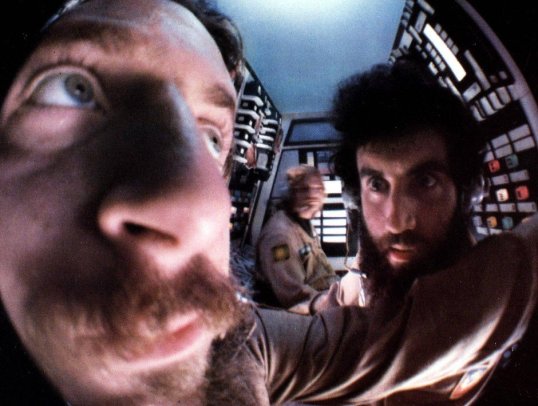
Dark Star (1974, dir by John Carpenter, DP: Douglas Knapp)

What’s it like to live in outer space?

That’s the question posed by 1974’s Dark Star and the answer seems to be that it’s boring as Hell.  Lt. Doolittle (Brian Narelle), Sgt. Pinback (future director and screenwriter Dan O’Bannon), Boiler (Cal Kuniholm), and Talby (Andreijah “Dre” Pahich) have been floating in their spaceship for over twenty years.  (Because of the vagaries of the space-time continuum, they’ve only aged three years in all that time.)  The leader of their mission, Commander Powell (Joe Saunders) was killed when he was accidentally electrocuted at the start of the mission.  The crew put his body in suspended animation so that they could still ask him question despite the fact that he’s not quite alive.  (When they do talk to Powell, Powell is very resentful about the whole situation.)  Doolittle, a former surfer, has taken over as commander of the ship though no one seems to be quite sure what their mission is.

The men struggle to find ways to pass the time as they float endlessly through space.  Some of them watch the asteroids in the distance.  Doolittle fantasizes about surfing.  Pinback plays jokes on people and claims to be an imposter who killed the real Pinback before the start of the mission.  The spaceship is a cluttered mess and the crew looks more like a collection of long-haired hippies than a group of rigorously trained astronauts.  They spend their time getting on each other’s nerves.

They do have a few things that they have to deal with over the course of the film.  The men aren’t particularly smart and whatever discipline they had was abandoned long ago.  As a result, their ship constantly seems to be on the verge of literally falling apart.  A dangerous alien that looks like a beach ball gets loose on the ship.  Even worse, one of the ship’s talking bomb is having an existential crisis.  It’s been over 20 years and it has yet to be used to blow anything up.  What, the bomb wonders, is the purpose of being a bomb if you can’t blow anything up?  Then again, what is the purpose of being in space if there’s nothing left to explore or to discover?

Dark Star is a film that requires a bit of patience.  It moves at its own deliberate pace and a lot of the humor comes from the contrast between the shabbiness of the film’s crew and Stanley Kubrick’s far sleeker vision of space travel in 2001: A Space Odyssey.  Both Dark Star and 2001 are existential films about man’s search for meaning in the stars.  In 2001, Dave Bowman finds that meaning, even if he doesn’t realize it.  The crew of the Dark Star however have to deal with very real possibility that there is no meaning.  Dark Star‘s comedy comes from poking fun at the concept that going into space would make people any less frustrated than they already are on Earth.

Essentially a stoner comedy set in space, Dark Star was John Carpenter’s feature debut.  It started out as a student film but Carpenter and Dan O’Bannon were able to raise an extra $10,ooo  to extend it to feature length.  Largely overlooked when it was first released, it was re-released in 1979.  By that point, Carpenter had directed Halloween and O’Bannon had written Alien, a film that had more than a little in common with Dark Star’s shabby future and its dangerous alien.  While Dark Star definitely shows its origins as a student film, I’ve always enjoyed it.  It’s hard not appreciate the film’s ambition.  And, in its way, it’s probably one of the most realistic vision of life in space ever captured on film.  Humans, the film says, will always be humans.  They’ll always screw things up but occasionally, if they’re lucky, they’ll also get to surf amongst the stars.