Today’s music video day is not just a Backstreet Boys video. It’s also the very first video that the Backstreet Boys ever made and it’s for their very first single! Just look at how young everyone used to be.
The main theme of this video seems to be that the Backstreet Boys are terrible boyfriends but it doesn’t matter because they have got it going on! Their real girlfriends play their video girlfriends in this video and Lou Pearlman, the creepy man behind all the good times, is in the video too. My favorite Backstreet Boy was Brian.
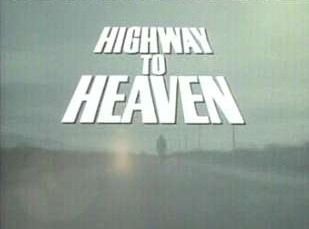
Welcome to Late Night Retro Television Reviews, a feature where we review some of our favorite and least favorite shows of the past! On Thursdays, I will be reviewing Highway to Heaven, which aired on NBC from 1984 to 1989. The entire show is currently streaming on Tubi and several other services!
This week, we start the fourth season of HighwaytoHeaven. This episode features orphans and dogs! I feel the tears coming….
Episode 4.1 “Man’s Best Friend Part One”
(Dir by Michael Landon, originally aired on September 16th, 1987)
Oh, this episode made me cry and cry.
Why? Well, for a couple of reasons….
First off, Jonathan and Mark got new jobs working at a kennel. Many of the dogs at the kennel had been abandoned by their owners and Ms. Lil (Fran Ryan) took care of them all, rather than taking them to the pound. And listen, I’m not a dog person. I’m a cat person. We all know this. But seriously, those dogs were adorable!
A Siberian husky named Jake gets lost. After running across the interstate (gasp!), he finds himself alone at night. Coyotes approach. (OH NO!) Suddenly, Jonathan appears and turns into a lion, scaring the coyotes off. (*sniff* *sniff* I’m okay.)
Every few days, Lil takes the dogs down to the local orphanage — (OH MY GOD!) — and lets them play with the orphans. Jake, now a part of the kennel crew, begs young Alex (Danny Pintauro, who had a much worse experience with a dog in Cujo) to play with him. Alex is shy and introverted but Jake quickly becomes his best friend. Alex starts to come out of his shell and says that he knows he’ll never be separated from Jake. For the first time in his young life, Alex is happy.
(Oh dear.)
The local media does a story on Lil and her dogs. They take a picture of Alex and Jake. The next morning, a young girl named Jenny (Elisabeth Harnois) sees the picture and recognizes Jake. For the past month, she’s been desperately looking for Jake!
(This isn’t good….)
Jenny and her grandfather (William Schallert) pick Jake up from the kennel. Jonathan has to go to the orphanage and tell Alex that his best friend is no longer going to be visiting him.
(Sorry, give me a minute.)
Alex is depressed. Jake is depressed. Jonathan shows at Jenny’s home and asks if Alex can come and visit Jake. Jenny and grandpa say yes. (YAY!)
Suddenly, three dreaded words appear on the screen: “TO BE CONTINUED”
What!? No, there’s no need to continue. Alex and Jake have been reunited, let’s end the story here….
This episode was HighwaytoHeaven at its most earnest, manipulative, and effective. Not only did it feature orphans but also an adorable dog and William Schallert as a genial authority figure. There was also a subplot about Jenny’s parents trying to have another child with a surrogate and I’m sure that has something to do with that promise of “TO BE CONTINUED.”
Happy 71st birthday to Kathleen Turner! The very first time I remember seeing her was with Michael Douglas in the jungle adventure film ROMANCING THE STONE! I just loved the movie and thought she was so beautiful. I also thought Michael Douglas was great as the rascally Jack Colton. A teenage me thought this mudslide scene was hilarious. I still do! Click on the link below and enjoy!
The Rangers are losing again so I’m going to treat my sorrows with a scene that I love from a baseball movie. In this scene from 61*, Roger Maris gets his sixty-first homerun of the season and he breaks Babe Ruth’s record.
I love this scene because it’s what baseball is all about.
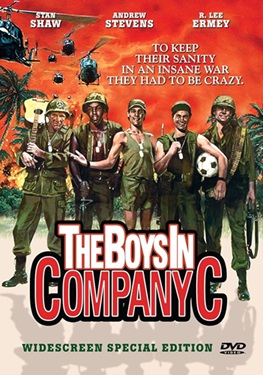
In 1967, a group of young men arrive at the Marie Corp. Recruit Depot in San Diego. Tyrone Washington (Stan Shaw) is a drug dealer from Chicago who tells everyone not to mess with him and who soon emerges as a natural born leader. Dave Brisbee (Craig Wasson) is a long-haired hippie who tried to feel to Canada and who shows up for induction in handcuffs. Vinny Fazio (Michael Lembeck) is a cocky and streetwise kid from Brooklyn. Billy Ray Pike (Andrew Stevens) is a country boy from Texas. Alvin Foster (James Canning) is an aspiring writer who keeps a journal of his experiences. Sgt. Loyce (R. Lee Ermey, making his film debut) molds them into a combat unit before they leave for Vietnam, where they discover that all of their training hasn’t prepared them for the reality of Vietnam.
TheBoysInCompanyC has the same basic structure as Stanley Kubrick’s Full Metal Jacket, right down to R. Lee Ermey playing the tough drill sergeant. The sharp discipline of basic training is compared to the chaos of Vietnam. Ermey always said that he was playing a bad drill sergeant in FullMetalJacket because he tore down the recruits but never bothered to build them back up. In TheBoysInCompanyC, Ermey plays a good drill sergeant, one who is tough but fair and who helps Washington reach his potential. It doesn’t make any difference once the company arrives in Vietnam, though. Both The Boys In Company C and FullMetalJacket present the war in Vietnam as being run by a collection of incompetent officer who have no idea what it’s like for the soldiers who are expected to carry out their orders.
Of course, TheBoysInCompanyC is nowhere near as good as Full Metal Jacket. Full MetalJacket was directed by Stanley Kubrick and it’s a chilling and relentless look at the horrors of combat. TheBoysInCompanyC was directed by Sidney J. Furie, a journeyman director who made a lot of movies without ever developing a signature style. The basic training scenes are when the film is at its strongest. When the company arrives in Vietnam, Furie struggles with the story’s episodic structure and it can sometimes be difficult to keep track of the large ensemble cast. The Vietnam sequences are at their best when the emphasis is on the soldiers grumbling and bitching as their officers send them on one pointless mission after another. The soccer game finale tries to duplicate the satire of the football game that ended Robert Altman’s M*A*S*H but it does so with middling results. TheBoysinCompanyC is a collection of strong moments that never manage to come together as a cohesive whole.
The movie is still important as one of the first major films to be made about the war in Vietnam. However, it’s since been overshadowed by The Deer Hunter, Apocalypse Now, Platoon, and, of course, Full Metal Jacket.
Welcome to Retro Television Reviews, a feature where we review some of our favorite and least favorite shows of the past! On Thursdays, I will be reviewing Malibu CA, which aired in Syndication in 1998 and 1999. Almost the entire show is currently streaming on YouTube!
Yes, this is from the first season. I don’t care. I refuse to waste my time looking for a second season advertisement.
This week, Jason’s smoking! And Dick Butkus shows up.
Episode 2.15 “Goin’ Up In Smoke”
(Dir by Gary Shimokawa, originally aired on February 12th, 2000)
Okay, can we just agree that Lisa is the absolute worst?
No, not me! I’m talking about the show’s Lisa, the premed student played by Marquita Terry. In this episode, she somehow gets a job writing theater reviews for the local newspaper. When Traycee puts on her own version of Romeo and Juliet (an “urban” version that she calls Rom-e-yo and Juliet), Lisa has to review it. Lisa doesn’t like the play so she writes a negative review in which she says that Traycee is a terrible actress. Traycee reads the review and gets offended. Lisa says that she didn’t have a choice. She had to be honest.
Actually, Lisa did have a choice and it wouldn’t have been involved any sort of dishonesty. Lisa could have simply said, “I can’t review this show because I have a conflict of interest.” The show was adapted, directed, and produced by Lisa’s roommate! That’s all Lisa had to say to get out of writing the review. The newspaper could have sent someone else to write the review and Lisa would have been off the hook. Instead, Lisa went to the show, trashed her roommate in the newspaper, and then acted like somehow she was the one being inconvenienced.
Seriously, Lisa is the worst and it doesn’t help that Marquita Terry’s performance on this show was so incredibly bad that she made the cast of One World look Emmy-worthy. Seriously, you have to be really bad to make Cray from One World look good by comparison.
That was the B-plot. The A-plot found Dick Butkus returning as Uncle Charlie, just in time for Jason to start smoking …. just like his favorite uncle! Peter freaks out. His son is smoking! Hey, Peter …. your son is 19 years old and legally an adult. If he wants to smoke, he can smoke. He’s a musician in Malibu so you should really be thankful that smoking cigarettes is all he’s doing.
Uncle Charlie is a smoker too. He and Jason try to quit together but, after one hour without a cigarette, they’re both ready to kill someone. Uhmmm …. okay. I don’t smoke but I know plenty of smokers and most of them can last for more than an hour without a cigarette. Anyway, Uncle Charlie gets lung cancer because this is a Peter Engel sitcom and, therefore, every point has to be made with the subtlety of a sledgehammer.
This episode felt familiar, mostly because every single Peter Engel sitcom had at least one insane anti-smoking episode. Having Dick Butkus show up just reminded me of how much better HangTime handled smoking. This episode annoyed me beyond all belief.
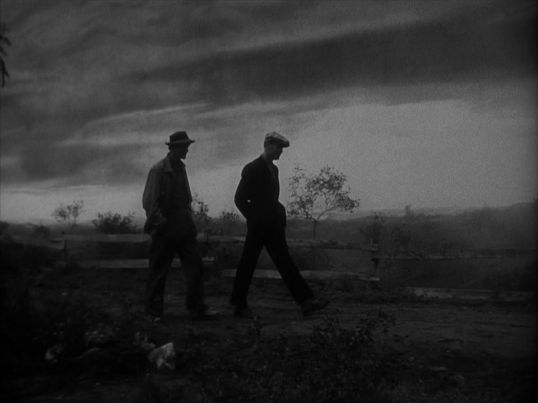
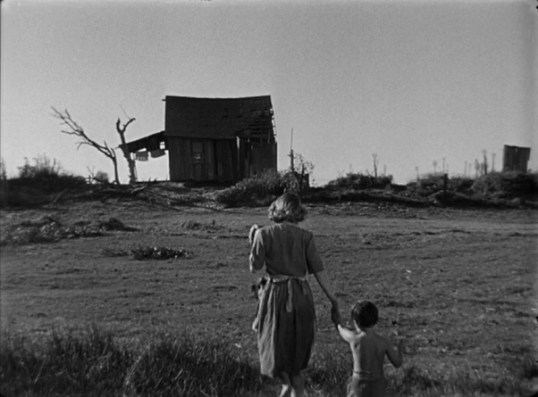
4 Or More Shots From 4 Or More Films is just what it says it is, 4 shots from 4 of our favorite films. As opposed to the reviews and recaps that we usually post, 4 Shots From 4 Films lets the visuals do the talking!
I’ve often mentioned on here that I grew up in Central Arkansas in the unincorporated community of Toad Suck. In other words, I’m a country boy. I grew up working with my dad to cut, stack and haul firewood for our family, as well as others in our community. I grew up cutting the grass at our house and our neighbors. I grew up working in my dad’s garden, a garden that fed our family and was shared with people all over Perry County. Dad still produces a big garden every year. As a matter of fact, I’ll be eating cabbage and squash from my dad’s garden tonight! Almost every Saturday, dad would take me and my brother fishing on the Arkansas River, which runs right through Toad Suck. I can filet a fish like nobody’s business. I’ve never cared much for hunting, but I’ve been around guns my whole life, and I know how to use them. I have them in my home for the sole purpose of protection.
I’ve also always loved Hank Williams, Jr. His songs “Family Tradition” and “All My Rowdy Friends Are Coming Over Tonight” are classics, but my personal favorite has always been “A Country Boy Can Survive.” And even though this song is somewhat dated here in 2025, it still takes me back to the early 80’s when my dad was teaching me how to work and fish. Today, it’s my song of the day. Enjoy!
Do you remember O-Town? They were the boy band that was formed for a reality television series. Back in the day, Lisa and I watched every episode and we still thought the name stood for Orgasm Town until we realized the band was from Orlando. Even thought they could actually sing, O-Town was still the boy band that made other boy bands seem tough.
O-Town may have been featured on Making The Band but they had nothing to do with Diddy. (O-Town was the first season, before Diddy was a part of the program.) The mastermind behind O-Town was Lou Pearlman, which isn’t much better but I don’t think Pearlman’s ever been accused of putting a hit out on anyone.
This music video was from O-Town’s 2016 comeback. Enjoy!