Review: One Piece (Season 1)


“Being a pirate is not about raiding villages or perfect plans; it’s about adventure and freedom.” — Monkey D. Luffy

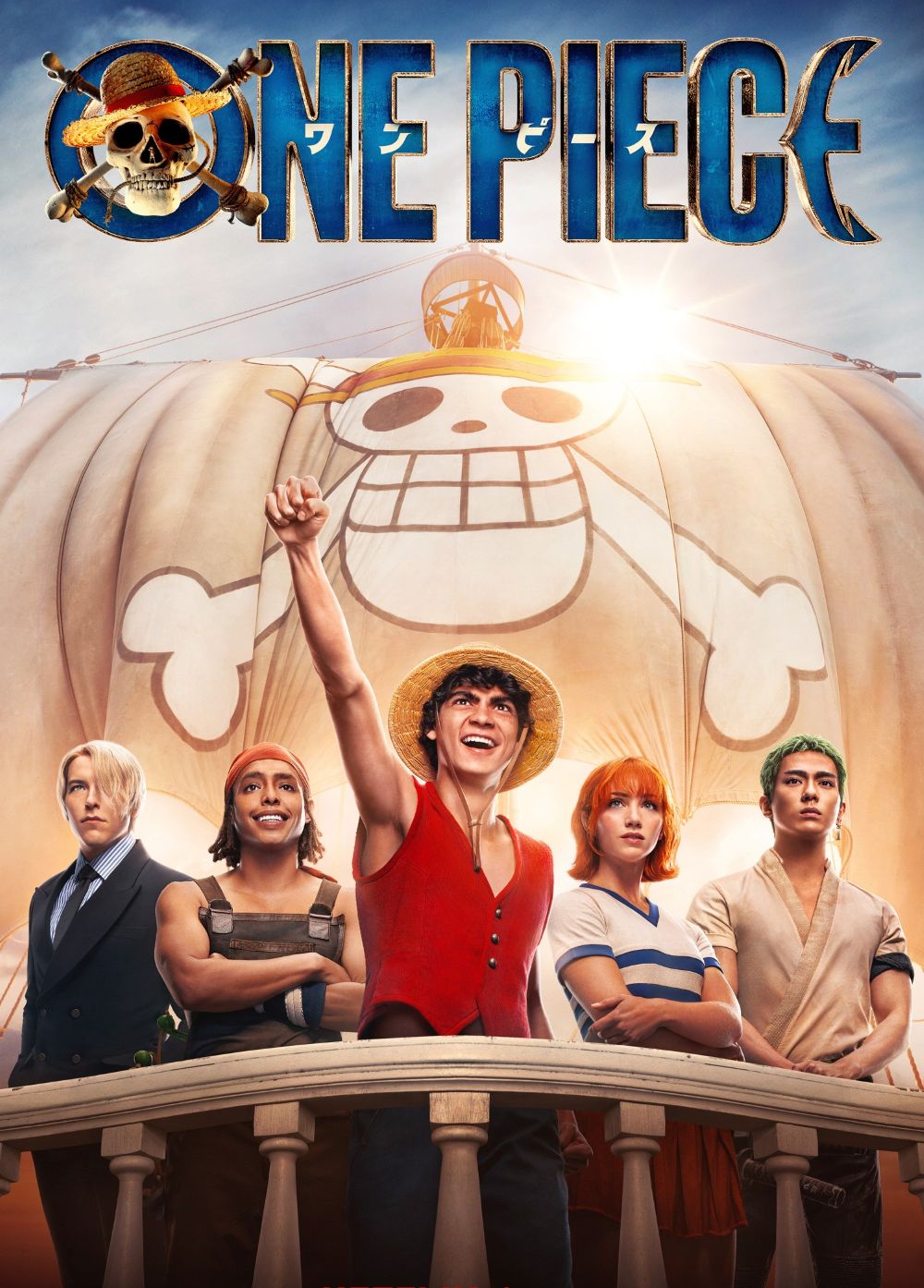
Netflix’s first season of the live-action One Piece is one of those rare anime adaptations that’s both messy and genuinely charming, often in the same scene. It doesn’t completely escape the usual problems that come with translating wild, cartoon logic into real people and real sets, but it gets enough right—especially the cast dynamics and worldbuilding—that it feels more like a real show than a cosplay experiment.

The basics: this first season covers the East Blue saga, following Monkey D. Luffy as he puts together the early Straw Hat crew and heads off toward the Grand Line. You get the big beats fans expect: Romance Dawn, Zoro’s introduction, Orange Town and Buggy, Syrup Village with Usopp and Kaya, Baratie with Sanji, and Arlong Park with Nami’s backstory as the emotional anchor. It’s condensed into eight hour-ish episodes, so you’re not getting a one-to-one remake of either the One Piece manga or the anime; this is very much a “greatest hits” version of that early stretch, with a ton of trimming, merging, and reordering to make it work as a bingeable live-action series.

Probably the easiest part to recommend is the core cast and their chemistry, which does a lot of heavy lifting. Iñaki Godoy’s Luffy is unapologetically goofy, earnest, and loud in a way that could’ve gone horribly wrong in live action, but he leans into the character’s optimism so hard that it mostly works. He feels like someone who really does believe he’ll be King of the Pirates and doesn’t see any reason to question it, and that unshakable confidence becomes the emotional center of the crew. Godoy also nails Luffy’s mix of childlike wonder and sudden steel; he can flip from grinning over a new ship to staring down a villain in a way that sells Luffy as more than just a rubbery himbo. His turn as Luffy ends up being the highlight performance of the season, because if he doesn’t work, nothing else does—and he absolutely carries the show’s heart on his sleeve.

Mackenyu’s Zoro is basically the polar opposite energy, which is why their dynamic works so well. He plays Zoro with a dry, deadpan coolness that never tips completely into parody, even when he’s doing something as inherently ridiculous as fighting with three swords. His line delivery is often clipped and understated, and that restraint gives him room to land some of the show’s funnier reactions just by raising an eyebrow or sighing at Luffy’s nonsense. Importantly, Mackenyu makes Zoro feel like someone who’s constantly sizing up the room and quietly choosing when to step in, which fits the character’s “honor-bound mercenary slowly becoming a real crewmate” vibe.

Emily Rudd’s Nami brings a different energy altogether, mixing competence, guardedness, and flashes of vulnerability in a way that really pays off once the Arlong Park material kicks in. Early on, she plays Nami with a kind of wary charm—she’s clearly the most practical person on the ship, always thinking about maps, money, and survival, and Rudd lets that edge peek through even when Nami is going along with Luffy’s madness. When the show finally digs into her backstory, she shifts gears into something rawer and more emotional without it feeling out of character, and her scenes in the latter part of the season give the story a genuine emotional spine. Alongside Godoy, Rudd’s performance is another standout, since the season’s biggest emotional payoff basically hinges on whether you buy Nami’s pain and eventual trust in the crew.

Jacob Romero as Usopp leans into the character’s role as the lovable coward and storyteller, but he doesn’t make him a total joke. His performance captures that mix of bluster and insecurity—he’s a guy who talks a big game, clearly doesn’t always believe himself, and still steps up when it matters. Romero’s physicality and timing help sell Usopp’s more exaggerated reactions, but he also gives the quieter moments with Kaya and the Going Merry a sincerity that keeps the character from being just comic relief. You can see why this crew keeps him around, even when he’s clearly terrified half the time.

Taz Skylar’s Sanji doesn’t show up until later in the season, but he makes a strong impression once he does. Skylar leans into Sanji’s suave, flirtatious side without making him completely insufferable, and he brings a surprising amount of warmth to the character’s loyalty toward Zeff and the Baratie. His fight scenes, built around kicks and flashy movement, give the action a slightly different flavor whenever he’s involved, and his banter with Zoro and Luffy slots into the group dynamic quickly. The show dials back some of Sanji’s more over-the-top anime tendencies, and Skylar’s performance sells that reined-in version pretty well.

One thing that helps the whole project feel less like a random “Hollywood take” and more like a genuine extension of the franchise is how closely One Piece creator Eiichiro Oda worked with the team to adapt his manga and anime for live action. His involvement doesn’t magically make every creative choice perfect, but it does temper some of the bigger changes from the original, since you get the sense that the tweaks to pacing, structure, and certain character beats were made with his blessing rather than behind his back. Even when the show compresses arcs or reshuffles events, it still feels guided by the spirit of One Piece as Oda sees it, which goes a long way toward making the adaptation easier to accept for fans who might otherwise bristle at every deviation.

The show spends a lot of time on relationships and backstory, and that’s both a strength and a weakness. On the plus side, those flashbacks—Luffy and Shanks, Zoro’s childhood, Nami’s history with Arlong, the way characters like Kaya and Usopp connect—give emotional weight to what might otherwise just be colorful pirate antics. By the time Arlong Park rolls around, you actually care enough about Nami and her village that the standoff with Arlong lands as the season’s big payoff rather than just another boss fight. On the minus side, the early episodes can feel overstuffed with introductions and tone-setting. There are a lot of characters and a lot of lore thrown at you quickly, and if you’re not already familiar with One Piece, it can feel chaotic and hard to latch onto at first.

Visually, the show is kind of wild—in a good way. One of the big fears with live-action anime is that the production design ends up feeling cheap, empty, or embarrassed by the source material. Here, the sets are large, busy, and distinct: each island or town has its own look and vibe, from circus-horror weirdness with Buggy to the ocean-front glam of the Baratie to the more oppressive, grimy feel of Arlong Park. There’s a sense that this is a big, strange world rather than just three reused soundstages and a backlot. The costumes, props, and little bits of world detail—like the transponder snails and offbeat outfits—lean into the original’s absurdity instead of trying to “ground” it into blandness, and that helps the show retain a lot of its personality.

The CGI and action are… pretty good, with caveats. Luffy’s rubber powers were always going to be a challenge, and sometimes the stretching looks a little off, but the show smartly leans into the inherent ridiculousness rather than pretending it’s supposed to look “realistic.” The action scenes are choreographed to be big and theatrical rather than gritty, which fits One Piece’s energy. There are moments where the limitations show—fights can be shorter than fans might want, and some sequences are clearly staged to avoid pushing the visual effects too hard—but when the show goes all-in, the results are genuinely fun. The key is that the action is always driven by character: Zoro’s swordsmanship, Sanji’s kicks, and Luffy’s unshakeable confidence all feel distinct and recognizable.

That brings us to the fishmen, which are easily one of the trickiest elements to pull off in live action. The make-up effects and prosthetics do a lot of heavy lifting, and from a distance the designs are bold and striking, but when the camera gets up close, things can get pretty rough. You can see the seams, the stiffness, and the slightly rubbery, mask-like quality that’s hard to completely disguise when you’re turning heavily stylized cartoon fish-people into real actors in costumes. By the time the show gets to that particular section of the season, though, the audience has more or less made its peace with the whole experiment: either you’ve bought into the concept that this is a live-action One Piece—with all the heightened, cosplay-adjacent weirdness that implies—or you haven’t, and the fishmen are just going to be one more thing you can’t get past. For viewers already on the show’s wavelength, the emotional stakes of Arlong Park matter more than the occasional rubbery jawline.

Performance-wise beyond the core Straw Hats, there are a few clear standouts in the supporting cast, and the obvious high point is Jeff Ward as Buggy. He takes a character who’s primarily used as broad, loud comedic relief in the manga and anime and plays him the same way on the surface—still ridiculous, still theatrical, still a clown-themed pirate—but with a bit more bite and cynicism underneath. There’s a mean streak and a sense of bruised ego in his version of Buggy that makes him feel less like a one-note gag and more like an actual threat who just happens to be funny. That extra edge helps his scenes pop whenever he’s on screen and makes Buggy one of the side characters you actually want to see come back later instead of just being a one-arc villain.

Tone-wise, season 1 walks a tightrope between over-the-top anime goofiness and more grounded live-action drama. The first couple of episodes lean heavily into cartoonish humor and big, exaggerated deliveries, which can feel jarring if you’re not already on board with that style. As the season goes on, though, the show settles into a more comfortable rhythm where the comedy and drama balance better. The horror-tinged atmosphere in some mid-season episodes, the emotional flashbacks, and the quieter character moments give it some texture beyond “loud and wacky.” Still, there’s no getting around the fact that some jokes are pushed too hard and some lines land awkwardly; not every animated beat translates cleanly to actors on a physical set.

One of the more interesting aspects is how the story has been compressed and rearranged. Plotlines that took multiple episodes in the anime get condensed, combined, or reordered so that they fit into an eight-episode season with a clear build toward Arlong Park as the climax. On the positive side, this keeps things moving and avoids the bloat that long-running anime can fall into. There aren’t many filler-feeling stretches; almost every scene is trying to push plot, character, or worldbuilding forward. On the negative side, there are moments where you can feel the rush: some conflicts resolve faster than they arguably should, certain relationships don’t get as much space to breathe, and some secondary characters end up feeling like sketches rather than fully realized people.

If you’re a long-time fan of the One Piece manga or anime, that editing is going to be a bit of a mixed bag. Some changes genuinely help the story flow better in live action, tightening up arcs that were originally more meandering. Other changes will probably rub purists the wrong way, especially when beloved scenes are trimmed, altered, or moved around. That said, the adaptation is more faithful in spirit than many other anime-to-live-action attempts. The Straw Hats act like themselves, the world still feels strange and adventurous, and the show never seems ashamed of its source material. It’s clearly designed as an accessible starting point for newcomers rather than a frame-by-frame recreation for existing fans.

Pacing is another area where the season both succeeds and stumbles. The length of the episodes means there’s room for characterization and little worldbuilding beats, but they can sometimes feel bloated, especially in the early going when you’re still figuring out how seriously to take anything. Some viewers may bounce off before the show fully finds its groove. However, once the series gets deeper into the crew’s emotional histories—especially in the middle episodes and leading into the Arlong material—it becomes easier to invest in what’s happening on screen. The season builds nicely toward its finale, even if the path there is occasionally uneven.

As a whole package, season 1 of Netflix’s One Piece is far from perfect but genuinely enjoyable if you’re open to what it’s trying to do. It’s big, colorful, sometimes clumsy, and often surprisingly heartfelt. Fans looking for a meticulous, panel-accurate adaptation are going to notice every shortcut and deviation. People who hate anime-style humor may find parts of it grating or too over-the-top. But if you’re okay with a show that’s earnest, occasionally awkward, and unafraid to be strange, there’s a lot here to like—especially the way the crew’s bond slowly becomes the emotional core of the story.

In the end, this first season feels less like a flawless triumph and more like a strong proof of concept. It shows that One Piece can work in live action without losing its identity, even if compromises have to be made in pacing, tone, and scale. The highlight performances from Godoy as Luffy and Rudd as Nami, backed by a solid ensemble that includes scene-stealers like Jeff Ward’s Buggy, Oda’s guiding hand, the ambitious production design, and the emotional beats of arcs like Arlong Park are strong enough that, by the time the final stinger hints at more adventures to come, it’s easy to imagine sticking around for another voyage with this crew—even if the make-up isn’t always convincing and the rubber powers don’t always look great.
The “This Week in Charles Bronson” podcast interviews actor Jordan Rhodes! 


I was lucky to be part of a recent interview with actor Jordan Rhodes on the “This Week in Charles Bronson” podcast. Jordan worked with Bronson on two separate movies almost twenty years apart, MR. MAJESTYK (1974) and THE INDIAN RUNNER (1991), so he does offer valuable insight to my favorite actor. Jordan also worked with so many great actors like Joe Don Baker, Sean Penn, Andy Griffith, Gregory Peck, etc., etc. One of the most interesting works of his career is a stage play he developed about Ernest Hemingway entitled PAPA: THE MAN, THE MYTH, THE LEGEND. I’ve seen a filmed version of the play on DVD and I can confirm that it’s incredible. He toured this play for over 7 years, with the emergence of Covid in 2020 effectively ending its run. During those Covid years, Jordan did find time to write a biography entitled “The Life of a Blue Collar Actor,” which I also own and have read. It’s such an interesting take on what life is like for your basic working actor who never becomes a star, but somehow carves out a four decade career. I found it very entertaining. 

If you’re interested in character actors like Jordan Rhodes, you should enjoy this. You’ll find that we do very little interviewing. He just gets to talking and it goes from there. I did want to point out that he does misspeak about a situation in Bronson’s personal life during the episode. He issued this statement on his Facebook page a few days after we recorded:

I want to apologize for making a misstatement about the death of Charlie’s son, which I quoted as having shot himself on Charlie’s Vermont farm. I was given that misinformation by a producer prior to working with Charlie on a film, and it was incorrect. Charlie’s adopted son, Jason, died from an overdose, and I apologize for making the misstatement.

We sincerely thank Jordan Rhodes for taking the time to speak to movie nerds like us! I hope you enjoy! 

Song of the Day: Free Bird by Lynyrd Skynard


I’m not even a hockey fan and I’m cheering right now!  3 Days ago, the U.S. women’s hockey team defeated Canada and won a gold medal at the Winter Olympics.  Today, the men’s hockey team did the same thing.

I have tears in my eyes and you better believe I have a song of the day.

Sing it!

(Arleigh picked this for Song of the Day back in 2015 and did a much better job than me explaining why this song is the unofficial national anthem of the United States.)

Free Bird

If I leave here tomorrow
Would you still remember me?
For I must be traveling on, now
‘Cause there’s too many places
I’ve got to see

But, if I stayed here with you, girl
Things just couldn’t be the same
‘Cause I’m as free as a bird now
And this bird, you’ll can not change
Oh, oh, oh, oh, oh

And the bird you cannot change
And this bird you cannot change
Lord knows, I can’t change
Bye, bye, baby it’s been a sweet love

Yeah, yeah
Though this feeling I can’t change
But please don’t take it so badly
‘Cause the Lord knows
I’m to blame

But, if I stayed here with you girl
Things just couldn’t be the same
‘Cause I’m as free as a bird now
And this bird, you’ll can not change
Oh, oh, oh, oh, oh

And this bird you cannot change
Lord knows, I can’t change
Lord help me, I can’t change
Lord I can’t change

Won’t you fly high, free bird, yeah?

(commence awesome triple guitar solos)

4 Shots From 4 Films: Special Jonathan Demme Edition


4 Shots From 4 Films is just what it says it is, 4 shots from 4 of our favorite films. As opposed to the reviews and recaps that we usually post, 4 Shots From 4 Films lets the visuals do the talking!

The late, great director Jonathan Demme was born 82 years ago today.  It’s time for….

4 Shots From 4 Jonathan Demme Films

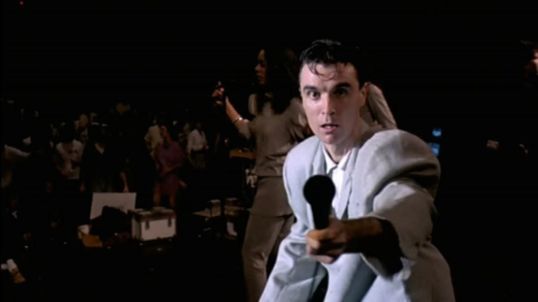
Stop Making Sense (1984, dir by Jonathan Demme, DP: Jordan Cronenweth)

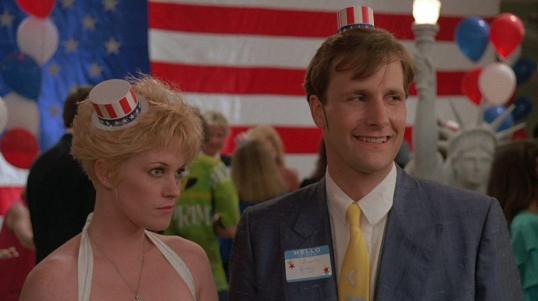
Something Wild (1986, dir by Jonathan Demme, DP: Tak Fujimoto)

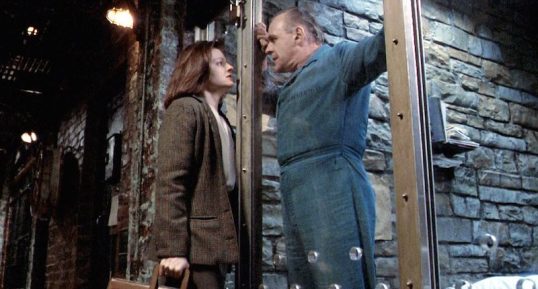
The Silence Of The Lambs (1991, dir by Jonathan Demme, DP: Tak Fujimoto)

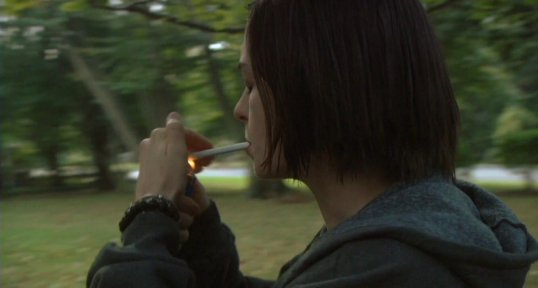
Rachel Getting Married (2008, dir by Jonathan Demme, DP: Declan Quinn)

Music Video of the Day: Trucks Don’t Lie by Tyler Rich (2023, dir by ????)


It’s true, they don’t!

Today, as we celebrate America’s success in the Winter Games and as we get ready for what will hopefully be a big 250th birthday celebration in July, a song about trucks just feels appropriate.

Enjoy!

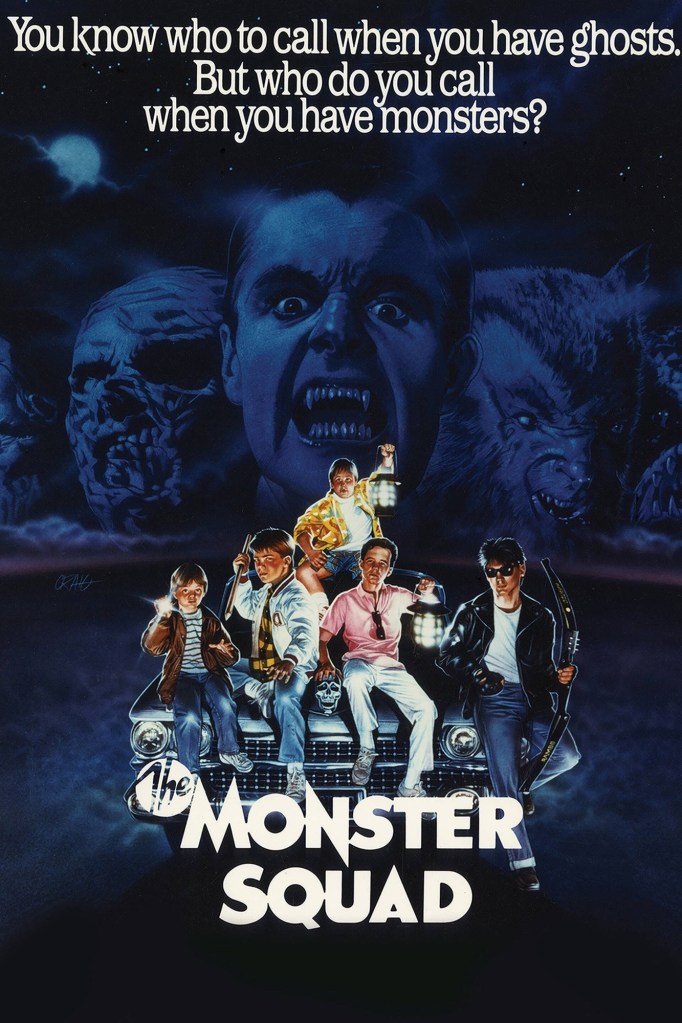
Review: The Monster Squad (dir. by Fred Dekker)


“Creature stole my Twinkie.” – Eugene

Released in 1987, The Monster Squad has lived one of those strange afterlives that cult films sometimes enjoy—ignored or even ridiculed upon release, only to become a beloved artifact for the generation that found it later on VHS. Directed by Fred Dekker and co-written with Shane Black, the movie occupies an awkward but endearing space between horror, comedy, and kids’ adventure. It never fully settles into one tone, and that’s part of both its charm and its problem. Watching it today, the film feels like The Goonies took a detour through a drive-in double feature of Dracula and The Wolf Man. It’s clunky, funny, occasionally mean-spirited, and loaded with enthusiasm—qualities that make it a thoroughly guilty pleasure for fans of ’80s genre mashups.

The story wastes no time getting into its madcap premise. A group of suburban preteens calling themselves “The Monster Squad” find that the classic Universal-style monsters are real, and worse, they’ve come to town. Count Dracula has a plan to plunge the world into darkness using an ancient amulet, and to succeed he enlists a roster of familiar faces: Frankenstein’s Monster, the Mummy, the Gill-Man, and the Wolf Man. This roster is fan-service before fan-service was a marketing term—a kid’s monster toybox brought to life. The squad, of course, must stop them, armed with comic-book knowledge, wooden stakes, and a blend of reckless courage and youthful sarcasm.

Dekker’s direction and tone play like a movie made for kids but smuggled in some heavy teenage energy. There’s violence, crude jokes, and occasional language that Hollywood would never let slip into a PG-friendly franchise today. Yet that rough edge is part of why The Monster Squad aged into cult status. It’s unapologetically of its time, operating on the belief that kids can handle scares as long as they’re fun and that suburban fantasy can, for a while at least, coexist with real danger. The movie’s depiction of childhood feels filtered through a stack of comic books and Creepshow issues—hyper absurd but still emotionally grounded in a way only ’80s adventure films seemed to pull off.

The kids themselves are a mixed bunch of believable archetypes. There’s Sean (André Gower), the de facto leader with a bedroom plastered in monster movie posters; Patrick (Robby Kiger), his wisecracking sidekick; Rudy (Ryan Lambert), the too-cool-for-school older kid who smokes, rides a bike, and somehow becomes the squad’s weapons specialist; and Eugene (Michael Faustino), the youngest, who still sleeps with his dog and writes letters to the Army for backup. They’re joined by Horace, nicknamed “Fat Kid,” played with surprising vulnerability by Brent Chalem. Each character is drawn broadly but memorably, and even when the dialogue veers into dated humor, there’s an underlying sincerity. You can tell Dekker and Black really liked these kids. They might use slingshots and one-liners, but what unites them is their intense sense of loyalty to one another—the kind of friendship that survives both bullies and broomstick-wielding vampires.

If there’s an emotional anchor, oddly enough, it’s the relationship between the squad and Frankenstein’s Monster, played by Tom Noonan in an unexpectedly gentle performance. When the creature befriends the kids, particularly little Phoebe (Ashley Bank), the film shifts momentarily from wisecracks to something close to tenderness. Noonan gives the character a shy uncertainty, a weary loneliness that offsets the visual absurdity of the rubbery monsters around him. There’s even a tinge of tragedy in his final act, which echoes Frankenstein’s literary roots—a moment of real feeling buried inside an otherwise loud and gleefully messy creature romp.

The monsters themselves, created by legendary effects artist Stan Winston, are among the film’s biggest draws. Each design feels like a loving upgrade to the old Universal look—recognizable but more feral, angular, and rooted in late-’80s aesthetics. The Wolf Man, for example, looks simultaneously comic and menacing, while the Gill-Man costume still impresses for its texture and movement decades later. The decision not to rely on stop motion or heavy opticals gives the monsters a tactile presence that CGI could never capture. There’s something about watching full-bodied suits and prosthetics move in real space that makes the threats feel tangible even when the stakes are goofy. These creatures are fun to look at, even when the script doesn’t give them much to do beyond roar and stalk across smoke-filled sets.

Shane Black’s fingerprints are all over the dialogue—the sardonic banter, the genre in-jokes, the affection for both pulp tropes and subverting them. But perhaps because the film was marketed partly as family adventure and partly as horror spoof, it often can’t decide whether to play sincere or ironic. Some scenes lean heavily on nostalgic affection for monster movies, while others feel almost mean in their mockery of small-town innocence. The tone whiplash means The Monster Squad doesn’t build much consistent momentum; one minute it’s heartfelt, the next it’s a barrage of sarcastic one-liners. Still, its rough tonal juggling has a ragtag energy that keeps it lively, and the sheer commitment to blending genres is endearing.

When it comes to pacing, the movie flies by in under 80 minutes, which turns out to be both blessing and curse. On one hand, there’s no filler—every scene moves briskly to the next piece of monster mayhem. On the other, the movie’s emotional beats and mythology barely have time to breathe. We get glimmers of backstory (like Dracula’s cryptic hunt for the amulet and Van Helsing’s prologue battle) that hint at a larger world that the film never really explores. You sense that Dekker and Black were operating under the fantasy logic of childlike storytelling: don’t explain too much, just move fast enough that no one questions it. It works, more or less, because of the film’s sheer enthusiasm, but it leaves you imagining a richer version of this story that never quite made it onscreen.

Looking back from today’s lens, some parts of The Monster Squad show their age more harshly. Certain lines and stereotypes that went unnoticed in the ’80s now feel jarring, even uncomfortable, and the film’s cavalier tone sometimes undercuts moments that should feel more innocent. Yet despite that, most viewers who revisit it with awareness of its era find themselves disarmed by its sense of fun. There’s no cynicism driving it—it’s pure genre love, messy and sincere, like a handmade Halloween costume that’s somehow cooler precisely because it’s imperfect. The film represents a time when kids’ movies were allowed to have teeth, blood, and a few scary moments, trusting that a young audience could handle being spooked without needing everything smoothed over.

For many fans, The Monster Squad works less as a polished film and more as an experience—a flashback to VHS sleepovers, bad pizza, and rewinding favorite scenes. The movie’s newfound appreciation, fueled by screenings and documentaries like Wolfman’s Got Nards, speaks to that nostalgic bond. It’s less about objective greatness and more about the feeling it preserves. Sure, some of the jokes fall flat, and the plot functions mostly as connective tissue between monster gags, but few movies embody the gleeful chaos of late-’80s pop horror as affectionately as this one does.

The Monster Squad earns its title. It’s not a flawless film, nor even a particularly coherent one, but it’s deeply fun, carried by the conviction that monsters—real or imaginary—are made to be fought with courage, humor, and friends who have your back. Watching it now is like flipping through an old comic book you used to love: you can see every crease and faded color, but that doesn’t make it any less special. And in a cinematic era saturated with irony and nostalgia pastiche, The Monster Squad still feels refreshingly earnest about its own weirdness. Maybe that’s its secret power.

Late Night Retro Television Review: Saved By The Bell 1.13 “The Babysitters”


Welcome to Late Night Retro Television Reviews, a feature where we review some of our favorite and least favorite shows of the past!  On Saturdays, I will be reviewing Saved By The Bell, which ran on NBC from 1989 to 1993.  The entire show is currently streaming on Prime and Tubi!

This week, Kelly is irresponsible.

Episode 1.13 “The Babysitters”

(Dir by Don Barnhart, originally aired on December 1st, 1990)

This episode stresses me out.

Kelly’s parents go off on a ski vacation and leave Kelly with the responsibility of taking care of her infant brother.  (Really?)  When they get stranded at the lodge, Kelly has to bring the baby to school.  She asks her idiot friends to help look after him.

Of course, Zack loses the baby.  Fortunately, Mr. Belding finds him but still…

Seriously, I hate this episode.  I hate that Kelly’s parents are irresponsible enough to abandon their baby so that they can go skiing.  I hate that Kelly has to find someone to take care of the baby while she goes to cheerleader practice.  I hate that Zack is dumb enough to lose the baby.  I hate that no one ever says, “Wow, this whole situation is really messed up.”  This is the one episode that I always turned off whenever I came across it on TV.

This episode, I just can’t take it.


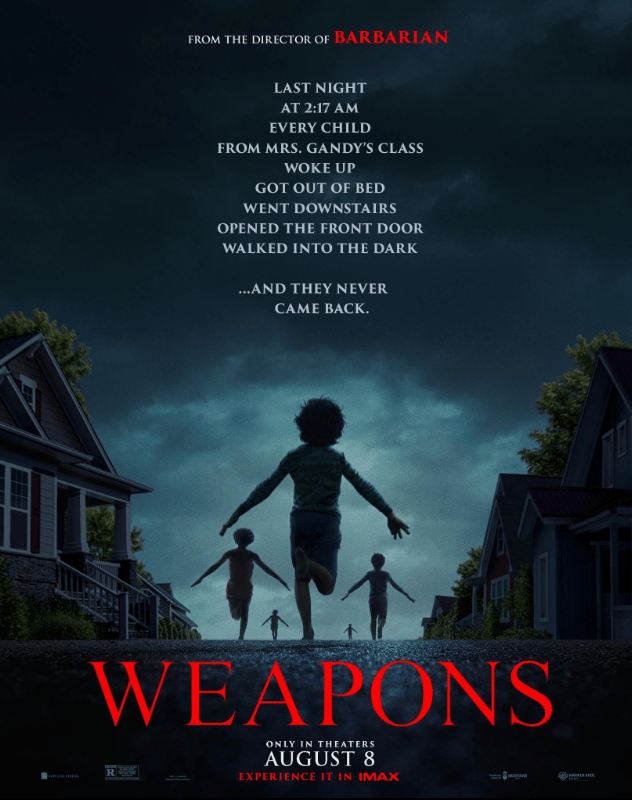
Weapons (w & dir: Zach Cregger), Film Review by Case Wright – No Spoilers


I should get an academy award for reviewing this film without spoiling it. It is so hard. I won’t post a spoiler review, until the Shattered Lens staff tells me that they’ve seen it.

I know, I know… Case, Weapons came out a while ago! What gives?! In my defense, it’s Oscar nominated; so, I’m not late until April. Take that!

Zach Cregger presents his story through six different perspectives: Justine a teacher/alcoholic, Archer a self-loathing father, Paul an alcholic/cheater cop, James a drug addict, Marcus the school principal who wants to be good, and Alex the crux of the plot. Cregger uses these different perspectives to force you to pay close attention to discern the subtle plot points. One thing that stood out to me was that he told the story through cinematography (showing not telling) to such a degree that the scenes with dialogue could be counted.

The film is clearly rooted in the storytelling of Fulci. There is plot and dialogue, but the vast majority of the story is told visually with unique Americana. Just as The Beyond had to be filmed in New Orleans, Weapons had to be filmed in summertime Suburbia. The setting succeeded in bringing additional tension to the story where the visuals were the storyteller.

He filmed it so that the suburban setting is a character itself. There are scenes where characters are quickly isolated by going from a backyard into the woods. I am certain that this was intentional to show that all normal civilized society is immediately adjacent to an untamed wild forest that can consume us whole. The theme of line crossing both physical and metaphorical is woven throughout the entire story. Lines are crossed that are professional, societal, relationship-based, and actual physical lines. The line crossing is another element that induces a cringe-suspense that ratchets the tension continually.

The score shares the circulatory system with the setting and story so that it is used as a stand-in for dialogue. There are entire scenes without a single word spoken; so, the music and cinematography fill that vacuum, which pulls us in deeper and deeper into Zach Cregger’s world. What makes the story more challenging is that it is a world we know: the suburbs. The music is both congruous and incongruous depending on what part of the story is told.

I believe that I have succeeded in reviewed this film without spoiling it. Normally, I DO NOT CARE, but this film is so well done and rooted in the Fulci storytelling that I can’t do that to the staff and especially not Lisa. I hope that you all watch it soon or we schedule a watch party.